Across Europe, a quiet rebellion against the bubble sheet and the timed exam is gaining momentum. Education ministries from the Nordics to the British Isles are rethinking what it means to measure learning, shifting away from one-off, high-stakes tests and toward portfolios, projects, and real-world problem-solving. The reasoning is straightforward: many educators believe that cramming for a test rarely produces the kind of critical thinking, creativity, and adaptability that students actually need once they leave school.
This shift is not happening everywhere, and it is not happening overnight. Still, five European countries stand out for how far they have pushed hands-on, project-based learning as an alternative or complement to traditional standardized testing. Here is a closer look at each one and what makes their approach distinctive.
1. Finland: Where Learning Beats Test Prep
Finland remains the reference point for anyone discussing life without standardized testing. Finland does not use nationwide standardized tests to rank schools or evaluate students, with the only standardized test being the Matriculation Examination, which is optional and taken at the end of upper secondary school at ages 18 to 19.[1] Instead of relying on exam scores, teachers use continuous, personalized methods including classroom observations, portfolios and projects, oral examinations and presentations, one-on-one teacher-student conferences, and peer and self-assessment.[1]
What makes this work in practice is teacher autonomy paired with genuine trust in the profession. Teachers are given significant professional freedom to design their own assessments based on the national curriculum framework, recognizing that classroom teachers have the most accurate understanding of their students’ abilities and learning needs.[2] In STEM subjects especially, Finnish students are assessed through project-based learning, working on real-world research projects where they must develop hypotheses, conduct experiments, and present their findings[3] rather than sitting for multiple-choice exams.
2. Estonia: A Digital Powerhouse Betting on Projects Over Bubble Sheets
Estonia has become something of a surprise star in European education circles, and it has done so without leaning heavily on standardized exams for classroom learning. The country ranks first in the EU for basic skills and is the only country which has reached the EU target for basic skills in all three domains of reading, science and maths, while also running one of the most equitable education systems in the EU.[4] Rather than crediting this success to relentless testing, Estonian educators point to a very different classroom culture.
Assessment in Estonian schools emphasizes formative feedback rather than high-stakes testing, and while standardized assessments exist, they are balanced with ongoing feedback that helps students understand their progress and reduces test anxiety.[5] Hands-on learning is baked into the daily routine, since project-based learning is widely implemented across Estonian schools, with students often working on cross-disciplinary projects that integrate multiple subjects and encourage connections between different areas of knowledge.[5] The country is now extending this philosophy into its next phase of reform, having invested in AI tools and training to ensure high-quality education well into the future.[4]
3. Wales: Rewriting the Rulebook with the Curriculum for Wales
Wales has taken perhaps the boldest legislative leap of any UK nation, replacing its old exam-heavy structure with the Curriculum for Wales. The Curriculum for Wales is being introduced in state-funded education for pupils aged three to sixteen, with its rollout beginning in 2022 and becoming statutory for all pupils up to Year 9 since September 2023, continuing to reach Year 11 in the 2026-2027 school year.[6] The intent behind the reform is explicit: school-leaving exams are being reformed to reflect the new structure and to put less emphasis on exams, with the exception of maths.[6]
In practical terms, that means classrooms look and feel different than they used to. Instead of relying solely on standardized testing and exams, assessment in the Curriculum for Wales includes ongoing teacher assessment, self-assessment, and project-based assessments, with the focus on evaluating students’ progress and their ability to apply knowledge and skills in real-world situations.[7] A centerpiece of the new qualifications system is a hands-on capstone project. Alongside GCSEs, students now complete a Personal Project on any subject of the learner’s choice, available at entry level, level 1, and level 2, and worth the equivalent of half a GCSE.[8] Since September 2025, the first section of ‘Made-for-Wales’ GCSEs have been taught,[6] giving the reform its first real test in classrooms.
4. Ireland: Trading Final Exams for Classroom-Based Assessments
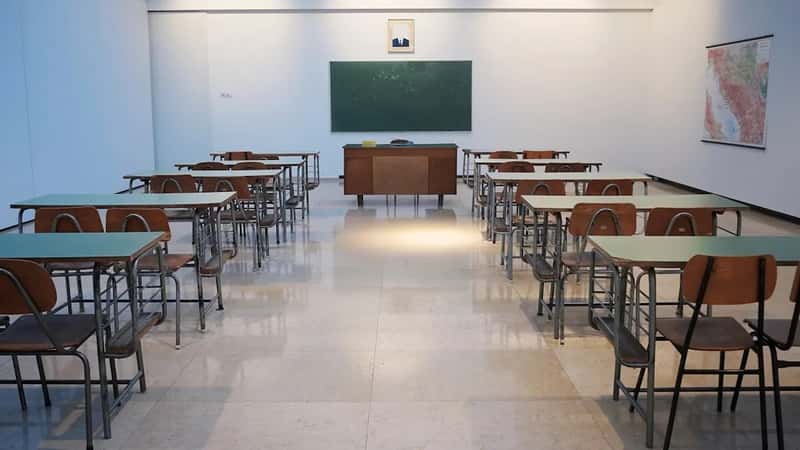
Ireland’s Junior Cycle, covering the first three years of secondary school, has moved steadily away from a system built almost entirely around a single terminal exam. Under the current framework, many subjects now include Classroom-Based Assessments, structured tasks completed during the school year that ask students to research a topic, build a project, or deliver a presentation rather than simply recall facts under exam conditions. Teachers assess these tasks against national descriptors, and the results sit alongside, rather than replace entirely, the final written state examination for most subjects.
The philosophy driving this shift mirrors what is happening in Wales and Finland: education officials in Ireland have argued that a broader mix of skills, including oral communication, collaboration, and independent research, deserves recognition beyond what a single exam paper can capture. The rollout has not been without friction, with some teachers’ unions raising concerns about workload and consistency in grading across schools. Even so, the direction of travel has held steady, with classroom-based, project-style assessment now a permanent fixture of lower secondary education in Ireland rather than an experimental add-on.
5. Portugal: Giving Schools Room to Experiment

Portugal has spent the past several years loosening the grip of centralized, test-driven schooling in favor of local flexibility. Under its curricular autonomy and flexibility framework, schools are permitted to redesign a meaningful share of their timetable around project work, interdisciplinary themes, and community-based learning, rather than teaching strictly to a fixed national syllabus that culminates in a standardized exam. The reform also trimmed back the number of high-stakes national exams required for basic education certification, shifting some of that weight onto ongoing school-based assessment instead.
Portuguese policymakers have framed this less as an abandonment of rigor and more as a rebalancing act, one that still values core literacy and numeracy but recognizes that skills like teamwork, digital literacy, and citizenship are hard to capture on a timed test. A 2026 update to Portugal’s national school improvement plan, known as the A+A plan, sets out measures aimed at improving learning and promoting pupils’ academic success through the 2025–2026 school year.[9] The emphasis throughout has been on giving schools room to adapt their methods to local needs rather than applying a single uniform benchmark everywhere.
Taken together, these five reforms tell a similar story even though each country arrived at it from a different starting point. Finland and Estonia built their systems around teacher trust and formative feedback from early on, while Wales, Ireland, and Portugal have actively dismantled parts of older, exam-centric structures to make room for something more flexible. None of these countries has abandoned assessment altogether, and none would claim their model is finished or without critics. What they share is a bet that students learn more deeply, and perhaps more happily, when the goal is understanding a project through to completion rather than filling in the correct bubble on a Tuesday morning. Whether that bet pays off in the long run is still being written, one classroom at a time.