Ask most people whether teaching pays as well as medicine, and the answer is usually a quick no. Yet in a handful of countries, the gap between a classroom salary and a hospital paycheck is far smaller than global stereotypes suggest, and in a few specific cases, entry level teachers have actually out earned entry level physicians. These situations are rare exceptions rather than the global rule, but they are real, documented, and worth understanding.
What follows are five nations where teaching has been elevated, through policy, funding, or cultural tradition, to a pay tier that rubs shoulders with medicine, at least at certain career stages. The comparisons are not identical everywhere, and context matters enormously, but each example offers a genuine glimpse into how differently societies can choose to value the people who teach their children.
1. Luxembourg

Luxembourg is the standout case in nearly every international salary comparison of teachers, and the numbers are striking. Luxembourg stands far ahead, with starting salaries near $100,000 and top pay reaching over $170,000. That places experienced teachers in the Grand Duchy well into the income territory typically associated with mid career physicians in many other wealthy nations.
The scale of the gap becomes clearer when set against other OECD countries. The highest-paid teachers earn more than double the OECD average top salary of about $76,000, highlighting how wide the global pay gap can be. Even newcomers to the profession start comfortably, since Luxembourg paid teachers the most by far, offering them starting salaries of $99,621. After a decade and a half in the classroom, that figure climbs even higher, since after 15 years, teachers earned an average of $137,418 per year, and the highest-earning teachers made $173,165 per year.
2. Switzerland

Switzerland rarely tops global salary charts outright, but its teacher pay sits comfortably in the same bracket as many skilled professionals, doctors included. According to OECD data, Swiss teachers earn some of the highest salaries globally, with secondary school teachers making an average of $80,000 to $100,000 per year. That range overlaps meaningfully with entry and mid career compensation for general practitioners in several European systems.
Part of the explanation lies in the country’s economic structure rather than any single policy decision. The high salaries reflect Switzerland’s strong investment in education and high cost of living. Career progression also plays a role, since experienced teachers with specialized qualifications and additional years of service can push their earnings toward the upper end of that scale, narrowing the distance between their paychecks and those of many licensed medical professionals working in similar regional labor markets.
3. Germany
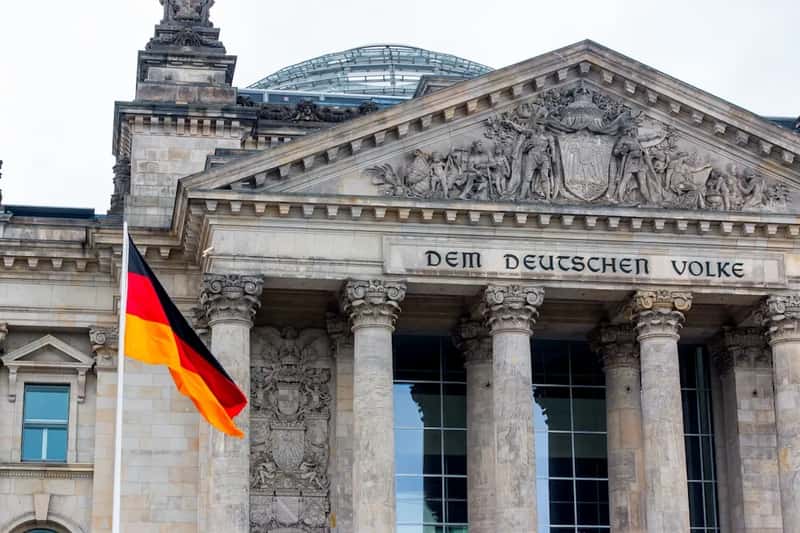
Germany consistently ranks just behind Luxembourg in teacher pay studies, but the absolute figures are still substantial. Germany took second place in the rankings, with experienced primary and secondary school teachers there receiving 79 and 89 thousand euros per year. Those are salaries that place veteran educators firmly within reach of general practitioner income in parts of the German healthcare system.
What makes the German case notable is how structured and predictable the pay ladder is. Teachers move through clearly defined civil servant pay grades tied to qualifications and years of service, which removes much of the negotiation and uncertainty that shapes teacher pay elsewhere. This stability, combined with strong starting salaries, is part of why Germany continues to attract steady numbers of applicants into teacher training programs despite demanding workloads.
4. Singapore

Singapore’s case is more specific and historical, but it remains one of the clearest documented examples of teacher pay actually surpassing doctor pay at a particular career stage. Darling-Hammond also said “beginning teachers make more than beginning doctors” in Singapore, though that was her only reference to doctors’ pay in the testimony. This was cited by researchers studying why Singapore’s education system performs so consistently well on international assessments.
The broader philosophy behind this reflects how the government treats teaching as a strategically important profession rather than a fallback career. Teaching has long been regarded as a “noble profession” and an “iron rice bowl” in Singapore. Pay structures are tied to qualifications and continue rising with experience and added responsibility, which is why the profession still draws strong graduate interest even as private sector salaries in finance and technology have grown more competitive in recent years.
5. South Korea

South Korea offers another documented instance where teaching sits unusually close to medicine on the national pay ladder, at least according to research presented to lawmakers. The White House cited a study in which Darling-Hammond said Korea pays teachers somewhere between doctors and engineers. That framing reflects South Korea’s long cultural tradition of respecting educators, reinforced by deliberate government investment in teacher training and salary structures.
Concrete figures back up the broader claim about teacher compensation relative to other professions. Upper secondary education teachers with more than 15 years of experience were paid $54,798 in 2007, about $11,000 more than in the United States. University level educators fare even better, since university professors still enjoy the prestige given to teachers traditionally in South Korean society, a status that has translated into salaries and social standing that many other countries reserve almost exclusively for medical professionals.
These five cases share a common thread even though the details differ from one country to the next. Where governments have chosen to fund education generously and structure teacher pay around clear, rising scales, the profession has climbed into salary territory usually reserved for medicine, law, or engineering. That does not mean teaching and medicine are financially equivalent everywhere, far from it, but it does show that the gap is a policy choice rather than an unavoidable fact of economic life.