Retirement planning used to boil down to two questions: how much money will I have, and where does the sun shine most often? These days the calculation is more layered. Retirees are weighing healthcare access, insurance costs, tax treatment of pensions and Social Security, and whether a place still feels livable once the weather turns or the nearest hospital is an hour away.
A handful of states keep showing up near the top of independent rankings for good reason. They combine tax relief with practical living costs and, in most cases, decent access to medical care. Here’s a closer look at five states that consistently earn their reputation as places where retirees can settle in without constantly worrying about the budget.
Florida

Florida’s reputation as a retirement magnet isn’t just folklore. Florida remains America’s most popular retirement destination, with 21.8% of its population made up of residents aged 65 and older, a figure that dwarfs most other states. Part of the draw is financial: Florida is one of the few states with no state income tax, allowing retirees to retain more of their Social Security benefits, pension payments and other retirement income.
That said, Florida isn’t a slam dunk on every metric. Some 2025 analyses noted that Florida, a longtime retirement favorite, landed at 41st due to poor healthcare rankings, high insurance costs, and natural disaster risks – despite strong scores in taxes and its large retiree population. Retirees moving there tend to do best when they treat the tax savings as a starting point rather than the whole story, budgeting extra for home insurance and researching local healthcare networks before signing a lease or closing on a house.
Tennessee

Tennessee has quietly become one of the more practical choices for retirees who want warm-ish weather without the coastal price tag. It’s one of the states with no state income tax, which matters a great deal for anyone drawing from a 401(k) or pension. Tennessee has zero state income tax, and using the 4% rule, a million-dollar nest egg generating $40,000 a year is comfortable there, a contrast to pricier states where the same income feels tight.
Cost of living plays a big role in that comfort. Housing in much of Tennessee, outside of Nashville’s booming core, remains reasonable compared to national averages, and the state’s mix of small cities and rural areas gives retirees flexibility depending on whether they want city amenities or quieter surroundings. It’s not a state built around beaches, but for retirees prioritizing stretched-out savings and mild winters, it checks a lot of boxes.
Wyoming

Wyoming rarely gets the attention Florida or Arizona does, yet it routinely lands near the top of tax-focused retirement rankings. Wyoming leads on total tax burden, combining no income tax with a 0.55% effective property tax rate and a 4% sales tax. Put in dollar terms, Wyoming’s total state tax burden on a $60,000 retirement income is just $2,575 per year compared to $7,950 in New York.
Beyond taxes, Wyoming scores well on quality of life measures too. Wyoming ranks second in overall quality of life, thanks to a combination of low violent crime, easy access to parks, and access to healthcare facilities, making it appealing for retirees who love the outdoors or prefer a slower pace. The tradeoff is climate and healthcare density. Winters are long and cold, and Wyoming and South Dakota rank well for taxes and cost of living but have harsh winters with temperatures regularly dropping below 10°F, which limits their appeal for retirees who prioritize warm weather. For retirees who don’t mind snow and value low costs over sunshine, it’s hard to beat.
Delaware
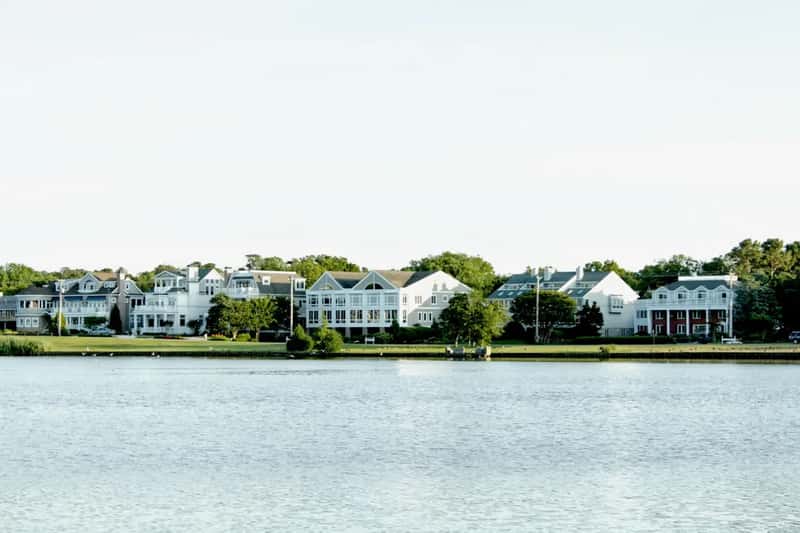
Delaware punches above its weight for such a small state. It has repeatedly ranked among the top overall retirement destinations in respected national guides, with the Kiplinger Retirement Guide 2026 naming Delaware, Georgia, and Mississippi among the top retirement destinations. Part of the appeal is geographic convenience. Retirees who want to stay within driving distance of family in the Northeast or Mid-Atlantic, without paying Northeast-level taxes, find Delaware a workable middle ground.
Delaware has no state sales tax, which quietly helps stretch a fixed income further on everyday purchases, and its property taxes tend to run lower than neighboring states. It did slip somewhat in more recent rankings, with one 2025 report noting the Granite State has overtaken last year’s leader, Delaware, which slipped to 11th place in that particular ranking. Still, its combination of coastal towns, reasonable taxes, and proximity to major East Coast cities keeps it firmly in the conversation for comfortable retirement.
New Hampshire

New Hampshire’s rise to the top of several 2025 and 2026 retirement rankings caught some observers by surprise, given its reputation for cold winters rather than retirement villages. According to Bankrate’s 2025 Best and Worst States to Retire study, the top destination that year is New Hampshire, proudly living up to its “Live Free or Die” motto. The state’s “Live Free or Die” motto isn’t just political branding. It reflects genuinely low tax exposure, since New Hampshire tops Bankrate’s 2025 study and ranks highly in Empower’s list, praised for strong healthcare, low crime, and no income tax on wages.
The broader trend behind this ranking shift is telling. One of the biggest takeaways from Bankrate’s 2025 report is that traditional retirement destinations in the Sun Belt didn’t perform as well as expected, with eight of the 10 lowest-ranking states located in the South or Southwest. New Hampshire benefits from strong healthcare infrastructure, low crime, and proximity to Boston’s medical centers, all while avoiding the income tax bite that hits retirees in nearby Massachusetts. Winters are real, but for retirees prioritizing safety and healthcare over year-round sunshine, it’s become a serious contender.
Choosing among these five states ultimately comes down to which tradeoffs a retiree is willing to accept. Florida and Tennessee offer warmth and tax relief but ask retirees to shoulder higher insurance costs or accept thinner healthcare networks in some areas. Wyoming and New Hampshire trade sunshine for lower crime, stronger healthcare access, and tax structures that leave more retirement income untouched, while cold winters become part of the deal. Delaware sits in between, offering moderate weather and reasonable taxes for those who want to stay close to family on the East Coast.
None of these states are perfect on every measure, and rankings shift from year to year depending on which factors a given study weights most heavily. What stays consistent is that taxes, healthcare access, and housing costs matter more to actual retirees than climate alone, and each of these five states delivers a genuinely workable combination of the three.