You sat through the chicken, the toast and the dancing, and it all felt like it just happened on its own. It didn’t. Banquet staff say every hotel event is quietly decided by a few pages of paperwork, a headcount nobody wants to talk about, and a clock that is never on the host’s side.
Servers, captains and event managers watch the same patterns repeat at weddings, galas, conferences and holiday parties, and they can call them like weather. The surprising part is that the things they notice first have almost nothing to do with the flowers. Some of these will change how you plan your next party, and the last one has nothing to do with money at all.
#1 – The One Sheet of Paper That Secretly Runs the Whole Night
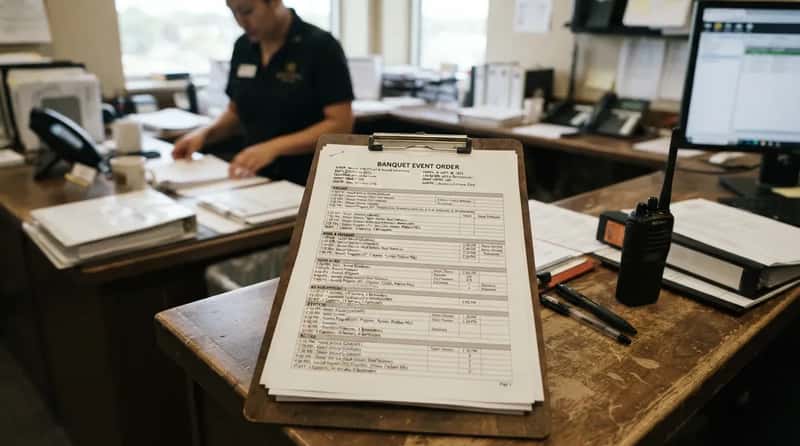
Every hotel event runs off a single document, and most guests never lay eyes on it. It’s called a banquet event order, or BEO. It packs the guest count, timeline, food and beverage, setup, AV, staffing and billing onto one sheet. The same pages go to catering, setup crews, AV teams and management.
Think of it as a script for the entire building. One industry guide calls it the single source of truth that keeps caterers, servers, AV techs and venue staff on the same page. If a detail isn’t on it, staff often don’t know it exists. And that’s exactly where the trouble starts in #2.
#2 – The Empty Seats Someone Still Pays For
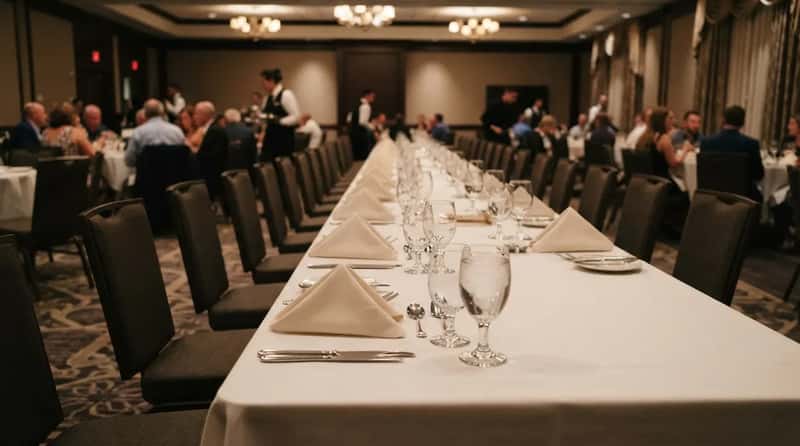
Staff watch the same scene at nearly every event: empty chairs with full place settings, napkins folded, glasses waiting. The hosts are still paying for those plates. A catering guarantee is the final number of guests committed for each meal, and the venue bills for the guarantee or the actual count, whichever is higher.
Here’s the part many hosts miss. Guarantee 500 and serve 430, and you pay for 500. The no-shows were never free.
But the kitchen has a quiet trick for the other side of that math, and it’s #3.
#3 – The Extra Plates the Kitchen Makes Without Telling Anyone
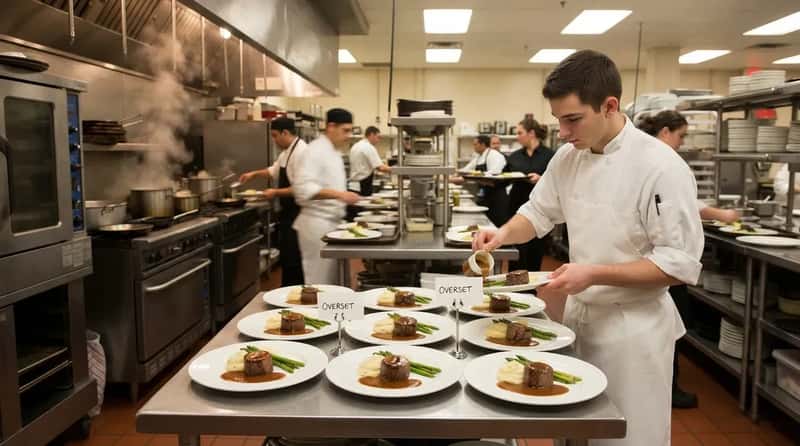
Banquet kitchens almost never cook the exact number on the contract. They cook a little more. That buffer is called the overset, commonly 3 to 5 percent above the guarantee, so late arrivals don’t go hungry.
So if a few extra guests drift in, the meal usually doesn’t fall apart. You’re typically billed only for oversets that actually get served. The buffer is a safety net, not a free second dinner for the whole room.
Even so, the seating chart tells a different story, as #4 shows.
#4 – The Room Is Always Set for More People Than Are Coming
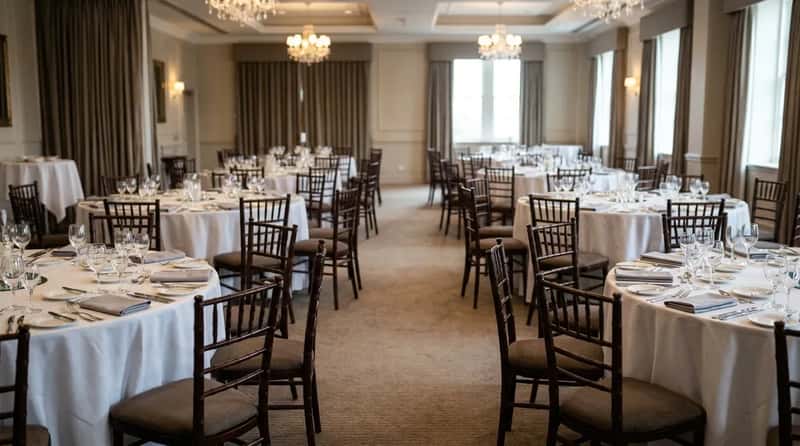
Look closely at the tables before guests sit down. There are almost always spare chairs. That’s deliberate, and it even has its own number.
The “set” number is how many seats the facility puts out. One planning guide gives an example: expect 185 people, set for 200 for breathing room, and guarantee 180 because of typical no-shows. Three different numbers can describe the same lunch. Staff say hosts who understand that rarely get surprised by the bill.
Quick Compare
- Expected: 185 guests the host thinks will show up
- Set: 200 seats put out for breathing room
- Guaranteed: 180 meals, the number the bill is built on
- Prepared: the guarantee plus an overset of 3 to 5 percent, so roughly 5 to 9 extra plates on 180
Which brings us to the guest who changes everything late. That’s #5.
#5 – The Headcount Goes Up After the Deadline, Never Down
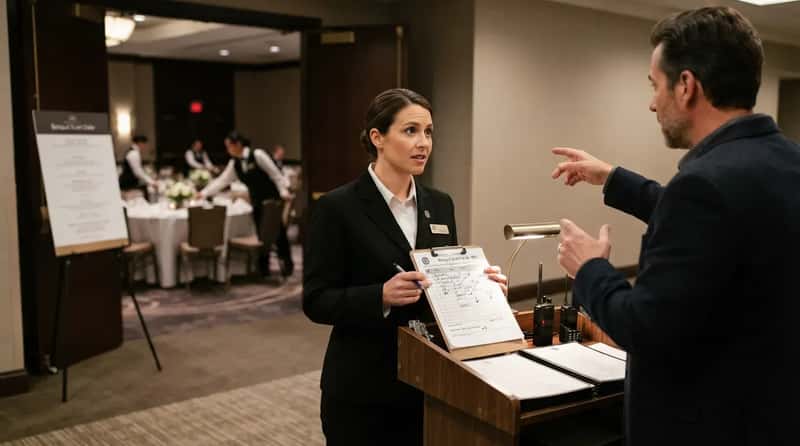
Every banquet captain has met the host who calls the day before with “just a few more.” Staff will usually try to say yes. After the deadline you can often increase the count, subject to availability, but you generally can’t lower it.
That one-way door is the whole reason the deadline exists. Kitchens order protein and plan staffing around a number that locks days ahead. A late addition can mean a rushed plate or a smaller portion somewhere else in the room.
But late changes are minor compared to the note that gets buried. That’s #6.
#6 – The Allergy Note That Gets Buried in the Paperwork
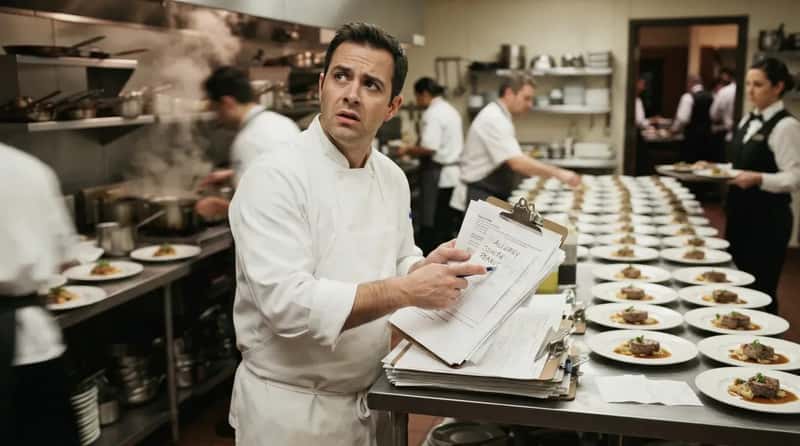
Dietary needs are the detail staff watch most closely, and the one they see handled badly most often. Burying allergy information in general notes risks serious consequences. A dedicated section with severe allergies flagged prominently is the safer approach.
Servers say the scariest moment is the guest who mentions an allergy at the table, after the kitchen has already plated. Information that never reached the kitchen can’t be fixed at the table. The best events list restrictions early and name them clearly.
The schedule has its own hidden problem, up next in #7.
#7 – “Dinner at 7” Never Actually Means Dinner at 7
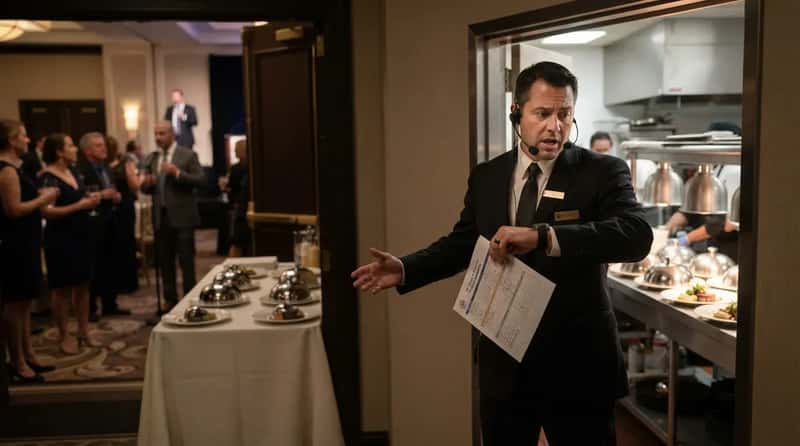
Ask any banquet captain what slips first, and they’ll say the timeline. Listing “dinner at 7 PM” without specifying service style, course timing or duration leaves far too much to interpretation.
Here’s the friction point. Many staff argue that open-mic toasts are the biggest schedule killer at any reception. Every extra speech pushes hot food later while the kitchen holds it. Hosts who plan the order of events in detail tend to keep the night on track.
Worth Knowing
- “Dinner at 7” can mean doors, first course or last plate, so ask which one
- Service style and course timing change how long the meal runs
- Speeches are easiest to manage when the order and speakers are set in advance
- Hot food held for a late program is a quality problem, not just a clock problem
Of course, the delay can start long before guests arrive, as #8 reveals.
#8 – The Ballroom You’re Dancing In Was Someone’s Conference Hours Ago
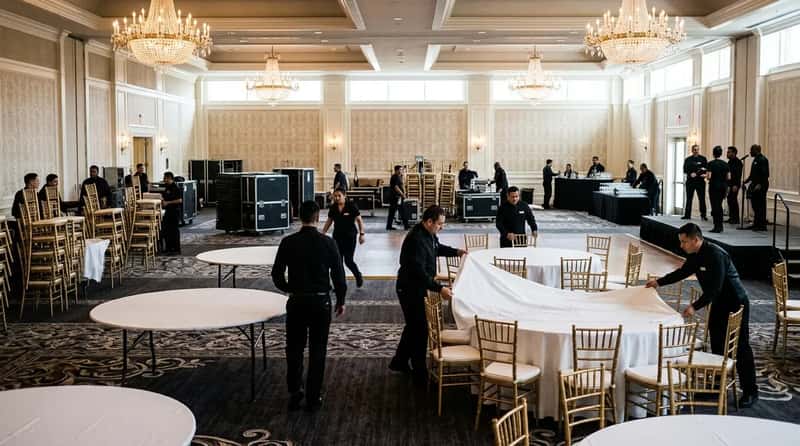
That elegant room has often hosted something else earlier in the day. Staff call the changeover a “flip,” and it runs on a brutally tight clock. Tables go out, linens go on, and the carpet gets a last pass.
The schedule accounts for this, too. A BEO’s schedule lists the location, setup time, start time, end time and tear-down time. Setup and breakdown windows are part of the plan, not an afterthought. When a prior event runs over, the flip gets squeezed.
Next, the pattern staff see the minute the doors open. That’s #9.
#9 – Everyone Freezes at the Door, and the Bar Line Appears Out of Nowhere
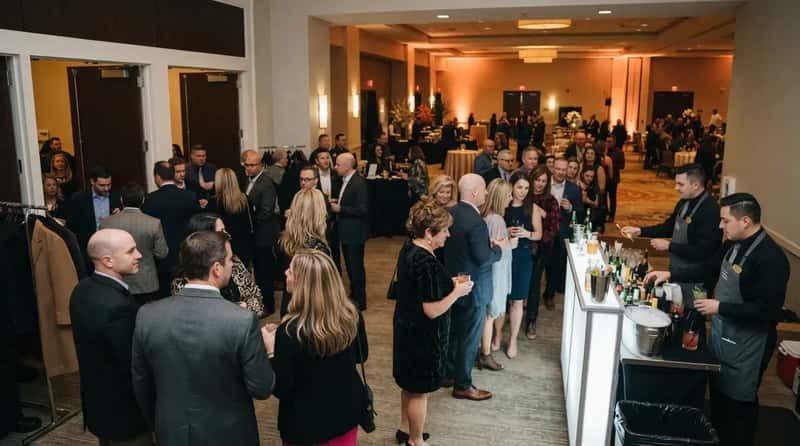
Doors open and guests stall. They clump near the entrance, scan the room, then drift toward the bar. Servers say crowd flow is one of the most predictable things in the building.
Captains plan around it. Bars and passed appetizers are often placed to pull people deeper into the space. Staff say a bar line forms within minutes of the first guests arriving. Good setups spread service points out so the entrance doesn’t jam.
Then comes dinner, and the buffet debate in #10.
#10 – The Buffet-Versus-Plated Debate Staff Quietly Have Opinions About
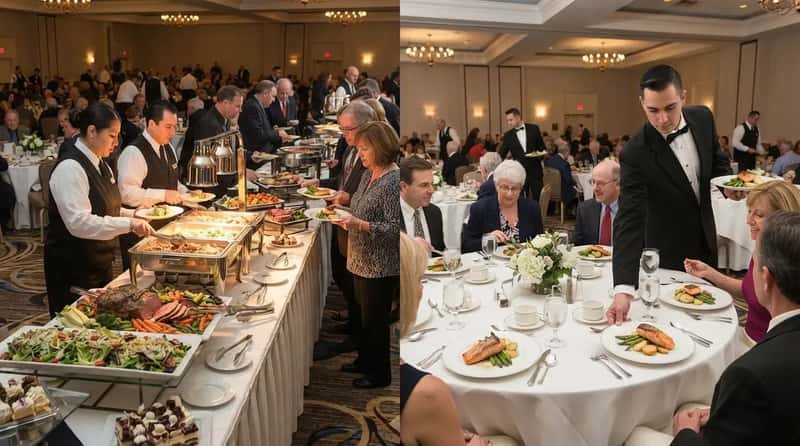
Guests often assume a buffet is the easy, relaxed choice. Many banquet pros disagree. They argue a plated dinner gives hosts more control over pacing, portions and the program.
The reasoning is simple. A buffet sends tables up in waves, and lines can stretch the evening. A plated meal lets everyone eat at roughly the same time. The BEO even records the call, since hosts may switch from buffet to plated service during revisions.
Either way, food safety is running quietly in the background. That’s #11.
#11 – The Silver Trays Are Racing a Clock You Can’t See
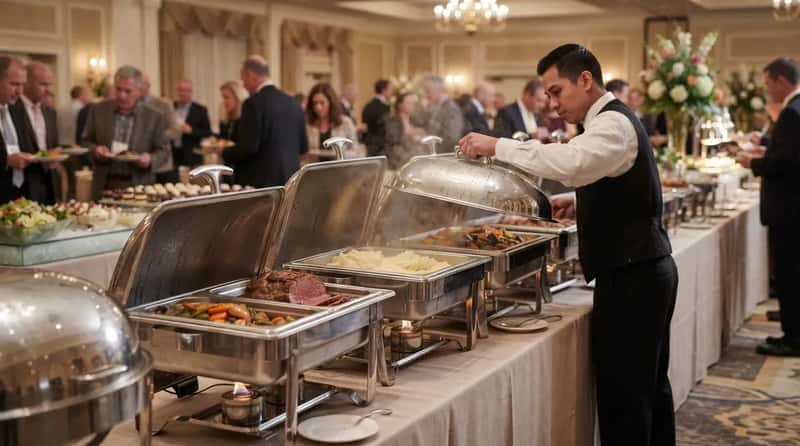
Those gleaming chafing dishes aren’t just decoration. Staff are watching temperatures and time. Hot food has to stay hot, cold food has to stay cold, and nothing sits out forever.
That discipline is built into catering. A HACCP framework asks food operations to identify and control hazards at each critical point in preparation and service. The longer a tray sits, the more the kitchen worries. That’s why a late program can mean a quick swap to fresh trays.
But the biggest kitchen headache is often a person, and #12 names them.
#12 – The Friend of the Host Who “Just Needs One Small Change”
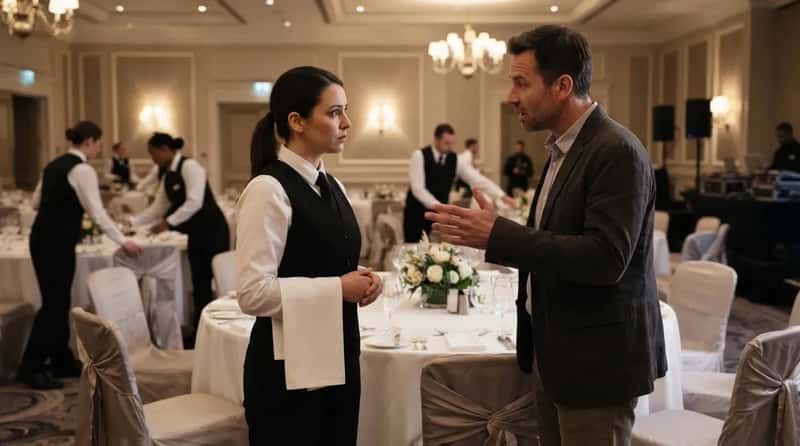
Every event has one. A relative or friend walks up to a server and changes something on the spot. The intention is good. The result can be chaos.
That’s why versions matter. Without a BEO number and version, the kitchen can cook from version 1 while service sets tables from version 2. An email to one person doesn’t update the document everyone else is reading. Every change should generate a new, clearly dated document.
That brings us to the quick meeting that happens before the doors open, in #13.
#13 – The Huddle Guests Never See Before the Doors Open
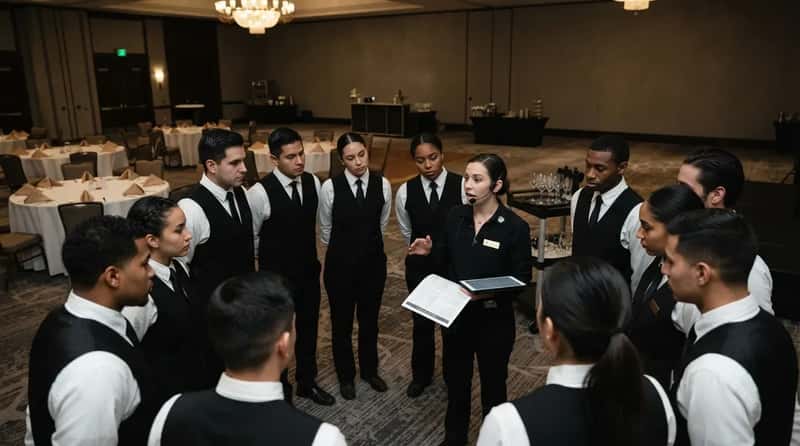
Before service, staff gather in a lineup. The captain walks through the plan, the VIPs, the allergies and the timing. Guests rarely see it, but it sets the tone for the whole night.
For big events, it can start even earlier. Some operations hold pre-event briefings 48 hours ahead with all department heads and vendors. Then the shift-day lineup is often the first time many servers see the details. Planning guides admit that assuming everyone will read the BEO thoroughly is optimistic.
Sometimes the plan survives and the technology doesn’t. That’s #14.
#14 – The Slideshow That Won’t Play and the Mic That Squeals
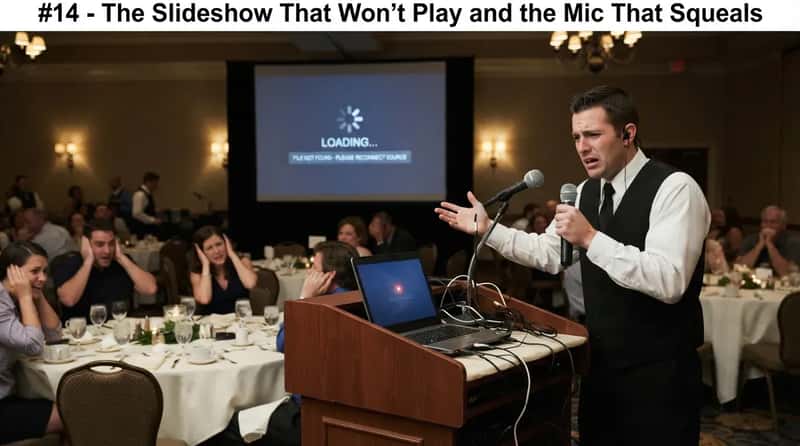
Staff swear the same tech moments happen at nearly every event. A wireless mic cuts out mid-toast. A video won’t load while a hundred people wait. The laptop doesn’t match the cable.
AV is part of the paperwork, too. Documents like the BEO include audio-visual requirements, so it’s all meant to be planned. The common mistake is bringing the file the morning of. Hosts who test early rarely become the story.
Fast Facts
- AV needs belong on the BEO, so the venue can plan for them
- The usual trouble spots: wireless mics, video files and mismatched cables
- A test run before guests arrive turns a live scramble into a quick fix
- A backup copy of the slideshow costs nothing and saves the toast
And speaking of the story, #15 is the one everybody photographs.
#15 – The Cake Drama That Starts With an Outside Vendor
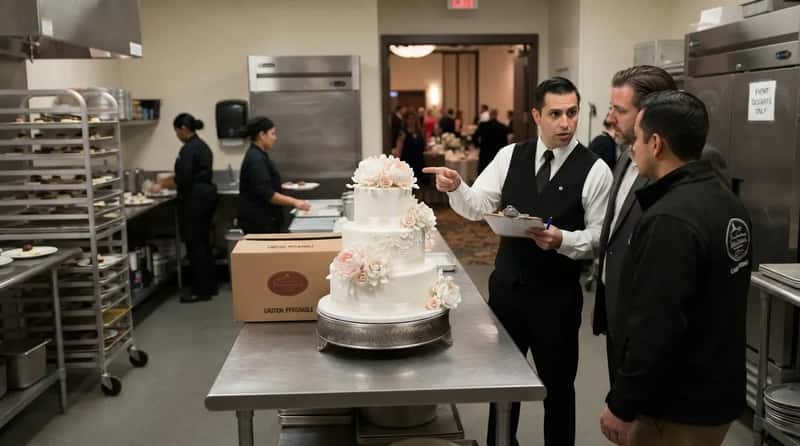
Cakes, desserts and décor often arrive from outside vendors. Banquet staff are the ones left coordinating where it goes, when it’s cut and who keeps it cold. It’s a common pressure point, and it usually plays out in the last hour of the night.
Some venues charge a cutting or service fee for outside desserts. Policies vary, so it’s worth checking. The surprise isn’t the cake, it’s the line item. Staff say the smoothest events confirm vendor arrival times in advance.
Money is the next surprise, and #16 is where it turns tense.
#16 – The Deposit That Stops Being Refundable Sooner Than You Think

Staff see hosts shocked by cancellation rules every season. The terms are in the paperwork, but few people read them. Most venues require a deposit of roughly 25-50% of the minimum, and deposits typically become non-refundable 2-4 weeks before the event.
There’s also the food and beverage minimum. It’s the total catering spend agreed to in the contract, and if guarantees add up to less, the client pays the difference anyway. A smaller party doesn’t automatically mean a smaller bill.
All of this lives in one place most people skip. That’s #17.
#17 – The Fine Print Everyone Signs and Almost Nobody Reads
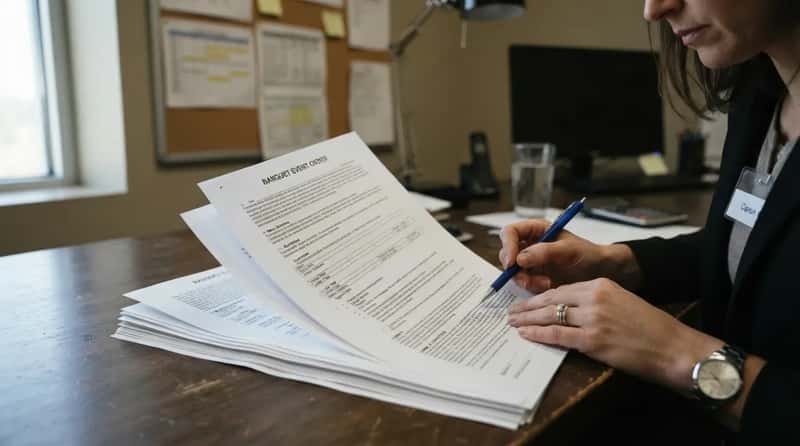
Staff often see hosts treat the BEO as a formality. It isn’t. One planning firm stresses that a BEO is a binding contract, so any changes should be written on it before signing.
The last page matters, too. Some include a terms and conditions section, and the advice is to read every part, including that page. Hotels commonly need catering guarantees three business days ahead, while outside caterers may need five. Missing that detail is an expensive way to learn it.
But the thing staff notice most has nothing to do with paperwork, as #18 shows.
#18 – The Moment Staff Remember Long After the Event Ends
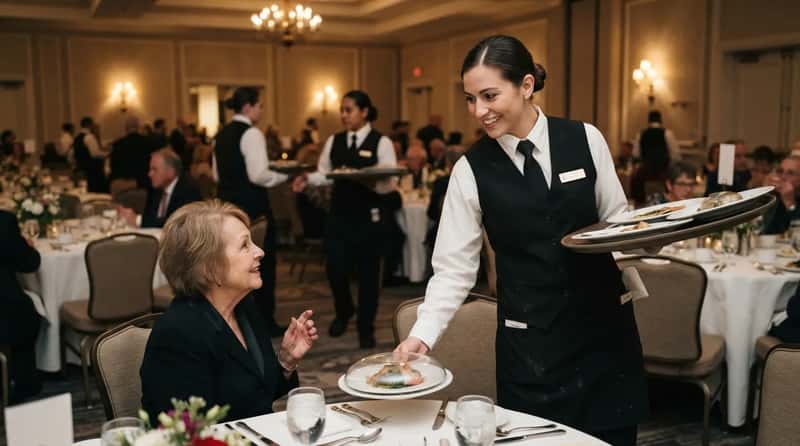
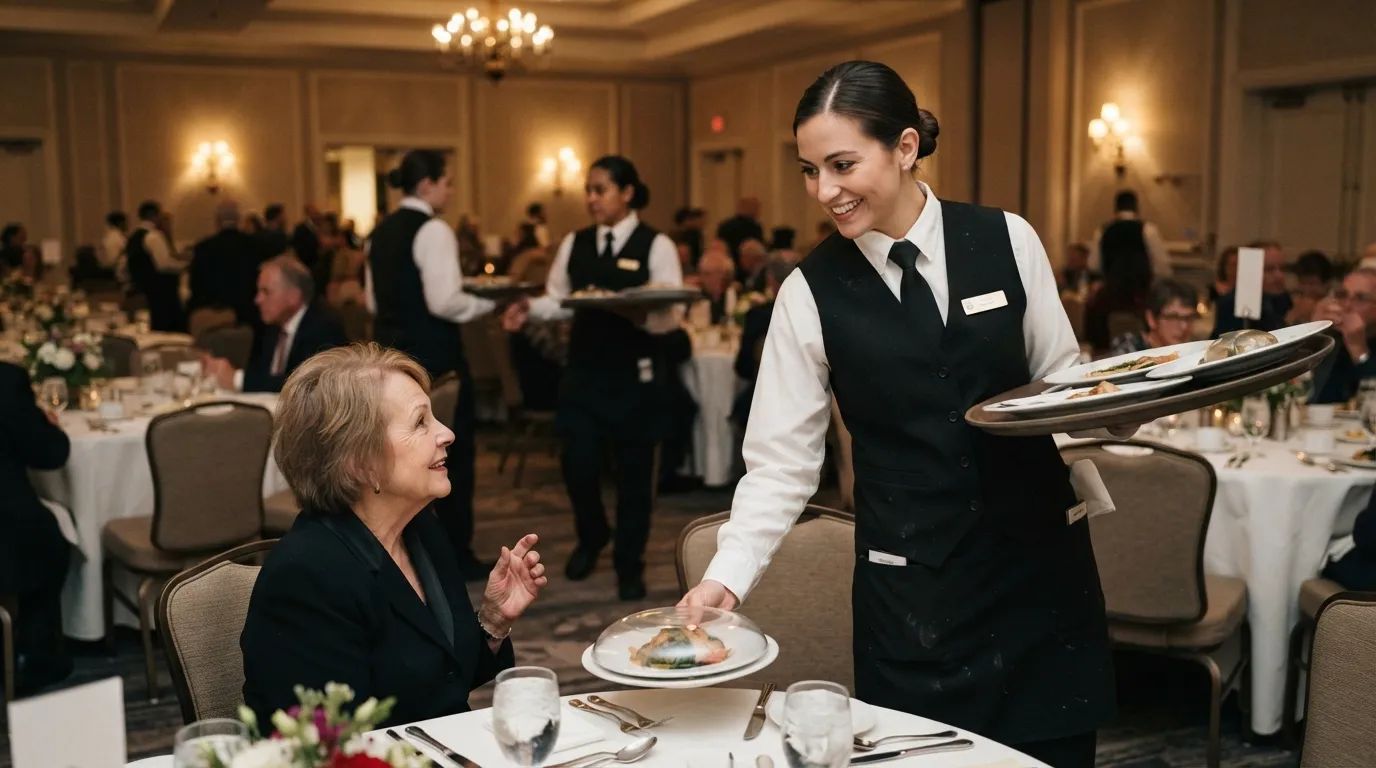
Ask banquet workers what they actually see at every event, and the answer is rarely the décor. It’s how guests treat the person carrying the tray. A simple “thank you” at a crowded table gets noticed.
These are long shifts, often on the move, with hundreds of plates and a schedule that rarely cooperates. Staff say the hosts and guests they remember are the ones who treat servers as people, not part of the furniture. The rest of the night’s details fade quickly.
The glamorous ballroom runs on unglamorous things: a binding BEO, a guarantee you pay for whether or not people show, a kitchen quietly cooking a few percent extra, and a timeline that slips the moment the toasts begin. Allergy notes, late changes, outside vendors and deposit deadlines trip up hosts every season.
Banquet crews have seen it all, but they haven’t seen your event yet. The next time a plate lands in front of you, notice who set it down. They’ll remember whether you noticed.