
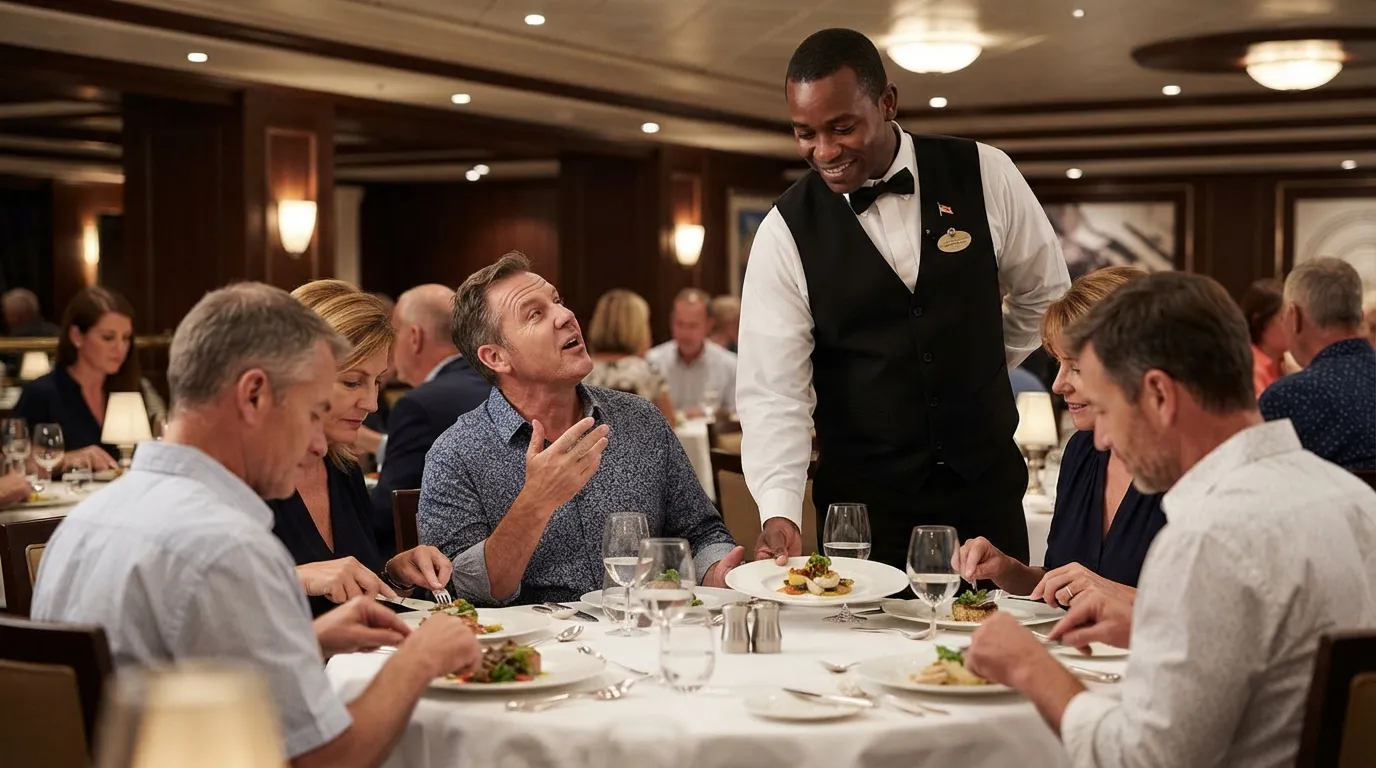
A couple on a seven-night cruise with a mainstream line should budget roughly $225 to $350 in automatic gratuities before ordering a single drink. Part of that money funds the dining room team you’ll meet every evening.
The habits that frustrate that team, and quietly spoil your own dinner, cost nothing to fix. Some look like good manners, a few cost real money, and one is a five-minute conversation on your first night that matters more than the other fifteen combined. First, the habit that looks the most polite.
#16 – Stacking Your Plates to Help the Waiter
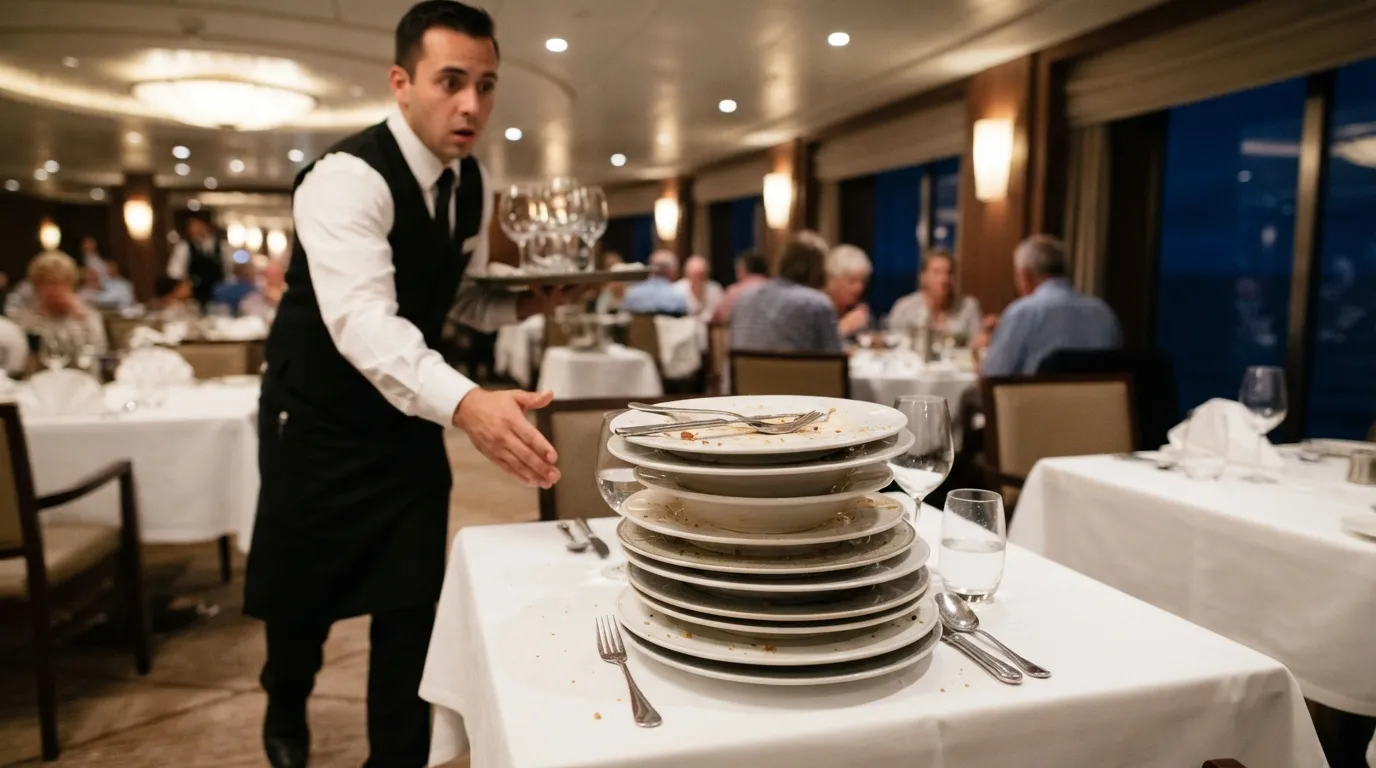
Clearing your own place setting feels polite, and on a ship it can backfire. Crew members have shared that if they’re already on their way to your table, they feel pressure to rush over, and a supervisor may read that as slow work.
Tidying up isn’t a favor here, whatever your intentions. Leave the dishes exactly where they are, and say thank you instead.
A related habit involves a glass instead of a plate, and the timing matters more than the object.
#15 – Handing Over Trash or an Empty Glass Mid-Service
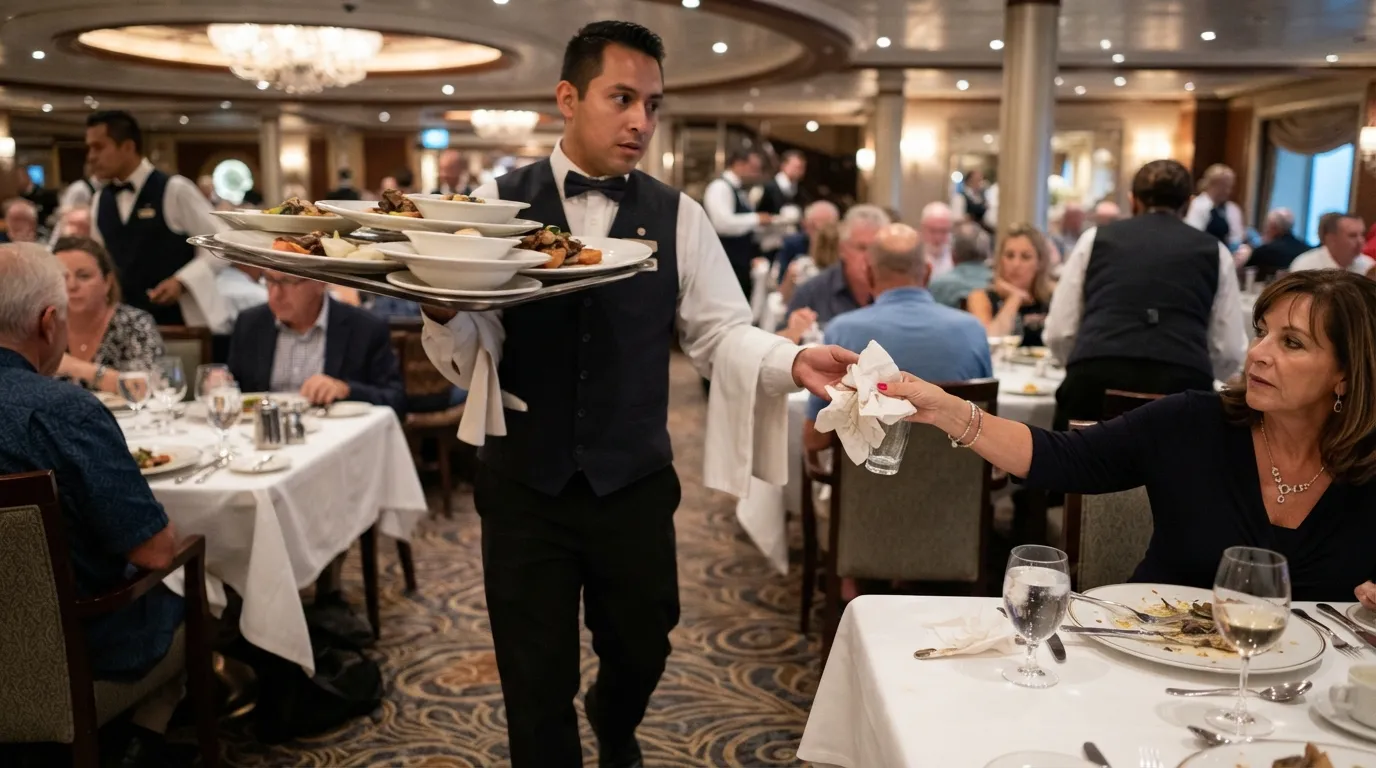
A waiter carrying a loaded tray has no free hand to take your napkin ball. If a crew member is in the middle of serving, that is not the moment to offer an empty glass or garbage.
Wait until the plates are down and they’re standing free at your elbow. Hold it until their hands are empty, or leave it at the table’s edge for the next pass.
Some guests go further than a glass and bring a gift, and on cruise ships that kind of gift often can’t be accepted.
#14 – Baking or Bringing Homemade Treats for the Crew
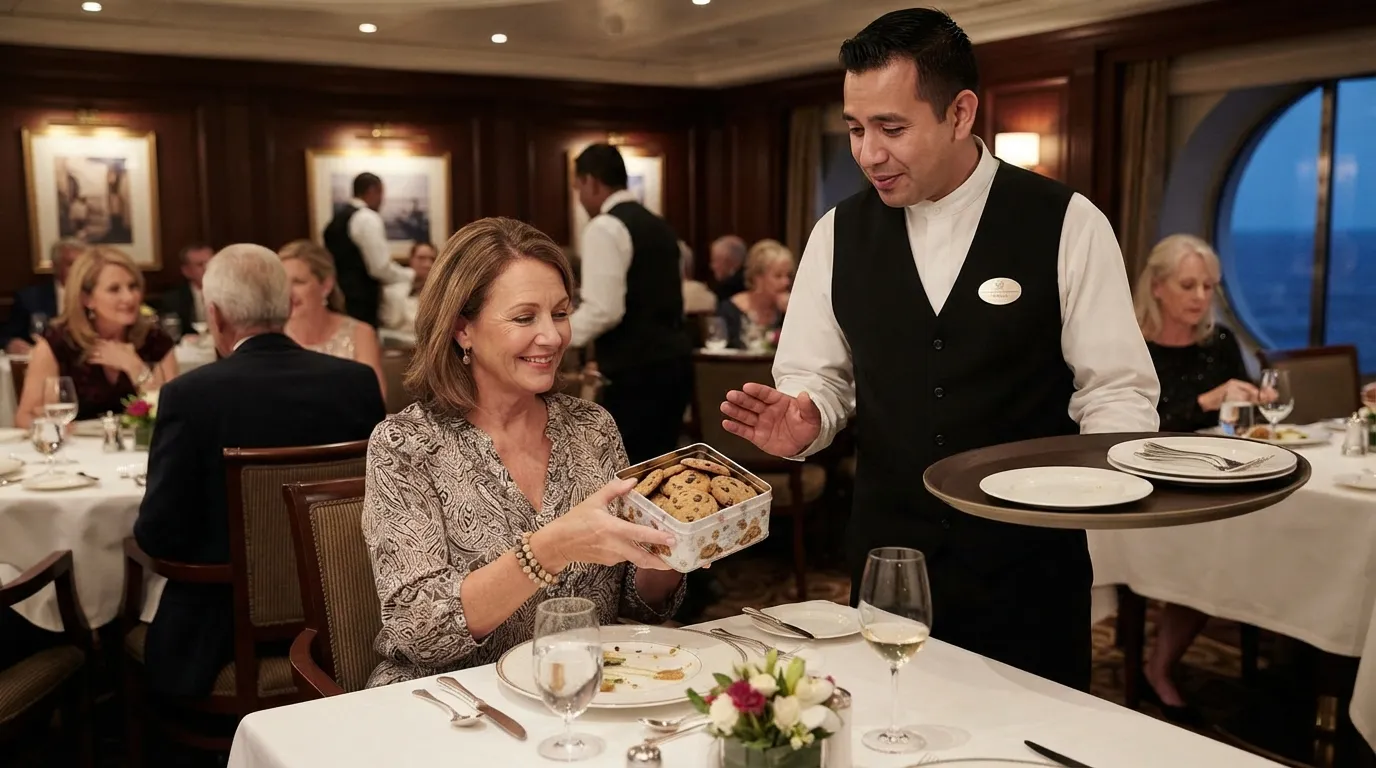
Cookies for your waiter come from a lovely place. Crew members generally aren’t allowed to accept homemade food from guests.
So the gesture usually ends in an awkward refusal. Thank them in words, or ask for the head waiter or dining manager and compliment the service, since that kind of praise needs no permission slip.
Worth Knowing
- Homemade food is generally off the table, however well meant.
- A spoken thank-you needs no approval and lands every time.
- Praise shared with the head waiter or dining manager is a gift crew can accept.
- The money side of gratitude runs through the gratuity system, covered in #2.
Gratitude in cash is a separate matter, and we’ll reach the real numbers shortly. First, the buffet has its own rules, and carrying its contents through the dining room doors breaks one.
#13 – Carrying Buffet Food Into the Dining Room
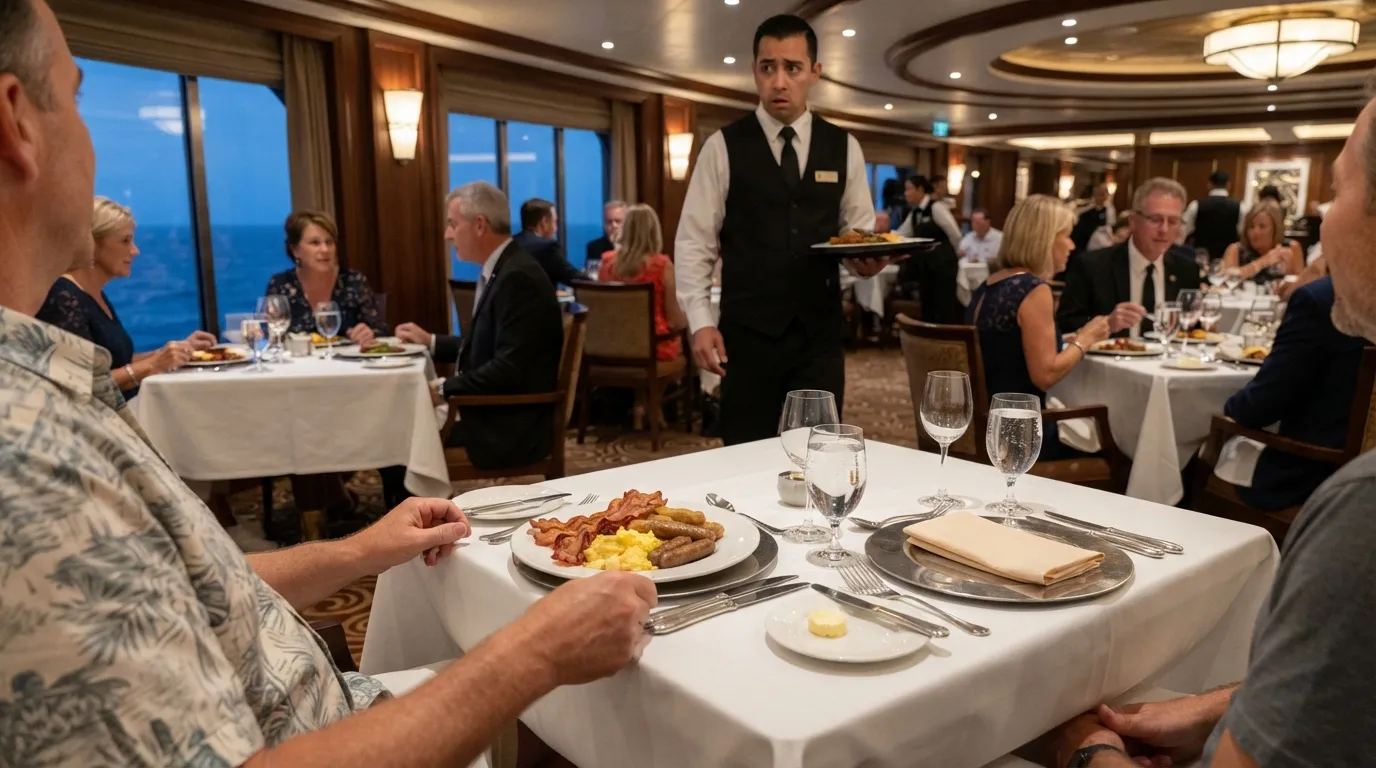
A plate of buffet bacon or a smuggled soda in the formal dining room happens more often than guests admit. The shortcut saves nothing, because dinner in the main dining room is included in the fare on lines such as Holland America.
If you want something the dining room doesn’t list, ask your waiter. The menu there is free and changes daily, so you can order your way to what you’re craving.
The same shortcut habit shows up in what some guests wear to dinner straight from the deck.
#12 – Arriving Straight from the Pool Deck
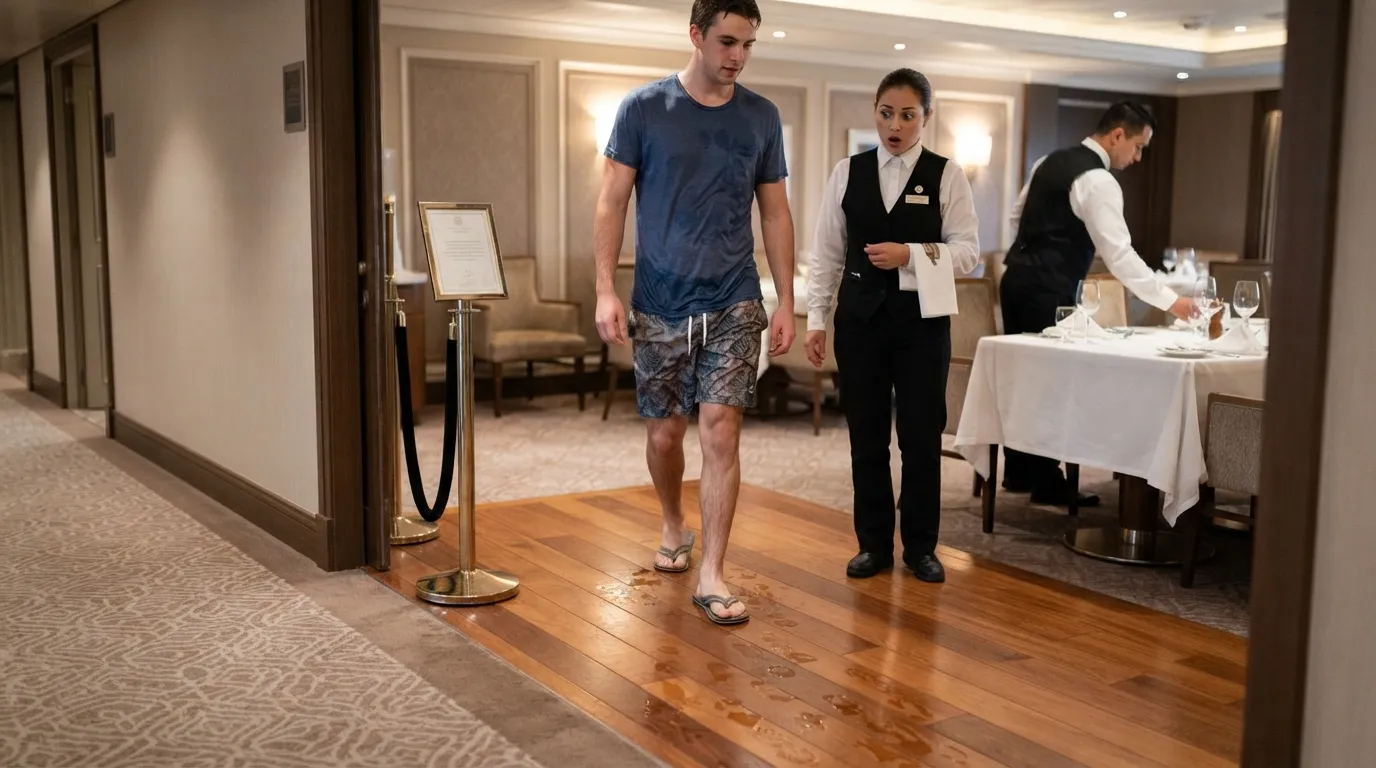
Dining rooms on many ships have written limits on what comes through the door. Azamara, for one, says bare feet, tank tops, t-shirts, baseball caps, bathing suits, shorts, and torn or distressed jeans are not allowed in the main dining room.1
Wet feet matter too. A wet floor in a crowded dining room is a genuine safety hazard, so change, and dry your feet, before you walk in.
Another habit follows you indoors, and this one is audible.
#11 – Taking Phone Calls at the Table
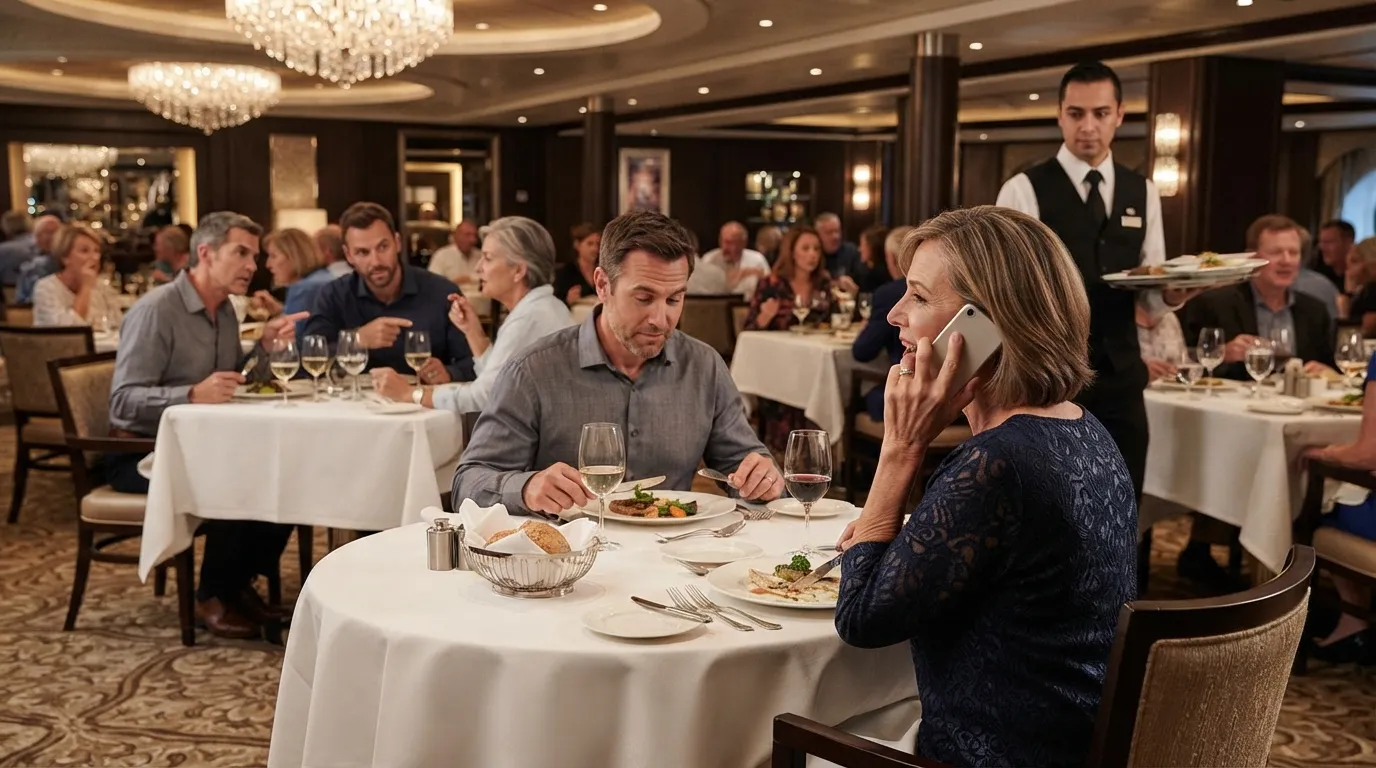
One passenger complained directly to a cruise line about loud calls filling the dining room during dinner service. Tables sit close together, so your half of a conversation becomes your neighbors’ evening.
If the call can’t wait, step into the corridor. Take it outside the dining room, and let the rest go to voicemail.
The crew bringing your plates come from dozens of countries, which leads to one kind of joke that lands badly.
#10 – Imitating a Waiter’s Accent
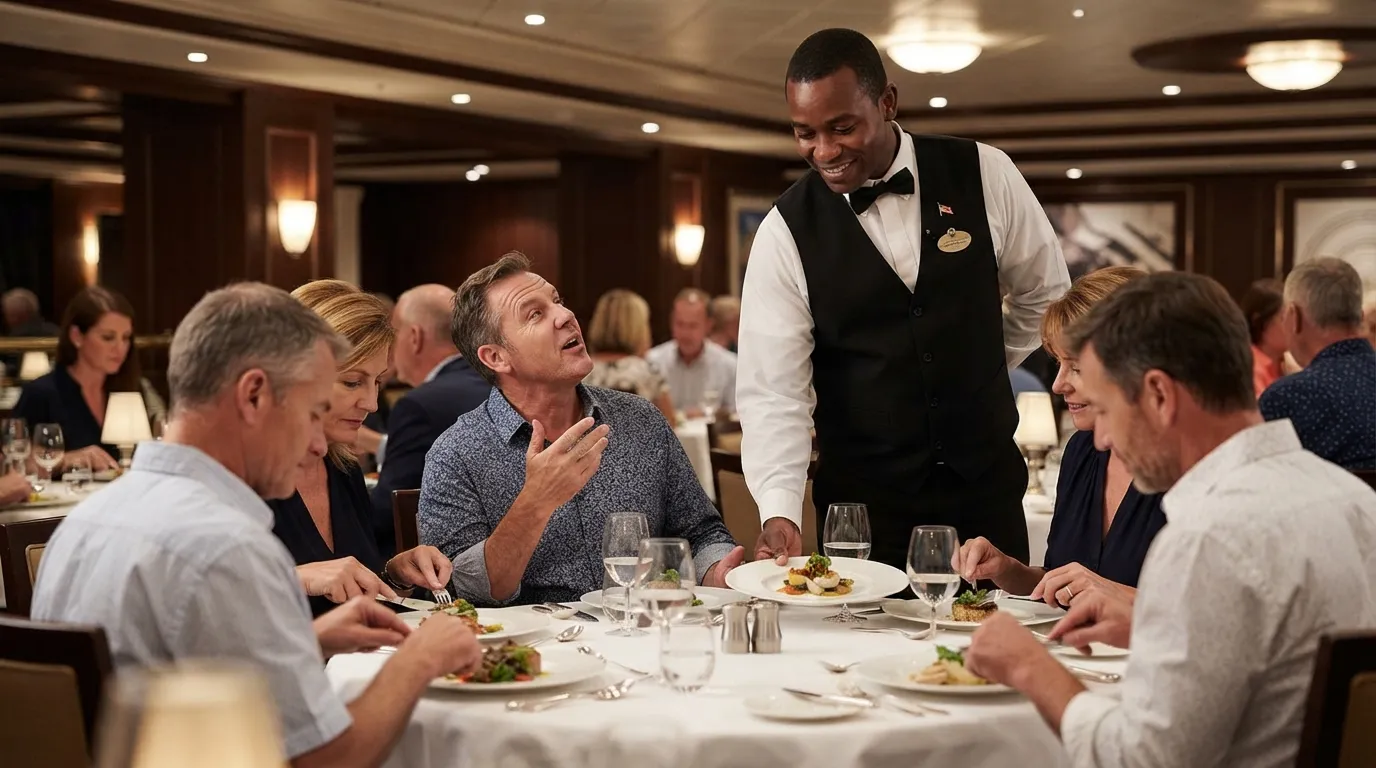
Cruise dining rooms are staffed by crew from dozens of countries, and passengers who imitate their accents cross a line fast. A joke that seems friendly to you is one the waiter has to smile through, because they can’t answer back.
If you can’t catch a word or a name, simply ask them to repeat it. Ask where they’re from and what they’d order instead of mimicking how they sound.
Conversation is the other table hazard, and two subjects in particular start arguments before dessert.
#9 – Politics and Religion at a Shared Table
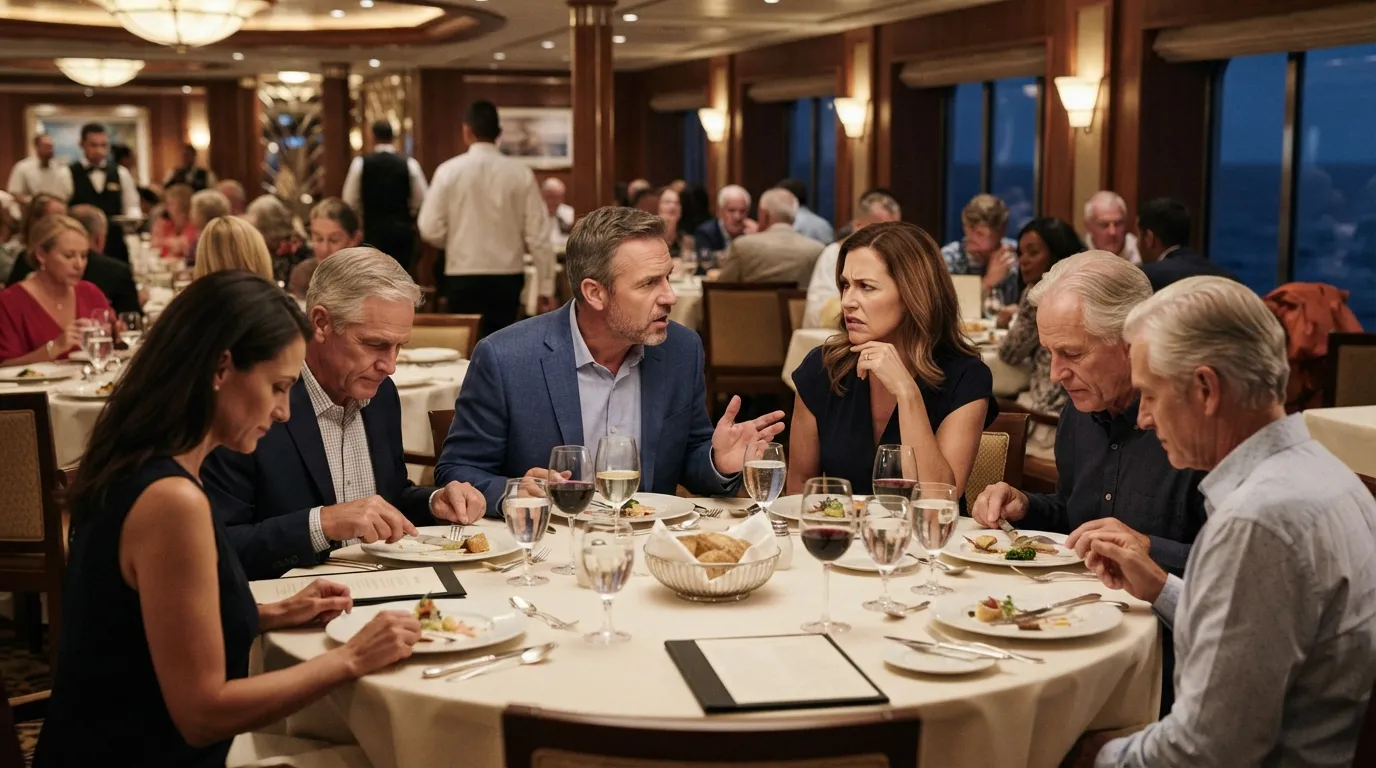
On sailings with set-time dining, you may share a table with strangers for the whole week. Politics and religion are the classic culprits that spark arguments at cruise dining tables.
Winning a debate with a stranger isn’t worth six more awkward dinners. Steer toward ports, food and past trips, and if someone else raises a touchy subject, change it with a question about their last cruise.
Quick Compare
- Safe table talk: ports, food and past trips.
- Risky table talk: politics and religion, the classic argument starters.
- Smooth exit: a friendly question about someone’s last cruise.
Walking out in the middle of dinner has a cost you can’t see from the table, and it lands in the kitchen.
#8 – Leaving Mid-Course or Skipping Dinner Unannounced
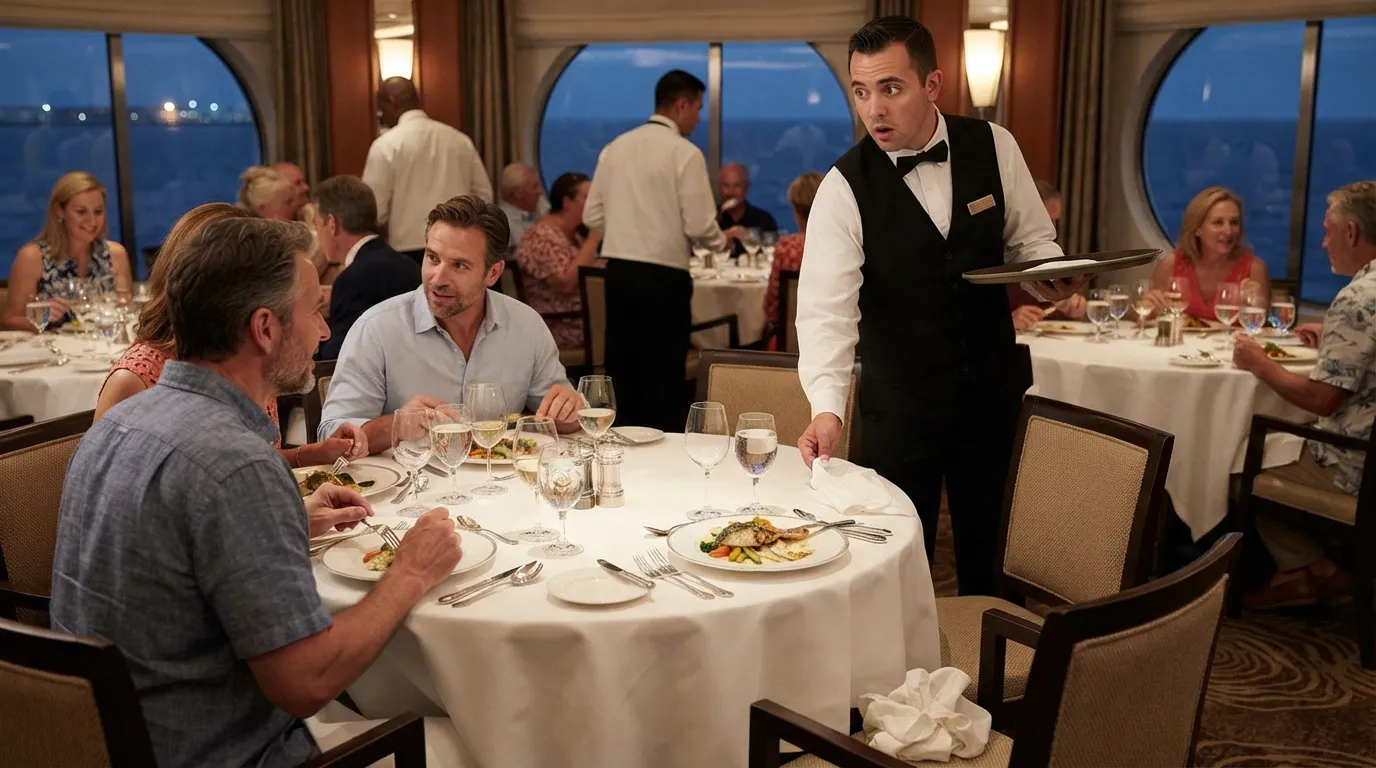
Cruise dinners run on a rhythm, and waiters time each course around every seat at the table. A guest who vanishes mid-meal, or skips an assigned seating without a word, leaves a cold plate and a hole in that schedule.
The fix is a single sentence. Tell your waiter or the maitre d’ before you skip a dinner or leave early.
Staying in your seat raises a better question: what’s on your plate, and why is it probably the same three dishes?
#7 – Ordering the Same Three Safe Dishes
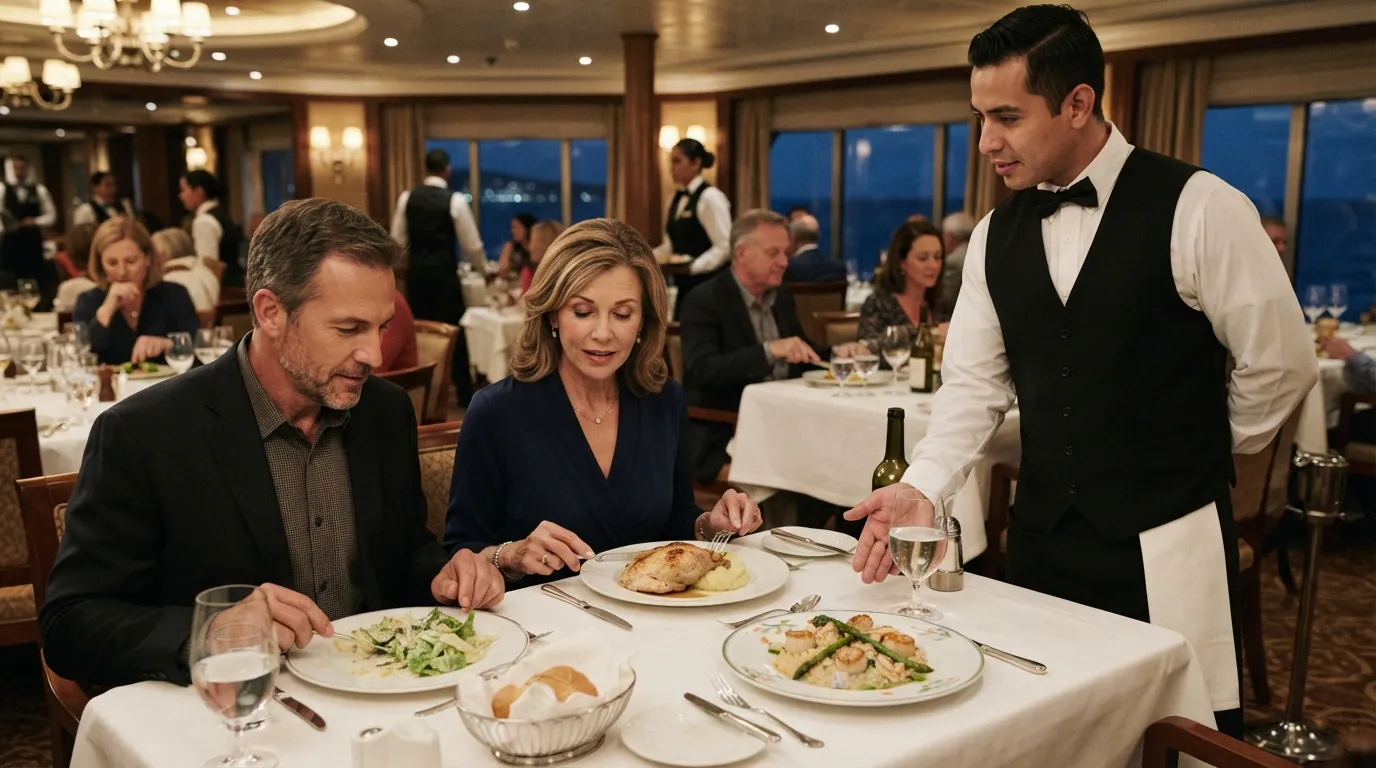
With a free menu that changes daily, waiters want guests to explore it, but plenty stick to the same three safe dishes all cruise. That leaves the better plates unordered.
The waiter already knows what’s good tonight. Ask which dish the kitchen does best, because a recommendation costs nothing extra and works on any night.
Choosing dishes is the easy decision of the evening. What to wear while eating them depends on the ship and the night.
#6 – Misreading the Dress Code for Formal Night
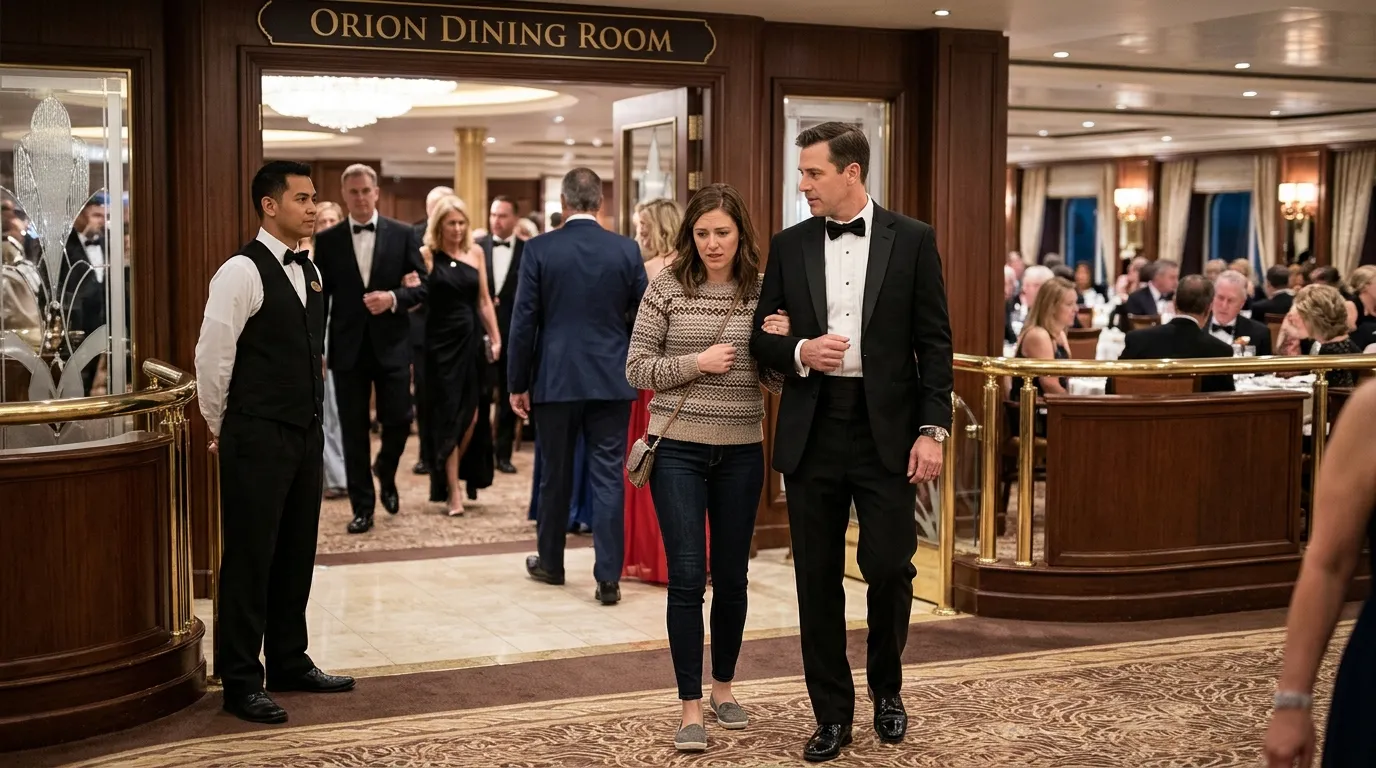
Dress rules change by line, so packing from habit can leave you overdressed or underdressed. Royal Caribbean’s schedule shows how it works:
Norwegian Cruise Line and Virgin Voyages have no formal nights and no mandatory dress code. Check your own line’s dress code before you pack.
On a line with formal nights, you don’t have to attend. The buffet stays open and casual that evening, so you can skip the main dining room and eat upstairs.
Dressing correctly gets you through the door, but a cold or wrong dish is where silence costs you.
#5 – Suffering in Silence over a Wrong Dish
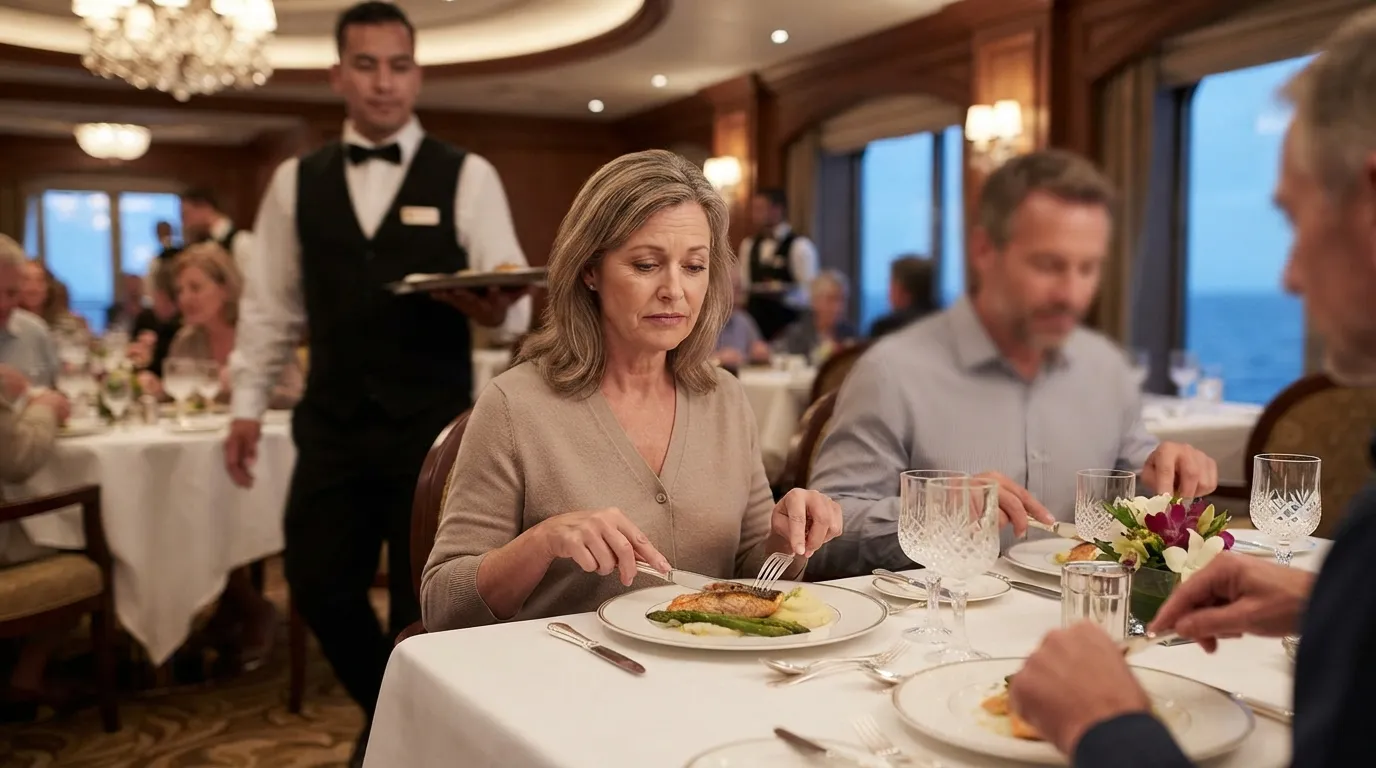
Pushing a dish around your plate tells the waiter nothing. If the food isn’t what you expected or isn’t hot enough, speak up, because any waiter or manager will bring you something else if you even hint you didn’t love it.
The best moment is right after the first taste. Tell the waiter right away, while the rest of your table is still eating.
Getting the dish right matters little if you can’t get the table, and some venues attach a penalty to the booking itself.
#4 – Skipping the Reservation or Missing It
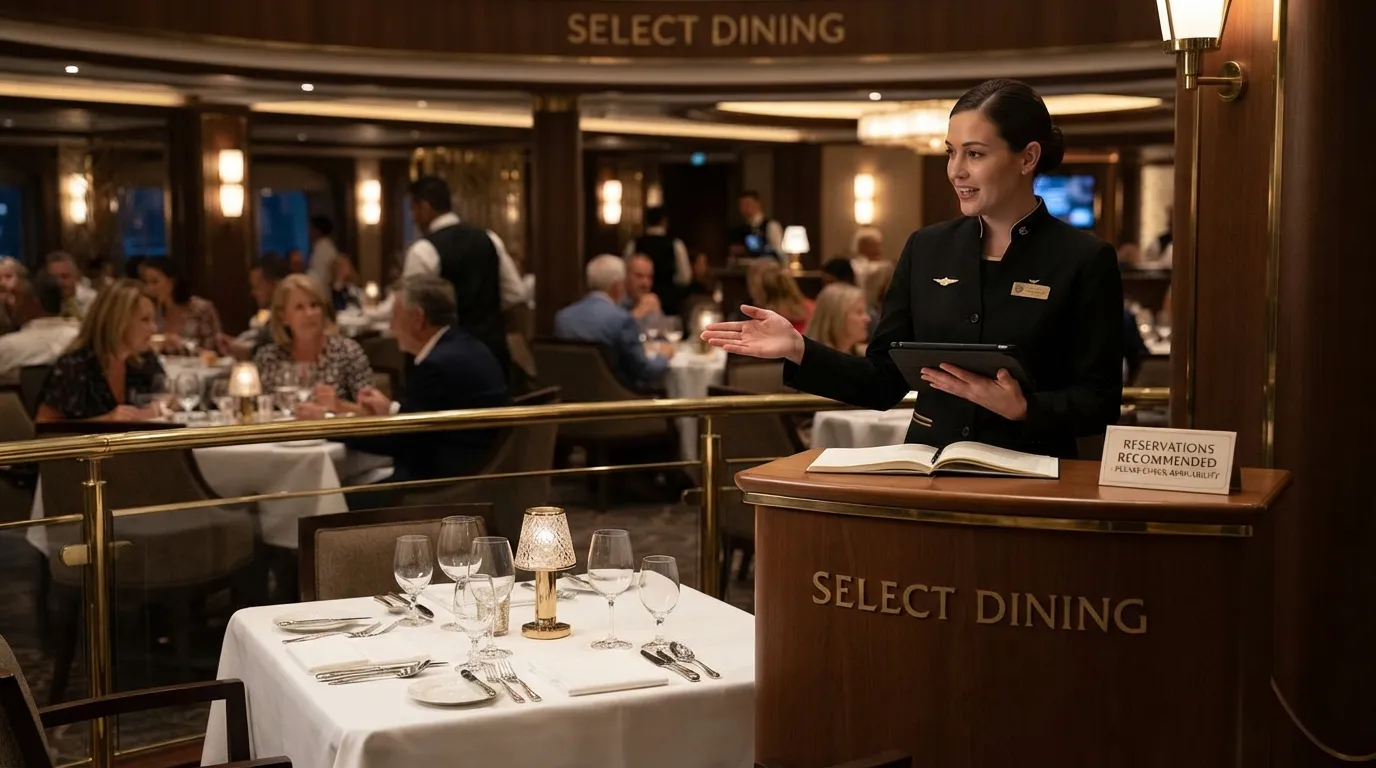
On flexible dining plans, the freedom has a catch. On Royal Caribbean’s My Time Dining, you can eat in the main dining room any time during dinner hours, according to availability, and reservations are strongly recommended.2 3
Specialty restaurants add a penalty. According to one 2026 Norwegian dining guide, NCL charges $10 per person for a no-show, and you must cancel or reschedule at least two hours before your booking.4
Flexible dining is only flexible if you reserve. Cancel at least two hours ahead if plans change.
The meals worth reserving are the ones that cost extra. The bigger mistake is paying for one while ignoring the dinner that’s already yours.
#3 – Skipping the Included Dining Room
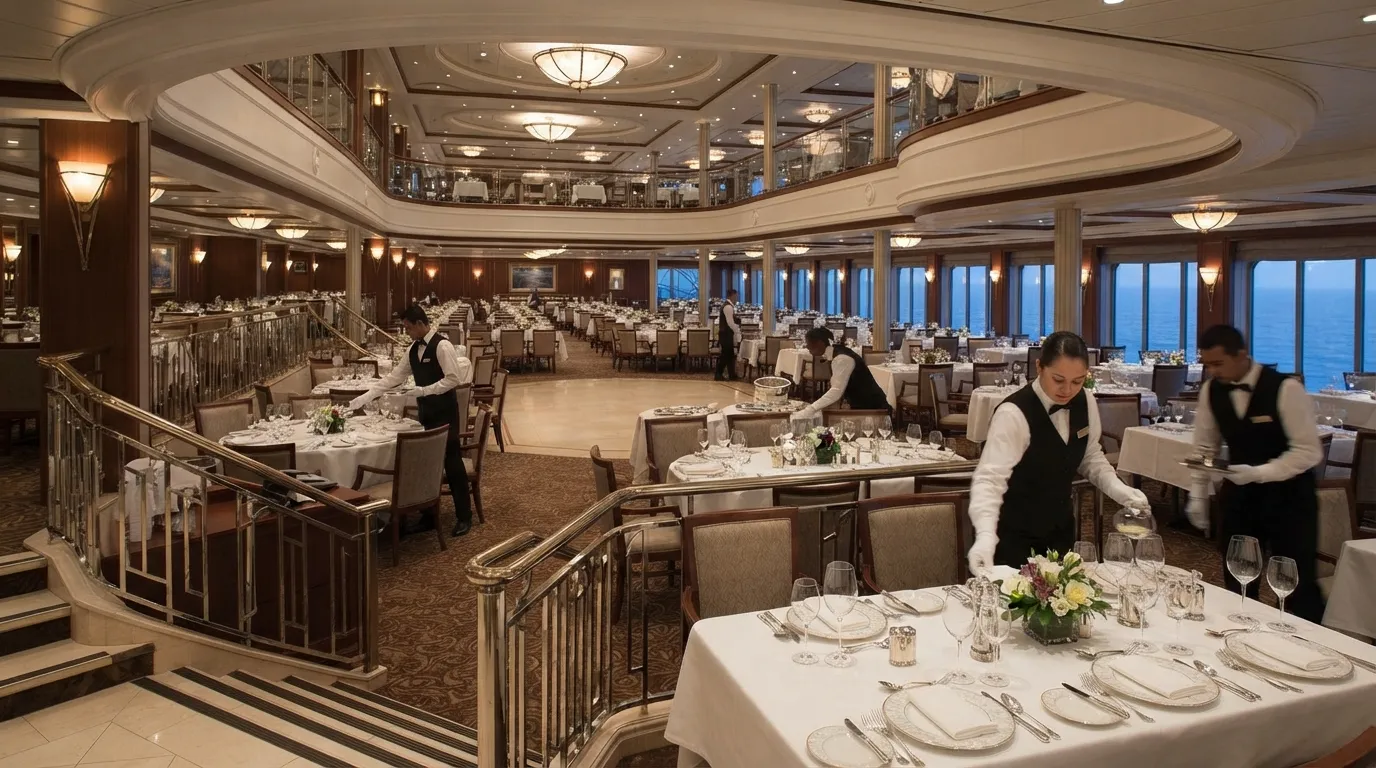
Some cruisers finish a seven-day sailing without once stepping through the dining room doors. That means skipping table service you’ve already paid for.
On Princess, for example, fine dining in the main dining rooms is complimentary. Try it on the first night, since checking it out early beats realizing on the last day that you never went.
Related Stories From Weather Fox

One chaotic first dinner shouldn’t end the experiment. Some guests write off the dining room for the rest of the cruise after a disorganized opening night, so give it a second evening before you decide.
That gratuity percentage points to a charge on your bill that guests misjudge in both directions, and it costs real money.
#2 – Misunderstanding the Automatic Gratuity
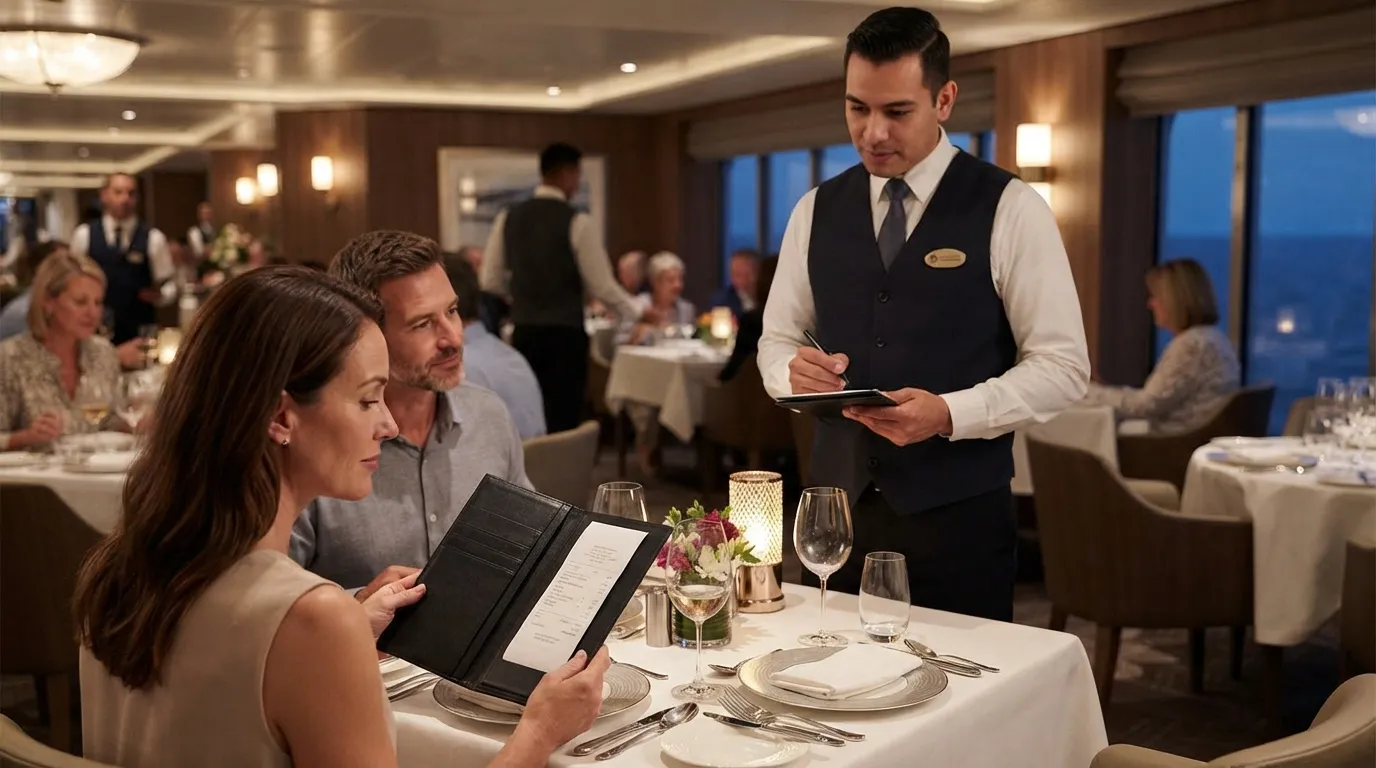
On mainstream lines, daily service charges run roughly $16 to $25 per person per day in 2026. Royal Caribbean, for instance, lists $18.50 for standard staterooms and $21.00 for suites.5
The second layer surprises guests on their folio. The automatic 18 to 20 percent added to bar drinks, specialty restaurants and spa services can’t be removed, only the flat daily charge can.6
Quick Compare
- Flat daily service charge: the one line that can be adjusted at guest services.
- Automatic 18 to 20 percent: built into bar, specialty dining and spa bills, and not removable.
- Extra cash: optional, best saved for service that stood out.
So that specialty dinner from #3 already includes its 20 percent, and a second cash tip doubles it. Don’t strip the daily charge over a small gripe, because it can be adjusted at guest services but is meant to pay the crew.5 6 Review your folio first, then add cash only for service that stood out.
All that money and attention goes to a team that can only protect you if it hears one thing before your first course arrives.
#1 – Not Telling the Dining Staff About Allergies on Night One
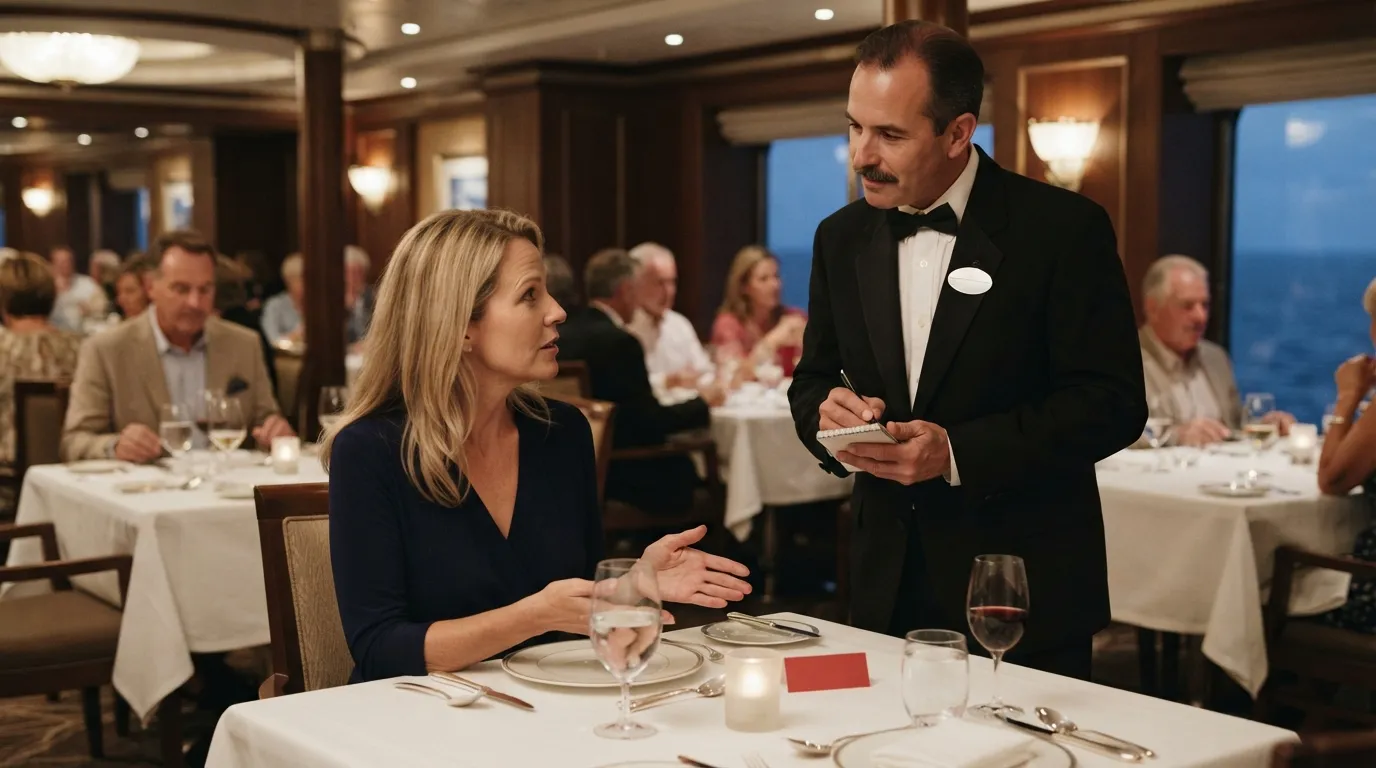
Cruise-line allergy guidance repeats the same instruction: confirm your dietary request with the head server at dinner on the first night, and remind your server at each meal. That applies even though food allergies should already be listed in the ship’s dining system.
The urge to avoid being a nuisance, the same one that keeps people quiet at #5, is risky here. Introduce yourself to the maitre d’ or head server on night one, then remind your server at every meal.
The room matters too. Allergies can best be accommodated in the main dining room, which is another reason to skip a buffet-only week.
Holland America adds that specialty restaurants often have more flexibility with advance notice, so ask about that venue before you book it.7 Talk with your doctor and your cruise line before sailing if you have a serious allergy, and carry your own medications.
Look back over all sixteen and a pattern shows. The dining room runs on routine, and the best moves are the early ones: the reservation, the first-night conversation, the quick word about a cold plate.
Treat the first evening as setup instead of a test, and ask for what you need while the room is calm. A waiter who hears from you early can shape the whole week.
Which dish on a cruise did you only try because a waiter pointed you toward it, and was it worth it?
- Azamara Onboard Dining: https://www.azamara.com/our-ships/onboard-dining
- Royal Caribbean Dining Information: https://deals.cruiselines.com/cruise_info/dining_line.cfm
- Royal Caribbean My Time Dining: https://www.royalcaribbeanblog.com/2025/06/12/royal-caribbean-my-time-dining
- Cruise Critic NCL No-Show Fee: https://www.cruisecritic.com/news/ncl-introduces-no-show-fee-for-specialty-restaurants
- Royal Caribbean Gratuity Policy: https://www.royalcaribbean.com/faq/questions/onboard-service-gratuity-expense
- Cruise Parrot Gratuity Clarification: https://cruiseparrot.com/royal-caribbean-clarifies-gratuity-policy-confirming-passengers-can-remove-additional-charges/
- Holland America Dining Venues: https://www.hollandamerica.com/en/us/faq/onboard-cruise-experience/dining/dining-venues