For years, the national story on air pollution in the United States was one of slow, steady improvement. Catalytic converters, cleaner power plants, and tighter emissions rules chipped away at smog year after year. That trend has started to wobble, and in a handful of states the numbers are now moving in the wrong direction, driven by wildfire smoke, extreme heat, population growth, and in some cases policy rollbacks that loosened emissions oversight.
The American Lung Association’s 2026 “State of the Air” report, along with EPA monitoring data and independent trackers like IQAir, paints a picture of uneven progress. Some states are still cleaning up, but others are backsliding in ways that show up in hospital visits, school absences, and hazy summer skies. Here are five states where the data points to a genuine decline rather than a temporary rough patch.
1. California

California has topped the worst air quality rankings for decades, but 2026 brought a fresh wrinkle: things are getting worse, not just staying bad. Ozone pollution in Los Angeles worsened from last year’s report[1], and the city remains the most ozone-polluted metro area in the country, a title it has held for all but one year of the 27-year history of the report. Bakersfield, meanwhile, keeps its own grim streak alive.
Bakersfield has ranked as America’s most polluted metro area for year-round particle pollution seven years running, per the American Lung Association’s 2026 report.[2] The Central Valley’s geography traps smoke and vehicle exhaust like a bowl, and wildfire seasons keep adding fuel to the problem. California tops the list for worst air quality at 11.7 micrograms per cubic meter, more than double the WHO guideline, a result the report attributes to high population density, industrial facilities, vehicle emissions and a climate that fuels frequent wildfires.[3]
2. Texas
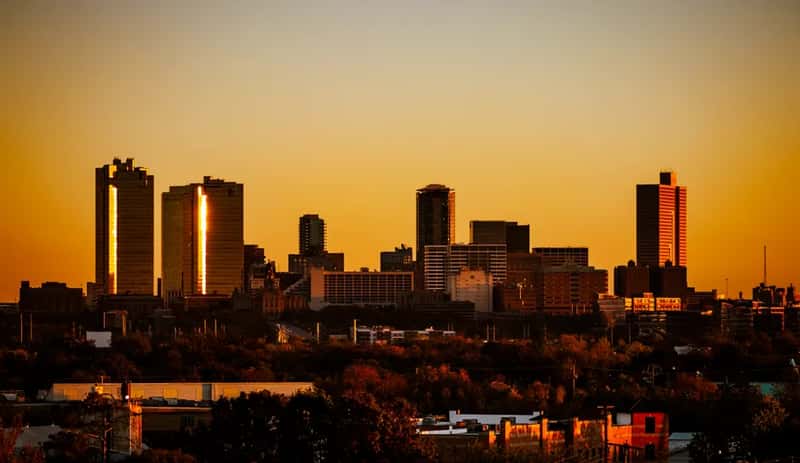
Texas has long dealt with industrial pollution around Houston and the Gulf Coast, but the newer concern is the Dallas-Fort Worth metro area, which had been showing modest gains before this year’s reversal. Air quality in the Dallas-Fort Worth metro area worsened, with residents exposed to more unhealthy ozone pollution, and the metro area was named 9th worst for ozone pollution, receiving an F grade.[4] That’s a meaningful step backward for a region that had been inching toward cleaner air.
The border cities tell a similar story. California’s Central Valley and Texas border metros posted the steepest particle pollution increases in the 2026 report.[2] Harris County, home to Houston’s petrochemical corridor, continues to struggle as well. For the year-round average level of particle pollution, the area’s worst county, Harris County, Texas, received a failing grade for pollution levels above the federal standard.[4] With more than five million children in the state living in areas with failing air grades, the stakes for Texas families are considerable.
3. Alaska
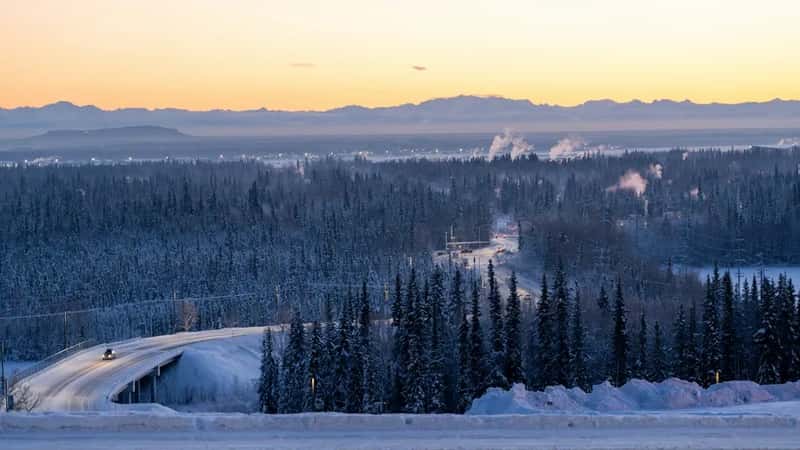
Alaska is the state that surprised even seasoned air quality watchers this year. Fairbanks, the state’s second-largest city, has overtaken California’s Central Valley cities for one specific measure. Fairbanks, Alaska, now holds the worst spot for short-term particle pollution, a title Bakersfield had improved enough to shed.[1] That’s a striking shift for a city that ranked far lower just a decade ago.
The cause is mostly local and seasonal rather than industrial. Wood-burning stoves in homes continue to be a major source of pollution in the area.[5] Combine that with temperature inversions common in Alaska’s winter valleys, and smoke gets trapped close to the ground for days at a time. Too many people in Fairbanks are living with unhealthy levels of particle pollution, which is causing kids to have asthma attacks, contributing to chronic health conditions, and making people who work outdoors sick.[6]
4. Oregon
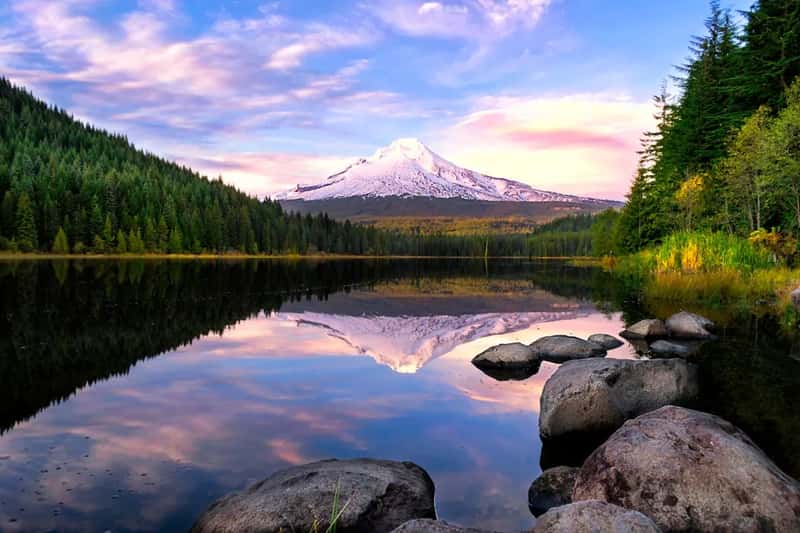
Oregon built a reputation over the past decade for clean, wet, forested air, but that reputation is being tested by increasingly intense wildfire seasons. Portland, historically one of the state’s brighter spots, is no exception this year. Air quality in the Portland-Vancouver metro area worsened slightly, with residents exposed to more unhealthy ozone and particle pollution, and the metro area was named 84th worst in the nation for ozone pollution, receiving a D grade.[7]
Smaller Oregon cities are faring worse than the state capital region. Fairbanks, Alaska, topped the list of cities with the most short-term particle pollution, followed by Eugene, Oregon, and Bakersfield, California.[8] That puts a mid-sized Oregon city in the same conversation as places long associated with the nation’s dirtiest air. Wildfire smoke drifting in from both in-state fires and neighboring California has become almost a seasonal fixture, undoing gains that took years to build.
5. Georgia
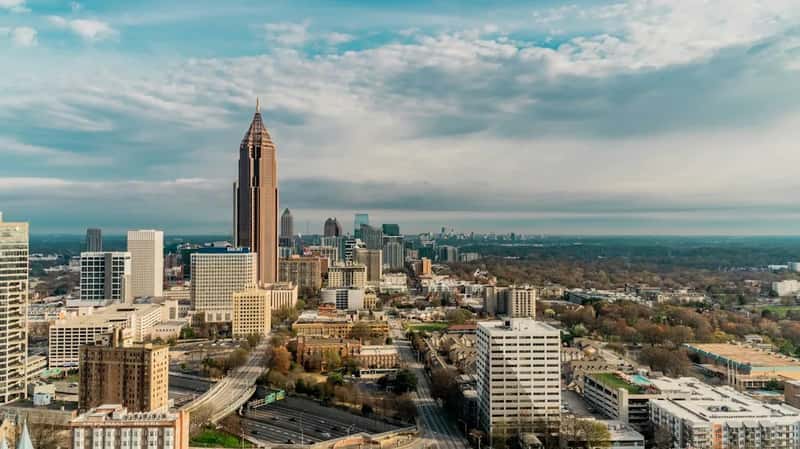
Georgia’s decline has a different flavor than the others on this list. It’s less about wildfire smoke and more about a regulatory rollback that could unwind years of progress. In April 2025, federal regulators exempted Georgia Power’s coal plants from emission regulations, a rollback that threatens to worsen already poor air quality.[9]
Atlanta remains the epicenter of the state’s air quality troubles. Georgia’s air quality index of 48.2 ties it with Ohio as having the second-worst air quality in the United States, with Atlanta continuing to struggle as the largest metro area in the state.[10] With the coal plant exemption now in place, environmental groups and public health advocates worry that any recent gains around metro Atlanta could quietly erode over the next few years, especially during hot, stagnant summer stretches when ozone tends to spike.
These five states don’t share a single cause. Wildfire smoke is reshaping the air over California, Alaska, and Oregon. Population growth and traffic are straining Texas metros that had been trending cleaner. In Georgia, a policy decision at the federal level threatens to reverse local progress before it even had a chance to take hold. Nationally, the American Lung Association’s 2026 report found that a large share of Americans, including nearly half of all children, live in counties that failed at least one air quality measure, a reminder that these five states are not isolated cases but part of a broader pattern worth watching closely in the years ahead.