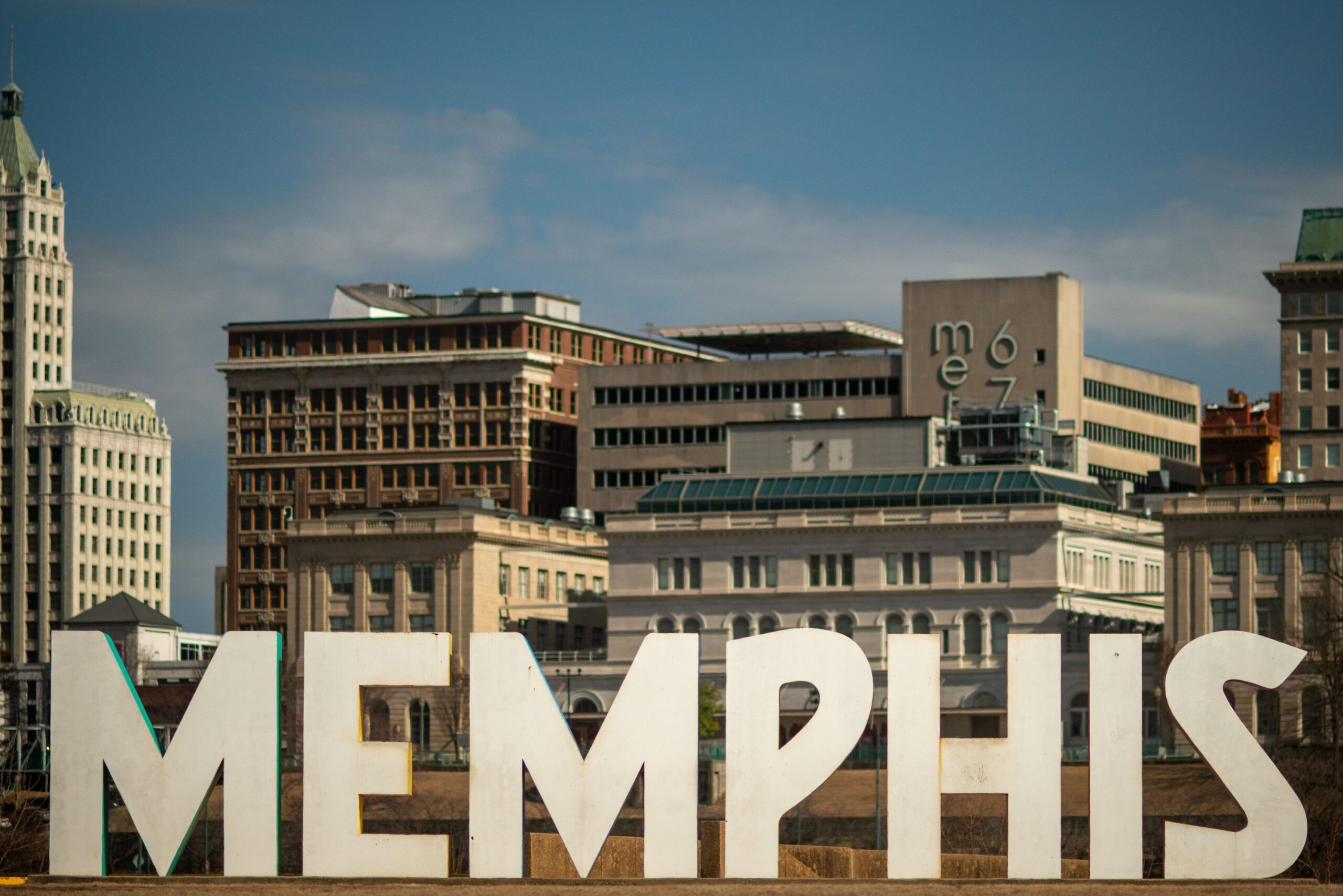
Few travelers plan a trip around crime statistics, yet plenty of them end up Googling “is it safe at night?” somewhere between booking the hotel and packing. Memphis, St. Louis, Detroit, New Orleans and Baltimore come up again and again in those searches. Their reputations are real, but they’re also out of date in some ways.
One caveat before we start. Public crime figures are almost always citywide and don’t break down by time of day, so they can’t tell you exactly what happens after dark. They do show where violence is concentrated, and that’s a reasonable starting point for judging risk. Nearly every city below has also improved sharply in the past two years.
Memphis, Tennessee

Memphis tops most national comparisons for violent crime among big cities. One 2025 analysis put its violent crime rate at 1,849.4 per 100,000 residents, more than five and a half times the national figure.[1] That national rate was 327.6 per 100,000, the lowest in 20 years[1], so the gap is a wide one.
The trend is moving the right way, though. Memphis recorded 184 homicides in 2025, which police said was 26% lower than in 2024.[2] Shooting incidents fell 38%, from 1,043 to 643.[2] Even so, a city that sat at an all-time peak of 351 homicides in 2023[2] is still recovering. Visitors who stay in well-patrolled entertainment areas and use rideshares late at night are taking sensible precautions, not overreacting.
St. Louis, Missouri

St. Louis is smaller than the other cities on this list, and its numbers are rough for that size. It recorded a murder rate of 47 per 100,000 residents in 2025, which SafeHome.org says is the highest for mid-sized U.S. cities.[2] One roundup says the worst of the violence falls on North St. Louis[3], which means it’s concentrated in specific areas rather than spread evenly.
Here too, the direction is encouraging. The St. Louis Metropolitan Police say 2024 had the fewest homicides in 11 years.[4] One 2026 roundup reports homicides fell roughly 22% in the first half of 2025.[5] Locals interviewed in a published roundup still advise staying in well-lit areas and avoiding walking alone downtown at night[4]. That’s anecdotal, but it matches the general advice for any city with this crime profile.
Detroit, Michigan

Detroit’s violent crime rate is still among the nation’s highest. A 2025 ranking put it second behind Memphis, at 1,649.1 violent crimes per 100,000 residents.[1] Compared with the national rate of 327.6, that’s a big gap, and it explains why the city keeps landing on “dangerous” lists.
The picture is more complicated than the headlines. Crime remains high compared with national averages, but violent and property crime are both falling, and 2023 brought Detroit’s lowest homicide count in 57 years.[6] Wikipedia’s summary of the city’s crime history notes that some downtown neighborhoods have seen a significant decline in crime, while the rate remains high in most of the city[7]. For visitors, that argues for staying in the revitalized core and being careful about wandering into residential areas after dark.
New Orleans, Louisiana
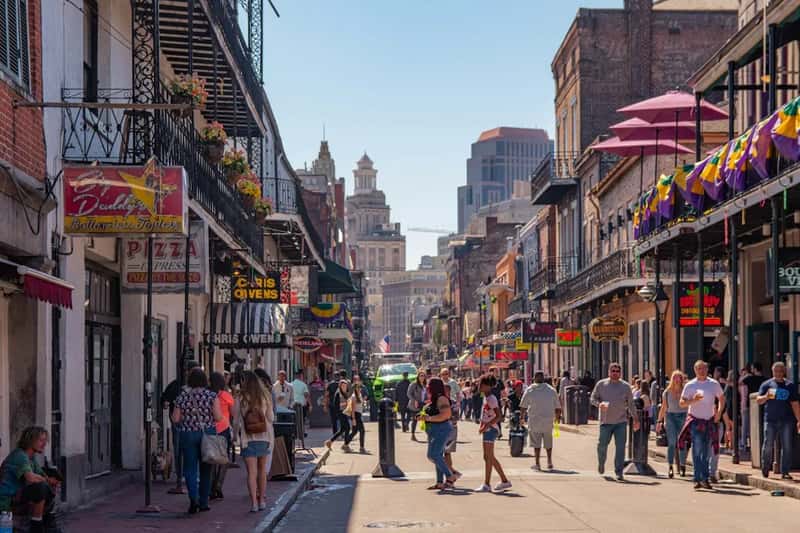
New Orleans earned its dangerous reputation. A mapping of homicide rates ranked it first, at 46 per 100,000 people.[8] The city also drew national attention after 14 people were killed in the New Year’s Day terror attack on Bourbon Street[9] in 2025. Heavy nightlife crowds and quiet back streets sit very close together there.
The recent data is much better than the reputation suggests. Homicides fell to roughly 105 in 2025, a 56% drop from the 243 murders recorded three years earlier.[10] One visitor guide says crime rates are concentrated in residential neighborhoods, not the tourist areas[11], and describes the main risks as pickpocketing in a crowd and the rare opportunistic robbery on a quiet, dark street late at night[11]. Another advises visitors to stick to well-lit main streets around Frenchmen Street and avoid empty side streets[12].
Baltimore, Maryland

Baltimore may be the biggest turnaround story here, though it hasn’t shaken its image. The city recorded 133 homicides in 2025, the fewest in nearly 50 years, a 31% decline from the year before.[13] Non-fatal shootings dropped from 423 to 311.[13] U.S. News & World Report also left Baltimore off its “Most Dangerous Places in the U.S. in 2024-2025” list[14], after years of it being a fixture.
Visitor areas haven’t been immune, though. A local report noted that in September 2025 police found an 18-year-old shot on East Pratt Street in the Inner Harbor area[15], and that incidents in entertainment districts highlight ongoing safety concerns[15] despite the falling totals. Even Baltimore’s mayor acknowledged that the work isn’t finished yet[14]. Sticking to busy, well-lit waterfront and neighborhood nightlife blocks, and avoiding late-night walks between them, is the practical approach.
None of these cities is off limits. Each has a real violence problem, and each has also posted significant declines in homicides over the past couple of years. The risk is also uneven. It clusters in particular neighborhoods and blocks, and tourist districts typically get more policing than residential areas.
A few habits cover most of the risk: check the specific neighborhood around your hotel, take rideshares instead of walking long distances late at night, and don’t leave belongings visible in cars. Reputations lag behind reality, but so does your own awareness if you ignore the numbers. A little homework before you go does more for your safety than avoiding a city altogether.