The world is in the middle of a tourism reckoning. The UNWTO predicts that by 2030, the number of worldwide tourists, which peaked at 1.5 billion in 2019, will reach 1.8 billion, likely leading to greater pressure on already popular spots and more objection from locals. Some of the most breathtaking places on earth are not just struggling with crowds – they are being slowly destroyed by them. The destinations below are either already implementing sweeping visitor restrictions, issuing hard caps on daily access, or facing such severe environmental and cultural damage that full or partial closure to the public before 2030 is a genuine and growing possibility.
1. Venice, Italy – A Sinking City Behind a Paywall
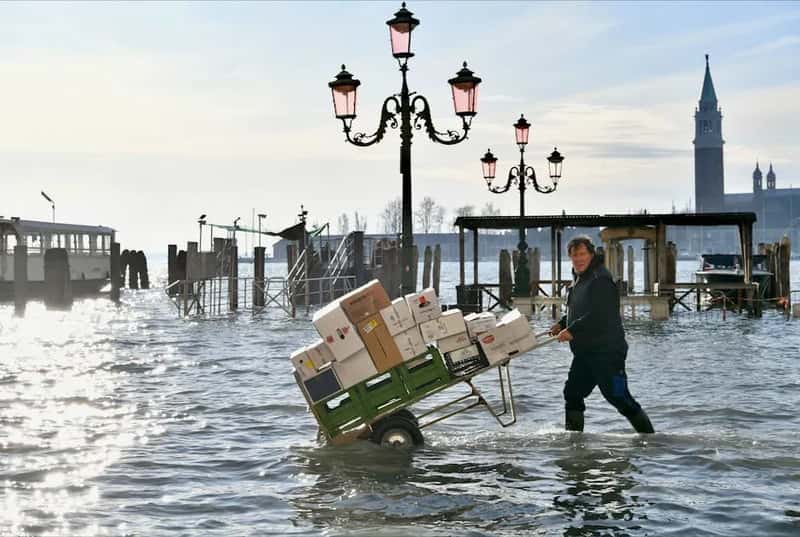
Venice experiences increasingly frequent “acqua alta” floods, with rising sea levels combining with natural subsidence to put 75 percent of the city underwater during peak floods. Massive cruise ships and over 30 million annual tourists strain the delicate infrastructure, while locals flee – the population has dropped from 175,000 in 1951 to just 50,000 today. The city is not just flooding physically. It is being hollowed out socially. Last September 2023, the number of tourist lodging beds actually surpassed the resident population for the first time.
In April 2024, Venice made headlines as the first city in the world to impose a €5 entry fee for day visitors. The experiment did not stop there. The Italian lagoon city will now increase the number of restricted days from 29 in 2024 to 54 in 2025, targeting peak travel periods in April, May, June, and July. Alongside the fee hikes, starting in June 2024, the city capped organized tour groups at 25 people when they visit the old city and nearby islands, and also banned loudspeakers to prevent confusion and disturbances. UNESCO has recommended that Venice be placed on the list of World Heritage in Danger, noting that “insufficient” measures have been taken to fight the deterioration of the site due to mass tourism and climate change.
2. Machu Picchu, Peru – An Ancient City Crumbling Under Footfall
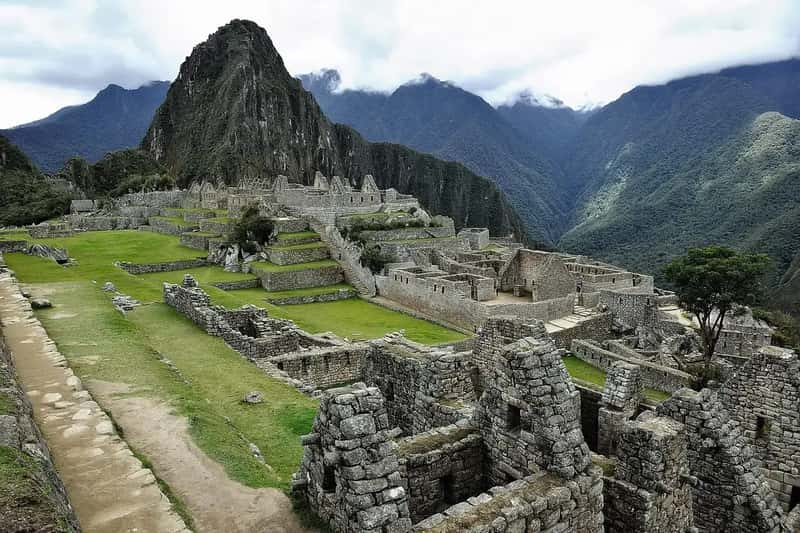
The number of tourists visiting Machu Picchu has jumped from less than 400,000 a year to over 1.4 million visitors in just 20 years, and this ancient Incan site simply was not built to handle it. The damage is no longer theoretical. In September 2023, Peru’s Culture Ministry announced that it would limit tourist access to Machu Picchu after measuring an alarming increase in erosion caused by high footfall in recent years. Although the weather factors into Machu Picchu’s erosion, the majority is caused by tourism. The citadel is thought to have housed around 750 people when it was built during the Inca Empire, and now it has been receiving almost 4,000 visitors per day for the past few decades.
Key sections of the site are already shut. Starting June 2, 2024, access to the Intihuatana was permanently restricted, a decision made to protect this fragile and significant structure from potential damage. UNESCO and Peru are implementing emergency climate adaptation measures costing $50 million or more through 2027. In 2024, unscheduled closures increased by 35% compared to the 2010-2020 average, disrupting thousands of planned treks. Peru has also placed a firm daily cap on visitors: only 5,600 people in the high season and 4,500 in the low season can enter daily.
3. Barcelona, Spain – A City Telling Tourists to Go Home
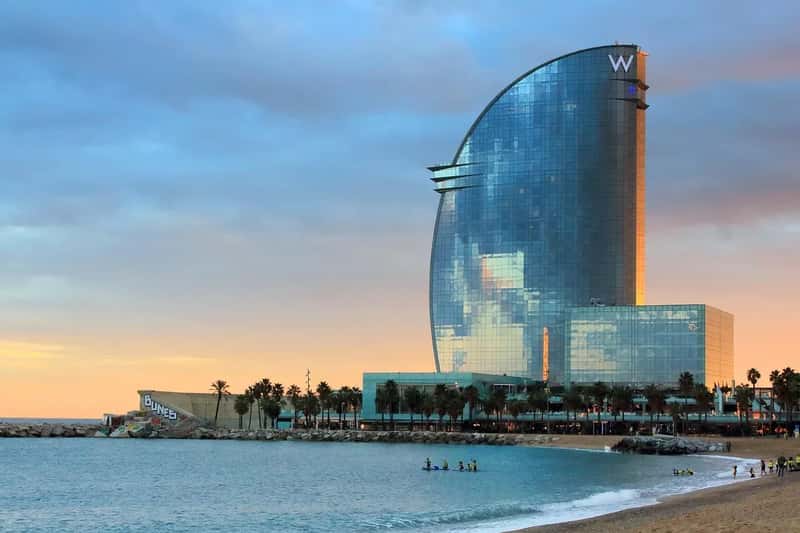
An estimated 32 million tourists visit Barcelona each year, yet the city has a population of just 1.6 million. The mismatch between residents and visitors has become explosive. The BBC reported that while overtourism has concerned residents of the most-visited locations for a while, in 2024 it felt like something had changed, with the anger among many locals reaching a new level. On June 15, 2025, large demonstrations were reported in Barcelona, where thousands of residents marched through central neighbourhoods chanting slogans such as “Your holidays, my misery.”
Authorities are now moving from protest to policy with serious teeth. In June 2024, Mayor Jaume Collboni said that he would end short-term rentals in Barcelona by 2028, aiming to reduce the impact on the housing market of landlords renting properties at inflated rates intended for tourists. Barcelona’s town hall stunned Airbnb and other platforms by announcing the elimination of all 10,000 short-term rental licenses in the city by 2028. The city also introduced measures to limit visitors to specific locations, including removing bus route 116 from maps, effectively reducing the number of visitors to the famous Antoni Gaudí-designed Parc Güell.
4. Santorini, Greece – Paradise Running Out of Water and Space
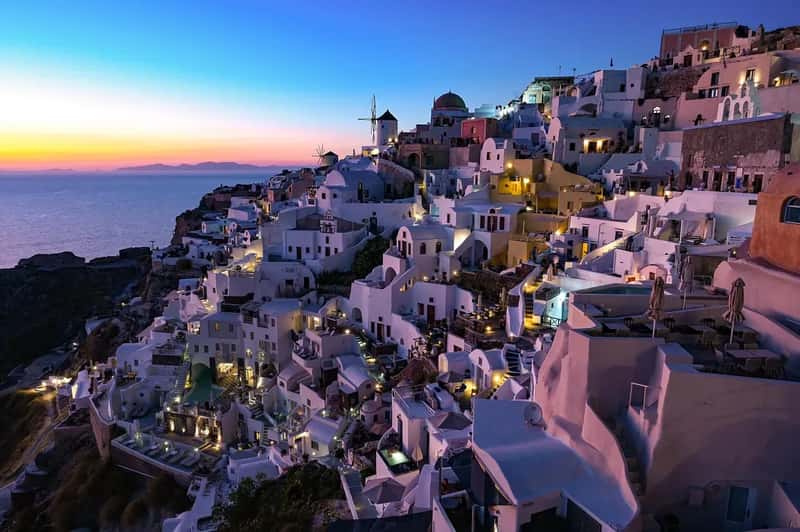
In 2023, the island hosted 3.4 million tourists and saw 800 cruise ships dock, all for a population of just 15,500 residents, making it one of the most overtouristed places in the world. The consequences are physical and immediate. The island has been pushed to its limit and is struggling to keep up with increasing waste disposal and water and energy consumption. Mayor Zorzos stated that “we don’t need more beds”; the problem wasn’t that the island lacked hotels, but that it had too many hotels with too many rooms and not enough water supply to support them.
To address this situation, Mayor Nikos Zorzos announced that starting in 2025, a daily limit of 8,000 cruise passengers would be enforced. New hotel construction has also been frozen. This new strategy aims to prevent damage rather than control it, by capping arrivals, pausing new hotel construction, and redirecting investment into public infrastructure and hazard mitigation. Some cruise and tour companies have voluntarily removed Santorini and Mykonos from their itineraries for 2025 and 2026. The island’s direction of travel is unmistakable – more restrictions, fewer visitors, and an increasingly managed entry system that points toward something closer to a protected reservation than an open tourist destination.
5. Mount Fuji, Japan – Japan’s Sacred Peak Under Siege

In 2024, more than 200,000 climbers visited Mount Fuji. With the growing number of international climbers in recent years, new rules were established in 2024, with the main objectives being to enhance climbing safety, protect the environment, and reduce congestion. A popular view of Mount Fuji was blocked in May 2024 to prevent tourists from taking selfies and inconveniencing locals, with a temporary barrier erected near a convenience store in the town of Fujikawaguchiko. The situation reflects a broader breakdown in visitor behavior at one of the world’s most recognizable natural landmarks.
Japanese officials introduced a mandatory ¥2,000 climbing fee in 2024 on Mount Fuji’s popular Yoshida Trail and capped daily access to 4,000 hikers to prevent unsafe “bullet climbs” and reduce waste. The fees are already rising: starting in 2024, climbers are required to pay a mandatory access fee of 2,000 yen to climb Mount Fuji, and in 2026, 4,000 yen is required. In Okinawa, UNESCO-protected Iriomote Island now limits daily tourists to 1,200, while Kyoto has banned tourists from entering private alleys in the Geisha district due to overtourism protests from residents. Japan’s broader approach signals a country systematically moving toward a managed, selective, and eventually much more restricted tourism model across its most iconic sites.
6. Dubrovnik, Croatia – The Walled City That Can No Longer Hold the Crowds
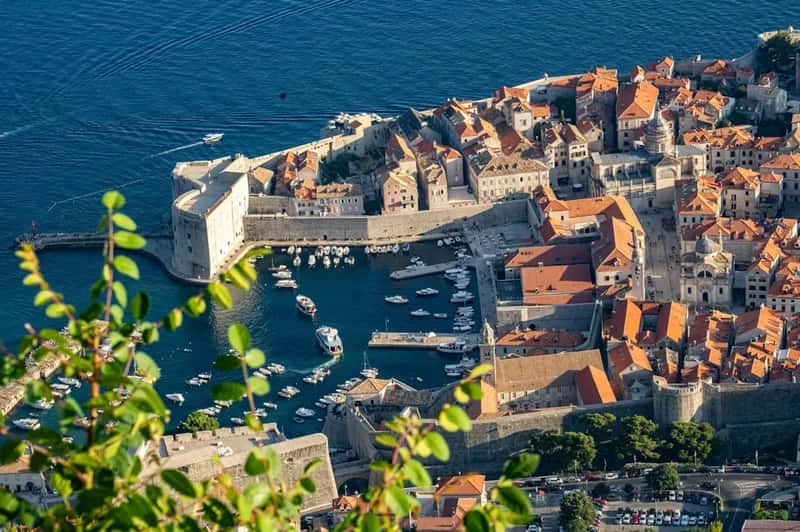
Dubrovnik holds the crown not just for being one of the most visited destinations in Croatia, but across all of Europe. Its global influence among tourists is unmatched, and beyond enthralling a stream of visitors interested in its historic neighborhoods and sapphire beaches, the city serves as a pilgrimage site for fans of “Game of Thrones” and “Star Wars,” parts of which were filmed there. That fame has become a burden. Dubrovnik has been attempting damage control for years, primarily since 2017 when UNESCO flagged concerns around overtourism that could have resulted in a withdrawal of the city’s heritage status.
After reducing the number of cruise ships, limiting rentals in the Old City, and cutting the number of tables and chairs in outdoor bars by 30 percent and the number of souvenir stalls by 70 percent, international and local companies have pushed back against the city’s mayor. For years, Dubrovnik has been a prime example of overtourism, with summer visitors far outnumbering the local population and the city administration repeatedly introducing measures to reduce the size and impact of a wave of tourists which transforms the historic center into a crowded car park for selfie lovers. Kotor, a comparable Adriatic UNESCO city, offers a preview of the trajectory – an estimated 500 large cruise ships, some carrying 5,000 people on board, dock there each year, and as a result, traffic congestion, rising housing costs, and environmental degradation are forcing some of the city’s 22,000 residents out of their UNESCO World Heritage Site homes. Dubrovnik is on the same path, with restrictions tightening every season and the window for unrestricted access narrowing fast.
Climate change is the primary threat to roughly 60 percent of disappearing destinations, causing glacial retreat, sea-level rise, coral bleaching, and extreme weather events. However, overtourism, resource exploitation, and political instability also play significant roles in different locations. The destinations above are not waiting for 2030 to act – they are already closing sections, setting hard caps, charging entry fees, and restructuring access in ways that look increasingly like permanent managed exclusion. The era of unrestricted mass tourism is coming to an end. Governments are realizing that a sustainable tourism model – one that prioritizes the environment and the resident over the visitor – is the only way forward.