Canada has built its tourism identity around wide open spaces and quiet corners where a person can supposedly get away from it all. That promise is getting harder to keep in a handful of places where visitor numbers have climbed faster than the roads, parking lots, and housing stock can absorb them. The timing matters too, since the federal government’s decision to bring back free national park access through the Canada Strong Pass for summer 2026 has only added fuel to a conversation that residents in several towns have been having quietly among themselves for years.[1]
None of this means these towns want visitors gone entirely. Tourism pays the bills in most of them. What’s changed is the tone of the conversation, moving from polite signage about respecting private property to public hearings, resident surveys, and pointed opinion pieces about who a place is actually for.
Banff, Alberta
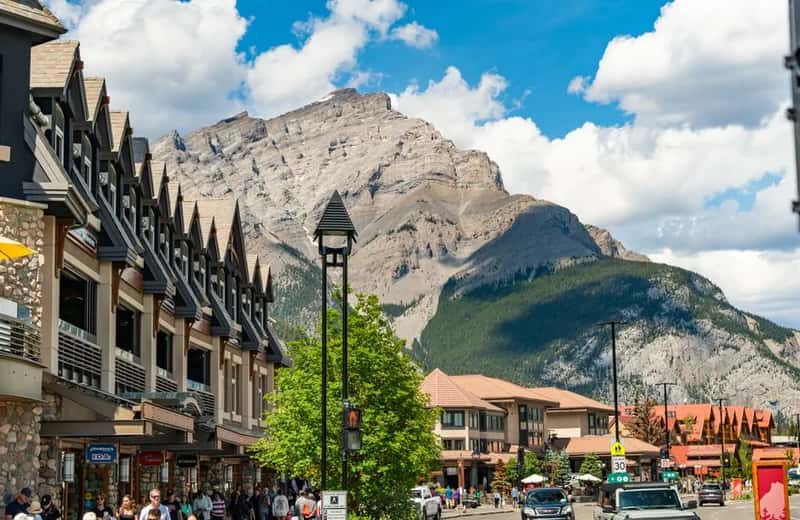
Banff is often cited as the textbook example of a mountain town loved almost past the point of comfort. Banff might be the clearest example of a town loved almost to the point of exhaustion, with nearly four million people visiting Banff in 2024 alone.[1] That’s a staggering ratio when you consider the town itself has just over eight thousand permanent residents, with 694,127 independent visitors arriving in July alone.[2]
The frustration isn’t just anecdotal anymore. A resident satisfaction survey from May 2025 showed that while 95 percent of residents remain satisfied with their quality of life, more than one-third of respondents reported a decline over the previous three years, with participants frequently pointing to rising costs, tourism, and overcrowding as the primary factors.[1] A separate community assessment found that living where the world visits was taking a toll on residents, with growing frustration and resentment among many of Banff’s 9,000 residents.[3] Locals continue showing up to council meetings, and as recently as September 2025 residents were once again imploring council to deal with overtourism they say is hurting the quality of life in the national park community.[4]
Tofino, British Columbia
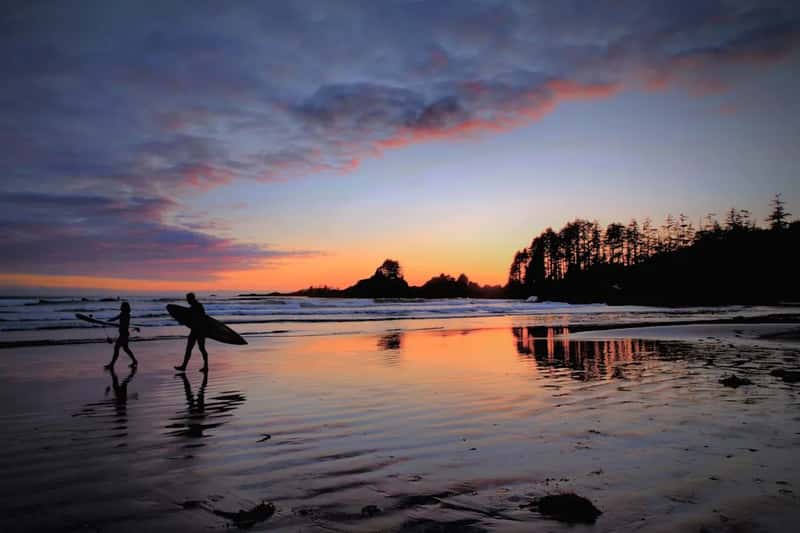
Tofino built its reputation on isolation, a surf town perched at the end of a long, winding road on Vancouver Island. Tofino built its reputation as an escape, a quiet surf town at the end of a long, winding road on Vancouver Island, and that same isolation is now part of the problem.[1] The numbers tell the story plainly, since Tofino hosted more than 700,000 visitors in 2024, far outnumbering the 2,500 residents, turning this once-quiet fishing village into an international hotspot.[2]
A recent ranking of Canada’s most overcrowded summer destinations put Tofino near the top of the list, noting the coastal destination receives approximately 500,000 visitors annually compared with its population of around 2,500, working out to an estimated 110 tourists per resident during peak season.[5] Traffic has become the most visible symptom, as the single road leading into town often sees bumper-to-bumper traffic, and the local housing market has been hollowed out by short-term rentals.[1] Even with restrictions in place, growth hasn’t slowed much, since visitor numbers grew 4.2 per cent year over year, despite short-term rental restrictions and previously documented concerns about overtourism.[5]
Niagara Falls and Niagara-on-the-Lake, Ontario
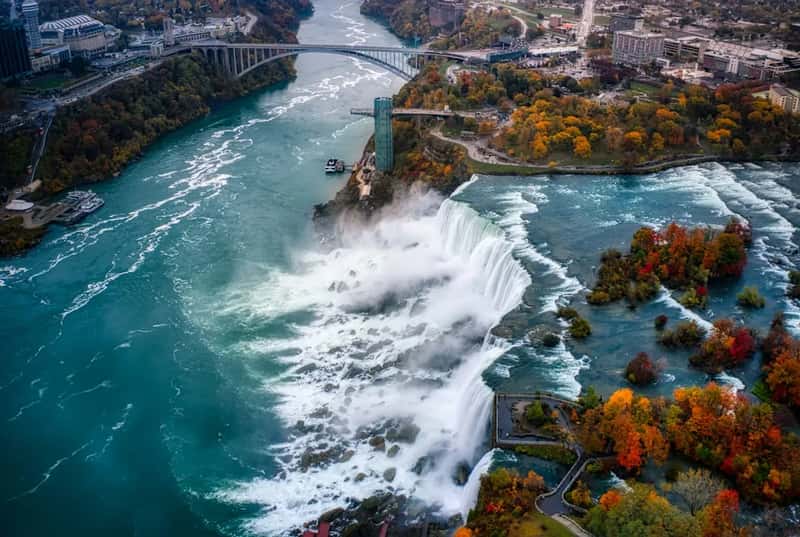
Tension between locals and tour buses in this corner of Ontario isn’t a new phenomenon. One tourism researcher pointed back decades, noting that residents in Niagara-on-the-Lake once resorted to pelting tour buses with rocks in the mid-1970s, after buses started driving through neighbourhoods to view the beautiful historic homes.[6] That history matters because it shows the friction between visitors and residents in this region has deep roots, not just a post-pandemic spike.
Today the strain looks different but is arguably heavier. There are over 40,000 people working in Niagara’s tourism industries, including accommodation, food services, arts, culture, recreation, and entertainment,[2] which shows how central visitors are to the local economy. At the same time, infrastructure in the Niagara region is being taxed to the limit, and local residents find themselves avoiding their own downtown cores during peak months to escape the gridlock and inflated pricing at restaurants.[7]
Peggy’s Cove, Nova Scotia
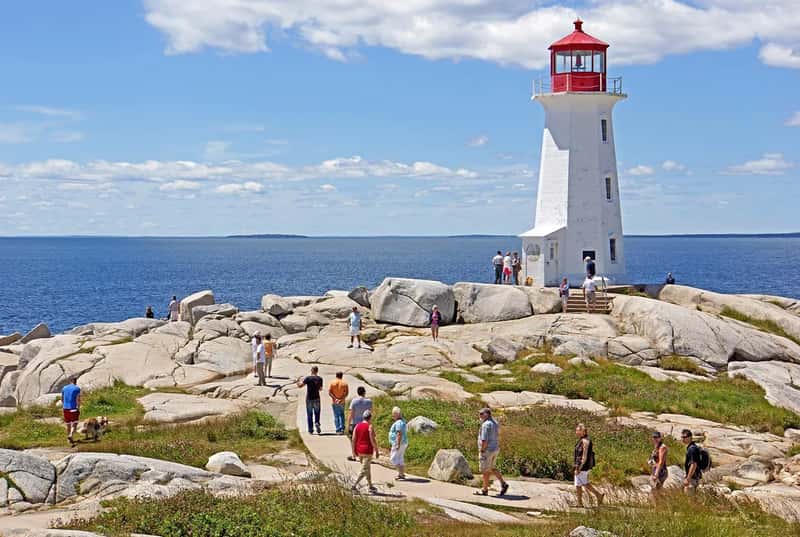
Peggy’s Cove is a tricky case because the town isn’t really a town in the usual sense. It’s a working fishing village with a population that can be counted in the dozens rather than the thousands, and Peggy’s Cove is an active fishing village and home to year-round residents.[8] Tourism boards themselves acknowledge the tension directly, reminding visitors that the community is not parkland and we ask that visitors respect the private property of residents.[9]
What makes this spot unusual on this list is that the frustration isn’t purely about crowd size, it’s about the mismatch between a tiny residential community and a landmark that draws bus tours year round. Provincial tourism materials themselves admit the friction, noting that Peggy’s Cove continues to be a destination that divides opinion but ultimately wins hearts, while the challenges of overtourism and safety concerns are real and significant.[10] The suggested fix leans on timing rather than restriction, encouraging visiting during off-peak hours, respecting safety warnings, and approaching the site with patience and awareness of its dual identity as both a tourist attraction and a living community.[10]
Old Quebec, Quebec City
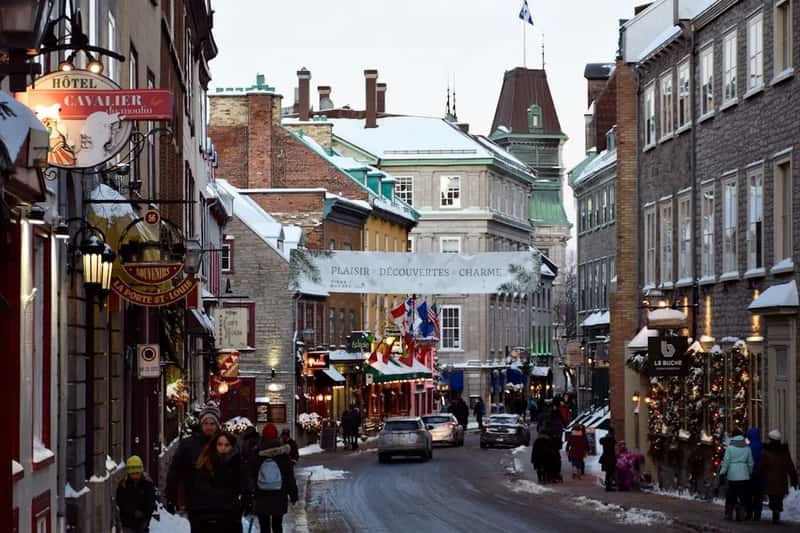
Quebec City’s walled old town is one of the most photographed neighbourhoods in the country, and that popularity has come with a cost residents have been raising for years. Every summer, the streets of Old Quebec, a UNESCO World Heritage Site, are packed with tourists, but some locals are up in arms, worried about the city being overrun by out-of-towners.[11] One local lawyer and urban planner working in the neighbourhood has been vocal about the risk that an influx of tourists will cause the area to lose its character and push longtime residents out entirely.
The population decline in the historic core has been notable rather than gradual. The Vieux Quebec neighbourhood has shed hundreds of residents over roughly a decade, a shift attributed in part to the pressure that constant tourist traffic puts on everyday life in a small, dense area. Peak summer months bring the familiar complaints found in most overtourism hotspots: crowded sidewalks, noise late into the evening, and a downtown that can feel less like a neighbourhood and more like a stage set for visitors passing through.
Prince Edward County, Ontario
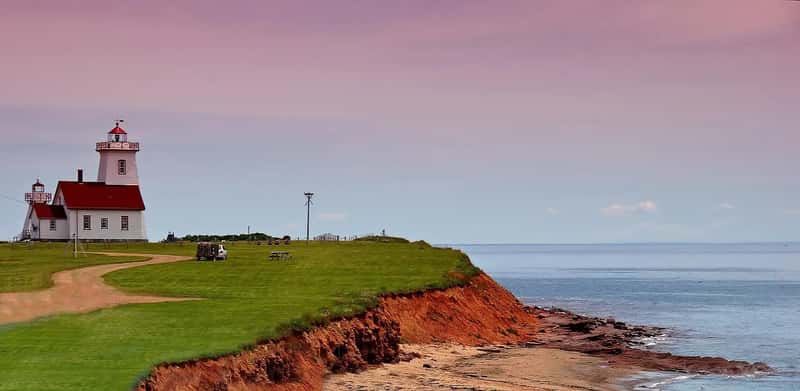
Prince Edward County built its modern reputation on wineries, beaches, and a laid-back rural charm that drew weekenders from Toronto and Ottawa. The trouble is that the county’s small towns, particularly Picton, weren’t built for the volume that reputation eventually attracted. As one local commentary on the shift put it plainly, Picton’s population is shrinking, yet we can’t find a parking spot.[12]
Staffing has become one of the sharper pain points, since stores have huge line-ups because they have trouble finding people to work in them, and low paid service workers can’t afford an apartment in town.[12] Local writers have argued the county should stop actively marketing itself as a destination, reasoning that the town can now save money by not advertising the County as a good place to go, since it’s very good to have tourists visit, it keeps the community vibrant, but there’s a point where it becomes too much.[12] The debate hasn’t resolved into policy the way it has in Tofino or Banff, but the sentiment among residents runs in the same direction.
None of these six places are turning tourists away at the border, and none plan to. What they share is a growing willingness to say publicly what used to stay in private conversations: that a beautiful place can be loved right past the point of being livable for the people who actually call it home. Whether that pushes any of them toward caps, fees, or seasonal limits in the next few years remains an open question, but the pressure to do something is no longer quiet.