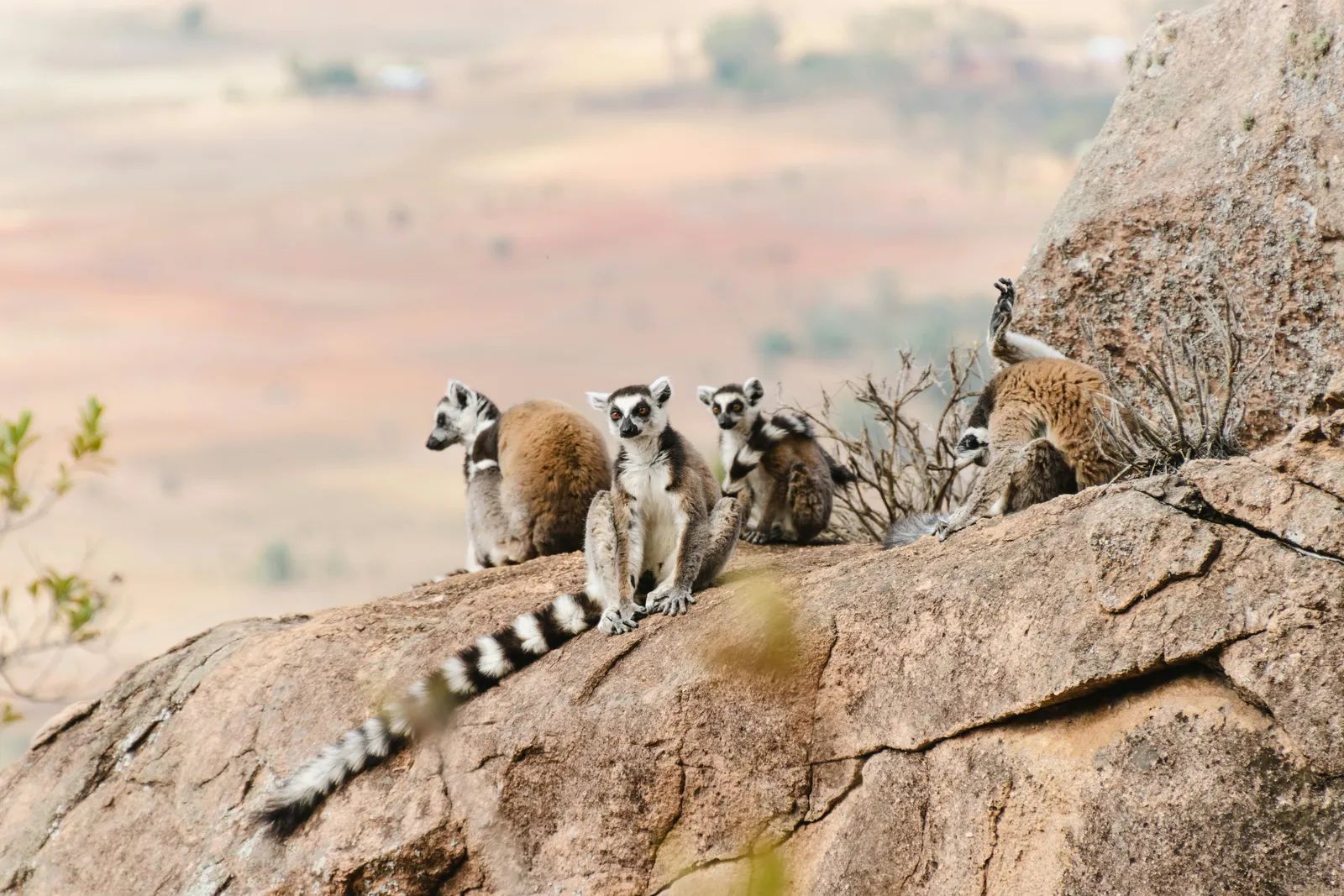
Madagascar stands apart as the sole home to more than 100 known lemur species. These primates, distinguished by their large eyes, pointed snouts, and long bushy tails, typically move through the island’s forests in sizable groups. Their entire existence remains tied to these trees, yet habitat loss and hunting have placed them among the world’s most threatened primate groups. World Lemur Day, observed on the final Friday of October, draws fresh attention to their situation each year. ([1])
A Landscape Once Connected, Now Fragmented
In eastern Madagascar, Andasibe-Mantadia National Park and the Analamazoatra Special Reserve together shelter roughly a dozen lemur species along with many other plants and animals found nowhere else. Continuous rainforest once linked the two protected areas. Large-scale clearing for agriculture and cattle pasture in the 1960s broke that connection, leaving scattered forest patches amid degraded land. The resulting isolation restricts animal movement and heightens risks to local biodiversity.
Efforts to Rebuild a Vital Corridor
A coalition of researchers, conservation groups, and nearby communities launched a reforestation initiative in 2023. The project targets restoration of 150 hectares of native forest to reconnect the two parks. By filling gaps between existing fragments, the work aims to reopen pathways for lemurs and other wildlife. Early progress shows promise, though success depends on sustained local involvement and careful species selection.
Invasive Trees Complicate Recovery
Restoring native forest remains essential, yet damaged areas in Madagascar often face takeover by invasive guava trees. Lemurs readily consume the fruit and spread the seeds, which can accelerate the spread of this non-native species. The same animals that benefit from restored habitat may unintentionally hinder the return of the original forest composition. Managers must balance these competing dynamics during planting and monitoring phases.
Why the Timing Matters
World Lemur Day arrives each year as a reminder of both the animals’ uniqueness and the narrow window for action. Continued pressure on their forest homes underscores the need for practical steps that address fragmentation and invasive species together. Projects already underway demonstrate that targeted restoration can begin to reverse decades of separation. The outcome will shape whether these distinctive primates continue to thrive in their only home on Earth.