Most Americans grow up thinking of a wide, warm smile as the universal language of friendliness. Flash those teeth at a stranger, and you’re basically saying, “I’m approachable, I’m happy, I mean well.” It works perfectly well in the U.S., Canada, Australia, and a handful of other nations. The problem? Roughly the rest of the world doesn’t quite see it that way.
There are places on this planet where your beaming, full-wattage grin will get you side-eyes, suspicion, or silent judgment. Not because people there are cold or unfriendly – far from it. It’s because cultures shape different scripts for social behavior, and as a consequence, different logics of nonverbal behavior and its social perception. What counts as warmth in Ohio might read as foolishness in Moscow or manipulation in Tehran. Let’s dive in.
1. Russia – Where Smiling at Strangers Is Basically Rude
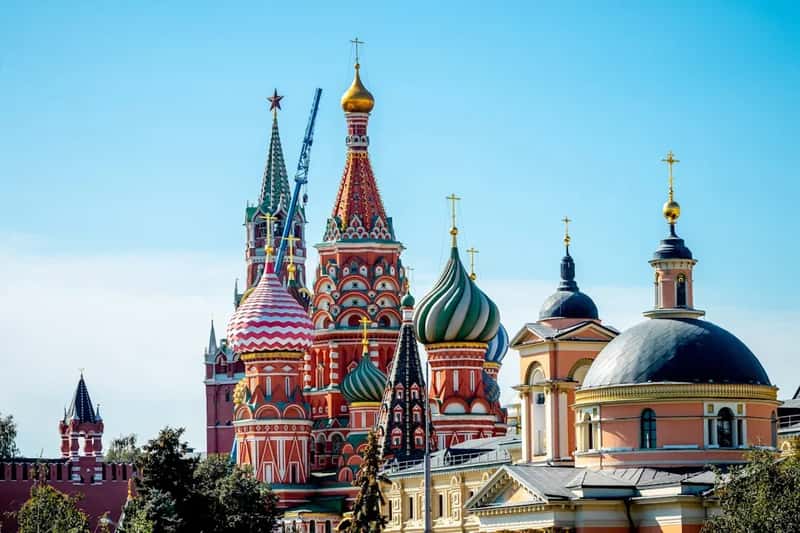
Let’s start with the country that arguably has the most famous anti-smile reputation on earth. In Russia, people do not smile because it implies that you are at best foolish or at worst, sneaky and manipulative. Even in candid family photos, adults often appear with stony, serious faces. There is nothing hostile about it. It is simply a deeply ingrained cultural norm, and the American grin cuts against it like a knife.
A well-known Russian proverb literally translates to: “smiling with no reason is a sign of stupidity.” That proverb is not just a saying – it reflects something genuine about how Russians interpret public emotion. In Russia, it can be considered poor taste to smile without a reason. Neutral faces are more common, especially when working or meeting new people. Smiles are seen as a more private view of the self that is reserved for close friends and family. So when an American walks in beaming like they just won a prize, locals may genuinely wonder what the catch is.
2. Japan – The Smile Means Something Completely Different

Japan is one of those places that genuinely challenges Western assumptions about facial expressions. Here’s the thing: Japanese people absolutely do smile. They just use smiles for very different reasons, and the wide American-style grin in the wrong context can feel jarring or even insincere. In Japan, smiling is a way to show respect or to hide what you’re actually feeling. Japanese culture uses nonverbal expressions around the eyes more than the mouth, which actually makes it easier for the Japanese to determine if a smile is genuine or fake.
The Japanese even have a term “Naki-warai” (泣き笑い) to convey crying while laughing, describing how Japanese people will be seen to smile when angry, sad, or embarrassed. They also smile when happy, which is bound to cause confusion. Meanwhile, research found that in Japan, smiling faces were considered significantly less intelligent compared to neutral ones. So walking into a business meeting or formal setting with that broad American smile may actually undermine your credibility before you’ve said a single word.
3. Norway – The Government Literally Warned About This

Scandinavia as a whole tends toward emotional restraint in public settings, but Norway stands out for something almost comically blunt. The Norwegian government humorously explained nuances of Norwegian culture by indicating that when a stranger on the street smiles at Norwegians, they may assume that the stranger is insane. Yes, that is an official government acknowledgment. Not exactly a warm welcome for a grinning tourist off the plane from Dallas.
According to the BBC, a government leaflet on working in Norway humorously warned that “you’ve been in the country too long if you assume smiling strangers are drunk, insane or American.” Honestly, that’s both funny and telling. Back in Norway, people rarely needed to communicate across cultural or linguistic divides. As a result, they didn’t need to adopt big, clear facial expressions – and the thought of doing so still feels weird today. The restraint is not coldness. It is simply a culture that never developed the same reliance on facial expressiveness to bridge social gaps.
4. Germany – Your Smile Might Make You Look Untrustworthy
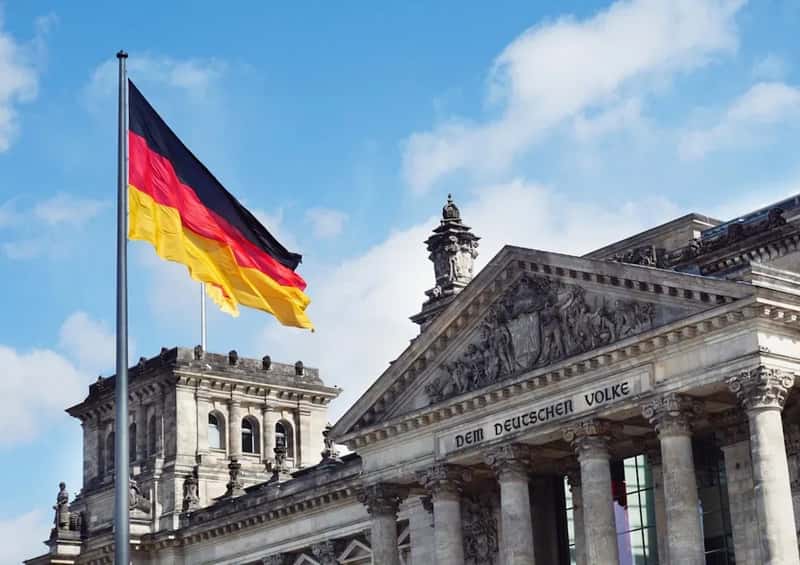
Germany has a reputation for directness and professionalism, and when it comes to smiling, that seriousness extends to the face. Smiling at a passerby in Germany will not usually elicit a smile in return. Some Germans find Americans too quick to smile and may perceive this as dishonesty or goofiness. Think about that for a second. The very thing you use to signal warmth and good faith gets interpreted as shallowness or insincerity. It’s a bit like bringing a hug to a handshake culture.
In Germany, professional seriousness is often expected, and broad smiling in formal or business contexts can be seen as unprofessional. Research published in the journal Frontiers in Psychology actually examined thousands of social media profile photos across countries and found that people from the former Eastern bloc and countries like Germany smilied far less in self-selected photos than their American counterparts. Despite the fact that 20 years have passed since the fall of the Berlin Wall, Internet users from a former Soviet bloc appear to smile less often than those from Western Europe, a pattern that likely still rings true today. Germans don’t distrust you personally. They just might want to see evidence that you mean business first.
5. Iran – Where Research Shows Smiling Can Signal Foolishness
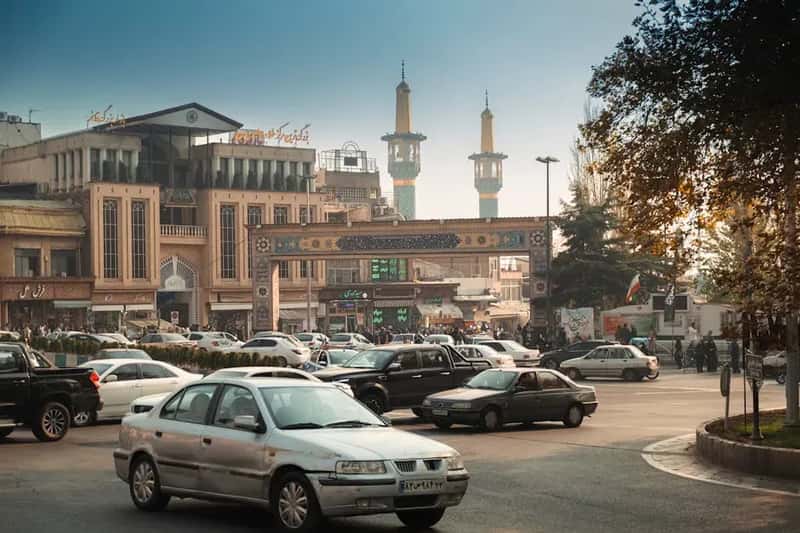
Iran is one of the most striking examples in the academic literature on cross-cultural smiling. This isn’t speculation – it has been formally studied. In investigating social perceptions of smiling, researchers asked 4,519 participants from 44 cultures across six continents to rate photographs of smiling and non-smiling individuals. They found that smiling was not consistently perceived as a signal of intelligence across all cultures. In six cultures, namely Japan, the Kerala district of India, Iran, South Korea, Russia and France, individuals were perceived as significantly less intelligent when smiling.
Countries like Russia, India, and Argentina associate dishonesty with smiling. These countries have cultures that rank lower on a cultural phenomenon known as “uncertainty avoidance” and tend to have instability with healthcare, the court system, and political environments. Because of this, they tend to have people that view the future as unpredictable and uncontrollable. A smile makes you look unwise to them, or causes them to be suspect, as if you have done something untrustworthy. In other words, where life feels precarious, an unprompted grin looks like you are not taking reality seriously. It is almost like laughing during a storm.
6. South Korea – Even the Local Proverbs Say It All
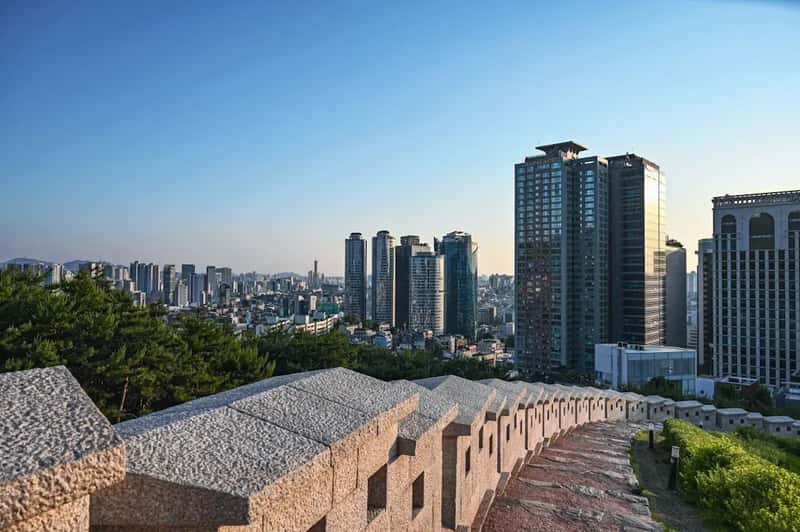
South Korea rounds out this list with a fascinating cultural attitude toward smiling that surprises many Western visitors. In South Korea, smiling faces were considered significantly less intelligent in controlled research studies. The cultural roots of this go deep into notions of dignity, composure, and social hierarchy. A perpetually grinning face may come across as frivolous, even childlike, in contexts that call for seriousness or respect.
A Korean saying goes: “He who smiles a lot is not a real man.” That is a direct cultural data point, not a fringe opinion. It reflects how emotional restraint in public has traditionally been tied to maturity, reliability, and strength of character in Korean society. Research shows that a smiling individual may be judged as less intelligent in cultures low on the uncertainty avoidance dimension, and that corruption at the societal level may further undermine the perception of smiling – in such societies, trust toward smiling individuals is reduced. So when an American tourist breezes through Seoul with that open, automatic grin, it can read less as friendliness and more as naivety.
What This All Really Means for Travelers

None of this means you should walk through the world with a permanent scowl. The bigger point here is that different cultures have different “soft rules” around smiling. Americans have a particularly wide, toothy smile, which can look kind of vulgar in some places where smiling with one’s lips is more commonplace. Awareness is the real travel skill. Adjusting is not fakery – it is respect.
According to research, countries that were built and populated with many different cultures coming together smile more often and more enthusiastically than more homogenous nations. When immigrants from many different cultures and languages come together, they often have to rely on nonverbal communication cues to make connections. The American smile, in this light, is not a personality flaw. It is a historical artifact. A product of a particular kind of nation-building. Still, knowing that “many people believe American smiles are inauthentic and manipulative, as well as deeply embedded in capitalism” should at least give any traveling American a moment of pause before defaulting to the automatic grin.
The next time you pack your bags for Russia, Japan, Iran, Norway, Germany, or South Korea, think of your smile the way you think about tipping etiquette or dress codes – something that means one thing at home, and something else entirely elsewhere. What expression would you instinctively wear walking into a room full of strangers? That default just might tell you more about your own culture than anyone else’s. What do you think – did any of these countries surprise you?