Tuition bills in the United States and the United Kingdom have gotten so steep that a growing number of students are looking elsewhere for a degree that won’t leave them buried in debt. It turns out several countries, mostly in Europe, still treat higher education as a public good rather than a business, and some of them extend that philosophy to students who were born nowhere near their borders. The catch, and there’s almost always a catch, usually involves a language requirement, a small administrative fee, or a policy that shifted in the last few years.
Below are six places where a college degree can genuinely cost little to nothing in tuition, even if you’re arriving on a foreign passport. Living costs still apply everywhere, so “free” here refers strictly to what universities charge for instruction, not to rent, food, or health insurance.
1. Germany
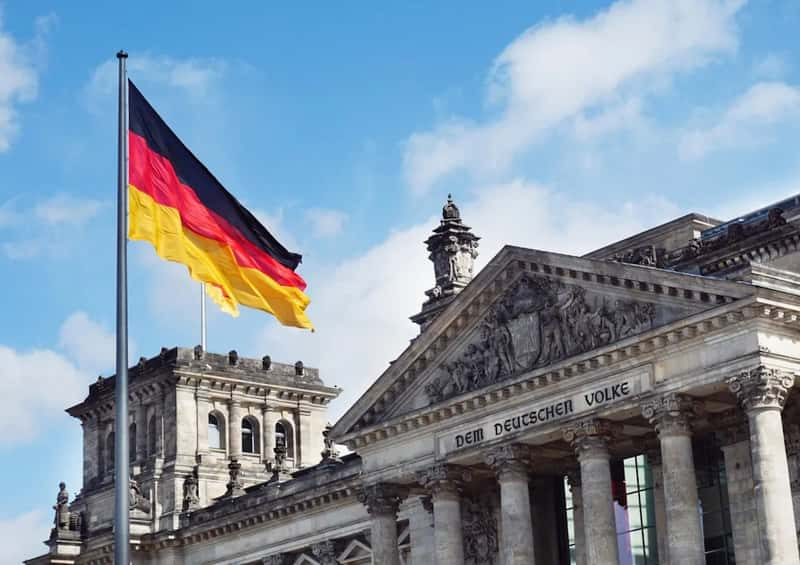
Germany remains the benchmark for tuition-free higher education, with public universities charging zero tuition fees in 2026 for international students of every nationality, at every level.[1] This policy dates back to 2014, when the country’s federal states collectively decided to scrap tuition across the public system rather than let individual universities charge for undergraduate or graduate study. Students still pay a modest semester contribution, which usually falls between 250 and 350 euros per semester and covers services like administration and often a public transport pass for the region.[2] That’s a fraction of what a single course credit might cost at a private American college.
There is one notable exception worth knowing about before you apply. In Baden-Württemberg, non-EU students pay about 1,500 euros per semester[2] rather than studying for free, a rule that state introduced on its own after the nationwide fee abolition. Everywhere else, a student from Nigeria, Vietnam, or Peru pays exactly what a German citizen pays, which is nothing beyond that small semester fee. Graduates also benefit from generous post-study options, since an 18-month job-seeker visa, the EU Blue Card, and the Chancenkarte create a clear path from graduation to permanent residency[3] for those who want to stay and work after finishing their degree.
2. Norway
Norway used to be the purest example of tuition-free education anywhere, and for decades it genuinely was free for absolutely everyone. All public universities in Norway were completely free for everyone regardless of nationality, so a Bangladeshi student, an American student, and a Norwegian student all paid exactly the same amount: nothing.[4] That changed abruptly, and the shift is important context for anyone researching Norway today. Norway introduced mandatory tuition fees for students from outside the European Economic Area and Switzerland starting with the 2023-24 academic year, ending a longstanding principle of free education[5], and the impact was immediate, with an 80 percent decrease in international enrollments[6] from outside the EEA following the change.
The good news is that a large slice of “foreign” students still study for free in Norway. Students from EU/EEA countries continue to study without paying tuition, while non-EU/EEA students must pay fees at most public universities as of 2023.[7] PhD candidates are exempt from the new fees regardless of where they’re from, since international students enrolled in PhD programmes in Norway are exempt from paying tuition fees.[8] The government has also been softening the rules further, and as of the 2025 reform, universities have been allowed to set their own tuition fees rather than charging the full cost of each programme, and some institutions have already reduced their fees significantly.[1] Everyone, regardless of nationality, still pays a small semester welfare fee of roughly 100 euros.
3. Iceland

Iceland rarely gets the attention Germany does, but it deserves a spot on this list because its policy genuinely covers everyone. Higher education in state-run universities is tuition-free for both Icelandic and international students, though you have to pay a registration fee to cover administrative costs.[9] That registration charge is the only real expense tied to enrollment, and it applies uniformly whether you’re a local student or someone who just flew in from another continent. Public universities in Iceland generally do not charge tuition fees, although students must pay annual registration or administration fees[10] that cover things like student services and exam administration.
The size of that fee is modest by any standard, with estimates putting it at around 750 dollars per year for international students[11] at public institutions. The flagship school, the University of Iceland, is a public institution and ranks in the top 2 percent worldwide[12], which is a solid return for a fee that barely covers a semester of textbooks elsewhere. The trade-off, as with most Nordic countries, is the cost of living, since Iceland’s remote location and small economy push everyday expenses higher than in mainland Europe.
4. Czech Republic
The Czech Republic offers a version of free tuition that comes with a genuine condition attached: you need to study in Czech. If you study a degree programme taught entirely in the Czech language at a public or state university, there are no tuition fees, according to the country’s Higher Education Act[1], and this rule applies to citizens and foreigners alike, with no distinction made based on passport. That’s a rare setup in Europe, where most “free for all” arrangements quietly carve out exceptions for non-EU applicants.
For students who don’t want to learn Czech before enrolling, the alternative is enrolling in a programme taught in English or another foreign language, where tuition fees run between 0 and 18,500 euros per academic year[1] depending on the school and subject. Many students split the difference by spending a year in an intensive Czech language course before starting their actual degree, which lets them access the free track afterward. It’s clearly working as a strategy, since over 50,000 international students choose the Czech Republic as their study abroad destination every year.[1]
5. Greece

Greece takes a constitutional approach to the question of free education rather than a policy-by-policy one. All education is free in Greece as mandated by the Greek Constitution[9], and that principle extends to public universities, which generally do not bill students for tuition the way private institutions do. This makes Greece one of the few countries where “free college” isn’t just a government incentive that could be reversed by the next parliament, but a baseline written into the country’s founding legal document.
The practical experience for a non-EU applicant can vary by program and academic level, so it’s worth double-checking the specifics for your chosen university and degree before assuming the guarantee applies exactly as it does for Greek or EU citizens. Public universities remain the main path to a genuinely low-cost degree, while private colleges and specialized institutes operate under separate, tuition-charging models. Popular public options for international applicants include the University of Crete, the National Technical University of Athens, and Aristotle University of Thessaloniki, all of which offer respected degrees inside the EU’s free-education framework.
6. Poland

Poland’s system rewards students who either integrate through language or compete for their spot. Full-time studies in the Polish language at state higher education institutions are free for Polish students and for foreigners who commence studies on terms applicable to Polish citizens, a group that includes EU/EEA citizens and holders of the Polish Charter, known as the Karta Polaka.[13] For students without that status, Polish universities have built a separate door in.
Several public universities run a “contest for the best foreign candidates,” where foreigners applying for programmes who aren’t otherwise entitled to study free of charge can compete, and those with the best qualification results won’t have to pay to study[14], spanning undergraduate, graduate, and long-cycle master’s programs. It’s a merit-based route rather than an automatic one, but it means a strong academic record can unlock a tuition-free Polish degree for students who hold no special citizenship status at all. For everyone else, Polish-taught programs remain comparatively cheap even when fees do apply, keeping the country firmly in the conversation about affordable European education.
None of these six countries hand out a completely cost-free experience once you factor in rent, food, insurance, and travel, and policies like Norway’s show how quickly a “free forever” promise can change once budgets tighten. Still, for students willing to learn a new language, meet a specific residency condition, or simply pick the right public university, these six countries prove that a debt-free degree from a respected institution is still very much possible in 2026. The smartest move before applying anywhere on this list is checking the individual university’s current fee page, since national policies can shift and exceptions like Baden-Württemberg or Norway’s reformed fee structure show that the details matter as much as the headline.