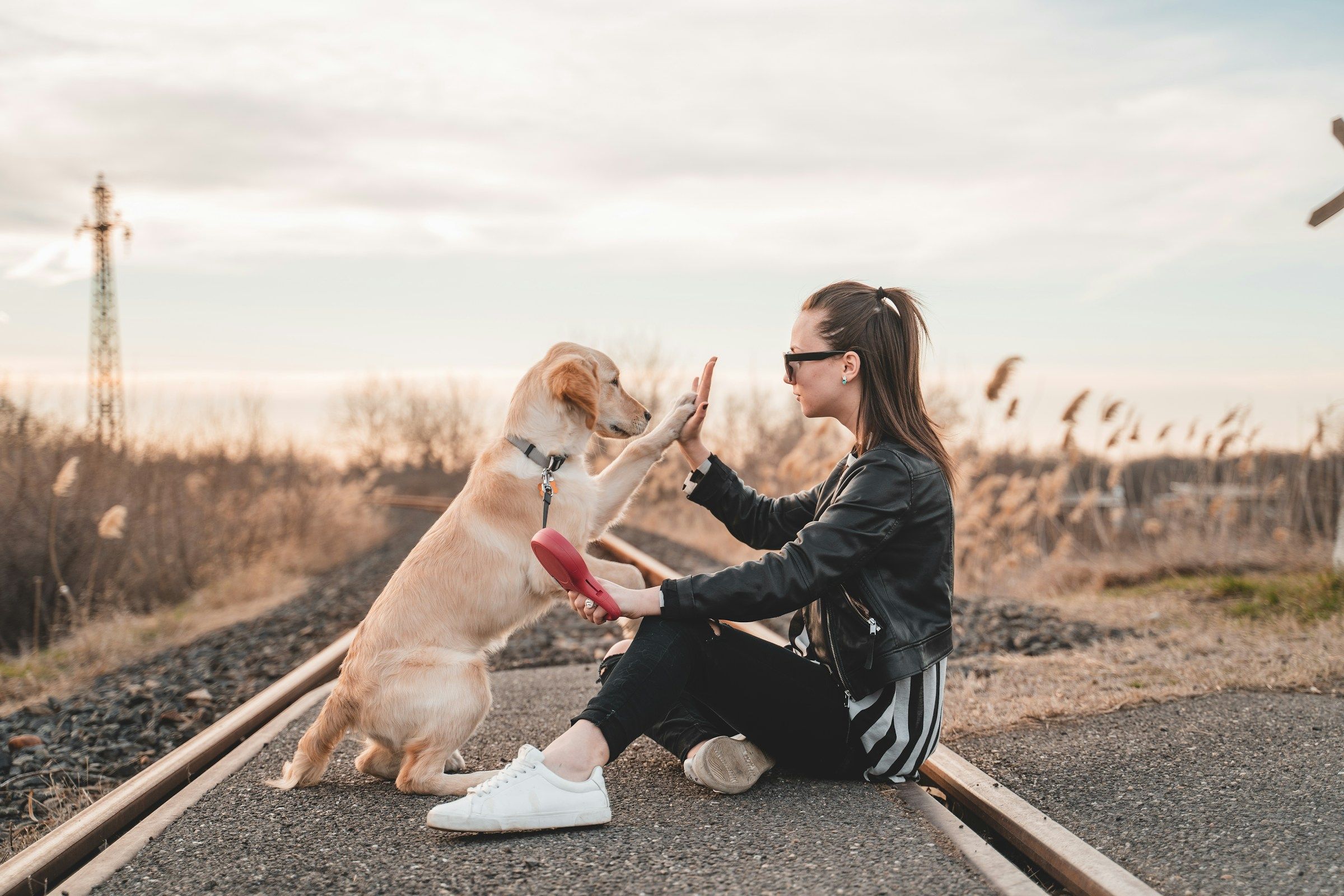
Dogs that hit the road often, whether for weekend trips, work commutes, or cross-country moves, start to behave differently than dogs who rarely leave the house. Anyone who has watched a well-traveled dog walk into a new hotel room and immediately flop down by the door versus a first-timer dog pacing and whining knows the difference is real. The shift isn’t magic. It’s a slow accumulation of learned responses, and researchers who study canine stress and behavior have documented several of these patterns in dogs who travel with some regularity.
1. They stop showing obvious stress signals in the car
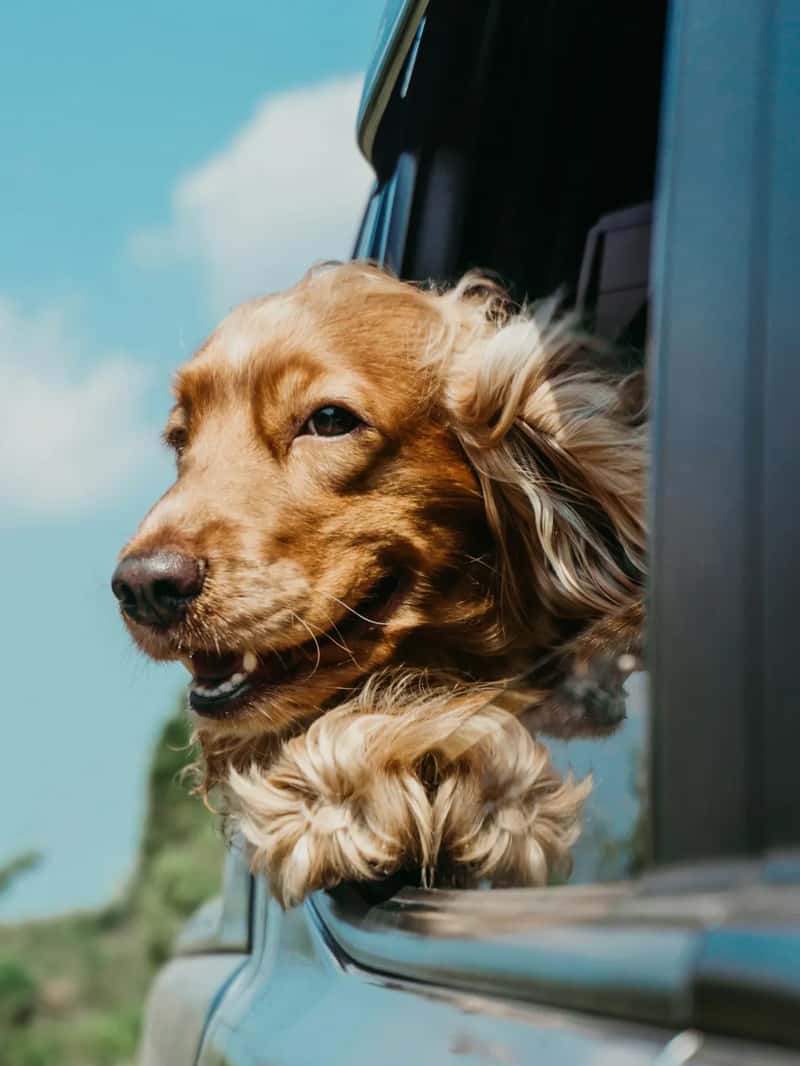
Dogs new to car travel commonly display a recognizable stress repertoire: lip licking, panting, restlessness, and attempts to climb or dig at the seats. These behaviors are among the most frequently owner-reported signs in dogs that respond negatively to travel.[1] Veterinary researchers have also linked these physical cues to measurable biological stress, since increases in cortisol, heart rate, and lip licking are generally the most consistent and reliable indicators of travel-induced stress.[1]
Dogs who travel often, though, tend to show fewer of these signals over time as their bodies adapt to the sensory load of a moving vehicle. This lines up with what’s known about habituation, the same process behind systematic desensitization training that behaviorists use for anxious dogs. A common and effective treatment approach to alleviate canine stress and anxiety is behavior modification therapy, where pet behaviorists guide owners through systematic desensitization and counter-conditioning.[2] Frequent, low-stakes trips essentially do this work automatically.
2. They pick up on departure cues almost instantly
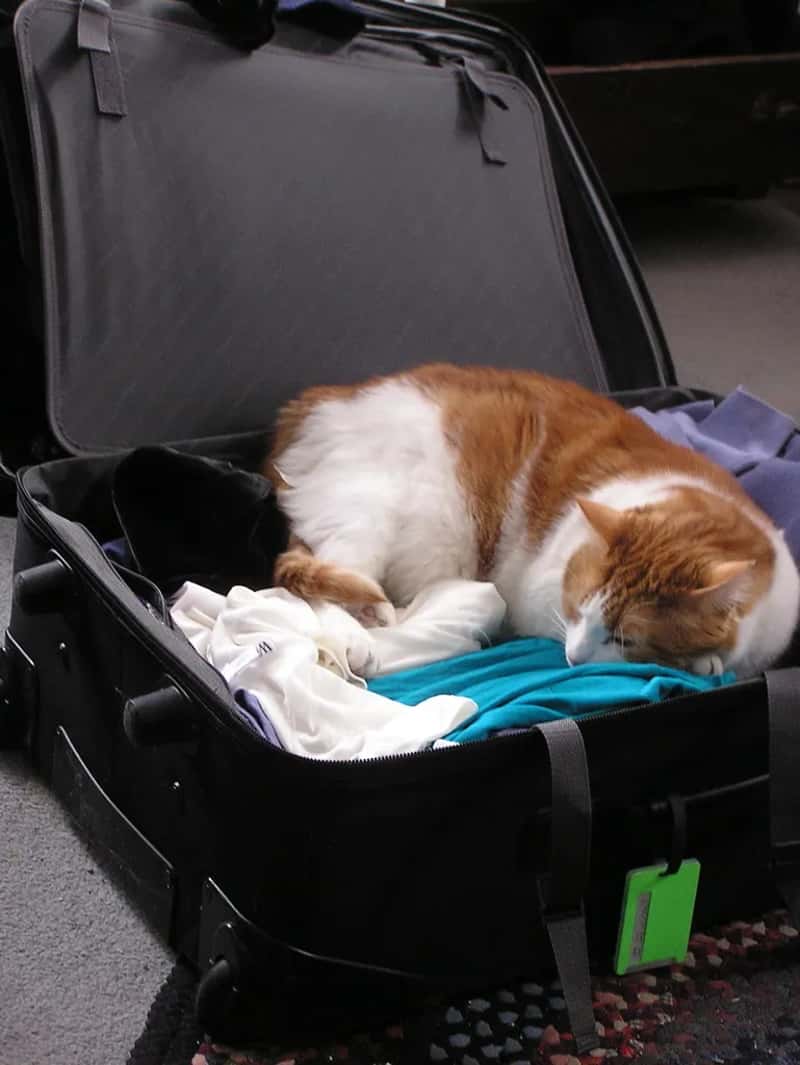
Dogs are pattern machines. A dog that rides along regularly starts associating specific objects and sounds, a suitcase zipper, a leash coming off the hook, keys jingling near the door, with an upcoming trip long before the car engine even starts. This isn’t unique to travel, but frequent travelers seem to sharpen the skill faster than dogs who only see a suitcase once a year.
The result is a dog who often beats you to the door or plants itself by the car before you’ve finished loading anything. It’s a small but telling habit, since it shows the dog has built a mental map connecting certain routines to a specific outcome. Owners of road-trip regulars often describe this anticipatory behavior as one of the more charming, if occasionally chaotic, side effects of frequent travel.
3. They develop a go-to resting spot or position
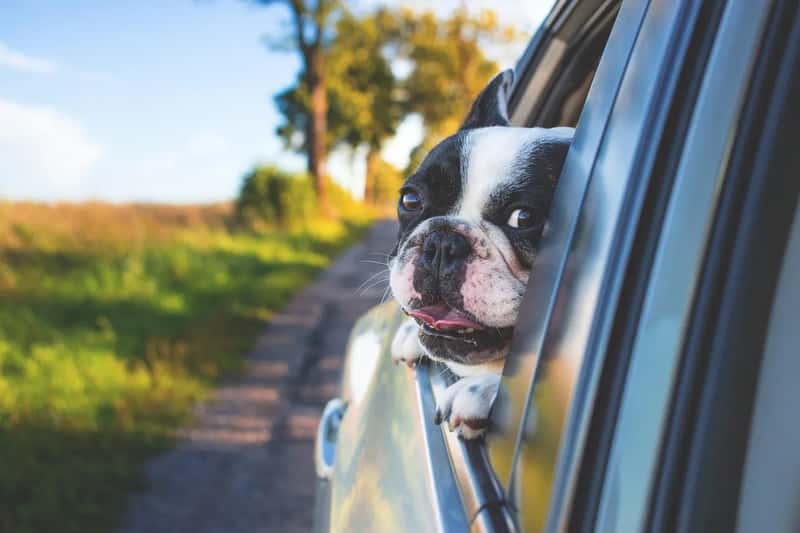
Dogs who travel a lot tend to settle into the same physical spot each time, whether that’s a particular corner of the back seat, a favorite travel crate, or curled against a specific piece of luggage. This preference isn’t random. It reflects a learned sense of where they feel most secure once the vehicle is moving, and consistency in that spot appears to reduce the vigilance behaviors tied to unfamiliar or shifting environments.
Comfort and containment also matter physically, not just emotionally. Research on working dogs has even examined how cage size affects comfort, safety, and the experienced security of dogs traveling in cars.[3] A dog that has traveled dozens of times in the same crate or harness setup usually settles into it faster than one encountering it for the first time, because the setup itself has become a predictable, safe container rather than a novel constraint.
4. They recover from novel environments more quickly
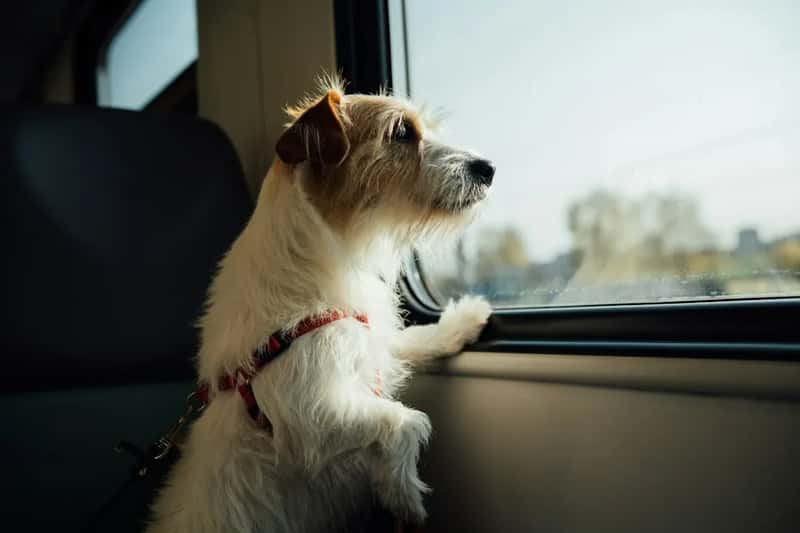
First-time travelers to a hotel room, campsite, or relative’s house often spend the initial stretch sniffing every corner, startling at unfamiliar sounds, or sticking close to the owner’s legs. Dogs with a travel history tend to move through that adjustment period faster. They still check out a new space, but the exploratory phase shortens with practice, and many settle into a nap or a familiar routine within minutes rather than hours.
This mirrors a broader finding in canine stress research, which is that repeated, non-threatening exposure to change tends to blunt the intensity of a dog’s physiological stress response over time. It doesn’t erase caution entirely. A dog that’s traveled widely will still notice something genuinely unusual, a strange smell, an aggressive stranger dog, a loud storm, but the baseline jumpiness around ordinary novelty tends to fade.
5. They sync bathroom and feeding rhythms to the road
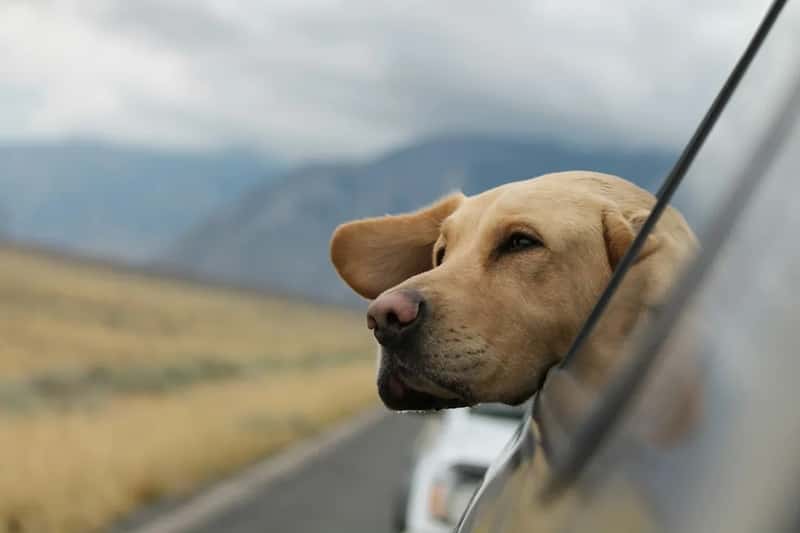
Dogs are creatures of routine, and frequent travelers learn to bend their internal schedule around whatever rhythm the trip demands. A dog used to regular road trips often learns to hold its bladder longer between rest stops, eat on a slightly compressed schedule, or adjust to eating in unfamiliar locations without much fuss. This is a practical survival skill more than an emotional one, but it’s still a habit built specifically through repetition.
Context matters here too. Dogs are taken on trips in the car on average three to four times a week, including visits to the vet, for walks, and to dog training, among other activities[4], according to research reviewed in a 2024 study on canine stress. Dogs logging that kind of frequency tend to build flexible internal clocks faster than dogs whose car rides are rare and unpredictable.
6. They check in with their owner more, not less

It’s a common assumption that a well-traveled dog becomes more independent, but the opposite pattern shows up just as often. Frequent travel tends to deepen a dog’s habit of glancing back at its owner in new settings, treating the person as a kind of mobile home base rather than relying solely on a fixed location. This check-in behavior, sometimes called social referencing, becomes more refined the more situations a dog has to navigate at the owner’s side.
Tourism researchers studying the growing trend of traveling with dogs have noted that the emotional bond driving these trips runs in both directions. Guardians traveling with their dogs consistently emphasize that both human and dog well-being and enjoyment matter, even as challenges around finding reliable dog-friendly information and managing perceived risks persist.[5] That mutual investment seems to reinforce the dog’s habit of staying attuned to its owner’s cues wherever the trip happens to lead.
Not every dog develops these habits at the same pace, and some individual temperament and breed tendencies play a role in how quickly a dog adapts to frequent travel. Still, the pattern is fairly consistent across owners who log a lot of miles with their dogs: repetition builds a kind of traveling confidence that shows up in smaller physical cues, faster emotional recovery, and a tighter behavioral bond with the person doing the driving.