You book a hotel room, see a reasonable price, and feel pretty good about the deal. Then the folio slides across the counter at checkout, and the total looks nothing like what you remember agreeing to.
That gap between the advertised rate and the final bill has become a familiar frustration for travelers in 2026, even with new pricing rules meant to fix it. Some charges are buried in fine print, others show up because of how hotels structure their billing systems, and a few are simply easy to forget about until the numbers are staring back at you.
1. Resort and destination fees

Resort fees are the charge most travelers have heard of but still underestimate. NerdWallet’s 2026 analysis of 160 hotels found an average resort fee of $33 per day, with typical U.S. ranges of $15 to $50 per night.[1] Other industry trackers put the national average closer to $42 to $43 a night once luxury and resort-heavy markets are factored in, which shows just how much these fees vary by property and location.
The fee itself covers things guests often assume are already included. A resort fee is a mandatory daily charge added on top of your room rate, and hotels say it covers amenities like WiFi, pool access, and the fitness center, though you can’t opt out of it and are charged whether you use those amenities or not.[2] Las Vegas remains the epicenter of this practice, where most major Strip hotels charge between $45 and $55 per night in resort fees before tax as of 2026[2], but the trend has spread well beyond casino towns into ordinary city and airport hotels.
2. Incidental authorization holds

Even if you never touch the minibar or order room service, your card can still take a temporary hit at check-in. An incidental hold is a temporary authorization on the traveler’s credit or debit card at check-in that covers potential in-room charges such as minibar, room service, and any room damage, and is released at checkout if unused.[3] It is not a real charge, but it can quietly reduce your available balance for days.
The amounts vary more than most guests expect. Many hotels place holds of about $50 to $250 per night, though the amount can vary by property.[4] Even after checkout, the money does not always reappear instantly, since most holds clear within three to seven business days after checkout, though Hilton states holds are released within 72 hours.[5] Debit card users tend to feel this the most, since those holds tie up real spendable cash rather than available credit.
3. Minibar and in-room sensor charges

The minibar has always had a reputation for absurd pricing, but the bigger surprise now is how automatic the billing has become. Many properties use weight or motion sensors that register a charge the moment an item is lifted, even briefly, before you’ve decided whether to actually drink it or eat it. Minibar items can also be expensive, and some properties post a charge automatically when an item is removed or moved for a set period.[6]
That system leads to plenty of disputed charges for snacks that were picked up, inspected, and put right back. It also means guests who store their own drinks or medication in the minibar fridge can accidentally trigger a fee without buying anything at all. The safest move is a quick call to the front desk before using the fridge for personal items, since asking upfront avoids an awkward conversation at checkout.
4. Parking and valet fees
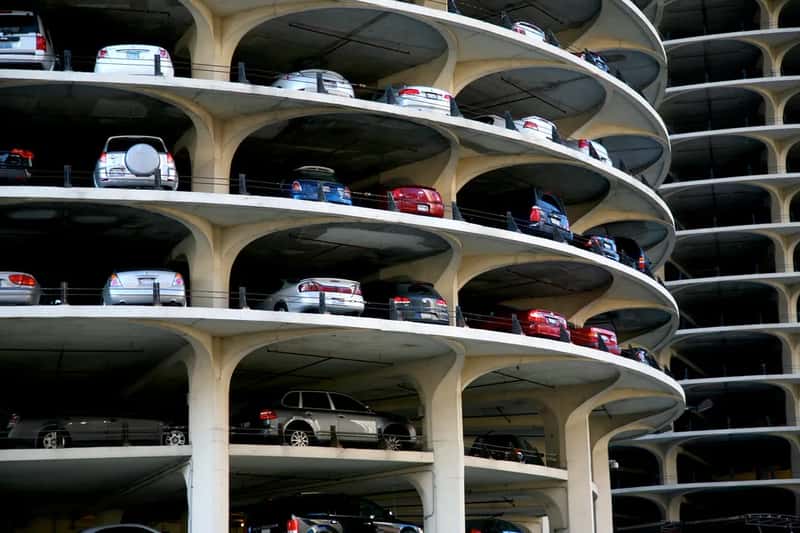
Parking has quietly become one of the more expensive line items on a hotel bill, especially in cities and at resort properties. The use of the hotel’s parking garage will incur a cost[7], and in many markets that fee is separate from, and sometimes larger than, the resort fee itself. Valet service usually costs more than self-parking, and gratuity for valet staff is often expected on top of the posted rate.
Urban and airport hotels are frequently the worst offenders, since parking fees are especially heavy at urban and airport hotels, and these add up fast.[5] Travelers who rent a car for part of a trip and then park it at the hotel for a few days sometimes end up paying more for parking than they did for the rental itself. Checking the parking rate before arrival, rather than assuming it’s included, can prevent an unpleasant surprise on the final bill.
5. Early check-in and late checkout fees

Arriving a few hours before the standard check-in time or lingering past checkout can feel like a small, harmless request. Hotels increasingly treat it as a billable service instead. Requests for early check-in or late checkout outside the standard schedule may have a flat or hourly fee.[6]
The charge is rarely mentioned during booking, since it depends on room availability and staffing on the day of arrival or departure. Some properties waive it for loyalty members or suite guests, while others apply it consistently regardless of status. Asking about the policy at check-in, rather than assuming flexibility is free, is the simplest way to avoid an unplanned charge showing up on the folio.
6. Local taxes and tourism assessments stacked on top

Even after the room rate and mandatory fees are settled, local government charges can still reshape the total. Hotel taxes are applied as a percentage of the base room rate and vary by state, county, and city in ways that can add 12 to 19 percent to the advertised nightly rate depending on the market.[3] These taxes often stack on top of resort fees rather than replacing them, which compounds the final number.
Some destinations have pushed these rates higher heading into 2026. Hawaii’s tax on hotel rooms increased by 0.75 percent, bringing the total levy to 11 percent, San Diego’s hotel-room tax is climbing to as high as 13.75 percent depending on the area, and Eagle County, Colorado, doubled its lodging tax from 2 percent to 4 percent.[8] None of these individual increases sound dramatic on their own, but layered together with resort fees and parking charges, they explain why a quoted nightly rate and a final checkout total can look like two completely different numbers.
New transparency rules have made some of this easier to spot before booking. On May 12, 2025, the FTC’s Rule on Unfair or Deceptive Fees officially took effect, requiring that any hotel advertising a room price show the total price including all mandatory fees upfront.[2] The rule stops short of banning or capping the charges themselves, so travelers who want an accurate picture of their final cost still need to read the full price breakdown before they book, not just the headline nightly rate.