Most travelers assume their checked bag is the easier bag to pack – no liquid rules, no size restrictions for most items, just throw everything in and zip it up. That assumption, it turns out, gets thousands of people into serious trouble every single year. The rules around checked luggage are more nuanced than many realize, and some of the most commonly misunderstood restrictions involve items you use every single day. Whether you’re a seasoned road warrior or an occasional flier, the six items below deserve a second look before your next trip.
1. Spare Lithium Batteries and Power Banks

As of March 1, 2025, TSA rules prohibit passengers from packing portable chargers, power banks, and cellphone battery charging cases that contain lithium-ion batteries in checked luggage. This is one of the most recent and most widely ignored updates to travel rules, catching even frequent flyers off guard. The reason isn’t bureaucratic – it’s a genuine fire safety issue that has escalated rapidly in recent years.
In 2024, 89 incidents caused by lithium-ion batteries overheating or catching fire were recorded on commercial and cargo flights by the Federal Aviation Administration – the highest-ever number. Lithium-ion batteries carry the risk of overheating via a chain-reaction process called “thermal runaway,” which occurs when the battery short-circuits, turning its components into flammable and toxic gases, causing smoke or fire. The FAA requires items with lithium batteries to be packed in carry-on bags, not checked luggage, so that if a battery overheats or catches fire, the flight crew can respond immediately.
2. E-Cigarettes and Vaping Devices

E-cigarettes and vaping devices are not allowed in checked luggage under any circumstances because they contain lithium batteries, which are flammable. Additionally, should a lithium battery spark a fire, it is more easily extinguished in the cabin of the aircraft. Many travelers assume that because vapes are a personal item, they can be tucked into a checked bag for convenience. That’s a mistake that can lead to delays, confiscation, and potential fines.
Some airlines do not allow electronic cigarettes in checked baggage at all. In these cases, you may travel with electronic cigarettes in your carry-on bags only. The rule is consistent across TSA and FAA guidelines, and the growing number of in-flight battery incidents has made enforcement stricter over time. Always keep your vaping device in your carry-on, turned off and protected from accidental activation.
3. Flammable Liquids, Gases, and Pressurized Items
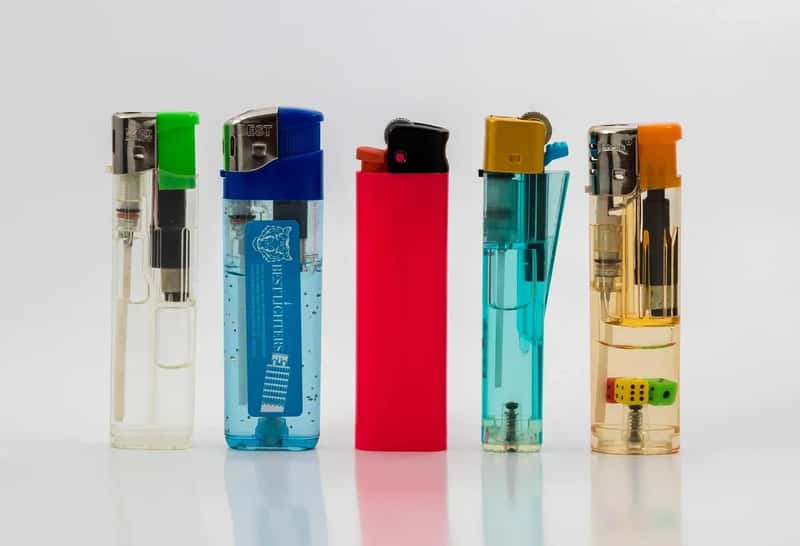
Items like whipped cream canisters, propane tanks, CO2 cartridges, scuba tanks, spray paint, and bear repellents are all off-limits in checked luggage because changes in air pressure during flight can cause these containers to expand and potentially explode. The list is longer than most people expect, and it catches outdoor enthusiasts and DIYers particularly off guard. Lighter fluid, gasoline, paint thinner, and solvents are also entirely banned.
Gasoline, lighter fluid, alcohol over 70%, paint thinners, and any highly flammable solvents are banned from checked luggage. Flammable paints can’t be checked or brought in your carry-on, with oil-based paints, acetone, turpentine, and paint thinner all falling under this umbrella. If you’re heading to a camping or diving destination, the smartest move is to rent or purchase these items locally rather than risking confiscation at the airport.
4. Wrapped Gifts

Here’s the one that genuinely surprises people. You’ve carefully selected a present, wrapped it beautifully, and tucked it into your checked bag to keep it safe. During December holidays, avoid wrapping gifts before screening – officers may need to unwrap them. This applies to both carry-on and checked bags, but it’s especially frustrating when it’s a gift that was tightly packaged for travel.
TSA scanners can’t clearly see through foil, and agents are trained to flag any dense, opaque packages. Foil-wrapped items like burritos, sub sandwiches, or even wrapped chocolate bars can trigger a full bag search. The same logic applies to gift wrapping – decorative paper and ribbons obscure the contents from X-ray scanners. Use clear plastic wrap, Tupperware, or parchment paper for TSA-friendly and safer transport. Pack the wrapping paper separately and wrap gifts after you arrive at your destination.
5. Medications – Especially Prescription Drugs

Medication is one of the most common items travelers mistakenly pack in their checked bags, often as an afterthought. Always carry essential medications in your carry-on in case your checked luggage is delayed or lost. Checked bags get delayed, misrouted, and occasionally lost – and being without critical medication while stranded in an unfamiliar city is a situation no traveler wants to face.
Some prescription medications are now flagged at international borders and even U.S. security due to active ingredients that appear on controlled substance watch lists. This includes sleep aids, anti-anxiety medications, pain medications with codeine, and even some over-the-counter allergy pills. If the TSA finds one of these medications unlabeled or in a random pill organizer, they can confiscate it, and you may face additional screening or even temporary detainment. Always travel with the original prescription bottle and, for international trips, bring a copy of your prescription and a doctor’s letter.
6. Valuables, Jewelry, and Irreplaceable Items

Never pack valuables and breakables in your checked luggage. If your valuables and breakables are lost, stolen, or damaged, you won’t be able to get compensation from your airline, as airlines exempt themselves from liability for their loss. This is a rule that travel experts have repeated for years, yet it remains one of the most ignored pieces of advice in travel circles. The airline’s limit of liability domestically in the U.S. is $3,800, and internationally, just $1,700.
According to Hong Kong police, there were 207 cases of in-flight theft on Hong Kong-bound flights in the first 10 months of 2024. A report noted that from 2023 to 2024, police recorded a 75% increase in thefts aboard planes bound for Hong Kong. Small luxury items appear to be a major focus for airborne criminals, with watches, handbags, jewelry, and credit cards all prime targets. Jewelry, expensive electronics, and other high-value items should always be carried in your hand luggage. Important documents such as passports, boarding passes, and IDs should remain with you at all times.