There’s a special kind of magic that happens when a five-dollar bill can buy you a meal so good you’ll be thinking about it for years. Street food has always been the great equalizer of the culinary world, where a plastic stool on a sidewalk can deliver flavors that rival any fine dining room, minus the pretense and the price tag.
Across the globe, a handful of countries have turned cheap eats into an art form, blending centuries-old recipes with the kind of everyday hustle that keeps prices low and quality high. Here are six nations where you can eat exceptionally well without ever breaking a five-dollar budget.
1. Vietnam
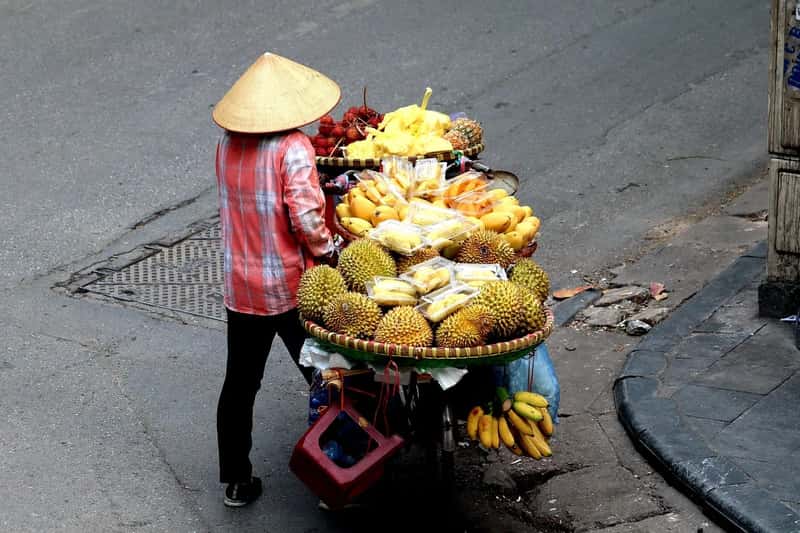
Vietnam might be the single best argument for why cheap food and great food aren’t mutually exclusive. Vietnam and Myanmar consistently rank as the cheapest countries for street food, with a full meal costing just one to three dollars at street stands, and the food quality is among the highest in the world for the price.[1] A steaming bowl of pho in the morning, a crusty banh mi for lunch, and fresh spring rolls for dinner will barely dent a traveler’s wallet.
What makes Vietnam stand out isn’t just the low cost, it’s the consistency of flavor across every price point. A basic local meal costs as little as 50,000 VND, around two dollars, while pho for breakfast, banh mi for lunch, and fresh spring rolls for dinner keep the food budget remarkably low.[2] Even the little pleasures add up in your favor, since a Vietnamese street beer runs about fifty cents to a dollar and a bowl of pho typically costs between $1.50 and $3.[3]
2. Thailand
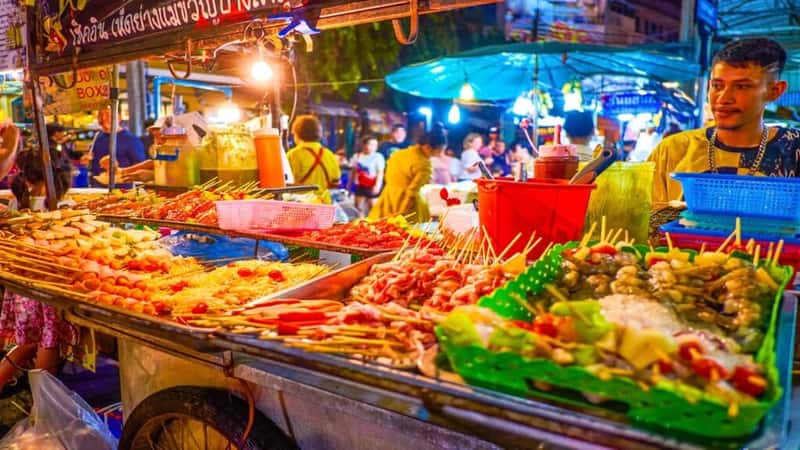
Bangkok’s street corners are practically an open-air restaurant chain, and the prices have stayed refreshingly reasonable even as tourism has surged. Bangkok street food meals rarely cost more than $2, with dishes like pad thai, som tam, and khao man gai available at nearly every corner.[2] That kind of pricing on dishes this flavorful is hard to find anywhere else in the world.
Thailand also earns points for something travelers care about just as much as flavor: safety. Street food in Thailand is not only affordable but also offers incredible value for money, with delicious dishes served from bustling market stalls, roadside carts and night bazaars at prices that suit every traveler’s budget, all while being flavorful, authentic and often freshly cooked right before your eyes.[4] Even with recent price increases, a Bangkok pad krapow still runs between $1.20 and $2.45, comfortably inside any five-dollar budget.[3]
3. Mexico
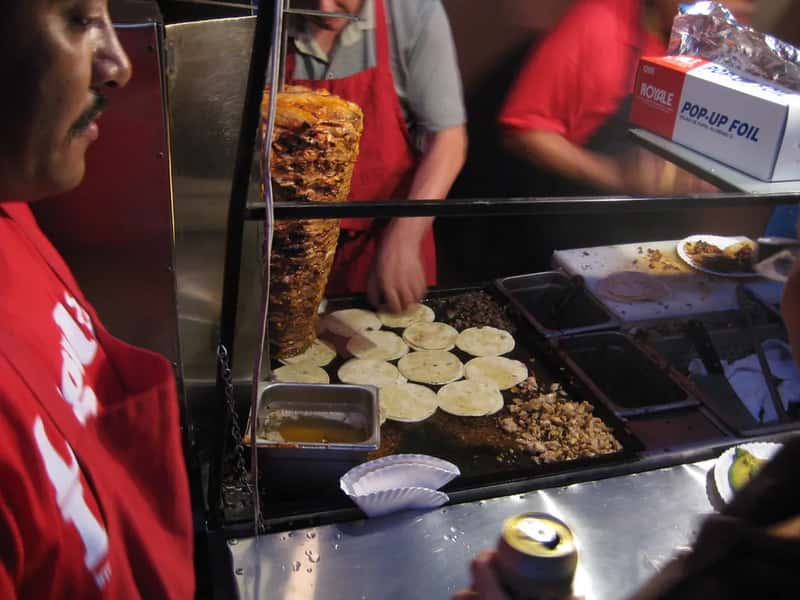
Few things capture the spirit of cheap eating quite like a taco stand at night, with the smell of charred pork drifting into the street. A perfectly charred al pastor taco from a street cart, watching the taquero shave marinated pork from a spinning trompo, can taste better than meals costing fifty dollars back home, all for about two dollars.[5] That contrast between price and payoff is exactly what makes Mexican street food so beloved.
The math works in almost every direction you look. Street tacos from carts or stands typically cost between fifteen and twenty-five pesos, which translates to roughly seventy-five cents to a dollar twenty-five per taco.[6] Even a full sit-down style meal of several tacos stays within reach, since budget-friendly street tacos run fifteen to one hundred pesos, or about seventy-five cents to five dollars, for a meal of three to four tacos.[7]
4. India
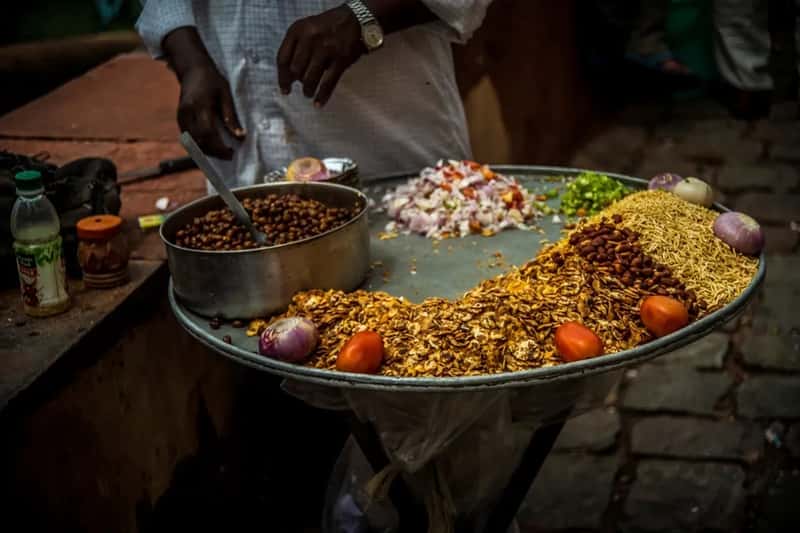
India’s street food culture is loud, colorful, and unapologetically cheap, built on generations of vendors perfecting a single dish. A plate of chaat can be found for twenty to fifty rupees, while the same dish in a restaurant might cost two hundred to three hundred rupees.[8] That gap alone explains why locals and travelers alike flock to the carts instead of the dining rooms.
Samosas, dosas, and vada pav round out a street food scene where almost nothing costs more than pocket change. Many street eats range from just ten to fifty rupees, about ten to sixty cents, while a filling meal at a casual eatery runs around one hundred fifty to three hundred rupees, or two to four dollars.[9] In Delhi specifically, crispy samosas stuffed with spiced potatoes and peas can be found at every tea stall and street corner for ten to fifteen rupees each.[10]
5. Turkey
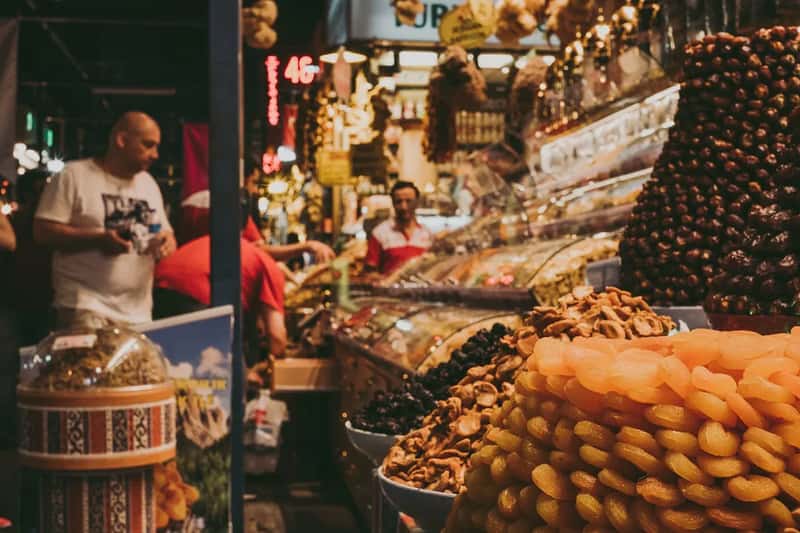
Istanbul’s street food scene runs on simit, doner, and balik ekmek, and even with recent currency swings the prices remain approachable for budget travelers. Simits, the crispy Turkish bagels found everywhere in the city, typically cost twenty to forty lira, or about fifty cents to a euro.[11] They’re the kind of grab-and-go breakfast that locals have relied on for generations.
A full day of eating on the street rarely stretches the budget too far, even accounting for Turkey’s ongoing inflation. A street-food day of simit for breakfast, balik ekmek for lunch, and a doner in the evening comes to roughly three hundred to four hundred lira, around seven to ten dollars, and that’s a legitimate way to eat in the city, not a compromise.[12] Split across three meals, each individual dish still lands comfortably under five dollars, especially the classic doner wrap grabbed from a busy corner stand.
6. Malaysia
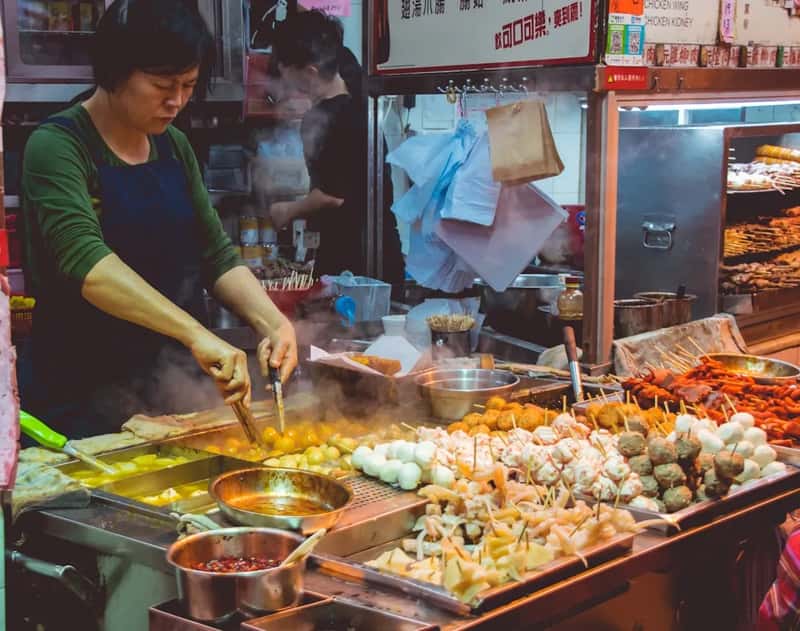
Malaysia’s hawker culture blends Malay, Chinese, and Indian culinary traditions into a street food scene that’s as diverse as it is affordable. George Town in Penang is often cited by food writers and travelers as one of Asia’s great hawker destinations, where dishes like char kway teow, laksa, and nasi lemak are cooked to order on woks that have seen decades of use. The blending of cultures means a single street can offer three completely different cuisines, all within a few steps of each other.
What keeps Malaysian street food so accessible is the sheer density of competition among hawker stalls, which naturally keeps prices low while pushing quality up. A plate of nasi lemak or a bowl of laksa from a well-loved stall typically costs just a few ringgit, translating to well under two or three dollars in most cases. That combination of variety, freshness, and unbeatable value is exactly why Malaysia belongs on any list of the world’s best cheap eats.
What ties these six countries together isn’t just low prices, it’s the culture behind the food. In each of these places, street vendors have spent years, sometimes generations, perfecting a handful of dishes, and that specialization is exactly why the quality stays so high even as the cost stays so low. Heavy foot traffic keeps ingredients fresh, competition keeps prices honest, and tradition keeps the recipes consistent from one cart to the next.
For travelers chasing flavor on a budget, these destinations prove that five dollars can still buy a genuinely memorable meal. The real secret, as always, is following the crowds, since the busiest stall on the block is usually the one worth waiting in line for.