Retirement daydreams usually involve palm trees, warm mornings, and a lot less math than most people expect. Yet for anyone actually running the numbers on a fixed income, the gap between fantasy and feasibility can feel wide. The good news is that a handful of destinations around the world still let a modest monthly budget stretch into something close to that daydream, provided you know where to look and what tradeoffs come with the savings.
Cuenca, Ecuador: Andean Spring Weather at Coastal Prices
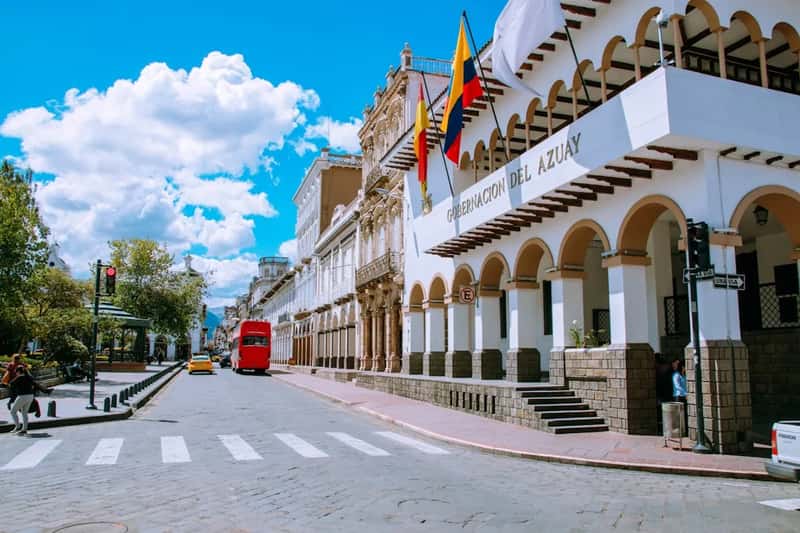
Cuenca sits at roughly 8,000 feet in the Ecuadorian Andes, which sounds like an odd entry on a tropical list until you realize the elevation gives it something better than heat: a permanent, mild spring. Temperatures hover between 48°F and 70°F year-round, creating a perpetual spring that requires neither air conditioning nor heavy heating. That climate, paired with a UNESCO-listed colonial center, has made it one of the most talked-about retirement spots in Latin America for over a decade.
On the budget side, expat guides consistently describe a cost of living so low that couples routinely live well on $1,500 to $2,500 a month. A single frugal retiree can do even better, since reports note a frugal single person can get by in Cuenca on less than $1,000 per month. Ecuador’s use of the US dollar removes currency guesswork entirely, and healthcare costs are strikingly low, with a specialist doctor visit typically running $25-$35 and an MRI costing $150-$250.
The Philippines: Island Life on a Shoestring

Few countries offer as much coastline per dollar as the Philippines. Retirees can enjoy life here, a Southeast Asian country that consists of more than 7,500 islands surrounded by gorgeous beaches and sparkling waters with colorful reefs, at bargain-basement pricing. Housing costs remain low even by regional standards, with recent data showing renting a one-bedroom furnished apartment costing about $330 monthly as of June 2026.
The affordability extends well beyond rent. Some cost breakdowns even suggest it’s one of the countries where people can retire on $1,000 monthly, which leaves a $1,500 budget with real breathing room for dining out, healthcare, and the occasional inter-island trip. English is widely spoken, which smooths over a lot of the everyday friction that can otherwise make an overseas move feel harder than it needs to be.
Panama: The Pensionado Program’s Tropical Payoff

Panama has built an entire national brand around welcoming retirees, and the numbers back it up. The country is a Central American gem known for its modern infrastructure, tropical climate, and its Pensionado visa program, with retirees drawn by low costs often 50% less than the U.S. The visa itself is refreshingly accessible, since Panama’s Pensionado visa requires just $1,000 per month and offers discounts on healthcare, transport, and dining.
Budget estimates for a couple line up neatly with a $1,500 target too. Guides peg the average monthly cost at $1,500 to $2,500 for a couple to cover a comfortable lifestyle in much of Panama. Beyond the money, Panama City offers world-class hospitals and shopping, while smaller towns provide tranquility in nature, with Caribbean and Pacific beaches and mountain retreats all a short flight from the U.S.
Bali, Indonesia: Villa Living Without the Villa Price Tag

Bali has spent years cultivating a reputation as a wellness and lifestyle hub, but it also remains genuinely affordable for retirees willing to live outside the most touristy strips. Longtime expat resources note that amid the most gracious and hospitable of peoples, you can live for as little as US$1,500 a month. More detailed breakdowns back this up, showing a comfortable retirement in Bali costs $1,200-2,000 a month, including a private villa at $400-800 a month and food at $200-400.
The tradeoff is on the visa side rather than the cost-of-living side. Indonesia’s dedicated retirement pathway requires more income than the daily budget suggests, since the Retirement KITAS for those 55 and older needs a $1,500/month pension just to qualify, separate from what you’ll actually spend once settled. Areas like Ubud and Sanur tend to offer the calmer, more budget-friendly version of island life compared with the beach clubs of Canggu or Seminyak.
Zihuatanejo, Mexico: Old-School Pacific Charm

Long before it became a household name thanks to a certain prison-break movie ending, Zihuatanejo was already a favorite for retirees chasing an unpolished Pacific coast experience. It remains one of Mexico’s better values, with U.S. News reporting a cost of living of approximately $1,315 per month for a retired couple. That figure covers a town described as a colorful fishing village with a laid-back, small-town feel.
Mexico’s broader retiree infrastructure adds a layer of security to that low cost. Housing remains the biggest lever on the budget, since a long-term unfurnished rental in a quiet neighborhood often runs $700 to $1,500 per month, while short-term furnished rentals in tourist areas can run two to three times that. Choosing a quieter neighborhood over a resort strip is really the whole game here, and it’s what keeps a $1,500 monthly number realistic rather than aspirational.
Chiang Mai, Thailand: Mountain Air, Tropical Prices

Chiang Mai isn’t a beach town, but its warm, tropical climate and rock-bottom cost of living have made it one of Southeast Asia’s most enduring retirement magnets. Multiple current guides converge on the same figure, noting that the city offers a comfortable retirement lifestyle for around US$1,500 a month, significantly cheaper than most Western cities. Another 2026 breakdown puts it plainly: it offers the lowest cost of living of any major Thai city, and you can live very comfortably on $1,500 a month, and frugally on $1,000 or less.
Healthcare is a genuine strength here, not just a footnote. Facilities like Bangkok Hospital Chiang Mai and Chiang Mai Ram provide quality care at a fraction of Western prices. The city also carries an active social infrastructure for newcomers, since it has one of the most active expat communities in Southeast Asia, with regular social events, clubs, and meetups, which matters as much as the exchange rate when you’re rebuilding a social life from scratch overseas.
Each of these six spots proves the same basic point in a slightly different way: a comfortable retirement abroad on $1,500 a month is not a myth, but it does depend on choosing the right neighborhood within the right country, not just the right country in general. Rent is almost always the variable that makes or breaks the budget, followed closely by whether you cook at home or eat out daily. None of these places require sacrificing quality of life to hit that number, they simply require picking a destination where $1,500 was never considered a small amount of money to begin with.