A family trip is supposed to be the stuff of good memories, sandy feet, theme park photos, maybe a sunburn that fades within a week. But somewhere between the packed suitcases and the souvenir shops, certain moments can lodge themselves in a child’s mind in a very different way. Psychologists have long studied how a single sharp scare, especially before age seven or eight, can quietly shape the way a person reacts to water, heights, or crowds for decades afterward.
What makes this interesting is that the trigger doesn’t have to be dramatic by adult standards. A moment that barely registers with a parent can become, for a small child, the seed of a fear that outlives the vacation itself by thirty or forty years.
1. Being pulled under by a wave or losing footing in a pool
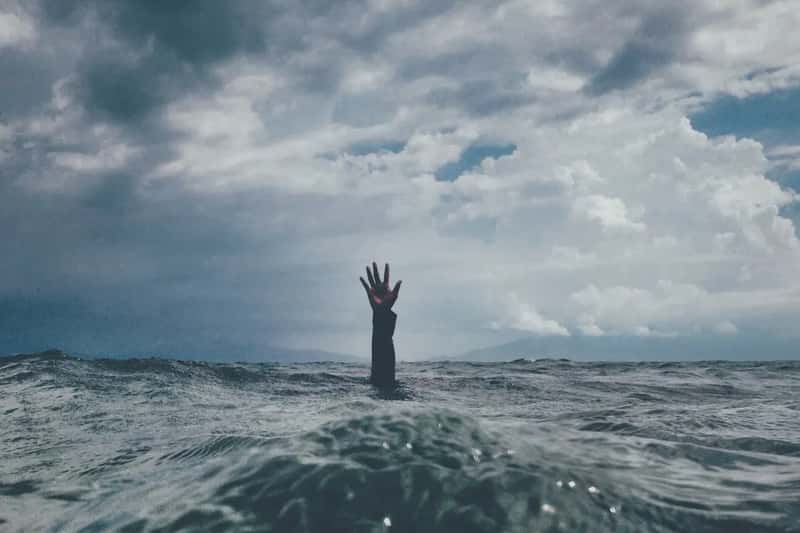
Water related fear is one of the most common outcomes of a bad vacation moment, and it makes sense given how quickly things can go wrong near a pool or shoreline. People who have had a traumatic experience related to water, such as a near drowning experience, may develop aquaphobia later in life.[1] Even a brief scare, a wave that knocks a child over or a moment of struggling to reach the surface, can register as genuinely life threatening from a small body’s perspective.
Researchers have noted that the incident doesn’t need to be severe to leave a mark. Even seemingly minor events, like a bad swimming lesson, can occasionally cause long-lasting anxiety about water.[2] Add in the fact that children process fear differently than adults, and a single choppy afternoon at the beach can turn into a lifelong hesitation around pools, lakes, or the ocean.
2. Getting separated from parents in a crowded destination

Theme parks, airports, and busy foreign markets are exactly the kind of places where a child can lose sight of a parent for what feels, to them, like an eternity. This kind of experience taps into something more primal than a typical scare. Fear of being alone or separated from a caregiver is recognized as one of the situational subtypes of specific phobia, and it tends to be one of the more persistent variants once it takes hold.
Research from the Netherlands Mental Health Survey and Incidence Study found that among the specific phobia subtypes examined, fear of being alone emerged as the most severe condition on nearly every measure except duration.[3] A five minute separation in a crowded plaza might resolve happily with a reunion and a hug, but the emotional imprint of that panic can resurface years later in situations that involve crowds, unfamiliar environments, or simply losing sight of someone important.
3. A rough or turbulent flight to or from the destination

Flying already carries an outsized reputation for anxiety compared to its actual safety record, and a bad flight during a family vacation can cement that association early. Like fear of heights or spiders, fear of flying is disproportionate to the danger involved and may involve intense anxiety or panic attacks.[4] Estimates vary widely, but between roughly a quarter and forty percent of air travelers experience some level of flight anxiety, with a smaller percentage meeting the clinical criteria for aviophobia.[5]
Interestingly, clinicians note that a bad childhood flight isn’t always the origin story people assume it to be. Aerophobia usually doesn’t have a specific cause, and it’s very rare for it to stem from a traumatic experience on a flight itself.[6] Still, for children who do experience a genuinely frightening bout of turbulence or a hard landing, the sensory memory of that helplessness can attach itself to future travel plans in ways that feel disproportionate to what actually happened.
4. An unexpected and frightening animal encounter

Vacations often put children in closer proximity to animals than everyday life does, whether that’s a stray dog at a resort, an aggressive seagull at the beach, or an unfamiliar creature encountered on a nature walk. Phobias can sometimes originate from early childhood experiences even if they are relatively minor, such as a child who had a negative experience with a dog being startled by a barking dog.[7] The setting matters too, since an unfamiliar environment removes the sense of predictability that usually makes animals feel less threatening.
Animal related phobias remain among the most common specific phobias tracked in large population studies. Lifetime prevalence of a specific fear of animals has been measured at roughly one in five people across major surveys, with a meaningful share of those going on to develop a diagnosable phobia.[8] A single bad encounter on a trip, especially one involving a bite, sting, or chase, can be enough to plant that association firmly in a young mind.
5. A height related scare on a ride, cliff, or lookout point

Vacations frequently involve exactly the kind of elevated experiences that don’t come up in ordinary life: a ferris wheel that stops at the top, a cliffside trail, a rickety observation deck. The lifetime prevalence of acrophobia has been estimated at around 6.4 percent, with women roughly twice as likely as men to have the phobia.[9] A moment of genuine panic at height, particularly one paired with a stuck ride or a wobbly platform, gives the fear something concrete to attach to.
What’s notable is how common a mild version of this fear already is before any scare even happens. Fear of heights has been found to be the most prevalent specific phobia variant in large population studies, affecting close to five percent of adults.[3] A frightening vacation moment doesn’t have to create the fear from nothing; it often just accelerates a tendency that was already present and gives it a specific, memorable scene to replay.
6. Getting caught in a severe storm far from home

There’s something uniquely unsettling about experiencing a violent storm in an unfamiliar place, without the usual comforts of home to soften it. Thunder, lightning, and sudden severe weather during a family trip can be frightening for adults, let alone children who don’t yet have a mental framework for how storms typically pass. Fear of storms falls under what researchers classify as the natural environment subtype of specific phobia, alongside heights and water.
Population studies tracking storm phobia specifically have found baseline prevalence rates in the range of one and a half to nearly four percent, with a meaningful share of cases persisting more than a decade after onset.[10] A vacation storm that knocks out power in an unfamiliar rental home or forces an evacuation from a beach can be exactly the kind of vivid, disorienting event that turns an ordinary weather fear into something more entrenched.
7. A car accident or a genuinely frightening moment on the road

Long drives are a staple of family vacations, and unfortunately so are the occasional close calls that come with unfamiliar roads, tired drivers, or bad weather conditions. Even incidents that don’t result in injury can leave an impression. Observing or being present during minor accidents or incidents, such as a car fender bender, can instill fear and result in the development of phobias.[7]
What often gets overlooked is how a single frightening episode in a vehicle can generalize into a broader unease around travel itself, not just driving. Because vacations already involve novelty and a break from routine, a scary moment on the road tends to stand out more sharply in memory than a similar incident would during an ordinary commute. That vividness is part of why road related scares during childhood trips show up so often in adult recollections of when a particular fear first began.
Fears formed this way don’t usually announce themselves right away. A child who panics briefly in the ocean or clutches a parent’s hand a little too tightly on a ferris wheel often seems fine within the hour, back to building sandcastles or asking for ice cream. It’s only years later, when an adult finds themselves gripping an armrest during turbulence or avoiding open water without quite knowing why, that the connection back to a single vacation afternoon becomes clear. Understanding where these reactions come from doesn’t make them disappear, but it does make them a little easier to recognize for what they are: an old, half forgotten memory still doing its job long after the trip ended.