For years, the standard advice for famous places was to arrive early and hope for the best. That advice is wearing thin. A growing list of cities, monuments and mountains now ask you to book a slot, pay a fee, or accept a daily limit before you show up.
The rules differ a lot from place to place. Some set a hard ceiling on daily visitors, while others use reservations or small charges to spread people out. Here are seven destinations where these systems are in place, with the details that matter most in 2026.
Venice, Italy

Venice was the first major historic city to charge day visitors for access. It introduced the day tripper fee in 2024 as the first initiative of its kind aimed at managing overtourism in a major historic city.[1] The scheme has grown each year: it began with a €5 fee on 29 peak days in 2024, expanded to 54 days in 2025, and reached a record 60 days in 2026.[2]
It works as a reservation system rather than a strict cap. The levy is €5, while tourists who don’t reserve up to four days in advance pay €10.[3] Day trippers get a QR code that is checked at spot controls at seven access points around the city,[3] and anyone who hasn’t paid or registered an exemption risks a fine of €50 to €300.[3] Results are mixed. The 2026 trial generated more than €5.2 million from nearly 680,000 tickets, according to provisional municipal data,[2] and average sales per charging day fell by roughly one third compared with 2024.[2] Reports differ on what comes next, with one outlet saying the city is considering a charge of up to €30[2] and another saying the new mayor proposed as much as €50 on the busiest days.[1]
The Acropolis, Athens, Greece

Greece’s most visited ancient site now runs on a firm daily ceiling. Starting in 2024, timed entry tickets were required to visit the Acropolis.[4] The site admits a maximum of 20,000 visitors per day, with hourly entry quotas, roughly 3,000 people in the first hour of the morning and fewer as the day goes on.[5]
In practice, that means booking ahead. Booking is mandatory through the official ticketing site, with no walk up sales once the daily cap is reached,[5] and tickets are valid from 15 minutes before to 15 minutes after the selected time slot.[6] Summer mornings go first, and morning slots in summer regularly sell out one to three weeks ahead.[5] Heat is another factor, since the site may close for part of the afternoon when temperatures exceed 40°C, which happened several times in the summers of 2024 and 2025.[7]
Mount Fuji, Japan

Japan’s tallest mountain has tightened its rules in stages. The hiking fee was introduced on the Yoshida Trail in 2024 at ¥2,000, and it now applies on all four routes at ¥4,000.[8] Every one of the four official trails requires an advance online reservation that produces a QR code permit.[9]
The Yoshida Trail, the busiest route, has a hard ceiling. Daily climbers are limited to 4,000, with 3,000 slots for advance reservations and 1,000 for same day registration.[10] Gates also close from 2 PM to 3 AM to anyone without a mountain hut booking,[9] which discourages overnight dashes to the summit. The 2026 season closed on September 10,[11] so anyone planning a climb will be looking at next summer’s rules.
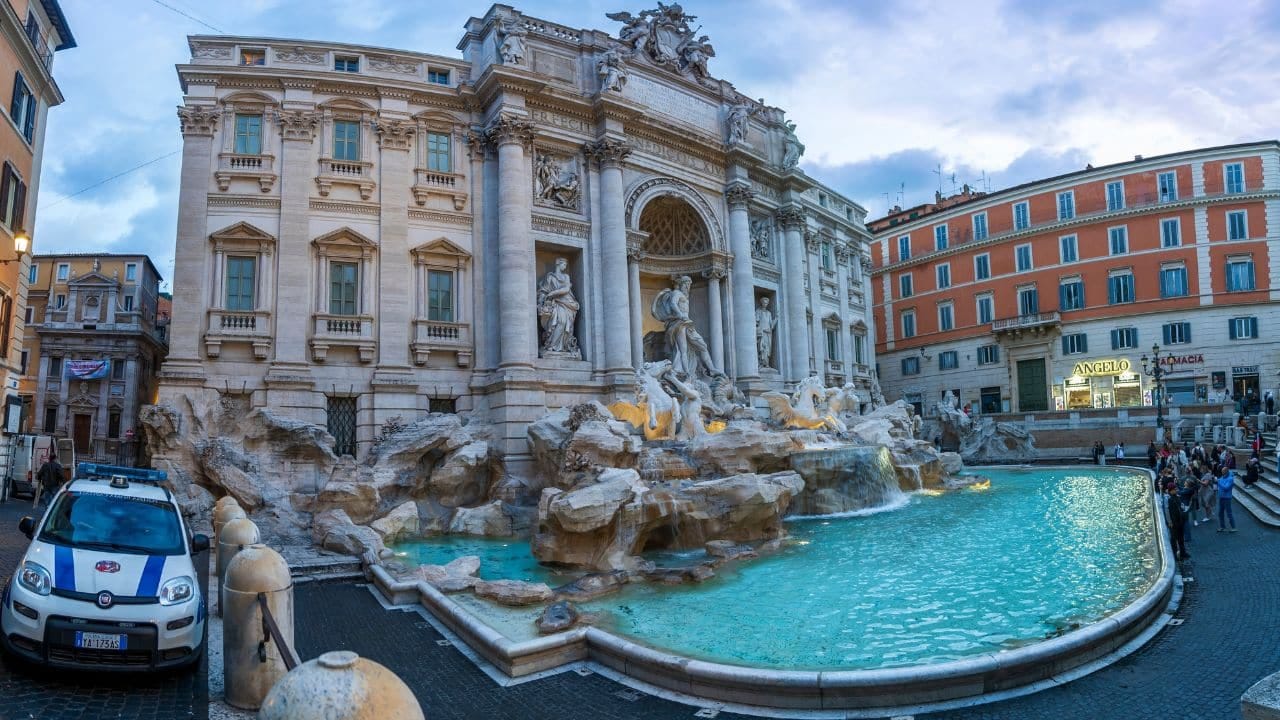
The Trevi Fountain, Rome, Italy

Rome’s best known fountain has been under crowd pressure for a long time. The city government says it draws about 30,000 visitors a day, with peak days reaching 70,000, and more than 9 million visitors annually.[12] The city first tested limits in 2025, and it tried to keep the number of people in the basin area to about 400 at a time.[13]
Then came a fee. From 2 February 2026, a €2 ticket is required to enter the basin, the part closest to the monument.[14] The fountain itself remains visible for free.[15] Tourists and non residents pay to enter the lower gated basin from 9 am to 10 pm daily,[16] and the tickets are not timed and not specific to one day.[16] Access is free for residents, children up to five years of age, and people with disabilities and their care companions.[16]
Machu Picchu, Peru

Machu Picchu has used a timed entry model for years, and it remains one of the most structured visits in South America. Tickets are sold for a specific entry window and a set circuit through the citadel, and visitors are expected to follow that route with an authorized guide. The idea is to keep foot traffic moving and reduce wear on the stone terraces and paths.
The daily quotas have been adjusted more than once as Peruvian authorities weigh conservation against the tourism income that the region depends on. Because the details have changed repeatedly, it’s worth checking the official government ticketing site for current limits, circuits and rules before booking. Tickets for the busiest months tend to go early, so flexible travelers usually do better than those locked into a single date.
Haleakalā National Park, Hawaii, United States

Sunrise at the summit of Haleakalā on Maui became so popular that the park had to manage it. Visitors who want to enter the summit district for sunrise, in the early morning hours before dawn, need an advance reservation booked through the federal recreation portal for a small fee. Vehicles without one are generally turned away during that window.
Reservations are released in batches, with one block opening well ahead of the trip and a smaller block opening just a couple of days before. That second release is a lifeline for travelers who plan late, though it fills quickly. The rule targets one specific bottleneck, the narrow summit road and limited parking at the top, rather than the whole park.
Arches National Park, Utah, United States

Arches sits at the front of a wider American trend toward reservation based entry. The park has run timed entry pilots in several recent seasons, requiring a reservation for vehicles entering during the busiest daytime hours of peak months. The point is to keep the entrance line and the limited parking at trailheads like Delicate Arch and the Windows from overflowing.
The exact dates, hours and booking windows have shifted from one year to the next, so last year’s schedule is not a reliable guide. The National Park Service page for the park lists the current requirements. Outside the reservation periods, visitors can typically enter without a slot, which makes early spring and late fall a simpler bet.