There’s a particular kind of disappointment that comes from planning a trip around a single photograph, then arriving to find fifty other people trying to take the exact same shot. It happens more often than most travelers expect, especially in the small, photogenic villages that dominate travel feeds and bucket lists. These are places built for a few hundred residents, not the tens of thousands who now show up on a busy Saturday.
The following seven villages have all reached a point where local life and mass tourism are openly clashing. Some have already introduced rules to manage the crowds. Others are still arguing about what to do next.
Hallstatt, Austria
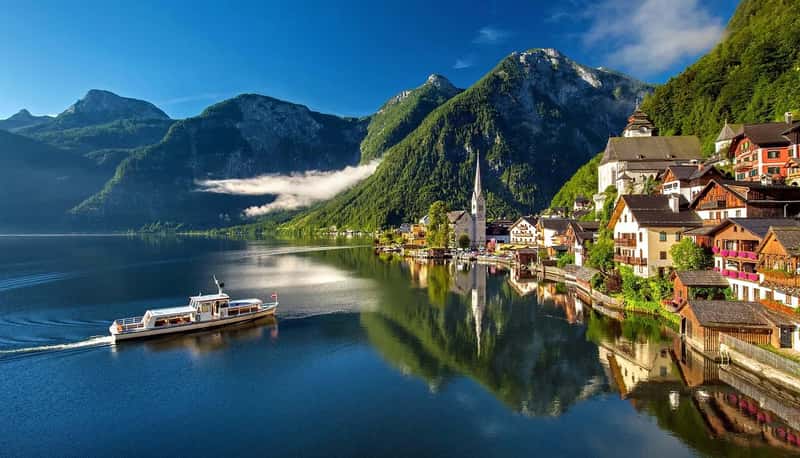
Hallstatt sits on a narrow strip of land between a lake and a steep mountainside in Austria’s Salzkammergut region, reachable by a single road that clogs up fast in peak season. Nestled between the lake and a steep mountainside in Austria’s vertiginous Salzkammergut region, the town is reachable only through a single road, which can often become congested in the peak tourism season. The village has around 750 permanent residents, yet on the busiest days it absorbs a visitor wave that dwarfs its population many times over.
On peak days, Hallstatt sees up to 10,000 tourists passing through its streets, according to deputy mayor Alfred Gamsjäger. Local officials have already introduced time slots for tour buses, and by 2024 that system was reportedly working well, though the same limits don’t apply to cars or public transport arrivals. Local leaders are clearly stating what they want: a digital reservation system, similar to an online ticket system, to limit visitor numbers. The village’s fame partly traces back to speculation that it inspired the setting of Disney’s Frozen, a connection that has pulled in waves of visitors from Asia in particular, including a full-size replica built in China.
Manarola and the villages of Cinque Terre, Italy
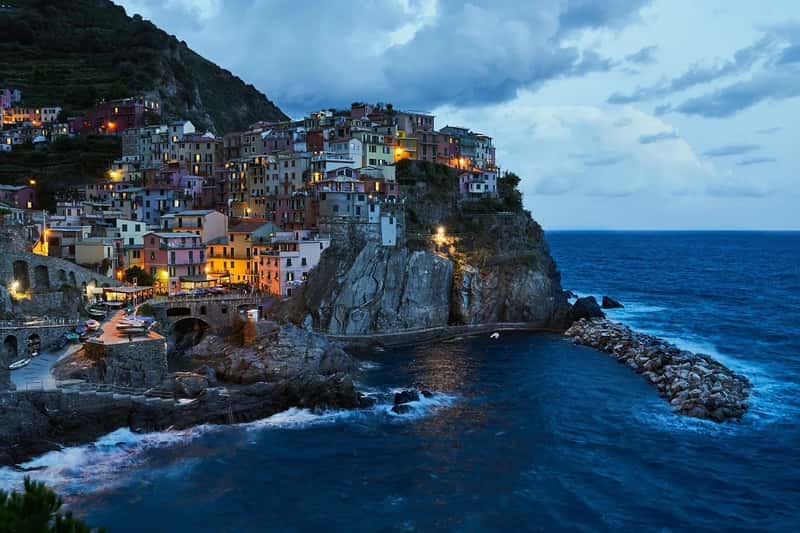
Cinque Terre is really five fishing villages strung along a dramatic stretch of Ligurian coastline, and Manarola is often singled out as the most photographed of the group. The problem is that everybody knows it: While Cinque Terre is home to 4,000 residents, more than 2.4 million people visit the area per year. Despite the national park covering over 4,300 hectares, nearly all tourists are funneled into just 2-3% of the territory, primarily within the five iconic villages.
Authorities have already capped access to one of the most scenic trails. Only 400 people are allowed to walk a 0.6-mile stretch of the Sentiero Azzurro, the Via dell’Amore, and visitors need to book in advance. Trains arrive roughly every half hour and unload hundreds of passengers straight into narrow streets that were laid out centuries before mass tourism existed, which is exactly why bottlenecks at stairways and platforms have become routine during the busiest months.
Giethoorn, the Netherlands
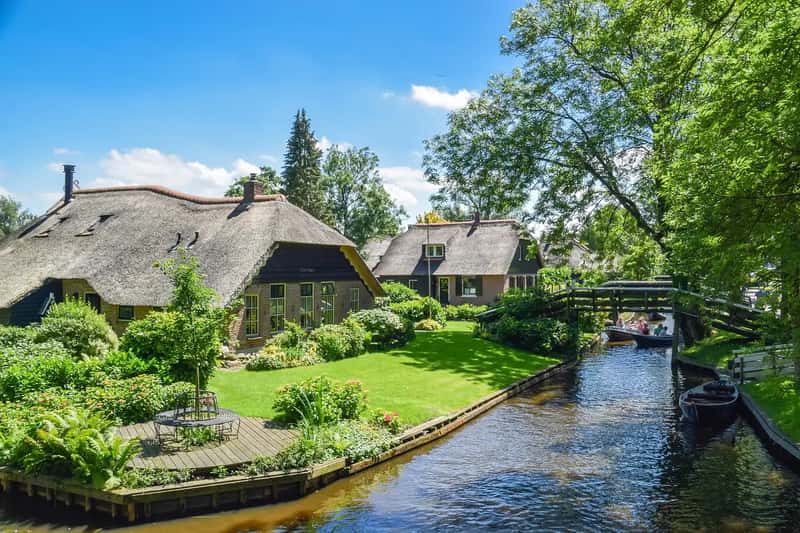
Giethoorn markets itself as the Venice of the Netherlands, a village of thatched cottages connected by footbridges and canals rather than roads. That marketing has worked almost too well. Its sole similarity with Venice is that tourists overcrowd the village in summer, and Giethoorn gets overrun by busloads of day trippers.
The crowding shows up most visibly on the water itself. On a nice summer day, the canals can be so crowded with boats that you can barely even move. A Wageningen University case study cited in recent coverage notes that the village recorded hundreds of thousands of day visitors in a year, and residents and stakeholders flag overcrowding and nuisance as quality-of-life issues. Most visitors who’ve been there agree that staying overnight, once the day-trip buses have pulled out, is the only way to see the village anywhere near how it looks in the photographs.
Bibury, England
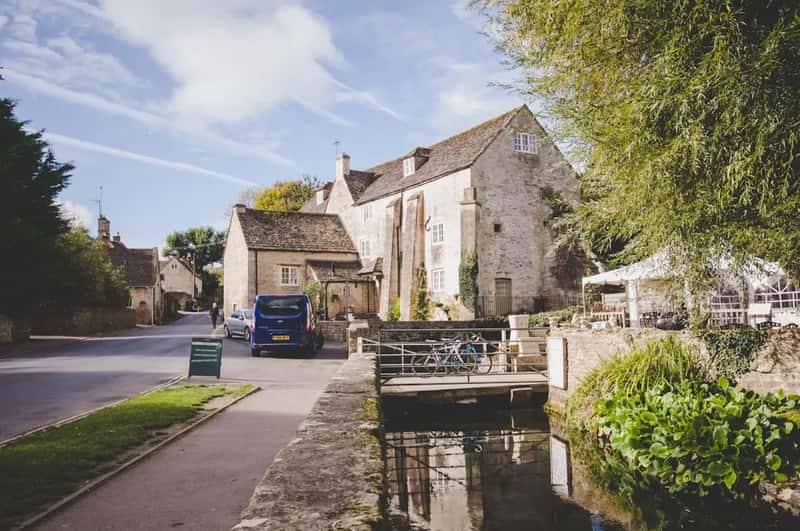
Bibury is a tiny Cotswolds village built around a single row of seventeenth-century cottages known as Arlington Row, along with a slow-moving trout stream that draws camera-toting crowds year-round. The numbers involved are startling for a place this small. The village is facing a battle over a rise in tourism, with up to 20,000 visitors descending on weekends, and up to 50 coaches arriving daily.
With around 700 residents, the strain on basic infrastructure is obvious to anyone who has tried to park there on a sunny afternoon. The narrow streets, a single bridge over the River Coln, and limited parking spaces are unable to accommodate the growing number of tourists. Social media has accelerated the problem in recent years, turning what was once a quiet countryside stop into a weekend pilgrimage site that locals openly say has changed the character of the village.
Oia, Santorini, Greece
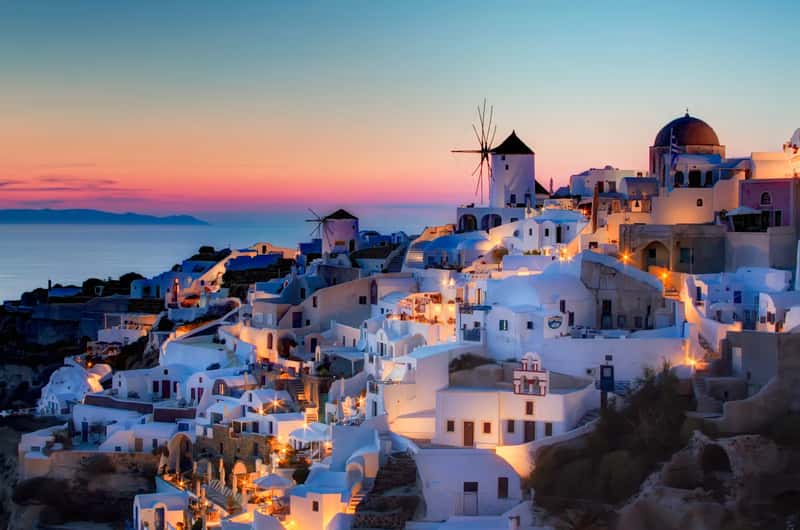
Oia occupies the northern tip of Santorini and has become, more than any other spot on the island, the place everyone wants to photograph at sunset. The layout works against it. Oia is the sunset capital of the internet: white walls, blue domes, and lanes that funnel everyone toward the same cliff-edge viewpoints right on cue.
The pressure isn’t limited to Oia’s lanes; it extends to how many people the island lets ashore in the first place. For the 2026 season, the island enforces a daily cap of 8,000 cruise visitors, run by the Municipal Port Fund of Thira through a berth-allocation system that ranks and schedules ship calls long in advance. Even with that cap, the narrow pedestrian streets leading to the caldera viewpoints still fill up well before the sun actually sets, leaving many visitors watching the moment through a wall of raised phones rather than an open view.
Portofino, Italy
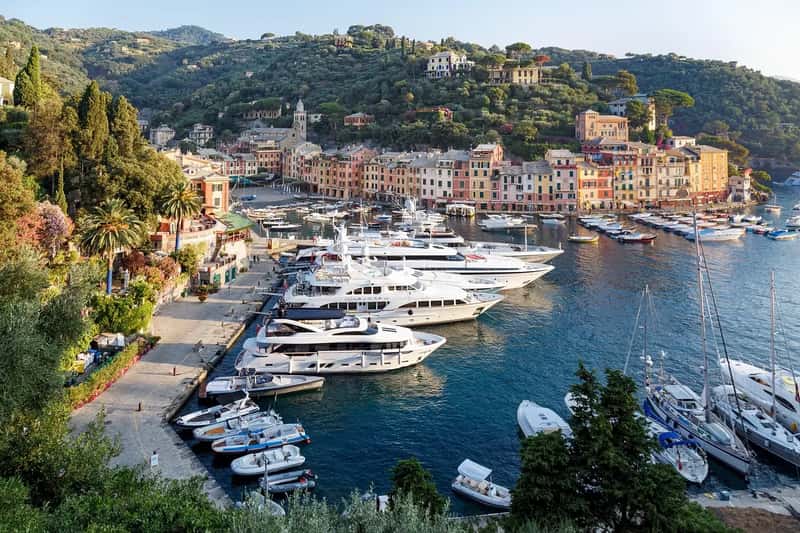
Portofino is a small fishing harbor on the Ligurian coast, famous for pastel-colored buildings wrapped tightly around a tiny marina. Its size is precisely the problem. Portofino is tiny, glossy, and extremely photogenic, which is a recipe for sidewalk gridlock, and the harbor front is narrow, so when crowds pause for selfies, the whole village can seize up.
Local officials responded with an unusual rule rather than a simple request for patience. The popular coastal fishing village has introduced a whopping fine of €275 for anyone hanging around too long in certain areas prone to congestion. Those spots have been termed red zones, or no-waiting zones, targeting the two hotspots most photographed on Instagram. It’s a striking example of how a village can end up policing tourist behavior simply to keep its own streets passable for residents.
Capri, Italy
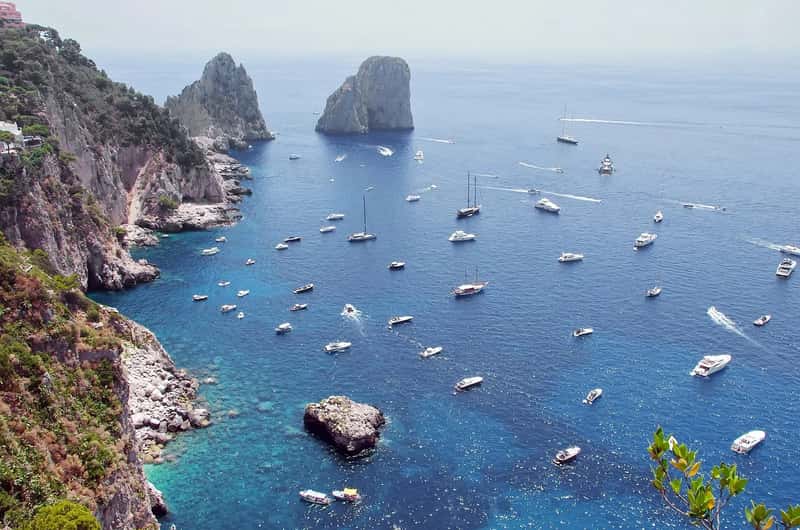
Capri is technically an island, but its two main settlements, Capri town and Anacapri, function very much like the tightly packed villages found elsewhere on this list, with narrow lanes never designed for crowds. The island is home to only around 13,000 permanent residents but in the summer months they are swamped by tourists with up to 16,000 visiting every day. Some counts run even higher during the peak of summer.
Recent reporting suggests the daily influx can climb well beyond that figure on the busiest days. Capri receives up to 50,000 daily visitors in peak season, a number far exceeding the resident population of roughly 13,000 to 15,000. Local authorities have started capping the size of organized tour groups allowed to move through the island’s main piazzas at once, an acknowledgment that Capri’s charm, much like its steep, narrow staircases, simply wasn’t built to handle modern crowd volumes.
Each of these villages built its reputation on being small, intimate, and slightly hidden. That same intimacy is now the thing straining under the weight of visitor numbers that keep climbing year after year. Whether the answer is timed entry, visitor caps, fines for lingering, or simply travelers choosing quieter months, the pattern across all seven places is remarkably similar: a small community trying to hold onto daily life while millions of people pass through in search of the same view.