Most people don’t think of their pre-trip routines as a source of stress. Packing lists, flight confirmations, a few extra browser tabs open at midnight, none of it feels dramatic in the moment. Yet these small, repeated habits often do more to fuel vacation anxiety than the trip itself ever will.
1. Checking flight status and travel news obsessively

Refreshing a flight tracker every twenty minutes feels productive, but it rarely changes the outcome and almost always raises the heart rate. Constant exposure to travel news has a similar effect, especially when headlines lean toward worst case scenarios. There is a growing fear of violence or conflict while abroad, exacerbated by doomscrolling on social media, and discussions of worst-case scenarios have further fueled some travelers’ hesitations.[1]
The habit creates a loop where checking for reassurance actually produces more unease, not less. Once the mind locks onto a possible delay or disruption, it tends to keep scanning for confirmation that something will go wrong. Setting specific check-in times, rather than checking constantly, tends to break that cycle without leaving travelers uninformed.
2. Overpacking the itinerary with no breathing room

Cramming a trip full of back-to-back activities can feel like getting the most out of limited vacation days, but it also removes any margin for things going sideways. Flight delays, traffic, and long security lines are common enough that a schedule without slack turns minor hiccups into full blown panic. Chief stressors associated with flying are airport procedures, the possibility of flight issues like delays or cancellations, and the cost of tickets.[2]
When every hour is booked, a single delay can cascade into missed reservations, rushed meals, and a nagging sense that the whole trip is falling apart. Building in unstructured time, even just an extra hour between connections or activities, gives the day room to absorb the unexpected. It sounds counterintuitive, but a slightly less ambitious itinerary usually produces a calmer, more enjoyable trip.
3. Leaving planning and research until the last minute

Waiting to book activities, confirm documents, or research a destination until the days right before departure is a common habit, and it is also a well documented source of stress. A meaningful share of travelers are anxious about failing to adequately research and plan their itinerary or lacking information about safety measures at the destination.[3] That anxiety tends to peak right when there is the least time left to fix any gaps.
Last minute planning also means last minute decisions, which are rarely the calmest ones. A rushed choice about lodging or transportation can carry a low grade worry through the entire trip, even after the decision is made. Spreading research out over several weeks, rather than a single stressful evening, tends to produce more confidence and fewer regrets once travel actually begins.
4. Underestimating the real cost of the trip

Money worries are one of the most consistent drivers of pre travel stress, and they often stem from underestimating costs rather than the trip being genuinely unaffordable. The most common sources of anxiety include not saving enough money for the trip.[3] Once travelers are already en route, discovering that a budget was too optimistic tends to color decisions for the rest of the vacation.
This habit shows up in small ways, like skipping a detailed budget for meals or transportation, assuming things will simply work out. Interestingly, safety and financial reassurance are connected for many travelers, since two thirds of travelers said they would pay more to book with an airline that had a perfect safety record, and on average people said they would pay about nineteen percent more for that peace of mind.[4] A realistic budget built before departure, with a bit of padding for the unexpected, removes one of the more persistent sources of vacation stress.
5. Sacrificing sleep in the days leading up to departure

Staying up late to finish packing, wrap up errands, or squeeze in one more work task before a trip is common, but it sets travelers up poorly for the days ahead. Fatigue lowers the threshold for stress, meaning a delay or a small inconvenience that would normally be shrugged off feels far more overwhelming on little sleep. Jet lag, fatigue, and work or family pressures can trigger anxiety and aggravate symptoms in travelers[5], and skipping sleep before departure only compounds that effect.
The irony is that people often sacrifice sleep specifically to prepare for the trip, when that sacrifice ends up undermining the first day or two of it. Arriving already exhausted makes it harder to problem solve calmly if something does go wrong. Protecting a normal sleep schedule in the final forty eight hours before travel is a simple habit that pays off well beyond just feeling more rested.
6. Measuring the trip against other people’s social media posts

Scrolling through curated vacation photos before or during a trip has become part of the modern travel experience, but it also sets up comparisons that rarely reflect reality. This pressure appears to weigh most heavily on younger travelers. A striking share of Gen Z travelers have canceled or changed their travel plans due to anxiety and a lack of preparedness[3], and social media driven expectations are frequently cited as part of that pressure.
A vacation does not need to look like someone else’s highlight reel to be worthwhile, yet the habit of checking is hard to shake once it starts. Constant comparison shifts attention away from the actual experience and toward how it might appear to others later. Limiting social media checks during the trip itself, rather than treating it as background noise throughout the day, tends to ease this particular strain.
7. Trying to stay fully connected to work right up until departure
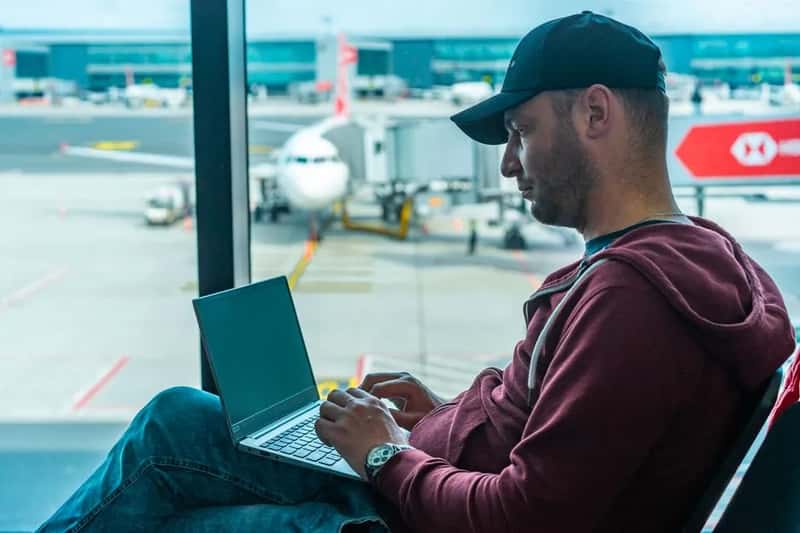
Answering emails at the airport gate or finishing a report the night before a flight might feel responsible, but it blurs the line between work stress and vacation time before the trip has even started. This habit prevents the mental shift that normally allows anxiety to ease once travel begins. Work related pressure does not disappear simply because the flight has taken off; it tends to follow along, especially when devices remain fully connected.
The urge to stay reachable is understandable, particularly in jobs where stepping away feels risky, but it consistently ranks among the more avoidable stressors travelers report. Setting a firm cutoff time before departure, and communicating it clearly to colleagues, allows the transition into vacation mode to actually happen. Without that boundary, the trip effectively starts with unfinished business still running in the background.
None of these habits are dramatic on their own, and most people recognize at least one or two in their own routine. What they share is a tendency to quietly compound ordinary travel stress into something heavier than it needs to be. Adjusting even a couple of them, rather than overhauling an entire travel routine, tends to be enough to notice the difference.