You settle into your seat, buckle up, maybe flip through the magazine in the pocket in front of you, and order a coffee. It all feels pretty routine. What most passengers don’t realize, though, is that nearly every single thing they casually touch on a plane is a hotspot for bacteria, mold, and germs that have been accumulating across dozens of flights.
Flight attendants see it all. Every single day. They know what gets cleaned, what gets skipped, and what should come with a biohazard label. So let’s take a proper look at the seven items they consistently warn passengers about. Let’s dive in.
1. The Seat-Back Pocket
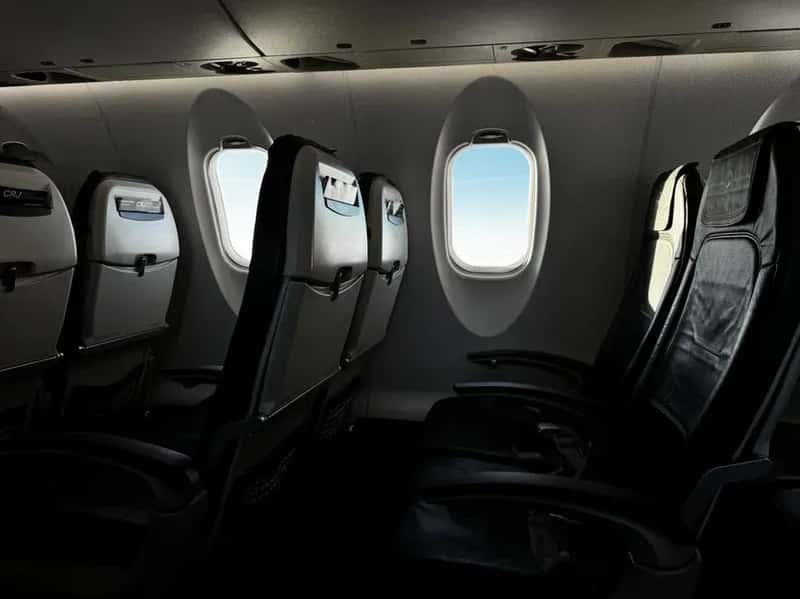
Honestly, this one is the most shocking item on the list, and it almost always tops the rankings when flight attendants are asked about airplane hygiene. One long-haul flight attendant on Reddit strongly recommended that travelers never, ever use or put anything in the seat pocket, explaining that while they are cleared of rubbish between flights, they are never actually “cleaned.”
According to the same flight attendant, the pockets contain “dirty tissues, sick bags, knickers, socks, peoples feet, gum, half sucked sweets, apple cores” – and then next flight, passengers go and put their phone, laptop, or iPad in there. Think about that for a second.
Research from Auburn University found that MRSA lasted an entire 168 hours – a full week – on the cloth material of a seatback pocket, while E. coli O157 survived 96 hours on airplane armrest material. The research also found that seat-back pockets tested positive for aerobic bacteria, mold, coliforms, and E. coli. Keep your hands out of that pocket.
2. The Tray Table
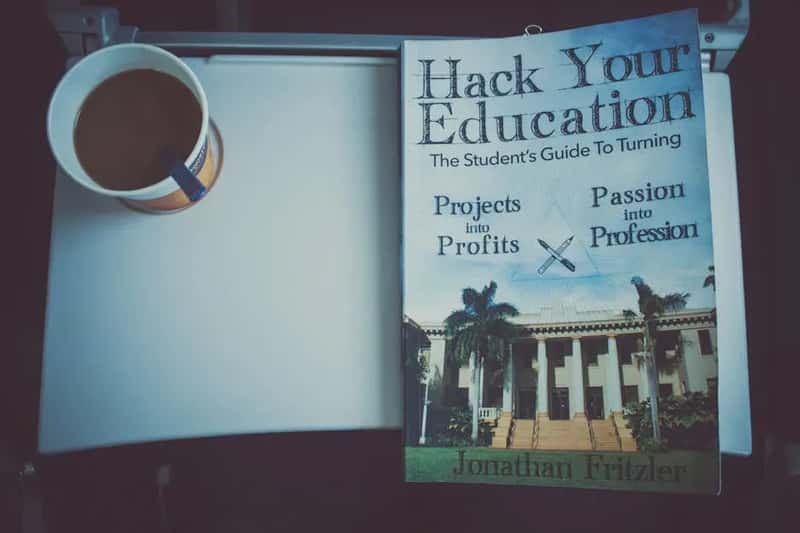
A 2015 study by TravelMath found that tray table surfaces had more than eight times the amount of bacteria per square inch compared to lavatory flush buttons, with trays registering 2,155 colony-forming units per square inch – far beyond the 127 CFU per square inch that the National Science Foundation considers standard for a toilet seat at home.
Dr. Charles Gerba, microbiologist at the University of Arizona, found cold viruses, human parainfluenza viruses, norovirus, and the superbug MRSA on tray tables he tested through research. These are real, documented pathogens – not just theoretical risks.
The alarming bacterial load is likely linked to plane cleaning crews simply not having enough time between flights to properly wipe down the tray tables. Flight attendants have even reported seeing people change a baby’s diaper on the tray table. Let that sink in next time you reach for your in-flight snack.
3. The Seatbelt Buckle
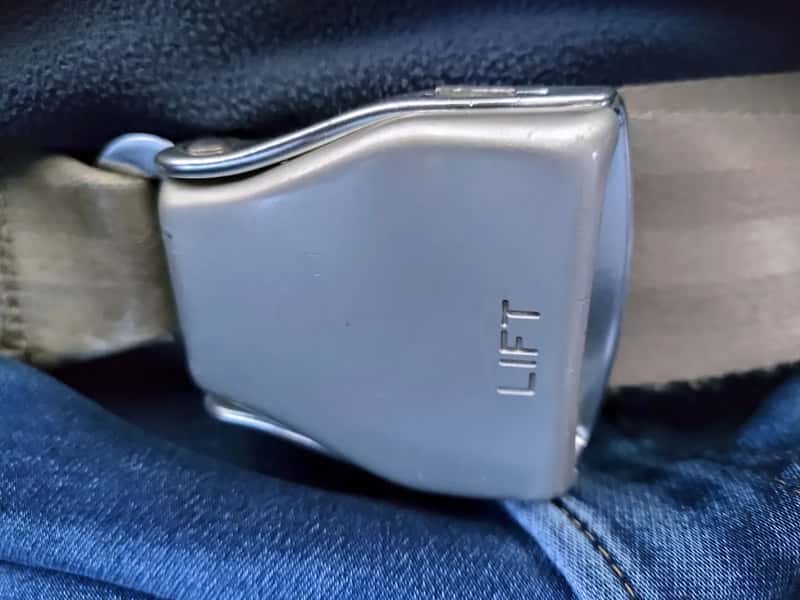
Here’s the thing – every single passenger on every single flight must touch the seatbelt buckle. There is no avoiding it. One of the most overlooked germ hot spots on an airplane is actually the seatbelt, including both the fabric strap and the metal buckle that every passenger touches each time they take off, land, or simply get up to walk around.
According to TravelMath research, the average airplane seatbelt buckle harbors 230 colony-forming units of bacteria per square inch, making it the third-germiest surface on the plane. A 2018 investigation by The Today Show found that seatbelts and buckles are highly contaminated with bacteria, including acinetobacter, which, according to the Centers for Disease Control and Prevention, accounts for around 80 percent of reported infections.
While the metal buckle could technically be wiped with a disinfectant more easily than the fabric strap, that isn’t necessarily happening – with very fast turnaround times between some flights, completing thorough decontamination is difficult. A viral TikTok from a flight attendant put it bluntly: wipe it down before you use it.
4. The Overhead Air Vents
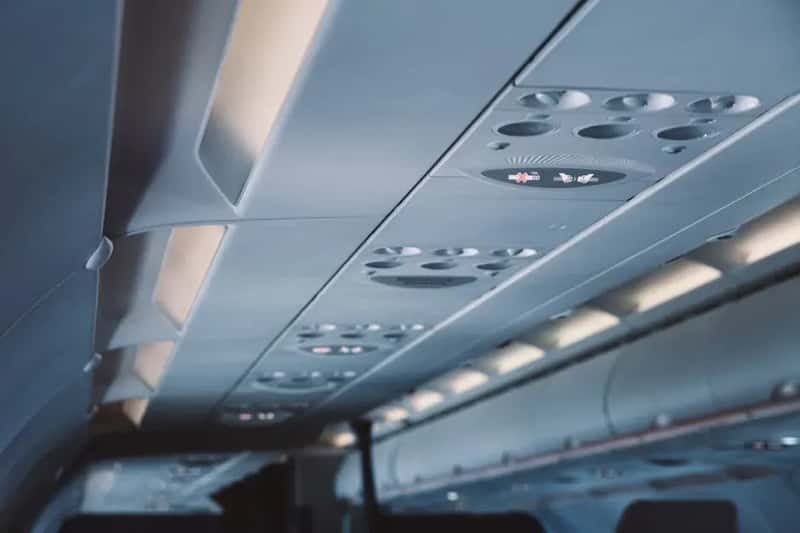
Most passengers reach up and twist the overhead air vent the moment they sit down, barely giving it a second thought. It’s a reflex. Yet these little nozzles are touched by virtually every passenger on every single flight. When thinking about the most germ-covered places on an airplane, experts suggest thinking of places that are often touched but rarely cleaned – and the overhead air vents are a prime example.
When the team at TravelMath conducted an investigation into airplane cleanliness, they found that overhead air vents contain 285 colony-forming units of bacteria per square inch. In fact, the TravelMath study ranked the tray table as dirtiest, followed by the overhead air vents, the flush button in bathrooms, and seatbelt buckles, based on colony-forming units per square inch.
The fix is surprisingly simple. One practical tip is to adjust the vent with an antibacterial wipe when you first board the plane, and then don’t touch it again. Adjust once, sanitize immediately, and you’ve done your part. It’s a small habit that could save you a nasty cold.
5. The Headrest
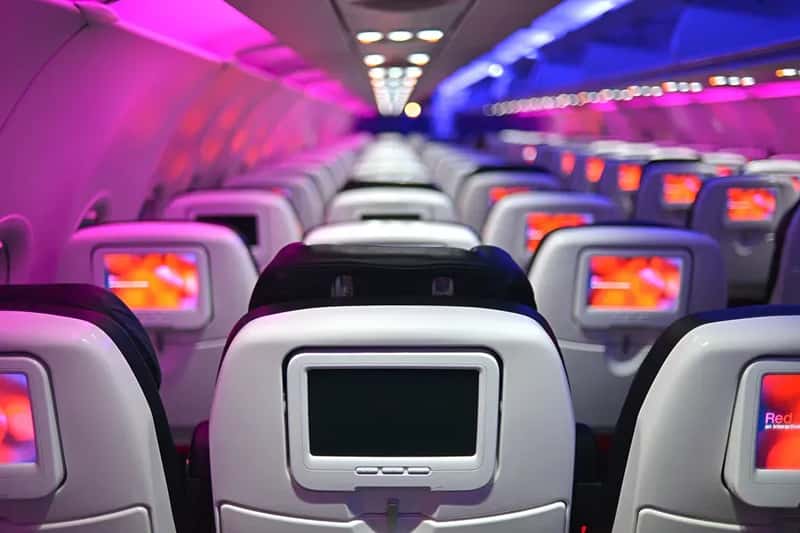
The headrest is one of those items people lean against for hours without thinking twice. On long flights especially, it becomes essentially a makeshift pillow. The problem? Swab tests conducted by the Canadian Broadcasting Corporation found some seat headrests teeming with Staphylococcus, E. coli, and Hemolytic bacteria – all germs that can cause flu and other serious infections.
Microbiologist Jason Tetro, author of The Germ Files, has noted that airplanes have their own microbiome, with the most common types coming from human skin – and that the germiest place on the plane is actually the headrest, where you’ll find not only bacteria but also yeasts and molds.
A study of aircraft cleanliness suggested the seats’ headrests may be the germiest surfaces on the entire plane, with some testing positive for E. coli bacteria, according to an analysis done by CBC’s consumer news series “Marketplace.” Nearly half of all swabs tested positive for high levels of bacteria. If you can bring a small travel scarf or hoodie to use as a barrier, do it.
6. Airplane Blankets and Pillows
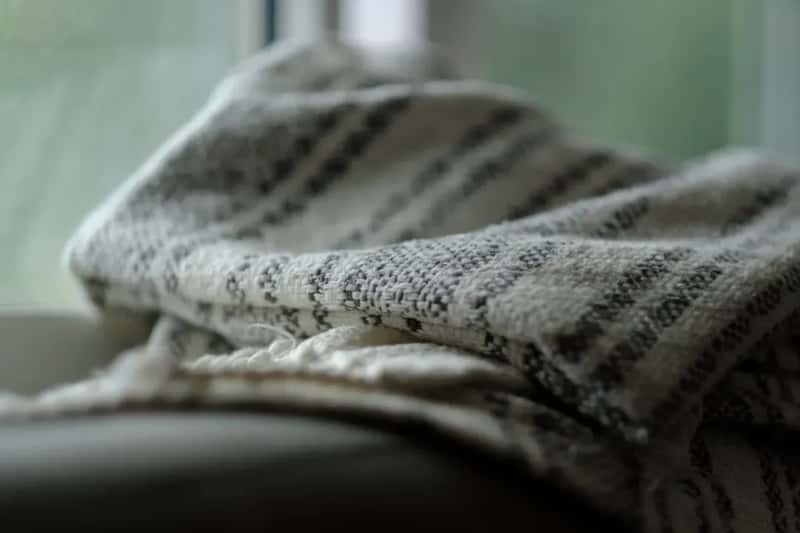
There’s something deceptively cozy about wrapping yourself in that airline blanket mid-flight. I get it. But flight attendants have been quietly horrified about these items for years. It turns out that pillows and blankets are not washed nearly as often as passengers might assume, and flight attendants themselves are not always sure how thoroughly they are disinfected – with these items frequently reused from flight to flight.
Unless a pillow or blanket encounters one of what insiders call the “three P’s” – puke, pee, or poop – it’s rarely replaced between flights. That is a remarkably low bar. Flight attendants have reported seeing people wrap their feet in the blankets and sneeze into them.
Even the complimentary blankies and pillows aren’t safe – and the only time it’s relatively safe to accept one is if it’s still sealed in plastic. Blankets and pillows that aren’t sealed may be getting reused, and while they may get washed in between uses, that’s not guaranteed. If they’re not sealed, treat that as a red flag. Your best option? Bring your own.
7. The Lavatory Door Latch and Flush Button
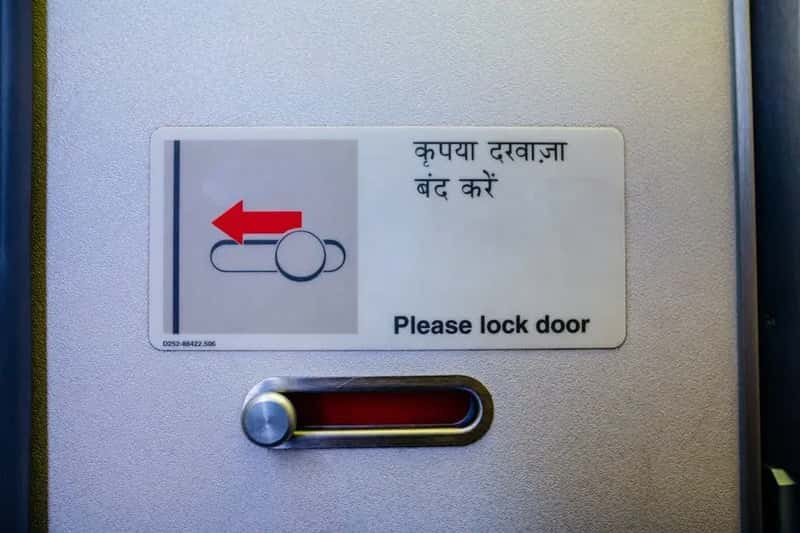
It shouldn’t surprise anyone that airplane bathrooms are not exactly a sanctuary of cleanliness. Roughly dozens to hundreds of passengers cycle through these tiny spaces on every single flight. As many as 75 people use the bathrooms between cleanings, according to microbiologist Charles Gerba of the University of Arizona. That’s a staggering number for a space the size of a closet.
When visiting the lavatory, it’s important to remember that while the toilets themselves may be cleaned relatively regularly, the locks and door handles are not. This is precisely where passengers who didn’t wash their hands transfer the most bacteria. Gerba has pointed out that the sinks are so small that people with large hands can’t even fully fit them under the faucets – and experts recommend using a paper towel on the door latch on the way out as a precaution.
Health experts note that germs found in airplanes can include E. coli and MRSA, and can live on surfaces for up to a week. Disease-causing bacteria can linger on surfaces commonly found in airplane cabins for days, even up to a week, according to research presented at the annual meeting of the American Society for Microbiology. Use your elbow or a paper towel to push open that lavatory door on the way out. It’s a tiny move with real protective value.
—
Flying doesn’t have to feel like a biological obstacle course, but it helps to be informed. Pack some antibacterial wipes, bring your own blanket on longer flights, and resist the urge to reach into that seat pocket. The skies are still friendly – just a little germier than the brochure lets on.
What do you think – were any of these items on your radar before? Drop your thoughts in the comments.