Fear rarely announces itself politely in an airport terminal or on a turbulent flight. It shows up sideways, in small gestures and quiet habits that most people around never even notice. Travelers have gotten remarkably good at masking nerves, whether it’s a fear of flying, a language barrier, or simply the unfamiliar chaos of a foreign train station.
What’s interesting is how consistent these coping behaviors are across different people and different fears. Watch closely in any departure lounge and the same patterns tend to repeat themselves.
1. They grip something, anything, a little too tightly

Hands need somewhere to put nervous energy, and armrests, phone cases, and water bottles absorb a lot of it. Flight attendants have long noted that passengers squeeze armrests during takeoff and turbulence far more than they realize, often leaving faint indentations on foam padding after repeated flights. It’s an involuntary response tied to the body’s fight or flight system, where muscles tense even when the mind is trying to stay calm.
This isn’t limited to planes either. Nervous travelers on buses through mountain passes or ferries in rough seas do the same thing with seat rails or bag straps. The grip loosens the moment the perceived danger passes, almost like a small physical exhale.
2. They over-explain their plans to strangers

Scared travelers often talk more than usual, especially to people they’ve just met. It might come out as an unprompted rundown of their itinerary to a taxi driver, or a detailed explanation to a hostel receptionist about exactly which train they’re catching and why. Psychologists who study anxiety note that verbal over-explaining is a common self-soothing mechanism, a way of feeling more in control by narrating the plan out loud.
This behavior tends to spike in unfamiliar environments where language or cultural cues feel uncertain. Saying the plan out loud to someone, even a stranger who may not care, gives the brain a small sense of structure and predictability that quiets the unease underneath.
3. They check their documents and belongings repeatedly
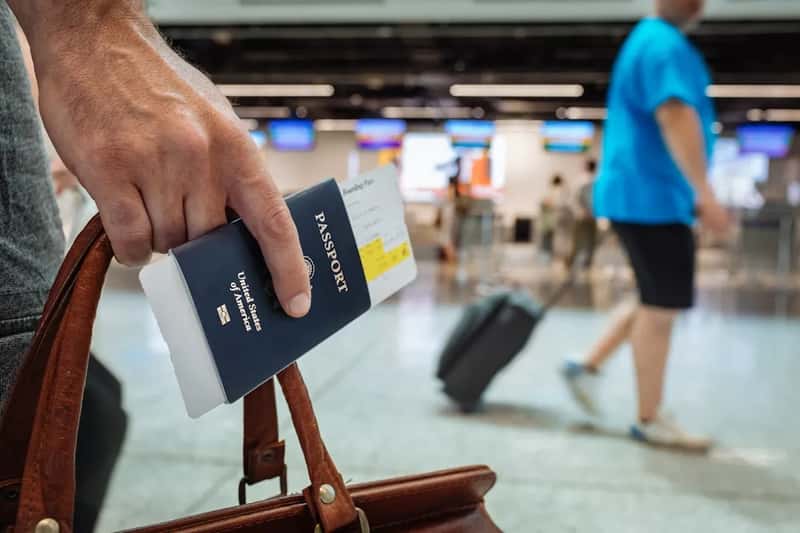
Passport, boarding pass, wallet, phone. Passport, boarding pass, wallet, phone again, sometimes within the same five minutes. This repetitive checking is one of the most universally recognized signs of travel anxiety, and it’s rooted in a basic need for reassurance rather than actual forgetfulness.
Airport security staff and border agents see this constantly, particularly among first-time international travelers or those navigating a country where they don’t speak the language fluently. The habit usually fades once the traveler clears the anxious checkpoint, whether that’s security screening, immigration, or simply boarding the plane itself.
4. They joke about the thing that’s actually scaring them

Humor is one of the oldest deflection tools people use when nerves run high, and travel brings it out constantly. A traveler afraid of flying might crack a joke about the plane being held together with duct tape, or someone nervous about a sketchy-looking taxi might laugh about starring in a true crime documentary. This kind of self-deprecating or dark humor is a well-documented psychological coping mechanism, allowing people to voice a fear without fully admitting how seriously they feel it.
It also serves a social function. Making light of the situation invites others to laugh along, which diffuses tension in the group and makes the traveler feel less alone in their nervousness, even if the underlying worry hasn’t actually gone away.
5. They mirror the calm of people around them

When travelers feel uneasy, they often scan the environment for cues on how to behave, watching flight attendants, tour guides, or fellow passengers to gauge whether the situation is actually dangerous. This is a documented behavior called social referencing, where people regulate their own emotional response based on the perceived calm or alarm of others nearby. A steady voice from a pilot during turbulence, or a relaxed local shrugging off a bumpy bus ride, can visibly settle a nervous traveler within seconds.
The reverse is also true. If the people around a scared traveler start looking worried, that anxiety spreads quickly, which is part of why airlines train cabin crew to project composure even during genuinely rough moments.
6. They keep their hands or body busy with small tasks
Reorganizing a backpack for the third time, refolding a map, scrolling through photos that were already looked at ten minutes ago. These small repetitive tasks give an anxious mind something to focus on besides the fear itself. Occupational therapists and anxiety researchers often describe this as a grounding technique, even when the traveler doing it has no idea they’re using one.
It shows up especially during waiting periods, like sitting at a gate before a delayed flight or standing in a long customs line in an unfamiliar country. The busywork isn’t really about the task. It’s about giving nervous energy a productive outlet instead of letting it build up with nothing to do.
7. They go quiet and stare out a window or at a fixed point
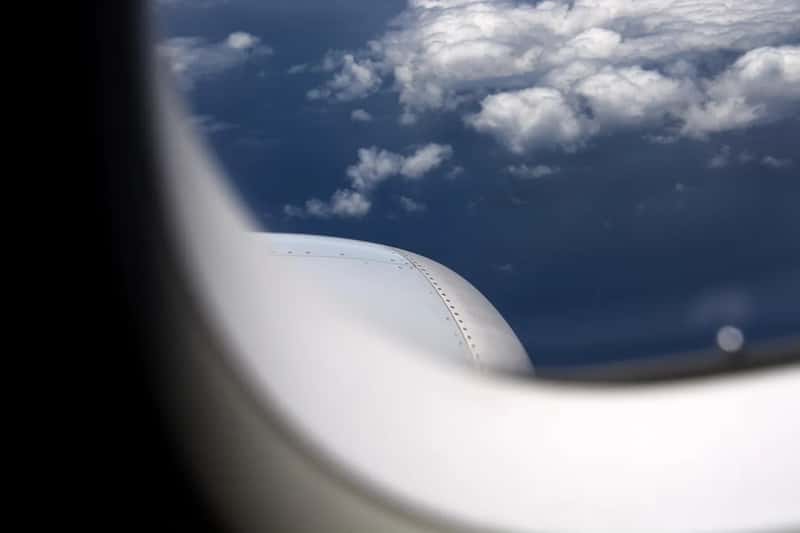
Not every scared traveler talks more or fidgets. Some do the opposite, going noticeably silent and fixing their gaze on a window, a seatback screen, or some distant point outside. This is a recognized stress response where the body essentially narrows focus to reduce sensory input, a way of managing overwhelm by simplifying what the brain has to process at once.
It’s often mistaken for boredom or tiredness by people sitting nearby, but for the traveler, it’s usually the opposite of relaxation. The stillness is doing a lot of internal work, holding steady until the flight lands, the train reaches the station, or whatever moment of uncertainty finally passes.
Travel fear doesn’t always look like panic. More often it looks like a tight grip on an armrest, a joke that lands a little too fast, or someone quietly staring out a window while their mind works through something they’d rather not say out loud.