Most American families brace themselves for the tuition bill long before a student ever sets foot on campus. Yet a growing number of accredited, well-ranked universities abroad charge less for an entire year, sometimes for an entire degree, than a public college back home charges an in-state resident for a single semester.
The gap has only widened in recent years. As sticker prices climb across the United States, a handful of countries have kept higher education deliberately affordable, treating it less as a business model and more as public infrastructure. Here are seven real institutions where that difference shows up clearly on paper.
1. Technical University of Munich, Germany

Germany’s public university system remains one of the most consistent bargains in global higher education. All 16 federal states charge zero tuition at public universities for Bachelor’s, Master’s, and PhD programmes, and the rule applies to every nationality, including non-EU international students.[1] The Technical University of Munich fits squarely into that system, and it happens to be one of the country’s strongest names in engineering and applied sciences. It is renowned for cutting-edge programs in engineering, computer science, and technology innovation.[2]
Students still pay a small administrative charge each semester, but it is nowhere near tuition in the traditional sense. Students can study a world-class Bachelor’s, Master’s, or PhD while paying only a small semester contribution of €150 to €350.[1] Compare that to the average published in-state tuition and fees of $11,950 at American public four-year universities for 2025-26[3], and the difference is not subtle. A German semester fee often costs less than a single American college textbook order.
2. University of Oslo, Norway
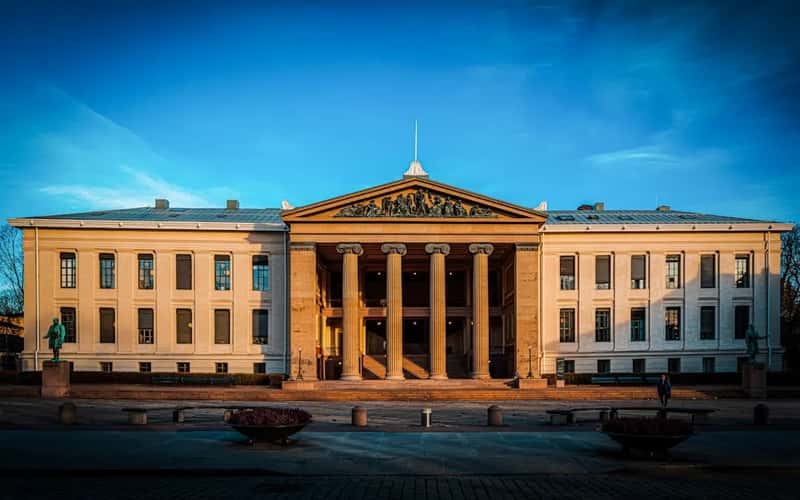
Norway’s tuition story has been anything but static, which makes it worth explaining carefully rather than repeating old headlines. In 2023, the Norwegian government introduced tuition fees for international students from outside the EU/EEA and Switzerland, after tuition at public higher education institutions had been free for all students, including international students.[4] That policy triggered a steep decline in foreign applicants, prompting a reversal that is now taking shape.
By June 2025, the ministry announced a legislative reversal, a proposed bill to remove the cost-covering requirement entirely, enabling universities to reduce fees to any level, including zero, with a target date of 1 August 2026.[5] The University of Oslo remains one of the country’s flagship institutions for students weighing this shift. Top options include the University of Oslo, NTNU, University of Bergen, and Oslo Metropolitan University.[6] Even under the interim fee structure, EU and EEA students have never paid tuition there, and the direction of policy is now pointing back toward broader access rather than away from it.
3. Charles University, Czech Republic

Charles University in Prague is one of the oldest universities in Europe, founded in 1348, and it still offers a route to a nearly free degree. The Czech Republic offers free tuition for programmes taught in Czech, while English-taught programmes cost approximately EUR 3,000 to 5,000 per year.[7] That English-language fee, spread across a full academic year, still lands well under half of what an American in-state student pays for tuition alone.
Living costs help the math even further. Monthly living costs run about €500 to €700 in Prague and €400 to €550 in Brno, and dormitory housing can run as low as €100 to €200 a month.[8] Add tuition and rent together for a full year, and the total frequently comes in below what many American families pay just for a public university’s room and board fees.
4. University of Warsaw, Poland
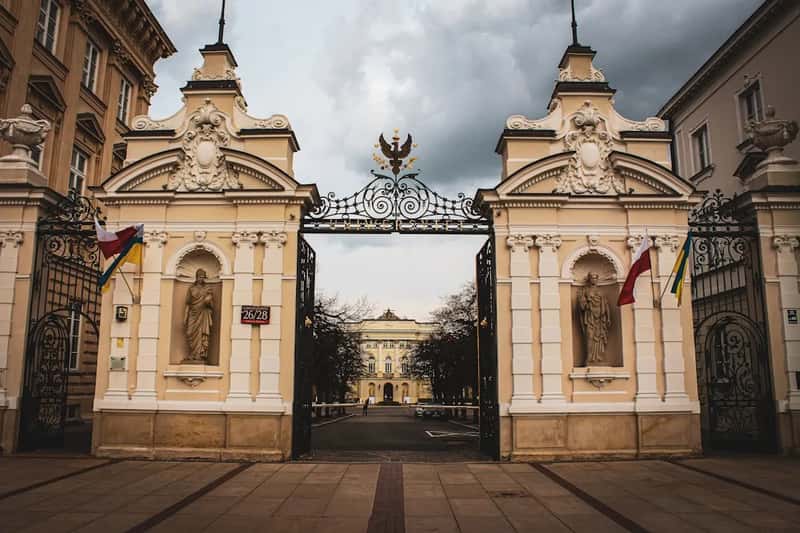
Poland has quietly built one of Central Europe’s more respected university systems, and the University of Warsaw sits near the top of it. Top universities include the University of Warsaw, Jagiellonian University, and Warsaw University of Technology, and Poland offers solid European education at very affordable rates.[9] English-taught programs have expanded steadily over the past several years, giving international students more options without needing fluent Polish.
The tuition figures back up the reputation for value. Poland’s tuition runs roughly €1,000 to €4,000 a year for English-taught programs, well below Germany’s tuition free model but still remarkably low by Western standards.[8] Combined with lower daily living costs than most Western European cities, a full year in Warsaw can cost less than a single semester of dorm fees at many American public schools.
5. Universiti Malaya, Malaysia

Universiti Malaya is the country’s oldest and most internationally ranked institution, and it anchors Malaysia’s reputation as a budget-friendly hub for Western-style degrees. Southeast Asia has become known for hosting branch campuses of respected British and Australian universities at a fraction of their home-country price, and Malaysia leads that trend. Tuition runs roughly MYR 7,000 to 12,000 per year, or about USD 1,500 to 2,700, with monthly living costs between $330 and $660.[8]
That places Kuala Lumpur among the least expensive major cities for international students anywhere in the world. The cost of living in Malaysia is notably reasonable, making it particularly attractive for international students seeking the cheapest countries to study abroad.[10] A full year of tuition and living expenses combined often falls short of what a single semester costs at an average American in-state public university.
6. National Taiwan University, Taiwan
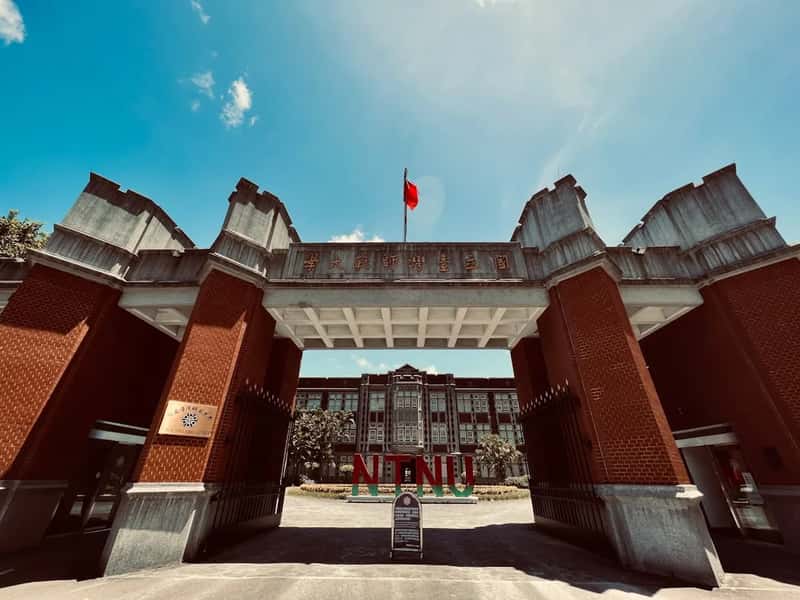
National Taiwan University consistently ranks as the island’s top institution, known for strong engineering, computer science, and business programs taught partly or fully in English. Taiwan has invested heavily in attracting international students without pricing them out. Taiwan’s average annual tuition runs around $2,500, among the lowest figures of any country with globally recognized universities.[11]
Government scholarships sweeten the deal further for qualified applicants. The Taiwan Scholarship covers tuition and provides a monthly stipend[9], effectively erasing the cost gap entirely for recipients. Even without that scholarship, tuition alone at National Taiwan University sits at roughly one fifth of the average American in-state rate.
7. Sorbonne University, France
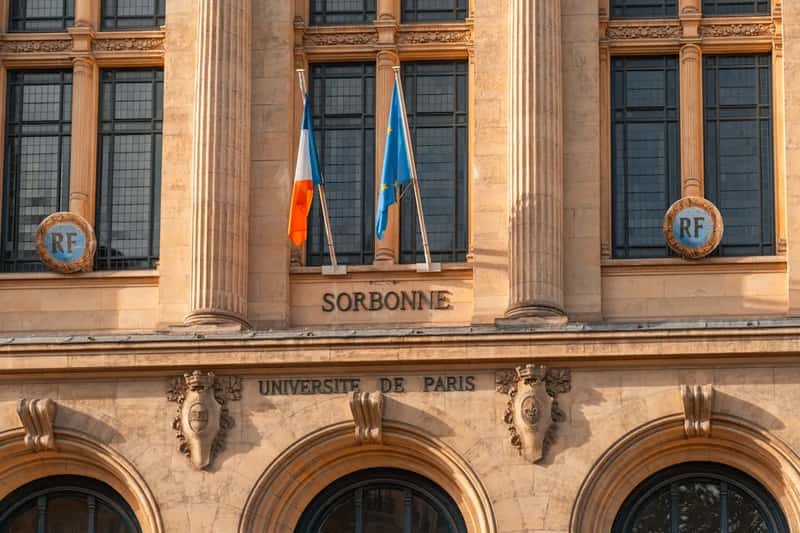
France runs one of the more counterintuitive systems in global higher education: prestige and price have almost nothing to do with each other. Sorbonne University in Paris, one of the most recognized academic names in the world, charges public university rates set by the French government rather than by the institution itself. Public tuition in France runs between €170 and €243 per year[11], a figure that applies broadly across public universities, Sorbonne included, for most standard degree programs.
Paris living costs run higher than the French national average, so the full picture requires some nuance. A rough annual budget for France, including tuition and living costs, runs between €11,000 and €16,000[11], which still lands below the total annual cost of attendance many American in-state students face once tuition, fees, and housing are added together. Tuition itself, though, remains almost symbolic by American standards, amounting to less than the price of a few textbooks each semester.
Seven countries, seven very different academic cultures, and one shared thread: none of them treat a university degree as an unavoidable financial gamble. Germany and France keep public tuition close to zero by design. Norway is actively rebuilding toward that same model after a brief detour. The Czech Republic, Poland, Malaysia, and Taiwan each offer a version of the same idea at a slightly different price point, usually still far below the $11,950 average in-state tuition[3] charged at American public universities in 2025-26. For students and families willing to look past their home state’s flagship school, the math abroad often speaks for itself.