Retirement doesn’t have to mean trading sunshine for a shrinking bank account. While plenty of coastal towns and beach cities have priced out anyone without a seven-figure nest egg, there are still places around the world where a modest pension or Social Security check can cover a genuinely comfortable life. These destinations combine warm climates, welcoming expat communities, and living costs that are often a fraction of what you’d pay in a major U.S. metro area.
What follows isn’t a list of hidden secrets nobody’s heard of. Rather, it’s a grounded look at seven places where the math actually works for retirees on a budget, based on current visa requirements, cost-of-living data, and healthcare realities as of 2026. Each one has its own personality, paperwork, and trade-offs, so it’s worth reading past the price tags before you start packing.
1. Lake Chapala and Central Mexico

Mexico has long been the default answer for North Americans who want warmth without a long flight, and it still holds that title in 2026. Mexico has long been the go-to for North American retirees seeking sun, culture, and value, and it remains true in 2026 largely because of geography and familiarity. Mexico offers an astounding variety of climates and landscapes, from colonial highland towns with cool evenings to tropical beach resorts, from modern megacities to quiet fishing villages, which means retirees can pick their own version of warm, whether that’s a dry desert plateau or a humid coastline.
The appeal goes beyond scenery. The appeal is clear: proximity to the U.S. and Canada, often just a few hours’ flight, a low cost of living, excellent healthcare in major cities, and a huge and welcoming expat network. For Americans specifically, the paperwork is refreshingly simple compared to European alternatives. Mexico wins on proximity: established expat cities, a straightforward Temporary Resident Visa, and lower transition costs than most European options. Towns like Lake Chapala and Mérida have built entire retiree ecosystems around this reality, with English-speaking clinics, golf courses, and social clubs that make the transition easier than most people expect.
2. Panama, the Dollarized Favorite
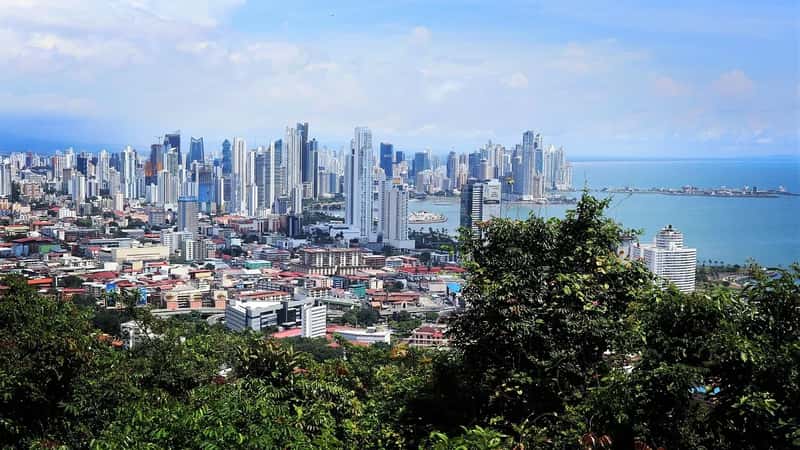
Panama earns its reputation as one of the easiest countries in the world for a retiree to plan a move to, mostly because it removes so many of the usual headaches. Panama’s Pensionado program has one of the lowest income thresholds of any retirement visa anywhere, at $1,000 a month in qualifying retirement income, and the country also runs on the U.S. dollar, which removes currency friction entirely. That combination means a modest Social Security check can genuinely open the door to legal residency here, something that isn’t true in most of Europe.
Cost of living varies enormously depending on where you settle. Housing costs can be as little as $400 in a smaller city or town, while a luxury apartment in Panama City could set you back over $5,000 a month. Panama City itself offers a surprising blend of modern comfort and affordability, since Panama City is a modern, cosmopolitan capital with skyscrapers, world-class restaurants, excellent private hospitals, and a surprisingly affordable cost of living for a major city. Retirees who choose smaller beach or mountain towns instead can stretch their budget even further, though it’s worth checking safety guidance for specific regions before committing to an address.
3. Costa Rica’s Central Valley

Costa Rica has built its reputation on the “pura vida” lifestyle, but it also happens to be one of the more financially accessible retirement destinations in Latin America. The Pensionado visa is designed for retirees with a monthly pension of $1,000 or more from a single source, such as Social Security or a private pension, making it one of the more attainable options for anyone living on a fixed income. The visa also extends to family, since the Pensionado visa allows you to bring your spouse, children under 25, and adult children with disabilities.
Real-world budgets here depend heavily on location. A retired couple living modestly in a Central Valley town like Atenas or Grecia, renting a two-bedroom house, cooking at home most nights, driving a used car, and using CAJA for healthcare, can live on $2,000 to $2,500 per month. Healthcare is a genuine strength of the country too, since the CAJA Costarricense de Seguro Social is the country’s universal healthcare system, and legal residents, including Pensionado visa holders, can enroll for monthly contributions of approximately $100 to $200 USD based on declared income. Beach towns cost more, but the Central Valley remains the budget-friendly sweet spot for most newcomers.
4. Portugal’s Algarve and Interior Towns

Portugal has become one of Europe’s most talked-about retirement havens, and while it’s no longer the rock-bottom bargain it once was, it still undercuts most of Western Europe by a wide margin. While Portugal has become more expensive in recent years as its popularity has grown, it remains significantly more affordable than most of Western Europe and the United States. The visa pathway is also relatively accessible for anyone with a steady pension, since applicants need a stable passive income of €920 per month in 2026 and minimum savings amounting to €11,040 annually, one of the lowest thresholds anywhere in the EU.
Day-to-day costs shift dramatically depending on whether you settle in a big city or a quieter region. A single person can live comfortably outside Lisbon or Porto for €1,500 to €2,000 per month, and choosing a smaller town in the Alentejo or the interior stretches that budget even further, all while keeping access to the country’s public healthcare system. The Algarve’s warm, dry climate and large existing expat community make it a particularly popular landing spot for retirees who want sunshine along with European infrastructure.
5. Medellín and Colombia’s Coffee Region
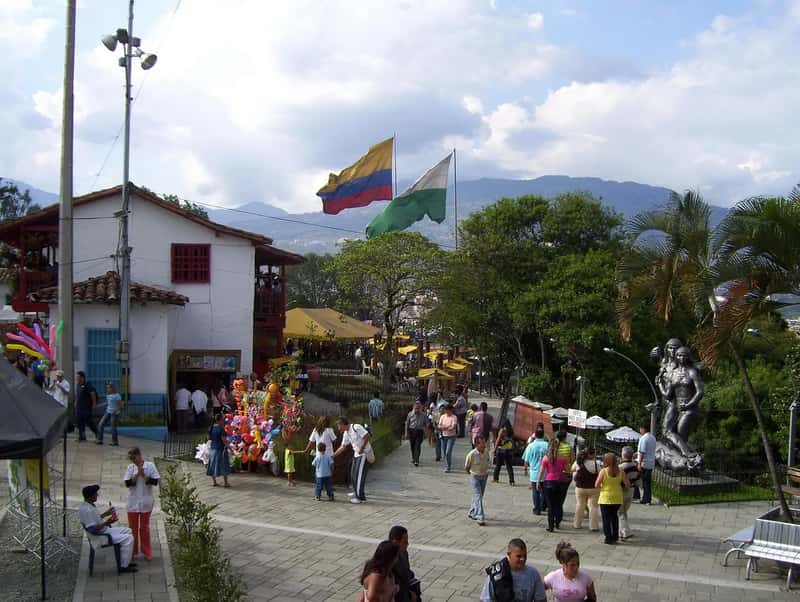
Colombia has quietly become one of the more compelling warm-weather options for retirees willing to look past outdated stereotypes. The country’s retiree visa is tied to a modest income requirement, since the visa is intended for foreigners who earn more than three times the Colombian minimum wage through a pension, social security, or disability payment, around $1,410 USD per month in 2026. That’s a manageable bar for anyone drawing a typical pension or Social Security benefit.
Medellín in particular has earned near-legendary status among expats for its climate and livability. Medellín enjoys year-round temperatures of 17 to 28 degrees Celsius, has the largest expat community in the country, and offers excellent infrastructure alongside world-class restaurants. Overall monthly budgets remain reasonable by North American standards, since a comfortable, high-quality retirement lifestyle in Colombia typically costs between $1,500 and $3,000 USD per month depending on lifestyle and city of choice. The country’s “eternal spring” climate, thanks to its elevation near the equator, gives retirees warm days without the oppressive heat found in lower-lying tropical spots.
6. Penang, Malaysia

For retirees willing to look toward Southeast Asia, Penang remains one of the strongest value propositions on the planet, especially for those who aren’t chasing a formal long-term visa. Day-to-day living costs are strikingly low, since a comfortable couple lifestyle in Penang runs RM 6,000 to 9,000 a month, or roughly $1,350 to $2,000, and that figure covers a genuinely comfortable modern lifestyle rather than a bare-bones existence. Housing adds to the appeal, with Georgetown offering colonial charm, world-class street food, and lower housing costs than Kuala Lumpur, with a two-bedroom in a modern condo running RM 1,800 to 3,500 a month, or $383 to $745.
It’s worth noting that Malaysia’s long-term MM2H residency program has become considerably more demanding in recent years, since it now requires RM 40,000 a month in income and up to RM 1.5 million in fixed deposit under its higher tiers, pricing out many budget-conscious retirees from formal long-stay status. Even so, day-to-day living costs remain remarkably low for those who can qualify or who structure shorter stays, and the island’s English-speaking healthcare system and established British and Australian retiree communities make the transition smoother than in many other parts of Asia.
7. Greece’s Mainland and Islands

Greece has recently overtaken longtime favorites to claim the top spot in International Living’s closely watched retirement rankings. International Living’s 2026 Global Retirement Index ranked Greece number one for the first time in the index’s history, with its 90.1 score topping the index across healthcare value, visa access, cost of living, and climate. Beyond the accolade, the everyday math genuinely works in a retiree’s favor, since the cost of living in Greece is fifty percent lower than in the U.S., and one needs around €1,500 per month to live a comfortable life.
The tax situation sweetens the deal considerably for anyone drawing pension or Social Security income. Greece’s most attractive feature for international retirees is its generous tax policy, with a seven percent flat tax rate for foreign pensioners who decide to live in the country. For those who want island living, among the best places for retirees are Athens, Thessaloniki, Rhodes, Volos, and Kalamata, each offering its own blend of history, climate, and pace of life. Non-EU citizens do need to navigate a residency visa requiring a monthly income threshold, but for anyone who qualifies, Greece now offers arguably the best combination of warmth, affordability, and lifestyle currently available in Europe.
None of these seven destinations are risk-free or effortless. Visa rules shift, currencies fluctuate, and the difference between a “comfortable” budget and a “bare minimum” one can be substantial depending on the town you choose within any given country. Still, each of these places proves that warm weather and financial breathing room aren’t mutually exclusive in retirement.
The common thread running through all seven is flexibility. Retirees who do well in these spots tend to be the ones who research the actual visa requirements, visit before committing, and choose smaller towns over glossy capital cities when stretching a budget matters most. A modest pension won’t buy a beachfront mansion anywhere, but in these places, it can still buy a genuinely good life in the sun.