Ask anyone who flies for a living, or close to it, what separates a calm airport morning from a frantic one, and the answer rarely involves luck. It usually comes down to a handful of small decisions made days or even weeks before the trip. The frustrating part is that most of these mistakes are invisible until they cost you a boarding group, a gate-check fee, or a missed flight.
1. Skipping expedited screening enrollment entirely
Plenty of travelers still walk into the standard security line every single time, assuming the wait will be manageable. TSA PreCheck remains the gold standard for fast airport security despite the Transportation Security Administration eliminating mandatory shoe removal in standard lanes on July 8, 2025, with 99% of PreCheck travelers waiting less than 10 minutes at checkpoints during the busiest holiday travel season on record.[1] That gap in wait times adds up fast if you fly more than a couple of times a year.
Seasoned travelers also stop thinking of PreCheck and CLEAR as competing products. Having both TSA PreCheck and CLEAR+ expands your options, and if an airport offers both, being enrolled in both programs allows you to choose whichever line is shorter.[2] Enrollment has gotten easier too, since you can walk up to CLEAR’s enrollment pod with no appointment necessary, and CLEAR will submit your TSA PreCheck application on your behalf, with a response expected within three to five days.[3]
2. Cutting arrival time down to the old, familiar minimum
A lot of travelers still operate on arrival windows they memorized years ago, before checkpoints got busier and ID rules changed. Official TSA guidance recommends that travelers arrive at least two hours before scheduled domestic flights and three hours before international departures.[4] Experienced flyers rarely ignore that guidance outright, but they do adjust it based on the airport and the day.
The smarter approach is treating the standard window as a floor, not a ceiling. Adjust these times based on your specific circumstances: subtract 30 to 60 minutes if you have TSA PreCheck and no checked bags, and add 30 to 60 minutes for families, holiday travel, or large airports during peak times.[5] Some major hubs have gone even further with public guidance, and Hartsfield-Jackson Atlanta International Airport is still advising passengers to arrive at least four hours early during peak surges.[6]
3. Showing up with the wrong form of identification

This one used to be a minor inconvenience. It is not anymore. As of May 7, 2025, travelers flying domestically in the US must present identification that complies with the REAL ID Act or another accepted form of ID at security checkpoints.[4] Seasoned travelers double-check this well before their trip rather than assuming their old driver’s license still qualifies.
Getting caught without compliant ID does not automatically ground you, but it does slow everything down. Passengers who arrive with an ID that does not meet these requirements may still be allowed to fly after additional identity verification by the TSA, though that process can take extra time, making an earlier arrival especially important.[4] That extra verification step is exactly the kind of delay frequent flyers try to eliminate by checking their documents ahead of time instead of at the checkpoint.
4. Packing power banks and spare batteries in checked luggage
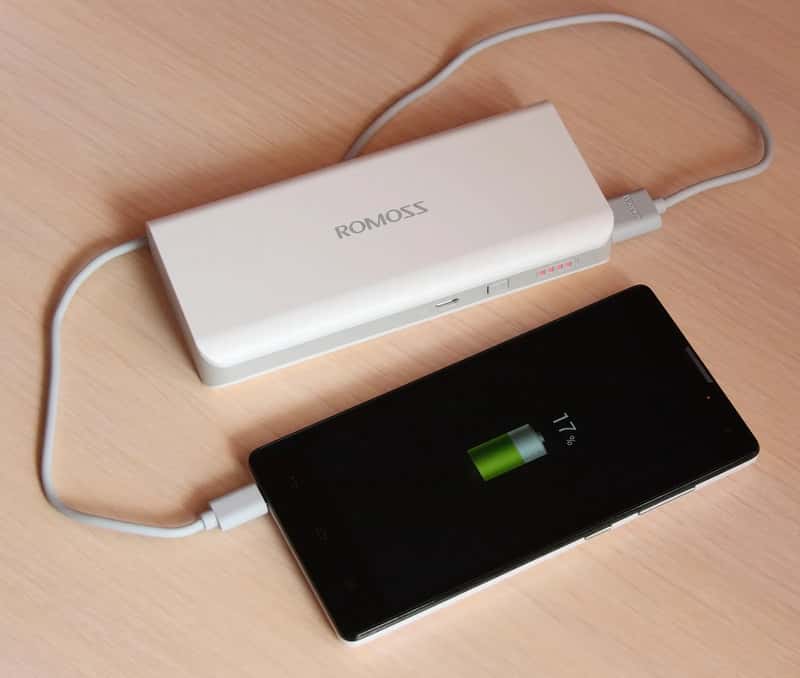
This mistake sounds like common sense once you hear it, yet it remains one of the most frequent errors at checkpoints. Portable chargers and spare lithium-ion batteries must always go in your carry-on bag, never in checked luggage, and batteries rated at 100 Wh or less are allowed without airline approval.[7] The reasoning is straightforward fire safety, since a battery malfunction is far easier to manage in the cabin than in a sealed cargo hold.
5. Assuming the liquids rule has quietly gone away
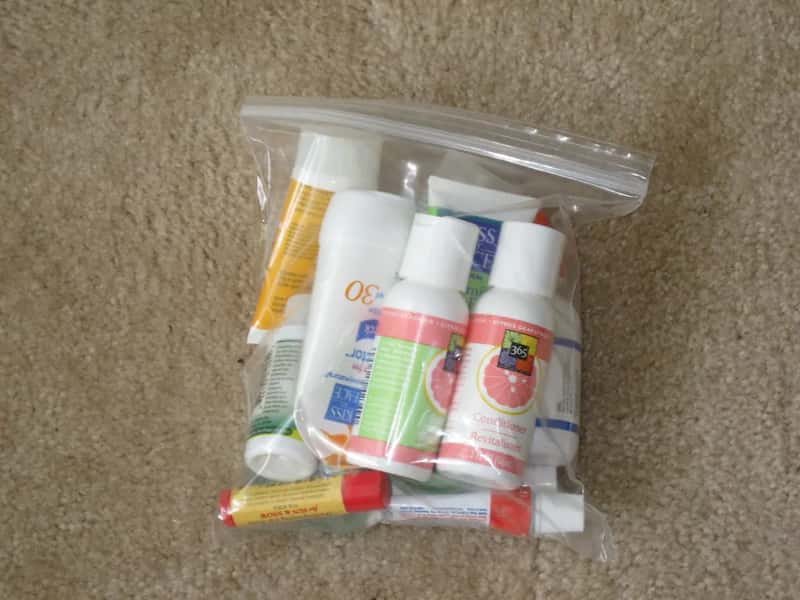
Every so often a headline suggests the liquids restriction has been relaxed or scrapped, and inexperienced travelers pack accordingly. It has not changed. The 3-1-1 rule has not changed in 2026: containers of 3.4 ounces or 100 milliliters or less, all of them inside one quart-size bag, one bag per passenger.[8] Every headline promising a new liquid limit this year is wrong.[8]
What has actually shifted is a narrow set of exceptions rather than the core rule itself. Liquids purchased at international duty-free shops may exceed the standard limit, provided they are sealed in a tamper-evident bag and accompanied by proof of purchase showing they were bought after the security checkpoint, though this is a narrow exception and should not be relied on for domestic purchases.[9] Frequent flyers still pack a quart bag out of habit, because getting flagged over a forgotten travel-size bottle is a needless delay.
6. Trusting a carry-on bag without measuring it first

Nearly every traveler has a bag they swear “always fits,” right up until the day it does not. Airlines have decided that the bag that worked last year might not work today, because what has changed is enforcement, with airlines now measuring bags at the gate instead of relying on the honor system.[10]
The financial hit for guessing wrong can be steep. Anything larger than the allowed dimensions requires paying the carry-on bag fee, which starts around $60 and climbs to $100 if you wait until the gate to pay.[10] Seasoned travelers weigh and measure their bag at home, including wheels and handles, precisely because gate agents no longer eyeball it.
7. Forgetting the personal item has its own separate limit
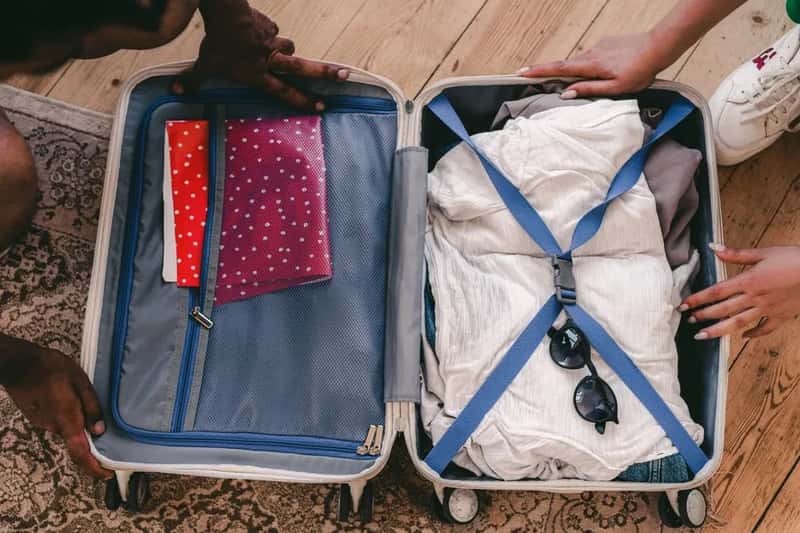
Most travelers focus entirely on their carry-on and treat the personal item as an afterthought, which is exactly where things go wrong. A surprising share of gate rejections occur because travelers forget the second size rule, the personal item limit, since gate agents check both the overhead-bin carry-on and the under-seat personal item at boarding.[12] The dimensions are not universal either, and assuming one airline’s rule applies to another is a common trap.
Budget carriers have made this distinction even sharper by pricing around it. The personal item that fits under the seat is free on every fare, but the larger carry-on bag for the overhead bin is paid, and it is often the most expensive single bag you can add.[13] Experienced travelers now check the personal item dimensions for their specific airline before packing, rather than relying on what worked on a different carrier last time.
8. Never adding the Known Traveler Number to a booking
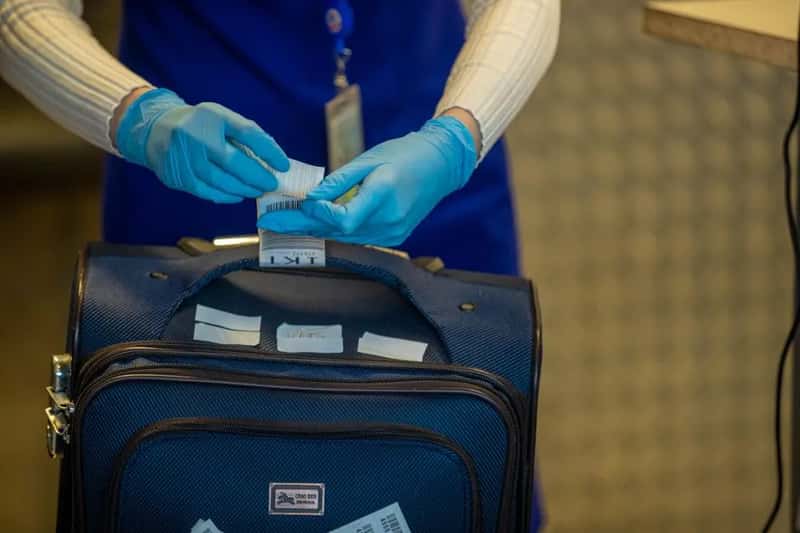
Paying for TSA PreCheck and then forgetting to actually use it happens more often than most people admit. Once you have a Known Traveler Number, you add it to every flight booking, and a TSA PreCheck indicator appears on your boarding pass.[14] Skip that step, and the membership does nothing at the checkpoint no matter how much was paid for it.
The fix experienced travelers rely on is saving the number permanently rather than typing it in each time. The expert advice is to add your KTN to your traveler profiles with every airline you fly, including frequent flyer accounts, since most airlines let you save it permanently so it applies to all future bookings automatically.[15] That single saved entry is often the difference between breezing through a dedicated lane and standing in the regular line wondering why the membership did not work.
Most of these habits share a common thread. None of them require special access or insider knowledge, just a willingness to double-check assumptions that used to be reliable but no longer are. The travelers who move through airports with the least friction are usually not the ones with the most experience in the air. They are the ones who stay current on the rules before they ever reach the terminal.