A lot of the buzz around “free college abroad” is a few years out of date. Norway quietly ended free tuition for non European students back in 2023, and Finland made the same move for undergraduates almost a decade ago, so the list of places that still let outsiders study for nothing has gotten shorter and more specific. What’s left, though, is still real: a small group of countries where a foreign passport does not automatically mean a tuition bill, provided you’re willing to meet the local requirements, whether that’s a language exam or a particular field of study.
The countries below aren’t included because a blog somewhere called them “cheap.” Each one has a documented legal or institutional policy that treats international students the same way it treats its own citizens, at least for the specific programs described. That distinction matters, because “affordable” and “free” get used interchangeably online, and they’re not the same thing.
Germany

Public universities in fifteen of the country’s sixteen states charge no tuition at all, regardless of a student’s nationality, at both bachelor’s and consecutive master’s level. Germany charges €0 tuition at public universities in 15 of 16 states, with only a Semesterbeitrag of €150 to €400 per semester, which includes a public transport pass.[1] That fee covers administration and a transit pass rather than instruction, so it’s not really tuition in the usual sense.
The one exception is Baden Württemberg, where non-EU students pay €1,500 per semester[1] at public universities, a rule introduced specifically to target students from outside the European Union. Everywhere else, the arrangement holds. It’s a big enough system that Germany hosts more than 400,000 international students, making it one of the top study destinations in the world.[2] German language skills open more doors, but a growing number of English taught master’s programs exist too, usually with the same fee free structure attached.
Czech Republic
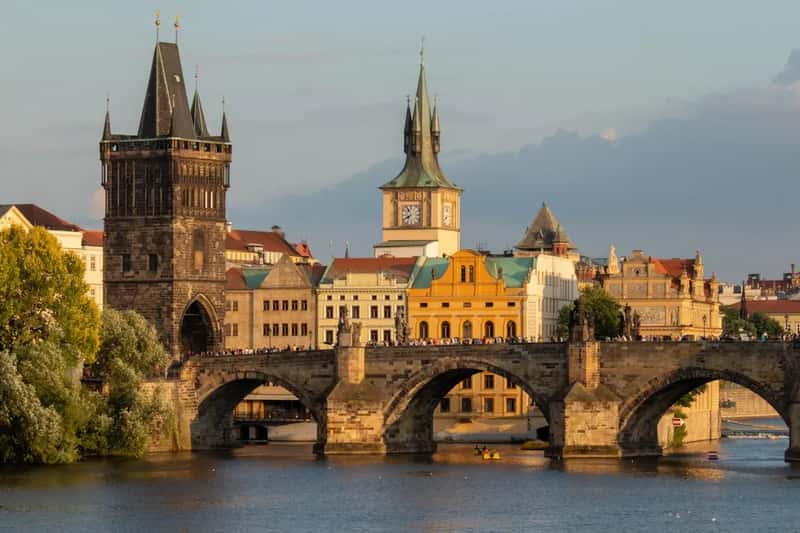
The Czech model is simple in theory and a bit more demanding in practice. In the Czech Republic, higher education is free for all students studying in the Czech language, regardless of their nationality.[3] That’s the whole rule: pass the entrance requirements, study in Czech, pay nothing in tuition, whether you grew up in Prague or Peru.
The catch is the language itself. Programs taught in English or another foreign language come with real costs, since choosing a programme taught in English or another foreign language means paying tuition fees between 0 and 18,500 EUR per academic year[4] depending on the university and subject. Many students bridge the gap with a preparatory year, and the system clearly works for a meaningful number of them, since roughly 44,000 foreign students are currently studying at universities in the Czech Republic.[5] For anyone willing to put in a year or two learning Czech first, it’s one of the more dependable free routes into a European degree.
Iceland

Iceland’s approach is less about language and more about scale, since the entire country has only a handful of institutions to begin with. Iceland has seven universities and many offer free college tuition to all students, no matter their nationality.[6] The University of Iceland, the largest and best known of them, is public and charges no tuition to anyone who enrolls.
What does exist is a modest annual registration charge rather than a fee tied to instruction. Iceland offers free education at public universities with only a small annual fee.[7] Most undergraduate teaching happens in Icelandic, though a number of master’s programs run in English, and living costs on the island tend to run higher than the tuition savings might suggest, so it’s worth budgeting for that side of things separately.
Brazil

Brazil’s federal and state universities operate on a straightforward premise, one that applies to citizens and foreign nationals alike. Brazil is one of the countries with free college for every student, including international students, and the country’s government subsidizes the public university system.[6] Institutions such as USP, UNICAMP, and UFMG confirm this directly to prospective foreign applicants rather than burying it in fine print.
UNICAMP’s own guidance for international applicants notes that undergraduate courses are free, with no fees or monthly payments, and lists 69 undergraduate courses.[8] UFMG describes itself in similar terms, presenting itself as a free-of-charge public educational institution[8] open to international cooperation. The real barrier isn’t cost, it’s language, since classes are in Portuguese, so only fluent students can take advantage of the tuition-free college.[6]
Argentina

The Universidad de Buenos Aires, one of Latin America’s most recognized institutions, charges nothing for undergraduate study regardless of nationality, and public universities charge no tuition at all, not even for international undergraduates, so a foreign student at UBA pays the same as an Argentine student: zero.[9] It’s a policy that stands out globally simply because so few countries extend the same terms to outsiders.
There is, however, a real asterisk worth knowing about. A recent decree has started to shift the ground under this system, since public universities charge no tuition for undergraduate programs even for foreign students, though this is being debated under DNU 366, which authorizes universities to charge non-permanent residents, with implementation varying by institution.[10] For now the traditional free access still largely holds at flagship schools, but anyone planning around it should check current rules at their specific university before assuming the old terms apply everywhere.
Finland
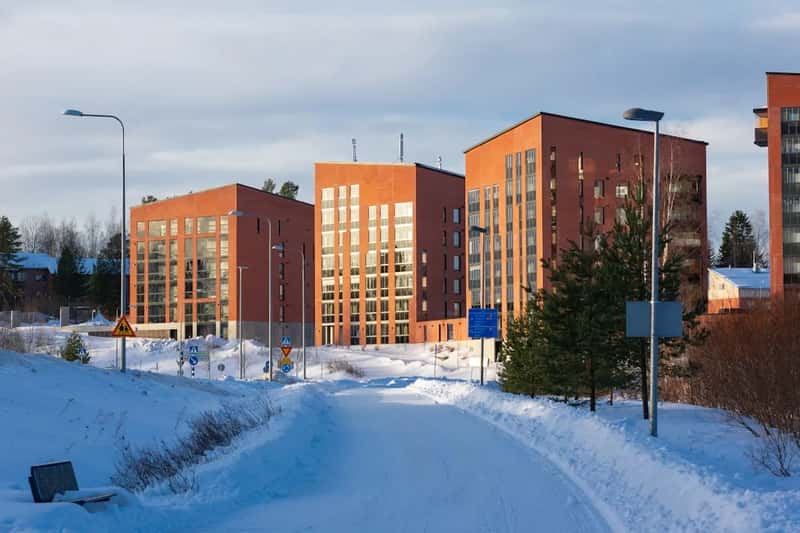
Finland is a more limited case, and it’s worth being upfront about that rather than overselling it. The country dropped free tuition for non EU bachelor’s and master’s students back in 2017, so a general “study free in Finland” claim doesn’t hold up anymore for most degree levels. Where it does still hold is at the very top of the academic ladder, since international students from outside the EU/EEA can study for free in public universities from Finland, though only at PhD level.[3]
That narrower window still matters for the right applicant. Finnish doctoral education is research based and typically comes with a salaried position rather than a conventional student enrollment, which is part of why tuition doesn’t apply regardless of where the candidate is from. It’s not a path for undergraduates chasing a cheap degree, but for someone already aiming at a research career, it’s a real and current option.
Norway
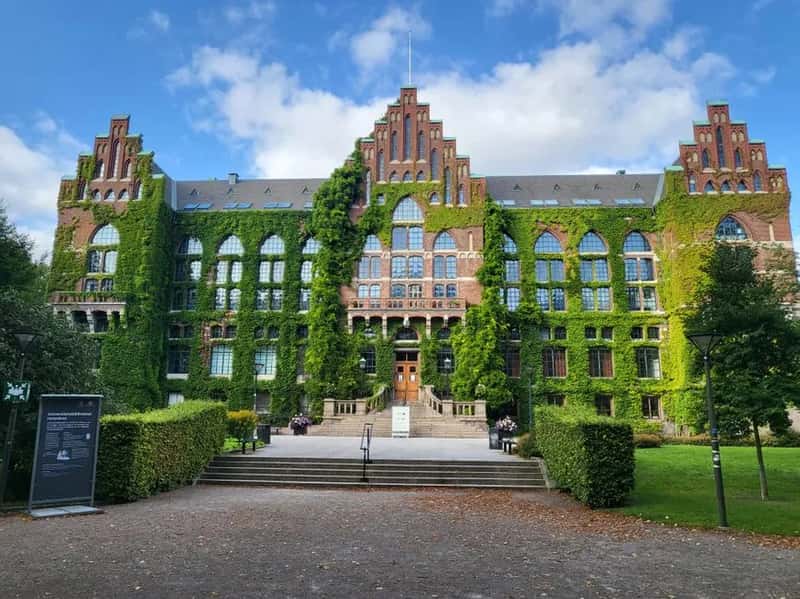
Norway’s reputation as the country with fully free tuition for everyone, including non EU students, no longer matches reality at the bachelor’s and master’s level. Public institutions there introduced fees for non EU/EEA applicants starting in the autumn of 2023, and until 2023, foreign students from countries outside the EU, EEA, and Switzerland studied in Norway free of charge, but from autumn 2023 compulsory tuition fees were introduced, often reaching NOK 130,000 to 180,000 per year.[11] That’s a significant shift from the country’s old reputation, and it’s still working itself out, since some universities have begun lowering their rates again for future intakes.
Where the old free model survives intact is at doctoral level. Norwegian PhD candidates are classified as university employees rather than fee paying students, and tuition fees do not apply because, legally, a PhD candidate isn’t a student, they’re a research employee at the university.[12] That status doesn’t depend on nationality, so a PhD track in Norway remains one of the more overlooked tuition free routes for foreign researchers, even though undergraduate study there no longer works the same way.
Egypt

Al Azhar University in Cairo represents a different, older model of free higher education, one rooted in religious endowment rather than modern public funding policy. For well over a century, the university has admitted students from around the Muslim world to study theology, Arabic, and a range of secular subjects without charging tuition, a tradition tied to its origins as a religiously endowed institution rather than a state funded one in the contemporary sense. It’s a narrower fit than the other entries on this list, since admission and free access have historically centered on Islamic studies and related fields rather than the full spread of modern degree programs.
Even so, it’s a genuine example of a country hosting large numbers of foreign students on a tuition free basis, long before “study abroad for free” became a search trend. The practical requirements, from Arabic proficiency to specific admission pathways, are different from anything in Europe or Latin America, so it’s worth treating as its own category rather than comparing it directly to a German or Czech public university. Anyone interested should go through Al Azhar’s own international admissions office rather than relying on general study abroad guides, since the process doesn’t follow the standard European template at all.