Most Americans spend decades paying into Social Security, only to discover that when retirement finally arrives, the monthly check doesn’t stretch nearly as far as they hoped. The average monthly benefit hovers somewhere around $1,900, and in U.S. cities, that barely keeps the lights on. In many parts of the United States, that monthly check of around $1,800 barely covers rent. Honestly, it’s a frustrating reality that millions of retirees face every single day.
Here’s the thing though: what feels like a tight budget in the U.S. can feel like genuine abundance in the right corner of the world. A February 2025 Harris Poll survey found that roughly more than half of Americans were striving to achieve retirement and financial security, and about half believed they could live a higher quality of life abroad. The world is listening, and more people are acting on it. Between 2018 and 2024, the number of Americans receiving Social Security benefits abroad climbed from 423,022 to 463,480, according to SSA data. So let’s dive in and explore the eight right now.
1. Portugal – Europe’s Best Value for American Retirees

Portugal has become something of a legend in the expat retirement world, and for good reason. In 2025, the Global Citizen Solutions Intelligence Unit ranked Portugal as the world’s best country to retire, awarding it an overall score of 92.61 for combining lifestyle benefits with practical advantages. That’s a remarkable endorsement, and anyone who has spent time in the Algarve or along the Silver Coast would not be surprised at all.
Your savings, Social Security, or pension can go a long way when retiring in Portugal. The country offers a low cost of living, and a retired couple could live comfortably for between $1,500 and $2,000 per month. For context, that is less than what many Americans spend on rent alone. According to an August 2025 analysis published in the newspaper Diário de Notícias, costs are considerably higher in major urban centers and the Algarve, and lower in inland regions.
Under the U.S.–Portugal agreement, a U.S. citizen can continue to receive their Social Security benefits while residing in Portugal. The U.S. Social Security Administration and the Portuguese Social Security Agency coordinate to ensure seamless benefit payments, providing financial stability and clarity for those on a fixed income. With the D7 visa, you can live in Portugal full-time, access public healthcare, travel freely in the Schengen area, and after five years apply for permanent residency or citizenship.
2. Panama – The Dollar-Based Dream With Serious Perks
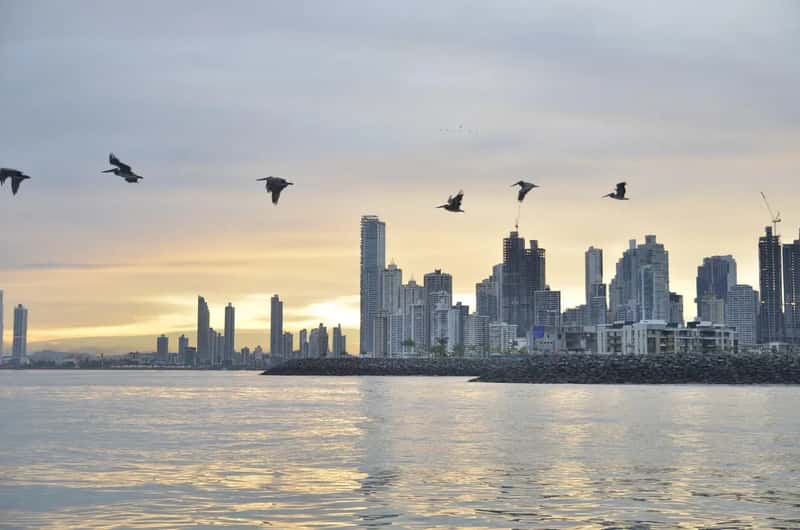
Panama is genuinely hard to beat when the goal is making Social Security work harder. With a U.S.-style infrastructure and dollar-based economy, Panama is an increasingly popular retirement spot. You can live well on $1,800 to $2,500 per month, especially in cities like David or mountain towns like Boquete. There is no exchange rate math to worry about here. Your Social Security check arrives in U.S. dollars and spends as U.S. dollars. Simple as that.
Panama’s Pensionado Program is among the best globally. If you have a guaranteed pension of at least $1,000 per month, you qualify and you’ll get discounts on healthcare, travel, restaurants, and more. I think this program alone sets Panama apart from most of its competitors. The small mountain town of Boquete draws many American retirees seeking peace, quiet and natural beauty, while still having access to good-quality, affordable healthcare, all on a relatively modest budget.
Panama taxes only money earned inside the country, so pensions from the U.S. are not taxed when paid to residents. That is a powerful financial advantage for any retiree receiving benefits from abroad. Panama is very welcoming to U.S. retirees, with established expat communities in places like Panama City and Boquete. English is commonly spoken, especially in expat areas, and Panama’s healthcare is modern and affordable, especially in Panama City, where retirees can find high-quality private hospitals.
3. Costa Rica – Pura Vida on a Budget

With its tropical climate, universal healthcare system, and low cost of living, Costa Rica is a popular retirement spot for Americans on Social Security. Some couples can live well in the country on just $2,000 per month, while others may need up to $3,000. The range really does depend on how much you want to lean into the beach resort lifestyle versus the more authentic local one. Outside the main tourist hubs, things get genuinely cheap.
Costa Rica’s healthcare system is highly rated, offering both public and private care options. The public healthcare system, known as the Caja, is accessible to legal residents at an affordable monthly cost, though many retirees opt for private insurance or international health plans to supplement their care. Public healthcare costs around $50 to $150 per month. Private clinics are also affordable and efficient. That’s practically nothing compared to U.S. health insurance premiums.
Costa Rica taxes only local income, which means foreign pensions and U.S. Social Security are usually not taxed at all. Pensionado applicants need $1,000 per month in pension income to qualify for residency. Most average Social Security recipients will easily clear that threshold, making the visa process relatively accessible. This tiny country ranks among the world’s top 10 for happiness and boasts more biodiversity per square mile than any other place on Earth.
4. Ecuador – The Overlooked Gem for Extreme Value

Ecuador is the destination that gets underestimated most consistently, which is honestly a shame. Ecuador offers a high quality of life on a very low budget. Many retirees live comfortably on less than $1,200 a month. That figure is astonishing. It means even retirees receiving a below-average Social Security benefit could potentially cover their entire lifestyle in comfort.
With a low cost of living, stunning landscapes including mountains, beaches, and jungles, Ecuador is an under-the-radar gem. Retirees can live comfortably on $1,000 to $1,800 per month in places like Cuenca or Loja. Cuenca is home to a large and active American retiree population, and English-speaking services and social groups are common. You won’t feel isolated here.
Senior discounts are significant: roughly half off on utilities, transportation, entertainment, and cultural events. Your cedula ID card gets you discounts everywhere. There is also no exchange rate risk, as your Social Security deposits clear the same as in the U.S., and prices are often quoted in dollars. Private insurance is low-cost, averaging $80 to $150 per month. The financial math for Ecuador is simply hard to argue with.
5. Thailand – Tropical Living at a Fraction of U.S. Costs
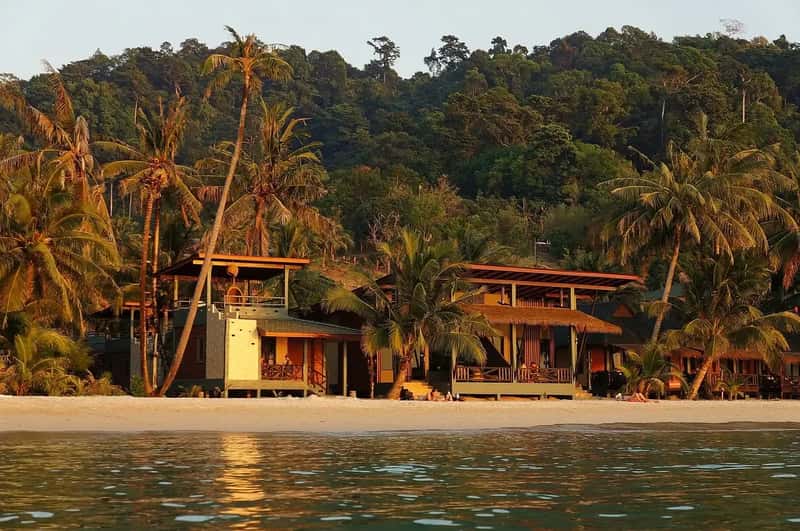
Thailand has long attracted retirees with big dreams and modest budgets, and in 2026 it remains one of the most compelling destinations in Southeast Asia. Thailand is ranked as having the best healthcare system in Southeast Asia according to Numbeo’s 2025 rankings. The country is ranked 9th in the world with an index of 77.5, equal to that of Finland. World-class hospitals at deeply affordable prices. That combination is genuinely rare.
A single retiree living on $1,200 a month can rent a $300 studio in Chiang Mai, eat Thai food for about $10 a day, and still have money left for a few $2 beers during happy hour. Think about what that same $1,200 buys in most American cities right now. A couple living on two average Social Security checks can live comfortably: a beachside two-bedroom bungalow in Pattaya or Hua Hin for under $1,000, with groceries costing $300 to $400 a month, and meals out whenever they like.
The country also has one of the world’s most retiree-friendly visa policies, offering stays of up to 10 years for eligible foreigners. High-speed internet in Thailand clocks nearly one gigabit per second for under $20 a month, while a weekly maid service costs $15. A two-hour deep-tissue massage runs about $12. I know it sounds crazy, but these are real numbers. Thailand landed ninth place in the 2026 Global Retirement Index.
6. Greece – Mediterranean Sun With a 7% Tax Advantage

Greece has spent years quietly building one of the most attractive retirement regimes in all of Europe. Greece offers a quintessential Mediterranean lifestyle with its thousands of islands and historic mainland. The cost of living has remained lower than many other Eurozone countries, especially in rural areas and smaller islands. In Crete, Greece’s biggest island, a retiree’s monthly budget was estimated at $1,830, the smallest of all destinations ranked in the top 10. That is remarkable value for an EU country.
Under Article 5B, qualifying foreign pensioners who move their tax residence to Greece can elect a 7% flat tax on all foreign source income for up to 15 years, once they come from a country that has a tax cooperation agreement with Greece. This keeps local taxes easy to understand while giving long-term clarity to retirees who want warm weather, steady costs, and a straightforward tax code.
The Greek healthcare system requires a small annual fee of approximately €300 for pensioners, after which most services are free or heavily discounted. Private insurance adds €80 to €150 per month for faster service and English-speaking doctors. Greece was ranked the best retirement destination overall by International Living’s 2026 Global Retirement Index, followed by Panama and Costa Rica. That top-spot recognition speaks volumes about how much the country has improved for expats.
7. Mexico – A Social Security Stretch Right Next Door

Mexico often gets overlooked in these conversations because it feels too obvious. Too close. Too familiar. Yet that familiarity is precisely what makes it brilliant for retirees who want comfort, value, and easy access back to the U.S. Mexico does not tax U.S. Social Security and pensions, with monthly living costs estimated around $1,800, and a Temporary Resident Visa available for those with sufficient income. That tax-free treatment of Social Security income is a huge deal.
Access to low-cost, high-quality healthcare means your Social Security dollars will go much further. A couple can live on less than $2,000 a month in San Miguel de Allende. Mexico is one of the cheapest countries to retire on Social Security if you want to be close to family. Modern medical care, large expat communities, and short flights make it ideal. Best cities include Mérida, Lake Chapala, and Querétaro, with lifestyle costs estimated at $1,000 to $1,600 per month.
Mexico’s expat-friendly areas, such as San Miguel de Allende and Lake Chapala, are home to large American communities. English is commonly spoken in these regions, especially within expat circles, making social integration easier. The sheer number of Americans living in Mexico, which runs well over one million expats, has created a support infrastructure that makes the transition genuinely smooth. It’s almost like moving to a different neighborhood, not a different country.
8. The Philippines – English-Speaking Value in the Tropics

The Philippines may be the most underrated country on this entire list. The Philippines is Asia’s hidden retirement gem, with over 7,000 islands, English widely spoken, warm people, and some of the world’s best beaches. Pristine beaches and tropical weather define the lifestyle in provinces like Cebu and Palawan. The cost of living is extremely low, allowing for a comfortable life on a minimum Social Security payment.
The Philippines is one of the cheapest countries to retire on Social Security and has the advantage of English being widely spoken. Cities like Dumaguete and Cebu offer a lifestyle cost of $900 to $1,300 per month. That is a genuinely staggering number. The Special Resident Retiree’s Visa is one of the most accessible in the world and includes multiple entry privileges. Domestic staff such as drivers and housekeepers are affordable for many expats living on a pension.
The Philippines taxes resident aliens only on money earned in the country, so pensions from abroad stay tax-free even when used for daily living. English fluency is extremely high, with an overwhelming majority of Filipinos speaking English as an official language. There is essentially no language barrier whatsoever. For retirees who want warm weather, crystal-clear water, and a genuinely welcoming culture – all without blowing a modest fixed income – the Philippines delivers in a way few countries can match.
The Bottom Line on Retiring Abroad on Social Security

The idea that Social Security alone cannot fund a dignified retirement is a distinctly American problem. You can retire in another country and still receive Social Security benefits. As long as you qualify for benefits based on your work history, you can collect them wherever you live. However, not all countries allow U.S. citizens to receive these payments, so it’s important to check the Social Security Administration’s list of restricted countries.
A few practical things every prospective overseas retiree should keep in mind. Medicare generally doesn’t cover healthcare outside the U.S., so you’ll need local health insurance. When evaluating retirement destinations, it’s worth understanding how U.S. Social Security Totalization Agreements and income-tax treaties interact with your benefits. Totalization agreements primarily coordinate Social Security coverage and contributions so workers don’t pay into two systems. Income-tax treaties determine how Social Security benefits are taxed and which country has primary taxing rights.
From the sun-drenched cliffs of Greece to the mountain coffee towns of Panama, the evidence is clear: your Social Security check has the power to fund a genuinely fulfilling life, just perhaps not in the ZIP code where you were born. The real question isn’t whether you can afford to retire well. It’s whether you’re willing to open the map a little wider. What would you do with a retirement that actually felt abundant? Tell us in the comments.