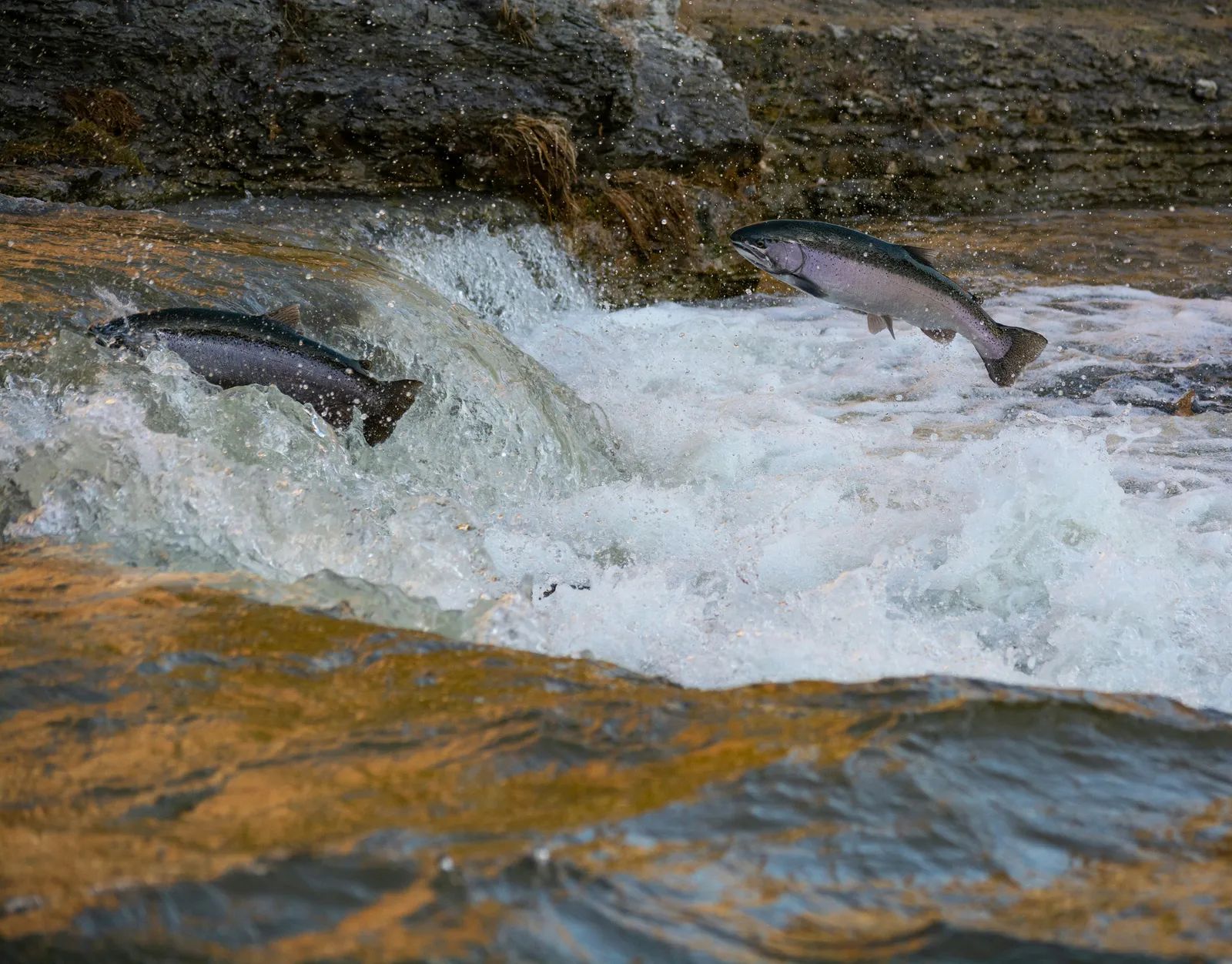
Southern Oregon and Northern California mark the path of the Klamath River, a waterway long altered by 20th-century dams that cut off access for spawning fish. Those barriers contributed to a sharp decline in Chinook salmon numbers, dropping the population that once used the river by roughly 90 percent. A recent study now shows that removing four of those dams has opened the way for a swift return.
Barriers That Lasted a Century
For generations the dams stood as solid obstacles on the Klamath. They blocked the upstream journeys essential to the salmon life cycle, leaving vast stretches of river unreachable. The result was a steep and sustained drop in the number of fish able to reach traditional spawning grounds. Over time the loss reshaped the river’s ecology and the communities that depend on it. The dams, built decades earlier, had turned a once-connected system into isolated segments. Restoring passage required coordinated removal efforts that finally took place in 2024.
Numbers That Tell the Story
The response came faster than many observers anticipated. In the first year after removal, 7,742 Chinook salmon moved past the former dam sites. The following year the count rose above 13,000. Those fish spread across 345 kilometers of river that had been closed to them for roughly a century. The study determined they had reclaimed 88 percent of their known historical habitat. Such rapid expansion highlights how quickly the species can respond once passage is restored.
Tracking the Fish in Real Time
Researchers relied on specialized sonar equipment to monitor the migration. The underwater cameras use sound waves to create moving images, allowing counts even in murky or dark conditions. This approach provided clear data on both the volume and the routes the salmon took. Damon Goodman, the study’s first author, noted the unexpected pace of the recolonization. The team had expected some return but found themselves adjusting plans to keep up with the advancing fish. The salmon navigated rapids, fishways, and a large lake to reach waters unseen by their kind for more than a hundred years.
A River Reconnected
The Klamath now flows more freely through its historic corridor. The return of the salmon offers a tangible sign of recovery in a system that had been heavily modified. Observers along the river in Southern Oregon and Northern California can witness the change through improved access to upstream reaches. The findings underscore how targeted removal of aging infrastructure can produce measurable ecological shifts. While challenges remain for the broader salmon population, the data from the Klamath provide a clear record of habitat reopening and fish movement on a meaningful scale.