
A plug that fits the wall doesn’t tell you much about the electricity behind it. In the United States, the USA, Panama, and Mexico have a much lower voltage at 120V[1] than most of the world. The most common voltage around the world ranges from 220 to 240V.[1]
Most of what Americans pack won’t care. Most modern phone chargers, laptop chargers, camera chargers, and USB adapters support 100 to 240 volts at 50 or 60 hertz.[2] The trouble starts with heat tools and older gadgets. The nine countries below are places where an American plug needs a new shape and a single voltage device also needs a converter, or a better replacement.
United Kingdom
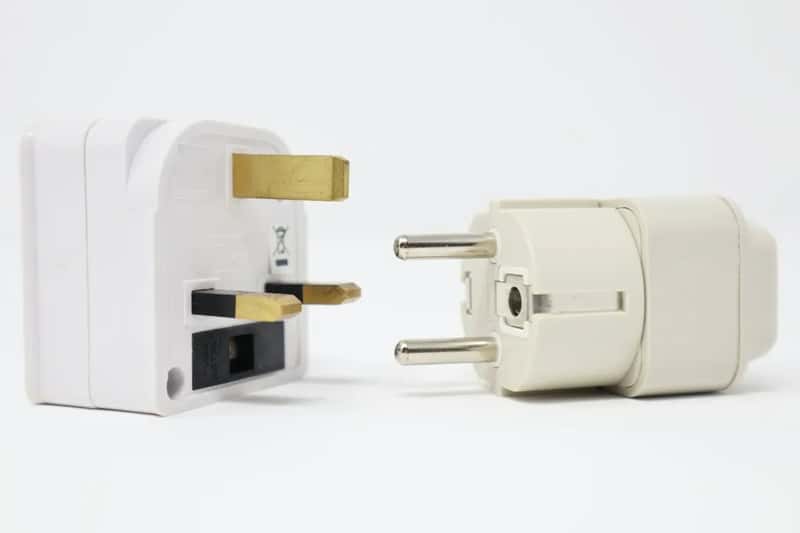
The United Kingdom uses Type G outlets exclusively.[3] These are the large plugs with three rectangular pins, found nowhere else in mainland Europe.[3] Every traveler from the US needs a travel adapter.[3]
The UK runs on 230V at 50Hz.[3] Phone and laptop chargers are almost certainly dual voltage and only need a plug adapter.[3] A 120V only hair dryer is a different story. One travel guide suggests buying a dual voltage travel version or using the hotel’s equipment, since voltage converters capable of handling 1,500W or more are heavy, expensive, and rarely worth the luggage space.[4]
France
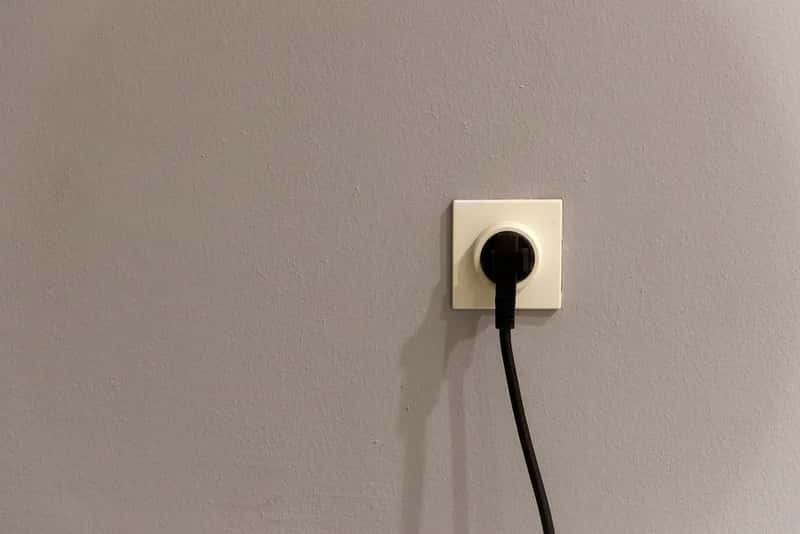
France is a textbook case of two separate problems. The plug shape is different because France commonly uses Type C and Type E outlets, while the United States uses Type A and Type B.[5] The voltage is also different, because France uses about 230V.[5]
That combination catches people out. A device marked only for 120V should not be plugged directly into a 230V outlet.[5] High power heat devices need extra caution because they draw much more power than a phone charger.[5] In many cases the safer choice is a dual voltage travel appliance or the one provided by the hotel.[5]
Germany

Germany uses Type C, with two round pins, and Type F, the Schuko with grounding clips, at 230V and 50Hz.[3] Travelers from the US, UK, or Australia need a travel adapter.[3] The adapter takes care of the pins and nothing else.
That’s the part people forget. A universal adapter changes the plug shape only, and it is not a voltage converter.[6] Taking a 120V only device to a 230V country without a voltage converter will permanently damage it.[7]
Italy
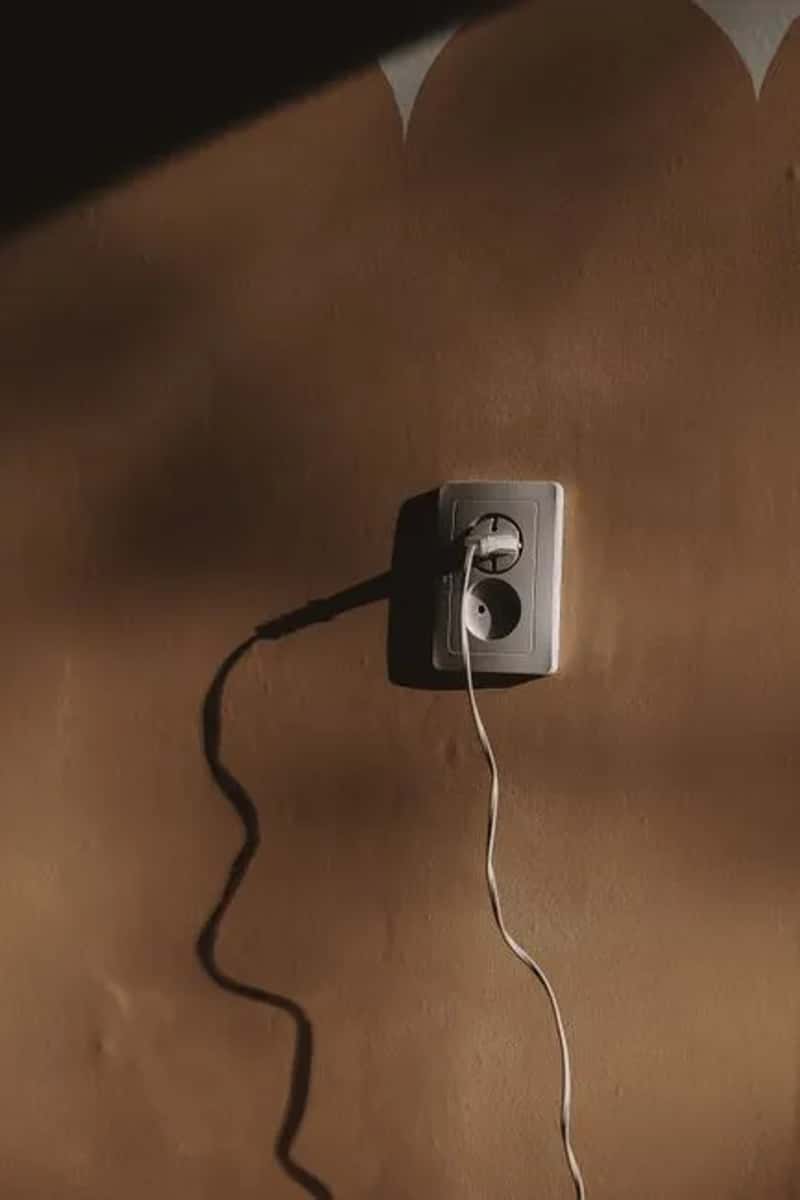
Europe isn’t one plug system, and Italy shows why. Italy uses Type L, which also accepts Type C.[8] A guide to the continent lists Italy, Spain, France, Germany, Portugal, and Iceland among the places where you need a Type C adapter.[7]
Voltage is the same story as elsewhere on the continent. Continental Europe mostly uses Type C, E, and F plugs at 230V.[7] If your device label shows only 120V, a plug adapter is not enough, and you would need a suitable voltage converter or a travel version of the device.[2]
Switzerland

Switzerland keeps its own socket standard. One guide lists it as an exception, noting that Switzerland uses Type J.[8] The country runs on the same 230V at 50Hz as its neighbors.
Check what your adapter actually covers before you leave. One guide describes a well designed universal adapter as covering Types A, B, C, E/F, G, and I, a list that doesn’t include J. The label on your gadget helps too, since an input of 110 to 240V means the device has dual voltage capability and needs no voltage conversion.[9]
Australia
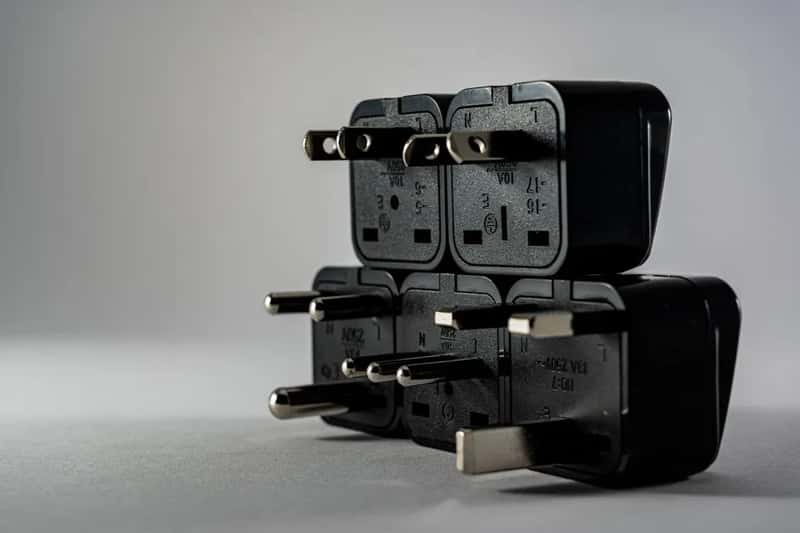
Australia uses Type I outlets, with two angled flat pins plus a grounding pin, at 230V and 50Hz.[3] Travelers from the US, UK, Europe, and most of Asia all need a travel adapter.[3] Bringing an American plug will get you nowhere.
For standard electronics, the fix is easy. Phone, laptop, and camera chargers are dual voltage and only need a plug adapter.[3] However, hair dryers, curling irons, kettles, clothes irons, and some electric shavers may be made for only one voltage range.[2] Those are the items to check first.
India

One guide describes India as using Type D plugs, plus C and M, at 230V[7]. A multi region or universal adapter usually covers most situations there. Sockets can vary from place to place, so a flexible adapter is a sensible choice.
The voltage gap is large. If a label reads only 110V, 120V, or 220V, the device is built for one voltage system.[7] A 120V only appliance will need a converter, or it should stay home in favor of a dual voltage model.
Turkey
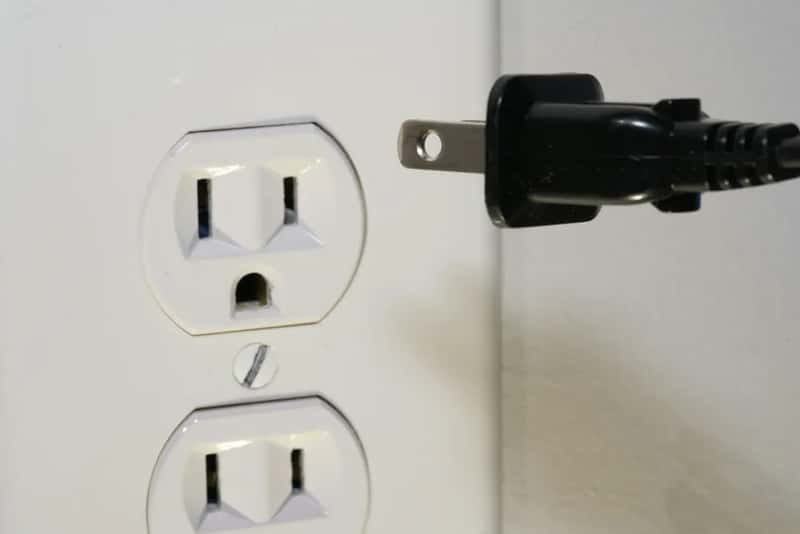
Turkey is often grouped with Europe for electricity purposes. One travel guide notes that South Africa and Turkey also have 230V[1], alongside the UK and Ireland. That puts it well above the 120V American standard.
Turkey mainly uses the round pin sockets common across Europe, so a Type C style adapter is the usual starting point. Hotels sometimes have universal outlets that accept several types[8], though you shouldn’t count on it. Meanwhile, a single voltage heating appliance won’t simply work anywhere with a plug adapter.[6]
South Africa

South Africa runs on 230V[1], roughly double the American standard. Its sockets are different from both American and typical European ones. The large round pin Type M is common, and Type N also appears, so a generic European adapter may not fit.
Chargers with a 100 to 240 volt label are fine with the right adapter. The problem appliances are the ones that heat, such as some hair dryers, straighteners, curling irons, and travel kettles.[6] Since a dual voltage travel version or hotel provided equipment[4] is often the easier route, a converter is best kept for gear you truly can’t replace.