Some lakes look clear in photos. A few are clear enough that scientists lower a white disk into them and keep paying out rope. These nine U.S. lakes have a reputation for transparent water, and in several cases the measurements back it up.
Clarity changes with the season, the weather, and the year, so treat the numbers below as a guide, not a promise. Where solid data exists, I’ve used it. Where it doesn’t, I’ve kept the descriptions general.
1. Lake Superior: The Cold, Clear Giant of the Great Lakes
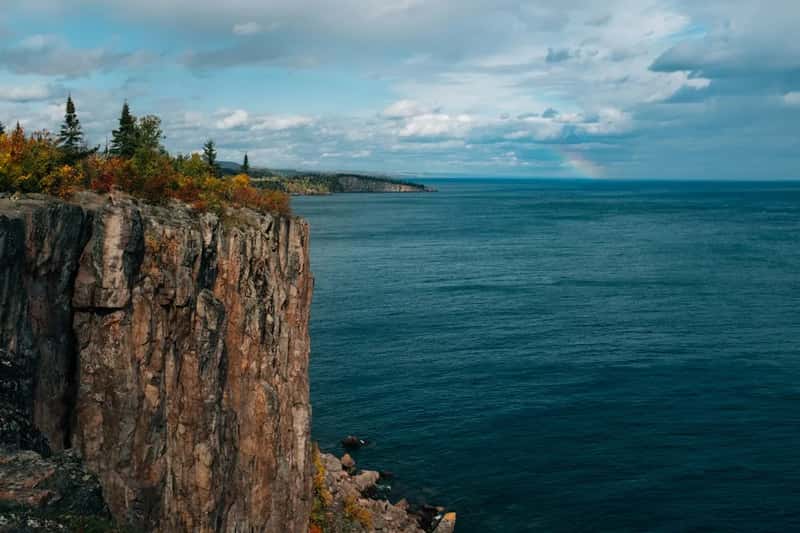
The National Park Service calls Lake Superior the largest, deepest, coldest, and most pristine of all the Great Lakes[1]. That’s a big claim, but the scenery supports it. At Pictured Rocks National Lakeshore in Michigan, the carved and colorful rocks extend for about 15 miles northeast of Munising[2]. The NPS notes that sand beaches and clear water add to the beauty[2].
Wisconsin’s Apostle Islands are another good way to see it. The lakeshore is broken into 22 wooded islands off the Bayfield Peninsula[3], and kayakers can paddle past sandstone sea caves. Bring a wetsuit if you plan to swim, though. “Clear” and “warm” rarely go together on Superior, even in midsummer.
2. Crater Lake, Oregon: Deep Blue and Famously Transparent
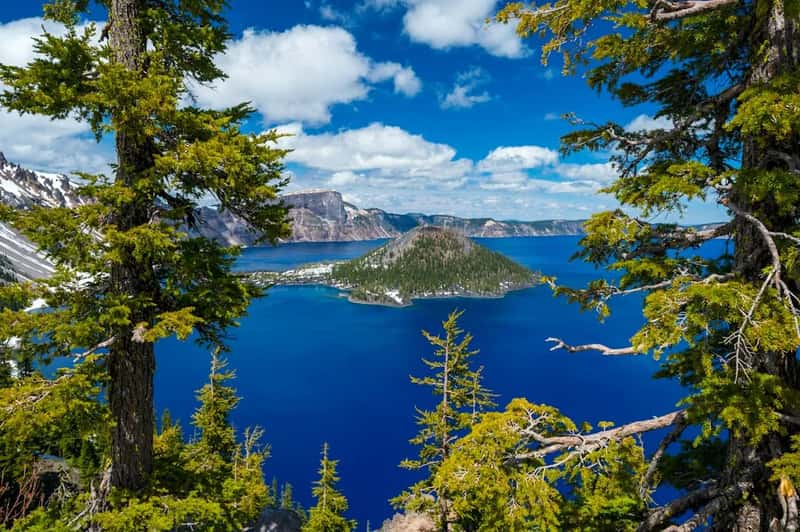
Crater Lake fills the collapsed caldera of Mount Mazama. The USGS says it is the deepest lake in the United States, at 589 meters[4]. The Park Service explains that readings deeper than 100 feet are rare in most lakes, but they can typically reach 120 feet at Crater Lake[5]. A reading of 142 feet was recorded in 1997[5].
The color comes from physics as much as purity. According to the NPS, it is the product of the lake’s great depth, the purity of its water, and the way solar radiation interacts with water[5]. Long-term monitoring also has good news. Park analyses reaffirm that Crater Lake does not show a reduction in water clarity over time[6]. Plan around snow, since the rim can hold deep drifts well into summer.
3. Lake Tahoe, California and Nevada: The Benchmark for Clear Water
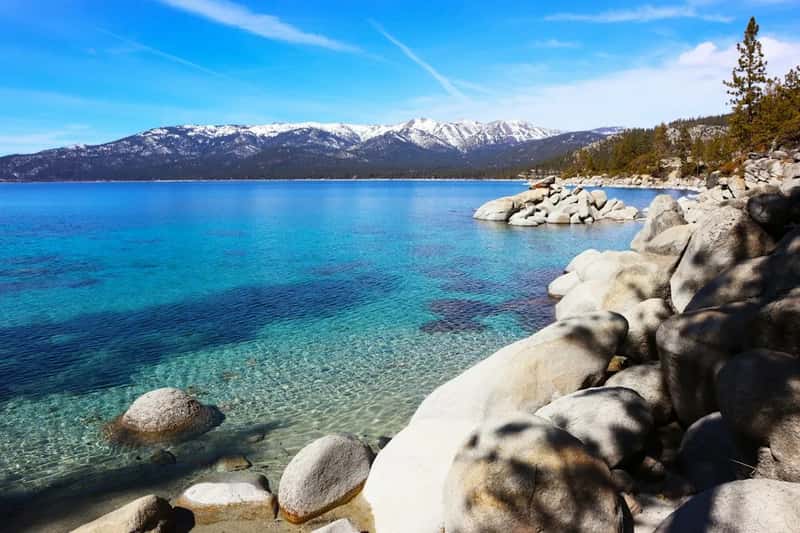
Few lakes are measured as carefully as Tahoe. UC Davis researchers have tracked its clarity since 1968, and the 2025 report found that the annual average was 69.2 feet[7]. That was 7 feet clearer than the 2024 average of 62.3 feet, but not statistically different from recent years[7].
The historic benchmark is higher. Restoration partners are working toward Tahoe’s historic clarity of 97.4 feet, the average recorded between 1967 and 1971[8]. Researchers say clarity has leveled off since the late 1990s, and summer readings remain the weak spot. For visitors, the practical lesson is that the lake is still strikingly clear. The best views are often in cooler months or on calm mornings along the rocky east shore.
4. Flathead Lake, Montana: A Big Western Lake With Small-Lake Clarity
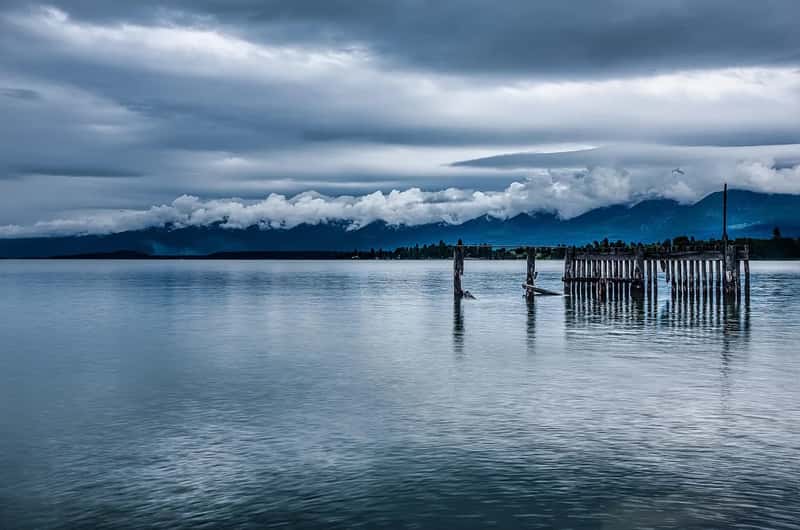
Flathead Lake is one of the largest and clearest freshwater lakes in the contiguous United States[9]. Researchers at the Flathead Lake Biological Station have tracked its transparency for decades. Its clarity has stayed relatively stable, averaging about 11 or 12 meters over the past 30 to 40 years[10]. The deepest reading on record was 18 meters, recorded in 2004[10].
The reason is partly geological. The lake is known for clear water largely because the geology of its watershed is low in nutrients, especially phosphorus[11]. Less phosphorus means less algae, so the lake stays blue instead of green. The biological station’s 2023 report found no signs of long-term or recent deterioration[12]. The lake did hit historic low levels that year, so check water levels before you book a boat ramp.
5. Lake Chelan, Washington: Fjord-Like Depths in the Cascades
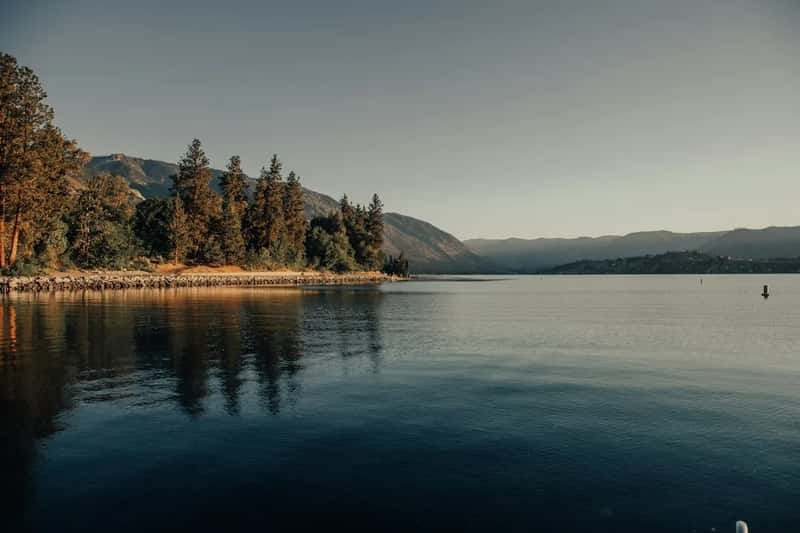
Lake Chelan is a long, narrow glacial lake that cuts deep into the North Cascades. It is one of the deepest lakes in the country and stretches roughly 50 miles. The water is often a vivid blue-green, shaped by depth and mountain meltwater. It tends to look bluer and cooler than most reservoirs.
The far end of the lake is the real draw. The remote village of Stehekin has no road access, so visitors arrive by ferry, floatplane, or on foot. That journey gives you hours on the water and far less shoreline development than you’d expect. Summer is busy and warm around the town of Chelan, so early and late season trips are quieter.
6. Lake George, New York: The Adirondack Classic
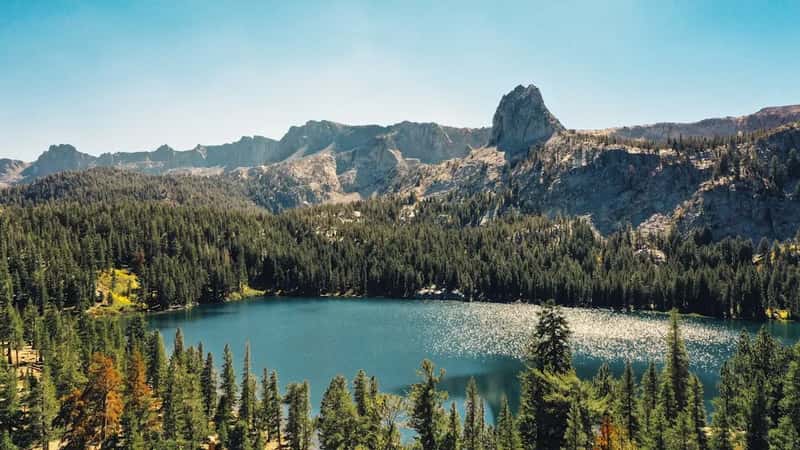
Lake George has drawn travelers since the nineteenth century, and its nickname, the Queen of American Lakes, still fits. The lake runs about 32 miles through the southeastern Adirondacks, and its many small islands make it popular with kayakers and campers. On calm days you can often see rocks and lake bottom from a paddleboard or canoe.
Protecting that clarity takes ongoing work. Local groups and the Lake George Park Commission have focused on invasive species and on road salt running off into the watershed. Their work is a good reminder that clear water is often fragile. If you visit, rinse your boat and follow the inspection rules.
7. Lake Jocassee, South Carolina: Waterfalls and Mountain-Fed Water
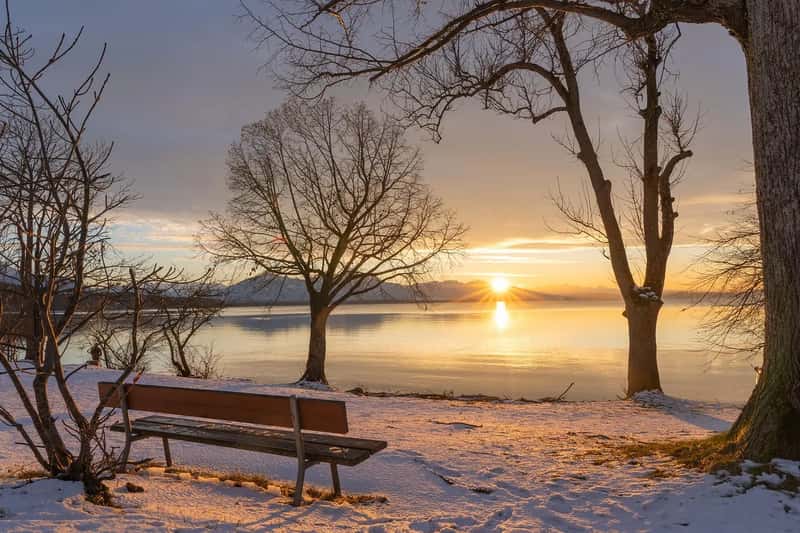
Lake Jocassee is a mountain reservoir in the Blue Ridge foothills of the Carolinas. It was created when Duke Energy dammed several rivers in the early 1970s, and the surrounding hillsides are still largely forested. Paddlers come for the clear, cool water and the waterfalls that spill directly into the lake. Devils Fork State Park is the main public access point.
Because the lake is deep and ringed by protected land, it has less runoff and development than many southern lakes. It’s popular with kayakers, anglers, and divers for the same reason. Expect the best clarity on calmer days, and book early in summer since boat access and camping fill up quickly.
8. Lake Michigan and Sleeping Bear Dunes, Michigan: Turquoise Shallows
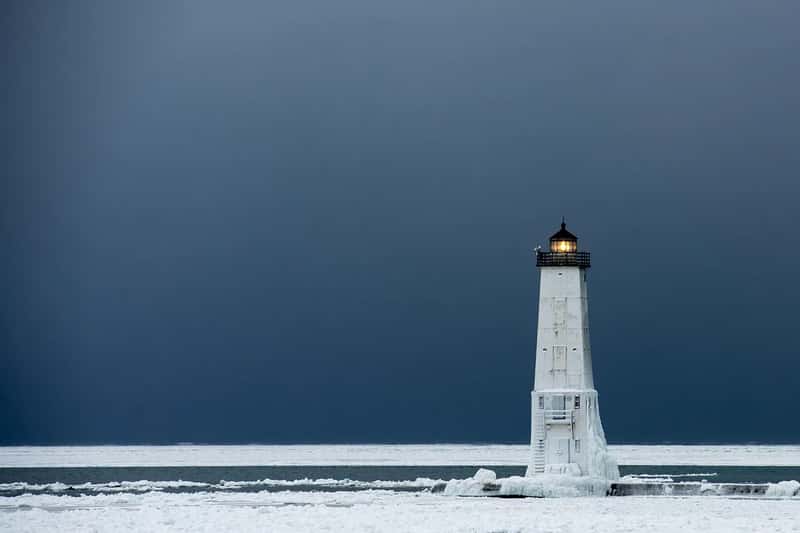
On a calm summer day, the water off northern Lake Michigan can look almost Caribbean. Sleeping Bear Dunes National Lakeshore and the Door County shoreline in Wisconsin are two of the best places to see it. White sand and pale limestone bottoms help create the turquoise color near the shore.
Part of the clarity has an unusual cause. Invasive zebra and quagga mussels filter large amounts of plankton from the water, and scientists have linked them to clearer conditions across the Great Lakes. That clarity comes with ecological costs, though, including disruption of the food web. The water is still cold, so a short swim is usually enough.
9. Lake Pend Oreille, Idaho: Deep Water in the Panhandle
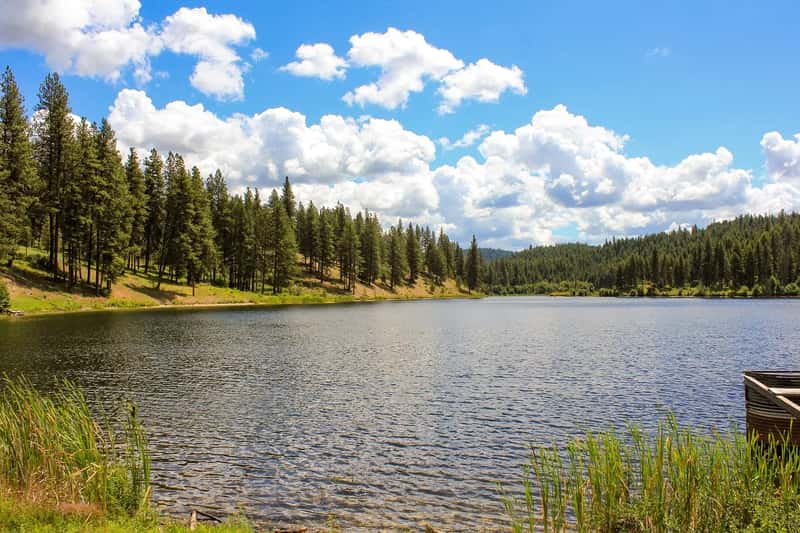
Lake Pend Oreille is Idaho’s largest lake and one of the deepest in the country, at more than 1,000 feet in places. It sits in a glacially carved basin in the state’s northern Panhandle, surrounded by the Cabinet and Selkirk mountains. Its water is cold, deep, and often a dark, clean blue. Sandpoint is the most convenient base for visitors.
The lake’s depth and isolation have made it useful for more than recreation. The U.S. Navy has long run underwater acoustic research there. For travelers, it offers boating, fishing, and quiet coves without the crowds of the more famous lakes on this list. Late summer usually brings the warmest swimming.
Clear water rarely happens by accident. Low nutrient levels, deep basins, cold temperatures, and careful monitoring show up again and again across these lakes. Tahoe’s readings show that even famous lakes can plateau or slip, and Crater Lake and Flathead show that protection works.
If you visit any of them, keep your boat clean, stay on trails, and keep fertilizer and waste away from the shoreline. The clearest lake on your trip is the one that’s still clear for the next visitor.