There’s a persistent myth that digital nomads are broke twenty-somethings living off ramen and Wi-Fi passwords. Walk into any coworking space in Lisbon or Chiang Mai these days, though, and you’ll find a different picture: people quietly building retirement accounts, investment portfolios, and financial cushions while working from a laptop on a beach. The habits that get them there rarely make it into the glossy Instagram posts.
What separates the nomads who go home broke from the ones who go home richer usually comes down to a handful of unglamorous financial routines. None of these habits are secret. They’re just consistently applied, month after month, country after country.
1. They bank borderless with multi-currency accounts

Traditional banks were built for people who stay in one place, which is exactly the opposite of how nomads live. Traditional banks weren’t designed for this lifestyle since they charge high foreign transaction fees, require physical branches for basic services, and often lock you out if you don’t maintain a permanent address in their country. That’s why so many location-independent workers have shifted to neobanks like Wise or Revolut instead of fighting their old hometown bank.
Wise has become the gold standard for multi-currency banking, offering full accounts with the ability to hold 40+ currencies and get local bank details like a EUR IBAN or USD routing number. Revolut works similarly, and lets users hold and exchange over 30 currencies at interbank rates. The savings from avoiding conversion markups sound small on any single transaction, but they compound fast when every purchase, invoice, and rent payment crosses a currency border.
2. They track their days abroad like it’s a second job

Nomads who take money seriously treat calendar days as data. In the US, this obsession is not paranoia, it’s tax law. To qualify for the Foreign Earned Income Exclusion, your income must come from active work, and you must be physically outside the US for 330 full days in any 12-month period, where partial days don’t count and travel days and time in US territories count as US presence.
Get this wrong and the tax savings disappear. Digital nomads may qualify if they spend at least 330 full days in foreign countries during a qualifying 12-month period and also maintain a foreign tax home without a US abode. The reward for tracking it carefully is real money: for the 2025 tax year filed in 2026, you can exclude up to $130,000 of foreign earned income from US federal income tax, and if you’re earning less than that and pass the Physical Presence Test, your federal tax bill will likely be zero. Wealthy nomads keep a running log, often just a spreadsheet with entry and exit stamps, rather than trusting memory alone.
3. They practice geographic arbitrage without letting lifestyle creep eat the gains

Earning in dollars or euros while spending in pesos or Thai baht is the oldest trick in the nomad playbook. Geographical arbitrage is a financial strategy that involves relocating to locations with lower costs of living while maintaining income from higher-cost areas, allowing individuals to stretch their earnings further without necessarily changing jobs or reducing their standard of living.
The habit that actually builds wealth isn’t just moving somewhere cheap, it’s redirecting the difference instead of spending it on a nicer apartment or extra trips. A digital nomad who moves from San Francisco to Bali can enjoy a comparable lifestyle at a fraction of the cost, about 60% cheaper, freeing up thousands of dollars each month for investment. The nomads who quietly build wealth are the ones who bank that gap rather than let their spending simply expand to match the lower prices.
4. They carry real international health insurance, not a patchwork plan

Skipping health coverage is one of the fastest ways a nomad’s savings can vanish overnight. Costs vary a lot by plan type and destination. For a healthy 30 to 35 year old as of early 2026, budget travel insurance runs roughly €40 to €65 per month for emergency cover only, mid-range nomad insurance runs €65 to €165, basic international health insurance runs €140 to €230, and premium international plans run €220 to €370 or more.
These aren’t abstract numbers. One nomad’s account of getting sick in Chiang Mai is a good reminder of what’s at stake: the emergency room visit, chest X-rays, medications, and follow-up appointments cost $2,100 out-of-pocket because U.S. insurance didn’t cover international care and there was no travel insurance. Financially savvy nomads treat that monthly premium as a fixed cost of doing business abroad, not an optional add-on to skip when money’s tight.
5. They diversify income instead of depending on one client or employer

A single-client freelance arrangement or one full-time remote job can feel stable right up until it isn’t. Financial planners who work with location-independent clients consistently push back against that fragility. Relying on a single income source can be risky, especially when living a nomadic lifestyle, so diversifying income streams ensures multiple sources of revenue that can provide a financial safety net, often through a mix of investments, rental properties, and part-time remote work.
In practice, this often looks like a mix: a primary contract, a smaller side client, maybe a bit of consulting or a modest passive income stream from investments. It’s less exciting than betting everything on one big retainer, but it’s far more resilient when a client cuts budgets or a project ends unexpectedly.
6. They keep a bigger emergency fund than a typical office worker

Nomads face risks that a salaried employee back home simply doesn’t. An emergency fund is critical for digital nomads because unexpected expenses such as medical emergencies, travel disruptions, or sudden relocations can arise anytime, and the fund should cover at least six to twelve months of living expenses, factoring in the potential costs of relocating to a safer or more affordable destination if needed.
That’s noticeably higher than the three-to-six-month buffer often recommended for people with stable jobs and a fixed address. Visa denials, sudden border closures, or a health scare can all force an expensive, unplanned move, so the nomads who avoid financial panic are usually the ones who padded their cushion well before they needed it.
7. They automate investing in low-cost index funds, wherever they happen to be

Constant movement makes it tempting to put investing on pause. The nomads who quietly get ahead do the opposite: they automate it so it happens regardless of time zone or Wi-Fi quality. Index funds are a favorite for a simple reason. A typical index fund has a total expense ratio of anywhere from 0.01 to 0.50 percent, while actively managed funds can have expense ratios of 1 to 3 percent, and because of these lower costs, index funds tend to outperform nearly all actively managed funds over time.
Fees that look tiny on paper matter enormously over decades. The growth of $100,000 over 30 years with 6% gross returns being reinvested shows a stark difference: no fees grows to $574,349, 0.25% yearly fees grows to $532,898, and 1.36% yearly fees grows to only $382,981. Setting up recurring transfers into a diversified fund, and then largely ignoring the account while traveling, removes the temptation to time markets or check balances out of boredom in an airport lounge.
8. They pick digital nomad visas partly for the tax treatment, not just the scenery
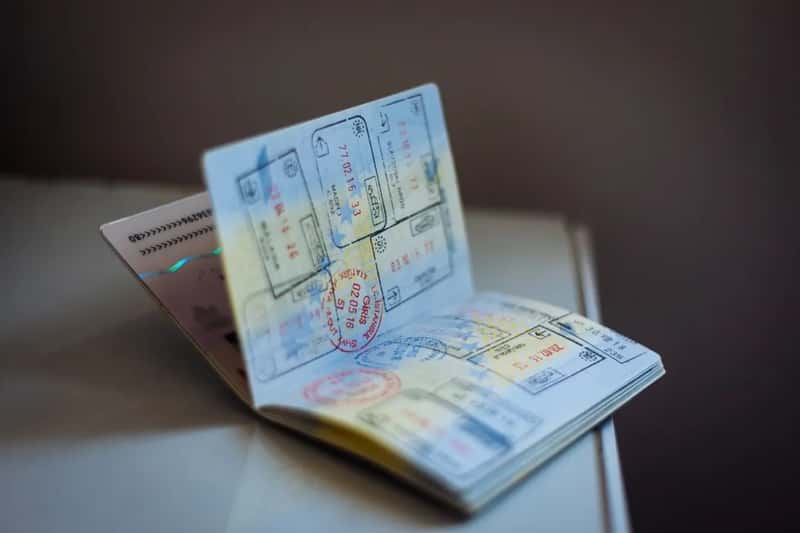
More than three dozen countries now court remote workers with dedicated visa programs, and the appeal isn’t only sunshine and coworking spaces. Over 35 countries now offer official digital nomad visa programmes, and most come with a key tax benefit where foreign-source income earned while on the visa is exempt from local income tax.
The details differ enough that they’re worth comparing before booking a flight. Costa Rica’s digital nomad visa requires $3,000 per month in income or $60,000 in savings and provides a tax exemption on foreign-sourced income for visa holders, while Croatia’s visa requires €2,539 per month and offers a one-year exemption from Croatian income tax on foreign-sourced income, limited to the first year. Nomads who research these terms in advance, rather than after arriving, avoid the unpleasant surprise of owing local tax they never budgeted for.
9. They protect home-country retirement accounts and dodge state tax traps

Leaving a home country doesn’t mean leaving its tax authorities behind, especially for Americans. The US taxes citizens and green card holders on worldwide income regardless of where they live, one of only two countries globally that does this. Some states are just as persistent about chasing former residents.
States are increasingly aggressive in claiming expat and nomad residents, and California has sent residency determination letters to former residents now living abroad based on credit card activity and property ownership. The nomads who avoid getting caught in that net tend to formally sever ties before leaving, closing out lingering accounts, updating registrations, and choosing a low-tax or no-tax state as their last domestic address. Meanwhile, they keep contributing to IRAs, solo 401(k)s, or other retirement vehicles even while abroad, since skipping a few years of contributions is one of the quietest ways a nomad’s long-term wealth ends up smaller than it should be.
None of these nine habits require a finance degree or a six-figure income to start. They require consistency, a decent spreadsheet, and a willingness to treat money management as part of the travel plan rather than an afterthought. The nomads who build real wealth aren’t the ones chasing the cheapest flight or the trendiest coworking space. They’re the ones who’ve turned banking, taxes, insurance, and investing into routines just as automatic as packing a bag.