There are people who fly twice a year for vacation, and then there are people who practically live at the airport. You know the type – the ones who have their TSA routine down to a science, who know which terminal has the best coffee, and who never, ever check a bag. If you want to fly smarter, it helps to take notes from those frequent fliers. They’ve learned through trial, error, and a few miserable red-eye flights exactly what belongs in a carry-on.
What’s fascinating is that many of their “must-haves” are surprisingly simple. Nothing exotic. Nothing wildly expensive. Every single day, the FAA’s Air Traffic Organization provides service to more than 44,000 flights and more than 3 million airline passengers – and among those millions, the seasoned fliers tend to carry very specific things that make all the difference. Here’s what they swear by. Let’s dive in.
1. A Reusable Water Bottle
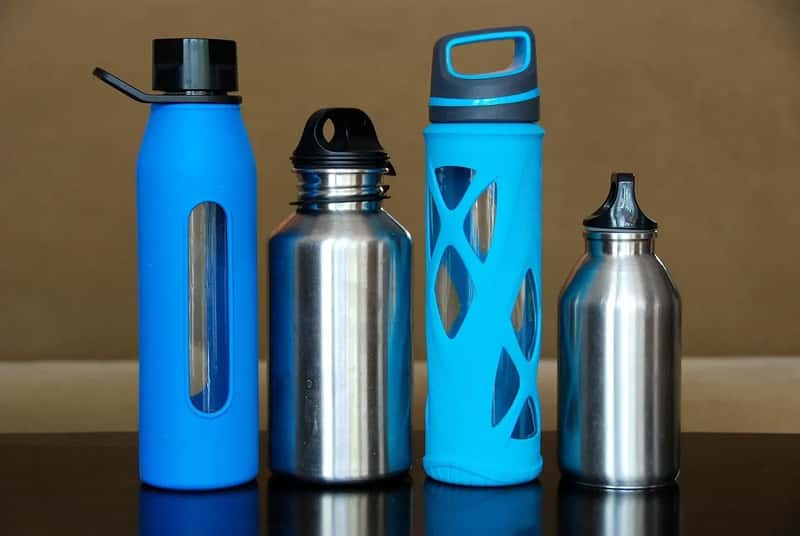
Here’s something that surprises most casual travelers: the air inside an airplane cabin is extraordinarily dry. Cabin humidity can drop to just 5%, far below the comfortable indoor range of 30 to 60%. That gap is enormous when you think about it. It’s drier than most deserts on Earth, and your body notices instantly.
In a standard airliner environment, individuals lose approximately eight ounces of water per hour, mostly from normal breathing. On a long-haul flight, that adds up fast. The smart move is to avoid relying on those tiny plastic cups and instead bring a collapsible or insulated water bottle and fill it after security.
Airplane cabins have very low humidity levels because about half of the air circulating in the cabin is pulled from the outside, and at high altitudes, the air is almost completely devoid of moisture. Frequent fliers don’t wait to get thirsty. They’re already sipping long before the seatbelt sign switches off.
2. Noise-Cancelling Headphones

Honestly, once you fly with a proper pair of noise-cancelling headphones, there’s no going back. Noise-cancelling headphones have become a long-haul flight essential for many frequent travelers, because the ones you get on a plane are frankly useless. That’s putting it nicely.
Playing audio out loud through your device or taking a FaceTime call so everyone can hear it is a bad look, and it deprives everyone, including you, of privacy – so headphones are simply a must. Think of it less as a comfort upgrade and more as basic cabin etiquette.
With a Bluetooth adapter, you can use your noise-canceling headphones instead of the airline’s wired, low-quality ones. No more tangled cables or weak sound – it’s one of the absolute must-haves for a long-haul flight if you want to fully enjoy the in-flight entertainment.
3. Hand Sanitizer and Sanitizing Wipes
Let’s be real – planes are not the cleanest places on Earth. Researchers at Auburn University found that potentially deadly bacteria, including E. coli and MRSA, are able to live on airplane surfaces like tray tables, seat pockets, and armrests for up to a week. A whole week. That fact alone should make you reach for a sanitizing wipe before you even sit down.
A study by TravelMath found that tray table surfaces had more than eight times the amount of bacteria per square inch than the lavatory flush buttons. The trays had over 2,000 colony-forming units of bacteria per square inch, compared to the 127 that the National Science Foundation says is standard for a toilet seat at home. Still want to eat directly off that tray table?
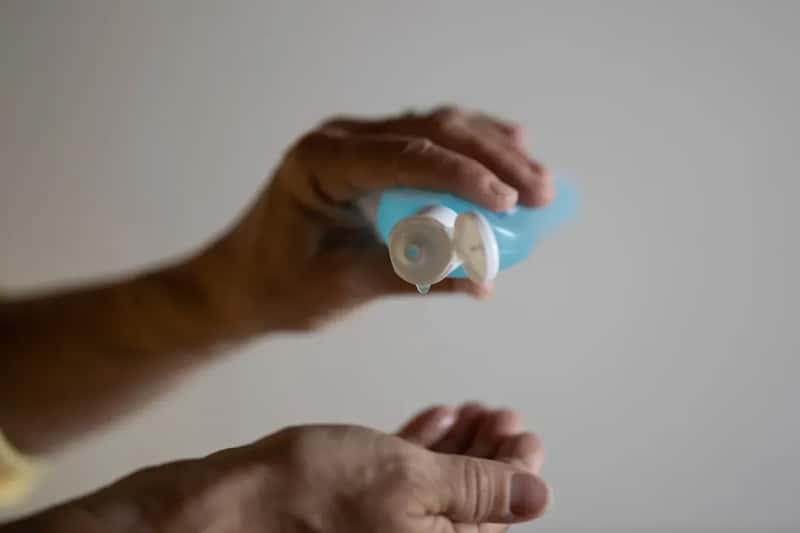
There are plenty of areas on planes that can get pretty germy, from tray tables to surfaces in the public restrooms. A good hand sanitizer containing 70% alcohol kills germs while also having nourishing skin care ingredients to keep from drying out the skin on your hands. Frequent fliers carry both wipes and sanitizer without thinking twice.
4. A Portable Power Bank
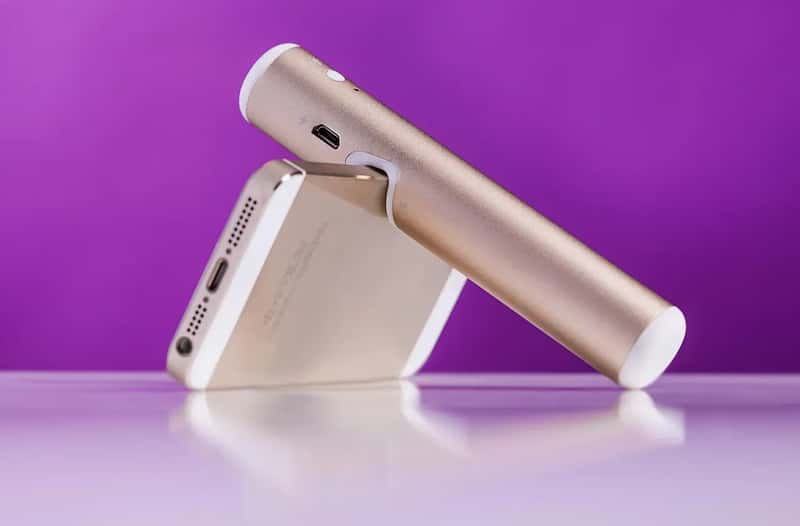
Frequent fliers live by a simple motto when it comes to devices on a plane. As a frequent traveler, the one thing to know above all others is ABC: always be charging. You can’t count on having in-seat power. It’s that straightforward, and yet so many travelers learn this the hard way mid-flight.
Even if your seat has a USB port, it might be slow or broken. A slim power bank keeps your phone and headphones charged for the full flight. Think about everything that depends on a charged phone once you land – your rideshare, your hotel confirmation, your boarding pass for the connecting flight.
Even during domestic travel, carrying a travel power adapter is smart, as many power outlets on planes are often worn out and require being held in place to charge devices. By having a foreign-pronged power adapter on hand, you can often get a better charging grip. Small item, massive payoff.
5. Compression Socks

This one sounds like advice your grandmother would give you – but it’s backed by real health reasons. Compression socks are important for flights because blood clots can develop due to a lack of blood flow in your calves while sitting for a long period. Compression socks stimulate that necessary blood flow by exerting pressure on your calves.
Airline travel remains the safest mode of transportation in the world, but the aircraft cabin environment can pose health-related challenges, especially on long-haul flights. The most common challenge that flight crews and passengers experience is a loss of fluids and circulatory stress from long periods of sitting.
Getting up and walking around if sitting for more than a couple of hours, and performing stretches in your seat, like picking your feet off the ground and flexing and pointing your toes, helps keep blood flowing. Pair that movement with compression socks and you’ve given your legs a real fighting chance.
6. A Quality Neck Pillow
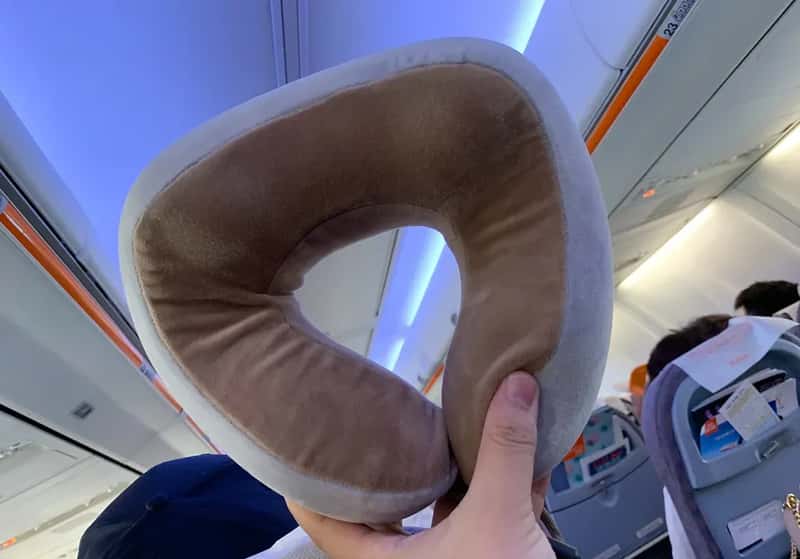
Not all neck pillows are created equal. Anyone who has ever wrestled with one of those floppy foam U-shapes for eight hours knows exactly what I mean. Ditch the floppy U-shaped pillows and go for a structured neck pillow that offers real support and packs down surprisingly small. The difference in quality sleep is staggering.
Frequent travelers try and test a ridiculous amount of neck pillows over the years, often buying into the idea that you need one to sleep on a plane. The problem isn’t the concept – it’s the execution. Most cheap versions just don’t work. A good structured pillow, however, really can help you grab a couple of hours of rest mid-flight.
Sometimes, you have to get some sleep wherever you can – on a plane, at the gate, in the car on the way to the airport. A quality eye mask makes it possible to do so. Combine that with a proper neck pillow and you might just arrive feeling like a human being.
7. Snacks from Home

Airline food has come a long way, but it’s still a gamble. A top carry-on essential for long flights is bringing a few snacks that don’t melt or go bad. Protein bars, trail mix, or dried fruit are great options. They help keep your energy up without relying on airplane food.
Dry air dehydrates the mucous membranes in your nose, impairing olfactory receptors and making it harder to detect aromas. Since much of what we perceive as taste is actually smell, this significantly dulls the flavor of food and beverages. This is partly why airplane meals often taste blander than they should – it’s not just the food itself, it’s your body’s environment.
To boost flavor, airlines tend to increase salt and sugar in meals, raising risks for high blood pressure, cardiovascular issues, and other concerns with frequent consumption. Packing your own smart snacks sidesteps that problem entirely. It’s one of the simplest, most underrated things a frequent flier does.
8. Moisturizer and a Facial Mist

It might sound like a beauty tip, but this one is genuinely about physical comfort and health. Frequent flights can do a number on your skin. Dry cabin air quickly affects your skin, so carrying a travel-sized moisturizer or facial mist to keep your skin comfortable is strongly recommended.
Consider packing toiletries that are useful for travel, particularly for the dry air on planes, even if they’re not part of your daily routine at home. A facial moisturizer and a body lotion are essentials for the carry-on toiletry bag. It’s the kind of thing you notice you needed only after your skin starts feeling like sandpaper at 35,000 feet.
Cabin air is brutal on your skin, especially for those with naturally dry skin. A small hydrating face mist helps you feel refreshed mid-flight and keeps your skin from drying out. Frequent fliers keep one within arm’s reach throughout the flight, not just for comfort but to arrive looking like they didn’t just cross three time zones in a metal tube.
9. A Luggage Tracker
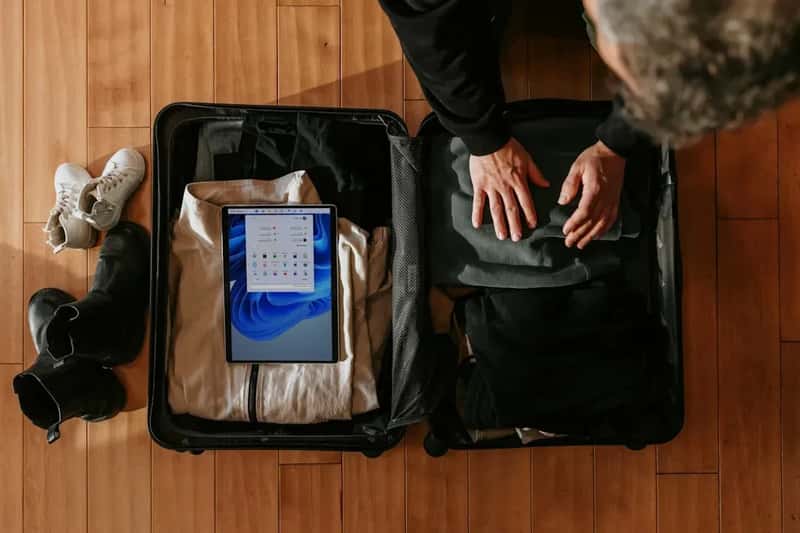
Even carry-on travelers benefit from this one. Carrying on your essentials is only a good strategy if you know where your carry-on bag is – and keeping a tracker on it will help you do that even in the event of loss or theft. It’s a small device that delivers serious peace of mind.
AirTags are fantastic for keeping tabs on your belongings. Stick them in your luggage or attach them to your keys, passport, and wallet to never lose track again. I think this is one of those things that sounds optional until the one time you actually need it – and then you’d give anything to have one.
GPS trackers are real, tiny, and everywhere, and you can buy one for about the cost of an airport drink. Apple AirTags seamlessly sync up with Apple devices, and experienced travelers put one on each carry-on bag for every member of the family. For something so small and affordable, it’s a genuinely smart investment every frequent flier has already made.
Final Thoughts
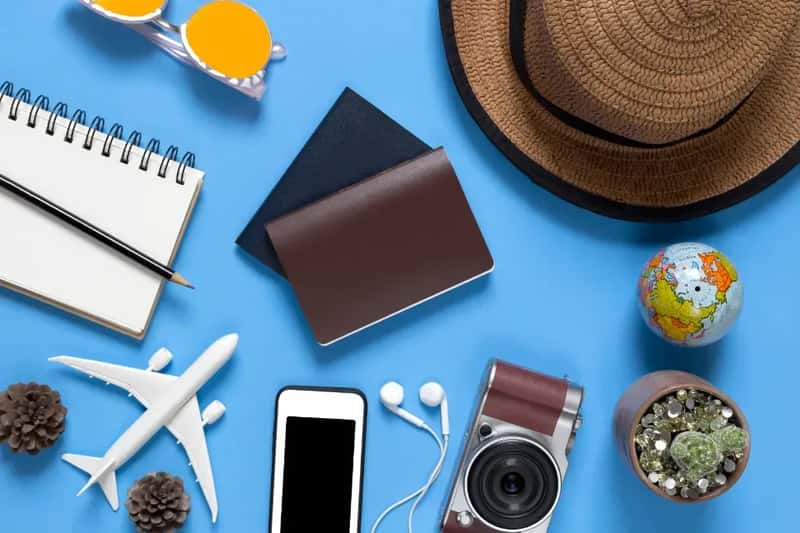
Here’s the thing about experienced fliers – they’ve simply paid attention. Every item on this list solves a real problem that most of us don’t think about until we’re already 30,000 feet in the air wishing we’d packed differently. None of it is rocket science, but together, these nine items transform a potentially miserable journey into a manageable, even pleasant one.
The cabin air is drier than a desert. The tray table is dirtier than a toilet seat. Your battery will die right when you need it most. These are not exaggerations – they’re documented, verifiable facts. The frequent flier’s answer to all of it? Prepare in advance, pack smart, and never leave those nine essentials behind.
What do you think – is there a travel essential you swear by that didn’t make this list? Tell us in the comments.