Most people assume a train ticket buys you a seat, a view, and maybe a sad vending-machine sandwich. But longtime Amtrak riders over 60 know something the rest of the country hasn’t caught onto: the same dining-car and sleeper attendants who look rushed off their feet are often the ones bending the rules in your favor, one small gesture at a time.
None of it is printed on a menu or listed in a brochure. It’s the kind of thing you only notice after your third or fourth long-haul trip, once the same attendants start recognizing your face before you say a word. Here’s what frequent senior riders and rail insiders actually say happens once you stop being a stranger on the train.
#14 – The First-Pick Reservation Slip
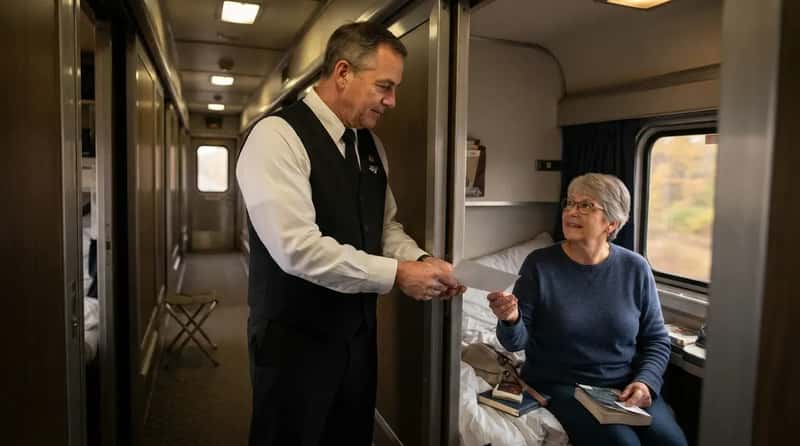
Dining car stewards don’t wait for coach passengers to wander down. They walk the sleeper cars right after departure to lock in meal times before anyone else even thinks about food, often making an announcement first. Regulars who ride the same routes repeatedly tend to get approached first, simply because the attendant already knows their room number and habits.
On some trains, that early conversation even comes with a paper reminder slip so nobody forgets their seating time. Miss the walkthrough entirely, and you’re still not out of luck – if you’re not in your room when the steward comes by, your car attendant can often make the reservation for you. That’s a small courtesy, but for someone who’s ridden the same line a dozen times, it’s the difference between a relaxed 5:30 seating and a scramble.
#13 – The Skip-the-Crowd To-Go Bag
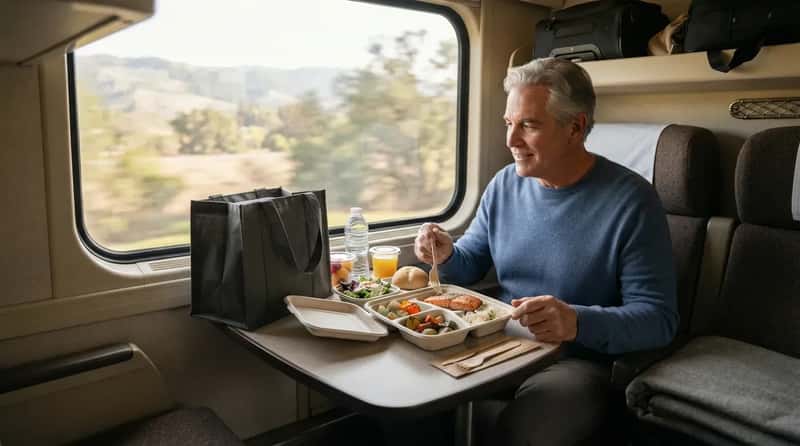
Nobody advertises this, but you don’t actually have to sit through the communal dining car scene if you’d rather not.
If you’d prefer to eat in your private room, your car attendant can prepare a to-go meal instead – plated, wrapped, and packed with the drinks included, more polished than it sounds. Older passengers who dislike the noise of a shared four-top table, or simply want to eat on their own schedule, ask for this instead of fighting the seating chart. Attendants rarely bring it up unprompted, but frequent riders learn to ask on day one.
#12 – The Complimentary Pour That Isn’t Always “Just One”
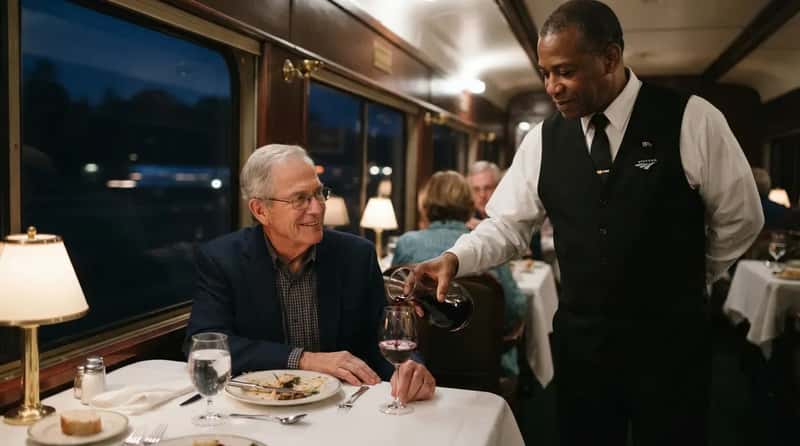
Sleeper car meals technically come with a strict drink limit, but the rule bends more than people expect.
At dinnertime, and only at dinnertime, you’re entitled to one alcoholic beverage per person if you’re of age, while nonalcoholic drinks flow freely and are complimentary all trip long. What frequent travelers notice is that attendants who recognize a regular sometimes stretch that generosity a little further, especially on quieter overnight runs. It’s not a guarantee – it’s a relationship, built one trip at a time.
#11 – The Morning Coffee That Shows Up Before You Ask
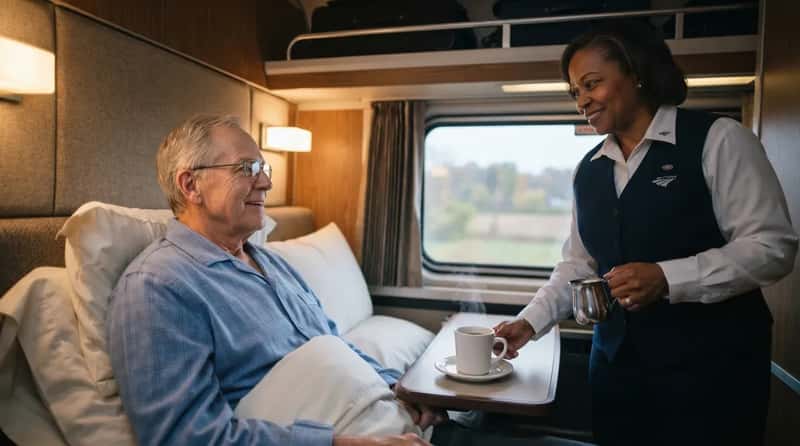
This is the extra that turns a groggy 6 a.m. into something almost civilized.
Both roomettes and bedrooms come with a dedicated first-class attendant who helps get passengers settled in, turns down the beds at night, and puts the coffee on in the morning. For a first-time rider, that’s a nice surprise once. For someone who books the same sleeper car three or four times a year, it becomes a small ritual – the attendant already knows exactly how you take it, and has it waiting before you’ve even opened your eyes.
#10 – The Quiet Table Swap Away from Strangers
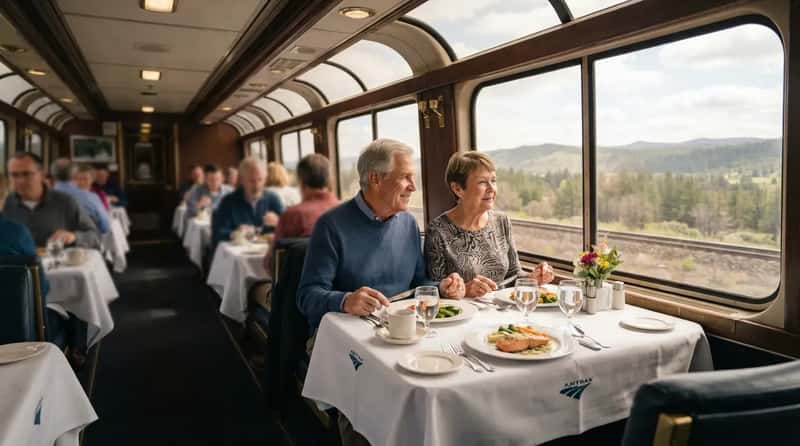
Communal seating is baked into Amtrak’s dining culture, but it’s not always mandatory the way people assume.
Crew members are often away from home for roughly a week at a stretch, and that extended time together builds familiarity fast. Attendants who’ve served the same couple across several trips sometimes seat them together instead of splitting them into a stranger’s four-top. It’s a small mercy for older travelers who find loud, crowded meal seatings exhausting rather than charming – ask politely, and don’t expect it every single meal, but it happens more than people think.
#9 – The Snack Stash Beyond the Printed Menu
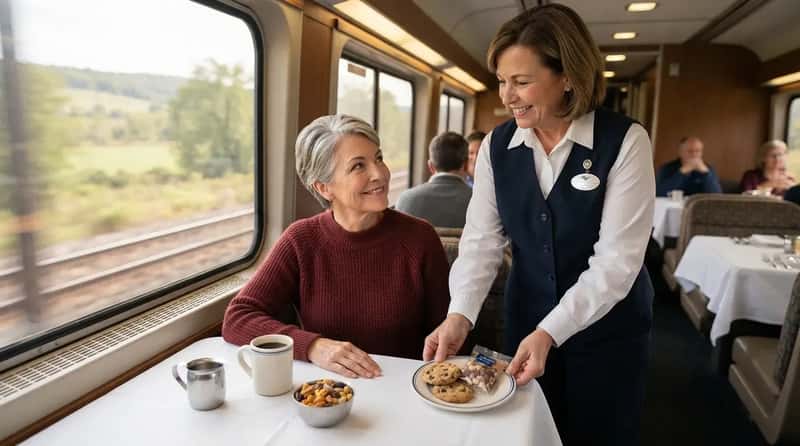
The official café menu is only half the story once an attendant knows you.
After departure, an attendant will bring the beverage of your choice, followed by a snack mix at lunch and dinner. That’s the baseline every passenger gets. But staff who deal with the same faces on a recurring commuter or vacation route start remembering preferences – who skips the pretzels for extra cookies, who always wants black coffee refilled without being asked. It’s less a hidden menu and more a hidden memory.
#8 – The Dietary Heads-Up Before You Even Ask
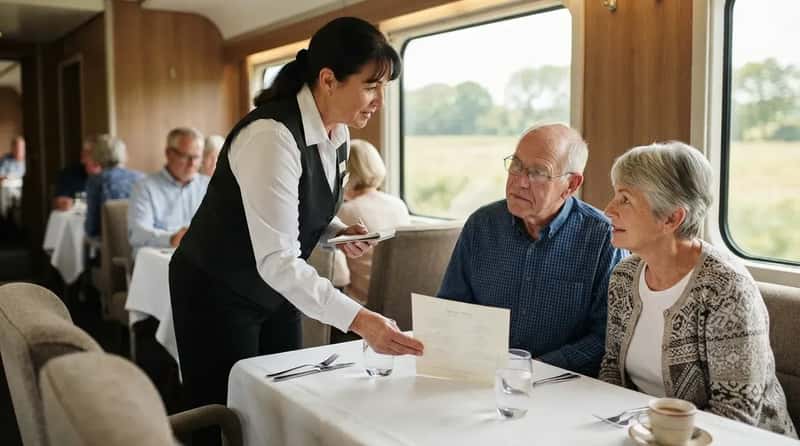
Special meals exist, but most first-time riders don’t know how far in advance you need to move.
Kosher and vegan selections are available on select trains, and kosher meals on overnight routes are prepared under rabbinical supervision and sealed until delivery, but they typically require 72 hours’ advance notice. Attendants who’ve served a returning passenger before will sometimes flag that window unprompted, rather than letting a regular find out too late. For a senior rider managing diabetes or a restricted diet, that early nudge can save an entire trip’s worth of frustration.
#7 – The Guest Rewards Nudge Nobody Explains at the Counter
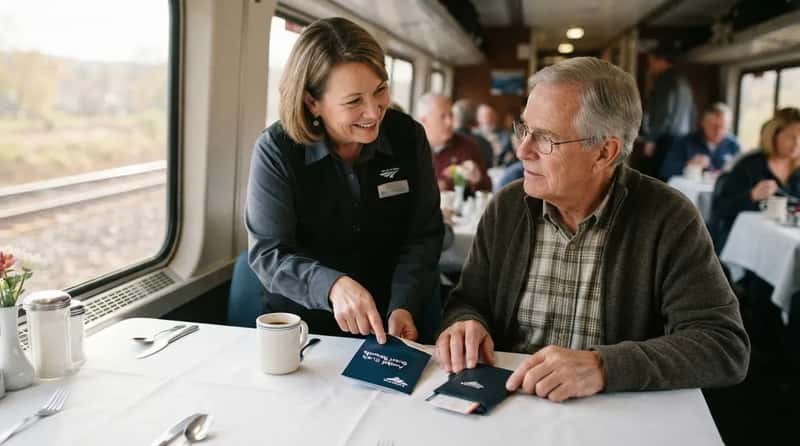
Here’s the part almost no one tells first-time senior travelers: the discount and the loyalty program are two completely separate systems, and you can stack the benefits of one on top of the other.
Travelers 65 and older save 10% on train fare when booking through Amtrak. That’s separate from Amtrak Guest Rewards, where members earn 2 points per dollar spent, plus a 25% bonus on business-class tickets and a 50% bonus on Acela first-class fares. Attendants who see the same loyalty number pop up trip after trip sometimes mention which upcoming route or promotion would push a rider into the next tier – a tip that never makes it into the onboard announcements.
#6 – The Cross-Border Discount Most Americans Never Hear About
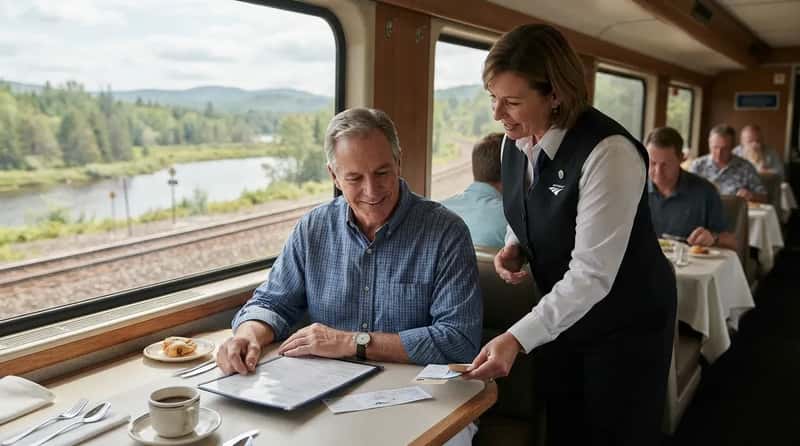
While most travelers assume 65 is the magic number everywhere, that’s actually not true on every route.
On routes that cross into Canada and are jointly operated by Amtrak and VIA Rail, adults 60 and up qualify for the same 10% discount. That means a 61-year-old riding the Adirondack or Maple Leaf toward Montreal or Toronto qualifies years before friends riding domestic-only routes. Frequent riders on those cross-border lines say attendants and ticket agents are far more likely to mention this quietly than to have it advertised at the counter – probably because most of the network doesn’t apply the same rule.
#5 – The Lounge Door That Opens Sooner Than You Think
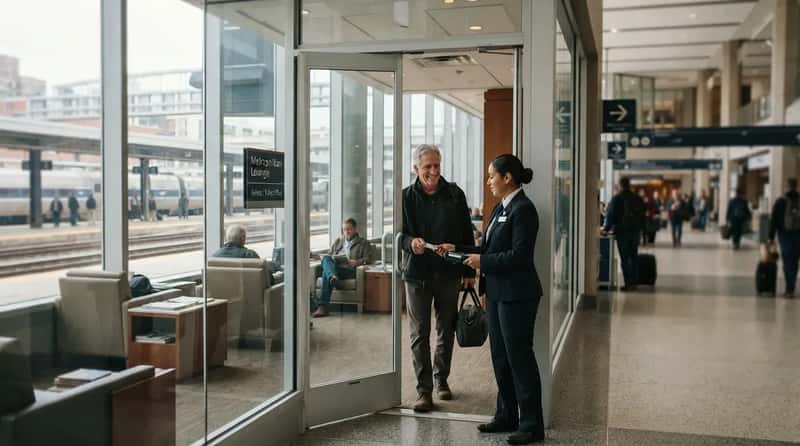
Most people picture airport-style lounges as something reserved for the ultra-elite. Amtrak’s version is more forgiving than that reputation suggests.
Select is the lowest tier in the Amtrak Guest Rewards program, unlocked by earning just 5,000 Tier Qualifying Points, and it comes with two single-visit lounge passes. Push to 10,000 points in a calendar year and you hit Select Plus, which adds a 50% point bonus and unlimited lounge access. Attendants who deal with repeat long-distance riders sometimes point out how close a passenger already is to that next tier, since return trips add up faster than people expect.
#4 – The Companion Who Rides Along for Free
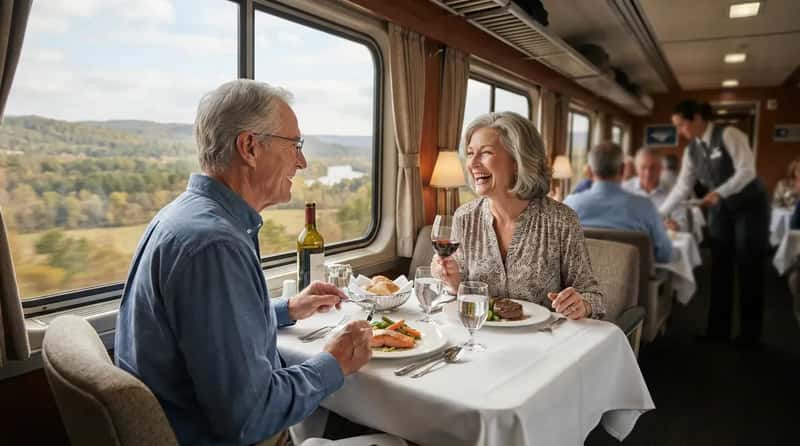
For senior couples who travel together constantly, this is the perk that actually saves real money.
Select Plus members earn two companion coupons outright. Climb to the top tier as a Select Executive, and you’ll earn a full 100% tier-point bonus, four one-class upgrades, two companion coupons, an Auto Train priority offloading coupon, and standing lounge access. None of this is secret exactly – but it’s buried deep enough in the program’s fine print that most casual riders never notice, while attendants serving the same retired couple twice a year absolutely do.
#3 – The Familiar Face That Buys You Small Grace
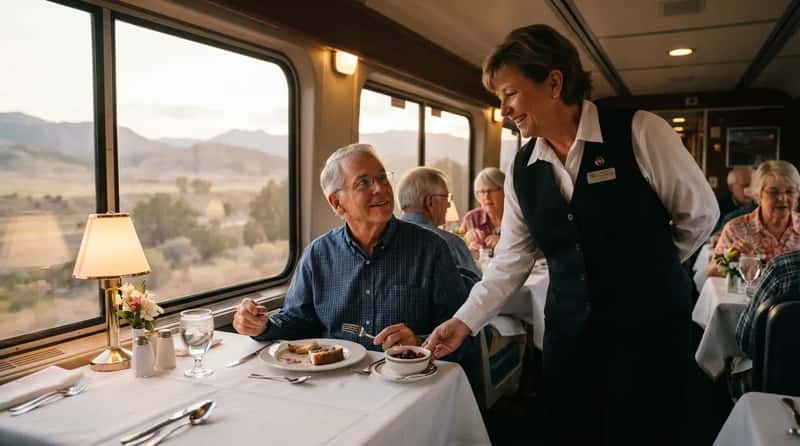
There’s a version of “service” that shows up on a checklist, and a different version that only exists once someone remembers you.
Eating in the dining car has the feel of a favorite hometown diner – the same server handles all your meals for the length of the trip. For a rider who’s made the same cross-country run a dozen times over the years, that familiarity compounds. Attendants have been known to hold a seat, delay “last call” by a few minutes, or quietly swap a sold-out entrée for something close to it – small mercies reserved for the faces they actually recognize.
#2 – The Tip-Return That Nobody Talks About Out Loud
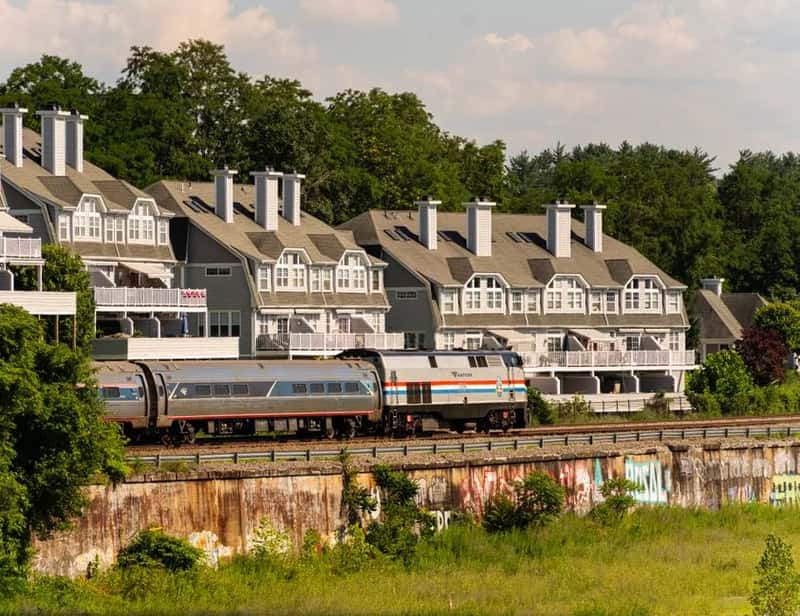
Gratuity culture on Amtrak runs both directions more than people realize, and frequent riders who tip generously and consistently tend to get remembered for it.
Typical optional tipping runs $10 to $20 per night for sleeping car attendants, given at the end of the trip, and 15 to 25% of the menu price for dining car staff, much like restaurant tipping. Attendants who work the same long-haul routes for years start recognizing the senior passengers who consistently tip well and treat them like actual people rather than a ticket number. That reputation follows a rider across trips – sometimes literally, if the same crew rotates back onto a route they frequently book.
#1 – The Card Rebate That Quietly Pays for the Whole Trip’s Food
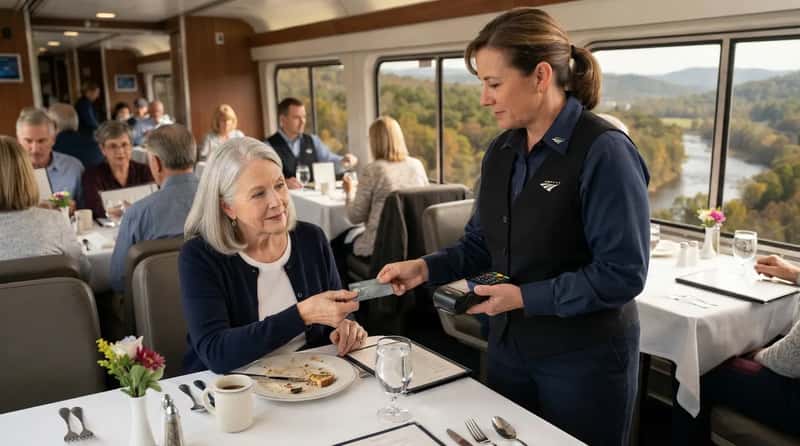
This is the one seasoned Amtrak riders guard almost jealously, because it turns every dining car meal into something close to free.
Food and beverage purchases made onboard with the Amtrak Guest Rewards Preferred Mastercard earn a 20% rebate as a statement credit. Stack that against the 10% senior fare discount and steady Guest Rewards points, and a passenger who rides three or four times a year can genuinely offset a meaningful chunk of their food costs without ever haggling or asking for a favor. Attendants rarely explain the math out loud – they just notice which regulars are already using it, and which ones are quietly overpaying trip after trip.
None of these fourteen extras require confrontation, insider connections, or a secret handshake. They’re mostly the product of consistency – riding the same routes, tipping fairly, and being polite enough that an overworked attendant remembers your face on trip four instead of treating you like trip one.
The discounts are real, the loyalty tiers are real, and the small human courtesies are real too, even if Amtrak never puts them in a brochure. Which of these have you actually experienced on a long-haul trip? Drop your own dining-car story below – the regulars always have the best ones.