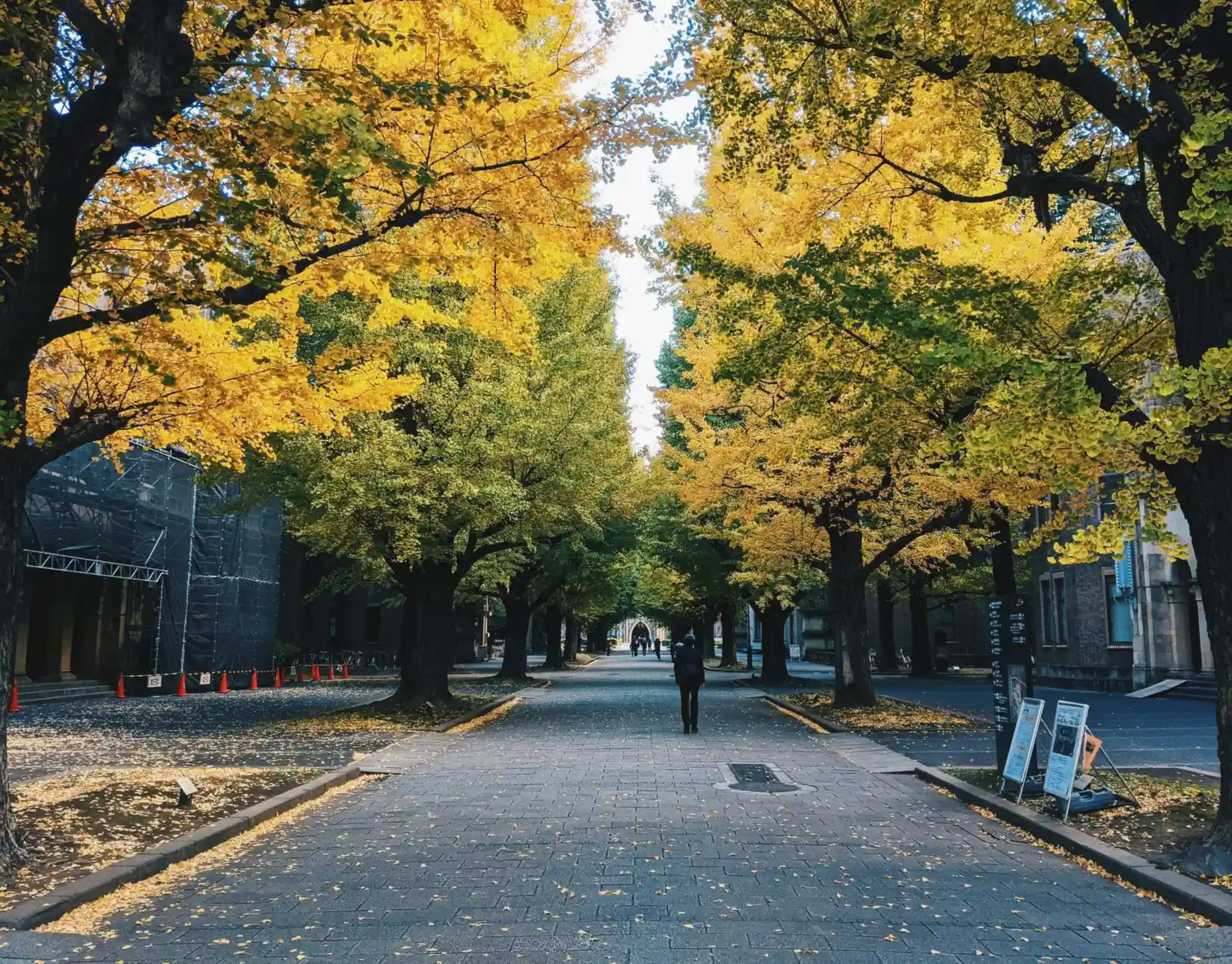
The airport smells like someone else’s panic.
You are handed a boarding pass. A number. A seat assignment.
You are told where to stand. When to move. When to sit down and stay.
And then, in six hours, you land somewhere new. A different city. A different version of your life waiting at baggage claim.
But you never crossed the miles. You were simply erased from one place and redrawn in another. This is the identity gap – the chasm between the person you were when you left, and the person you’re expected to be when you arrive. Flying doesn’t bridge that gap. It just pretends it doesn’t exist. The train is linear because identity transition is linear. You cannot skip the middle chapters of who you are becoming. You cannot arrive as the new version of yourself before the old version has had a chance to dissolve, station by station, into the passing countryside.
1. The Teleportation Problem
Flying is a magic trick you didn’t ask for.
You step into a metal tube. The lights dim. Somewhere over the heartland, you eat a small pretzel. Then you land.
The geography between your departure and your destination – all those mountains, rivers, towns, and lives – simply ceases to exist. It was never real to you. You floated above it at 35,000 feet and felt nothing but cabin pressure and mild dehydration.
Unlike flying, which removes you entirely from the geography between two points, travelling by train keeps you connected to the land throughout.
This matters more than it sounds.
Because the self is not a static object you carry from gate to gate. The self is a story. And stories require continuity. They require you to move through the middle chapters – not skip from the first page to the last.
When you board a plane, you sever the narrative. You arrive as a stranger in your own skin, disoriented in a city that feels like a film set, because you never watched the scenery change. You never earned the distance.
The train makes you earn it. Slowly. Honestly.
2. The Earned Arrival
There is a specific satisfaction in watching a city approach.
Not appear – approach. The suburbs bleed in first. Then the infrastructure. Then the skyline, modest or grand, pulling itself above the horizon like it has something to prove.
The view from the window changes gradually – city giving way to suburb, suburb to countryside, countryside to mountain or coast – and that gradual transition is itself a kind of understanding.
That understanding is psychological. It is territorial. It is the brain drawing a map it can trust.
When you fly, you land and immediately consult your phone for orientation. Which way is north? Where is the hotel? The city has no context. It is a destination without a journey – a noun without a verb.
The train gives you the verb. You watch your old city dissolve into landscape. You watch new landscape compose itself into your next city. By the time you arrive, something in you has shifted – quietly, correctly, at the pace of the rails.
You haven’t just traveled. You have transitioned.
3. The Rhythm as Therapy
Ask a train traveler what they love most, and watch their eyes go soft.
It’s the rhythm. It’s always the rhythm.
That low, persistent percussion of the rails – ka-thunk, ka-thunk – is not noise. It is a metronome for the interior life. It regulates something ancient. Something pre-digital.
The steady, rhythmic movement of trains creates a uniquely meditative environment that many travellers find deeply restorative.
This isn’t coincidence. It isn’t nostalgia. It is the nervous system responding to a predictable, grounded motion – a motion that says: you are moving, but you are safe. You are changing, but there is a track. You are in transition, and that is allowed.
Flying offers no such reassurance. There is turbulence that cannot be explained. There is the terrifying smoothness of cruising altitude, which feels like suspension rather than movement. You are neither here nor there.
The train is always, unambiguously, somewhere. And so are you.
4. The Permission to Think
Modern life is structurally allergic to deep thought.
We have engineered interruption into every surface. The phone. The notification. The open-plan office. The algorithmic scroll that replaces silence with noise before silence has a chance to mean anything.
Some find that being in transit induces “think time,” to think through serious concepts. Still others find that traveling on a long-distance train is ideal for internal exploration, or daydreaming.
And this is where the train becomes radical.
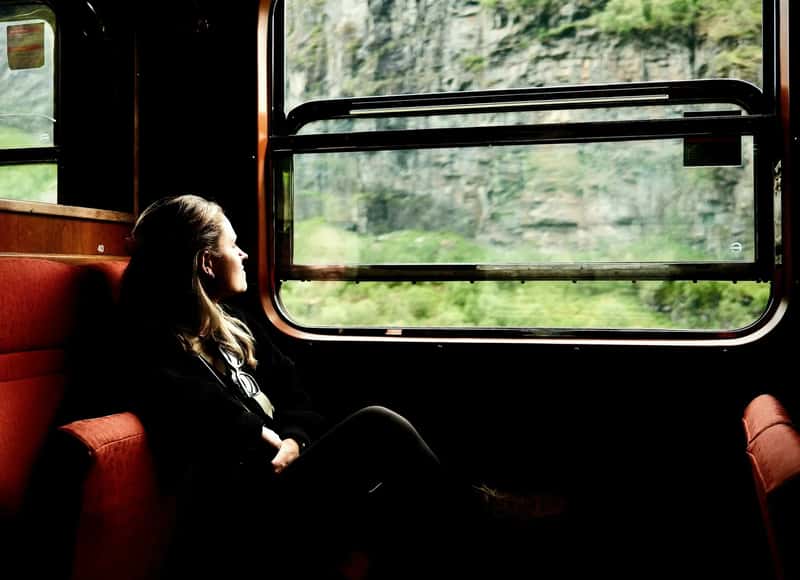
It is a protected container of unhurried time. Without the stress of navigating unfamiliar roads or enduring airport security queues, your mind is free to wander, reflect, or simply rest as landscapes glide by your window.
The airport does not offer this. The airport is a controlled anxiety loop – security theater, overpriced coffee, gate changes, the collective low-grade dread of strangers who are all running slightly late for something.
On the train, there is space. Physical space in the seat. Temporal space in the schedule. Psychological space to let an idea arrive without forcing it. Some people write their best sentences on trains. Some people grieve. Some people simply exhale for the first time in months.
The train is the only transportation that doubles as a room you can think in.
5. The Identity Without a Resume
I once took a twelve-hour overnight train through a country where I didn’t speak the language.
I had no meetings to attend. No persona to perform. In that compartment, I was just a person watching darkness move past glass, eating something warm from a paper bag, listening to a language I could not decode.
No one on that train knew my job title. No one cared what I’d published or produced. I was simply a body in motion – and that anonymity was the most honest I’d felt in months.
This is not escapism. This is archaeology.
There will be no appointments, no social entanglements, no family responsibilities, no community obligations, no promises, no identity save what I create out of whole cloth during this passage.
That sentence describes a liberation most of us are too afraid to ask for. On a train, you don’t have to ask. It simply happens, station by station, as your known world recedes and you are left with the only person who was always there underneath the noise – yourself.
6. The Controlled Surrender
People who prefer trains are often misread as control freaks.
The opposite is closer to the truth.
Airports tell you where to stand, what to take off, and when to move. On trains, you orchestrate more of the experience. You choose your seat, bring liquids, stand up when you want.
This distinction is profound. The airport strips autonomy in the name of efficiency. The train restores micro-choices that accumulate into something crucial – a felt sense of agency over your own journey.
And agency, it turns out, is deeply connected to identity stability.
When we feel we have no choice – no say in the pace of things, the direction, the sensory experience – we begin to fragment. We feel managed rather than moving. Processed rather than present.
Control restores agency. Agency lowers threat responses.
The train doesn’t hand you total control. The track is fixed. The schedule is not yours. But the experience within it – the window seat, the dining car, the moment you lean your head against cool glass and let the landscape blur – that is entirely yours.
And that is enough.
7. The Emotional Attribution We Don’t Talk About
Science is slowly catching up to what train lovers have always known in their bodies.
The preference for rail is not purely rational. It was never meant to be.
Researchers found preferences for rail travel were “rather irrational” and “highly loaded with emotional and social attributions.” The largest factor explaining the favoritism was “emotional attributes,” like nostalgia, accounting for 38 percent of the bias.
Nostalgia is not sentimentality. Nostalgia is the self reaching backward for evidence that it has existed continuously – that there is a coherent thread between who you were and who you are now.
The train activates this thread.
It connects us to every long journey ever taken by rail – every immigrant watching a coast disappear, every soldier returning home, every writer chasing a story through an unfamiliar country. There is a lineage to this mode of movement. A gravity that flying simply cannot simulate.
When you choose the train, you are choosing to belong to that lineage. You are saying: I am a person for whom the journey matters as much as the arrival.
8. The State of Flow That Only Motion Unlocks
There is a specific cognitive state available only to people in gentle, sustained motion.
Not rushed motion. Not the controlled chaos of driving. Not the suspended non-motion of flying. The particular, ground-connected, scenery-unrolling movement of a train.
Some have compared being in transit to the state of flow, which would be fitting, given that trains themselves “flow” because their exact paths were charted decades ago.
Flow – the psychological state of total absorption, where time distorts and output feels effortless – is not something we can manufacture at a desk. It requires the right conditions. Moderate challenge. Clear boundaries. Sustained engagement without interruption.
A train provides all of this without asking. The problem you’ve been circling for weeks suddenly has a shape. The letter you couldn’t write begins to write itself. The grief you’ve been deferring finds a window to lean against.
It induces a spatial detachment and the time suspension necessary for bold thoughts to race ahead.
This is why writers have always loved trains. It is not romanticism. It is neuroscience in motion.
9. The Act of Witnessing the Middle
Flying erases the middle.
This is its great crime against the traveling self.
The middle is where everything real happens. The middle is the farmland that stretches flat for two hundred miles before the mountains interrupt it. The middle is the small town with the water tower and the church steeple and the life that no one documents. The middle is the evidence that the distance between where you were and where you’re going is real, not conceptual.
On a train, you don’t teleport between departure and arrival – you witness every kilometre of the journey between them.
Witnessing matters. It is an act of respect – for the geography, for the people who live in the middle, and for the version of yourself that needs to travel the distance emotionally before arriving physically.
Identity transitions require the middle.
Grief requires the middle. Healing requires the middle. Every meaningful change in a human life requires the sustained, sometimes uncomfortable, passage through everything that lies between the before and the after.
The train refuses to let you skip it.
10. The Soft Arrival
This is the heaviest truth of all.
The people who choose trains – who choose the slower, earthbound, scenery-saturated passage from one life to the next – are not afraid of flying. They are not merely eco-conscious or nostalgic or quirky. They are people who have learned, through some interior knowing that often cannot be articulated, that they need time to become who they’re about to be.
When your choices match your values, stress drops. Cognitive dissonance disappears.
And more than values – when your method of movement matches your psychological architecture, something aligns. The body arrives at the same time as the self. There is no lag. No jet-lag of the soul.
To arrive as yourself. That is the entire philosophy. Condensed to four words. It is the reason for the slower route, the longer journey, the window seat watched in silence as the landscape does its quiet work.
There is a particular quality of light in the late afternoon, viewed from a train window. It is amber and horizontal. It catches the tops of trees and the edges of fields in a way that feels almost accusatory – as if the world is asking whether you have been paying attention.
Most of us haven’t. Most of us have been moving too fast to notice the light, or the trees, or the slow dissolving of one version of ourselves into the next. We teleport through life – from obligation to obligation, from identity to performance – and we wonder, quietly and persistently, why we feel like strangers inside our own stories.
The train does not solve this. Nothing so simple solves this. But it offers something rare in a world engineered for speed: the unhurried permission to be in between. To be neither who you were when you left, nor quite yet who you will be when you arrive. Just a person in motion, watching the middle, letting the distance do its work.