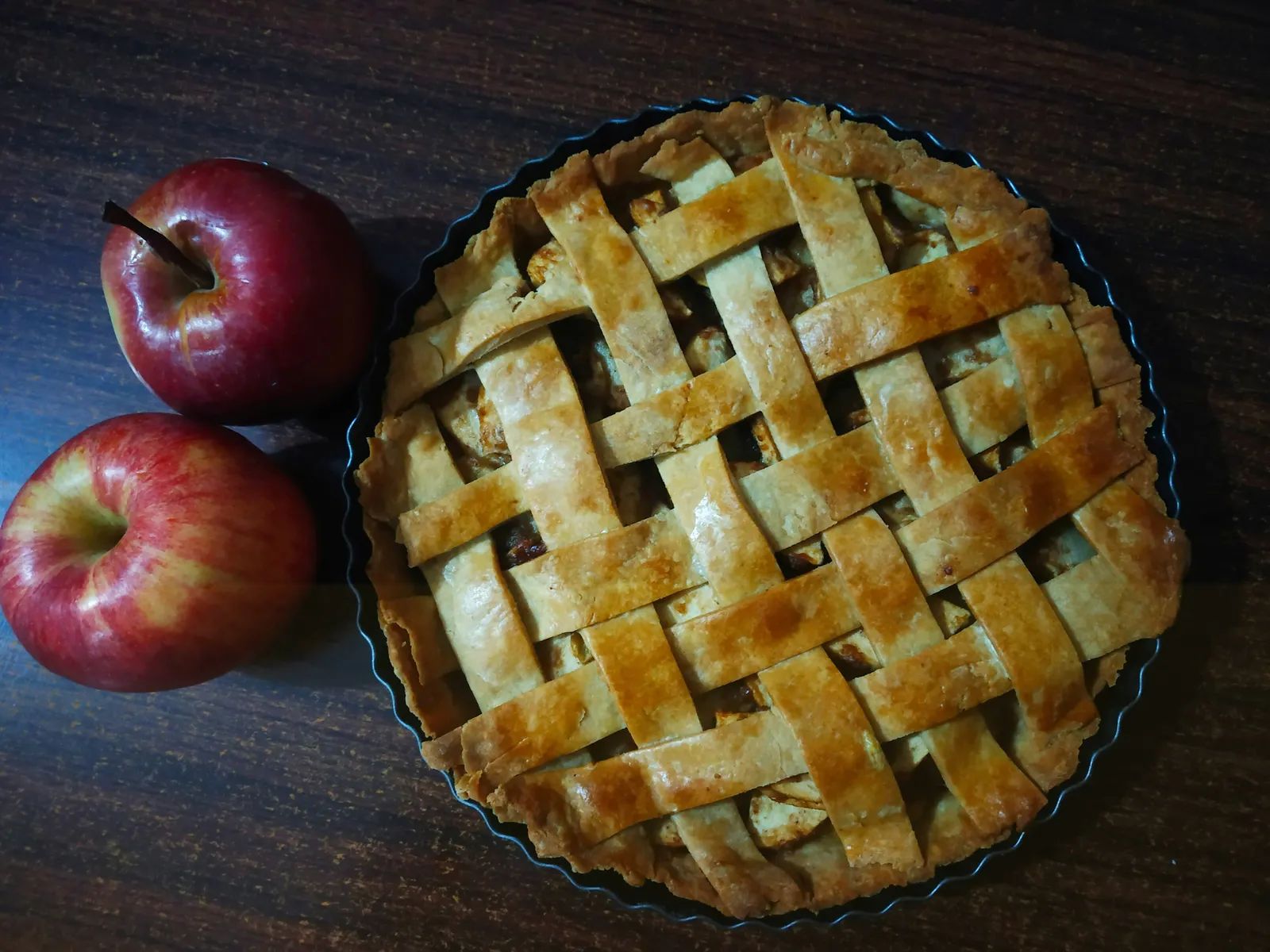
Many home bakers finish an apple pie one day and wonder whether it belongs on the counter or in the fridge the next. The answer hinges on the filling, the recipe, and kitchen conditions rather than a single rule for every pie. Extension services across several states have reviewed the science behind fruit pies and offer consistent guidance for traditional versions.
The Basic Rule for Classic Apple Pie
A baked apple pie made with sugar-sweetened fruit filling can stay loosely covered at room temperature for up to two days. Sugar and the natural acidity of the apples help limit bacterial growth during that window. After two days the pie should move to the refrigerator for up to two additional days. University guidance notes that refrigerating the pie from the moment it cools extends safe storage to about seven days total. The two-day counter period and the seven-day refrigerated period are separate schedules; days already spent at room temperature do not add to the longer refrigerated count. Warm kitchens or climates above typical indoor temperatures call for immediate refrigeration instead.
When the Fridge Becomes Necessary
Pies that contain custard, cream, cream cheese, or whipped-cream toppings fall under stricter rules. These versions must stay refrigerated and should not sit out longer than two hours, or one hour if the room exceeds 90 degrees. Sugar-free pies also require the refrigerator and are best eaten within one to two days. Store-bought pies follow the instructions printed on the package, including any guidance after opening. A pie labeled “keep refrigerated” belongs in the fridge from the start. The same applies to any bakery pie that includes dairy or egg-based layers.
Freezing and Thawing Options
Freezing offers longer-term storage for traditional apple pie. Both baked and unbaked pies hold up well when wrapped properly after freezing solid. Quality remains highest for up to four months. Thawing in the refrigerator preserves texture better than room-temperature thawing for most bakers. Once thawed, slices can be warmed briefly in the oven if desired, though many people enjoy the pie cold straight from the fridge. Reheated leftovers should reach an internal temperature of 165 degrees as a general safety step.
Signs It Is Time to Discard
Visible mold on the crust or filling means the entire pie should be thrown away. Baked goods are porous, so mold can extend below the surface even if it is not obvious. Any pie that exceeds the recommended storage times or shows an off odor should also be discarded. A softer crust after refrigeration or a small amount of juice on the plate reflects normal quality changes rather than spoilage. The key factors remain the ingredients, the time elapsed, and whether the pie stayed within the temperature guidelines. Following these steps keeps a classic apple pie enjoyable and safe through the holiday baking season.