Most of us picture airline employees on their days off as airport wizards who know every shortcut and collect every perk. The reality, according to insider accounts, employer rules and public data, is far stranger, because there are things they flatly refuse to do, and you’ve probably done some of them on your last flight.
A few of these habits are about safety, a few are about germs, and one can get a free ticket taken away over a pair of leggings. The one waiting at #1 involves a drink millions of passengers order every day, and the story behind it is messier than you’d expect.
#13 – Press the Call Button for a Refill
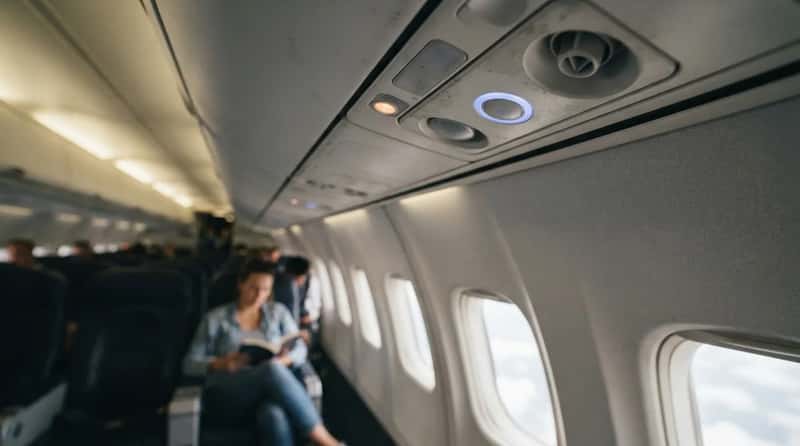
The person who pours your drinks for a living almost never rings for one. Flight attendants can log upwards of 90 hours per month in the sky, so they know exactly how much one more ding adds to a busy service.
Several flight attendants in an online discussion said that as passengers, they stay put and skip the call button unless something is urgent. One former crew member pointed out that flight attendants are constantly on the move during a shift, which is why ringing for another drink is something they’d never do.
Those threads read less like a rulebook and more like a reflex built from years of walking that aisle. Crew simply know what a call light feels like from the other side.
Most passengers see the call button as part of the ticket price. Many crew members treat it as a last resort, and that gap explains a lot of cabin friction.
At a Glance
- Flight attendants can log upwards of 90 hours per month in the sky.
- Off-duty crew in online threads say they skip the call button unless something is urgent.
- The habit comes from years of working the aisle, not from a written rule.
But the next habit happens in the first ten minutes of your flight, and it might change how you board next time.
#12 – Use the Lavatory During Boarding
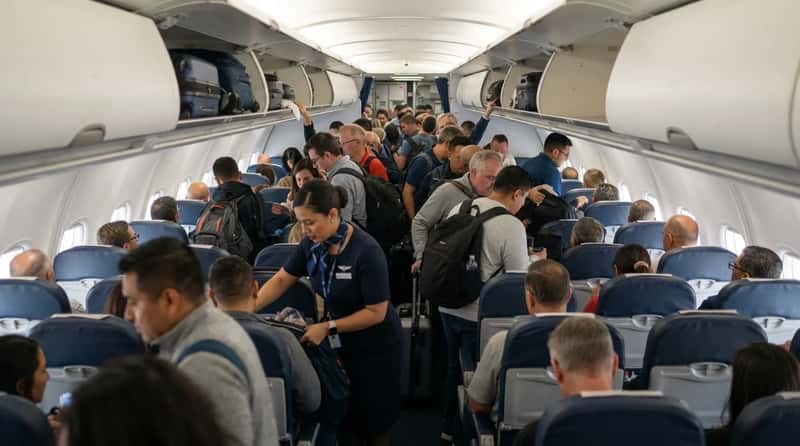
Boarding is the one window when off-duty crew stay out of the lavatory. Flight attendant Lentini told HuffPost she would never use the aircraft lavatory during the boarding process.
The aisle is already at capacity, and crews are often handed trash and dealing with other disturbances while passengers shuffle past. Add one more person heading the wrong way and the whole line stalls.
A lavatory trip can delay departure, because you end up going against the flow of traffic to get back to your seat. Every stuck row is another minute ticking away before the plane can get moving.
Her fix is simple: the terminal has dozens of restrooms. Some passengers will say nature doesn’t wait for a boarding group, but the crew view is that the terminal is the smarter first stop.
That’s a small courtesy, but the next one involves a rule most travelers treat as optional and crews absolutely don’t.
#11 – Unbuckle Just Because the Sign Is Off
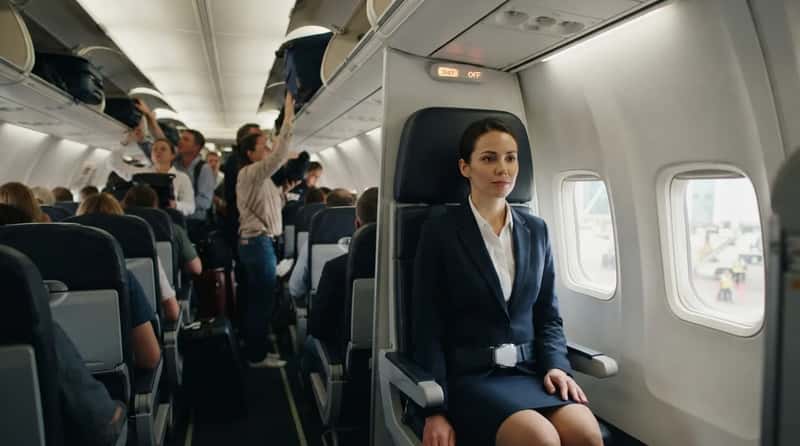
The moment the seat belt sign goes dark is when most passengers relax, and it’s exactly when crew don’t. Turbulence doesn’t always announce itself, and experienced crew members know how troublesome it can be.
Flight attendants say that, working or off duty, they keep the seat belt fastened whenever they’re seated, even if the sign is off. Many passengers treat that sign as a flexible suggestion, while crew treat it as the bare minimum.
There’s a second rule for the end of the trip. Flight attendant Ling says to stay seated until the engines are shut off, the seat belt sign is off and the airplane has stopped moving.
Rushing the aisle can feel like winning a race. The crew view is that the extra minute isn’t worth the risk.
Worth Knowing
- In flight: belt stays fastened whenever seated, sign or no sign.
- After landing: wait until the engines are shut off.
- After landing: wait until the seat belt sign is off.
- After landing: wait until the airplane has stopped moving.
The next item is about what crews bring aboard, and it might embarrass you.
#10 – Bring a Bag They Can’t Lift
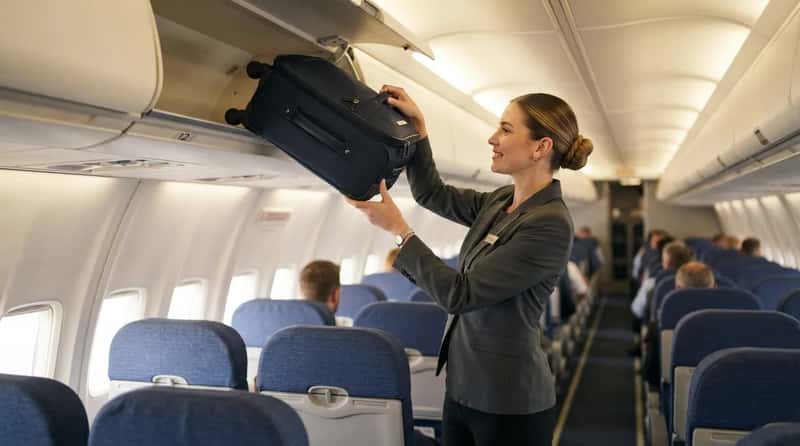
The bag that barely fits is never the one you’ll see in an off-duty crew member’s hand. Flight attendant Treat says that if you can’t lift your bag into the overhead bin, chances are she can’t either.
Many travelers prefer carry-ons, but size and weight restrictions still apply. Crews say they’re glad to check your bag and help get it to your final destination.
Employees flying standby have another reason to pack light. Standby passengers get a seat only after all regular-fare passengers do.
They may even have to give theirs up for a full-fare customer. A bag that’s easy to grab makes that awkward moment a lot less painful.
Packing smart is easy compared with the next rule, which has cost people their free-ticket privileges.
#9 – Wear Whatever’s Comfortable on Standby
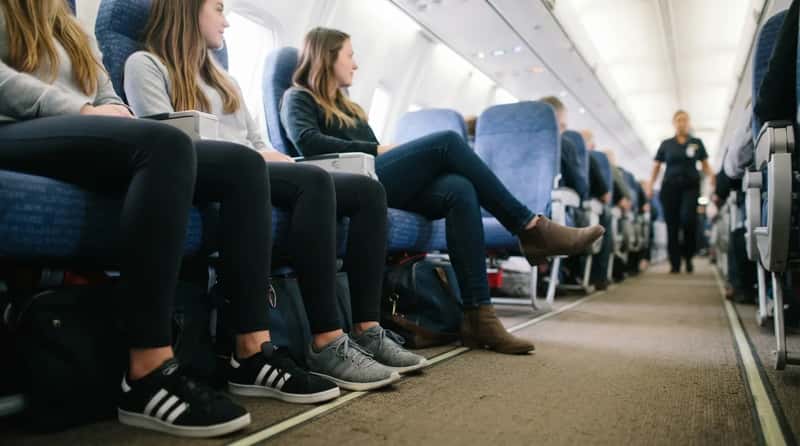
A free flight can be refused over what’s on your legs, and airline staff know it. In 2017, a United gate agent refused boarding to two girls in leggings, and it later turned out they were non-revenue passengers.
Many airlines let employees fly standby for free and extend the perk to friends and family with a buddy pass. Since these riders represent the airline, they must follow a dress code.
Alaska’s guest-pass rules call bare feet, exercise clothing, T-shirts and sweats inappropriate. Rules vary widely, from American Airlines’ relaxed request for clothing that is clean and neat to a long list of requirements for British Airways non-revenue travelers.
Critics call this outdated. Airlines argue staff riders are walking advertisements, and Spirit says its agents can deny boarding to those who don’t look the part.
Even a perfect outfit can be undone by one accessory that employees deliberately leave at home.
#8 – Flash the Company Badge
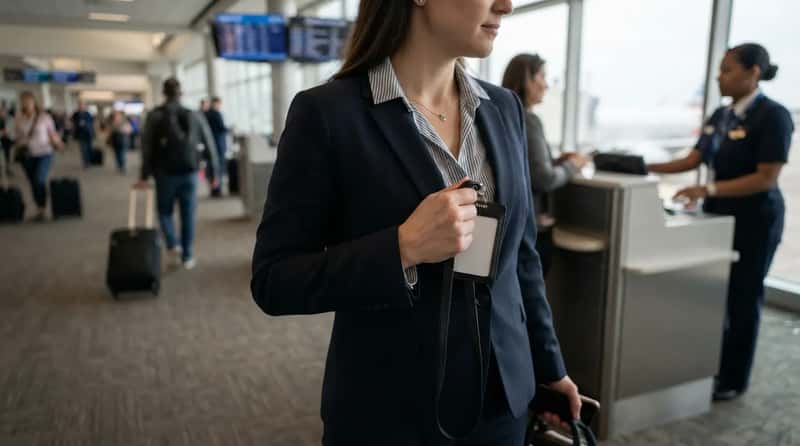
The company badge is the accessory staff leave in their pocket. American Airlines tells team members and retirees not to wear company or security badges when traveling non-revenue, unless the travel requires it, as with the jumpseat.
Spirit’s flight attendant union guidance is blunt about why. Other passengers may not know you don’t work for the airline you’re flying, so you’re a brand ambassador at all times.
That same guidance says agents can deny boarding to non-rev customers who don’t look the part. Flashing credentials might feel like a shortcut, but it can make a free ticket feel a lot less free.
Waving a badge for special treatment sounds tempting, since some non-revs do land premium seats. But upgrades depend on eligibility rules and on whether the seat is actually available, not on who looks most important.
Which brings us to the behavior at the gate that employees are warned about most.
#7 – Pressure the Gate Agent
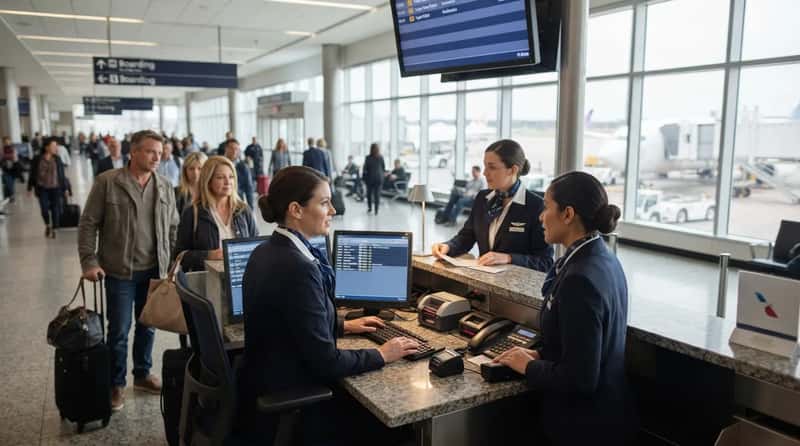
Even with a free ticket, staff know the person behind the desk holds all the cards. StaffTraveler advises being polite and patient, avoiding pressure on gate agents, and waiting to be told when it’s time to board.
The reason is built into how standby works. Even discounted ZED fares are still standby, space available, and don’t guarantee a seat.
FlyerTalk notes most airlines don’t take poor standby behavior lightly and may take away flight benefits or even terminate the employee. That’s a steep price for one heated exchange at a podium.
The scale of the system makes courtesy even more important. StaffTraveler says it connects over 1,250,000 airline employees and answers over 40,000 non-rev load requests every day.
That’s a lot of people competing for the same open seats, and nobody wants to lose theirs by arguing.
Fast Facts
- StaffTraveler connects over 1,250,000 airline employees.
- It answers over 40,000 non-rev load requests every day.
- Even discounted ZED fares are standby, with no seat guaranteed.
- Poor standby behavior can cost an employee their flight benefits, or even their job.
Now for the small pouch on the seat in front of you, which crews treat like a black hole.
#6 – Store Valuables in the Seat Pocket
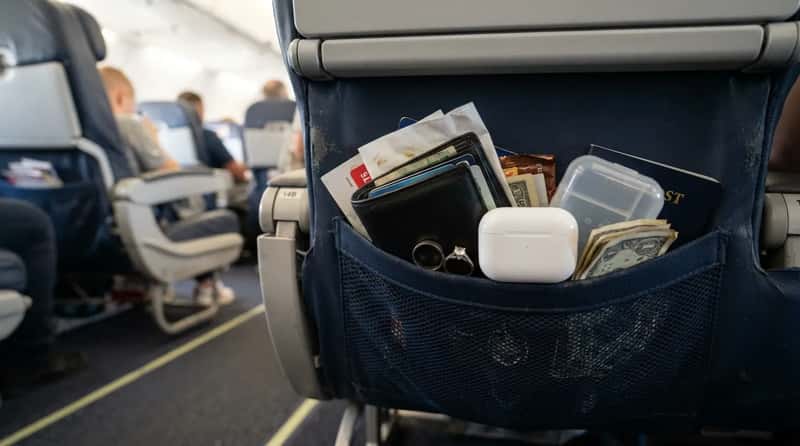
The seat pocket looks like storage, but crews treat it like a trap. Reader’s Digest’s flight attendants say they’ve found wallets, wedding rings, AirPods, retainer cases and actual cash in there.
One crew member explained that fingers can swell during a flight, so passengers take off rings, tuck them in the pocket and forget. Those items usually aren’t found until hours, or even days, later.
Another flight attendant’s advice is to keep passports out of the seat pocket. Never leave a laptop or phone sitting around when you walk the aisle, either.
The crew rule of thumb is hard to argue with: never put anything in the pocket that would make you cry if it disappeared.
But losing a ring is nothing next to what can happen when a dropped phone slips between seats.
#5 – Dig for a Dropped Phone
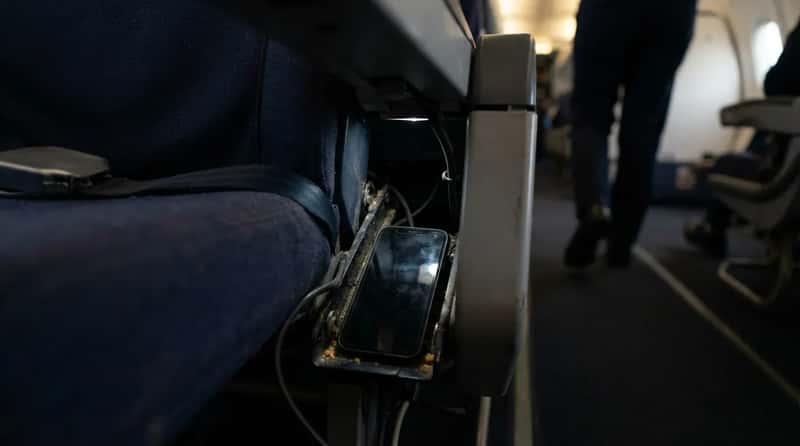
A phone sliding between the seats is a bigger problem than it looks, and crew won’t go digging for it. One flight attendant says trying to retrieve it is actually a safety hazard.
Moving the seat and jiggling the phone can damage its lithium battery, which may catch fire. Her advice is to call a crew member and ask for help instead.
The same source lists other fire-related habits crew avoid. Smoking or vaping generates aerosols that can trigger the smoke alarm and lead pilots to suspect a mechanical fire.
It’s the kind of chain reaction that starts with something tiny. A single dropped phone or a single puff can turn a quiet flight into a tense one.
Next up is a habit that sounds harmless, and one former flight attendant says it’s the last thing he’d ever do.
#4 – Go Barefoot
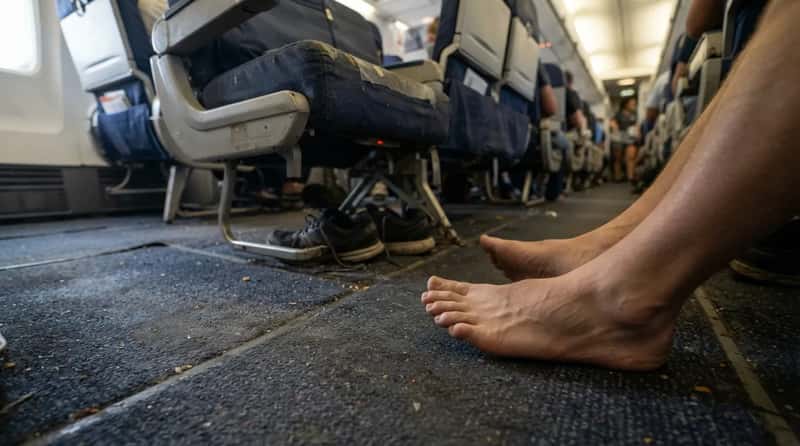
Bare feet on a plane are a hard no for crew members who’ve seen the floors up close. Former flight attendant Jay Robert says you’ll never catch him taking off his shoes, walking barefoot or putting his feet on walls and seats.
His reasoning is as much about hygiene as manners. He says he’s seen the effort put into cleaning the toilets, and that the damp floor in there isn’t damp from sink water.
He also says airplane carpets are typically spot-cleaned, if cleaned at all, during daily rotations. He adds that the goal for aircraft cleaners is often just to mask the smell, since time is short.
That’s one insider’s account rather than an audited measurement. But it shows why going barefoot is such a common thing for crew to avoid.
The next surface has actual lab numbers behind it, and some of them surprised even the researchers.
#3 – Treat the Tray Table Like a Dinner Plate
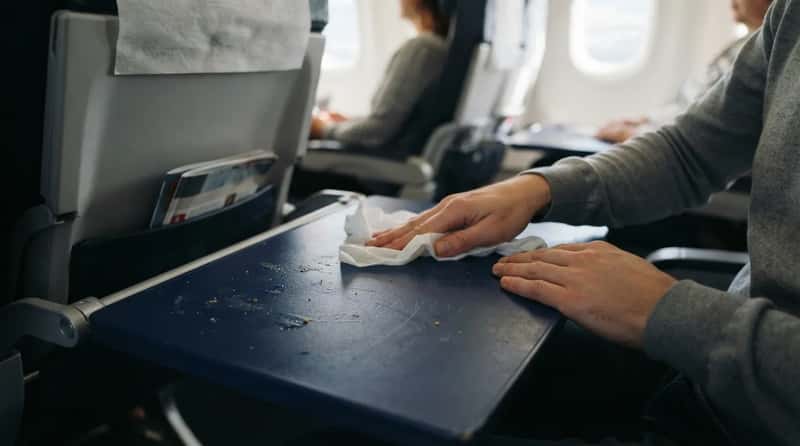
The tray table is the surface many travelers trust most, and it may deserve the least trust. A 2015 TravelMath test found tray table surfaces had more than eight times the bacteria per square inch of lavatory flush buttons.
The tray tables measured 2,155 colony forming units per square inch, compared with the 127 the National Science Foundation cites as standard for a toilet seat at home. Lab work at Auburn University adds context, showing that germs like E. coli and MRSA can survive on airplane surfaces for days.
Balance matters, though. The Auburn team said the study wasn’t meant to scare people, and Delta said its surfaces are disinfected every night and before every departure.
Because hard surfaces are easier to disinfect, a quick wipe of your own is the common-sense answer. It costs you about ten seconds.
But nothing on the plane draws more crew suspicion than what comes out of the tap.
#2 – Drink the Tap Water
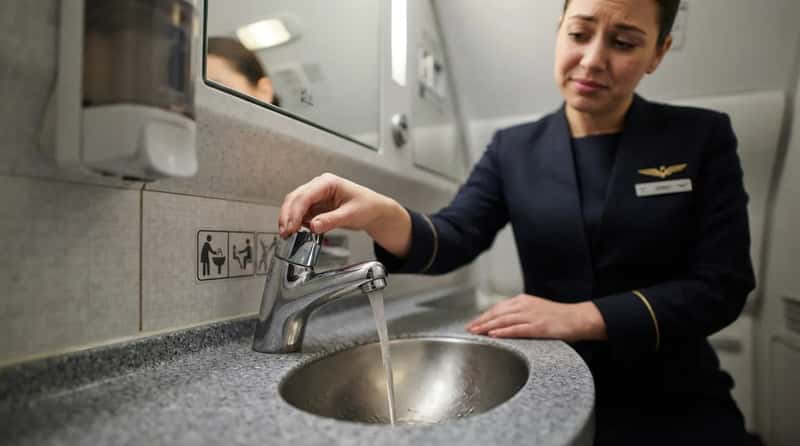
One veteran flight attendant flatly says she won’t drink the plane’s tap water, and she isn’t alone. Jenny, who has worked for a major airline for 20 years, told TIME the tanks are rarely cleaned and she won’t drink it.
A nonprofit analysis of more than 35,000 samples from 10 major and 11 regional airlines urged passengers to stick to bottled water. It found 2.7% of samples tested positive for total coliform, and E. coli was identified 32 times across the 21 airlines.
Results varied sharply. Delta and Frontier earned A grades among major carriers, while American, JetBlue and Spirit earned Ds.
U.S. airlines say they’re in compliance with the EPA. The flight attendants’ union says the regulation doesn’t go far enough or isn’t sufficiently enforced.
Yet the drink flight attendants avoid most isn’t plain water at all, and the debate around it is heated.
#1 – Order the Hot Coffee or Tea
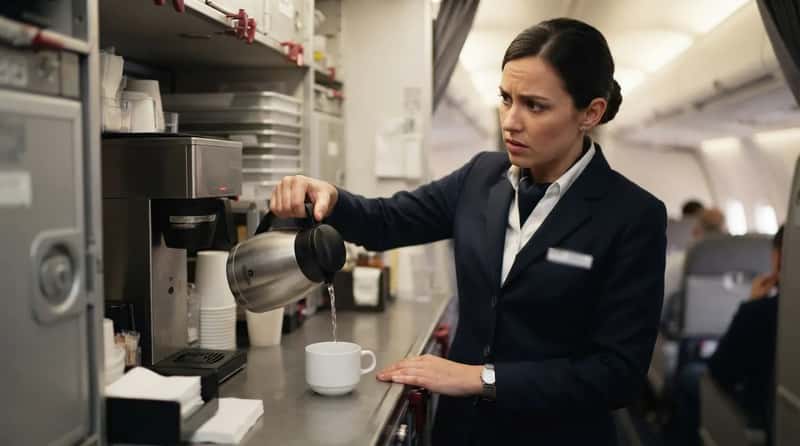
Here’s the one that started the whole conversation: many flight attendants say they won’t touch plain hot water, coffee or tea on board. Most travelers see airplane coffee as a harmless ritual, but many crew members treat it as the one drink not worth the gamble.
The water for tea and coffee comes from the same tap water system. A 2004 EPA sample of 158 planes found 13 percent contained coliform, with two planes testing positive for E. coli.
The flight attendants’ union says it pushed for the EPA regulation over 15 years ago, so crews helped create the rule they still don’t fully trust. That’s a striking irony coming from the people who work on those planes every day.
Skeptics have a real point. At cabin altitude water boils at about 195 degrees, the World Health Organization says bacteria die at 170, and there have been no public reports of passengers getting sick from in-flight coffee or tea.
Even so, a former flight attendant told AOL he has personally seen maintenance crews neglect proper tank-cleaning protocols. His advice is to stick with sealed, canned or bottled drinks.
Quick Compare
- The worry: a 2004 EPA sample of 158 planes found 13 percent with coliform and two with E. coli.
- The counterpoint: water boils at about 195 degrees at cabin altitude, and the WHO says bacteria die at 170.
- The public record: no reports of passengers getting sick from in-flight coffee or tea.
- The crew workaround: sealed, canned or bottled drinks.
Line up all 13 habits, though, and a pattern jumps out that changes how you’ll see your next flight.
The Bottom Line
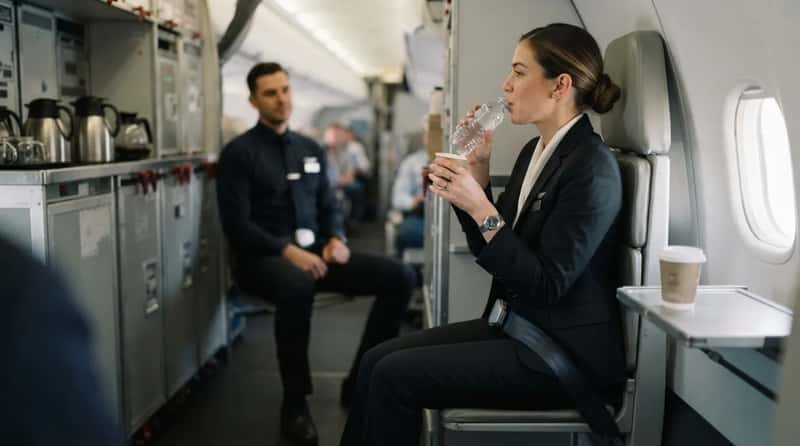
Across all 13, off-duty crews avoid anything that adds work for colleagues, risks safety or invites germs. The strongest evidence sits at the top of the list, where a 35,000-sample water analysis and a 2004 EPA sample help explain why crews skip the tap and the coffee.
Many of these habits come from individual crew accounts or employer policy, not universal rules, and the hot-drink debate is still unsettled. Insiders can be right about the risks and still disagree about how big they are.
So next time you board, watch for the quiet clues, like the buckled seat belt, the sealed bottle and the pass rider in pressed pants. Have you ever watched a crew member break one of these unwritten rules, or do you still order the coffee?