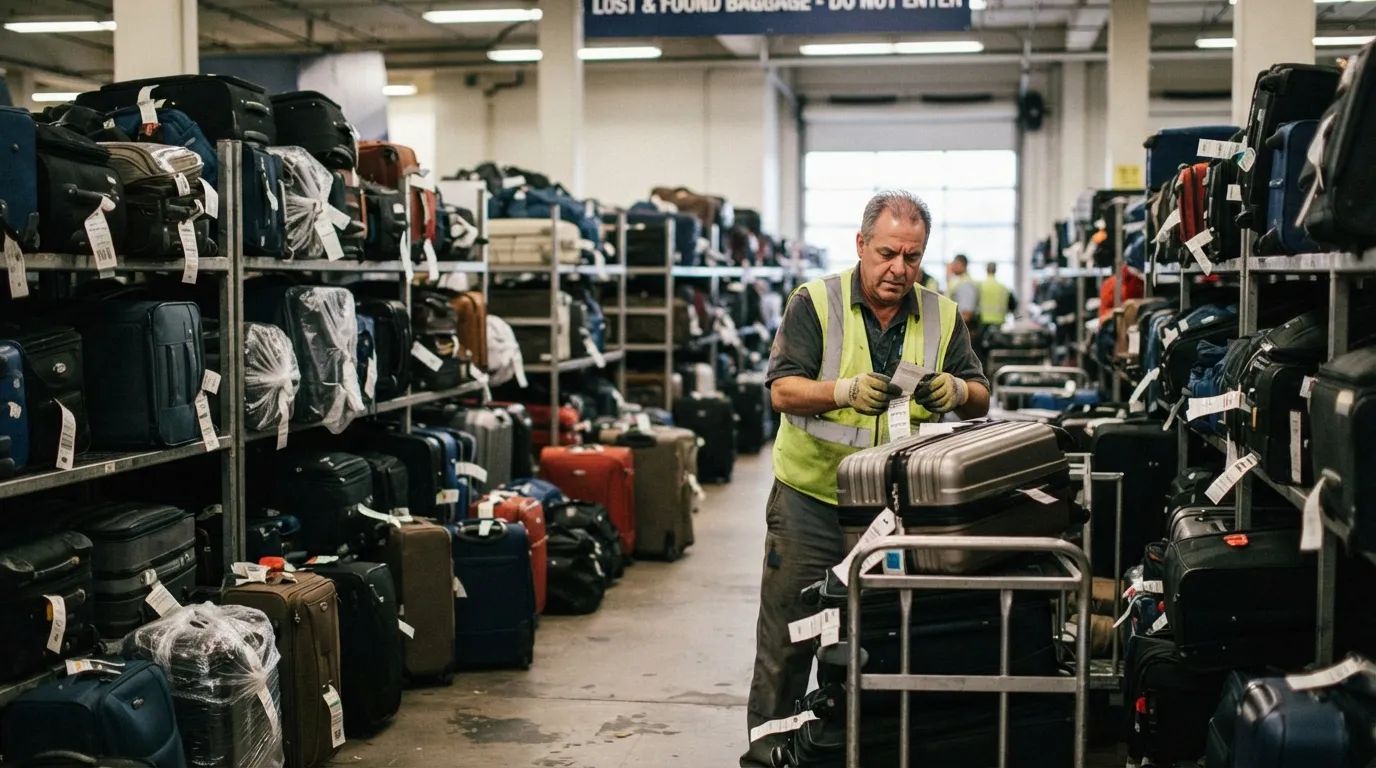
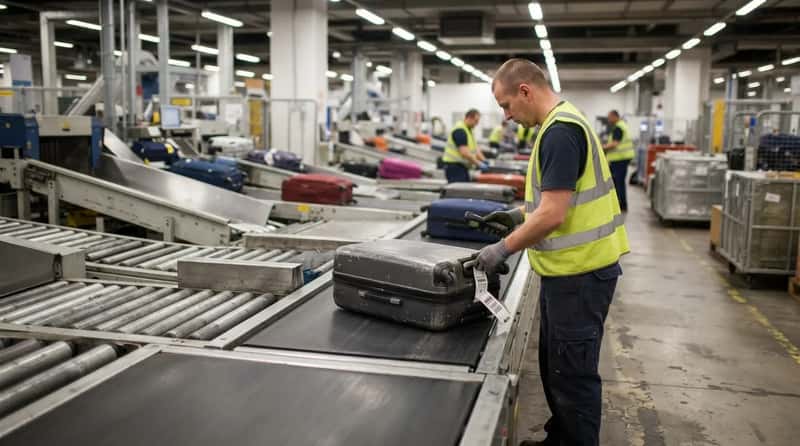
You probably picture it like this: a tired handler chucks your suitcase onto the wrong cart, shrugs, and walks off for a coffee break. That image is almost entirely wrong.
What actually happens is a frantic, high-speed operation involving global databases, a hard 90-day legal deadline, and yes, a real store in Alabama that sells your missing socks to strangers. SITA’s 2024 Baggage Insights report logged 33.4 million mishandled bags worldwide in a single year. That’s not a glitch. That’s a system with visible cracks, and the people who work inside it know exactly where those cracks are.
#7 – The Second Your Bag Disappears, a Clock Starts Ticking
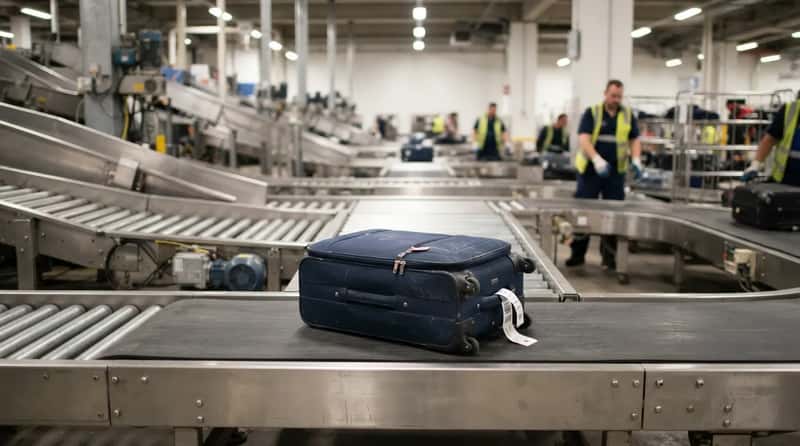
Most people think a missing bag is a mystery. It isn’t. It’s a timed race, and it starts the moment the belt stops moving.
For the first few days, your bag sits at the airport’s baggage service office. If nobody claims it, it gets shipped to a central airline warehouse where tracking software tries to match it to a lost-property report.
Everything depends on one tiny barcode sticker slapped on at check-in. It holds your destination, flight number, departure time, and your name.
Here’s the part handlers won’t say out loud: if that sticker tears off or gets misread, the airline is flying blind. Tags fall off constantly, and human error sends bags to the wrong city more often than anyone advertises.
That’s nothing compared to the chaos waiting one section ahead.
#6 – Connecting Flights Are Where Bags Go to Die
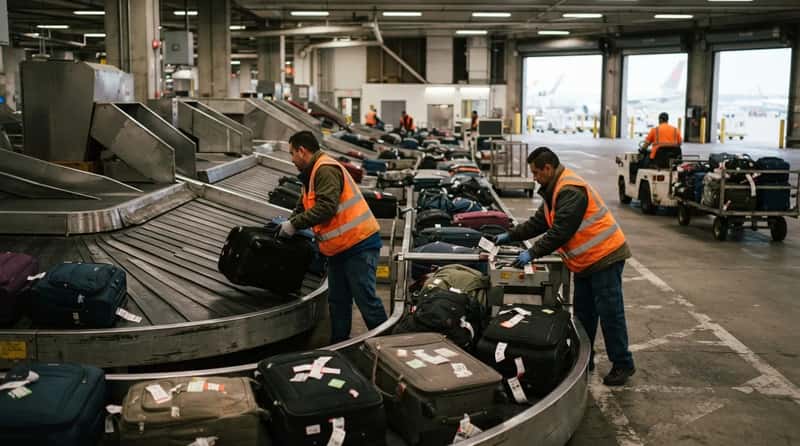
Handlers rarely say this loudly, but frequent flyers already feel it in their bones.
Every connection adds another set of hands, another system, another tight window for something to go wrong. In 2025, transfers alone caused 39% of all mishandling worldwide – nearly four in ten failures trace back to one single moment: your bag switching planes without you.
Fast Facts
- Transfers caused 39% of global mishandling in 2025, down slightly from 41% the year before.
- International routes mishandle bags far more than domestic ones – 9.12 per 1,000 passengers versus just 1.65 on domestic flights.
- Every extra connection adds another handoff, another system, and another chance for a tag to fail.
Shorten that connection with a delay, and the odds get worse fast. If your bag misses the flight, it doesn’t wait around – it gets rebooked onto the “next possible flight.”
That phrase sounds calm and orderly. In reality, it can mean your suitcase lands two days after you’ve already unpacked.
Transfer points account for the largest single share of mishandling globally. That’s not a travel blog tip. That’s an insider confession.
#5 – There’s a Secret Global Database Tracking Your Bag Right Now
Most passengers assume someone is manually digging through a warehouse looking for their suitcase. That’s not how modern lost-luggage recovery works at all.
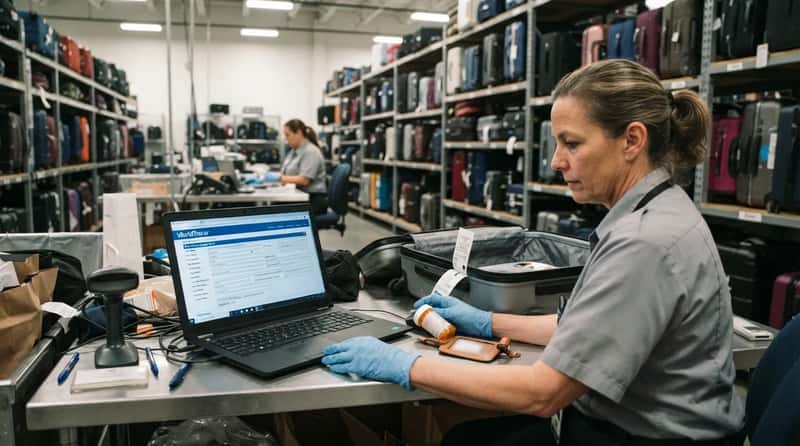
Behind the scenes, over 500 airlines share a single system called WorldTracer, built by SITA, that cross-references every “lost” report against every “found” report worldwide. Send a bag to Denver by mistake instead of Dallas, and WorldTracer is usually how it finds its way back to you.
Agents physically open unclaimed bags looking for tags, business cards, prescriptions, anything that identifies an owner. If nothing turns up, a description of the bag goes straight into the database.
Here’s what handlers rarely admit: if your bag never gets logged into WorldTracer correctly, it effectively disappears from the system entirely. No “now onboard” message means the airline genuinely has no idea where your bag physically is.
The system only works as well as the human typing into it. And that leads straight into a deadline nobody tells you about.
#4 – Your Bag Has a 90-Day Expiration Date
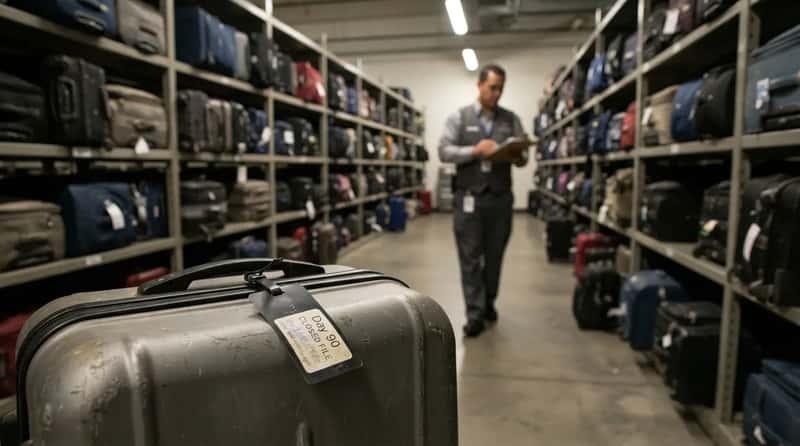
This is the part airlines never put in the boarding announcement. Your missing suitcase has a legal shelf life.
Airlines actively search for 5 to 21 days, then quietly downgrade to passive tracing through WorldTracer for up to 100 days. Around the 90-day mark, the airline closes the file for good.
At a Glance: The Countdown
- Days 1-5: Active search launches right at the airport.
- Days 5-21: The airline widens the search net across its network.
- Up to Day 100: Passive tracing quietly continues through WorldTracer.
- Day 90: The file closes – ownership legally shifts to the airline.
The moment that window shuts, the bag is no longer legally yours. Ownership transfers to the airline, and most passengers have zero idea this deadline even exists.
If your bag is officially declared lost, airlines must pay out for the value of the contents – minus depreciation – up to a maximum of $4,700 per passenger on domestic U.S. trips. That cap was raised in 2024, but it still won’t come close to covering a suitcase full of camera gear.
#3 – Your Lost Bag Ends Up in a Store in Alabama
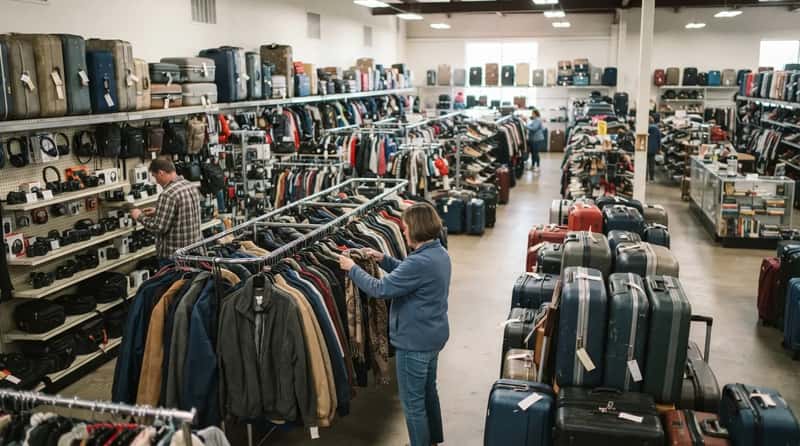
No, this isn’t a myth passed around in airport bars. There is a real, physical store that sells the contents of unclaimed luggage to complete strangers.
Once the 90-day window closes, airlines sell truckloads of unclaimed bags to the Unclaimed Baggage Center in Scottsboro, Alabama – the only retail store in the country built entirely on other people’s lost luggage.
The airlines have a great success rate in reuniting bags with their owners, but even a fraction of a percent of all lost bags adds up quickly.
Unclaimed Baggage Center
The store’s staff open every suitcase, sort the contents, and sell, donate, or recycle what’s inside. The 50,000-square-foot location has quietly become one of Alabama’s stranger tourist attractions.
Before any of it hits the shelves, airlines unlock and search every case for ID and anything illegal, and valuable items like jewelry and electronics are typically pulled out first. So if you’re hoping to score a diamond ring for ten bucks, don’t hold your breath.
#2 – The Industry Loses $6.3 Billion a Year and Still Charges You for Bags
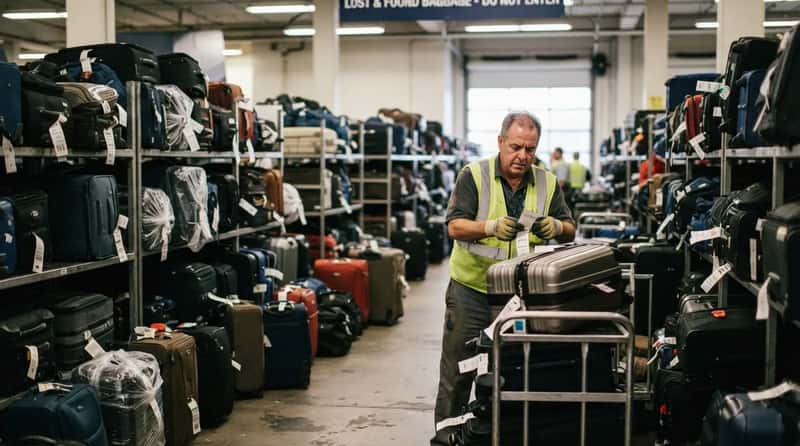
Here’s the part that makes frequent flyers genuinely furious.
Mishandled baggage costs the airline industry $6.3 billion a year – roughly 15% of total industry profit in 2025. That’s not a rounding error. That’s a wound the industry keeps bleeding from, year after year.
Quick Compare: How Much Has Really Improved
- 2024 mishandling rate: 6.3 bags per 1,000 passengers.
- 2023 mishandling rate: 6.9 bags per 1,000 passengers.
- Compared with 2007, that’s still a 67% improvement industry-wide.
Lost bags are rarer than delayed ones, but they’re the most expensive per incident at $635 a bag, hitting airlines financially and reputationally in one shot. Meanwhile, passengers keep paying checked-bag fees that add up to tens of billions globally every single year.
There’s a sliver of good news: mishandled baggage dropped industry-wide in 2024 compared to the year before. But the gap between that improvement and actual accountability is still enormous.
The most controversial truth insiders admit: airlines profit heavily from checked-bag fees, yet the cost of their own mishandling gets quietly pushed back onto passengers through slow reimbursements and depreciation math. The incentives are backwards, and the people on the tarmac know it better than anyone.
#1 – Most “Lost” Bags Were Never Actually Lost
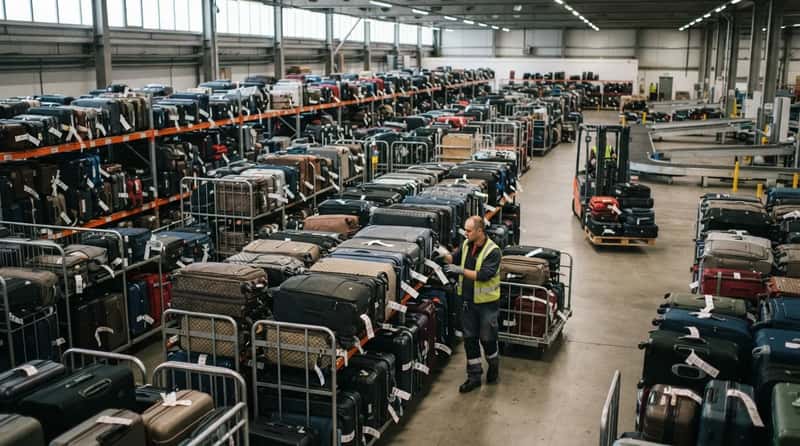
This is the fact that reframes everything, and almost nobody hears it until it’s too late to matter.
The vast majority of mishandled baggage is delayed, not permanently lost. The word “lost” triggers panic, but the reality is far more boring and far more recoverable than airlines let on.
Of every bag flagged as missing, 66% get recovered within 48 hours. Your suitcase is almost certainly sitting in a warehouse somewhere, waiting for a system to match it back to your claim.
The numbers are genuinely reassuring here. The global permanently-lost rate sits below 0.5% of all checked bags – an extraordinarily small number given how many suitcases fly every single day.
SITA’s 2024 data breaks it down further: about 74% of mishandled bags were simply delayed and later delivered, 18% arrived damaged or pilfered, and only 8% were truly lost or stolen for good.
Worth Knowing
- File the claim before you leave the airport – every hour improves your odds.
- Slip a digital tracker, like an AirTag or Tile, inside the lining of your bag.
- Some major airlines now let you share that tracker’s location directly through Apple’s Share Item Location, tied straight into WorldTracer.
- Keep receipts for valuables – claims are paid on depreciated value, not full replacement price.
The real mistake most passengers make isn’t bad luck – it’s not filing the report fast enough, not leaving contact details inside the bag, and not tracking the claim afterward. Handlers say it constantly: a $20 tracker tucked inside your lining changes the entire recovery odds in your favor.
The Bottom Line
Your bag doesn’t vanish into thin air. It enters a high-speed global system with a ticking 90-day clock, a worldwide tracking database, and a surprisingly high recovery rate most passengers never hear about.
Each mishandled bag costs airlines roughly $150 in added expenses, yet the root causes – tight connections, torn tags, undertrained staff logging errors – remain stubbornly unfixed. The real revelation isn’t that the system fails.
It’s that it works far more often than panic suggests, and the few bags that vanish for good almost always had one preventable moment somewhere along the route. Put a tracker in your bag, tuck your contact details inside the lining, and file your report before you leave the airport.
Have you ever had a bag go missing – and did you get it back? Drop your story in the comments.