
Mexico’s best known destinations tend to crowd the travel conversation. Beaches, big ruins and famous colonial cities get most of the attention. Meanwhile, a quieter group of small towns holds some of the country’s most striking scenery.
Many of them belong to the Pueblos Mágicos program. Mexico’s Ministry of Tourism started it in 2001 to celebrate the beauty and historical significance of its towns, along with their traditions, crafts and cuisine.[1] Three of these places stand out for how composed they look, as if someone chose every color and angle on purpose.
Izamal, Yucatán: A Town Washed in Golden Yellow
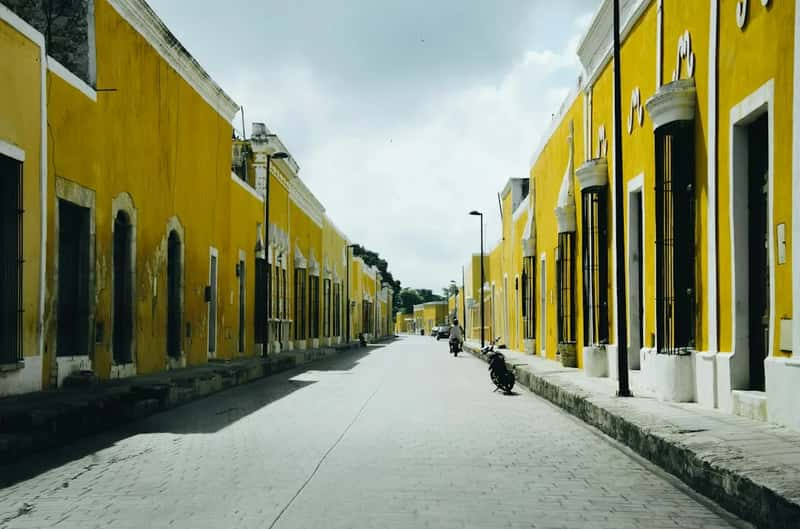
Izamal sits in the state of Yucatán, about 44 miles east of the capital, Mérida.[2] From the market to the colonial convent, the town is painted yellow with white trim, and ancient Maya ruins are scattered throughout.[3] The great arches of the Convento de San Antonio de Padua occupy the site of an ancient Mayan temple.[4] If you climb the nearby pyramid, the steep steps lead to 360 degree views of the town and the jungle beyond.[2]
Nobody agrees on why the town is yellow. No one knows exactly why Izamal is painted this color.[5] One widely cited theory ties the color to the Mayan sun god, Kinich Ahau,[6] while another popular explanation says the yellow and white colors help keep mosquitoes away.[3] Izamal became a Pueblo Mágico in 2002 and was the first one in Yucatán state.[7] You can still tour it by horse drawn carriage from Parque Itzamna.[8]
Real de Catorce, San Luis Potosí: A Silver Town Above the Desert
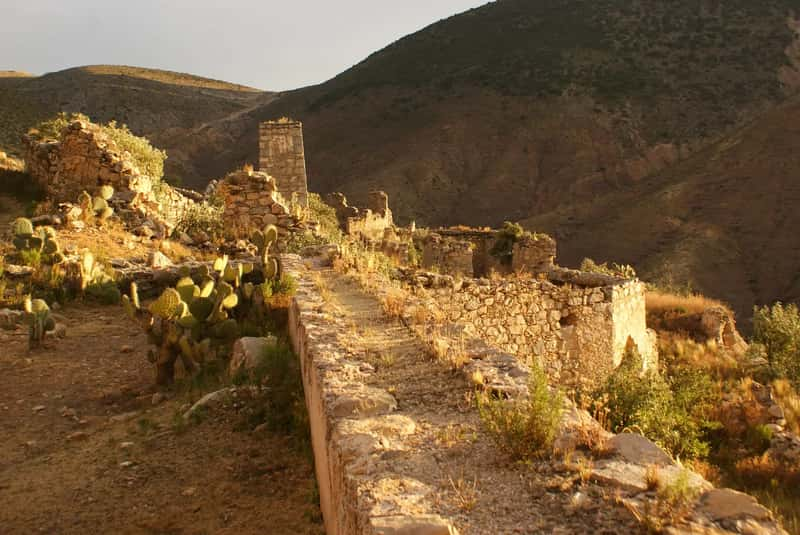
Real de Catorce looks like a painting for a different reason. It’s mostly stone and dust, set against the mountains. The village sits on the side of a mountain at more than 2,743 meters, or 9,000 feet.[9] The only entrance from the north is the single lane Ogarrio tunnel, which is 2,300 meters long.[10] On the other side, cobbled streets and weathered facades open up.
Silver was discovered in the local mountains in 1772, and the village was founded in 1779.[11] The town peaked in the 19th century with a population of 15,000 people working in silver mining.[12] The Mexican Revolution and a steep fall in the price of silver left it almost entirely abandoned by the early 1900s.[12] Only about 1,400 residents remained as of 2010.[11]
Visitors came back after the town was named a Pueblo Mágico in 2001.[9] It is especially popular with tourists from Texas.[11] One travel writer notes that it still seems better known to Mexican travelers than to foreigners.[13] Films shot here include Bandidas and The Mexican.[10]
Tlacotalpan, Veracruz: A River Port in Every Color

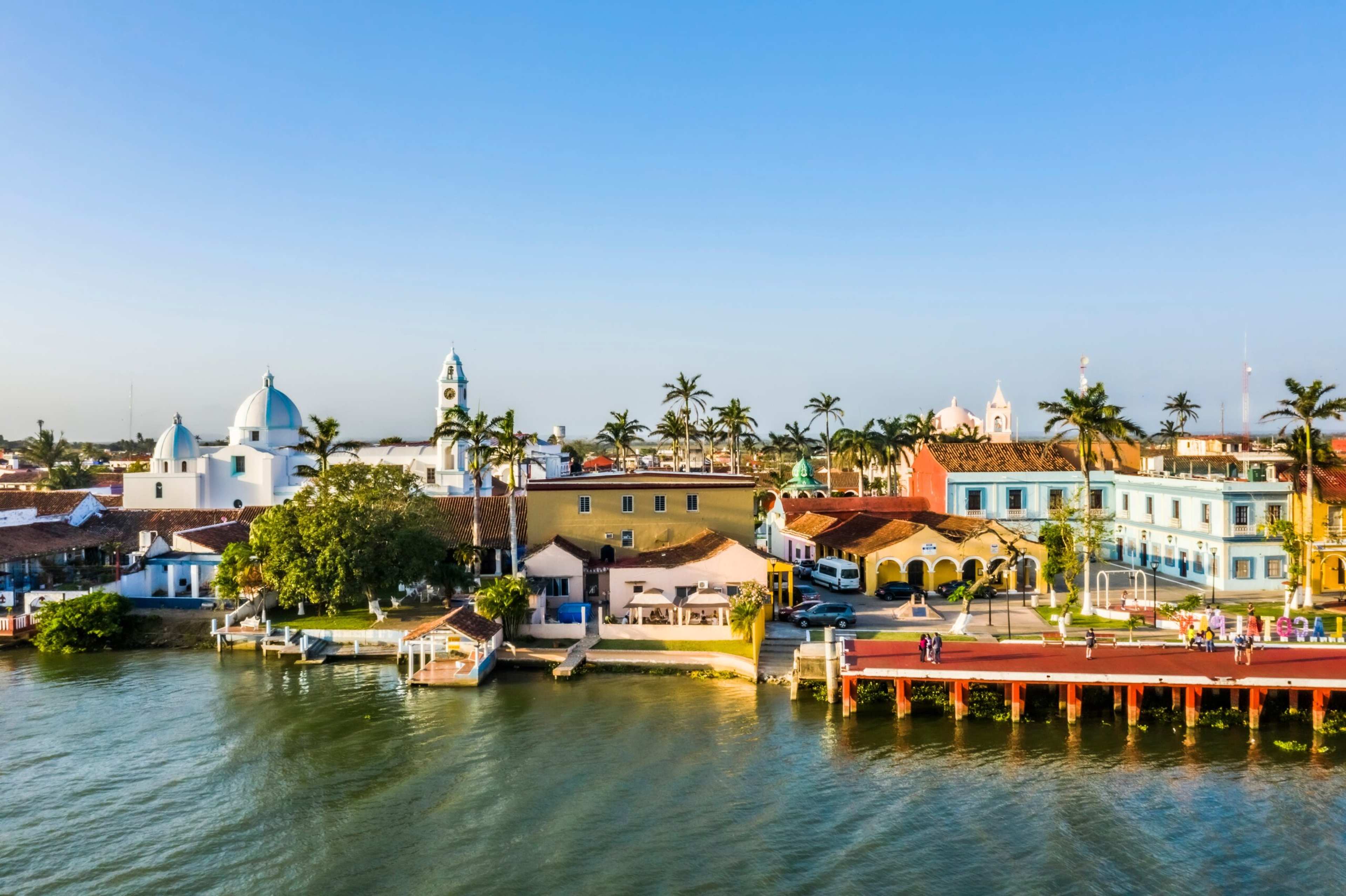
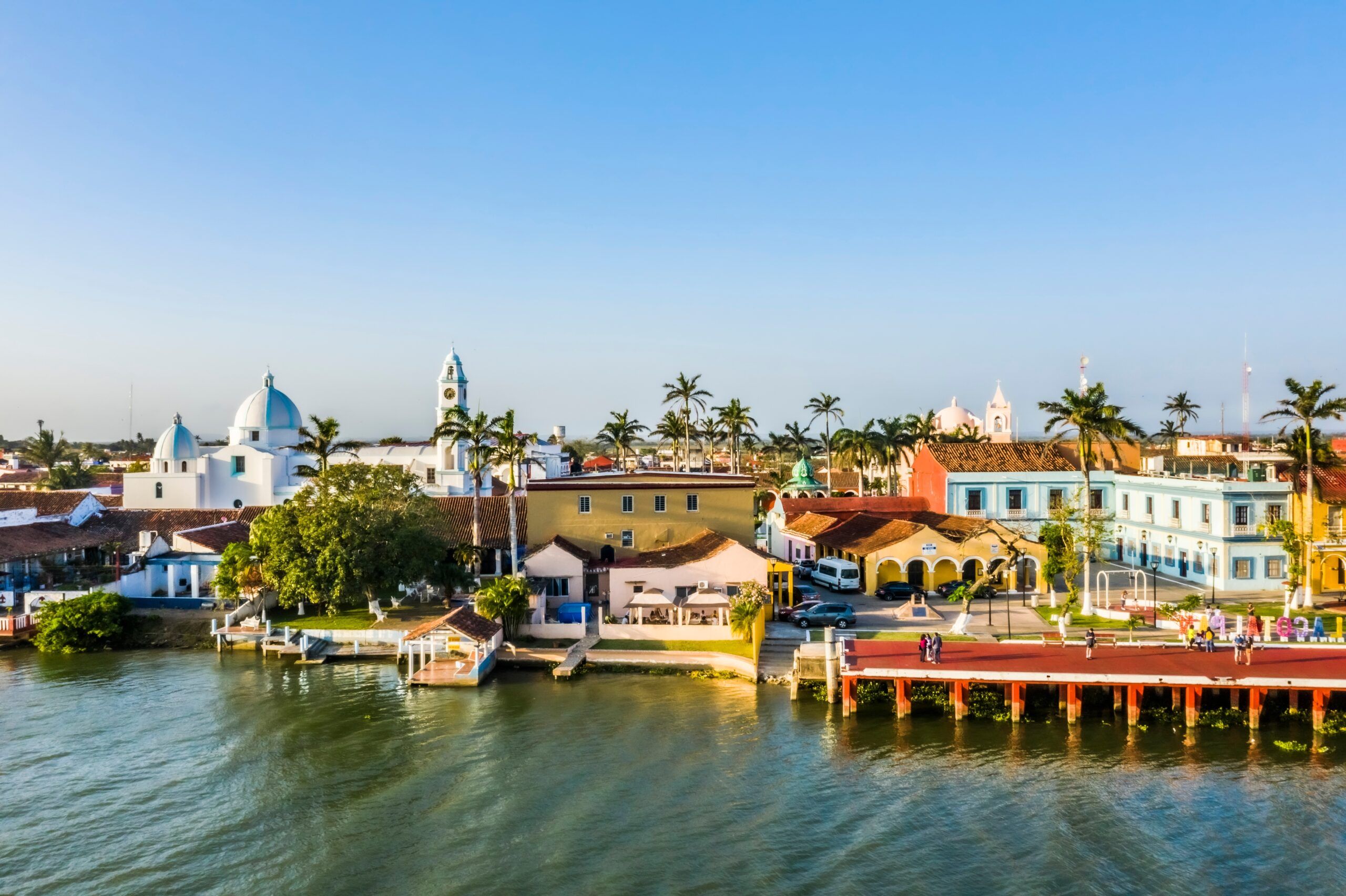
Tlacotalpan is a picturesque small town in eastern Veracruz, on the Papaloapan River.[14] Many visitors to Mexico overlook it, even though it is one of the country’s most iconic colonial settlements.[14] UNESCO declared it a World Heritage Site in 1998, primarily for its architecture and colonial era layout.[15] The architecture includes colonnaded houses, Caribbean style arches, red tile roofs and colorful facades.[15]
Spaniards first settled the town in the 1550s, and it reached its peak in the 19th century.[16] Its importance faded when railroads were built,[17] which helps explain why so much of the old town survived. A 2010 flood caused some damage, though most of the city remains remarkably well preserved.[18]
The town plaza has a bandstand where music and dancing take place on Saturday nights.[14] At the end of January and beginning of February, the town holds a large festival for its patron saint, the Virgen de la Candelaria.[19] A figure of the Virgin is decorated and rides through town in a parade with 600 horsemen.[14]