Most people assume a flight attendant remembers the big moments, like a spilled coffee or a loud complaint. The quieter truth is that the first ten seconds at the aircraft door can set the tone for everything after it.
The 18 habits below are drawn from FAA guidance, AAA etiquette advice and what working flight attendants say they appreciate. None of them costs a dime, and boarding is exactly when a crew member has the least room to spare.
Travelers who have flown for decades often do many of these without thinking. The courtesy waiting at #1 is one the FAA asks of every passenger before every flight, and AAA says very few manage it.
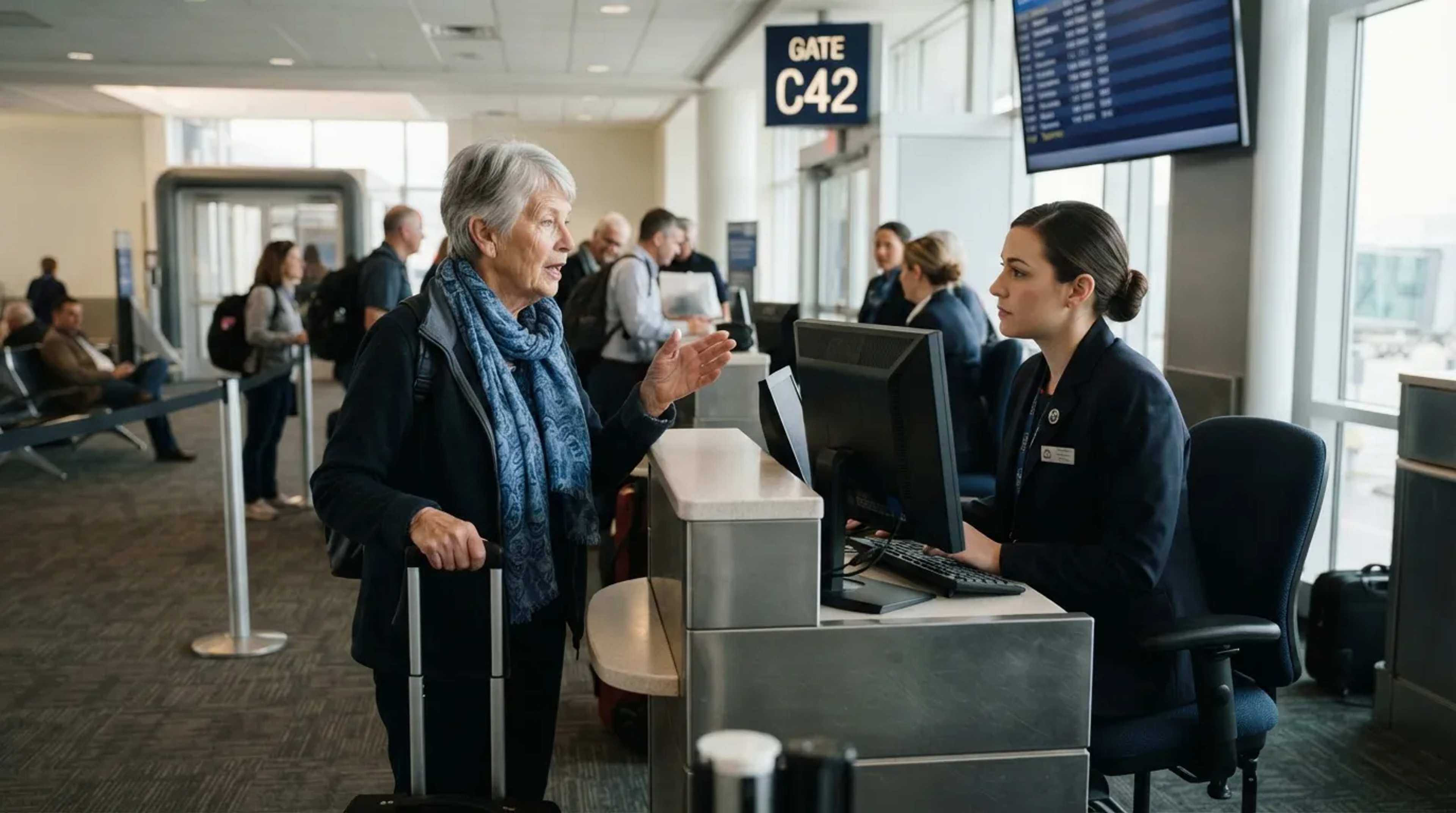
#18 – Waiting at the Gate Until Your Group Is Called
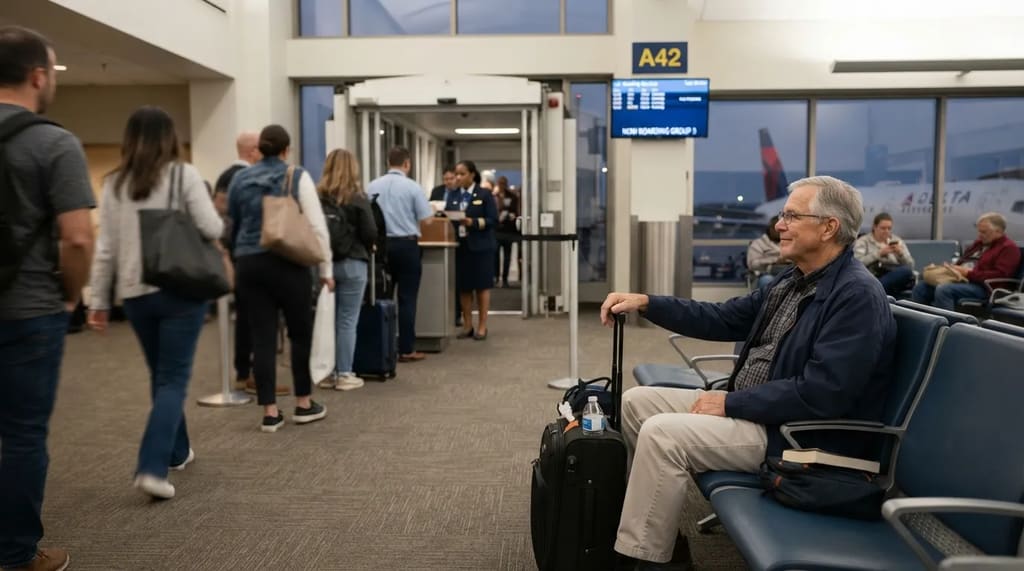
Travel etiquette writers advise boarding last if you can, because your assigned seat will still be there when boarding ends. Standing at the front of a crowded gate just earns you a longer time on your feet.
It also crowds the area for everyone else, including the gate agent trying to call groups in order. A calm, uncrowded gate is a small gift to the people working it.
The one exception is a full flight where you worry about finding bin space for your bag. In that case, board with your own group and not ahead of it.
If your seat is assigned and your bag is small, the gate line is not worth joining. Sit, let the crowd thin, and walk on when the aisle is easy.
Waiting calmly gets easier once you know exactly what to have in hand when your group is called.
#17 – Boarding Pass and Row Number Ready Early
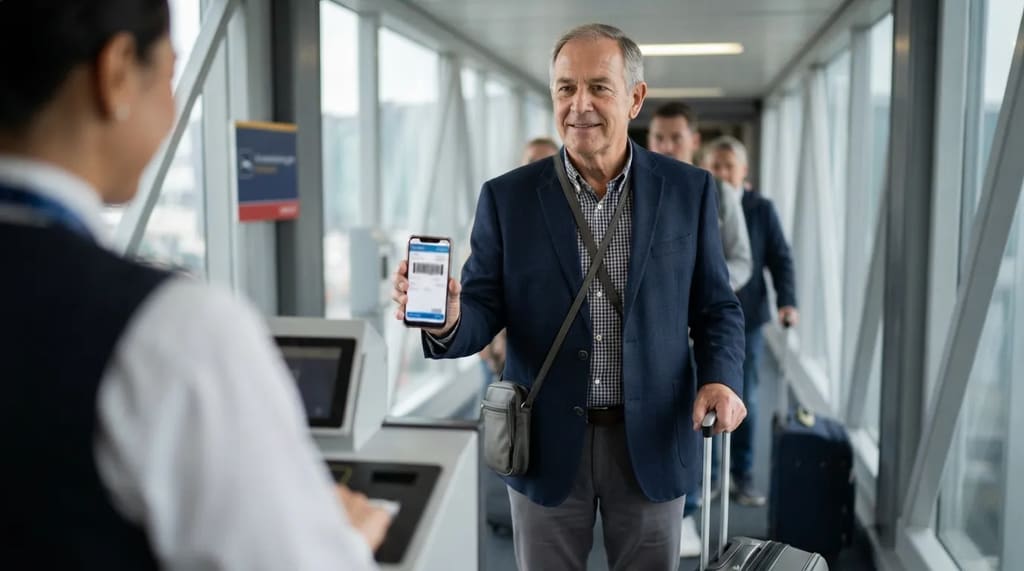
AAA’s etiquette advice treats preparation as a courtesy in itself, because being well prepared at check-in and boarding is considerate to other travelers and airport staff. A line moves at the speed of its slowest pocket search.
Etiquette experts quoted by HuffPost likewise say to be ready when it is time for your row. That means the work is done before you reach the scanner, not at it.
- Open your boarding pass and turn the screen brightness up before the line forms.
- Know your row and seat number so you do not stop mid-aisle to look for it.
- Put your wallet or ID back in the same pocket every time.
Getting through the door with a boarding pass still leaves the phone in your other hand, and a call in progress follows you onto the plane.
#16 – Ending the Phone Call Before the Jet Bridge
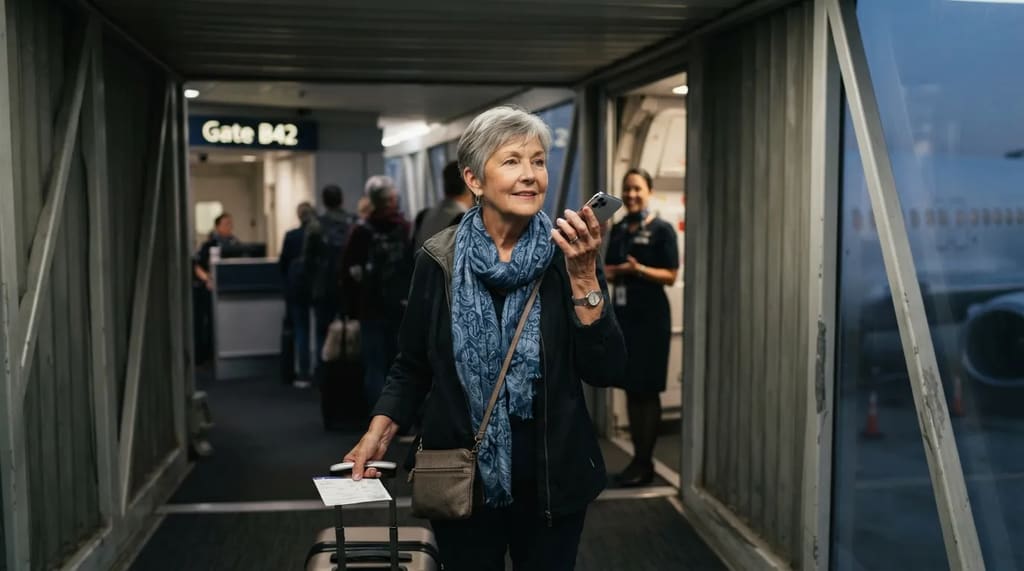
Finish the call at the gate, because the crew member greeting you at the door needs your attention and so do the people walking behind you. A phone at your ear means you cannot hear a hello, a seat number or a request to step aside.
A call also puts everyone in earshot into your conversation, and a jet bridge is a narrow place to be overheard. If something truly cannot wait, a short text from the gate says what you need.
At a Glance
- Wrap up the call while you are still at the gate.
- Send a short text if something truly cannot wait.
- Look up and meet the crew member’s eyes at the door.
- Keep both hands free for your bag and boarding pass.
That leaves both hands free for your bag and your boarding pass. It is a plain habit, and crews notice when it is missing.
Picture the view from the doorway: a stream of faces, and one of them is talking to someone who is not there. The passenger who looks up and meets the crew member’s eyes stands out for the right reason.
With the phone away, one hand is free for the next small gesture, which involves a magazine you finished reading at the gate.
#15 – A Finished Magazine Handed to the Crew
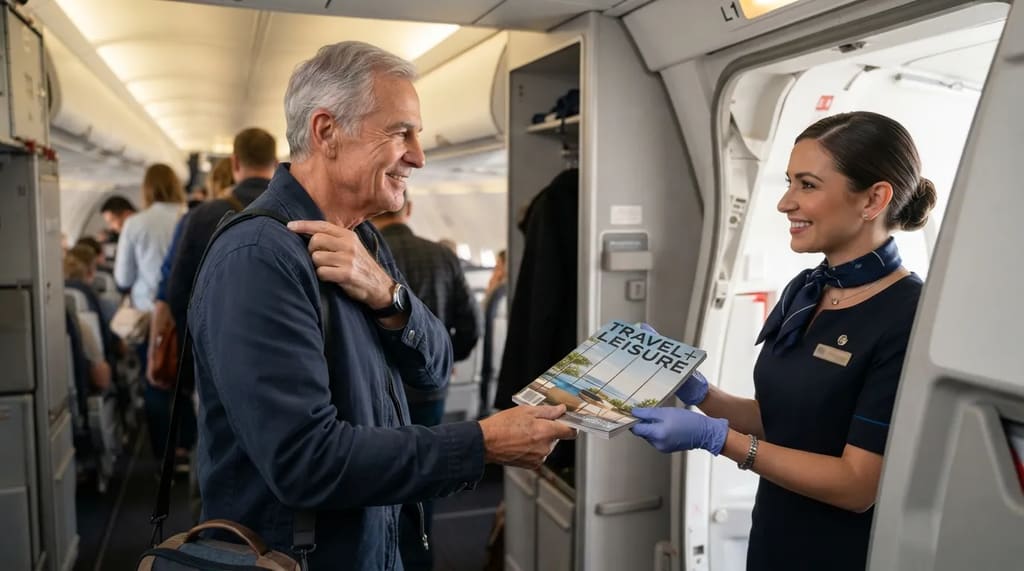
One travel etiquette feature suggests donating copies of your current magazines to the crew, since flight attendants like to read them off duty or on a break. It is an unusual courtesy, and that is part of its charm.
It costs nothing if the magazine is already in your bag, and you can hand it over with your hello at the door. Choose one that is recent and in good shape, since a crumpled old copy is a gift nobody wants.
A magazine you have not finished belongs in your own seat pocket. Nobody will be offended if you keep it.
Of the small gifts on this list, this is the easiest, because it asks for no shopping and no planning. Whether the crew has time to read it on that flight is out of your hands, and that is fine.
#14 – A Small Treat Offered With a Smile
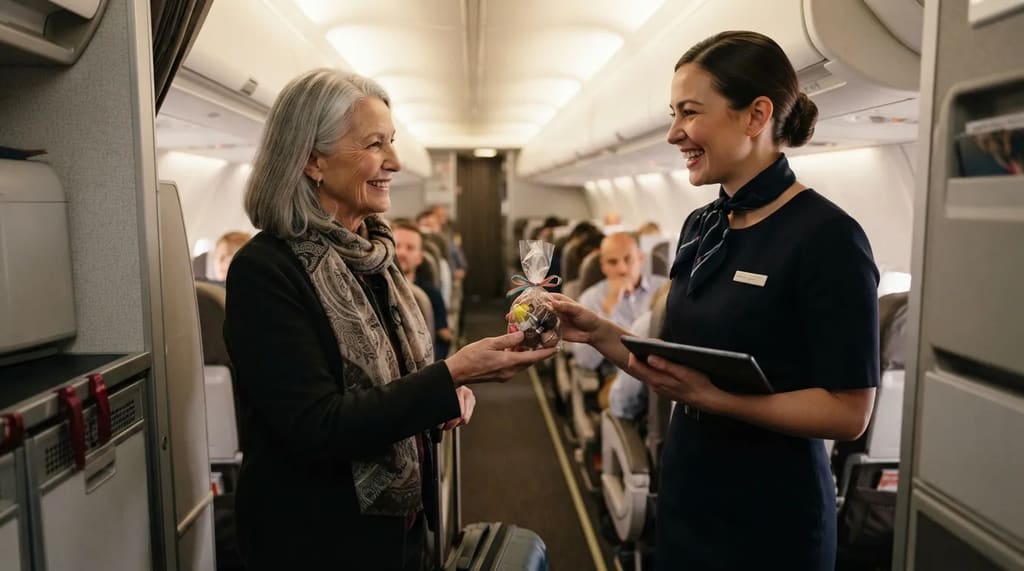
One etiquette roundup says a simple hello with eye contact will do, but if you want to go the extra mile, bring treats like chocolates or candies. Another feature agrees it is perfectly permissible to bring a little tasty treat for your crew.
The logic is sound, since a little token of appreciation can mean a lot to a flight attendant during a stressful workday. A sweet on a long flight is a friendly gesture.
On a short domestic hop, though, the treat is optional and the greeting is not. A candy bought at the last minute at the gate adds nothing a sincere hello does not already give.
Among the things travelers keep asking crews for, a pen comes up constantly, and that one you can handle yourself.
#13 – Your Own Pen in Your Pocket
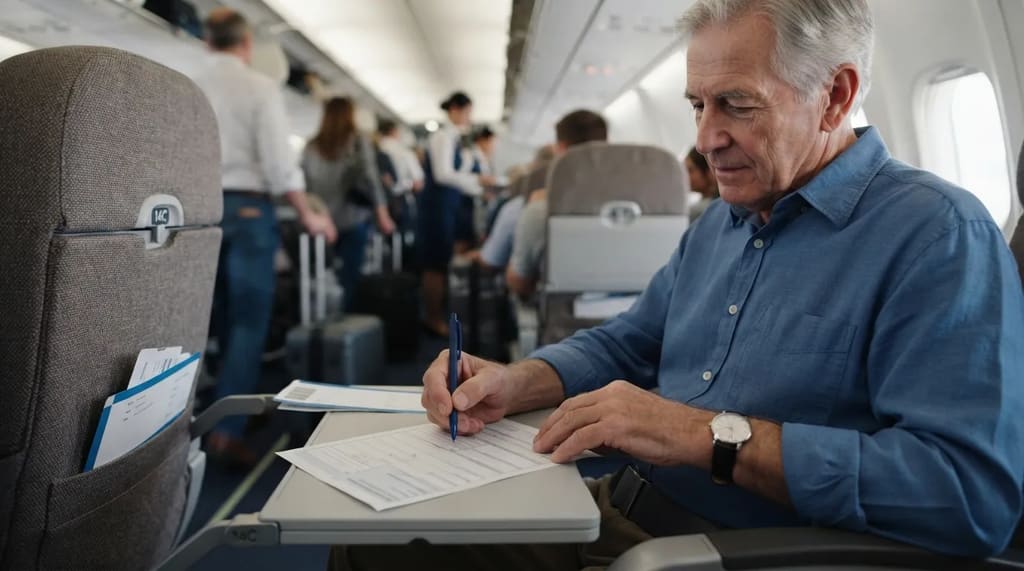
The same etiquette feature notes that people are always asking flight attendants for pens, whether for immigration and customs forms or for the crossword. Each request is small.
A crew working through a full cabin has plenty of other things to do, and a pen from your own bag removes one of them. It also saves you from waiting while someone hunts for a spare.
If you fly only domestic routes and never do crosswords, you can skip this one. It earns its place on trips that come with paper forms to fill out.
Keep the pen in the same pocket as your boarding pass from the earlier habit, so it is in reach when the forms come around and not buried in the overhead bin.
#12 – Everything You Need Out Before the Aisle
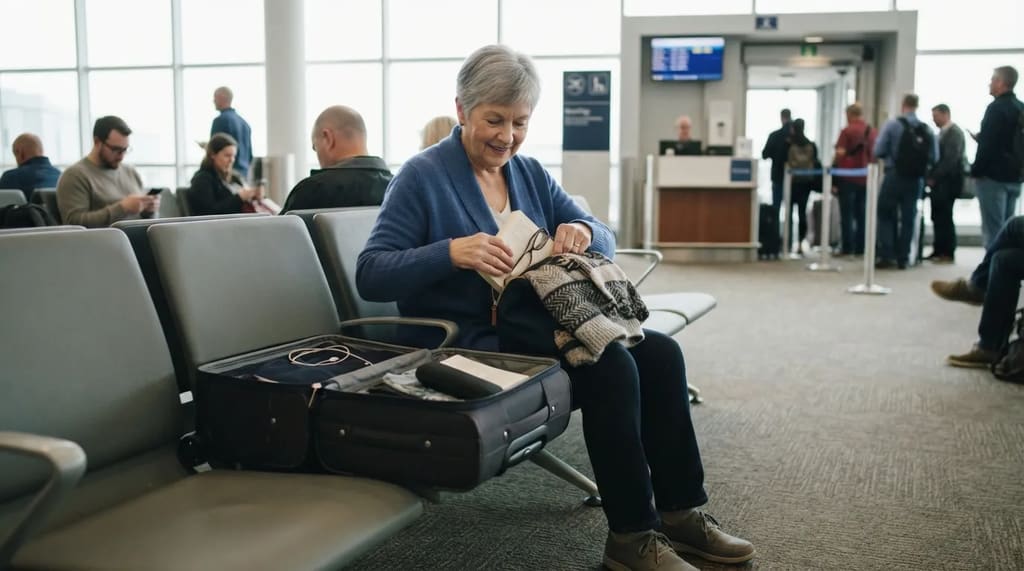
Flight attendants say to take out the things you need for the flight in advance and avoid blocking the aisle, which saves them precious time when things are busy. That advice is really about where you do your sorting.
Your book, reading glasses, charger and the sweater you will want later can all come out at the gate. Then the bag goes into the bin in one motion.
That is quicker than digging through a bag while a line forms behind you. It also keeps the aisle open for the crew member trying to get past you to the back of the cabin.
Sorting your bag only helps if you do it somewhere other than the aisle, where standing still costs the line behind you.
#11 – Stepping Into Your Row to Clear the Aisle
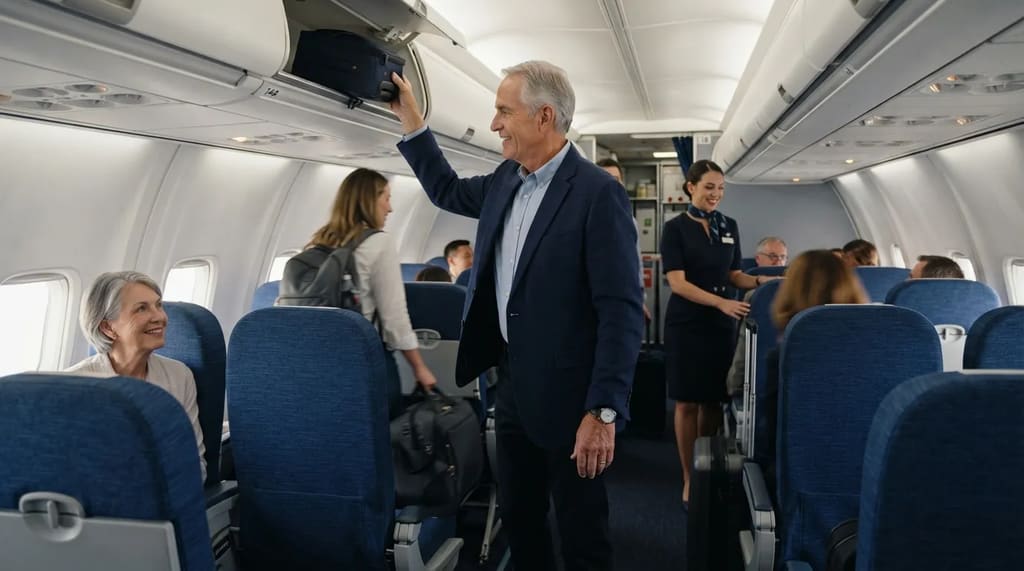
AAA’s etiquette tips ask you to be mindful of other passengers when walking up or down the aisle, which may help avoid inconveniencing flight attendants during the time-pressed boarding process.1 The aisle is the one lane everyone needs.
Once you reach your row, step into it before you rearrange anything. Even half a step clears the lane for the people behind you.
Place your items, then sit down. The few seconds of standing in the aisle are the ones that hold up everyone else.
A cheerful apology to the line behind you is kind, but clearing the aisle quickly is better, because that is what actually helps the crew.
The next courtesy goes back to the very first moment of boarding, and it takes up no aisle space at all.
#10 – Saying Hello Back at the Aircraft Door
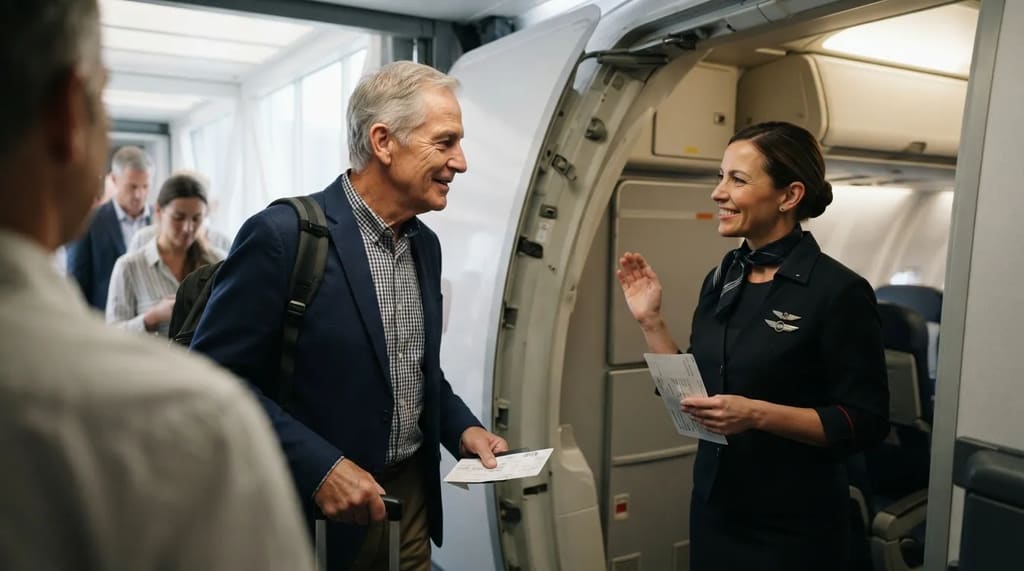
Boarding is one of the busiest phases of a flight, and flight attendants consistently appreciate eye contact, a smile and a hello as you step aboard.2 It is the cheapest courtesy on this list.
Your greeting does not need to be elaborate. A simple hello with eye contact will suffice, and a nod works for travelers who feel shy.
If you have to choose between the greeting and the treat from earlier, choose the greeting. It is free, it is quick, and it reaches the crew member at the door when it counts.
A hello is easy while nothing is being asked of the crew, and manners get harder once you start making requests.
#9 – Please, Thank You and a Gentle Excuse Me
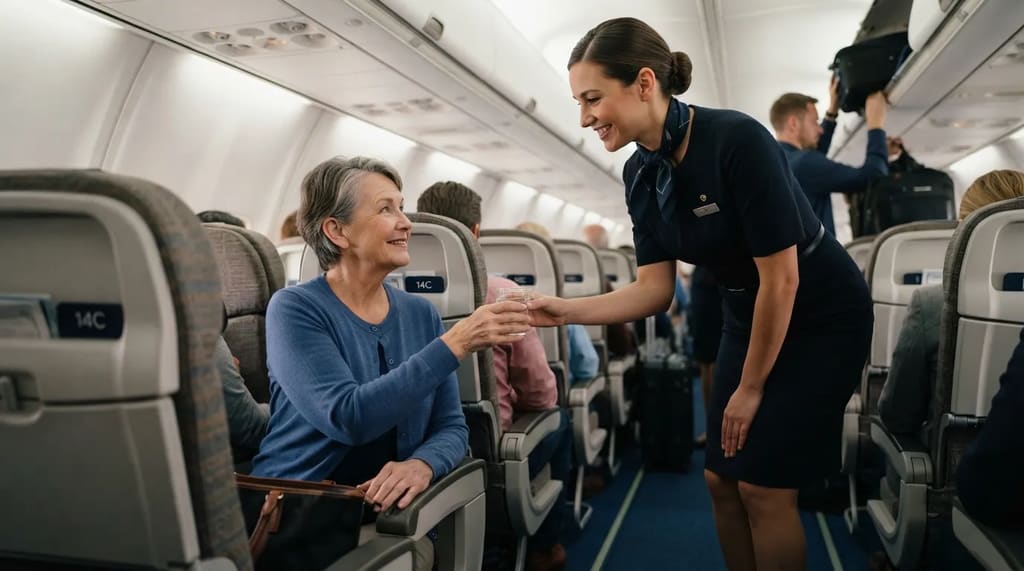
Flight attendants say they love a simple please and thank you, and that these days it is something of a rarity.3 The words cost nothing.
When you need a crew member’s attention, one veteran flight attendant says to use words like “Excuse me” and never to touch or prod them. Keep your hands in your lap and let your voice do the work.
Quick Compare
- Instead of a tap or a prod: a clear “Excuse me” with eye contact.
- Instead of a bare request: start with “please.”
- Instead of silence after help: a quick “thank you.”
These phrases count for more than any gift, because they come with every request you make. A blanket, a cup of water or a question each get a please and a thank you.
Manners are easiest while the schedule holds, and a delayed departure is where they get tested.
#8 – Keeping Delays Off the Crew’s Shoulders
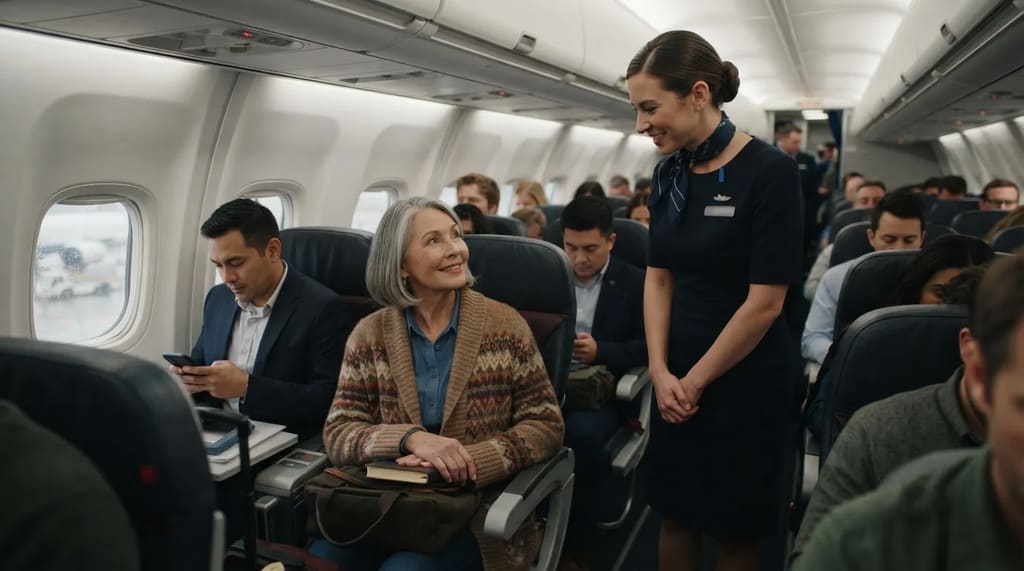
Travel writers point out that flight attendants are not responsible for weather, delays or most airline policies. They are there to keep you safe and comfortable, and they are waiting out the same delay you are.2
If you are upset about a late departure, take it to the airline’s customer service channels after the flight. The person standing in the aisle cannot change the schedule.
A calm word at the door when the plan has slipped goes a long way, as does patience while the crew waits for instructions. Both fit with the please and thank you above.
Announcements during a delay come in a crew member’s own voice, which is hard to catch with earbuds in.
#7 – Earbuds Out When the Crew Speak to You
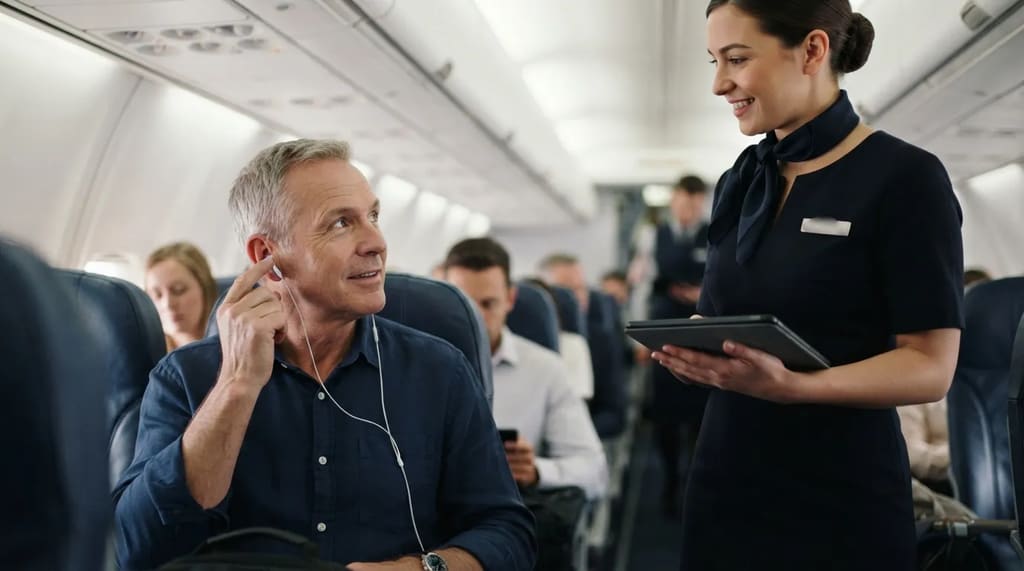
Flight attendants say removing your headphones as soon as a crew member approaches signals attentiveness. Passengers who do it are seen as easier to work with.
Without it, a crew member asking for a drink order can end up hearing “Huh?” or “What?” Repeated questions make the service longer, which is not ideal for passengers or crew.4
It is only a few seconds of your movie or music, and it is one of the easiest gestures on this list. The pause button does the rest.
With your ears free, you are ready for the question that always comes next: what would you like to drink?
#6 – Choosing Your Drink Before the Cart Arrives
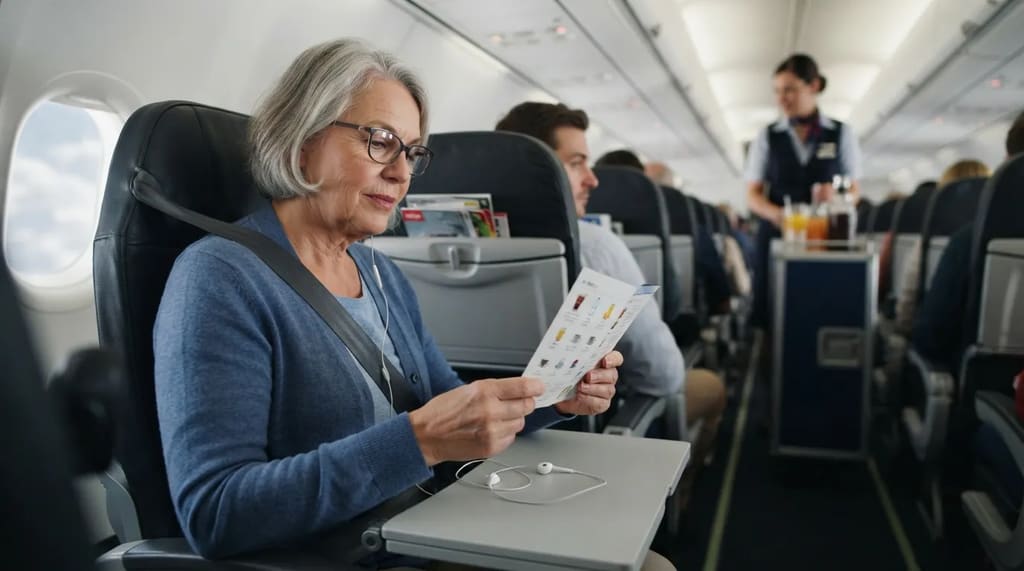
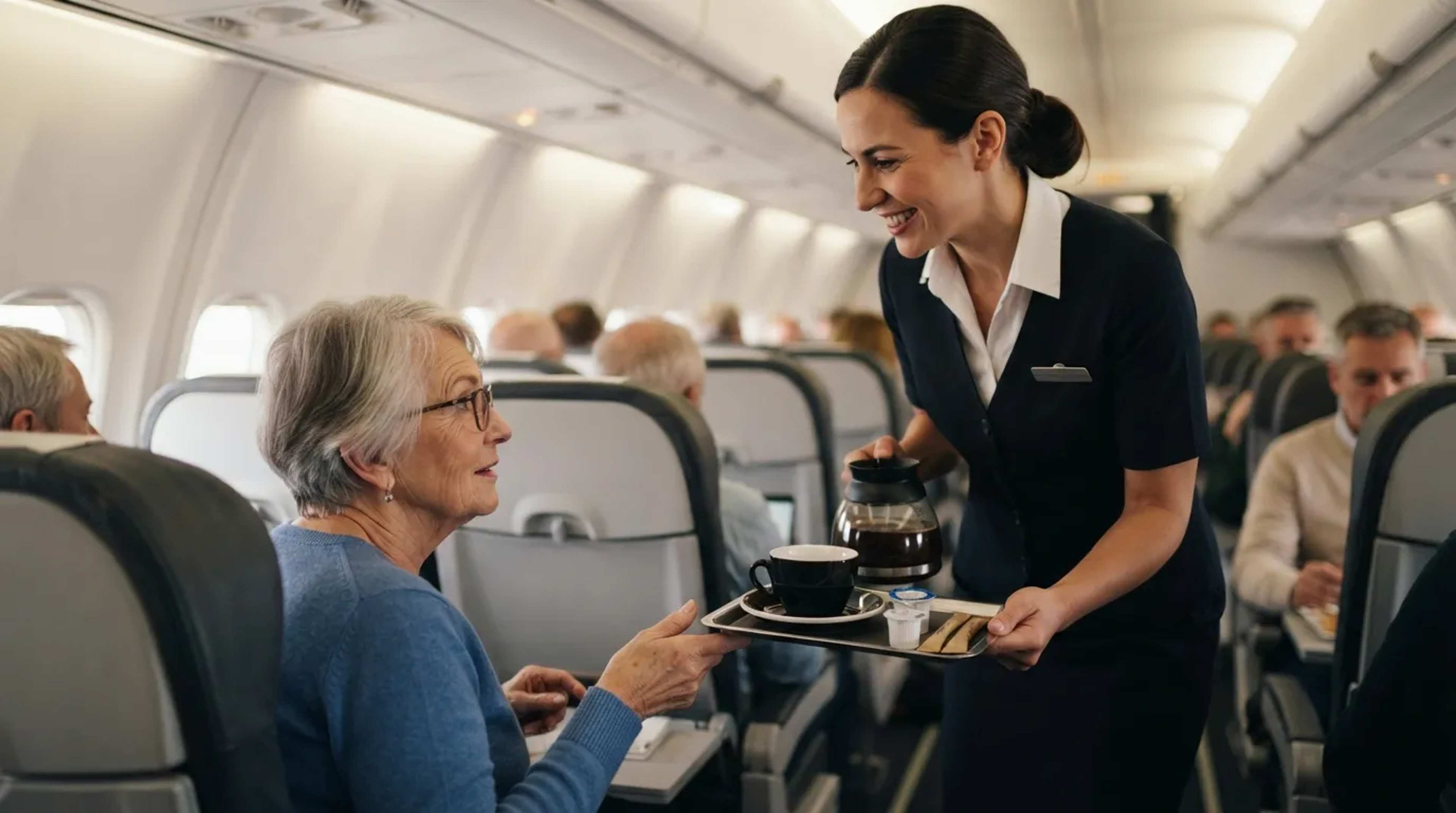
Flight attendants suggest that, if possible, you look at the menu in advance and decide what you would like, which saves service time when there are sometimes hundreds of passengers.4 Your decision is part of the cart’s schedule.
It is also a courtesy to the row behind you. While you make up your mind, the cart stays where it is and everyone behind it waits.
Fast Facts
- Some flights carry hundreds of passengers, so a few seconds per row add up fast.
- Glance at the menu before the cart leaves the galley.
- Have your earbuds out before the cart reaches your row.
- While you decide, everyone behind you is waiting too.
You do not need to rehearse. A choice formed in the minute before the cart reaches you is enough, as long as your earbuds are already out.
Not every request can wait for the cart, and a request made between services has its own etiquette.
#5 – Walking to the Back Galley Instead of Ringing
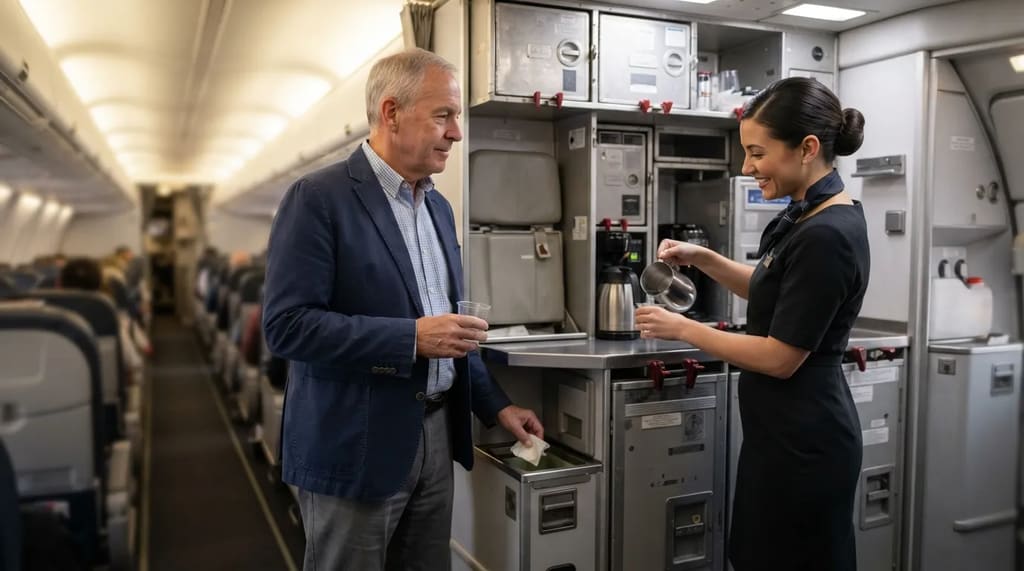
A flight attendant and travel blogger says it helps when passengers go to the aft galley for a glass of water or to throw something away instead of ringing the call bell. A short walk takes the pressure off the crew.
Using the call bell repeatedly during service is a no-no unless there is an emergency.3 It prolongs service, and the crew may take time to reach you because they are stuck between carts.
For a glass of water or a bit of trash, a short walk is the better manner, once the aisle is clear of the cart. The same goes for the restroom, which is best used before boarding or after takeoff, with a stay in your seat once service begins.
The overhead bin is the next place a careless moment can cost someone, and opening it is the step where that happens.
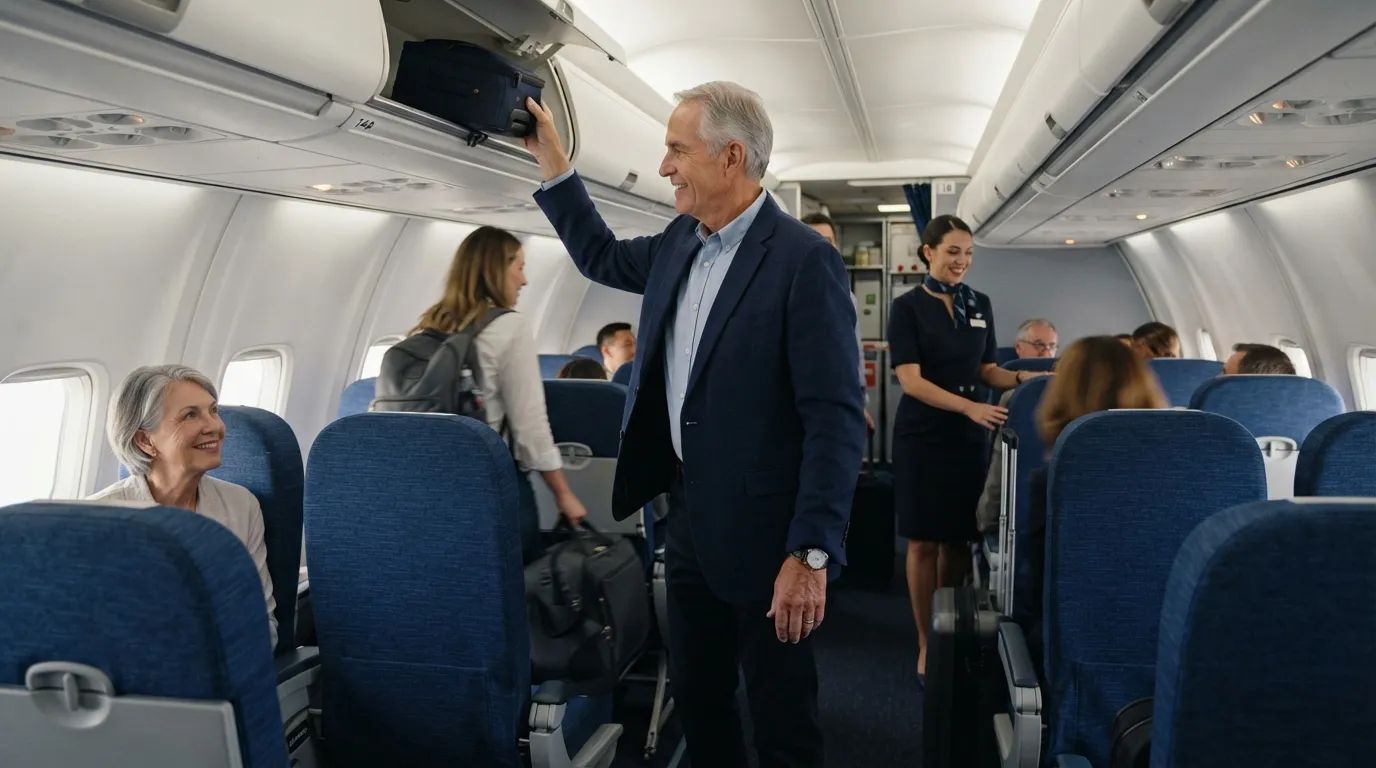
#4 – Opening the Overhead Bin Slowly
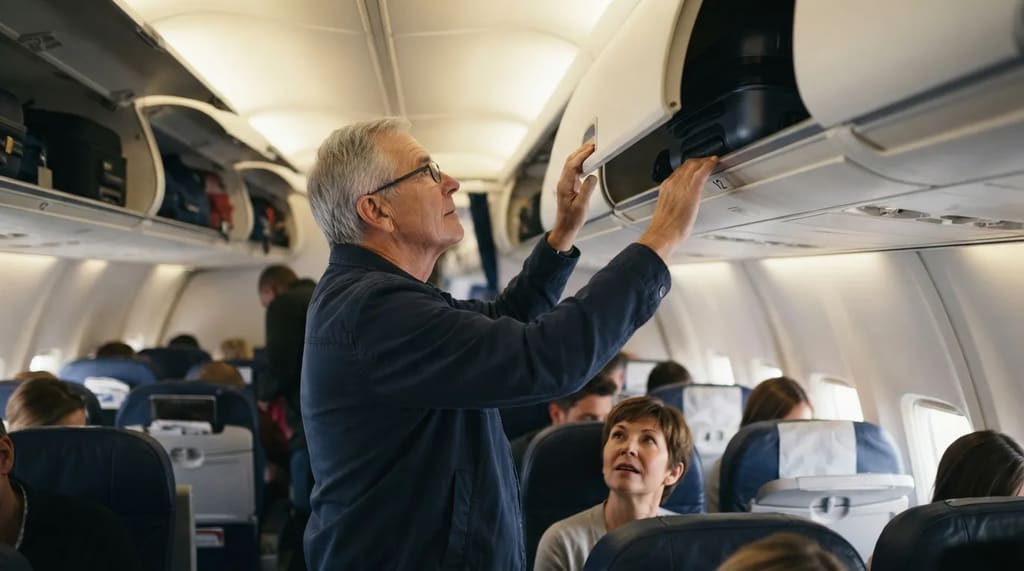
FAA guidance on passenger briefing cards says that passengers should be reminded to use caution when opening the overhead bins. It is one of the few courtesies written into official advice.
Bags shift during taxi and flight, and a closed door may be holding back a bag that has leaned against it. The passenger seated below is looking up at that door.5
Related Stories From Travelbinger
Open the bin a few inches, check what is inside, then open it fully. It adds a second at most.
A slow, careful opening protects the person underneath, and the same care applies to where your bag ends up once it is inside.
#3 – A Bag That Cannot Slide Into the Aisle
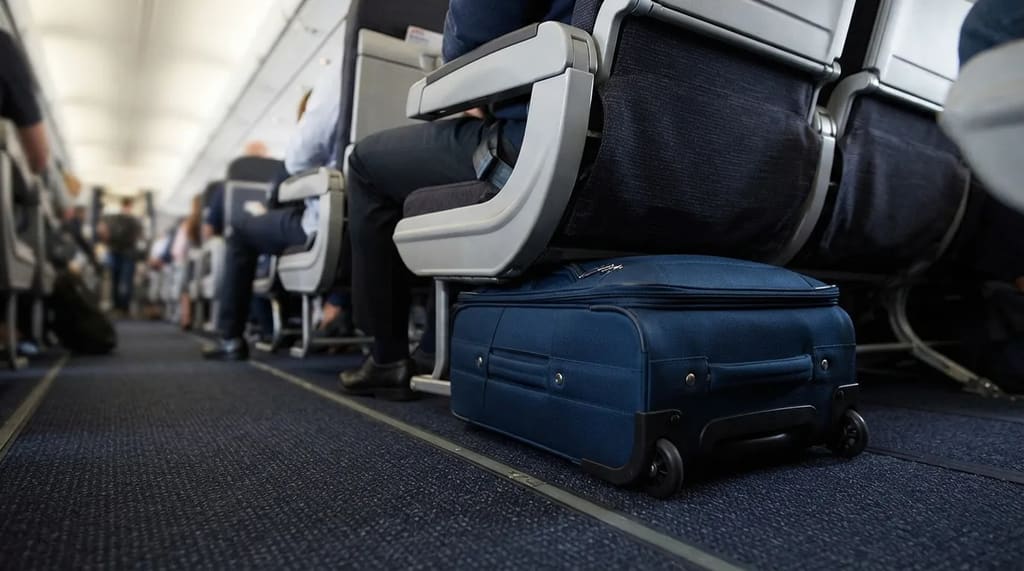
FAA guidance for airlines’ carry-on programs says under-seat stowage needs forward and side restraints to keep bags from sliding into the aisle. Push your bag fully under the seat in front of you.
The same guidance says baggage is neither properly stowed nor restrained unless the overhead bin door is closed and latched.6 After you shut a bin, check that it clicks.
A bag too big to fit either place is the one that stops the line while the crew works out where it goes. That is why sorting at the gate, as covered earlier, saves the crew time.
Bags are the visible part of readiness for takeoff, while the devices in your hands are what crews have to ask about.
#2 – Putting Devices Away the Moment You Are Asked
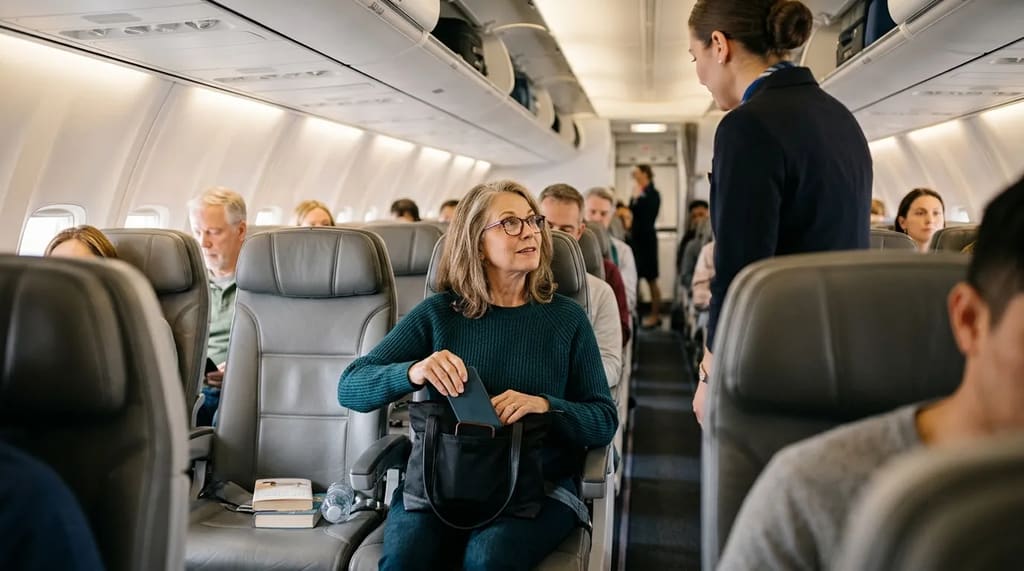
FAA guidance says that all electronic devices should be stowed or secured during taxi, takeoff and landing.7 The airline will tell you how its own rules apply on your flight.
In rare instances of low visibility, the crew will instruct passengers to turn off their devices during landing. The FAA’s advice is simple: always follow crew instructions and immediately turn off your device if asked.
Finishing the text before the crew reaches your row is a courtesy. Finishing it after they have asked twice is not.
- Stow heavier devices under the seat or in the overhead bin for takeoff and landing.7
- Turn a device off right away when a crew member asks.
Instructions about devices are repeated in the safety briefing, the one part of boarding that few passengers hear in full.
#1 – Putting Everything Down for the Safety Briefing
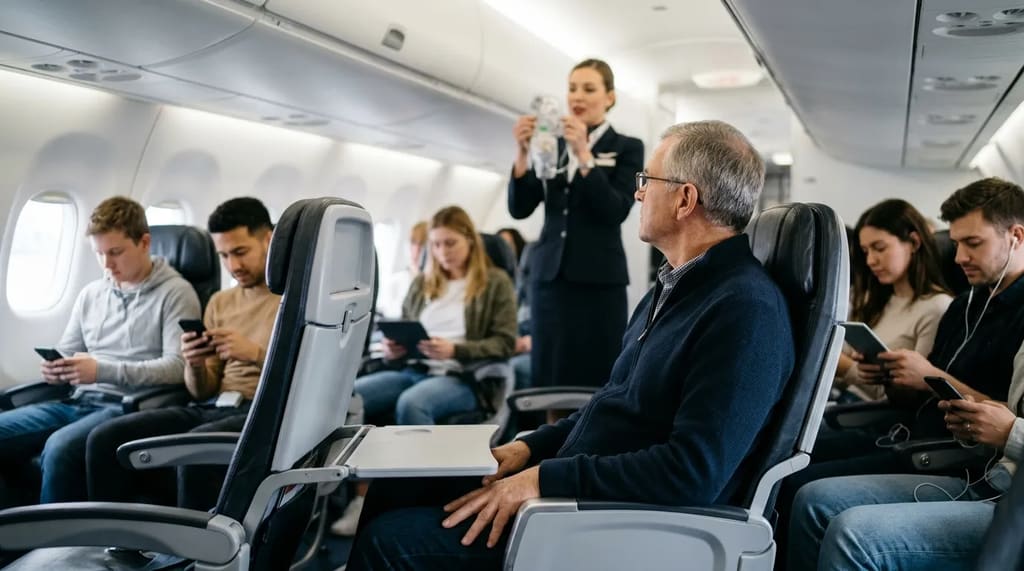
The FAA tells passengers to put down electronic devices, books and newspapers during the safety briefing and listen to the crew member’s instructions. It asks this of every passenger before every flight.
AAA pairs this courtesy with the greeting at the door, noting that most travelers know it is courteous to greet the crew as you board and thank them as you leave. Attention to the briefing is the part that does not follow.
The earbuds you took out for a drink order are the same ones that come out here, and your book goes face down in your lap. Crews would like to be treated as safety professionals, not personal servers, and this is the moment that shows it.
Even if you have flown many times, sit still for the minutes it takes. As the FAA puts it, it only takes a few minutes to secure items according to the crew’s instructions.
Why the Busiest Minutes Reward a Little Planning
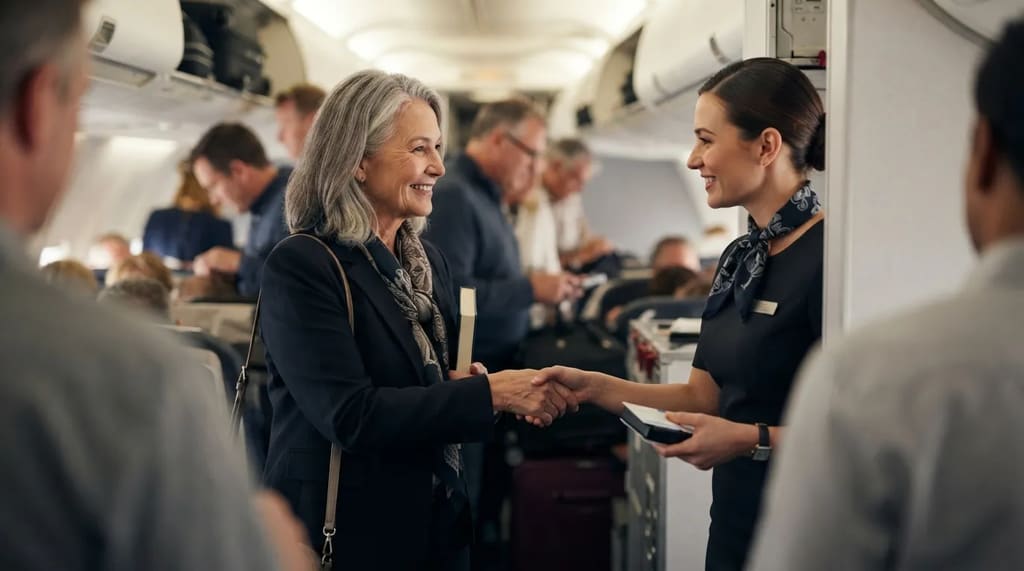
Boarding is the crew’s most hurried stretch, so the courtesies that count are the ones that give them back a few seconds or your full attention. None of them depend on age, gifts or charm.
A crew member may never learn your name. A hello at the door, an earbud pulled out and a book set face down are what they have to remember you by.
Why It Stands Out
- The hello: free, quick and delivered right when the crew member is at the door.
- The earbud: answers the crew’s question before they have to ask it.
- The briefing: your full attention, while much of the cabin is looking elsewhere.
Choose one to do on purpose before your next trip, and let the others follow as they suit you. The hello at the door is the easiest place to begin.
What small courtesy have you seen another passenger offer at the aircraft door that you still remember?
- AAA Flying Etiquette Tips: https://mwg.aaa.com/via/travel-tips/etiquette-rules-for-flying
- Yahoo Airplane Etiquette Rules: https://travel.yahoo.com/advice/lifestyle/articles/golden-rules-airplane-etiquette-because-090000553.html
- Simple Flying Politeness Habits: https://simpleflying.com/flight-attendant-reveals-passenger-habits-special-treatment-onboard/
- Simple Flying Passenger Habits: https://simpleflying.com/passenger-habits-flight-attendants-love/
- FAA Carry-On Baggage Tips: https://www.faa.gov/travelers/prepare_fly/baggage
- FAA Carry-On Baggage Bulletin: https://www.faa.gov/sites/faa.gov/files/about/initiatives/cabin_safety/regs/acob211.pdf
- FAA Portable Electronic Devices: https://www.faa.gov/speeches/portable-electronic-devices-presser