Flight attendants notice far more than most passengers think, and they remember a surprising amount of it. Long after the cart is back in the galley, the little things you did at your seat are still sitting in their heads.
Most people assume the crew treats every seat exactly the same. The truth is messier, and crew members say boarding, requests and thank-yous quietly shape how a whole flight feels.
One honest note: nobody has surveyed passengers over 60 on this, so everything here comes from what crew members themselves report. Stay with the countdown, because the gesture at #1 is the one they keep coming back to.
#12 – Looking Up When the Cart Rolls Close
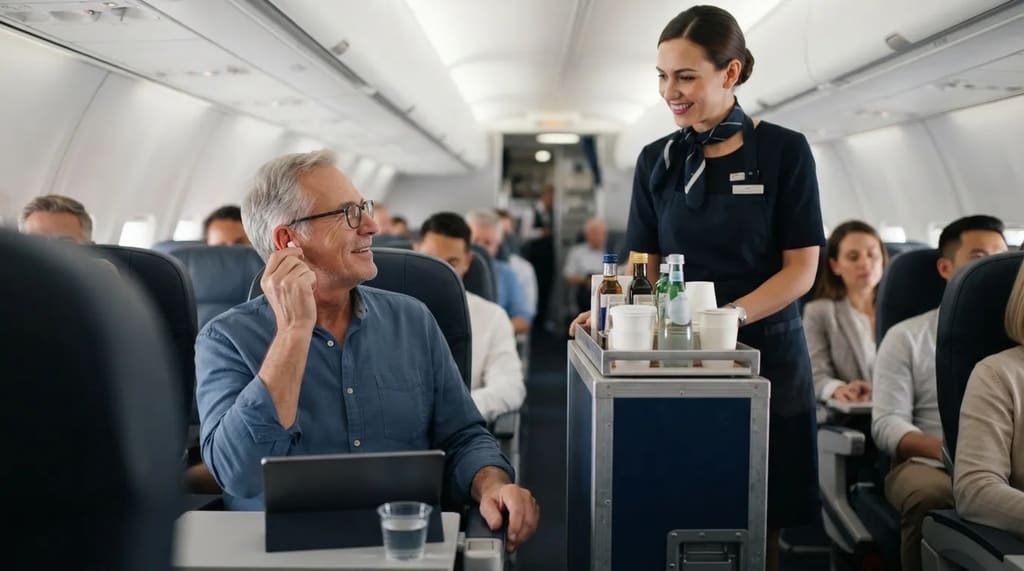
It takes about one second, and crews say they see it.
Flight attendants appreciate it when you take off your headphones or turn them off as they come down the aisle. Most people don’t realize how often a crew member has to repeat a question to someone who can’t hear it.
A drink order, a meal choice and a seat belt reminder all depend on being heard the first time. When you look up and pull an earbud out, the exchange is over in seconds.
That matters on a full flight with a long aisle to cover. The passenger who makes it easy tends to stay in the crew’s mind as the easy one.
But the next gesture is one that many well-meaning travelers get exactly backwards…
#11 – Raising a Hand Instead of Reaching Out
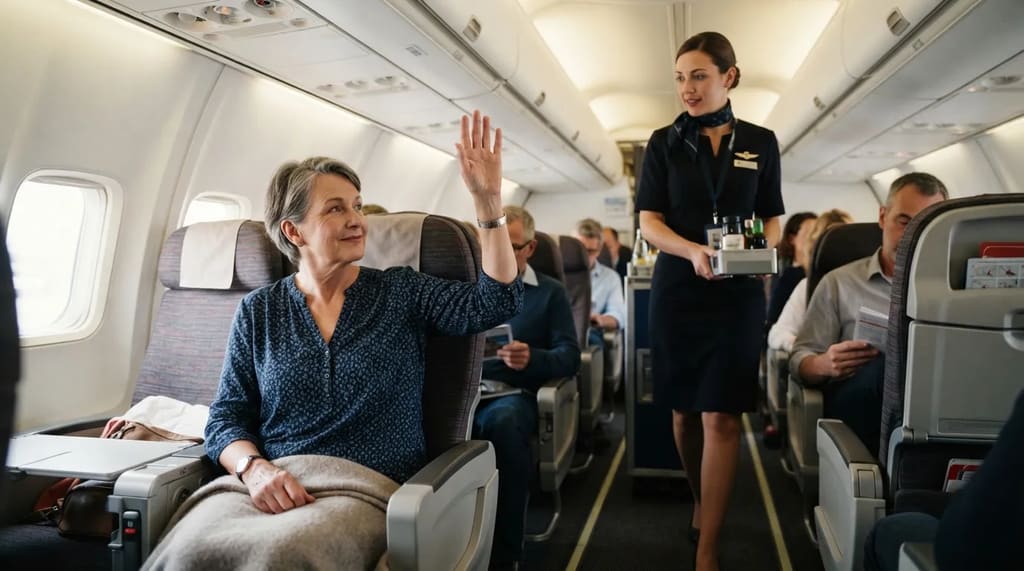
The friendliest way to get attention turns out to be the one that keeps your hands to yourself.
A raised hand, a friendly “excuse me” or a glance when the crew member looks your way works fine. Passengers who do this come across as considerate, and crews tend to notice.
The reason is practical. Flight attendants spend hours moving through narrow aisles, focused on safety and service, and being touched while they work can be startling or uncomfortable.
A tap on the arm feels warm to the person doing it. To someone who has been backing down an aisle for hours, it can land very differently.
Quick Compare
- Raised hand: visible from down the aisle, with no contact at all.
- Friendly “excuse me”: works well once the crew member is close.
- Tap on the arm: warm in intent, but it can startle someone mid-task.
It’s a small correction, and it costs nothing. Next time, try a lifted hand and a clear voice.
Still, one rule on board matters far more than manners, and some passengers skip it…
#10 – Staying Seated When the Light Is On
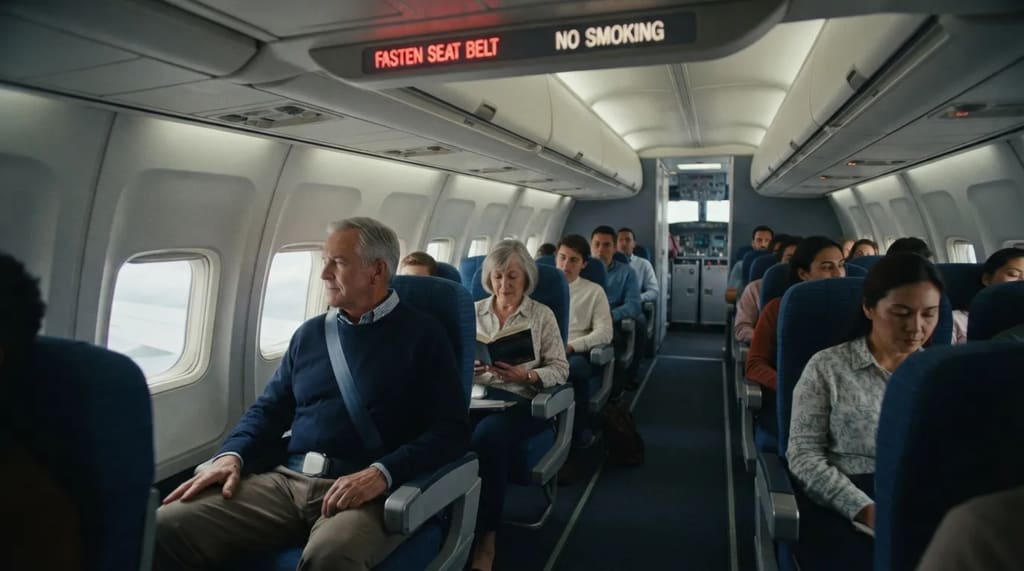
Few gestures say “I respect your job” more clearly than staying put.
Charity Moore, an 11-year flight attendant, has said that crews like passengers who respect the seat belt sign. She notes that crews understand when someone is feeling sick or needs the bathroom urgently, but otherwise they love a passenger who honors the sign.1
Plenty of passengers over 60 do this out of long habit. They remember when the rules were simply followed.
That habit pays off when turbulence arrives without warning. A crew that doesn’t have to ask twice can spend its attention on the people who really need it.
Even so, the next gesture starts before the plane has left the gate, and crews spot it fast…
#9 – Lifting Only What You Can Carry
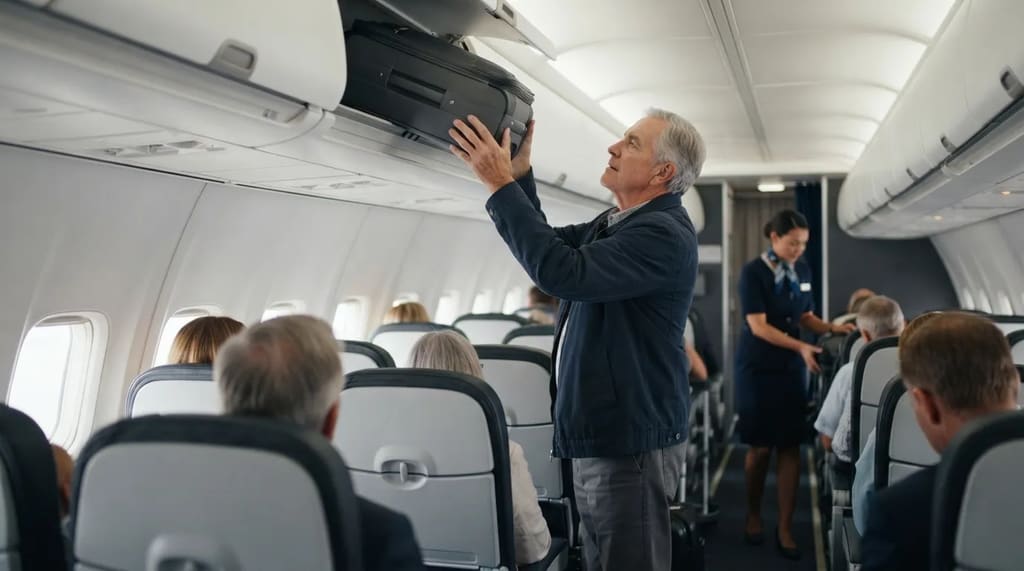
Honest limits are quietly respected on every flight.
Airlines expect passengers to manage their own belongings or check oversized luggage. It’s safer for everyone when travelers lift only what they can carry.
Many older travelers assume the crew will hoist the bag. Often they do, and for passengers with disabilities, in-flight personnel will help store and retrieve items in the overhead bins.2
The quiet gesture here is choosing a bag you can handle, or saying so plainly before a heavy case wobbles over somebody’s head. Crews notice the need almost immediately during boarding, especially when someone struggles with an overhead bin.
And that brings us to a habit that feels polite but often backfires…
#8 – Holding Onto Your Trash Until the Crew Asks
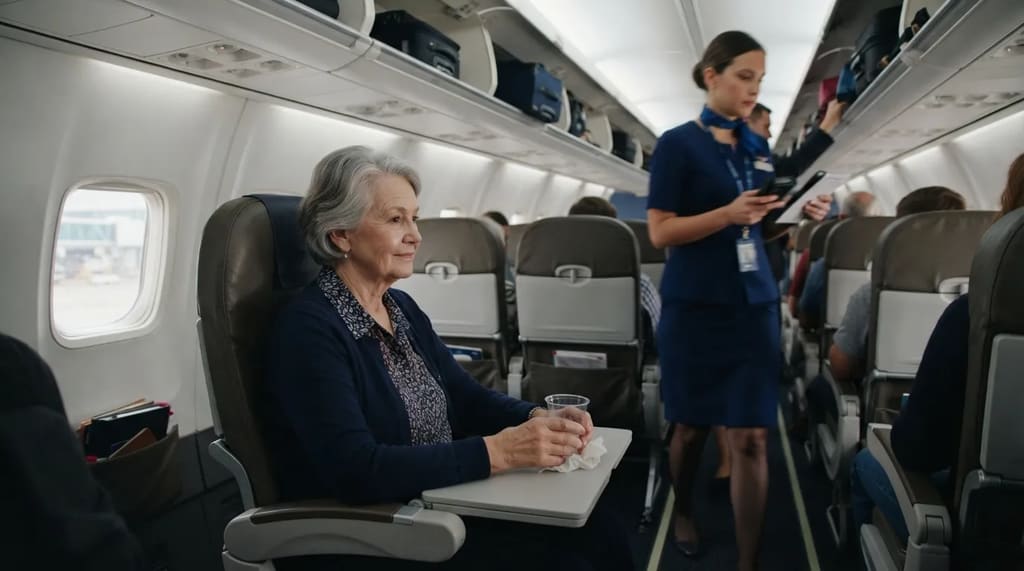
This is the one where kindness and help don’t match.
Many travelers hand over cups and wrappers the moment a crew member passes. During boarding, flight attendants are focused on seating passengers and completing safety checks, not collecting waste.
The same goes for the overhead bins. Passengers who shuffle other people’s bags often think they’re speeding up boarding, yet crews are already juggling bin space and can end up with a bigger jam.
Here’s the opinion that gets some people arguing. Several crew accounts suggest that “helping” can cost more than it saves, and the most helpful gesture is often doing nothing.
- Keep your trash until the crew comes through with a bag.
- Leave the bins as you found them.
Next up is a gesture that makes drink service quicker for everyone in your row…
#7 – Making the Request All at Once
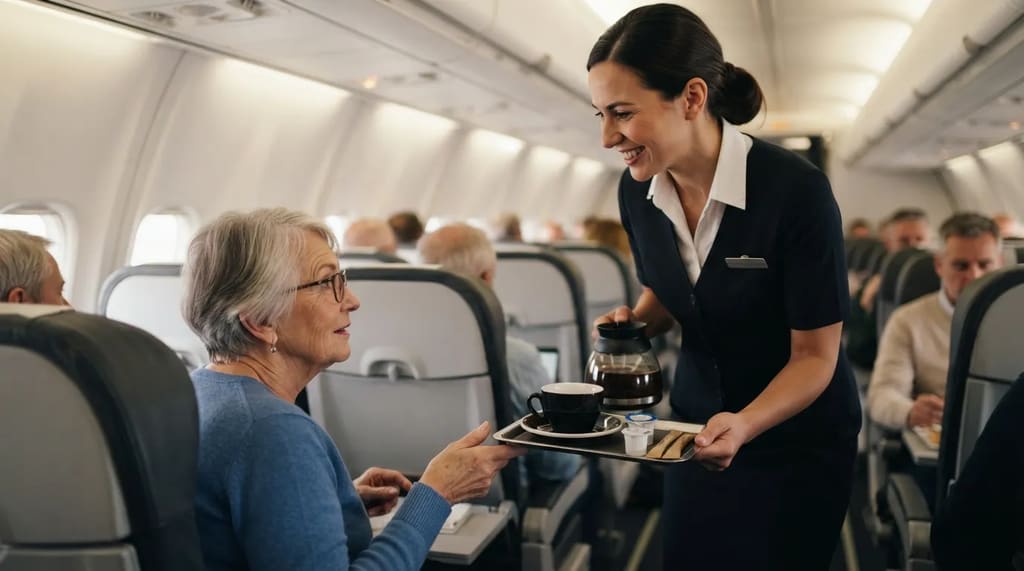
A clear order is a small gift on a busy cart.
Moore says passengers get “bonus points” for making special requests up front, such as asking for two creams and two sugars in their coffee.1 The idea is simple: say it once, say it fully.
A crew member standing at your row has other rows waiting. A vague “just coffee” followed by three follow-up requests turns a ten-second stop into a minute.
Crews often say this kind of clarity is what makes a passenger easy to serve. It also tells them you’ve thought about their time.
But clear requests are only half of it, because some needs should be spoken long before the cart arrives…
#6 – Mentioning a Need in One Sentence
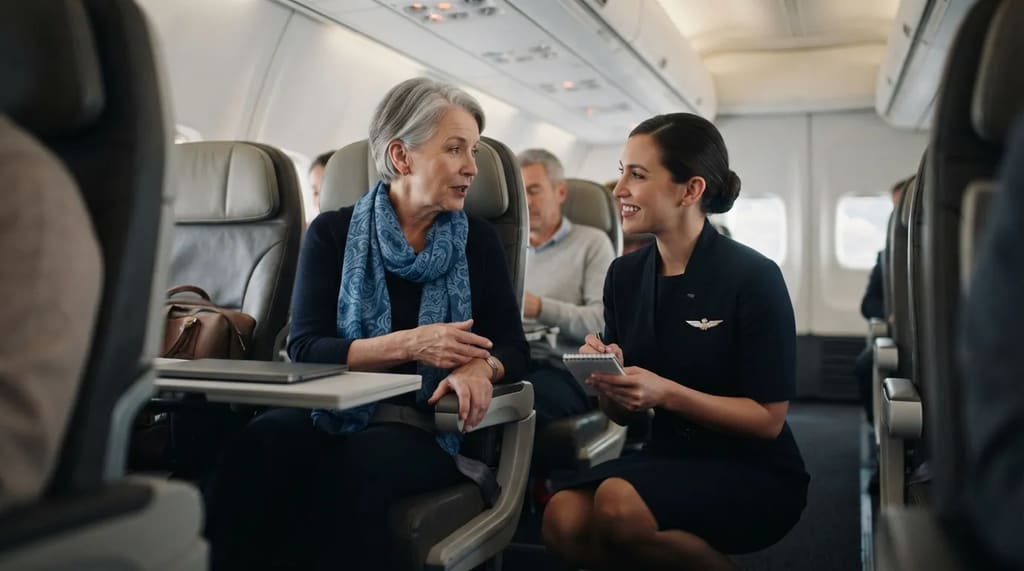
The best help often starts with a few words from you.
Crews get a manifest before boarding, and it can include notes on passengers who requested special assistance. But notes don’t cover everything, and one sentence fills in the gaps.
That might be a hearing difficulty, a bad knee, or a medication timing. Say it plainly, and the crew can plan around it.
Meals work the same way. On longer flights many airlines let senior passengers request specialty meals, and asking at booking helps that food actually show up.
Some older travelers worry this makes them look needy. Crews tend to read it the opposite way, as someone who plans ahead.
Now for a gesture that crews say tells them more than almost anything else you do after you sit down…
#5 – Actually Watching the Safety Briefing
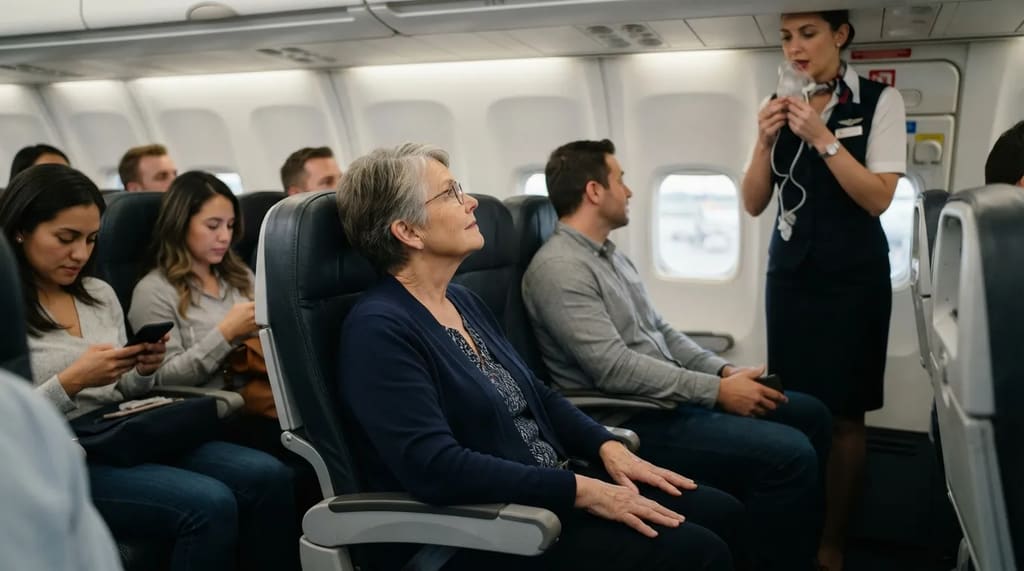
This is the one habit that experienced flyers are most tempted to skip.
Most people don’t realize that crews are watching the audience while the briefing plays. One account says crews notice who watches the demo instead of scrolling on a phone.
“I’ve heard it a hundred times” is a very common answer. It’s also the one that crews quietly mark down.
Every aircraft is a little different, and the exits may not be where you remember. Looking up for the two minutes it takes is both a courtesy and a smart habit.
One report says the biggest thing crews notice about passengers over 60 isn’t fragility, it’s quiet competence. Paying attention is a big part of that picture.
Next comes the one place where honesty can matter more than pride…
#4 – Telling the Truth in the Exit Row
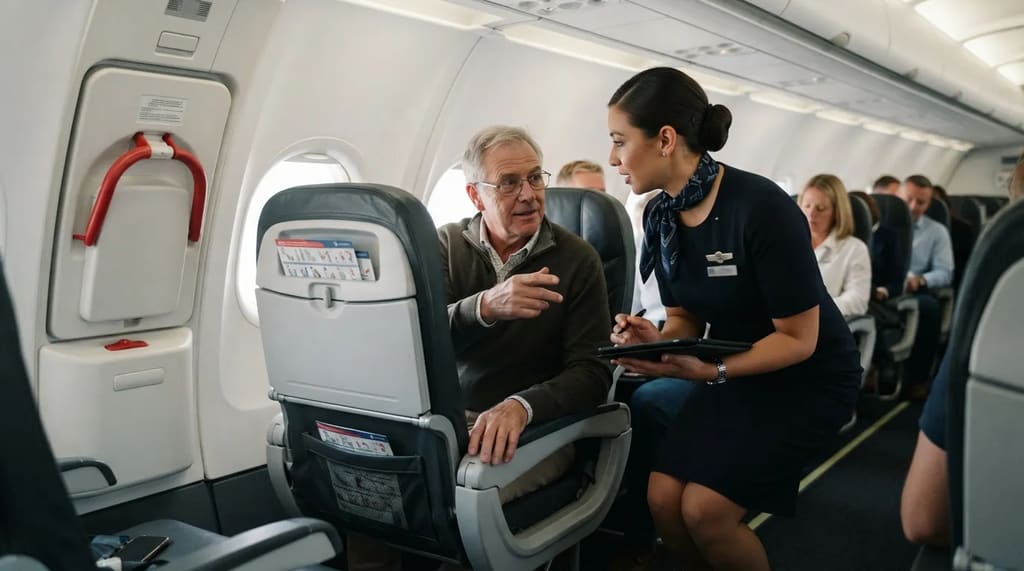
This gesture is a rule first and a courtesy second, and crews take it seriously.
Exit rows come with federal requirements. Passengers there must understand crew instructions and have enough mobility, strength and dexterity to operate the exit and help others out.3 4
Crews don’t assume. They ask exit row passengers if they’re willing to help in an emergency, and they want a clear verbal answer from each one.5
The gesture that earns respect is a plain “I’d better move.” Passengers are asked to request a new seat if they cannot perform exit row functions or don’t wish to, and anyone can say it at any age.
Worth Knowing
- Federal rules bar anyone under 15 from an exit seat.3
- An exit seat isn’t only the one beside the door. It also covers the seats in the row you’d pass through to reach it, up to the first aisle.3
- Passengers must be able to understand crew commands and speak to the people around them.
- Airlines can’t make you explain why you’re asking to be reseated.
One more thing most people don’t realize. Moving into an empty exit row seat isn’t allowed without crew approval, even after takeoff.
The next gesture happens in the last thirty seconds of the flight, and most people get it slightly wrong…
#3 – A Quick “Thanks” on the Way Out
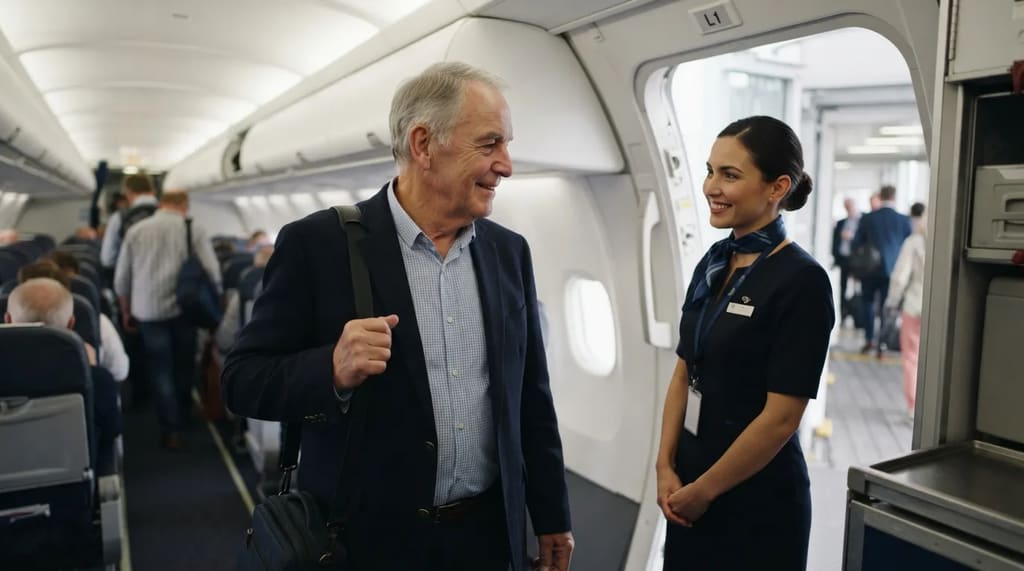
Short and sincere beats long and lingering.
Many passengers stop in the aisle to say goodbye. Most attendants appreciate the gesture but prefer a quick “thanks” as you pass, since they’re preparing the cabin for the next flight.
Some people will disagree, because a proper goodbye feels like good manners. But the crew’s own accounts point to the shorter version.
Related Stories From Travelbinger
A glance, a nod and two words do the job. The person behind you also gets to leave on time.
Now we reach the gesture that has become a talking point online, and not everyone agrees about it…
#2 – The Small Note or Treat
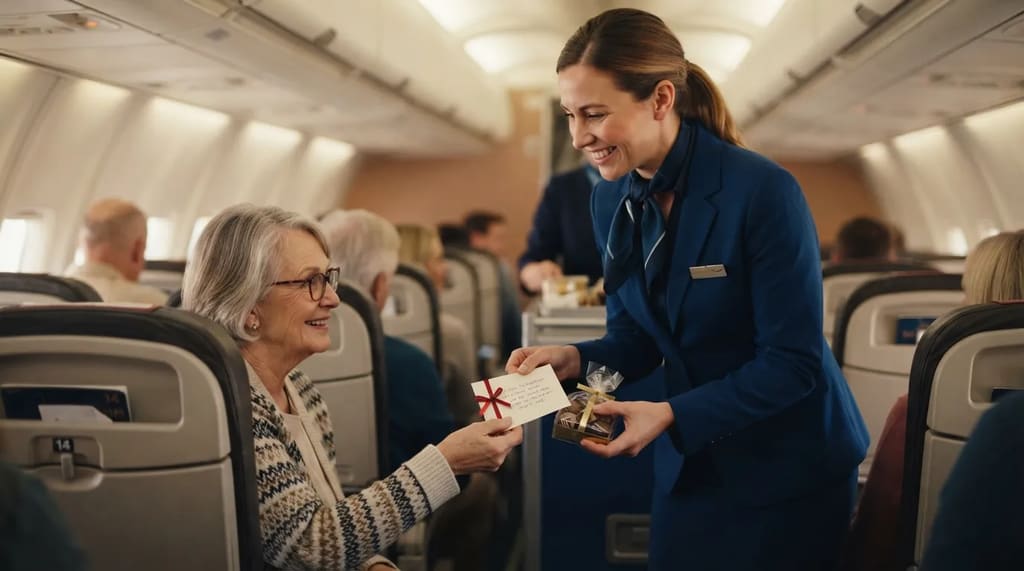
This is the gesture that gets the most attention, and the most debate.
Candy, a handwritten note, or a simple treat is something flight attendants frequently describe as memorable. Moore says crews can be stuck on board for 12, 13, even 14 hours with no way to step off.
There’s a catch. Crews stress that passengers should never expect special treatment in return, and as Moore put it, nothing is expected but everything is appreciated.6
Some travelers find the trend excessive, and that’s a fair view. Attendants don’t expect gifts, so there are no hard feelings if you skip it.
The cheapest version may be the best one. A handwritten thank-you costs almost nothing.
But crews keep returning to one gesture that costs nothing at all, and it comes first…
#1 – The Hello at the Door
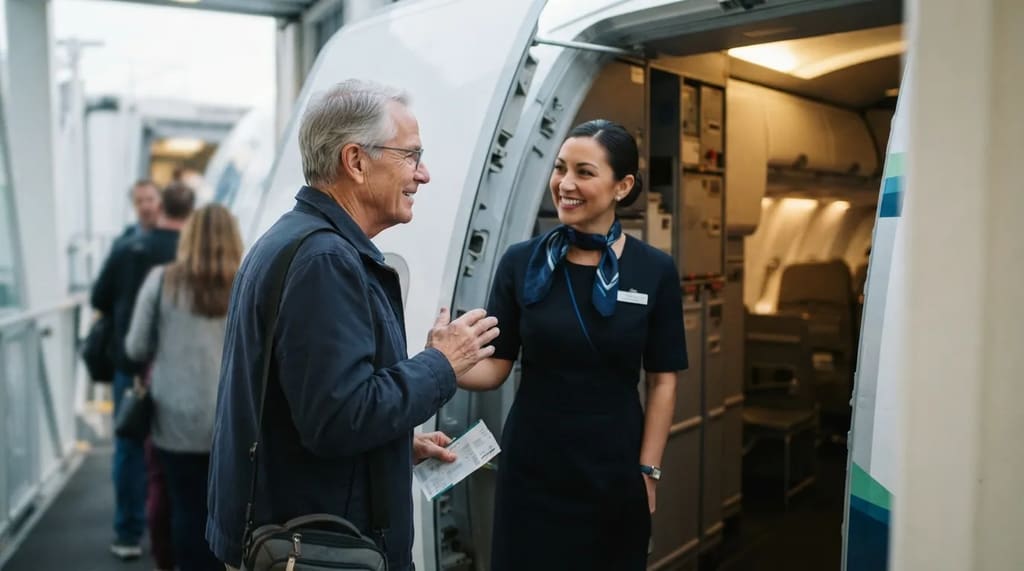
The gesture crews remember longest happens before you even find your seat.
One Alaska Airlines flight attendant said that when a passenger makes eye contact and says hello, she feels at ease. To her, being acknowledged suggests that person will be a good passenger.7
A Southwest flight attendant made a similar point. “Traveling is stressful, but stress is contagious,” he said.7
One report says a simple greeting and steady eye contact set a tone that crews remember all flight. That fits what crews say elsewhere: passengers who acknowledge them with a smile or greeting are often seen as easier to assist.
Why It Stands Out
- It happens at the very start, so it frames everything that follows.
- It needs no money, no planning and no special request.
- It works at any age and in any seat, from the front row to the last.
- Crews tie it to feeling at ease and to passengers who seem easier to assist.
None of this requires anything you can’t do today. It takes a smile, a look and one word.
The Bottom Line
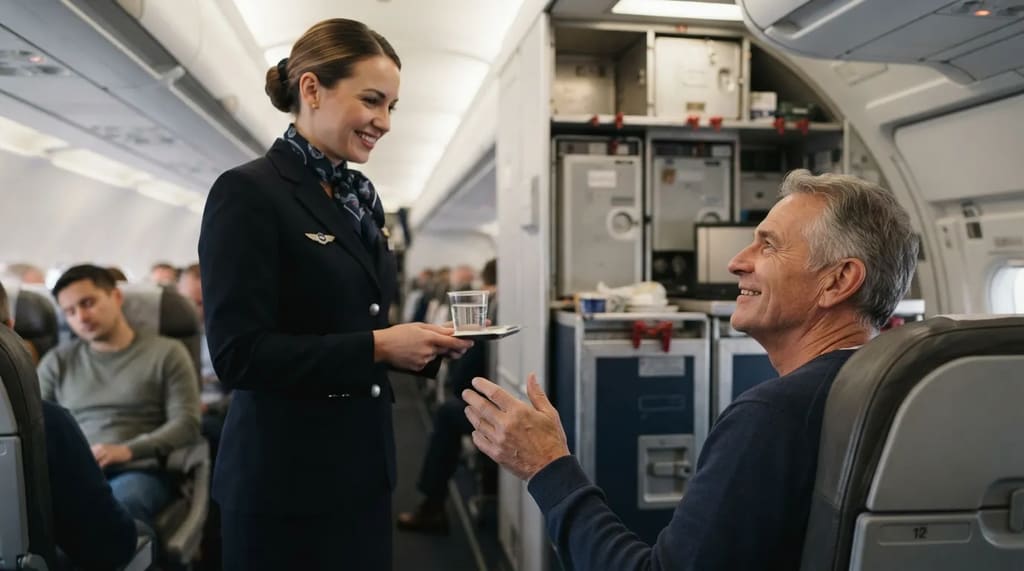
The gestures crews describe are small: look up, raise a hand, stay seated, speak up early, watch the briefing, tell the truth in the exit row. None of them costs a dollar.
Gifts are welcome but never expected, and a hello at the door sets the tone for the whole flight. The evidence here is crew testimony, not a survey of passengers over 60, so treat it as insight and not as a rule.
Which of these have you seen a crew member respond to, and which one did we get wrong?
- Charity Moore Seat Belt Tips: https://creators.yahoo.com/lifestyle/story/a-flight-attendant-shares-the-way-to-get-special-treatment-on-your-next-flight-200857637.html
- DOT Air Carrier Access Manual: https://www.federalregister.gov/documents/2005/04/20/05-7544/nondiscrimination-on-the-basis-of-disability-in-air-travel
- Exit Seat Rules Explained: https://engine.com/glossary/emergency-exit-row
- FAA Exit Seating Requirements: https://www.faa.gov/sites/faa.gov/files/2022-05/PL_115-254_Sec_323_Safety_of_Unoccupied_Exit_Rows.pdf
- Exit Row Flight Attendant Checks: https://travel.yahoo.com/articles/exit-row-seats-come-rules-131215835.html
- Moore on Gifts for Crew: https://www.aol.co.uk/articles/flight-attendant-shares-customers-show-184443000.html
- Travel + Leisure Easy Passengers: https://travel.yahoo.com/advice/lifestyle/articles/most-obvious-signs-easy-passenger-131500571.html