Stand in any gate area 40 minutes before departure and you can pick out the veterans without a word being said. They are not pacing, not hovering at the podium, and not patting their pockets, and the passenger right behind them rarely works out why.
The sixteen habits below are small enough to miss, and fifteen of them cost nothing but a little attention. The last one is different, because it involves a bag leaving your hands, and it is the one slip you cannot take back once it happens.
#16 – Your Boarding Group, Read Once and Remembered
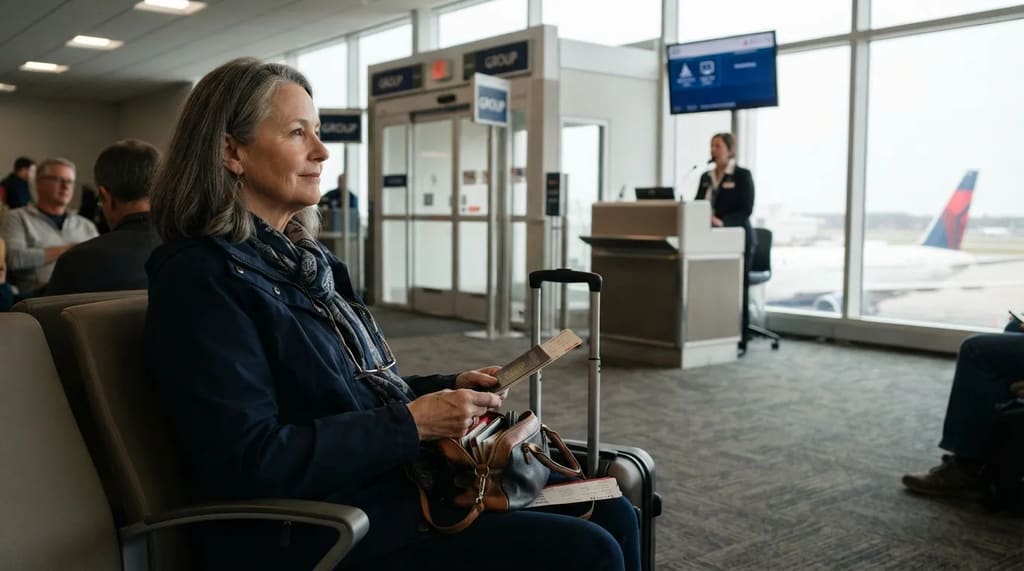
Airlines usually board by group or zone, and the group is often printed on your boarding pass. A seasoned traveler checks the pass once, files the number away, and waits for it instead of glancing down again and again.
Look at the pass before you leave the gate area. Then follow the screen and the announcements rather than your phone, because the phone cannot tell you what the agent is about to say.
The number on your pass will not change while you sit there. The order in which the agent calls the groups sometimes does.
The pass tells you where you stand, but it does nothing about the noise that can swallow the call.
#15 – Earplugs or Headphones in an Outer Pocket
Gate areas are loud. Overhead announcements, crying children and rolling suitcase wheels all compete for attention, and a long wait in that din is tiring.
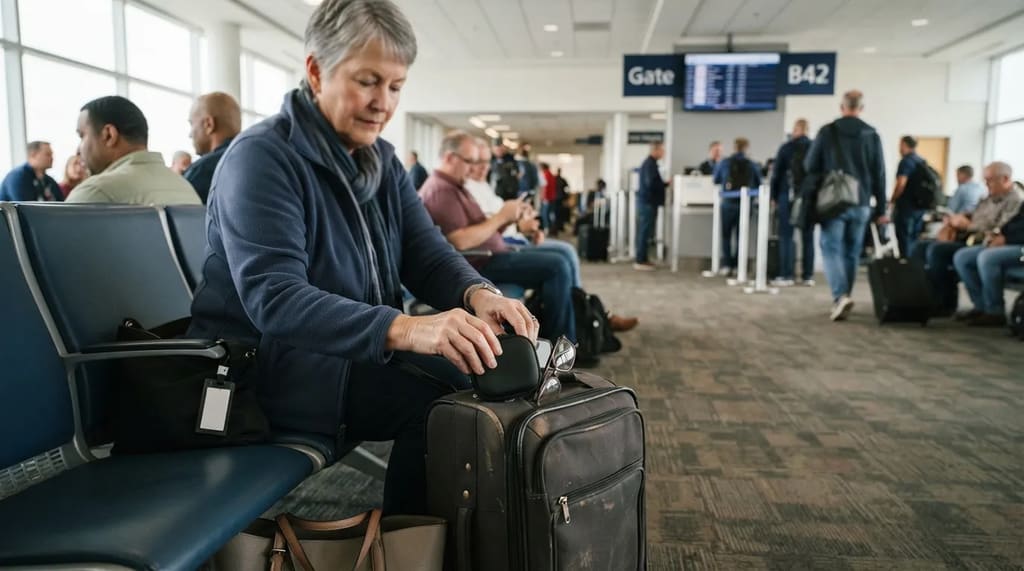
Experienced flyers keep headphones or earplugs in an outer pocket rather than buried in a packed bag. That way they can put them on the moment they sit down, without unpacking anything at their feet.
The catch is to leave one ear free, or keep the volume low, while the flight is still waiting to board. The call for your group has to reach you, and no pair of headphones is worth a missed call.
Quiet lasts only until boarding opens, when a line forms and someone has to decide who steps forward first.
#14 – A Few Seconds Spent Letting Ready Passengers Ahead
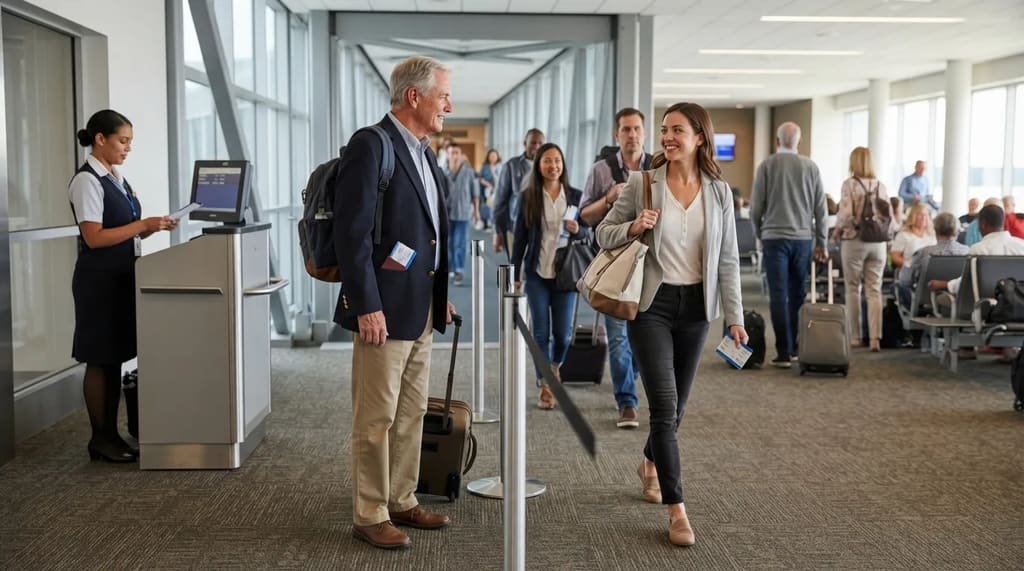
Once your group is called, there is no prize for being first through the door. One guide to boarding suggests that you let others in your group board ahead if they are ready before you.
The same courtesy works in reverse. If your pass is not in your hand when the call comes, step aside to find it, because digging through a bag while an agent waits is one of the clearest signs of an infrequent flyer.
Your group has already been called, so waiting for a few people to pass costs you a few seconds and not your place. That is a fair trade on a flight where everyone in the group is allowed on.
Worth Knowing
- Your group has been called, so your place is not at risk.
- Stepping aside to find a pass keeps the line moving.
- Letting ready passengers go first costs seconds, not seats.
Stepping aside only works if the pass and your ID are somewhere you can reach them, and that depends on what is in your pockets.
#13 – Pass and ID Kept in One Pocket
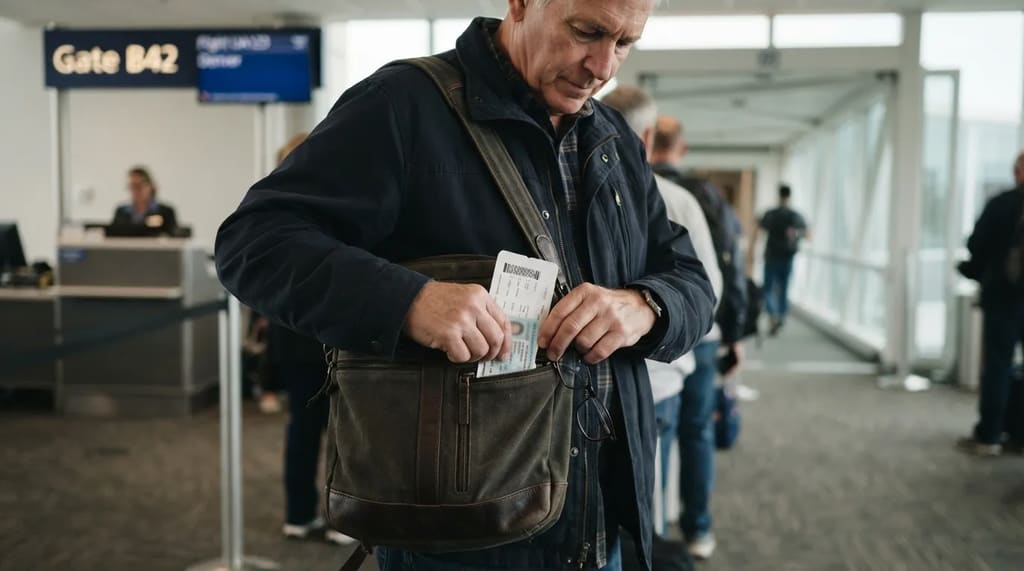
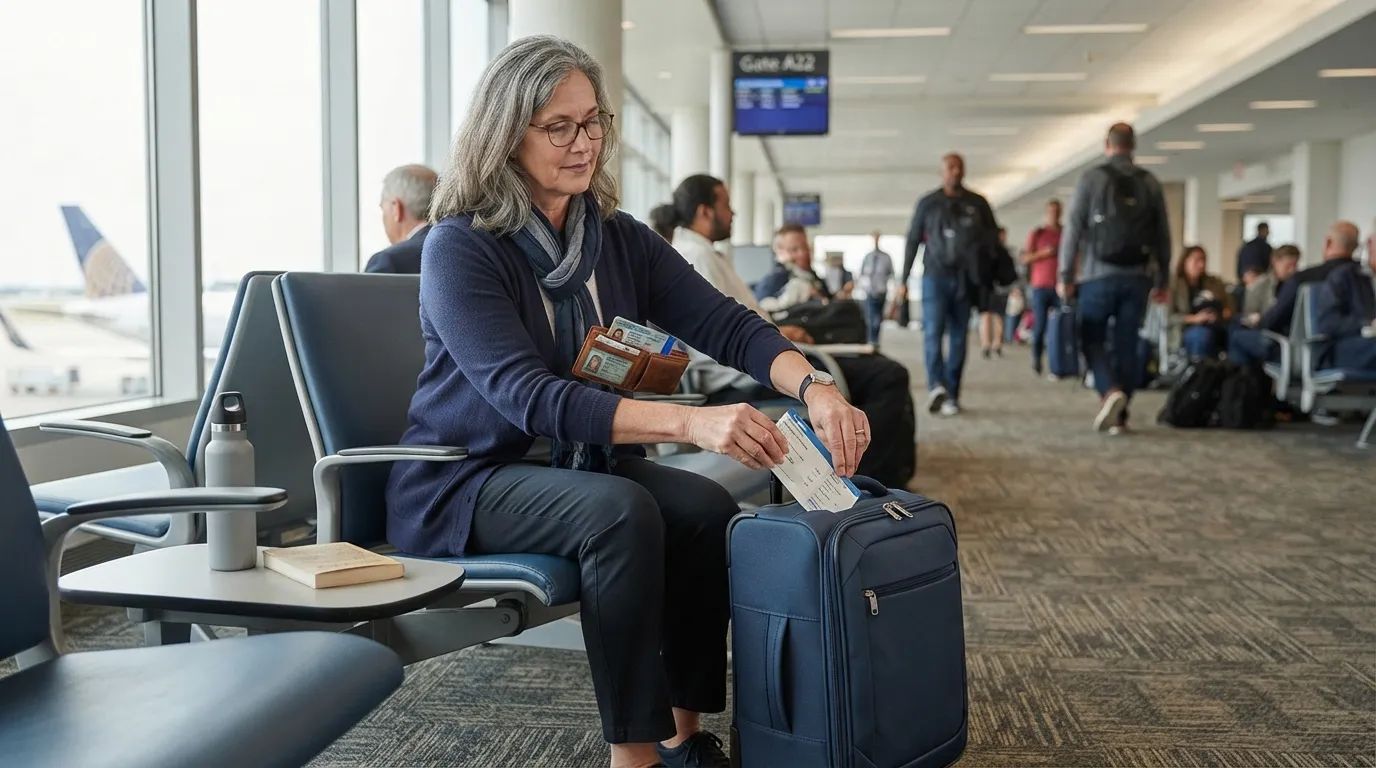
An experienced flyer decides on one pocket for the boarding pass, the ID and the reading glasses, and everything returns there after each check. The point is to have your carry-on items consolidated and ready, so the line does not wait on a search.
A jacket pocket or a small zipped pouch works better than the main compartment of a bag. You can find things by touch without looking, and you are not holding up a jet bridge while you do it.
This is the habit that makes the one before it possible. If you can produce the pass without thinking, stepping aside is a courtesy you rarely need to use.
With everything in one place, there is no reason to be the first one on your feet.
#12 – Staying Seated Until Your Own Group Is Called
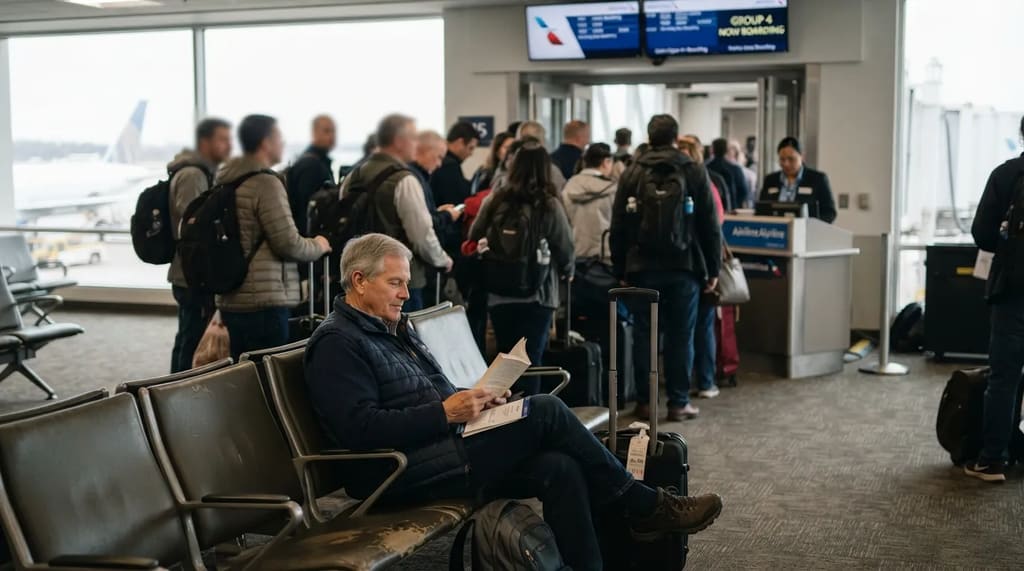
Boarding order depends on your group or zone, not on who is standing closest when the agent picks up the microphone. Jumping up too soon just leaves you standing awkwardly while the agent redirects the line.
Crowding the gate also earns a nickname from frequent flyers, who call early huddlers “gate lice.” Early standing is one of the most overrated habits in air travel, because it buys you a longer wait on your feet and nothing else.
Bin space is the usual reason people give for it, and the worry is real, since earlier boarding gives a better chance at overhead space. The answer is to be ready the moment your group is called, and one source adds that boarding after your own group has been called can cost you bin space.
Staying seated assumes you know about how long the wait will be, and that clock starts well before the call.
#11 – Arriving Before Boarding Starts, Not Hours Before
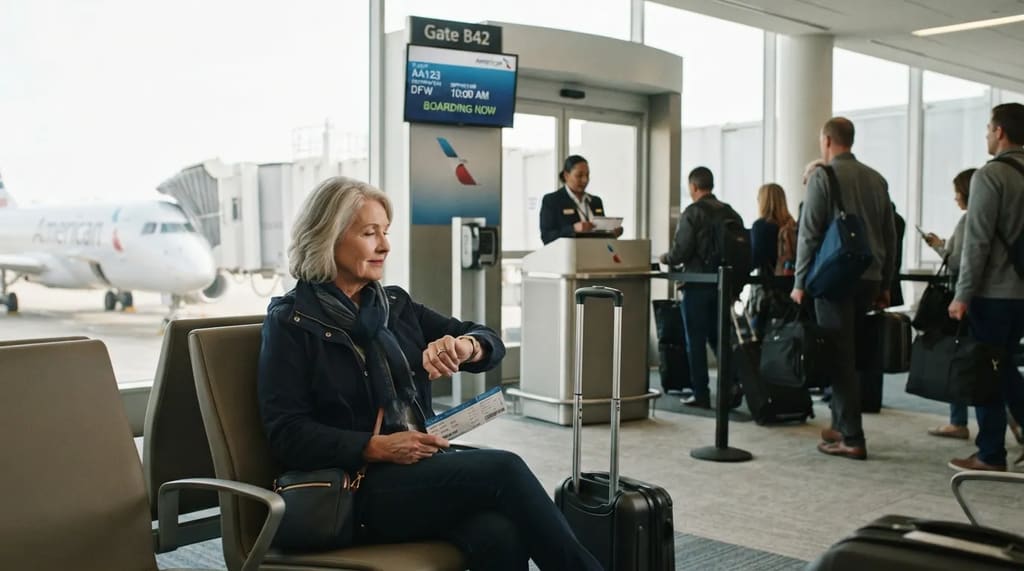
The useful moment to be at the gate is just ahead of boarding. On American, boarding typically starts 35 to 40 minutes before departure, and domestic boarding on other airlines often falls in the same 30 to 45 minute range.
Kayak’s guide to American’s boarding groups advises you to get to the gate before boarding starts and keep an eye on announcements.1 That is the whole rule, and it does not ask you to sit there for two hours.
Arriving very early rarely pays off. A long wait at the gate gives you more time in a hard chair and the same boarding order, and those hours are better spent at a coffee shop or walking the concourse.
At a Glance
- American: boarding typically begins 35 to 40 minutes before departure.
- Other domestic airlines: often 30 to 45 minutes before departure.
- Your target: at the gate just before boarding opens.
- Arriving hours early: a harder chair and the same boarding order.
Timing gets you into the room, but how the room is run depends on the airline.
#10 – How Your Airline Calls Its Groups
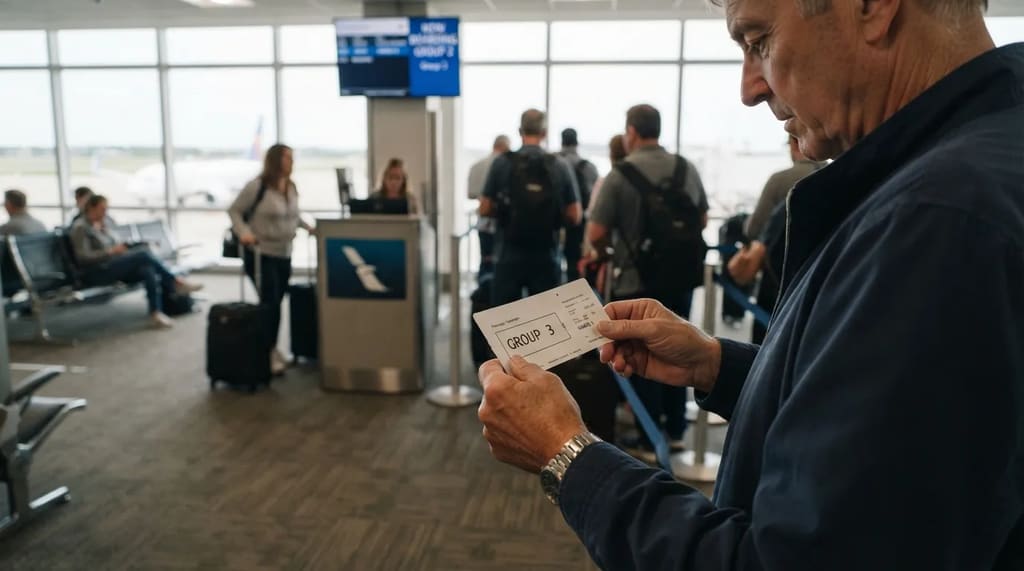
Boarding systems differ from one carrier to the next, and some have changed recently. An experienced flyer checks how this airline does it instead of assuming it matches the last trip.
If you have not flown a carrier for a few years, the change matters most to you. Old advice about racing for a good seat may simply no longer apply.
Knowing the system is half of it, and the other half is watching the person who runs it.
#9 – Watching the Podium as Well as the Screen
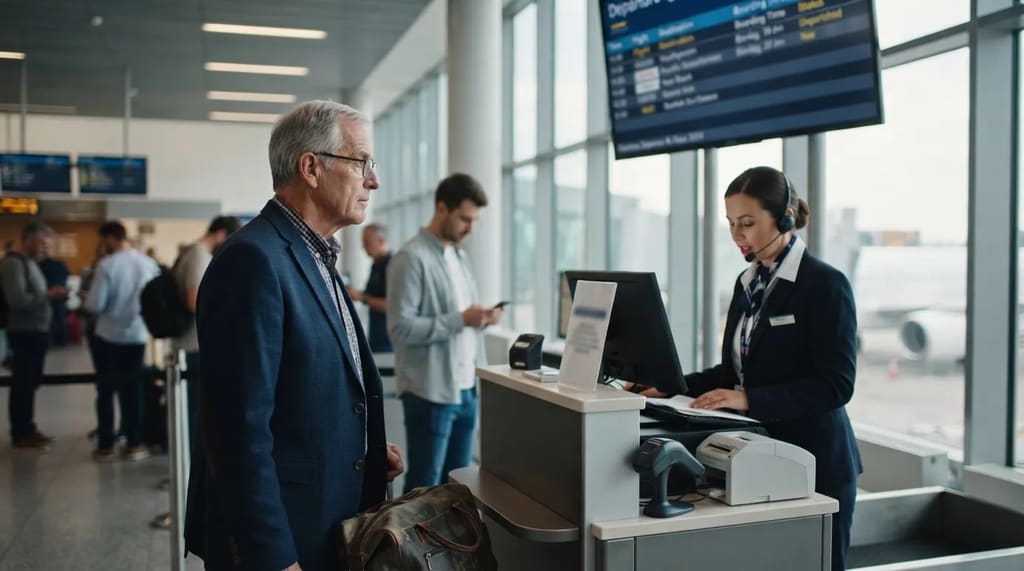
Experienced flyers keep half an eye on the agent. They notice when staff begin making calls, check paperwork more urgently, or gather near the podium, because those signs often come before any announcement.
Screens help too, and watching them is how you avoid missing your group when agents combine groups on a smaller aircraft. The screen and the agent together tell you more than either one alone.
The agent can also speed things up when a flight is late. One guide notes that agents compress the boarding schedule when a flight is delayed.
Body language at the podium helps only when you can hear what comes after it.
#8 – A Seat Within Earshot of the Gate Agent
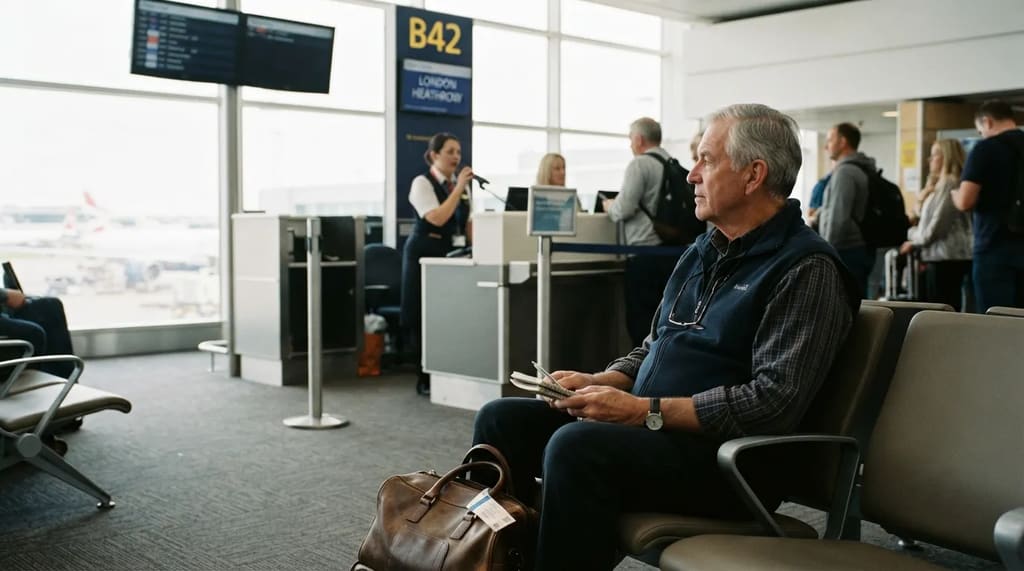
One guide to the gate advises you to sit within earshot of the desk instead of joining the line. The reason is that gate changes, delay updates and other announcements reach the room through the agent’s microphone first.
Updates may not reach your phone in time, since some of them are spoken only. If you do wander off, listen for announcements or check the departure boards and the airline’s app.
If you must choose between the seat near the outlet and the seat near the desk, take the one near the desk. A power bank solves the outlet problem, which you will meet again at the end of this list, but nothing solves a missed gate change.
Being close to the desk helps with the call, though the order the agent uses is sometimes not the order your pass promised.
#7 – The Agent’s Order Over the Printed Pass
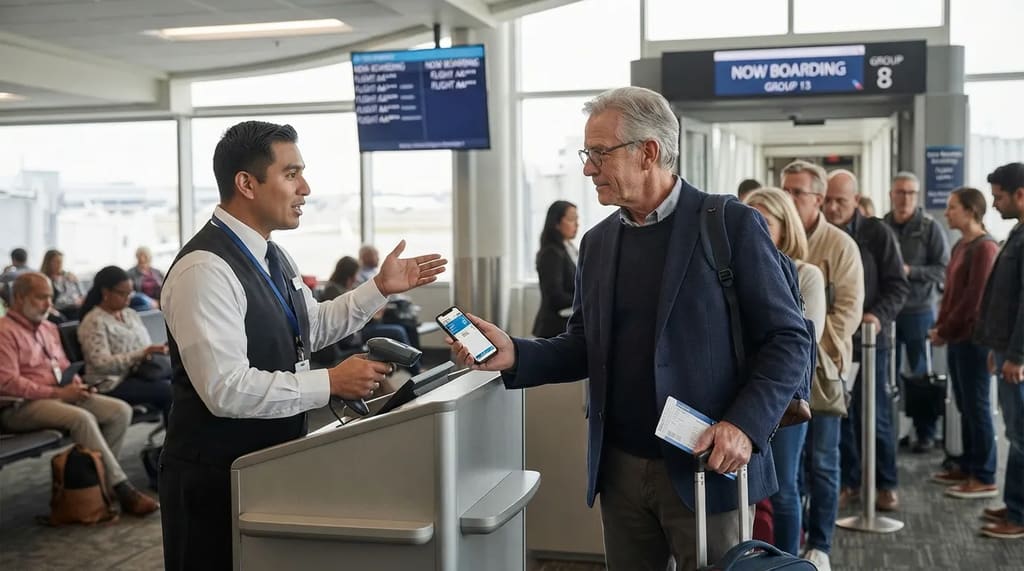
When the gate order and your pass disagree, experienced flyers follow the agent. Agents merge groups on smaller aircraft, and the gate order overrides what your boarding pass printed.
American’s agents, for example, have been known to group several boarding groups together on smaller aircraft or less-full flights.1 A call for a lower number may therefore include yours.
Quick Compare
- Your printed pass: shows where you started, set before you reached the gate.
- The agent’s call: reflects the actual plane and crowd on the day.
- When they differ: the call wins, every time.
Arguing your way into an earlier group gets you nothing, because there is no advantage to it and the agent usually has a reason that has nothing to do with you.
This is the same reason you watched the podium and sat near the desk. The order is decided at the gate on the day, and the pass is only the starting point.
#6 – A Screenshot of the Boarding Pass
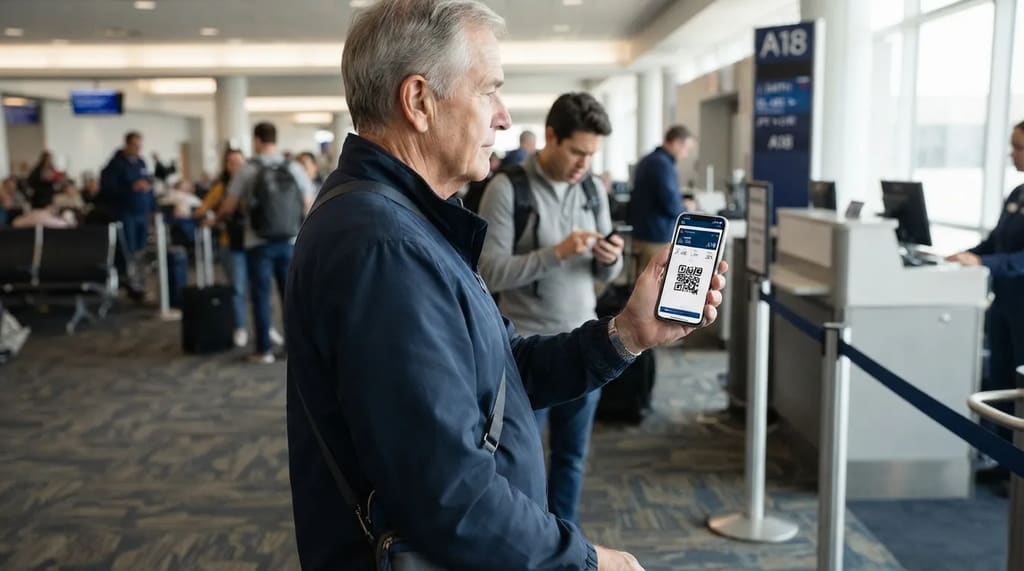
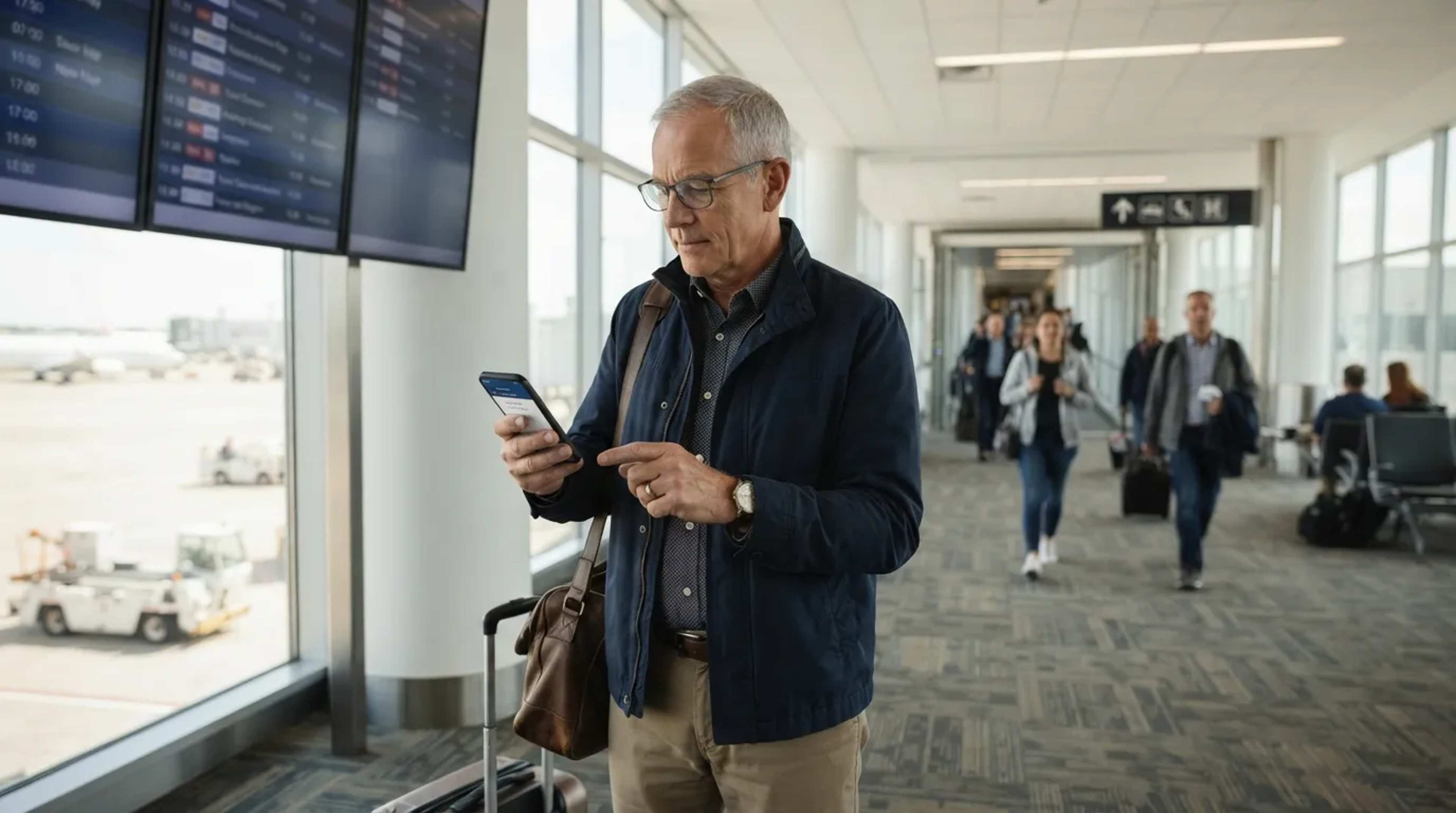
Experienced flyers tend to have their mobile pass loaded and screenshotted before they reach the gate, in case terminal WiFi is spotty. The screenshot opens the same way every time, with no signal at all.
The screenshot is worth the ten seconds it takes. Waiting for an app to load while a line forms behind you is the sort of delay you can avoid entirely.
If you like paper, a printed pass is the other safeguard. One guide argues that a folded printout removes one failure point from the equation, which is a fair reason to print it if your airline offers that.
The phone holds the pass, but the checkpoint asks for something it cannot supply on its own.
#5 – Acceptable ID Kept Beside the Boarding Pass
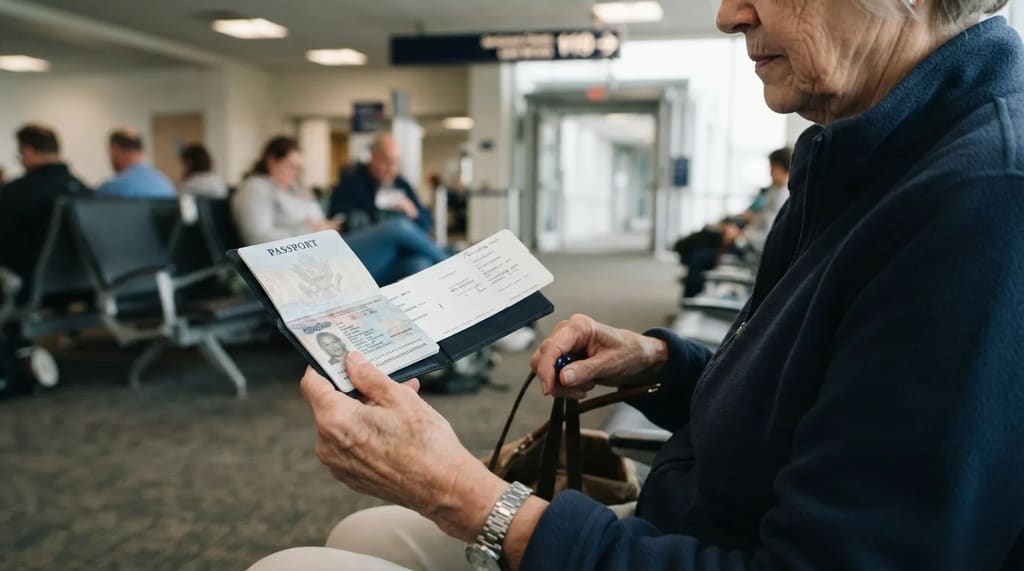
Since May 7, 2025, anyone 18 or older flying within the U.S. needs a REAL ID or another acceptable ID. That includes frequent travelers, and TSA PreCheck does not exempt you from the ID requirement.3 4
- A REAL ID-compliant license, marked with the star.
- A U.S. passport or passport card.
- An enhanced license from Michigan, Minnesota, New York, Vermont or Washington, or a Global Entry card.4
If you keep a license on your phone, carry the plastic one as well. TSA’s own advice is that mobile license holders must carry a physical acceptable form of ID.
With the documents sorted, the only thing left to settle is the seat itself.
#4 – One Short, Specific Question at the Desk Before Boarding Opens
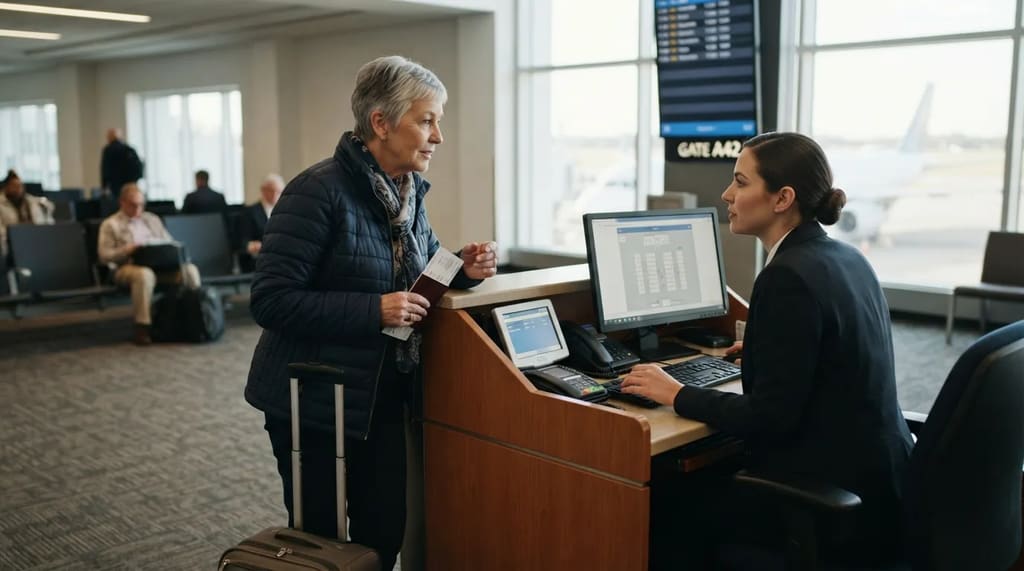
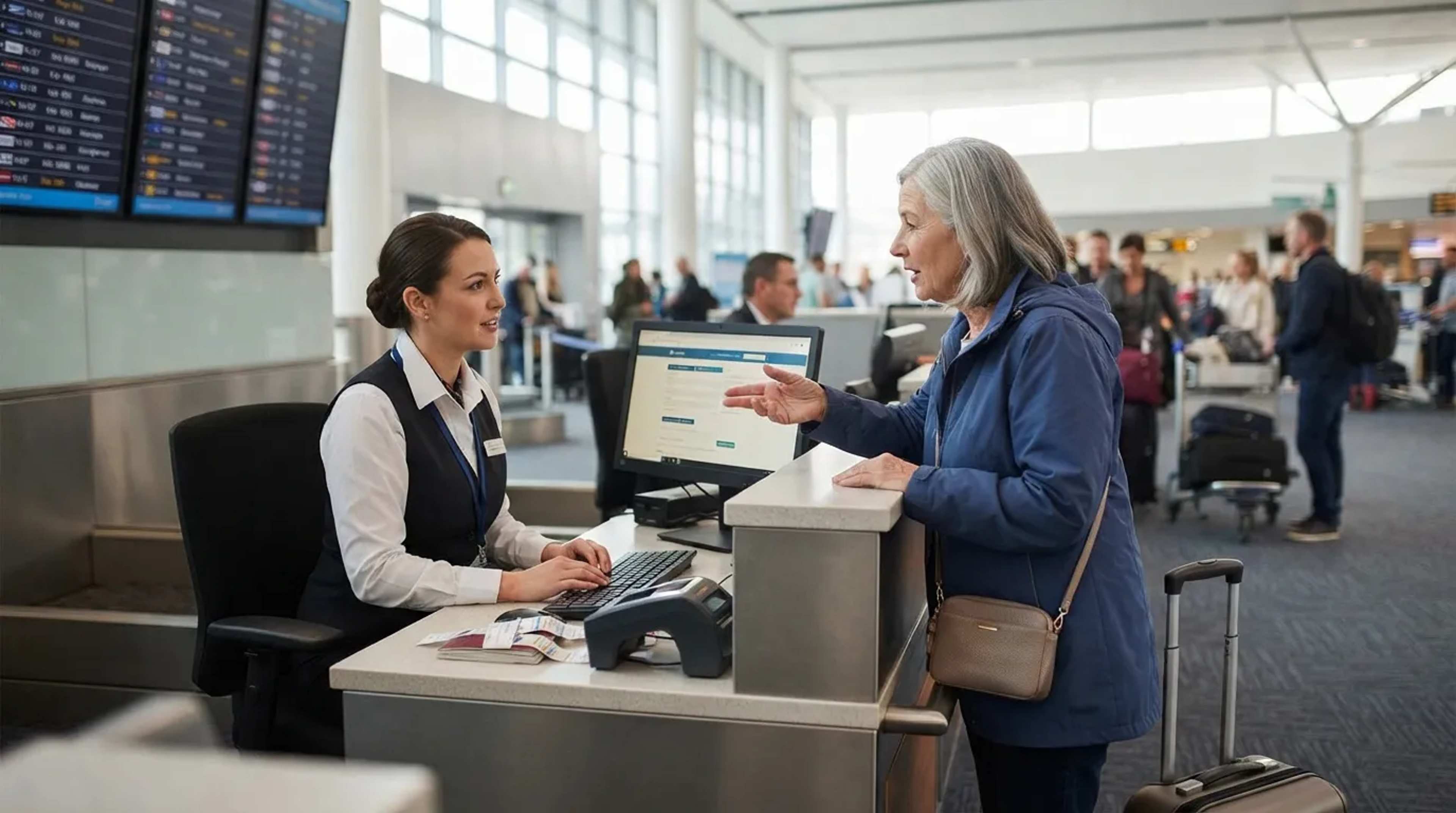
Experienced flyers go to the desk before boarding starts, not during the rush, because an early request gives the agent room to plan. They also know a specific request is easier for an agent to grant than a general one.
The agent can see the seat map, and you cannot. That is why a short question often gets a better answer than any amount of guessing from the gate chairs.
- Whether an aisle seat is still open on this flight.
- Whether the bins are likely to fill, so you can decide about the carry-on.
- When the group you hold is expected to be called.
Keep the question short and ask it while the agent is not busy. A polite, specific question is usually answered, and a long story at the podium is not.
Related Stories From Travelbinger

An aisle seat is worth asking for mostly because of what it lets you do once the flight is long.
#3 – Calf Stretches at the Gate Before a Long Flight
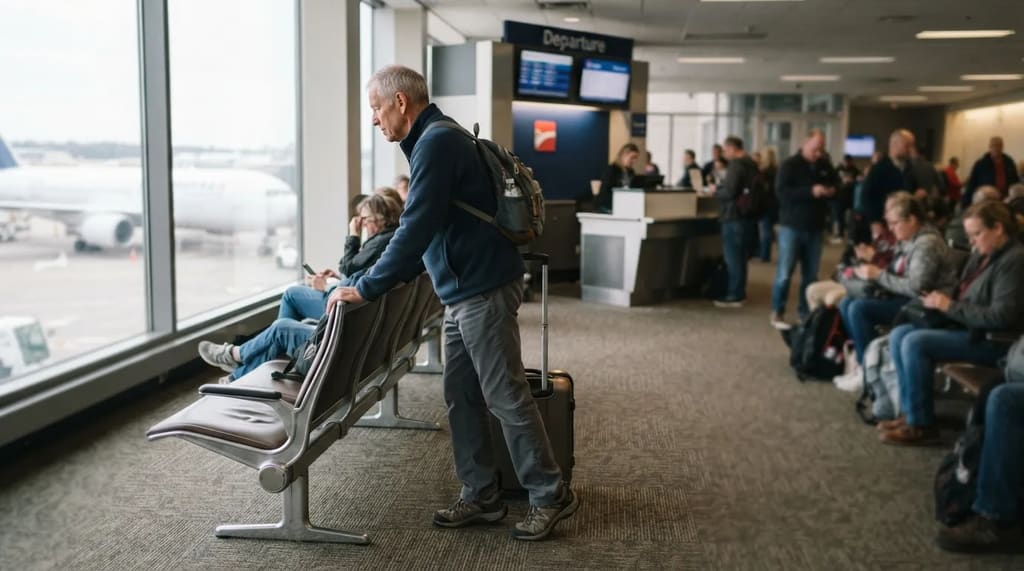
The CDC says blood clots can form in the deep veins of the legs during travel because you sit still in a confined space for a long time.5 It also says that even on a long trip the risk is generally very small, and that it depends on the length of the trip and on other risk factors.
So the experienced habit is to stand and move before you board, and to keep doing it in the air. The CDC advises you to move your legs frequently on long trips and exercise your calf muscles, and a gate with a long wait ahead of a long flight is a fair place to start.6
- Raise and lower your heels, keeping your toes on the floor.5
- Raise and lower your toes, keeping your heels on the floor.
- Tighten and release your leg muscles.
Stretching leaves you ready to sit, but it does nothing about the bag that may be taken from you at the door.
#2 – Offering the Roller Before Anyone Asks
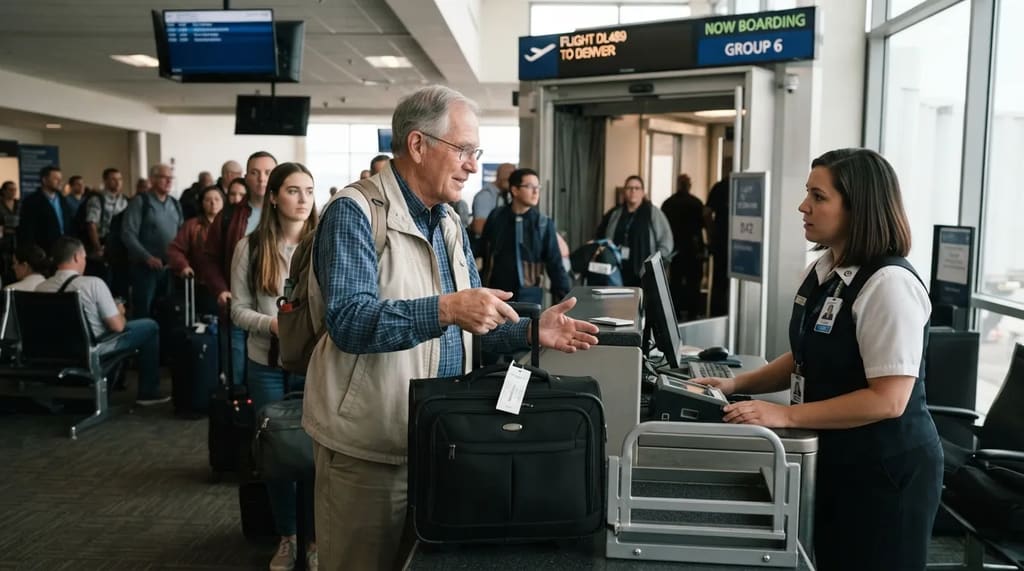
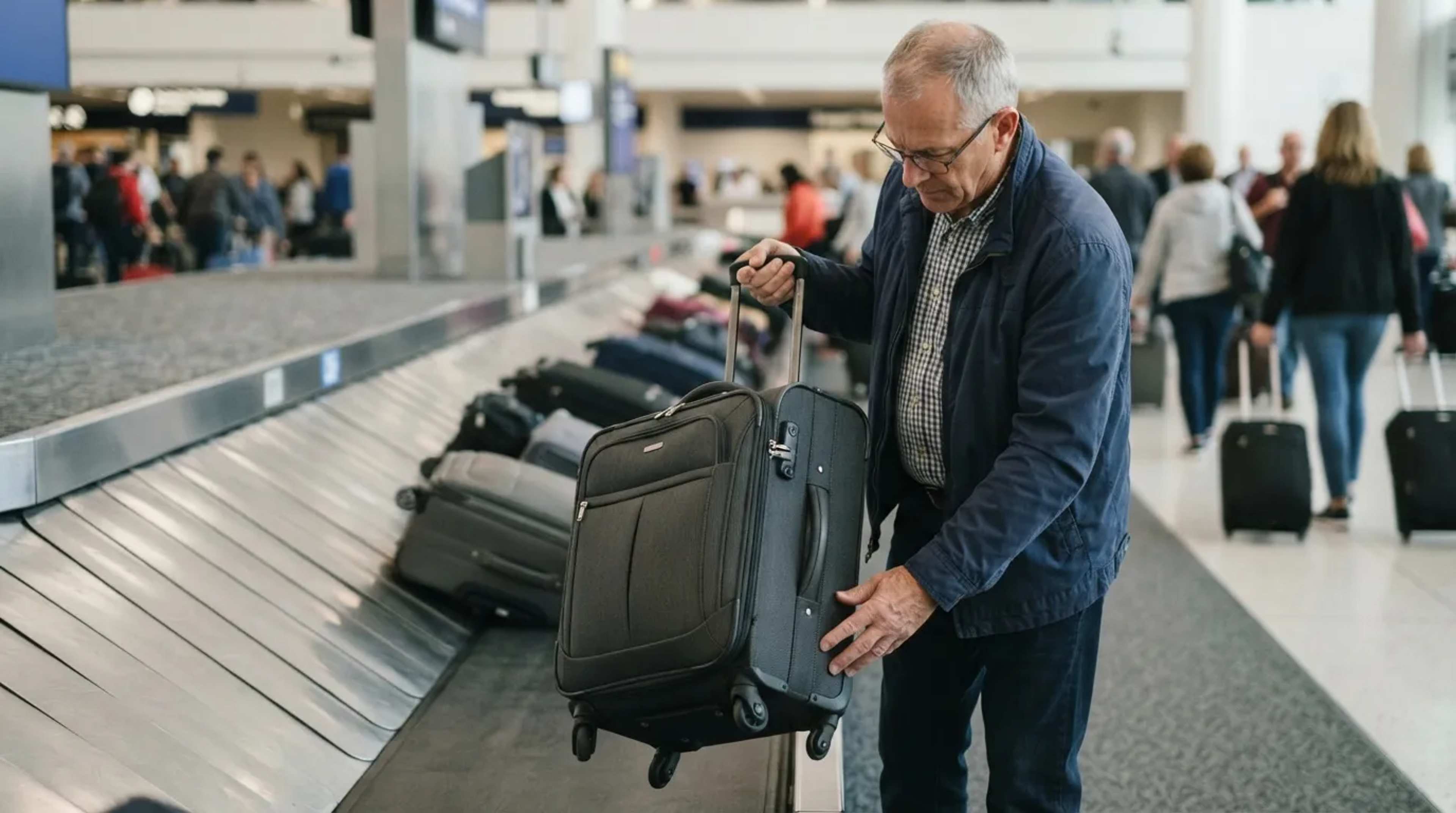
On a full flight, later boarding groups may have to gate-check bags. Experienced flyers in a late group often offer the roller before anyone asks.
Agents on some airlines, especially budget carriers on full flights, measure carry-ons at the gate. A bag stuffed past its limits is the one most likely to be pulled from the line.
Why It Stands Out
- You choose what stays in the cabin, instead of having it chosen for you.
- There is no scramble at the jet bridge door.
- The line behind you keeps moving, and so does your mood.
If you hold a late group on a crowded flight, offering it early is the calmer choice. It is better to decide at the desk than to be told at the door with a line waiting behind you.
Handing over the roller is easy, though one thing inside it must come out first.
#1 – Power Banks Pulled Out Before the Bag Goes Below
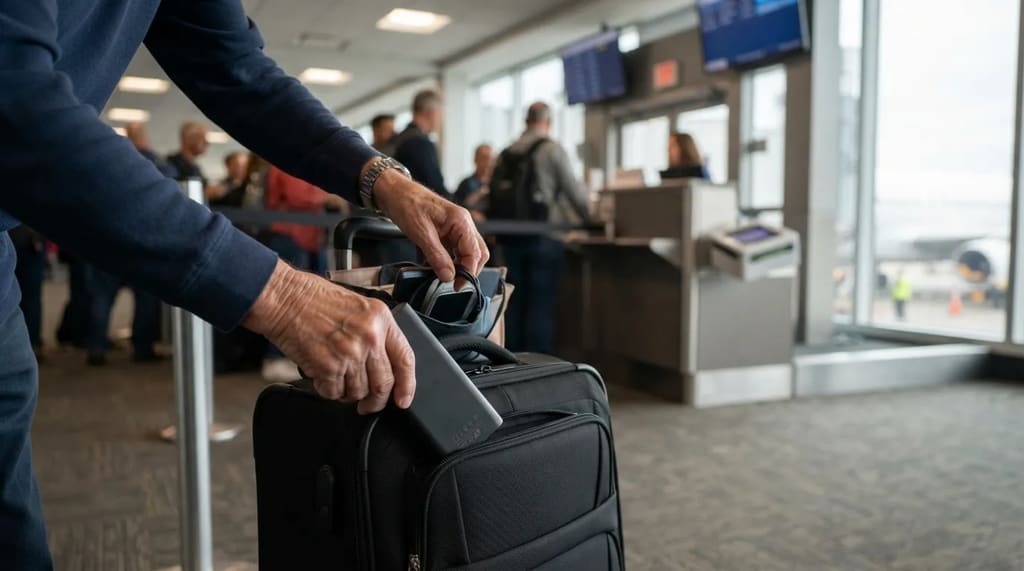
The FAA says spare lithium batteries, including power banks and battery charging cases, must be in carry-on baggage only.7 That rule does not lapse when a carry-on is taken at the gate.
So if your carry-on is gate-checked, take out every power bank before you hand the bag over. A bag that goes into the hold with a spare battery inside has broken the rule even though you never meant it to.
- Batteries of 0 to 100 Wh are allowed on passenger aircraft, 101 to 160 Wh need airline approval, and anything above 160 Wh is forbidden.7
- A 20,000 mAh bank at 3.7 volts comes to about 74 Wh, so it is under the line.
- A 30,000 mAh bank comes to roughly 111 Wh, which needs approval.
Airlines can be stricter than the FAA, so check your own carrier’s page if your bank is a large one. This one is the least forgiving of the sixteen, because every earlier habit can be repaired at the gate, but a spare battery in the hold cannot be taken back out once the bag is gone.
It ties together the roller you offered, the phone you screenshotted and the seat you chose near the desk. The power bank that keeps all three working is the one item that must stay in your hands.
What to Do With the Half Hour at the Gate
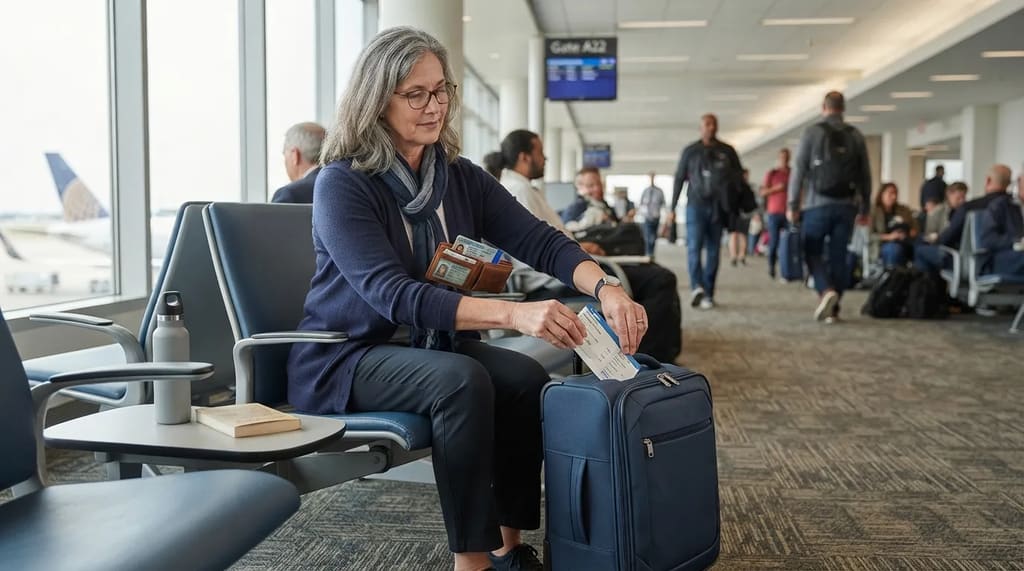
Most of these habits are done well before boarding is called. The gate is a place to collect information and get ready, not a race, and the people who treat it that way tend to have their hands free when the line moves.
That is the shift worth making. You do not need to be past 62 to borrow any of this, only to notice what the calm person ahead of you is doing.
Pick two or three from this list and add them to your next trip, starting with whichever costs you the least. What do you keep in the outer pocket of your carry-on so you can find it at the gate without unpacking anything?
- Kayak American Boarding Groups: https://www.kayak.com/news/american-airlines-boarding-groups/
- Afar Southwest Assigned Seating: https://www.afar.com/magazine/why-southwest-now-uses-assigned-seating-and-how-it-works
- TSA About REAL ID: https://www.tsa.gov/realid/about-realid
- TSA Acceptable Identification: https://www.tsa.gov/travel/security-screening/identification
- Baylor Scott & White Blood Clots: https://www.bswhealth.com/blog/blood-clots-the-scary-side-of-holiday-travel
- CDC Blood Clots and Travel: https://www.cdc.gov/blood-clots/risk-factors/travel.html
- FAA Airline Passengers and Batteries: https://www.faa.gov/hazmat/packsafe/airline-passengers-and-batteries