Ask a first-timer about embarkation day and you hear about long lines, a mandatory safety drill and a lot of hurrying. Ask a veteran and the answer is oddly calm, because most of the work was finished before the drill ever began.
These 16 habits explain that calm, and they run from small chores to one step the ship itself keeps count of. The last one cannot be handled by your phone, and the first begins with a question about the pier.
#16 – The Pier Check That Beats a Stale Map Pin
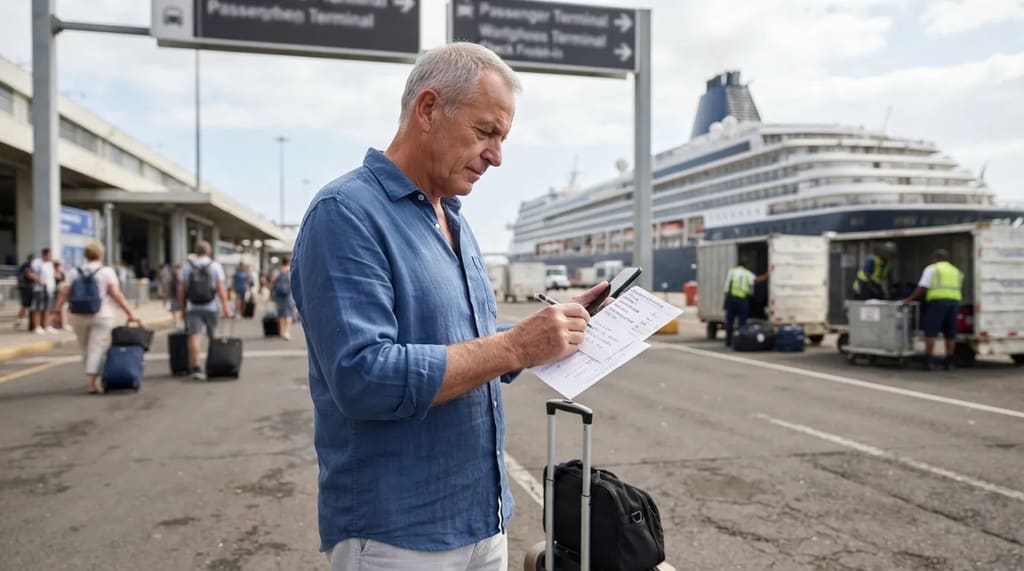
Cruise lines publish the berth and the arrival time for your sailing, and repeat cruisers look up both in the line’s app on the morning of travel. A map pin saved last week can be out of date by embarkation day.
Three details matter: the correct berth, your assigned arrival time and the final boarding cutoff. Veterans write all three on a card or on the back of the boarding pass.
The cutoff is the one that catches people off guard. Final boarding closes before the ship’s scheduled departure time, so the final boarding cutoff is earlier than the sailing time printed on your itinerary.
A ride that drops you at the wrong terminal can swallow an hour you were counting on. After the pier, everything is a short chain of luggage, security, documents and a gangway.
The card tells you where to be and when, but your arrival window rests on paperwork finished days earlier at home.
#15 – Online Check-In Done at the Kitchen Table

Online check-in is what produces your boarding documents, which is why it comes before almost everything else. Afterward you can reach your e-documents, including your boarding pass and luggage tags.1
It is also the moment to download the cruise line’s app and sign in, because safety steps later in the day often run through it. Royal Caribbean, for one, lets guests do the first two parts of its safety drill in the app or on the stateroom TV before visiting the assigned station.2
Veterans skip the night-before scramble. If the app wants a password reset or a photo upload, they would rather sort it out on their own Wi-Fi than in a terminal line.
Many also screenshot the boarding pass, so it opens even when the signal at the pier drops. Check-in then hands you luggage tags to print, though a paper tag is worth little if it is torn off before you reach the ship.
#14 – Luggage Tags That Survive the Flight
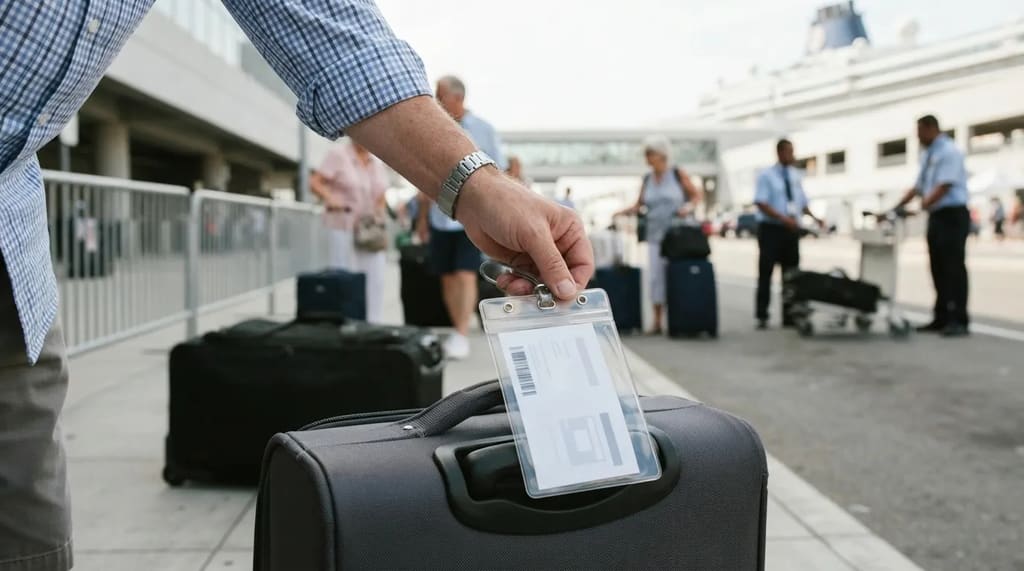
Your tag carries your name and stateroom number, which is how your bag finds its way to you. Porters at the curbside drop-off sort bags by these tags, and without them your luggage may be delayed.
If you fly to the port, the tags face a risk before you ever see the ship. Airline baggage handling can damage paper cruise tags, so some experienced cruisers wait to attach them until they are close to the port.3
- One tag on each checked bag you hand to a porter
- A clear tag holder or wide tape over the paper, so it stays readable after handling
- Attached near the port if your trip includes a flight
A plastic tag holder is worth having if you are flying, because it protects the one piece of paper that tells a porter whose bag this is. It is a tiny purchase compared with a suitcase that goes astray.
Tags cover the bags that leave your hands, while the passport and boarding pass have to stay in them.
#13 – Passport and Boarding Pass in One Pocket
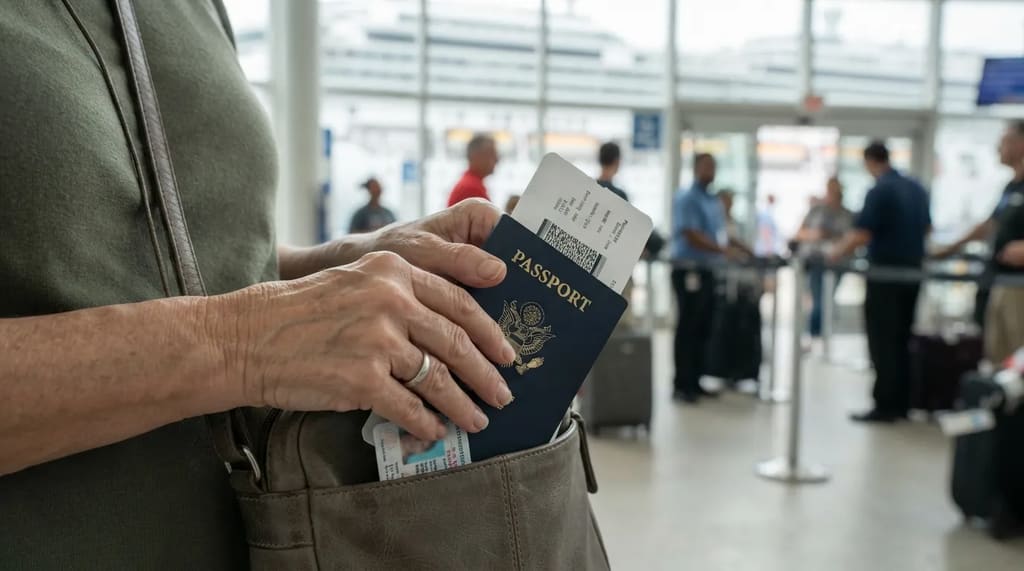
Veterans keep their passport or cruise documents and a government photo ID where they can reach them in seconds. You will need them within minutes of arriving.
Never in a porter’s bag is the rule, because documents must not be packed in luggage you plan to hand over. Once a suitcase is on the cart, anything inside it is headed for the ship without you.
At a Glance
- Passport or government photo ID, as your itinerary requires
- Boarding pass, both on paper and as a screenshot
- Phone with the cruise line app already signed in
- The cruise line’s day-of-travel phone number, written down
A paper copy of the boarding pass is a sound backup even on lines that accept a digital one. A phone with a dead battery cannot show a desk agent anything.
Requirements differ by itinerary, citizenship and residency. Check your cruise line’s instructions and the official entry rules for every country on your route, and skip the social media checklist.
With the documents tucked away, the next job is the bag that stays on your shoulder.
#12 – The Small Bag That Carries the First Afternoon

Checked bags do not reach your cabin when you do. MSC Cruises, for instance, gives late afternoon through early evening as the expected delivery time and advises keeping what you need until then in your carry-on.4
On a busy day, bags can show up after the sail-away party, because delivery is staggered across thousands of suitcases. So the bag on your shoulder has to carry the afternoon.
- Documents, boarding pass and eyeglasses or contacts
- Phone, charger and any valuables
- Swimsuit, sunscreen and a change of clothes
Keep it to one compact bag. You will carry it through security, up the gangway and around the ship, and every extra tote is one more thing to leave on a chair.
What goes in that bag also has to cover what you will wear until the suitcases turn up.
#11 – A Swimsuit and One Evening Outfit
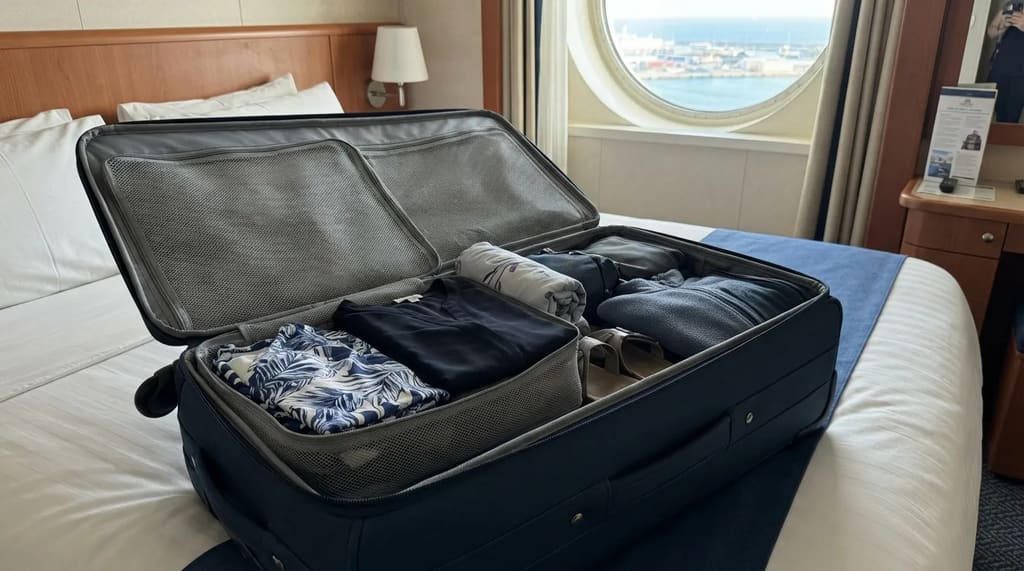
The swimsuit goes in the carry-on because the pools and hot tubs are open before your luggage lands. Even if you never swim, it costs almost nothing to have it.
Add one complete evening outfit, in case the ship does not deliver luggage to cabins until 6:00 PM or later. Without it, you would be dining in whatever you wore on the road.
Putting the outfit and pajamas in one packing cube means you pull out a single item and do not dig through the bag. It also keeps things tidy if a crew member asks to look inside at security.
Cold-weather sailings change the list. On an itinerary such as Alaska, keep your warmest jacket or fleece in the carry-on, since you will step outside again before the luggage arrives.
Clothes sorted, there is still the gadget that holds the whole day together.
#10 – A Charged Phone and a Spare Battery
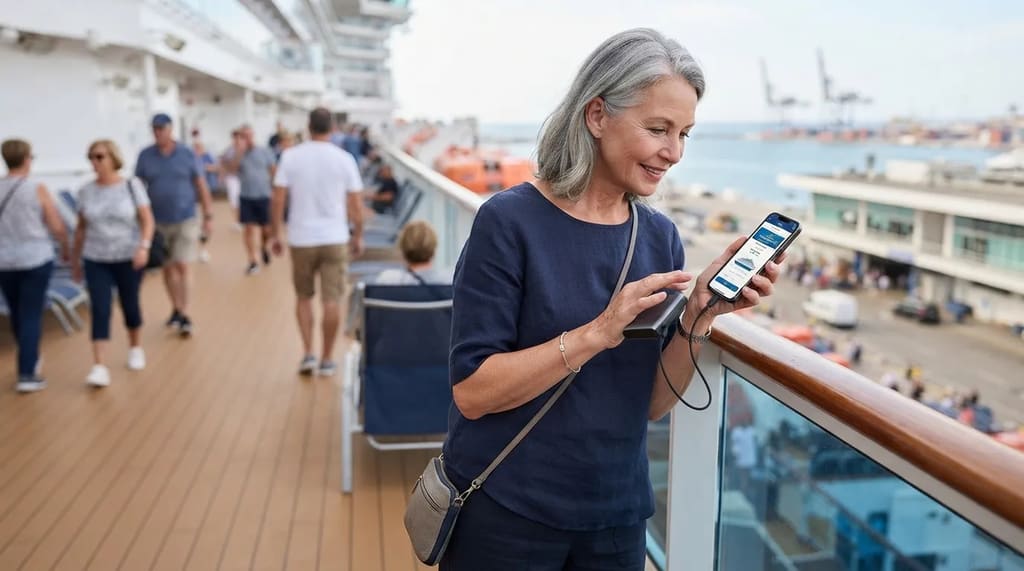
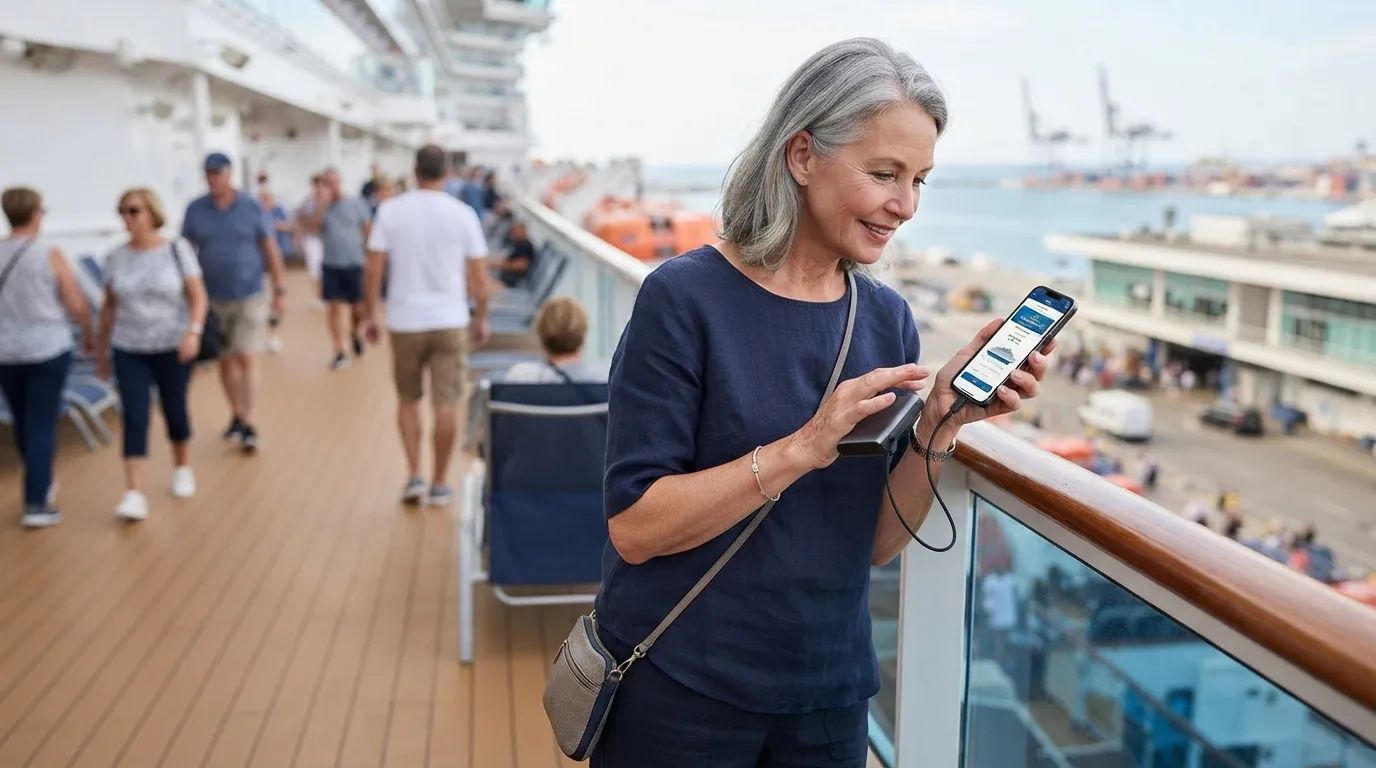
Your phone works harder than usual on embarkation day. It handles check-in, the cruise line app, photos of the ship and navigation.
A small portable battery is a sensible addition, since you will be walking the ship for hours before you plug in. Cabin outlets are scarce, and some extra gear can backfire at the gangway.
Cruise lines commonly take extension cords and some surge protectors at security, so check your line’s prohibited list before you pack a power strip. Skip the strip unless that list plainly says it is allowed.
A pocket battery gets you through the first afternoon without raising the question at all. It also keeps the app, the boarding pass and the photo of your cabin number alive.
Charged devices and tagged bags still leave one decision, which is what time you walk up to the terminal.
#9 – Arriving When Your Boarding Window Opens
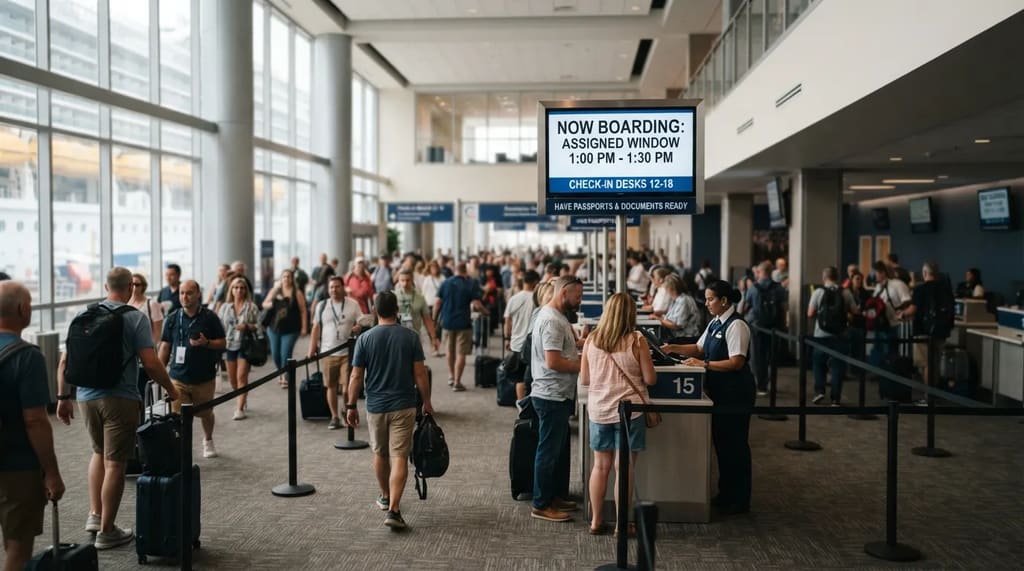
Arrive during the boarding time your cruise line assigned you, because earlier is not always better. The windows exist to spread thousands of guests across the day, so turning up hours ahead mostly lengthens your wait.
Say your window opens at 1:00 PM. Showing up at 11:00 usually buys you a longer stretch of standing around, not a head start.
Worth Knowing
- Your assigned arrival time lives in your check-in documents and the cruise line’s app
- The final boarding cutoff comes before the printed sailing time
- Traffic, parking and shuttles are the usual thieves of spare minutes
- Right on your window beats hours early, because the extra time is spent standing
Allow extra time for the trip itself. Traffic, parking, shuttles and finding the correct terminal can all eat into the margin you thought you had.
Keep your documents and phone ready before you reach the desk. That way the line moves at your pace, and you are not digging through a bag while others wait behind you.
Once you are aboard, the cabin may not be ready for you yet.
#8 – Ten Minutes Inside the Cabin Before You Leave It
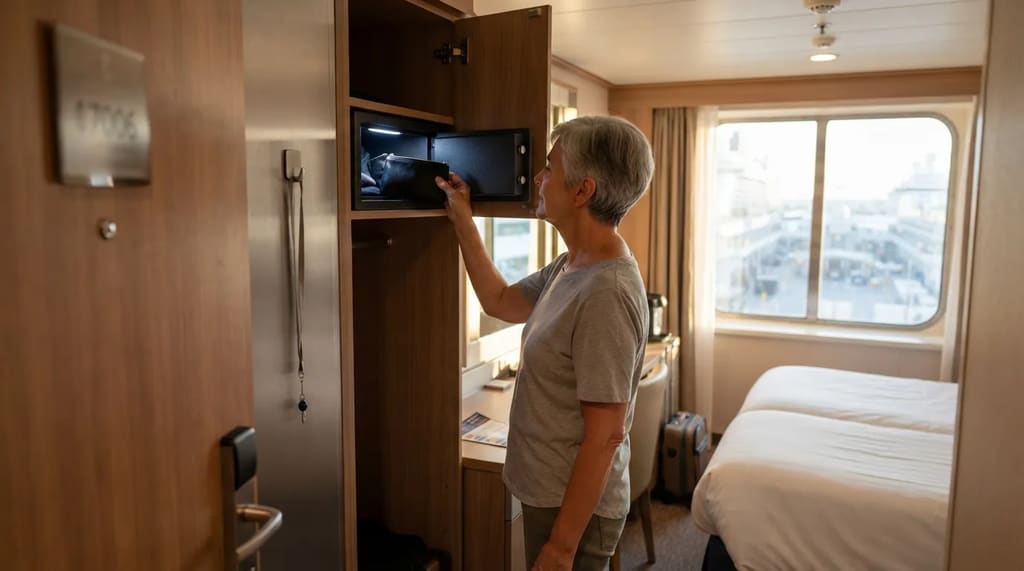
Cabins usually open in the early afternoon, though the time varies by cruise line, and you cannot always go straight there after boarding. When yours opens, spend a few minutes on a walk-through before you head back out.
Check that the number on the door matches your paperwork and see where the outlets are. Then settle your valuables and documents in a safe place, such as the cabin safe if yours has one.
Unpack the essentials and leave the rest. Your suitcases are probably still on a cart somewhere on the pier.
If the room is not ready, there is no reason to wait outside the door. Luggage arrives when it arrives, and hovering in the hallway will not speed it up.
#7 – A Photo of Your Cabin Number and Deck
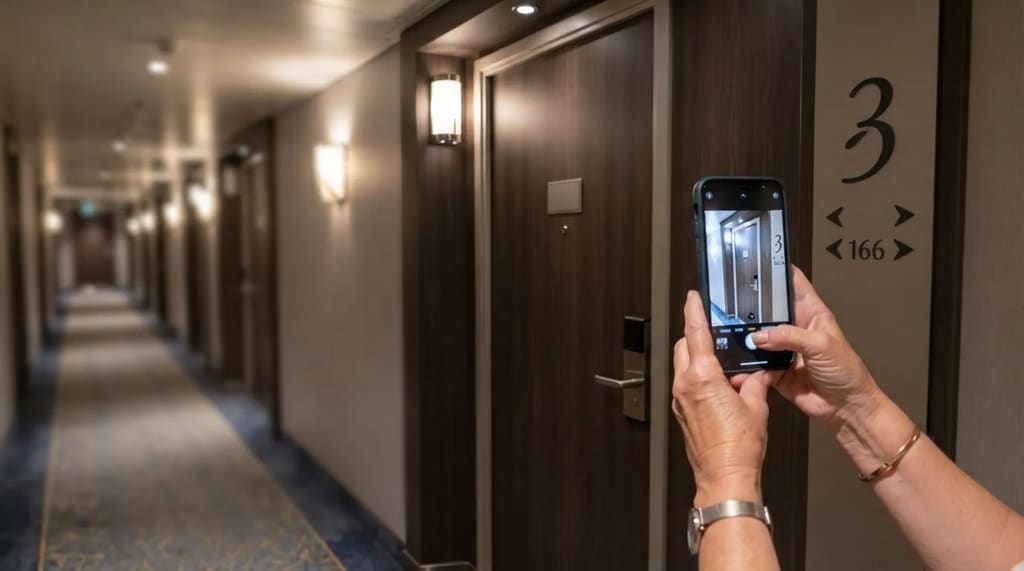
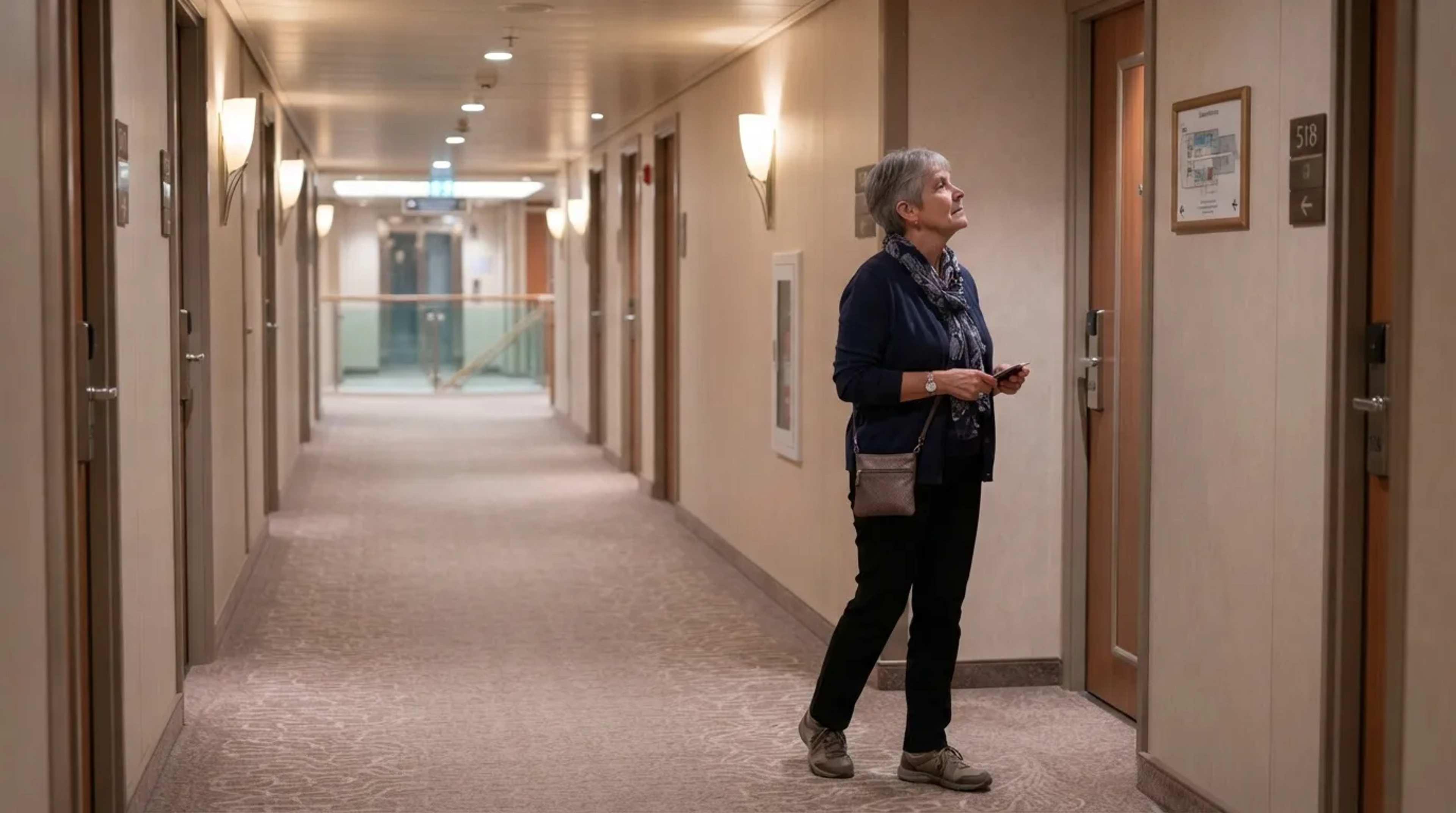
Take a photo of your cabin number and deck location, or save it in the cruise line’s app. That way the first walk back from dinner is not a guessing game.
Corridors on a large ship look much alike, and a photo of the door and the deck sign takes seconds. It pays off the first time you come back a little turned around.
Keep the picture in the same album as the screenshot of your boarding pass, so one swipe shows you everything you need. The deck number matters again soon, because your muster station is usually tied to your cabin’s location.
That is why the photo and the cabin visit belong ahead of any wandering.
#6 – The Deck Plan Traced Route by Route
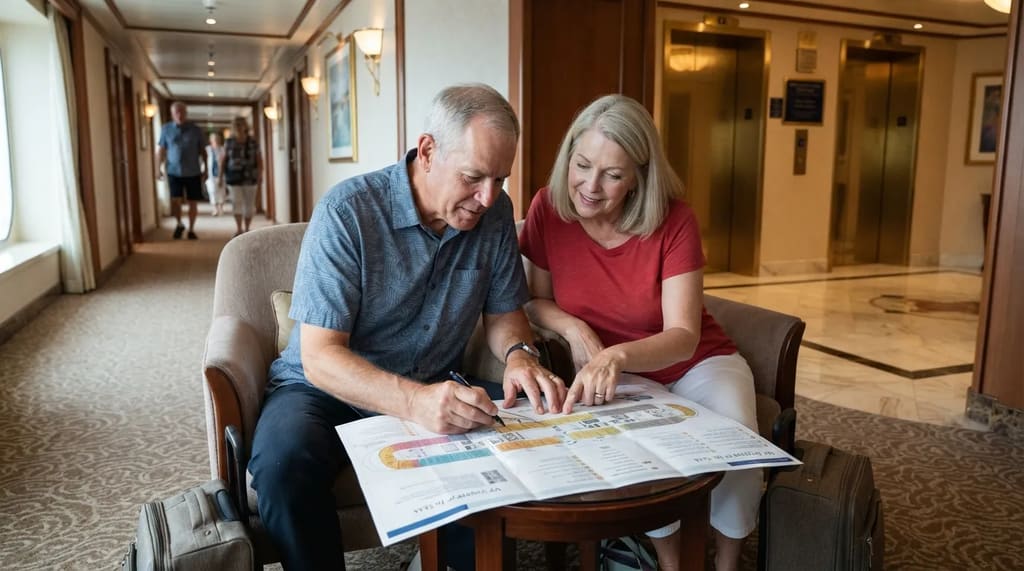
A deck plan shows the ship’s layout from bow to stern, whether you have it on paper or in the cruise line’s app. Most repeat cruisers use it to trace a few routes before the afternoon gets busy.
Start from your cabin door and trace each of these:
- The nearest stairwell and elevator on your deck
- The walk to your muster station
- The way to the dining room
Keep a paper copy in your pocket even if you use the app. A paper plan needs no signal and no battery, which counts for something on the afternoon your phone is low.
The best time for this is while other guests are still boarding, when corridors are likely to be quieter. A map shows where the dining room is, though it cannot tell you when your table is waiting.
#5 – Dinner Time on a Slip of Paper
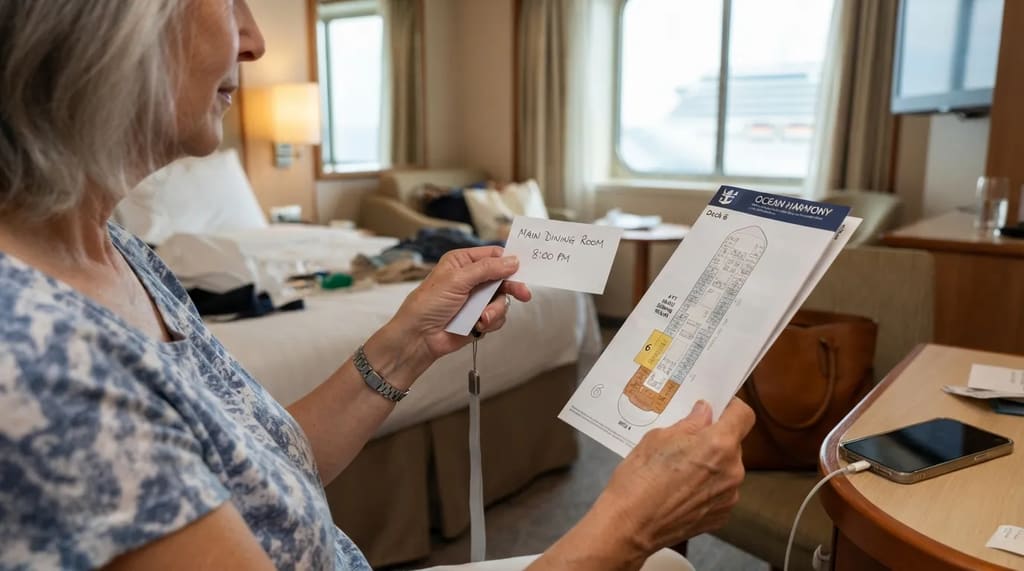
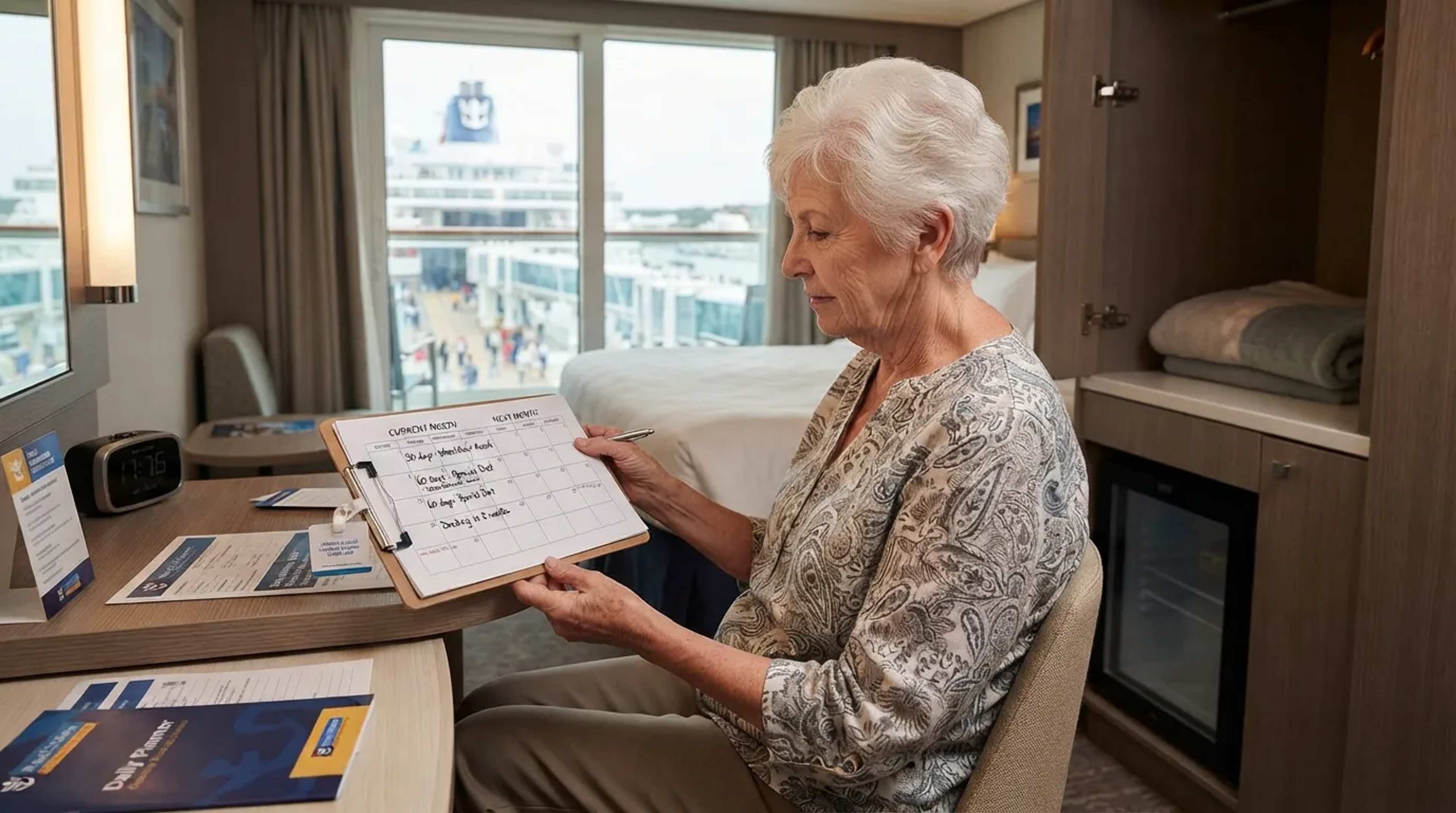
Write your dinner time on a slip of paper and keep it with the deck plan. If your sailing has assigned seating, check your cruise documents or the app for the time, and if dining is open, note the hours the dining room serves.
A phone left charging in the cabin cannot remind you of anything. The first evening also fills up fast with sail-away, unpacking and a late suitcase.
That is the reason veterans hold back on extra plans. The sail-away party and your first dinner are usually plenty for one day.
A written dinner time also tells you whether you have room to change clothes if your suitcases arrive late.
#4 – The Safety Video Watched in the Cabin
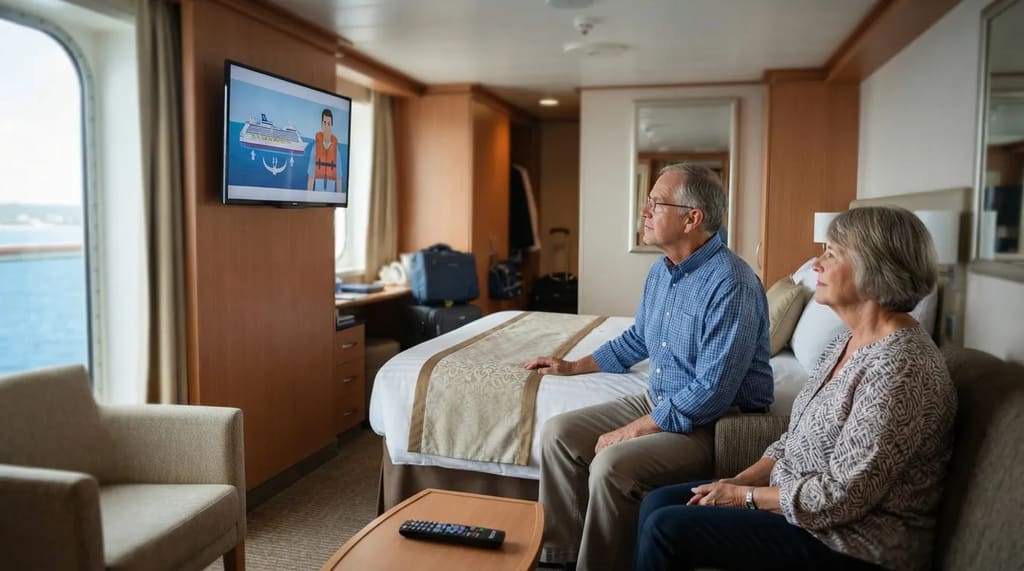
The safety drill on many ships now comes in parts, because many cruise lines changed their drill process after COVID. On Royal Caribbean, the first two parts can be done in the app or on your stateroom TV before you visit your station at the set time.2
Other lines use a similar e-muster, with a video on the cruise app or cabin TV plus a physical visit to your station.
Related Stories From Travelbinger



Watch the video in the cabin on the TV, sitting down, and do not squint at a phone in a corridor. It also makes good use of the stretch while you wait for your bags.
Watching settles one half of the drill, and the format on your ship may not match the one you remember.
#3 – Checking the Drill Format for This Sailing
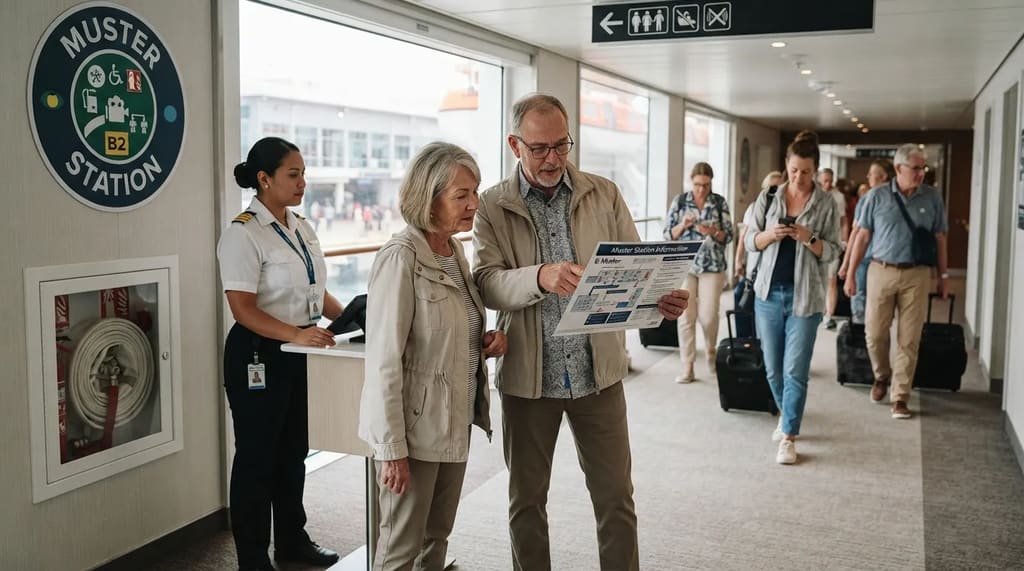
Drill formats vary from line to line and sailing to sailing. Even if you have cruised before, follow the current onboard instructions.
In the older format, everyone is called to open decks or lounges at once. On ships that no longer do this, you go to your muster station, usually before the ship sets sail, where a crew member marks down your attendance.
Quick Compare
- Older format: everyone is called to open decks or lounges at the same time
- Newer e-muster: a video on the app or cabin TV, then a visit to your own station
- Either way: follow the instructions for this ship, not your memory of the last one
A repeat cruiser’s confidence is the risk here. What you remember from your last ship may be a different procedure, so read the app or the cabin notice before you assume.
Whichever format applies, the timing is the part you control.
#2 – Doing the Drill Before Lunch
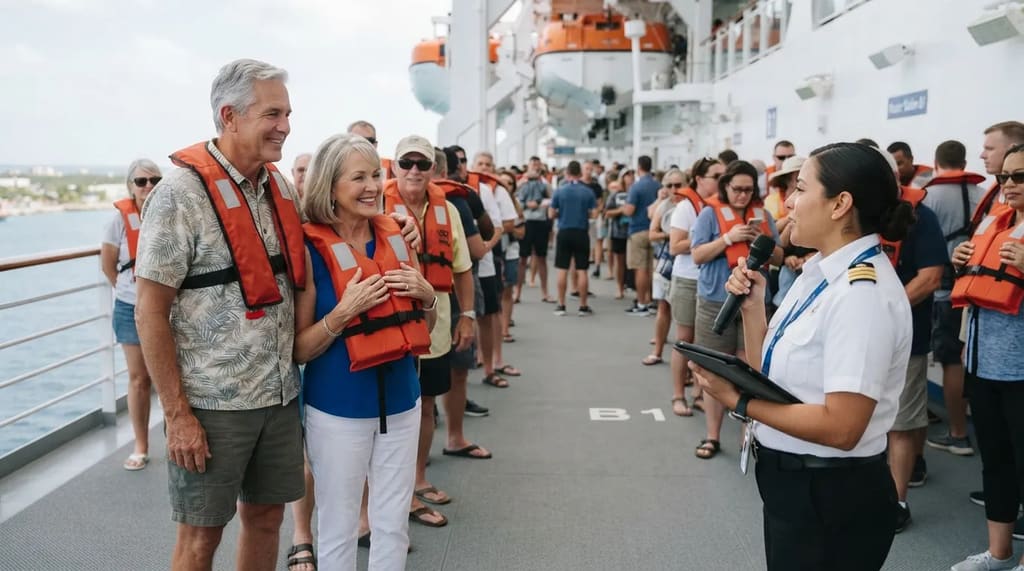
Do the drill as soon as you board, before lunch or the pool. The deadline falls shortly before sail-away, and guests who have not finished can be paged by the crew.
Many cruise lines now hold the drill before the ship leaves its first port, a shift that followed the Costa Concordia disaster in 2012.5 It is one reason the drill feels more pressing than it once did.
Royal Caribbean asks every embarking guest to muster, even those who have sailed with the line before.2 Doing it early also takes the step out of the busy hour, since it is easier before sail-away pressure builds.
A video watched early still leaves the part of the drill that happens on foot.
#1 – The Walk to Your Muster Station and the Card Scan
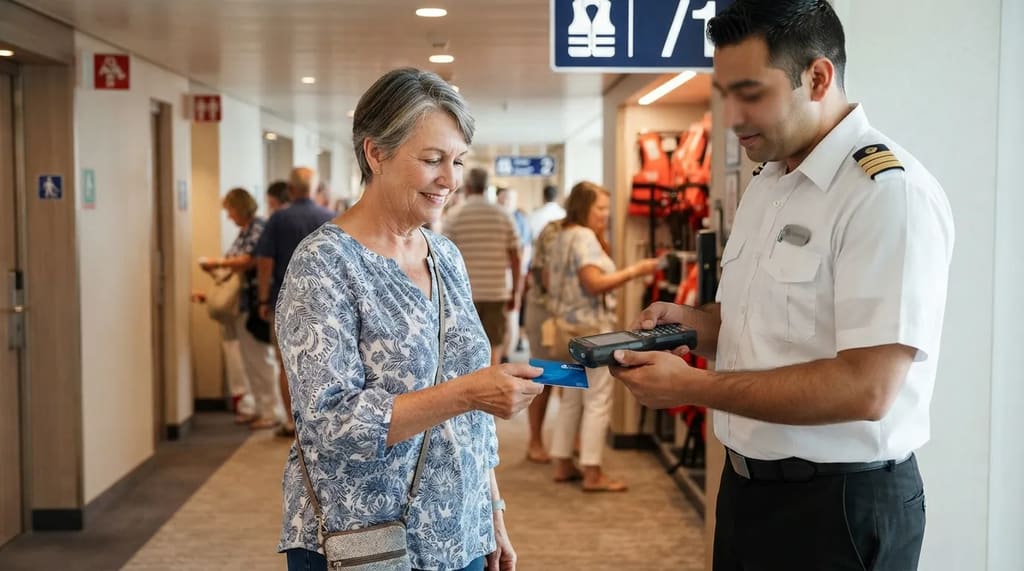
Watching the safety video does not complete the drill. You must show up in person at your station.
Walk to the location printed on your cruise card, with the deck plan in your pocket. A crew member scans the card to confirm you were there.2
The cruise line’s computer system tracks which passengers have completed both parts, the video and the physical station check-in.6 Most cruise lines will not sail until every guest is accounted for.
Tags, documents, bags and dinner times are your own business, but this scan is the one the ship counts. A missing scan can hold up the departure for every guest aboard, not just you.7
That is why veterans plan the afternoon backward from the scan. The paperwork, the bags and the map shrink into small errands that finish before it, leaving lunch and the open deck unrushed.
First-timers see a drill to get through, while repeat cruisers see the one appointment the whole ship is waiting on. By the time the ship slides away from the pier, the calmest people on deck are usually the ones who crossed everything off hours ago.
- NCL Luggage Tags: https://www.ncl.com/faq/how-do-i-get-luggage-tags
- Royal Caribbean Muster Drill FAQ: https://www.royalcaribbean.com/faq/questions/muster-drill-onboard-safety
- Cruise Parrot Luggage Tags: https://cruiseparrot.com/cruise-luggage-tags-every-question-answered/
- MSC Cruises Luggage Information: https://www.msccruisesusa.com/manage-booking/before-you-go/luggage
- Skuld Passenger Ship Drills: https://www.skuld.com/topics/ship/safety/passenger-ship-safety-drills/
- Royal Caribbean Blog Muster 2.0: https://www.royalcaribbeanblog.com/category/category/muster-20
- Royal Caribbean Muster Guide: https://www.royalcaribbean.com/guides/what-is-muster-drill-on-a-cruise