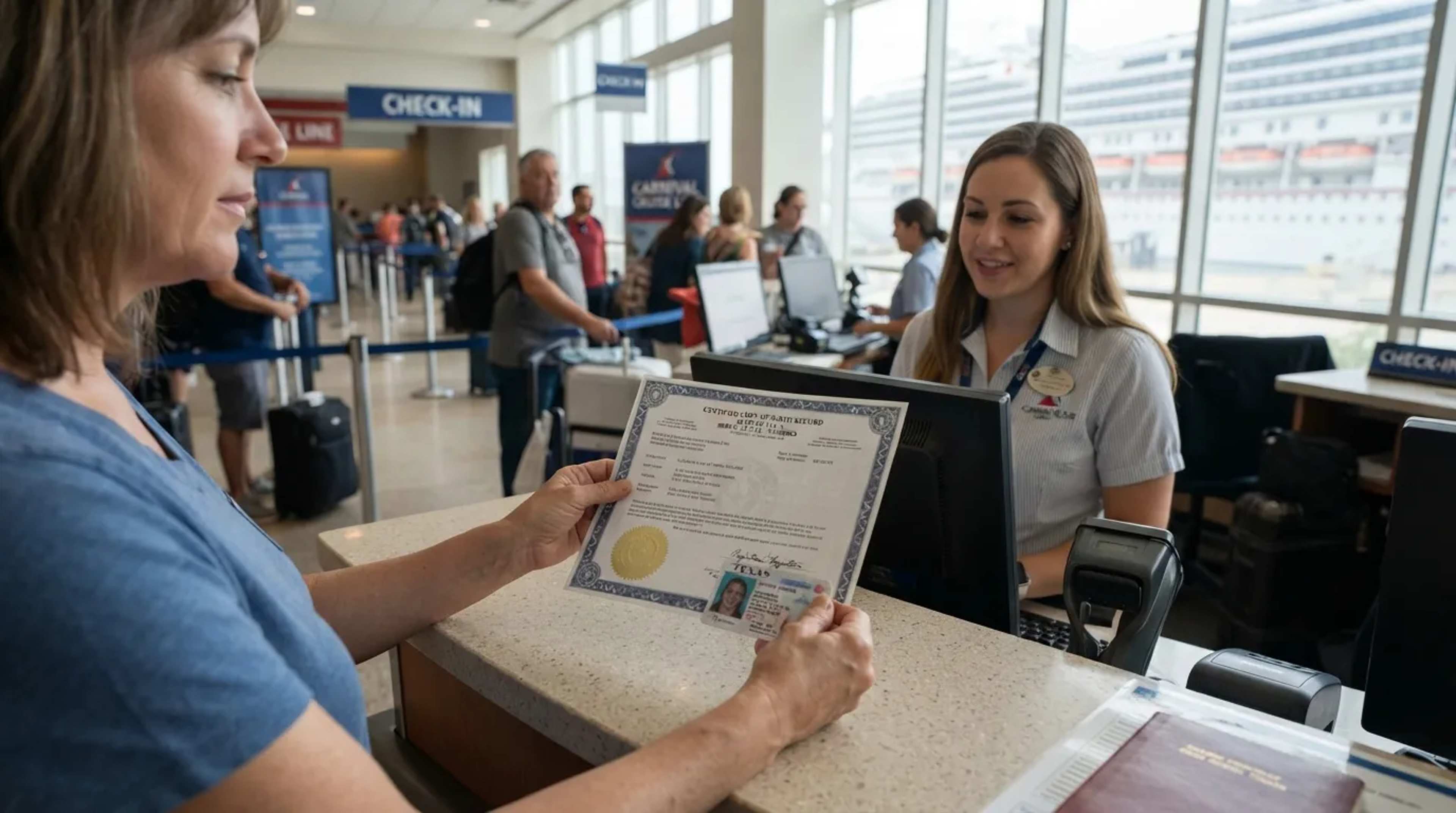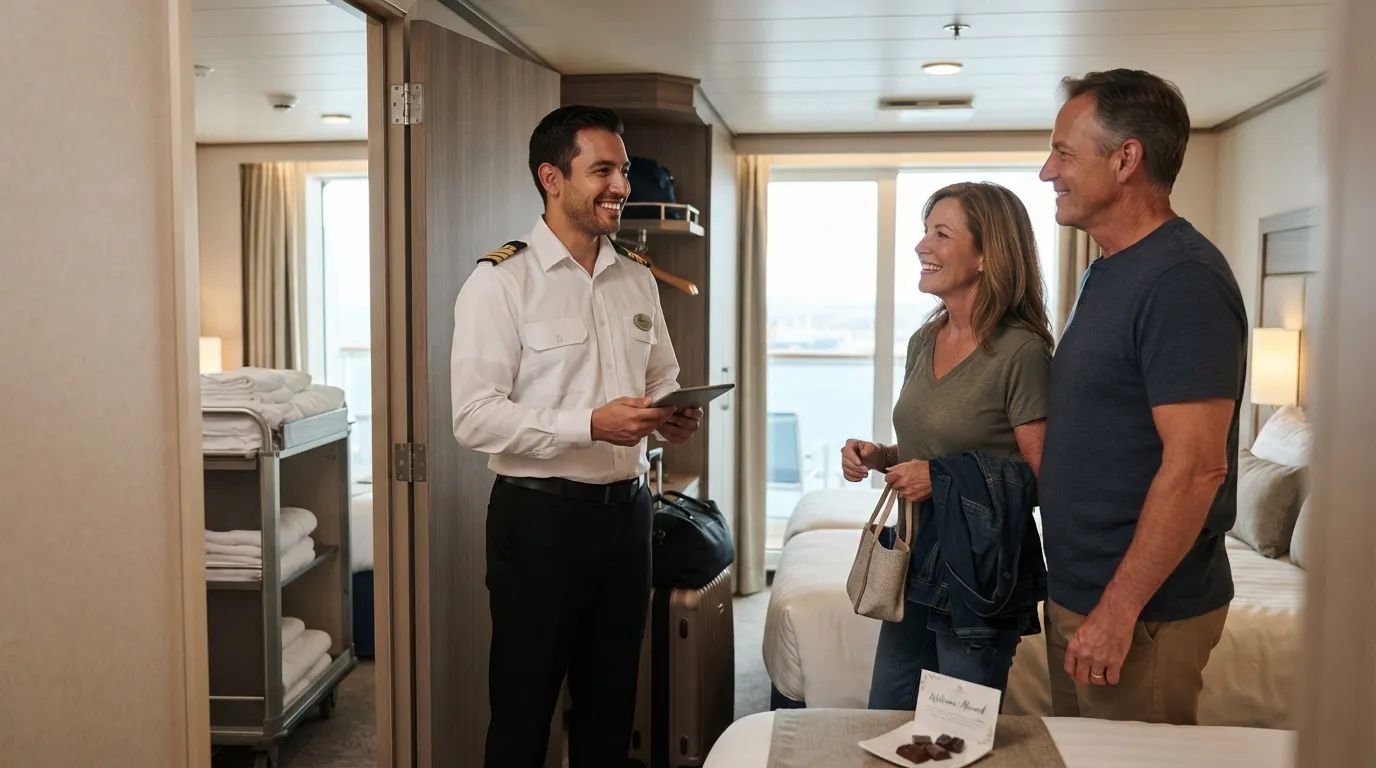
You walk up the gangway before noon, ready for vacation, and the cabin door is still locked. Staterooms are typically ready between about 1:00 and 2:00 p.m., so you get an hour or two with a carry-on bag and nowhere to put it.1 2
Most first-timers treat that gap as dead time. Repeat cruisers treat it as the start of a checklist, because a cabin problem found on day one is far easier to fix than one found mid-cruise. The 15 checks below run from minor to costly, and the last one takes about a minute and protects the document you can least afford to have locked away. First, though, the closed door.
#15 – The Closed Corridor Door Before One O’Clock
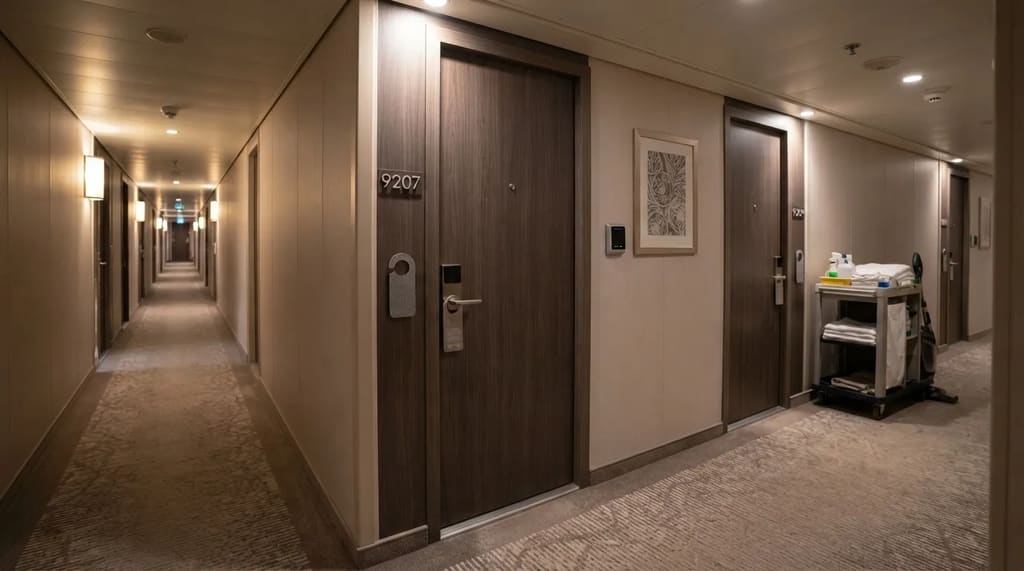
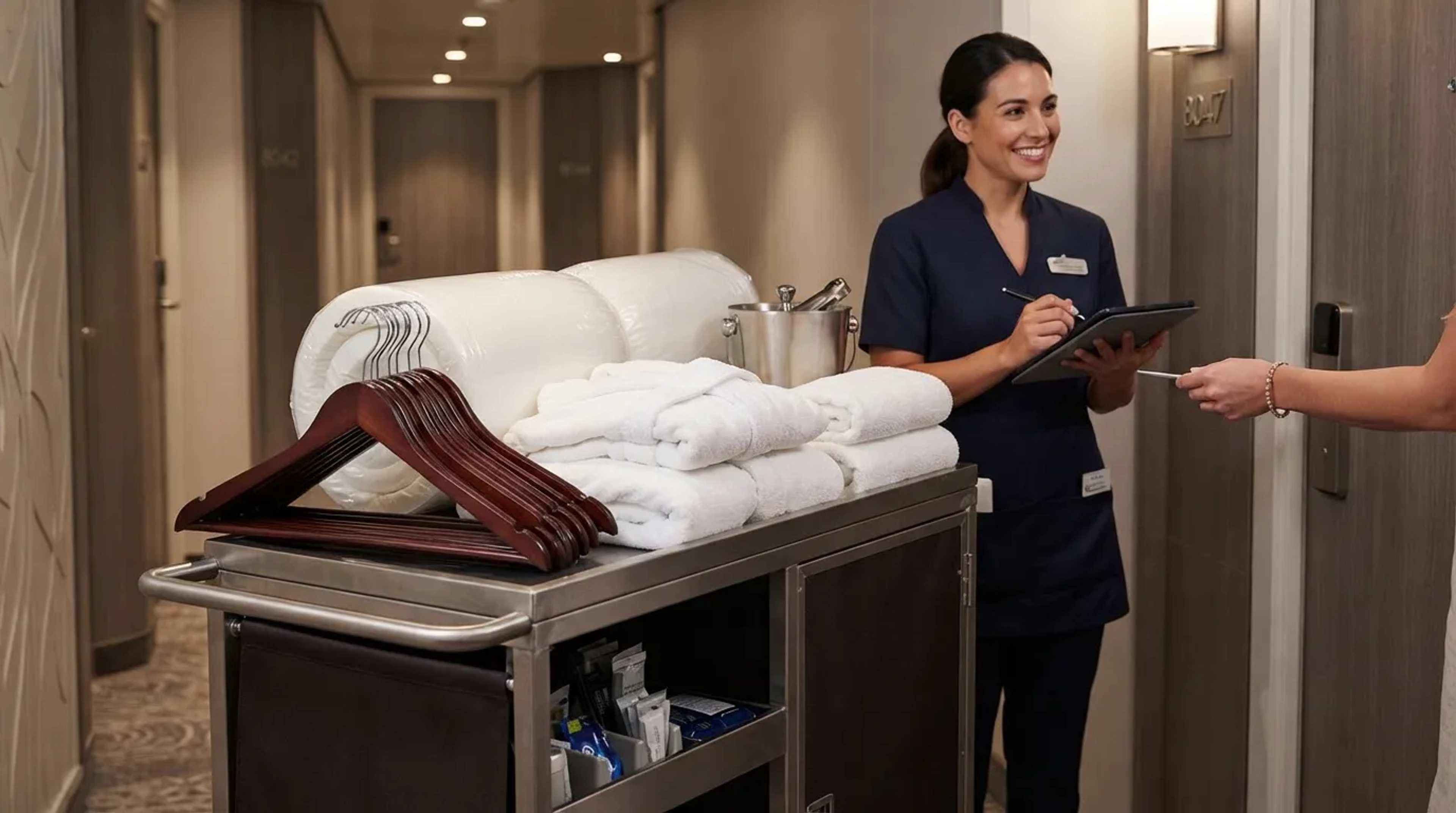
Cruise ships usually run back-to-back sailings, so unlike a hotel, the crew has to clean and prepare almost every room on the same day. The previous guests leave that morning, and the hours that follow are all the crew gets to turn over every cabin.2
Carnival Cruise Line has put up signs on embarkation day asking passengers to stay out of cabin corridors while stewards finish their rooms. Waiting outside a door that isn’t ready only gets in the steward’s way.
Some lines send a notification through their app, and others announce it or tell guests which decks are ready. I would treat that as your cue. Until then, lunch and a walk around the ship are a better use of the time than standing in a hallway.
A closed door means the bag on your shoulder is all you have, so what goes in it matters more than usual.
#14 – A Carry-On That Covers the First Five Hours
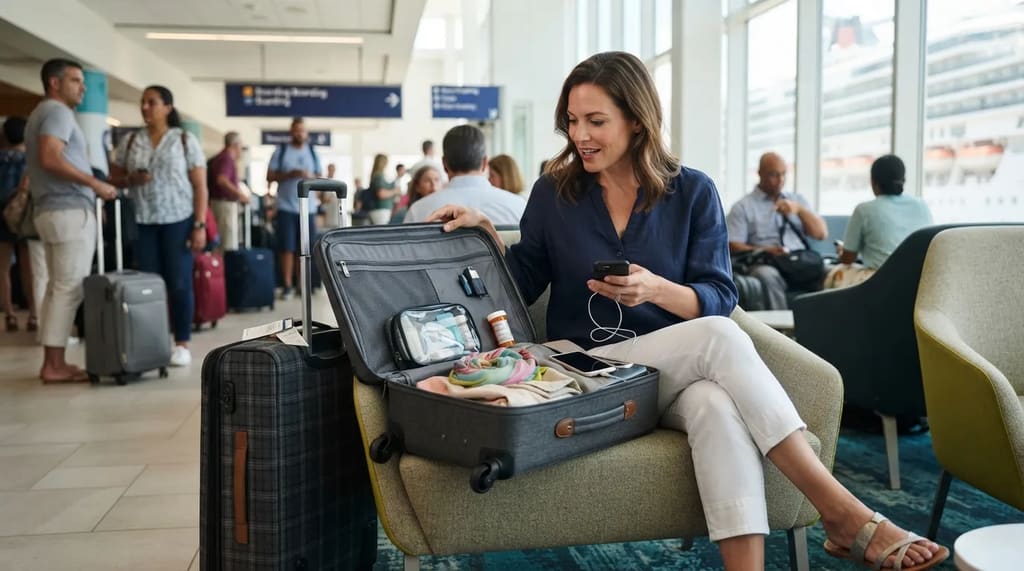
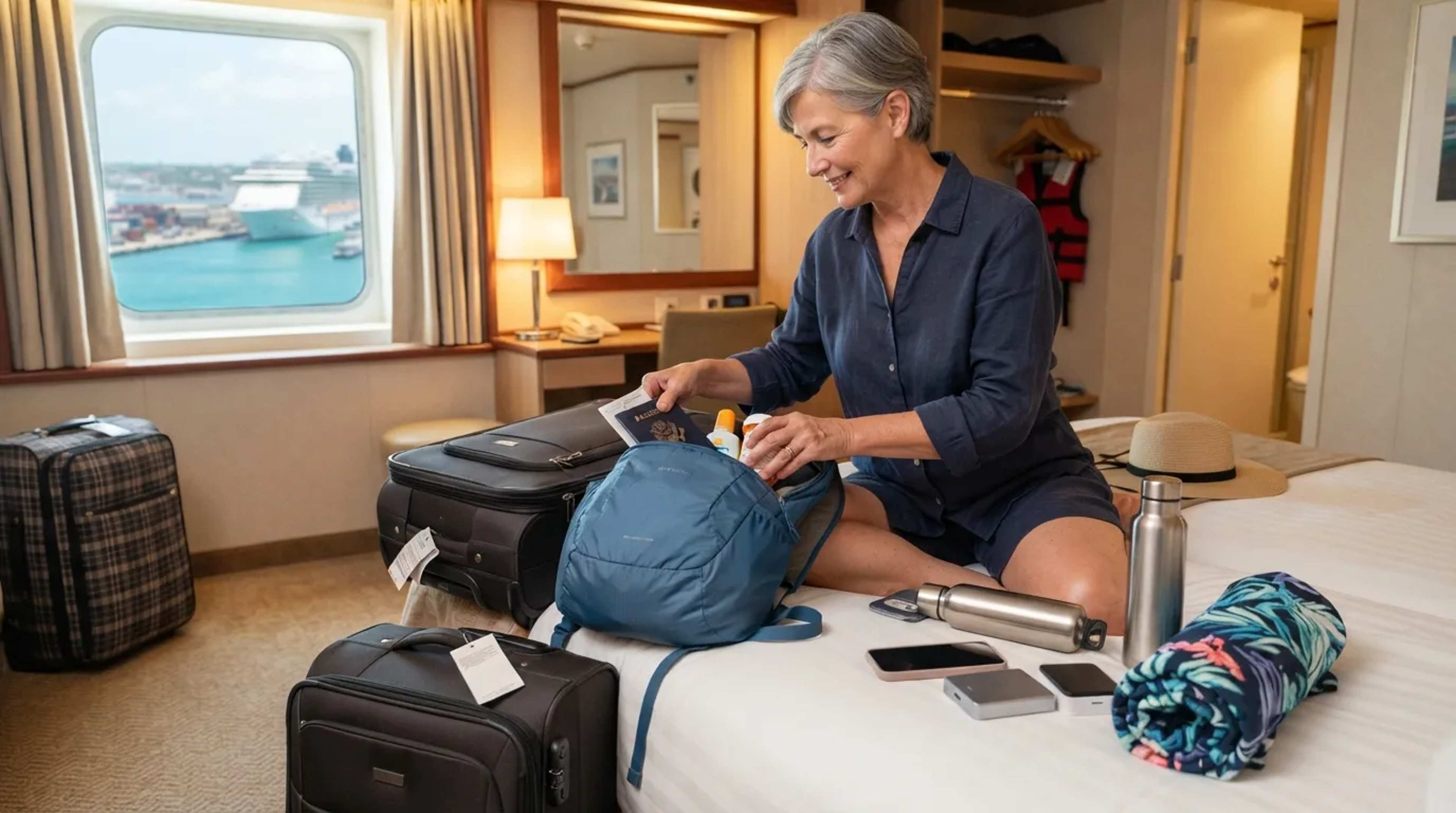
Checked luggage won’t reach your cabin until late afternoon, so everything you need for the first four or five hours belongs in the bag you carry yourself.2 3 That means medication, a phone charger and anything you could not easily replace.
Large suitcases go to a porter at the curb and are delivered to your stateroom over the following hours.2 I would not carry anything heavy in the meantime, because a bag you cannot set down for two hours is not worth the convenience.
If your cabin isn’t ready, you may want out of your travel clothes, so a light change earns its space in the bag.
Suitcases checked at the curb travel on their own schedule, and yours may be sitting in the corridor when the door finally opens.
#13 – Suitcases Outside the Cabin Door
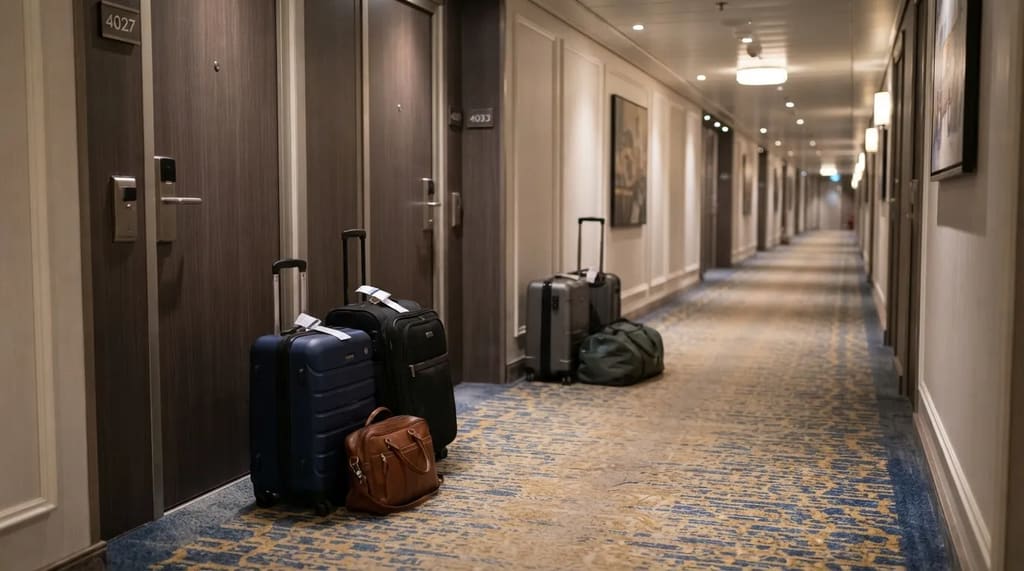
Depending on the cruise line, your bags may be inside the room or just outside the door. Check whether they have arrived as soon as you get in, since shoes, chargers and a change of clothes may all be inside them.
Cabin stewards deliver your luggage on embarkation day, but they will not help you unpack. The same Seattle ship from the turnaround count above had 8,000 pieces of luggage to deliver that day, so a bag that turns up in mid-afternoon is not a sign of trouble.
Worth Knowing
- Look in the corridor as well as inside the room before you worry.
- Your carry-on should hold the essentials until the suitcases arrive.
- Delivery is not unpacking, so the bags stay yours to deal with.
- If a suitcase has not shown up by the time the ship sails, tell your steward or Guest Services so the ship can look for it.
Once the bags are in, the room itself still has to match what you booked, and that is easiest to judge before anything is unpacked.
#12 – The Cabin You Actually Booked
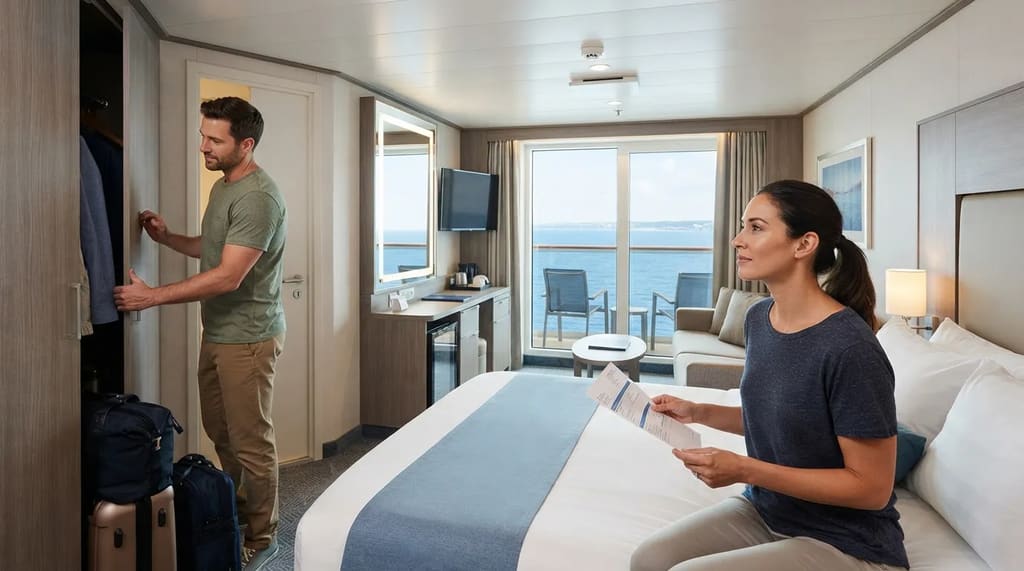
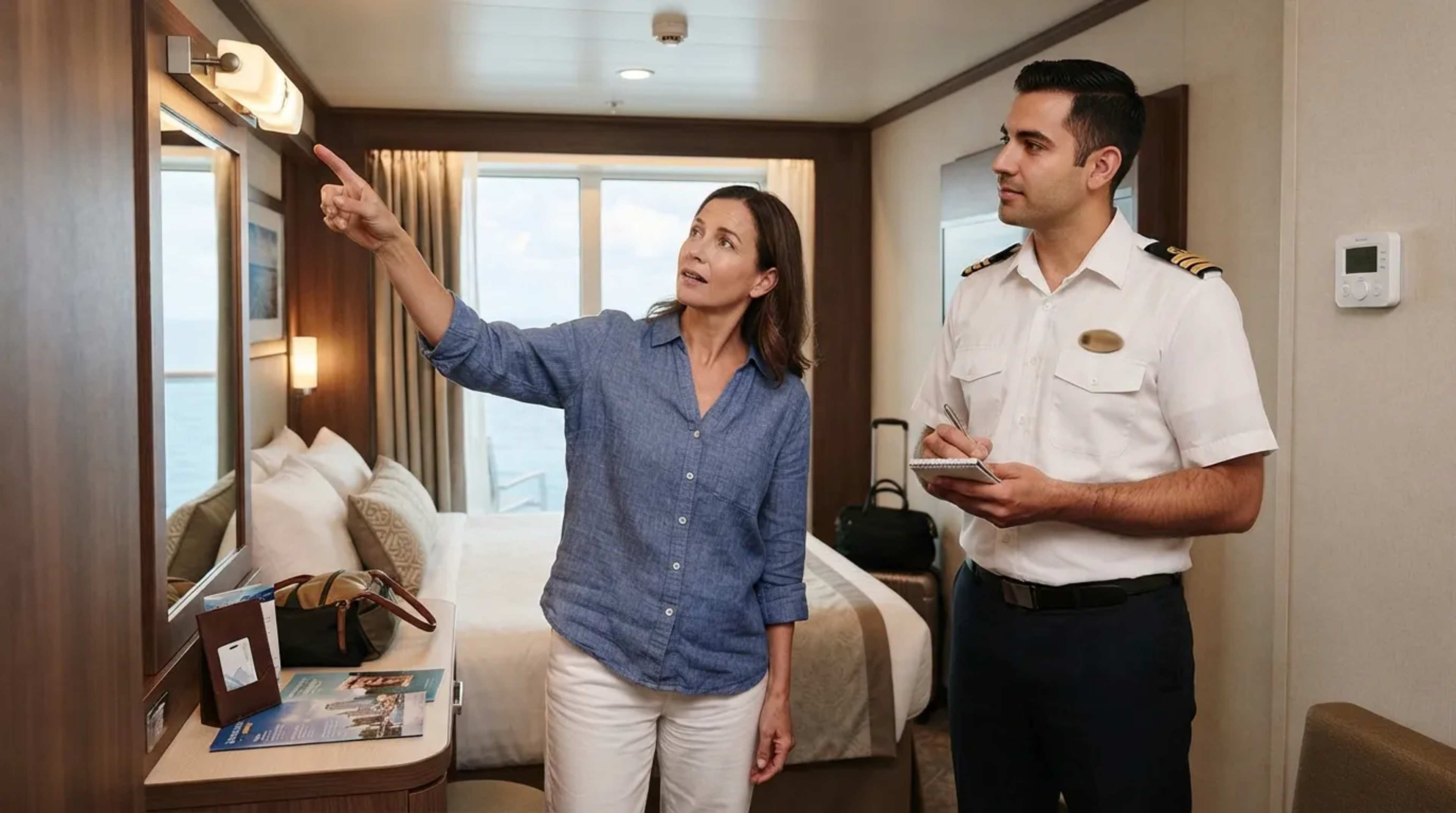
Look at the cabin category, bed setup, bathroom and view type, and hold them up against your confirmation. If you booked a balcony and walked into a cabin without one, that is a clear mismatch.
If you booked connecting cabins, confirm that the connecting door is where it should be. If something is truly wrong, raise it before you hang a single shirt. Asking for a different room is far more awkward once your clothes fill the drawers.
If anyone in your party has limited mobility, add these to the comparison:
- The width of the cabin entry and the bathroom door.
- Whether the bathroom has a roll-in shower or a raised lip at the entrance.
- Whether a scooter or wheelchair can be stored and charged without blocking an exit.
Even a correct cabin can be uncomfortable by mid-afternoon, and the first control worth touching is a dial on the wall.
#11 – The Thermostat Dial
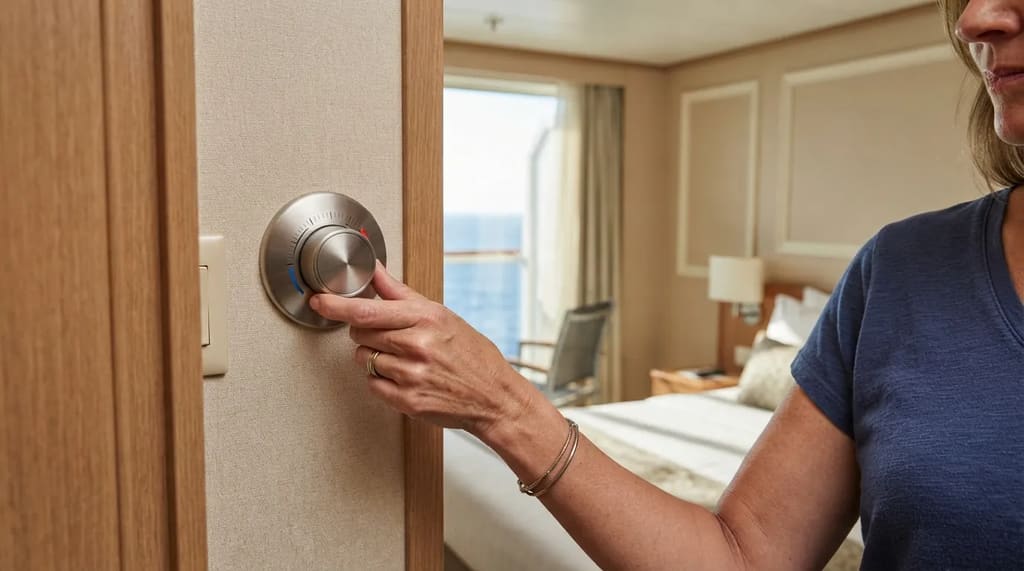
Set the temperature the moment you walk in, before you unpack, so the cabin has time to cool while you do everything else on this list. It is the cheapest check here, and it costs you nothing but a few seconds.
One cruiser sets the thermostat to the coldest setting in warm months, but that is a personal preference, not a rule. I would pick the temperature you sleep best at and adjust from there, rather than copy anyone else’s habit.
If the dial seems to do nothing, your steward can pass the problem to maintenance, and Guest Services can help if the steward isn’t around.
#10 – Every Outlet and USB Port
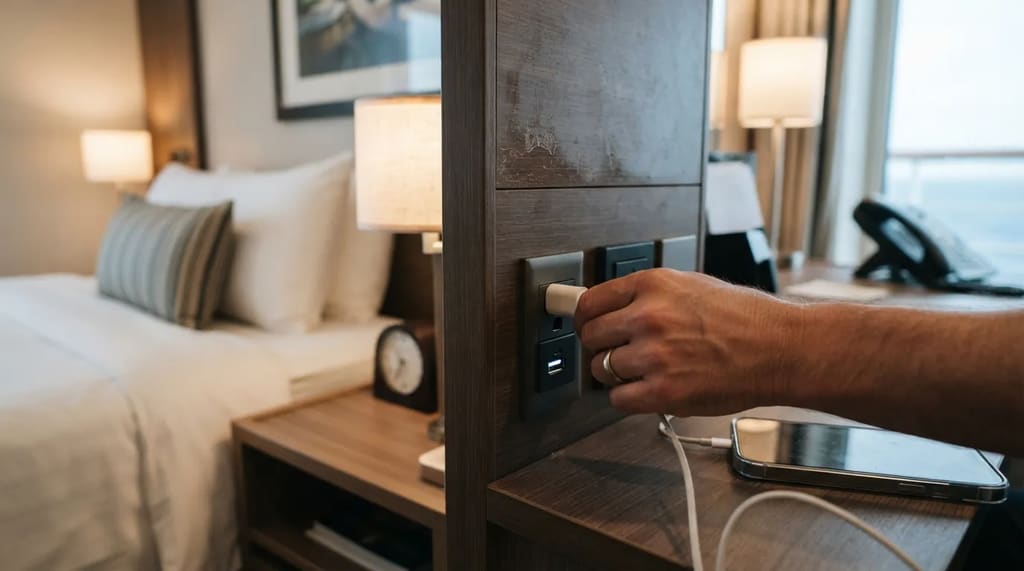
Find every outlet and USB port in the first minute, because in a shared cabin, whoever finds them first usually claims the bedside spot. If the cabin sleeps two, that is a fair reason to look before your companion does.
Test the basics with a real charger rather than by eye:
- The lights, including the bedside lamps and the bathroom.
- The TV and the cabin phone.
- Each outlet, with your phone charger plugged in.
A power strip, magnetic hooks and an over-door organizer take about five minutes to install. I would pack the strip only after reading your cruise line’s rules on them, since some lines restrict certain types. If you charge a mobility device or run medical equipment overnight, where the outlets sit matters even more.
Power is only part of the working order; the toilet, sink and shower have to be run as well.
#9 – The Toilet, Sink and Shower
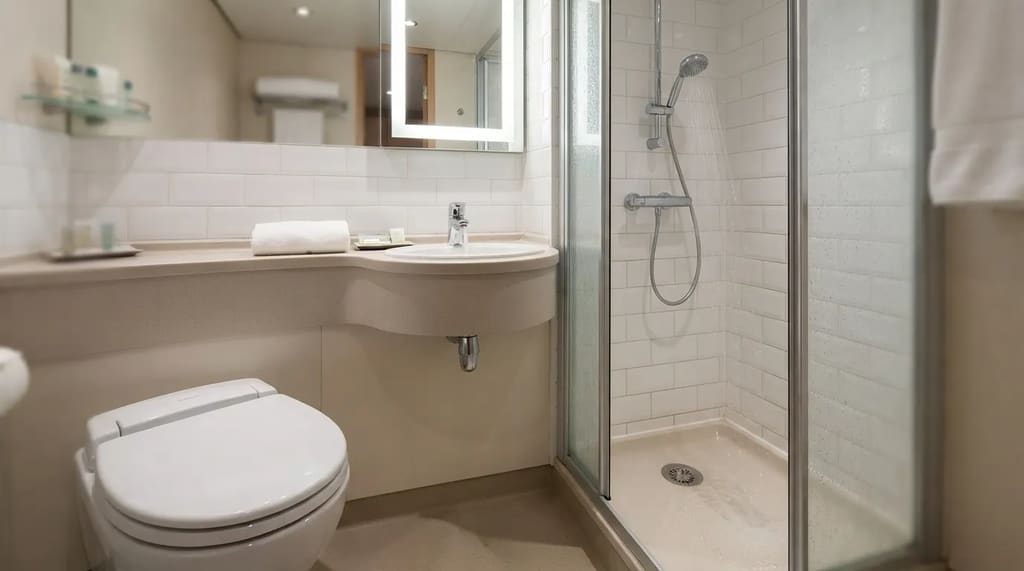
Flush the toilet, run the sink and turn on the shower. While you are in there, look over the bathroom’s cleanliness and condition, since both are worth inspecting on arrival.
Your steward is the go-to crew member for something like a broken showerhead and can send maintenance to fix it. Guest Services is the alternative if the steward doesn’t answer. Report a dead outlet and a slow drain in the same message, since each steward is covering many cabins on embarkation day.
#8 – The Balcony Door and Its Seal
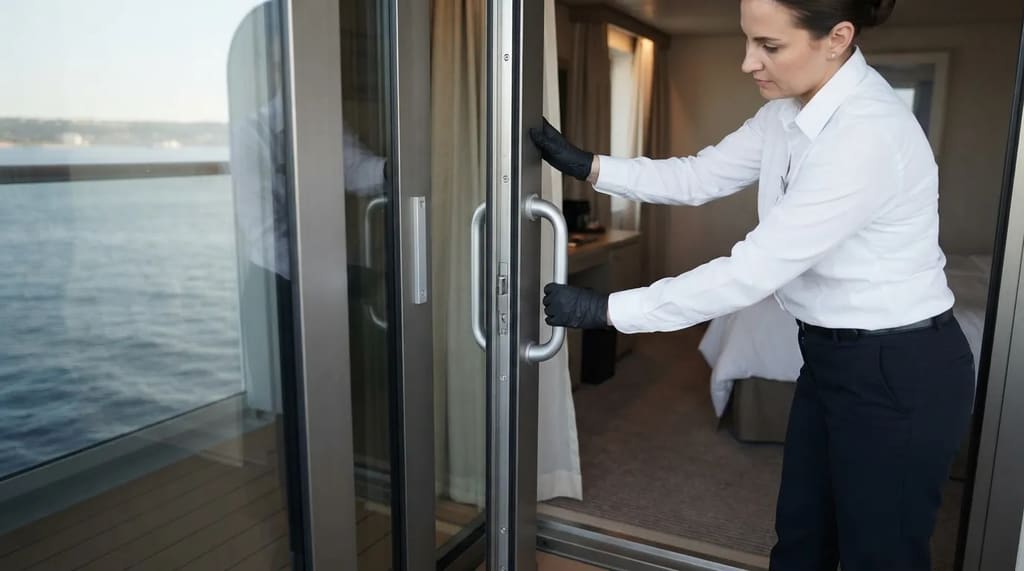
If you booked a balcony, check that the door seals properly as soon as you get in. Make sure it opens and closes the way you expect. A door that is very stiff is worth reporting along with the bathroom problems from before.
A poorly fitted door can whistle loudly once the ship is under way, which you cannot hear at the pier. Close it, look along the edge for gaps and feel for moving air.
If you use a walker or wheelchair, notice the balcony threshold as well.
At a Glance
- Open it: it should slide or swing without a fight.
- Close it: it should latch fully on the first try.
- Look along the edge: any visible gap is worth a report.
- Feel for air: a draft at the pier can become a whistle at sea.
Beyond the glass sit the chairs, the table and a partition shared with the neighbors.
#7 – Balcony Chairs, Table and the Divider
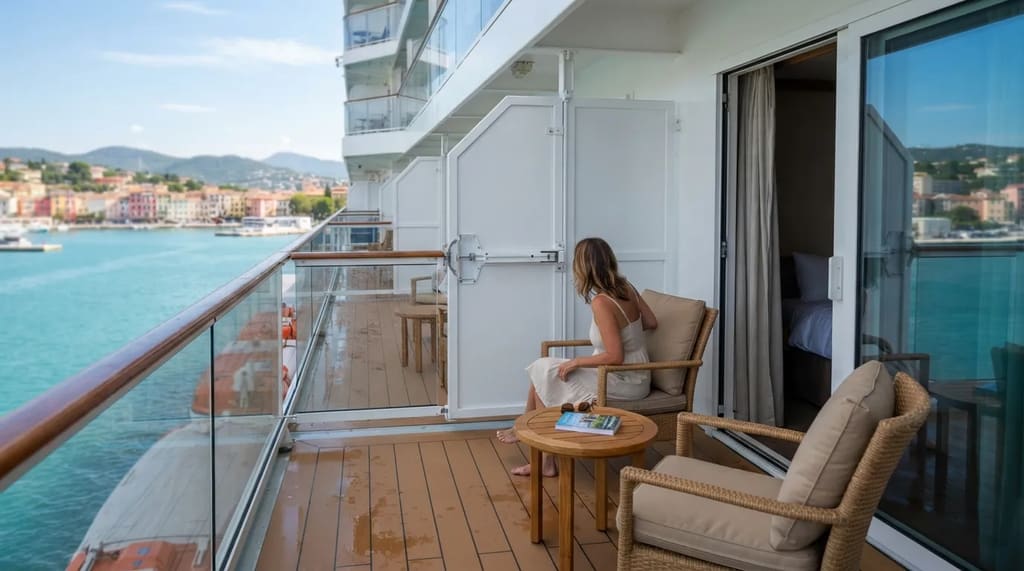
Check that the chairs and table are clean, stable and functional. Sit in each chair for a moment, because a wobbly leg shows up only when you test it. Report missing or damaged pieces right away rather than assuming nothing can be done mid-cruise.
If you booked connecting balconies, make sure the divider is open. If it isn’t, ask your stateroom attendant to open it, and add it to the same list as the stiff door you just checked.
Back inside, the sleeping arrangements deserve the same scrutiny, and they are easiest to change on the first day.
#6 – Two Singles or One Large Bed
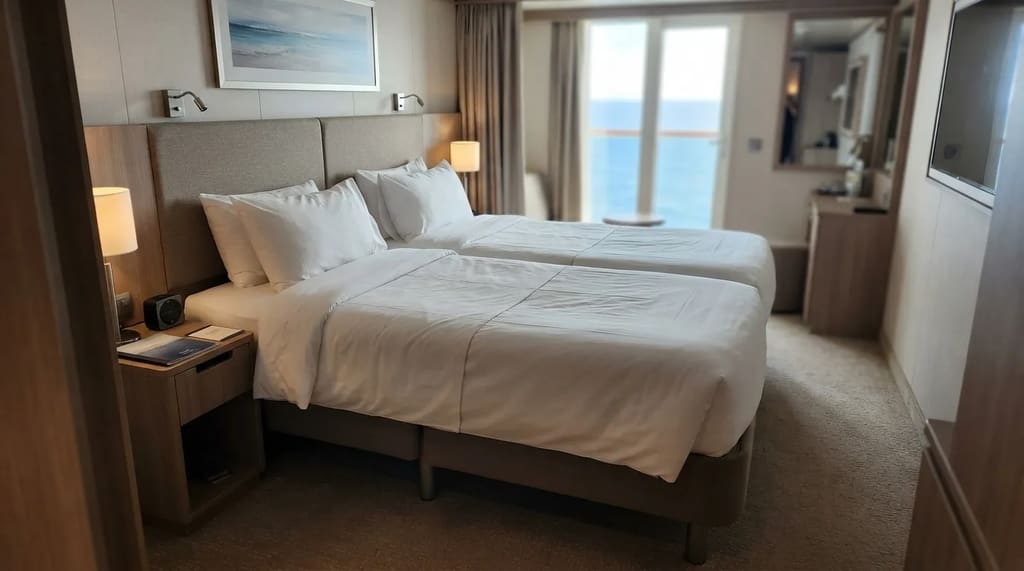
Cruise staterooms usually have two twin beds, which can be put together as a queen or king if requested. You can state your preference on the reservation, but couples who booked a queen configuration should verify it rather than assume the booking system guaranteed it.
Check the layout before you unpack, because it is far easier to change on day one than in the middle of the cruise, and the beds can often be adjusted before you sleep that evening. Of everything that needs a steward, this is the request I would make first.
A few cases deserve a second look:
- A third or fourth guest may have a pullman bed or sofa bed that is only put out at night.
- For anyone who needs help transferring to the bed, ask about bed height, clearance on each side and whether the beds can be separated.
Whoever resets your beds is also the person to ask about ice, towels and nearly everything else in the room.
#5 – Your First Hello to the Cabin Steward
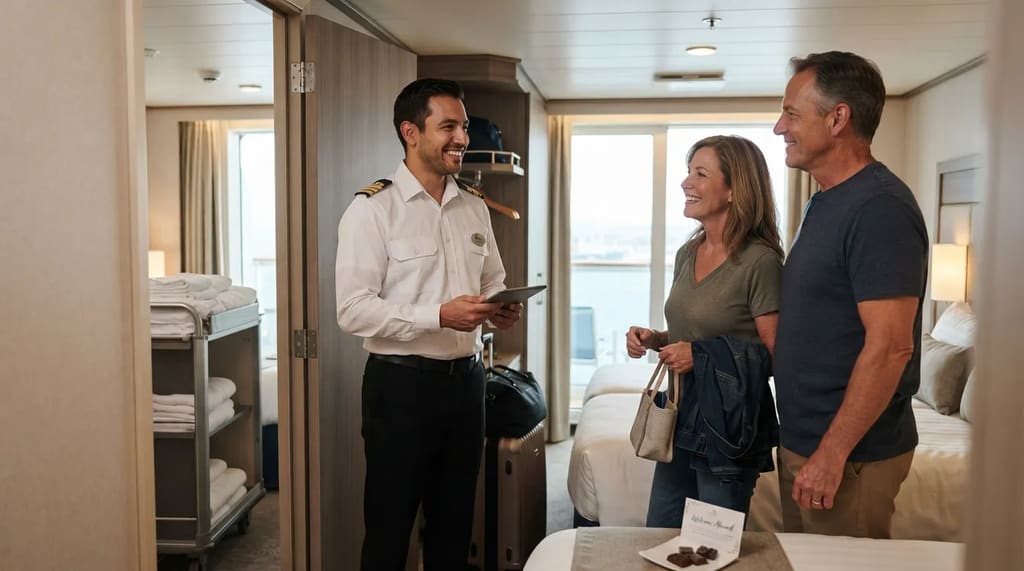
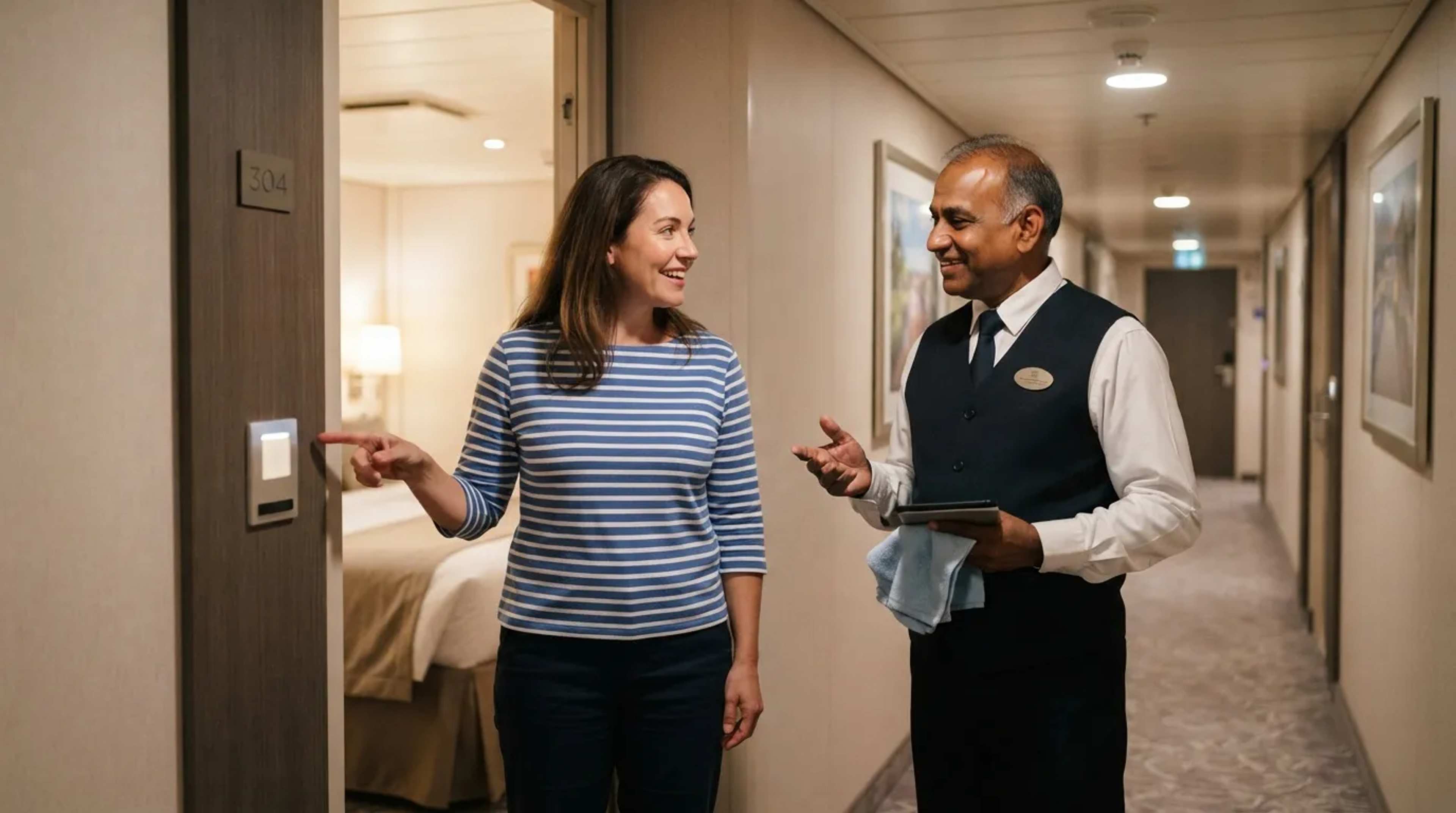
Stewards go door to door on embarkation day trying to meet everyone in the cabins they service, so you will probably meet yours without looking. Yours stops by daily for housekeeping, which makes that first hello your best chance to say what you need.
Because every cabin is asking for something at the same hour, one short list serves you better than three separate calls. Reasonable first requests include:
- A change to the bed layout, as in the bed slide above.
- Extra pillows or ice.
- More towels, or opening a balcony divider or connecting door.
This is also the moment to mention the stiff balcony door or slow drain you found. Stewards are responsible for your cabin all cruise, and they can carry those problems to maintenance.
How often that steward comes back depends on a service time you may be able to choose.
#4 – Morning or Evening Cleaning
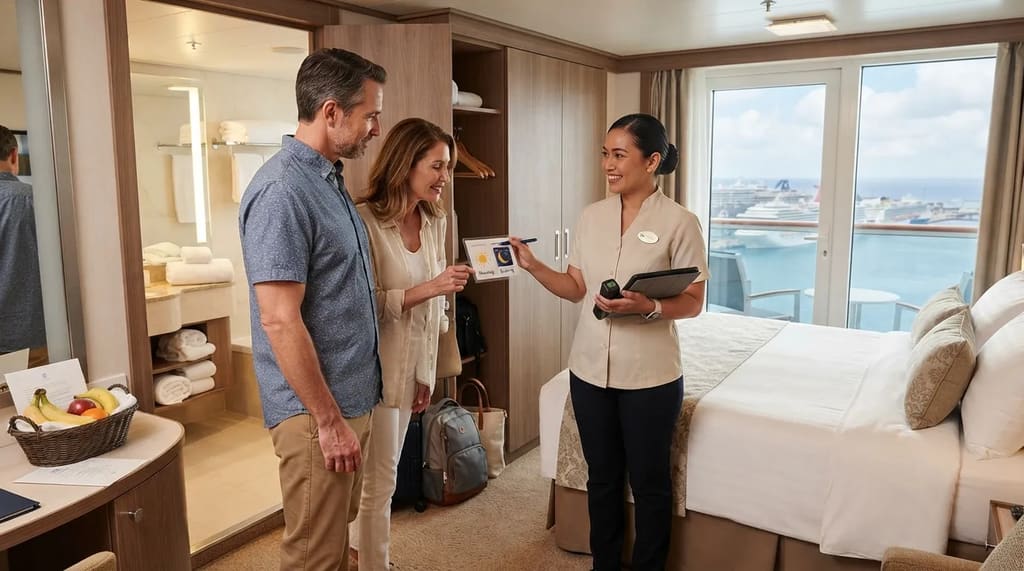
On cruise lines that offer the choice, you can have the cabin cleaned in the morning or the evening. The first day is where the two differ most.
Your room was prepared before you boarded, so an evening schedule means it isn’t serviced again for about a day and a half. That is a long stretch for a cabin you have been living in since mid-afternoon.
Quick Compare
- Morning service: the room is reset while you are out at breakfast or on an early excursion.
- Evening service: the first refresh after embarkation is a day and a half away.
I would choose morning service unless you really do spend late mornings in the cabin. The first hello with your steward is a good time to say which you want.
#3 – Photos of Anything Already Damaged
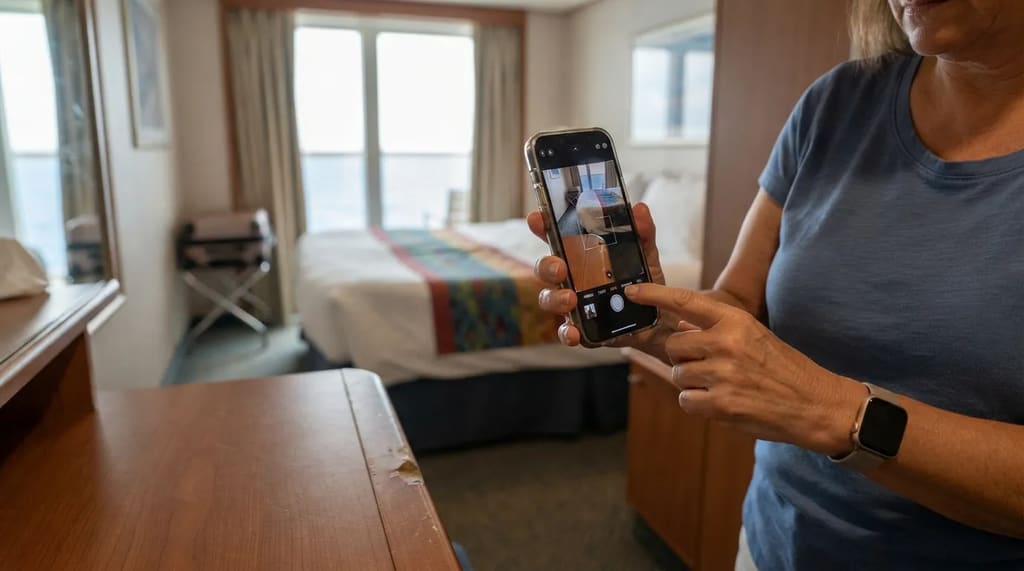
Before you toss luggage on the bed, take a few quick photos of the stateroom. Cleanliness and condition are worth a careful look on arrival, and photos are a plain record of what you saw.
Related Stories From Travelbinger

Worth photographing:
- Stains or burns on carpet, bedding or upholstery.
- Chips and scrapes on furniture and walls.
- Anything broken, including fixtures in the bathroom you just tested.
Mention what you find to your steward the same day. If a question about the room’s condition ever comes up, a photo from day one settles what it looked like when you arrived.
Photos settle what the room looked like on day one, but they say nothing about where to go if an alarm sounds.
#2 – The Emergency Instructions and Muster Drill
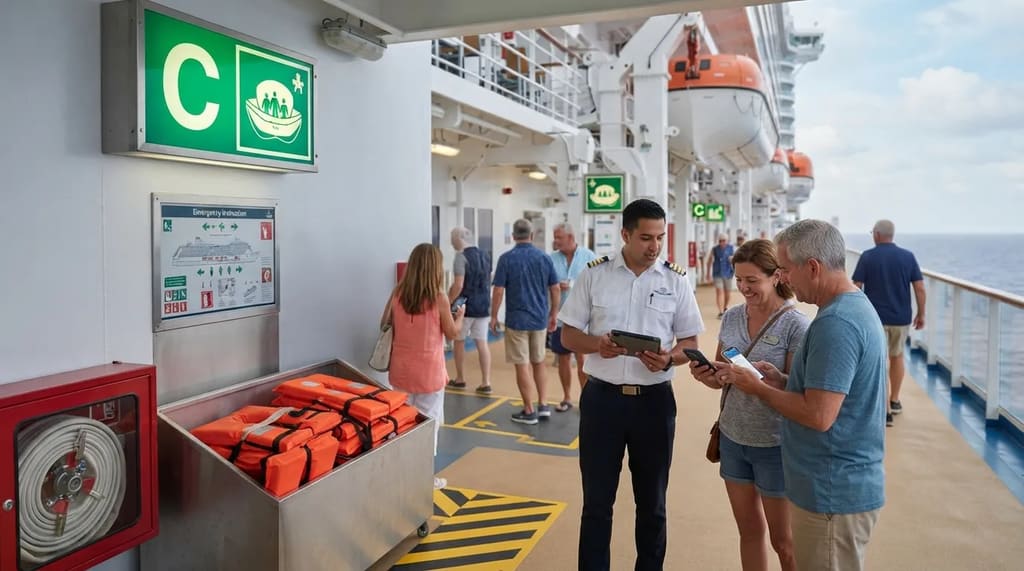
Watch the safety video on the cabin TV or in the ship’s app, then report to your muster station. Do this even if you have sailed the same line a dozen times, since the routine can differ from ship to ship.4
Emergency information belongs on the same first-night check as the bathroom, bed access and power outlets. It matters most if you need help moving around the ship, because you will want a plan before the crowd gathers.
Of everything on this list, this is the one the ship requires rather than recommends, so I would do it before the nap.5
#1 – Testing the Cabin Safe Before Your Passport Goes In
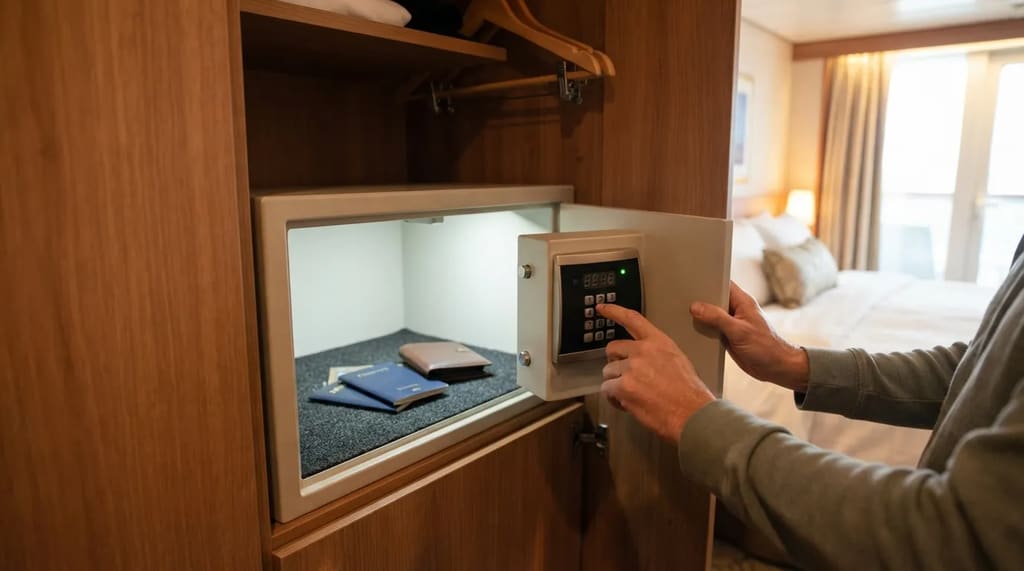
Open the cabin safe and test it before you trust it. A safe that looks fine can still refuse a code, and you do not want to learn that with your passport already inside.6
Test it empty first: set your code, lock it, then open it again with the door shut behind you, and only then put your passport inside.6 There is usually a safe in every cabin, though it may be hidden; if you cannot find it, look in the closet or a drawer.7
Passports and IDs are needed for disembarkation and port calls, but they should be secured when not in use. That is why they stayed in your carry-on all morning. They should leave your hands only after you have watched the safe work, and a failed test is a problem to hand to the steward you met earlier.
Jewelry, valuables and a lot of cash should go in the safe right away. A failed safe costs you a minute on day one. A locked one with your passport inside costs far more.
So that closed corridor door at the start was never really a delay. It was the first part of the cruise, and the people who sail often know it. Lunch, a walk around the decks and a look at the deck plan cost nothing, and the room will still be there at 1 or 2.
When the door does open, one pass through the room with a short list is enough, and a single conversation with the steward can carry whatever you find.
When your cabin door finally opened on your last cruise, what was the first thing you checked, and would you check it first again?
- Royal Caribbean Embarkation Guide: https://www.royalcaribbeanblog.com/2026/02/10/embarkation-day-guide
- Embarkation Day Walkthrough: https://cruiseprodigy.com/pages/new-to-cruising/embarkation-day.html
- Holland America Boarding Procedures: https://www.hollandamerica.com/en/us/faq/cruise-planning/boarding-and-online-check-in/what-are-the-boarding-procedures
- Royal Caribbean Muster Drill: https://www.royalcaribbean.com/faq/questions/muster-drill-onboard-safety
- Muster Drills Everything to Know: https://travel.usnews.com/features/muster-station-and-drills-everything-to-know
- Cabin Safe Test Guide: https://travelbinger.com/16-cabin-problems-seasoned-cruisers-solve-before-unpacking-a-single-bag
- Cruise Critic Cabin Checklist: https://www.cruisecritic.com/articles/10-things-to-do-as-soon-as-you-get-to-your-cruise-cabin?recId=e64186f72556bde7c89137adc71dfd70