Here are 14 small cabin habits that repeat cruisers over 60 tend to finish before the ship ever leaves the pier. None of them is flashy, and that is exactly why they work.
Under international safety rules, passenger ships must hold the muster drill before or immediately upon leaving the first port,1 so this calm stretch is shorter than it feels. The last item is the only one the ship itself requires of you, and the list starts with something far smaller: where your phone sleeps.
1. The Phone Charger Gets One Fixed Spot
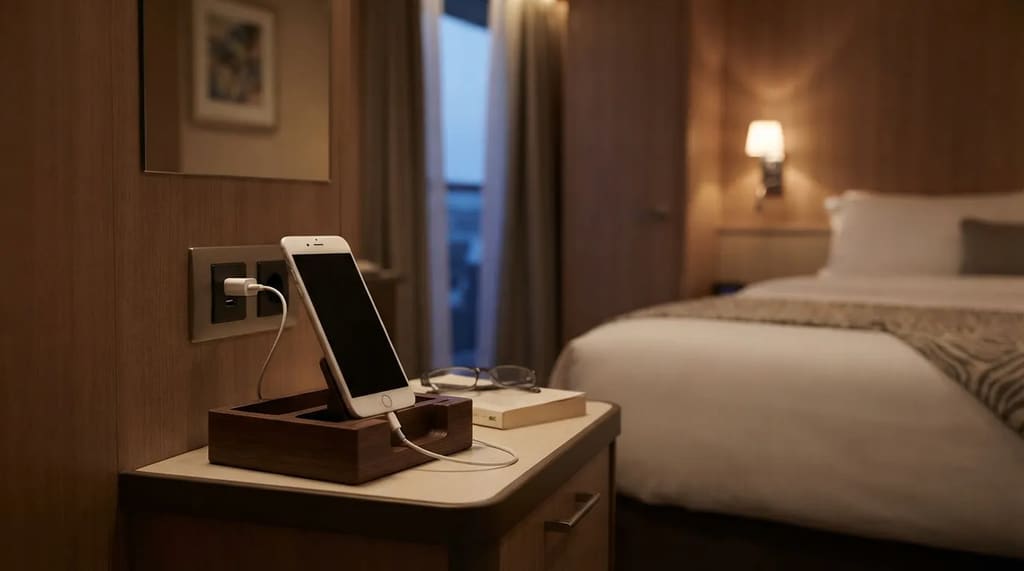
Cabin outlets are rarely where you’d put them yourself. Find every outlet and USB port in the first minute, since in a shared cabin the bedside one tends to go to whoever spots it first.
Then choose one outlet for the phone and leave the cable plugged in there for the whole trip. Pick the outlet you can reach from the pillow, and use only that one.
A fixed spot matters because a phone doubles as your clock and your flashlight in a dark cabin. When it lives in the same place every night, you never pat the sheets at 3 a.m. looking for it.
If you packed a power strip or an extension cord, check your cruise line’s rules before you plug it in, since some lines restrict them.2 A short cable that reaches the bed beats a long one that crosses the walkway.
Once the phone has a home, the curtains decide what time you wake up.
2. Morning Light and the Curtain Rule
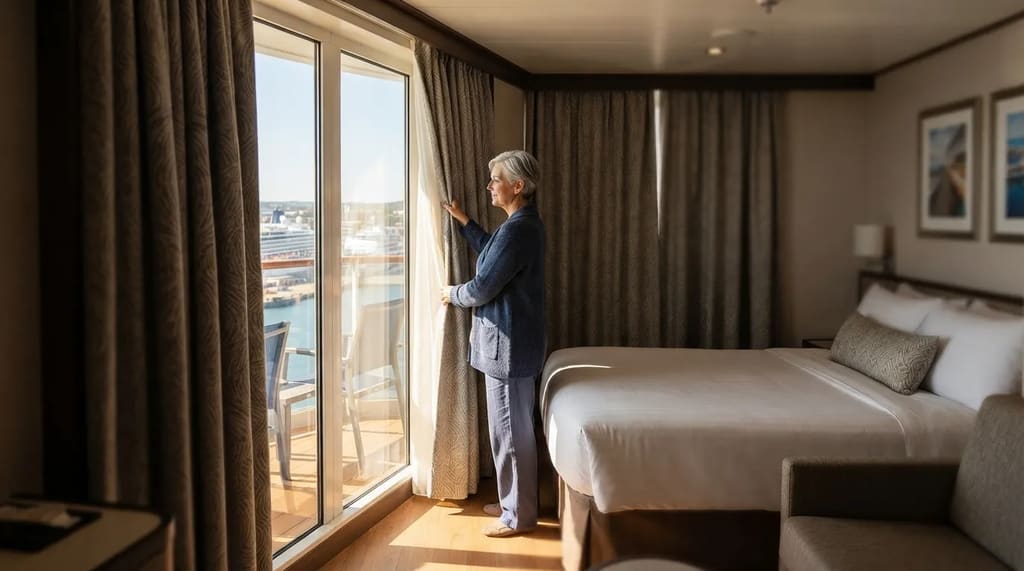
A cabin with a window or balcony can go from dark to bright in one tug of the curtain. Those cabins also tend to run warm, because the sun radiates heat in.
Before sailaway, open the curtains once and watch where the light lands on the bed. The ship’s heading changes through the trip, so the light you see at the dock is no promise about sunrise.
Settle the night rule now. Decide whether the curtains stay shut or open a hand’s width.
A small gap gives you a gentle sunrise and a sense of the hour, while a tight seal protects a late sleeper. Interior cabins have no window at all, so there the lamp is your sunrise, and you choose when it comes on.
A curtain pulled tight leaves the cabin very dark, and that raises the question of the walk to the bathroom.
3. A Night Light for the Walk to the Bathroom
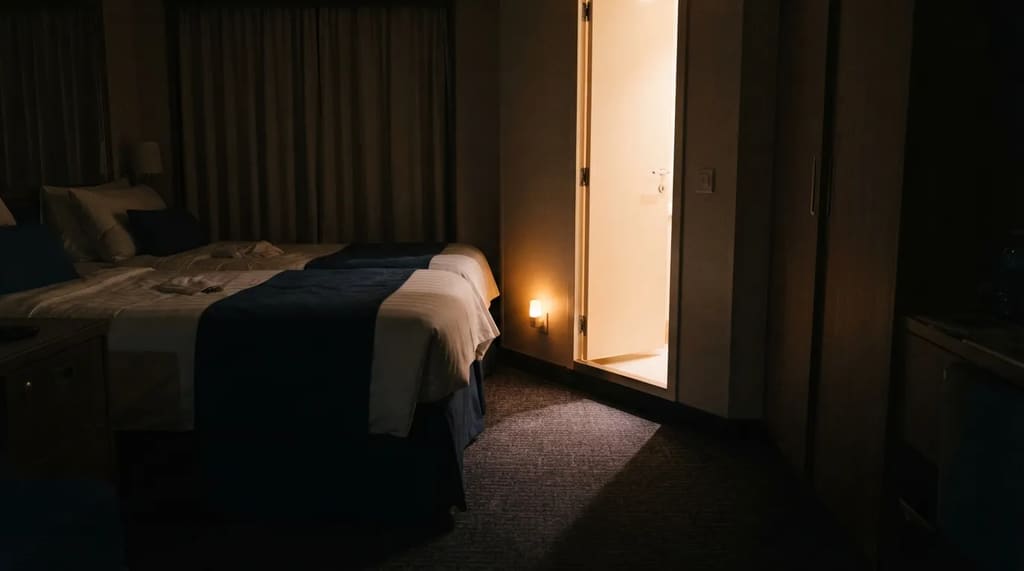
An unfamiliar room with the lights off is harder to cross than your bedroom at home. You haven’t yet learned where the corner of the bed sits or how far the door is.
The simplest fix needs no gear at all. Leave the bathroom light on and the door open a hand’s width.
That thin strip of light shows the floor and the edge of the bed without waking your cabin mate. If it shines in your eyes, a small plug-in or battery night light does the same job more softly.
Worth Knowing
- Interior cabins have no window, so the dark after lights-out is total.
- A battery night light doesn’t use up one of your few outlets.
- Raised lips at the bathroom door are easy to miss, so feel for them in daylight.
- Anything lying on the bed-to-bathroom line needs a new home.
Whichever light you choose, walk the route once with the lights low, from bed to bathroom door. Anything lying along that line, a suitcase or a pair of shoes, needs a new home.
Cabins can also hide small surprises underfoot, like a raised lip at the bathroom door. Feel for those once in daylight, and the dark version of the walk gets easier.
That clear floor depends on where the clothes live, and the closet is shared space that needs dividing before the first suitcase opens.
4. The Closet Gets Split Before Suitcases Open
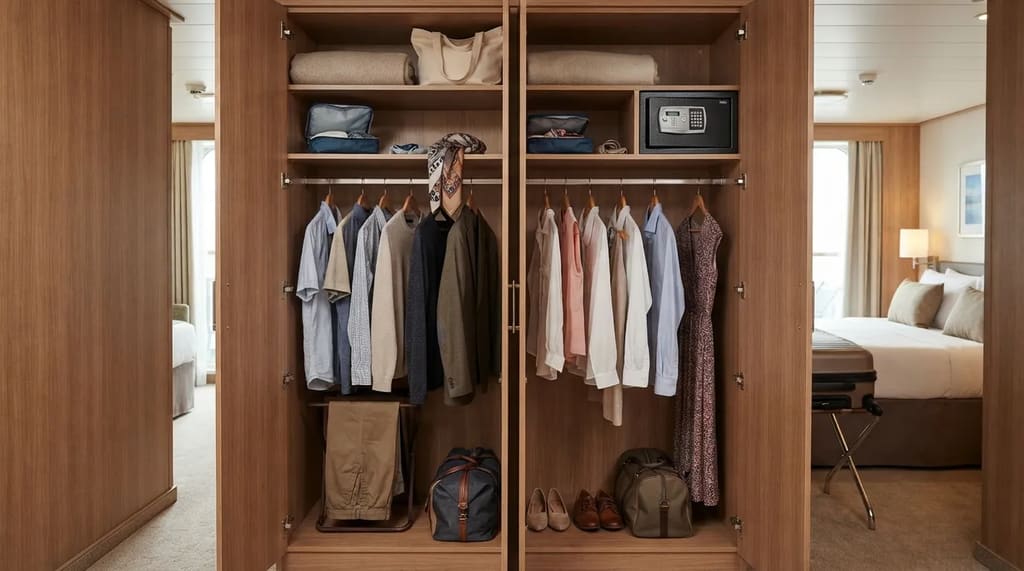
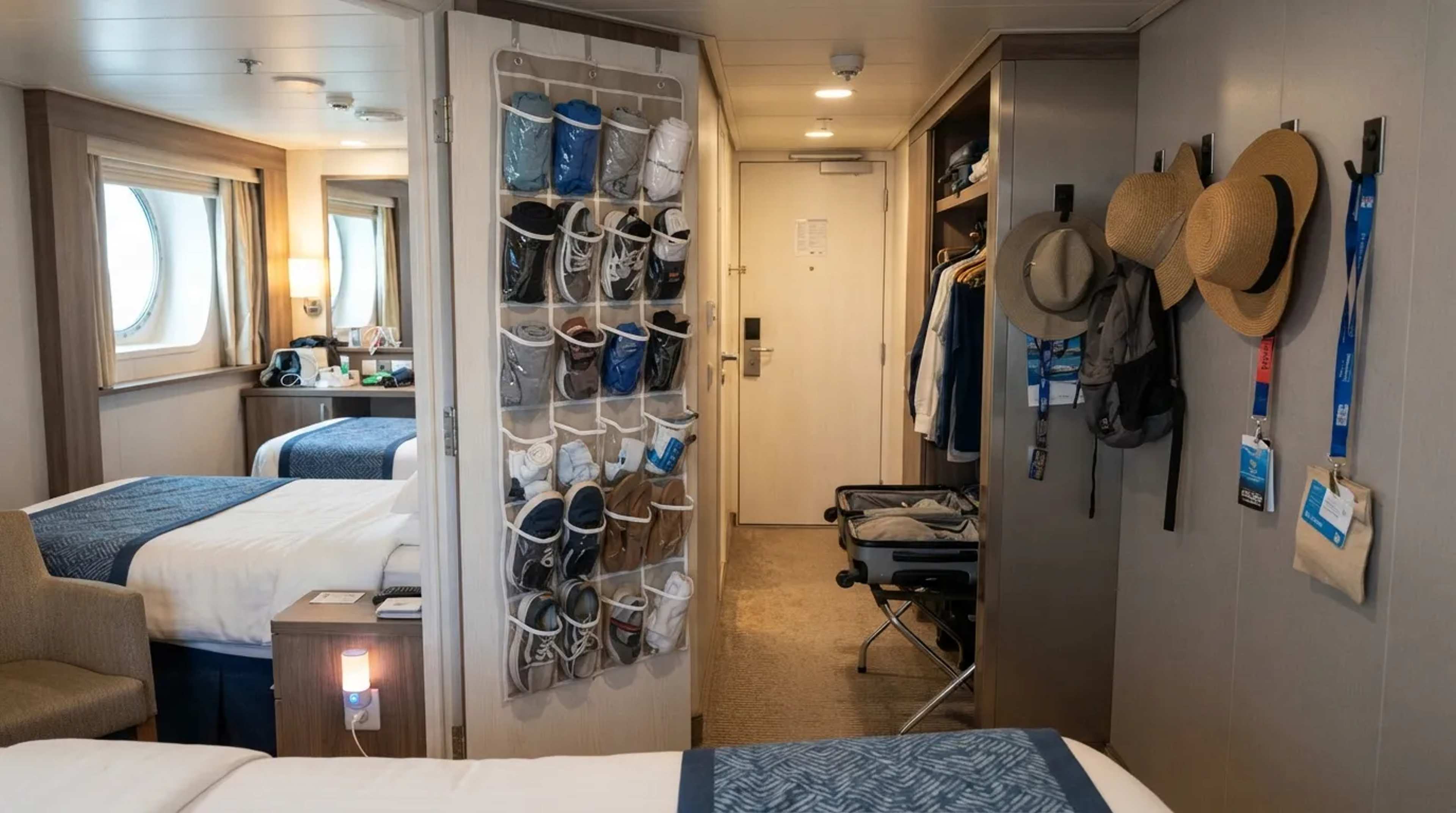
Cabin closets are smaller than the ones at home, so the split has to happen while the closet is still empty.
Divide it by side, with one half of the rail and one half of the shelves for each traveler. The safe is almost always in the closet, though on some ships it sits in a drawer, so note which half it falls on.
Within your half, think by height. Daily clothes go at chest height, suitcase-only items on the floor or top shelf.
Reaching for a sweater every morning is easy at chest level and tiresome at ankle level. Anything you’ll wear once, like the outfit for a dressy dinner, can hang at the far end of the rail.
Drawers are another matter, because the most useful ones in the cabin are the ones you leave empty.
5. Two Drawers That Stay Empty on Purpose
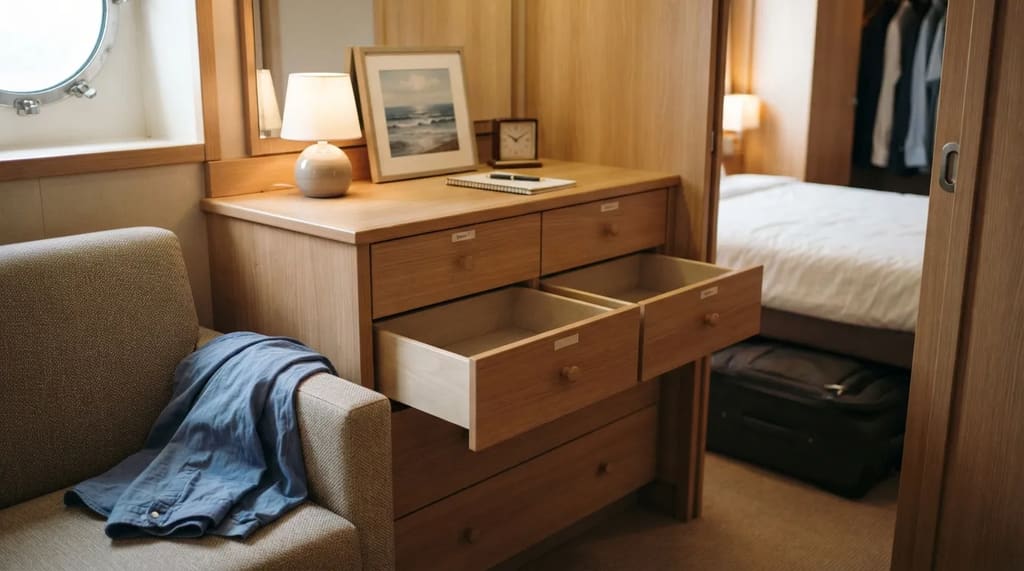
Full drawers on day one leave nowhere for the things you’ll gather over the week.
Here’s a verdict some readers will argue with: unpacking every last item on embarkation day is overrated. Keep two drawers empty until the final evening.
One drawer holds whatever you pick up in port, from a paperback to a small gift. The other takes the clothes you’ve worn once and will wear again, so they don’t pile up on the chair.
Everything else can wait in the suitcase, which many cabins let you slide under the bed. If it won’t fit there, the closet’s top shelf is the next best place.
On the last evening, those same drawers become your packing staging area. The final night then starts with a gentle sort instead of a scramble.
Those drawers stay empty only if shoes and bathroom things have corners of their own.
6. Shoes by the Wall, Toiletries Within Reach
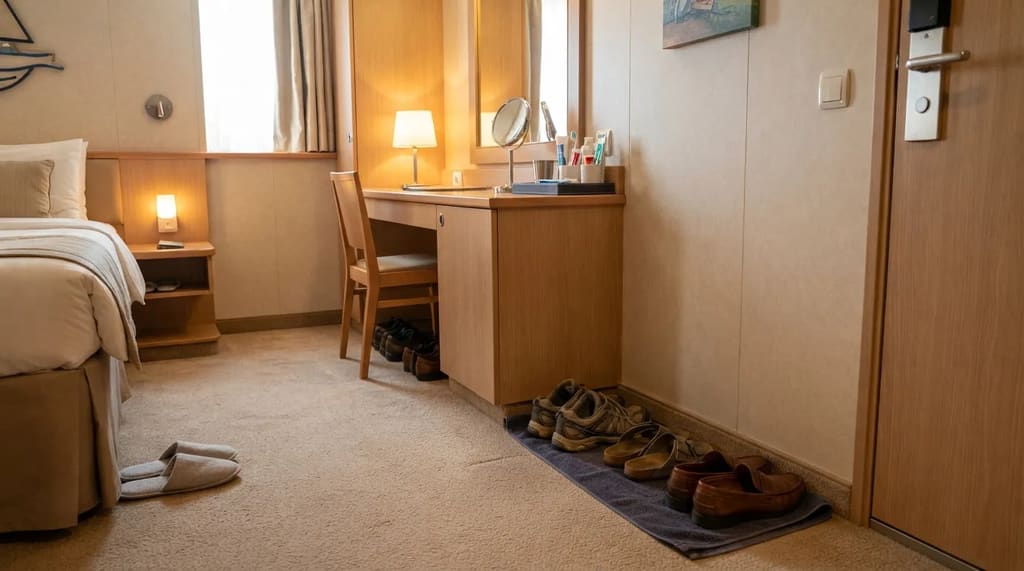
A pair of shoes in the middle of the cabin floor is what you’ll step on at 2 a.m. It’s also the clear path you set up back at the night light.
Line the shoes along one wall, under the desk or at the base of the closet, with the pair you wear most nearest the door. Slippers for the bathroom trip can sit beside the bed, off the walkway.
Quick Compare
- Under the desk: home for your everyday pair, nearest the door
- Base of the closet: best for dressy shoes you’ll wear once
- Beside the bed: slippers only, tucked off the walkway
If a port day leaves your shoes damp, set them on a spare towel by the wall instead of the carpet. They dry out of the walkway, and the cabin smells better for it.
Bathroom shelves are small, so toiletries need an order. Shoes along one wall, toiletries on one shelf, in order of use.
Put what you reach for with wet hands closest, and keep the rest zipped in their bag. A tidy shelf also tells you at a glance whether you’ve left something behind on the last morning.
The mini-fridge wants a similar plan, though it’s the one fixture that may not be in your cabin at all.
7. The Mini-Fridge Gets a Plan on Day One
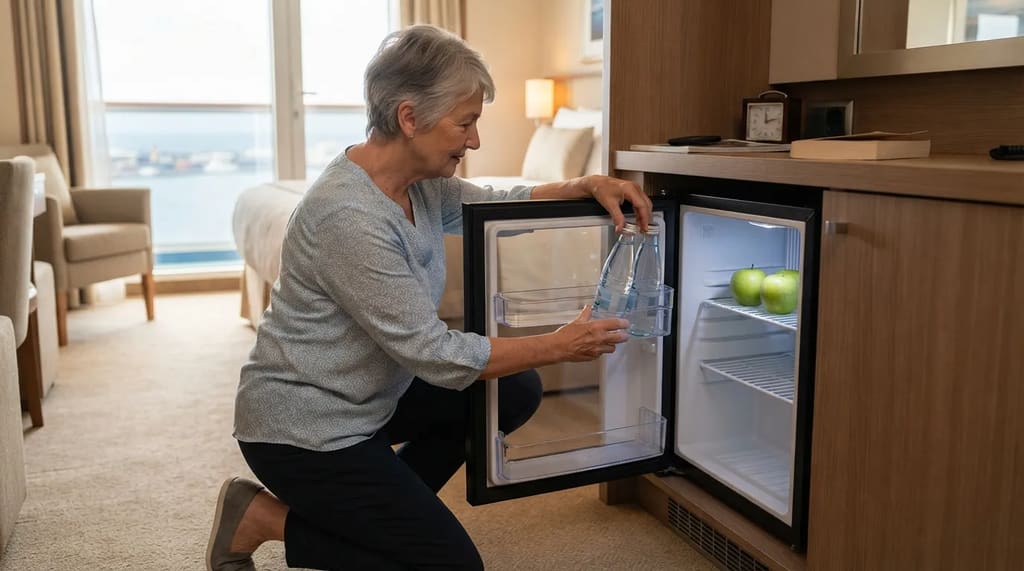
Mini-fridges aren’t in every cabin, and where they exist they hold only a handful of bottles. So the first job is simple: open it and see what you have.
Check that it’s cold and that the door closes fully. A fridge that hums or rattles is easier to fix this afternoon than at midnight, so mention it to your cabin steward if it does.
Verdict: stocking the fridge on day one is overrated. Fill one shelf at most, and leave the rest empty.
You’ll pass dining rooms several times a day, so a full fridge mostly holds things you forget. One shelf of water and fruit covers a quiet evening on the balcony or a very early morning.
The bed can be rearranged too, and the change is easier before you unpack around it.
8. The Bed Arrangement You Settle First
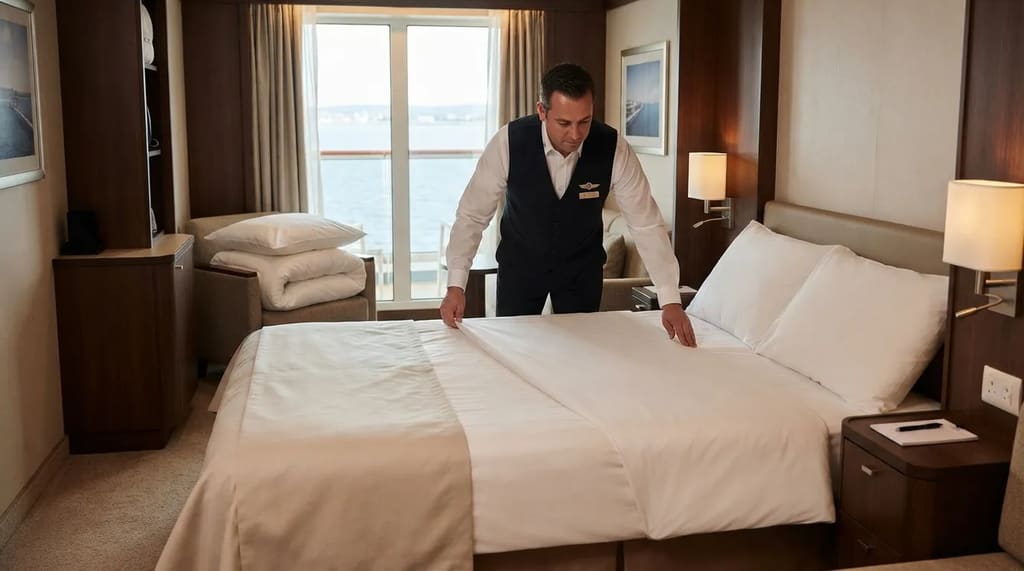
On many ships the beds can be set up as two singles or pushed together into one large bed. If yours isn’t the way you want it, your cabin steward can usually change it, and early in the trip is the easiest time to ask.
Decide singles or one large bed now, before the suitcases come out. Once your things are spread around the room, moving a bed means moving everything beside it.
At a Glance
- Two singles: no seam, and easier when sleep schedules differ
- One large bed: more shared room, with a seam to plan around
- Who to ask: your cabin steward, early in the trip
- Double-check: pillow side against the outlet and the bathroom path
If the beds are pushed together, there’s often a seam between the mattresses, so choose sides with that in mind. The side nearest the bathroom suits whoever gets up first in the night, and it lines up with the lit path from the night light.
Check the pillow side against your outlet from the charger spot, too. If the plug sits on the far side, swap which side each of you sleeps on.
While you’re talking to your steward, mention an extra pillow or spare blanket if you like one. They’re already thinking about the bed.
The bed gets made when the door sign says so, and you can set that sign before the first morning arrives.
9. The Door Sign Decision for Day Two
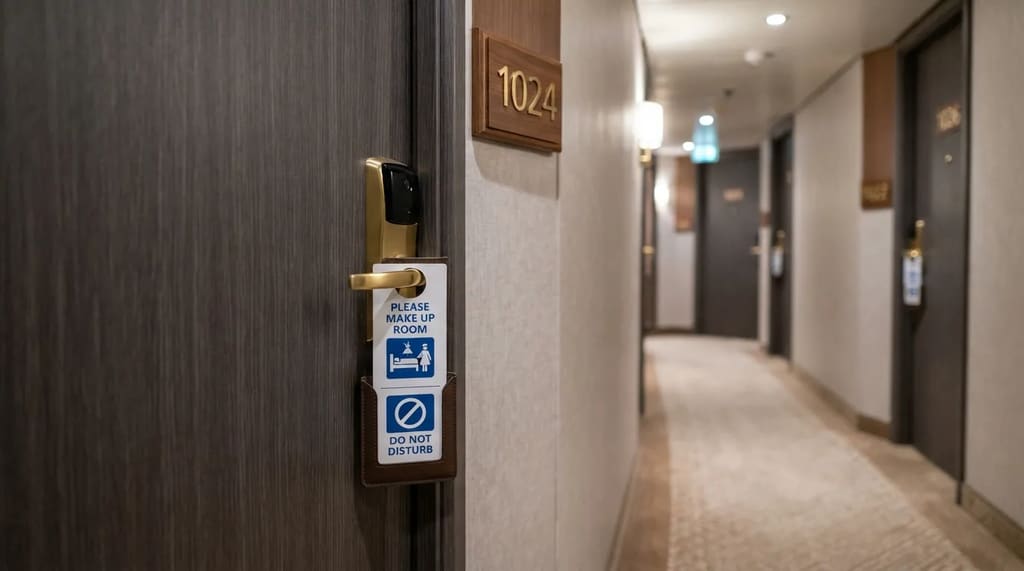
Your cabin door comes with signs for two opposite wishes. A tidy-up sign lets your steward in while you’re out, and it makes their day easier.
A do-not-disturb or sleeping sign goes on the door when you’re resting. Hang the sign that matches your plan before the door closes behind you.
Verdict: leaving do-not-disturb up all day is a mistake. It’s meant for sleeping, and a cabin nobody can enter is a cabin that doesn’t get made up or refreshed.
If you plan to sleep late on the first morning, hang it the night before and take it down when you head out. The tidy sign then goes up when you leave for the deck.
The sign handles the steward. Your key card handles everyone else, and it does more jobs than the lock suggests.
10. The Key Card’s One Permanent Home
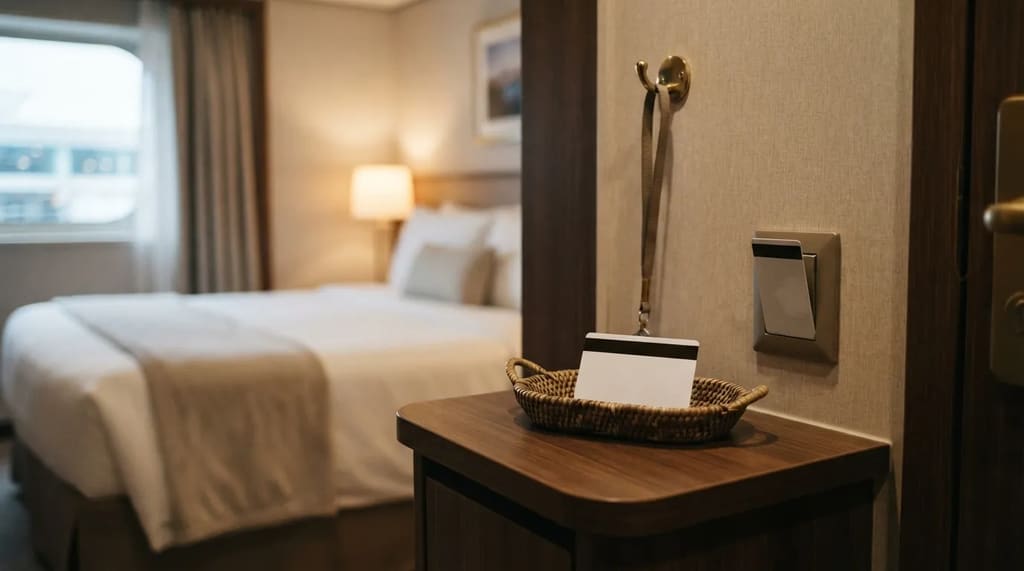
Your stateroom card opens the cabin door, may carry your muster station, and may open your safe. It may also be needed to run the room’s lights, outlets and cooling.3
That’s a lot riding on one piece of plastic. Give the card one pocket, lanyard or hook, and never move it.
Test it at the door before you do anything else. A card that fails can leave you with a dark, warm cabin as well as a locked door.3
Read the name and cabin number printed on it, so you know it’s yours. If anything is off, ask for a replacement now, while the crew has time, rather than after a long day ashore.
The card may open the safe, but what belongs inside it is a shorter list than you’d expect.
11. The Safe Holds Passports and Little Else
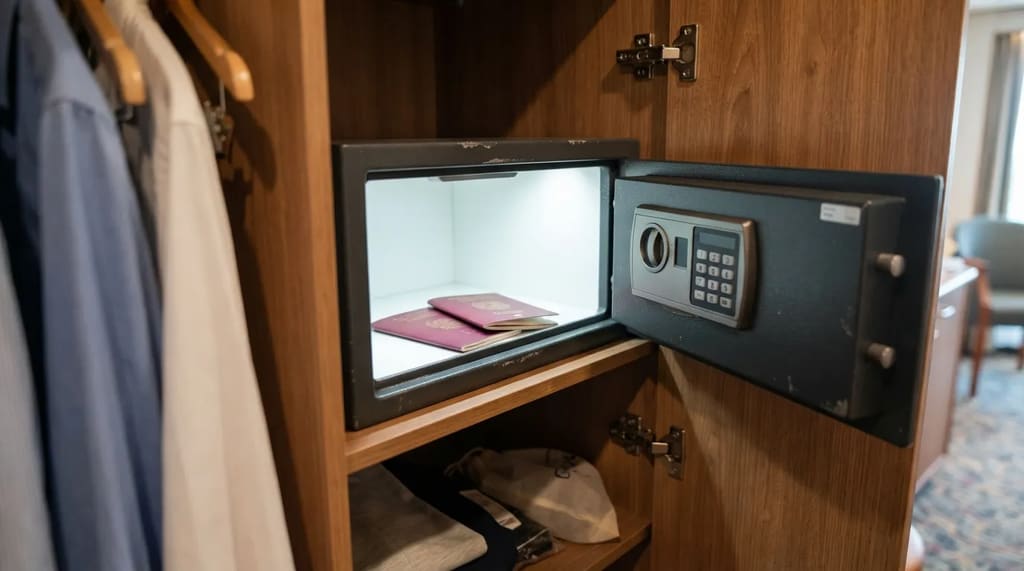
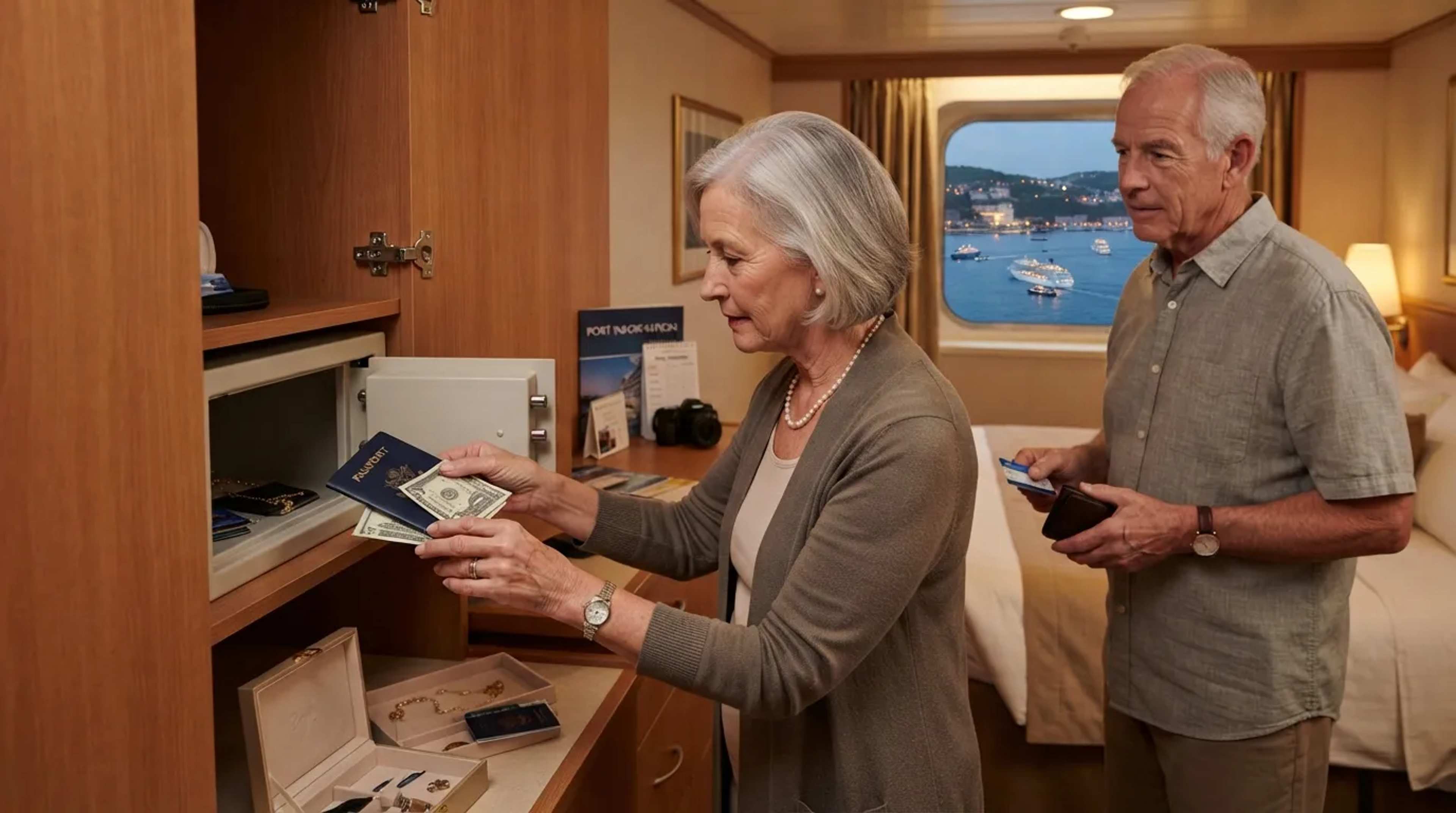
As the closet split showed, the safe is usually on one side of the closet. Find it early, since a safe that won’t open takes one call to the front desk while the crew still has time.
Set the code, close the door and lock it, then open it once more to be sure it behaves. Pick a code you’ll remember without writing it on anything that stays in the cabin.
Verdict: treating the safe as a vault for the whole cabin is overrated. Use it for passports only, and stop opening it after that.
A safe you open six times a day turns into a chore, and chores get skipped, which is how a passport ends up lying on the desk. Put the passports in on the first afternoon and leave the safe alone until you pack.
Why It Stands Out
- One item, one place, one habit to remember.
- Fewer openings mean fewer chances to leave a passport out on the desk.
- The code gets set once and tested once.
- It pairs neatly with the key card’s permanent home.
The balcony door is a different kind of lock, and a small sound tells you whether it’s working.
12. The Balcony Door Gets Tested Before You Need It
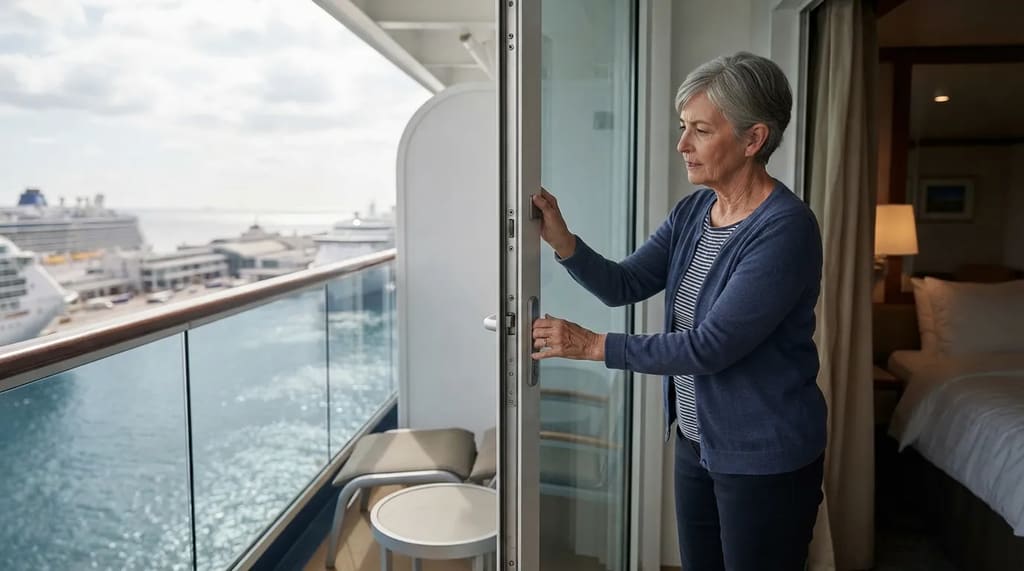
A whistling or drafty balcony door is hard to sleep through, and your attendant can usually fix it with a quick adjustment if you mention it early. So test it now, not at midnight.
Slide the door open and shut a few times and confirm that it latches. Then step outside and look at the divider between balconies; if there’s a partition door, it should be locked.
Related Stories From Travelbinger


Lock the balcony door at night and whenever you leave the cabin. That matters most in port.3
Don’t leave it open while the cabin’s cooling runs. An open door fights the cooling system and can make the room damp and clammy.4
With the balcony locked, one last pass through the room decides whether you walk to the deck with everything you need.
13. The Last Look Before You Head for the Deck
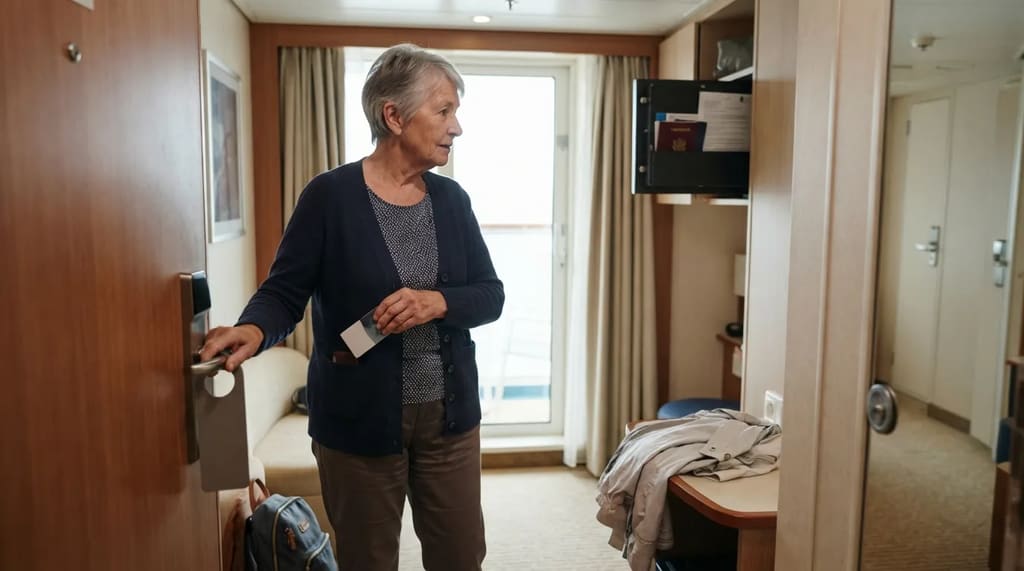
The last look takes under a minute and happens at the open door, with your hand already on the handle.
Four things get a glance, in the same order every time:
- Key card in your pocket
- Balcony door latched
- Safe closed, passports inside
- Door sign set for your plan
Run the same four checks in the same order every time you leave. A habit that never changes works when you’re tired, and a list you rebuild each time does not.
A light layer for the breezy deck belongs in the same glance, since the top decks at sailaway are often windier than the cabin makes you expect.
The card in your pocket has one more job before the ship sails, and it’s the only job the ship can’t skip.
14. The Muster Card on the Back of Your Door
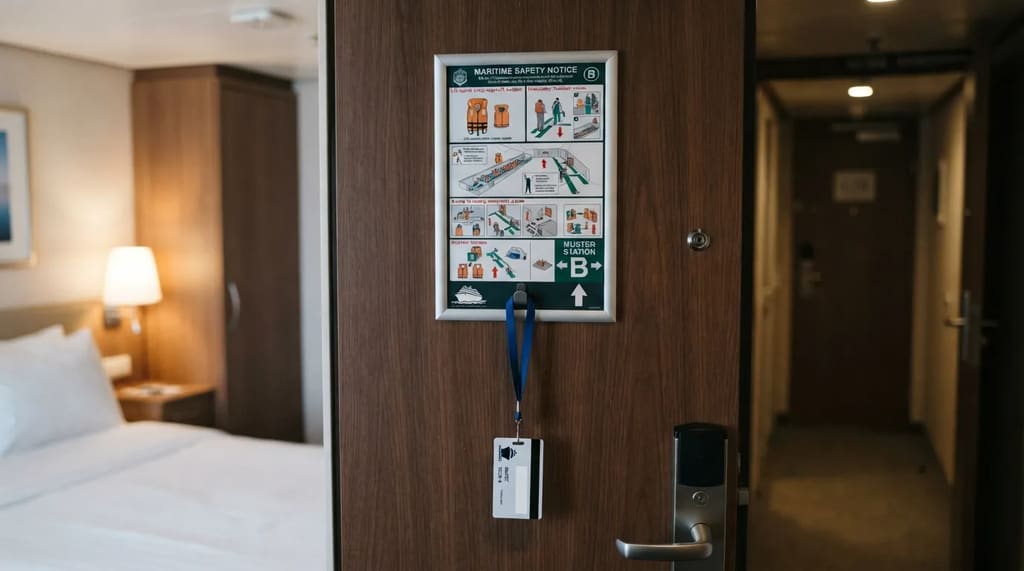
Turn around and look at your cabin door, where the safety instructions are often posted. International SOLAS rules require your cabin instructions to give your muster station, the actions to take in an emergency and how to put on a life jacket.5
Everyone must attend the drill, even if they’ve sailed the same ship or cruise line before. On many ships that use an electronic muster, you watch the safety video first, then walk to your station and have your cruise card scanned.
Watching the video alone doesn’t finish the job. A crew member confirms you’ve actually been at the station, which is why the card you gave one permanent home matters again here.
Walk the route from your door to your station once, taking the stairs. Elevators are off limits during the drill, and the stairs are the route you’d use in an emergency.
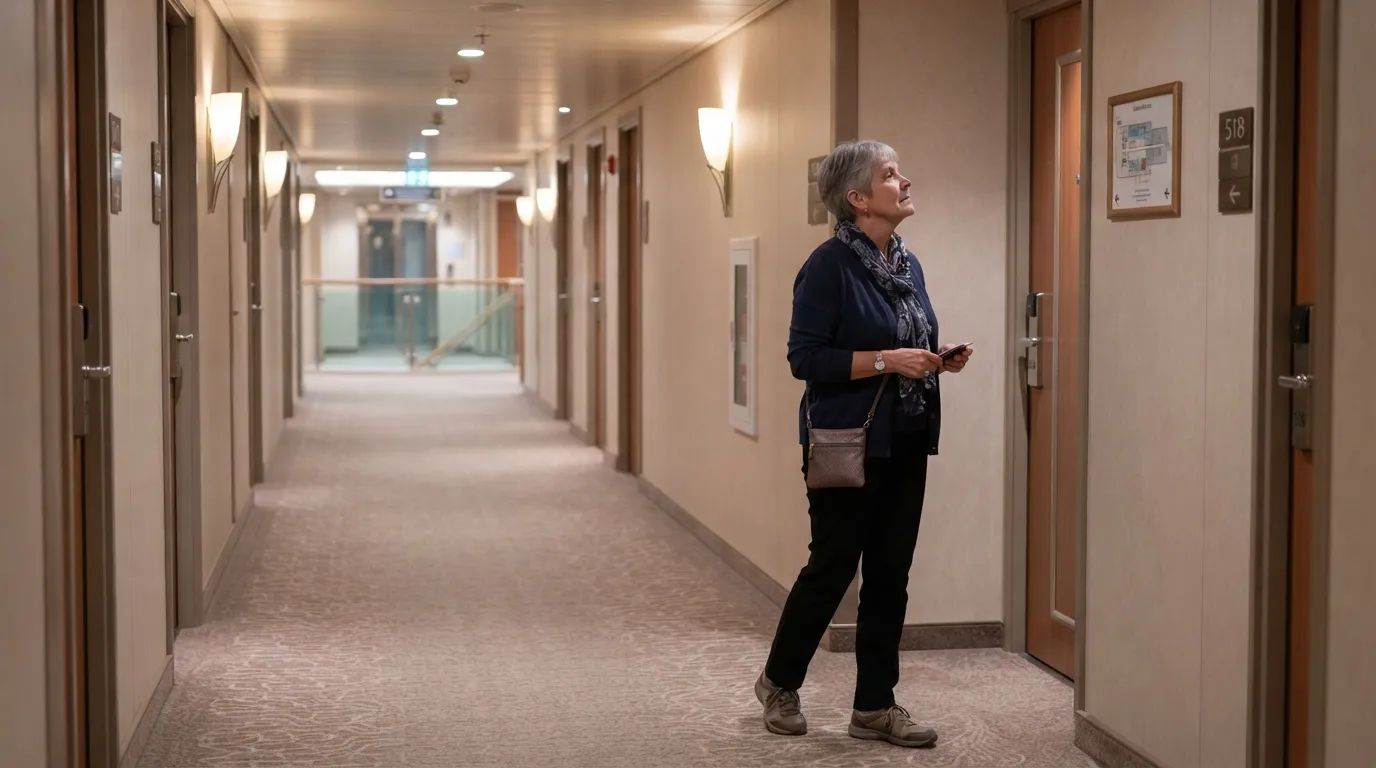
Do it while the corridors are quiet, and count the turns as you go. At the station, notice which stairwell you used and which way you turned out of your corridor.
Every other comfort on this list is for you alone, but this one is for everyone aboard, you included. It’s the walk your feet should know before the horn sounds.
Closing Thoughts
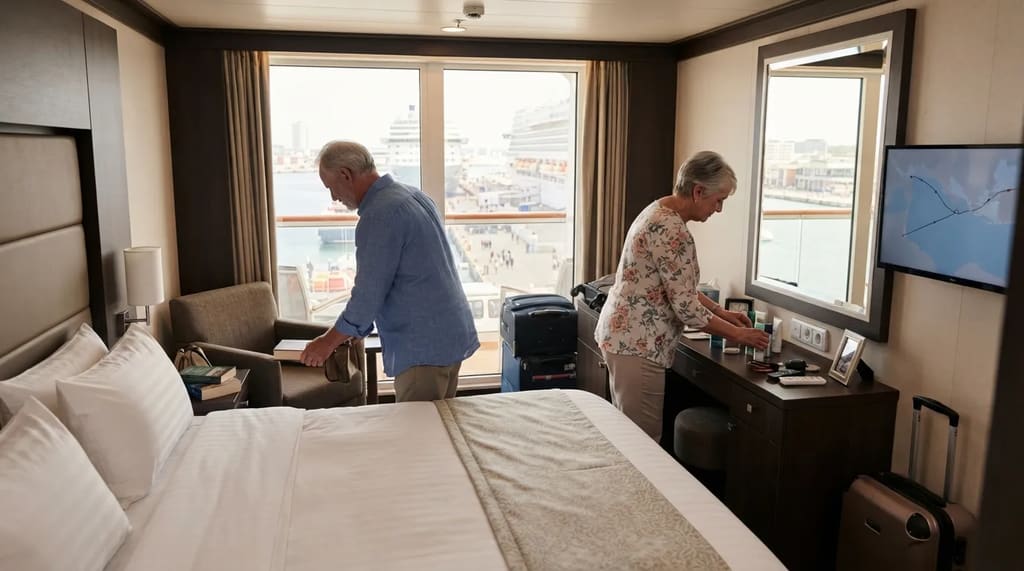
None of these setups is hard, and all of them are easiest in the same window. Before sailaway the cabin is empty, the corridors are calm, and a fix is a short conversation with your steward.
Think of the first hour as settling the room so the rest of the week doesn’t have to be. Each decision made once is one you won’t be making half-asleep in the dark.
When you open your cabin door on embarkation day, which setup do you handle first, and what made you start doing it?
Bonus: The Insider Trick Nobody Tells You
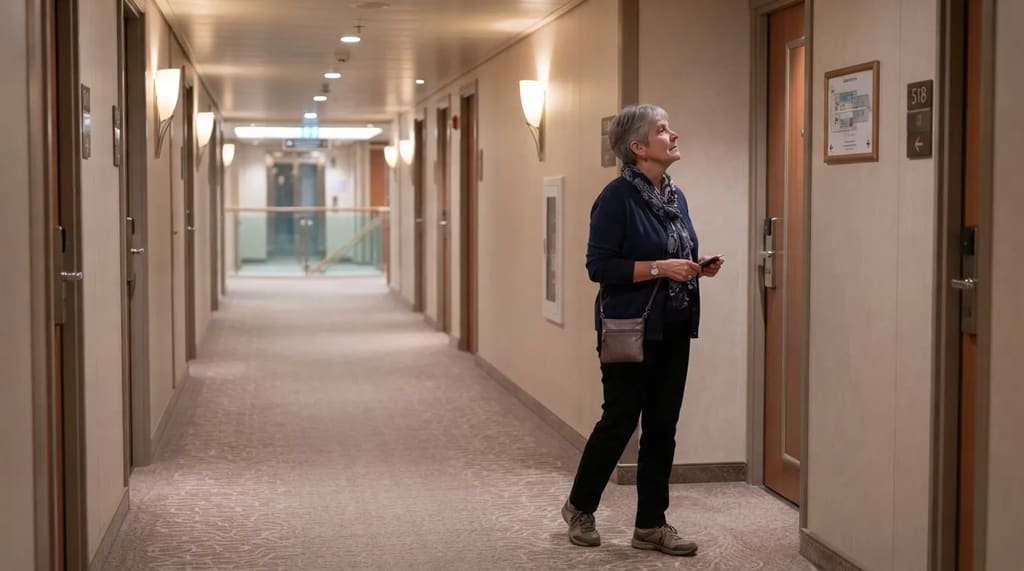
Walk your muster route backward. Most guests learn the way from the cabin to the station once and never practice the trip home.
That return leg is the one that goes wrong, because every corridor looks alike when you’re tired or when a crowd is moving around you. Ten quiet minutes now makes the whole ship feel smaller.
- Start at the station, not the cabin. Once you’ve confirmed the route there, put your phone away and find your own door using only the signs and your memory.
- Count doors to the nearest stairwell. Do it in both directions from your cabin, and note which stairwell is closer toward the front of the ship and which toward the back.
- Take two photos. One shows the deck-plan sign beside your stairwell, and the other shows your door with its number and any nearby landmark, like an ice machine or a corner.
Do this once on the first afternoon, and finding your way back will take no thought for the rest of the week.
- Marine Insight Passenger Drills: https://www.marineinsight.com/marine-safety/emergency-response-drills-on-passenger-ships-explained/
- Cruise Power Strip Rules: https://travel-hacker.com/2026/10/16/cruise-power-strip-rules/
- Balcony and Closet Checks: https://travelbinger.com/13-day-one-balcony-and-closet-checks-frequent-cruisers-over-70-never-skip
- Cruise Cabin AC Balcony Door: https://www.islands.com/1677555/balcony-door-lock-cruise-cabin-significantly-cooler-air-conditioning/
- Frommer’s Muster Drill Guide: https://www.frommers.com/tips/cruise/cruise-ship-safety-what-to-expect-in-a-muster-drill/