Some of the best moments in a national park happen within sight of a crowded lot, on a bench, a porch or a paved path that almost nobody stops for. These fourteen quiet stops are easy on the knees and easy to miss, and each gives a day trip something the overlook photo never does.
One of them sits a short paved walk from the busiest viewpoint in its park, and it comes last. The first is indoors, in a corner of the visitor center that many day visitors treat as a hallway.
14. The Bookstore Corner Inside the Visitor Center
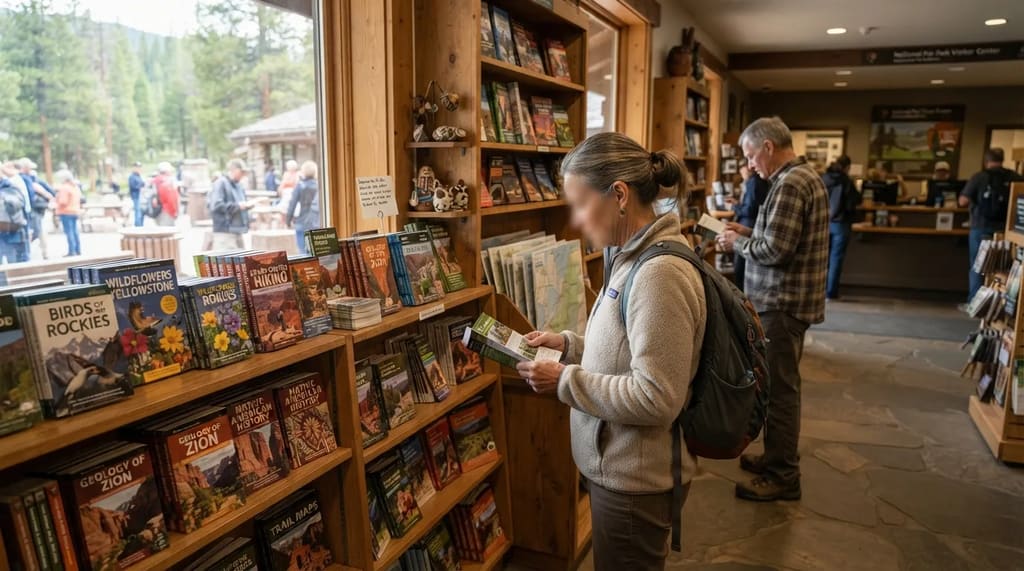
Most visitor centers keep a small bookstore near the front desk, and most day visitors cross it at a walk. Slow down at the regional shelves, where trail guides, field guides and local histories are all written about the ground just outside the door.
A field guide to the park’s own birds or wildflowers turns a plain walk into a game of names. A short local history, read on a bench later, explains why the road, the lodge or the old farm sits exactly where it does.
The staff nearby can usually point you to a short, level morning trail while you look over a map. A printed regional map also keeps working in canyons and valleys where phone signal drops out.
A book needs a place to be read, and the picnic groves tucked off the main roads are made for exactly that.
13. A Picnic Grove Off the Side Road
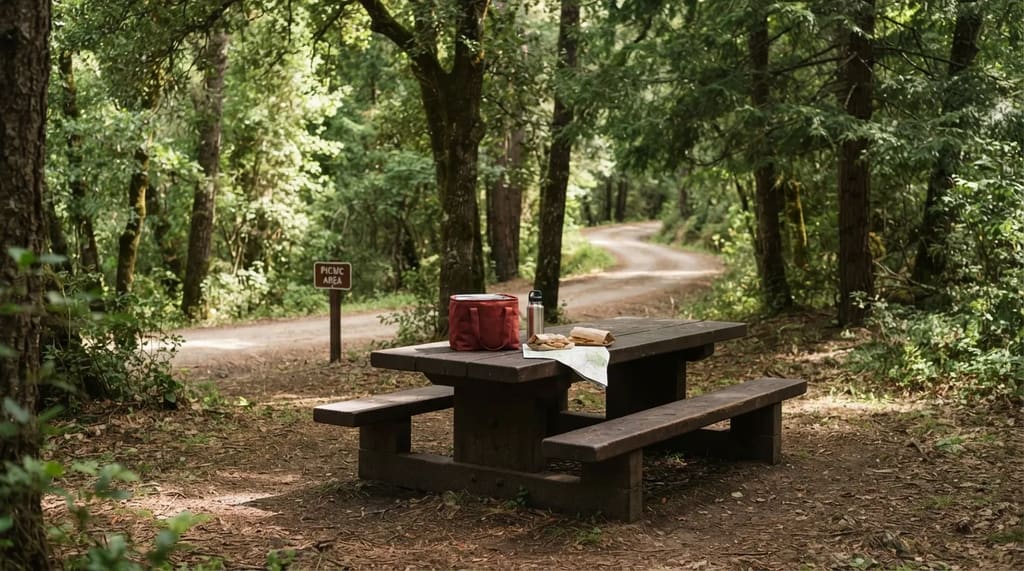
Picnic areas sit where shade, level ground and a table come together, and the ones off a side road can be nearly empty at two in the afternoon. Find them on the park map before you leave the lot, since a grove you drive past is hard to find again.
A half hour at a table does more for a long day than another overlook, because you stay put long enough to hear the place. Birdsong, wind in the leaves and running water come forward once the engine is off.
Take the table in the shade even if the sunny one is closer to the car. Shade keeps you comfortable, and it keeps the cooler bag and the sandwiches at a safer temperature on a warm day.
- Shade and level ground for a long sit
- A table wide enough for lunch, a map and a field guide
- Quiet in the middle of the afternoon, after the lunch hour has gone
If you are traveling with grandchildren, a grove is where they can run without anyone worrying about a drop-off or a railing.
12. A Short Paved Spur Off the Main Road
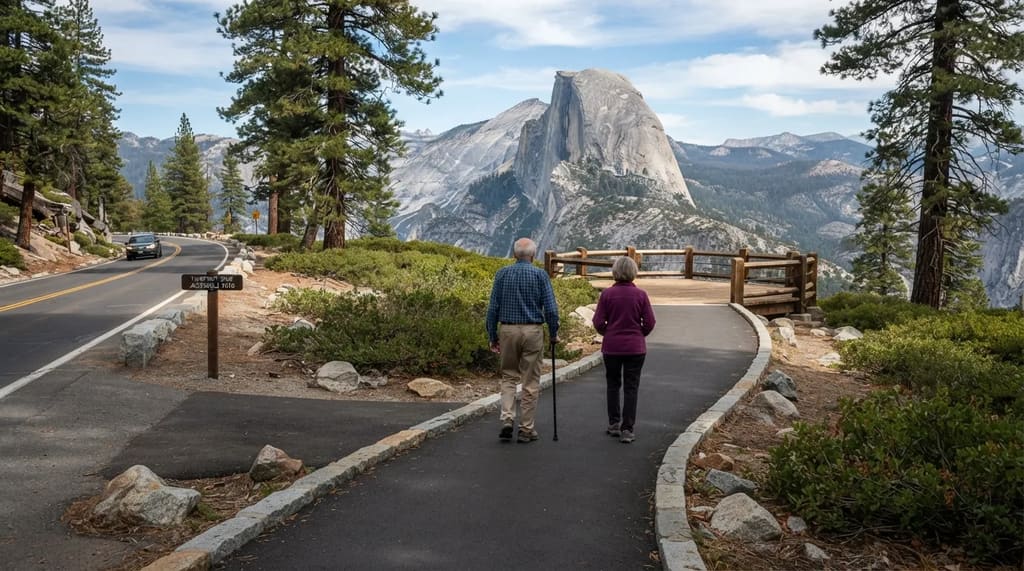
A paved spur is a short side road or path that leaves the main route and ends at one view, such as a waterfall, a rock formation or a stretch of shoreline. Because it is level and surfaced, it asks for ten or fifteen minutes rather than a morning.
Look on the park map for short lines branching off the main road, and ask at the desk which ones are paved. Pavement matters on a stiff day, since it holds a cane, a walker or a wheelchair without trouble.
Wear the shoes you would wear around town, and carry water anyway. A short walk is still a walk, and the air at higher elevations is drier than it feels.
The spur shows you the view, but the exhibits that explain it are indoors, in a room that is easy to cross without stopping.
11. The Visitor Center Exhibit Room You Cross Without Stopping
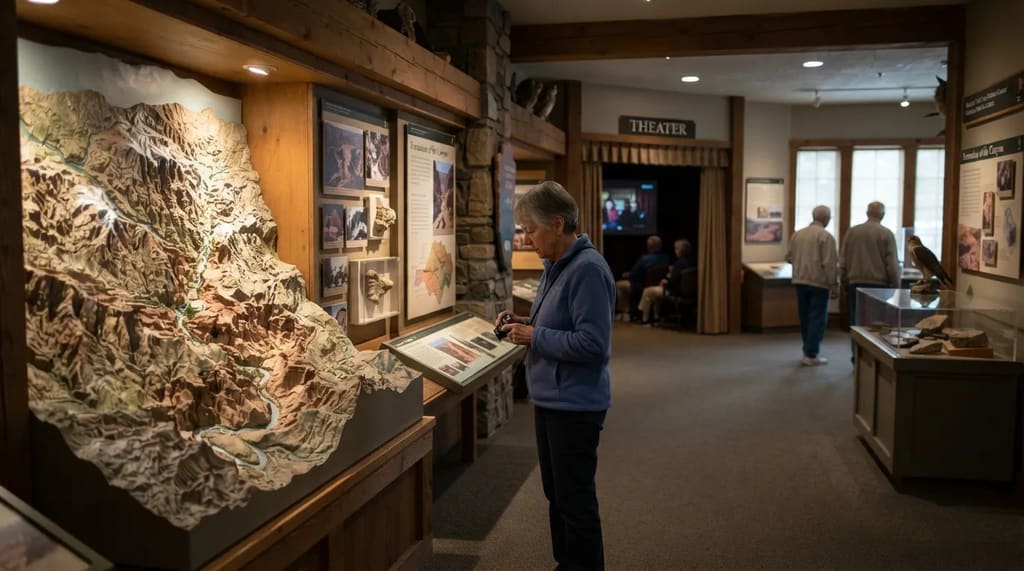
The exhibit room gives you a park’s story at a pace you set, sitting or standing, out of the wind or the heat. Maps, models, specimens and photographs show what the landscape looked like before the roads, and often what lives there now.
Read one panel that interests you instead of trying to read them all. A single good panel about the river you will walk beside, or the rock in the cliff, changes what you see for the rest of the day.
Many visitor centers also show a short film in a small theater, which doubles as a cool seat in the middle of a hot afternoon. Ask at the desk when the next showing begins.
At a Glance
- Best for a hot, windy or rainy stretch of the day
- Time needed: one good panel, or one short film
- Seating is usually close by, indoors and out of the weather
- Worth asking at the desk: what is in bloom and where wildlife was seen
The people at the desk can tell you what is in bloom this week or where wildlife was seen yesterday, which no printed sign can match. Ask, then follow the answer out to the road.
10. A Wildflower Pullout Along the Mountain Road
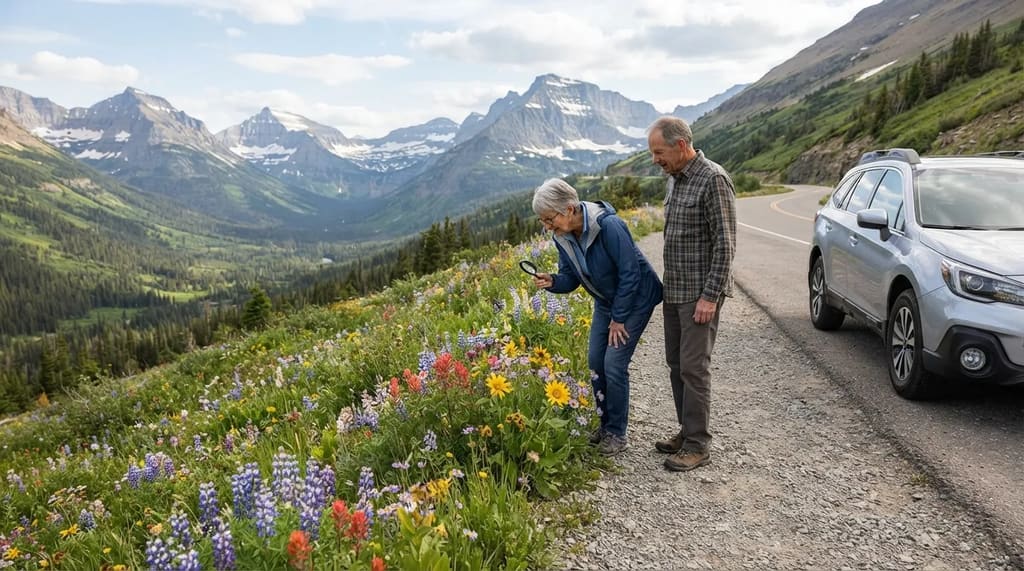
A pullout beside a meadow or slope in bloom is easy to pass at road speed, because wildflowers grow low and the big view above them draws the eye. Park fully off the pavement, switch off the engine and walk a few steps along the gravel edge.
Bloom timing shifts from year to year with snowmelt and weather, so a park’s visitor center or website is a better guide than a date on the calendar. A pullout that is bare on one trip can be full of color on the next.
Ten minutes is plenty, since flowers reward a slow look more than a long stay. Reading glasses or a small magnifier bring out details you would otherwise miss.
- Stay on the path or the road edge, because stepping into a meadow crushes the plants you came to see
- Look low and slowly first, then lift your eyes to the slope above
- Keep clear of traffic and watch for passing cars
Where a stream runs below the pullout, there is often a bench within a short walk.
9. The Riverside Bench on the Oconaluftee Trail
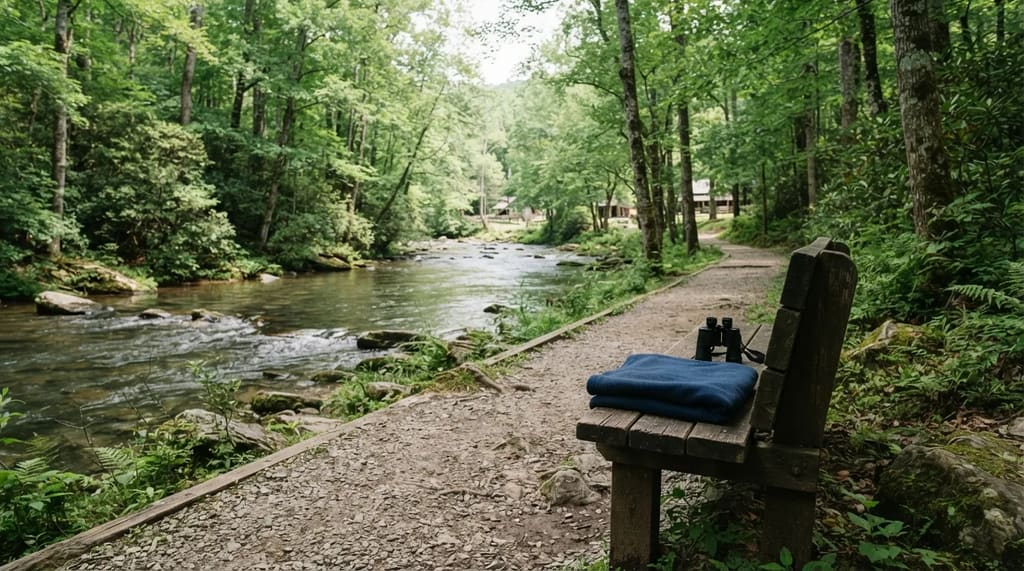
At the Oconaluftee end of Great Smoky Mountains National Park, a path behind the visitor center follows the river toward a historic farm. The Oconaluftee River Trail begins at the Mountain Farm Museum, runs 1.5 miles one way and is stroller-accessible, so it suits a slow pace.1
You do not need to walk it all. Go as far as the first spot where the river comes into view, sit for a while and turn around when you feel like it.
Moving water covers conversation and softens the sound of traffic, so a bench by a river feels farther from the lot than it is. A pair of binoculars and a cushion for the seat make it a better stop.
The trail begins beside a set of old farm buildings, and one of them has a porch built for sitting.
8. The Cabin Porch at the Mountain Farm Museum
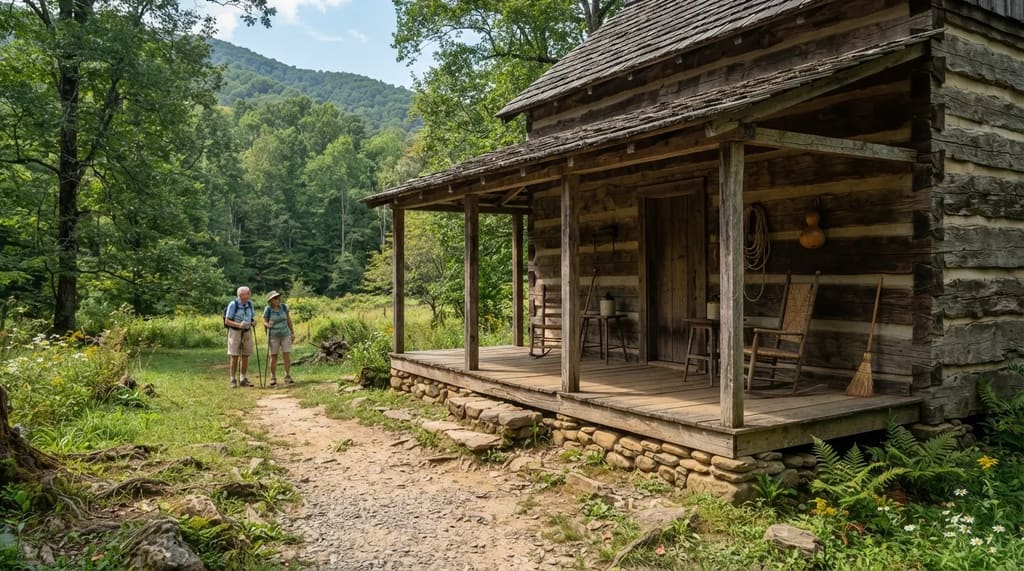
The Davis House at the Mountain Farm Museum is an original log home, built by John E. Davis around the turn of the twentieth century. The National Park Service says most of the farm’s buildings were moved from other parts of the park and assembled here in the 1950s.2
The path from the visitor center is mostly paved or hard-packed gravel with a short, gradual descent, and the ground around the farm is generally flat and grassy. Roots and rocks turn up now and then, so watch your footing if you step off the path.3
Fast Facts
- The Davis House is an original log home, not a replica
- Most farm buildings were moved here from elsewhere in the park in the 1950s
- Plan on about half an hour for a level stroll of under a mile
- The farmhouse has a covered porch with wooden benches on either side
Sit on that porch for a few minutes and look across the field at the barn. You can picture the people who once waited out an afternoon rain in the same spot.
Parks lean on rangers to tell stories like that one, and their talks are easy to walk straight past.
7. The Ranger Talk Circle on the Patio or Overlook
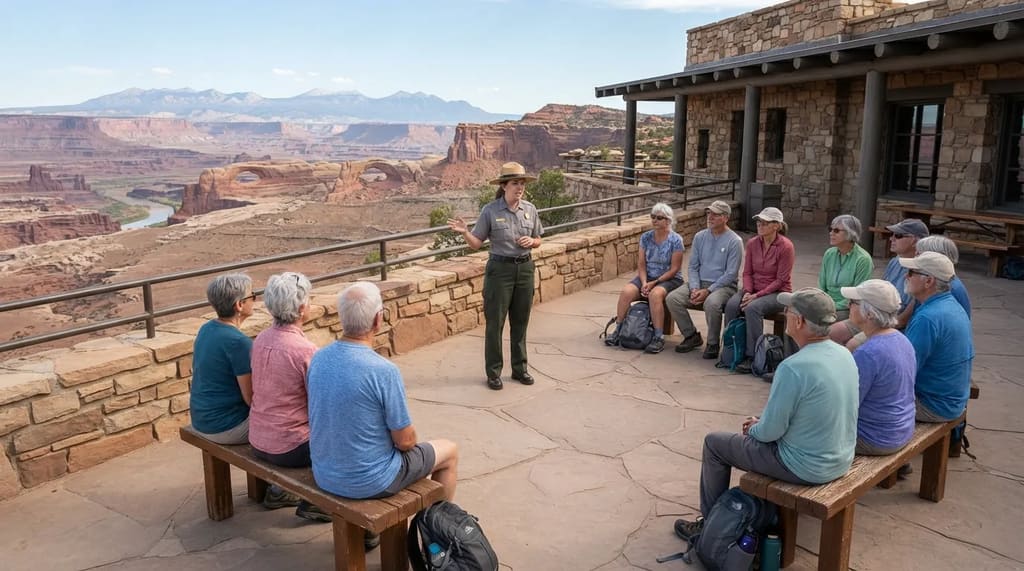
A ranger talk circle often looks like nothing more than a few benches on a patio or at an overlook, so it is easy to walk by while a ranger is mid-sentence. These short talks run 10 to 20 minutes in the parks below, which fits between a morning stop and lunch.
- Canyonlands lists a 20-minute geology talk on the Island in the Sky Visitor Center patio4
- Arches lists a 10-minute patio talk at its visitor center
- Mount Rainier describes informal talks at its visitor centers
The Canyonlands talks need no advance reservation, so you can decide on the spot.4 A ten-minute talk is a better use of ten minutes than another look at the railing, because it explains what you are looking at.
Program times and locations change through the year and with the weather, so read the board at the visitor center when you arrive instead of trusting a time you saw months ago. Stand near the front, since a ranger’s voice carries poorly in open wind.
Talks keep a schedule, and the path along the water, which needs none, is a good way to fill the time before one begins.
6. A Lakeside Path That Follows the Shore
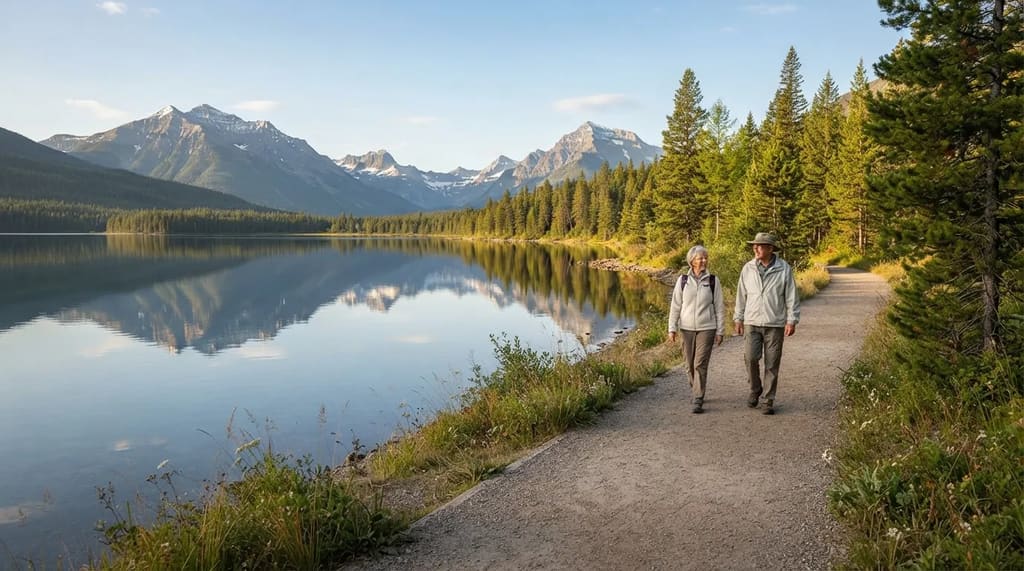
A lakeside path is usually flat, because a lake sits at the low point of its land and the path follows the shore instead of climbing away from it. That makes it one of the easiest ways to walk a mile without noticing the effort.
Choose a path that starts at a parking area or lodge, and plan to turn around after half the distance you think you want. You can always go farther if the day is kind.
Early morning and late afternoon give the calmest water and the softest light, and a still surface shows the mountains or trees upside down. Wind tends to pick up on open water as the day warms, so keep a light jacket in the car even in summer.
With only an hour to spare, take the shore path over a second overlook. You keep moving at an easy pace, and a place to sit is never far.
The lake shows you a view at its calmest, and the next stop shows you the same view from a spot most drivers never reach.
5. The Scenic Turnout One Mile Past the Main Lot
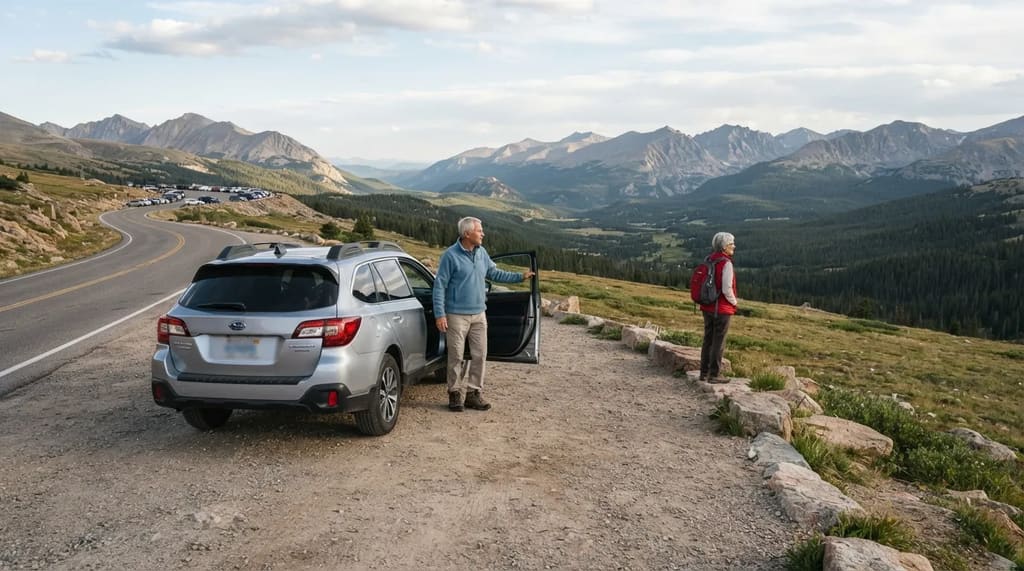
The turnout a mile or so past the main lot has no big sign and often no restrooms, which is why it fills slowly. The view is the same ridge, valley or shoreline, only from a slightly different angle and with room to open the car door.
Pull completely off the pavement, look for passing cars and cyclists before you step out, and keep clear of any steep edge. If the shoulder is narrow, a turnout farther along the road is the safer choice.
Drive on past a full lot rather than circle it waiting for a space, since a good view with an open spot beats a famous one watched from the driver’s seat.
- Room to leave the road completely
- A look both ways before you open the door
- Level footing between the car and the view
A turnout puts you beside the view from the car window, and a boardwalk puts you in the middle of it.
4. The Cook’s Meadow Boardwalk in Yosemite Valley
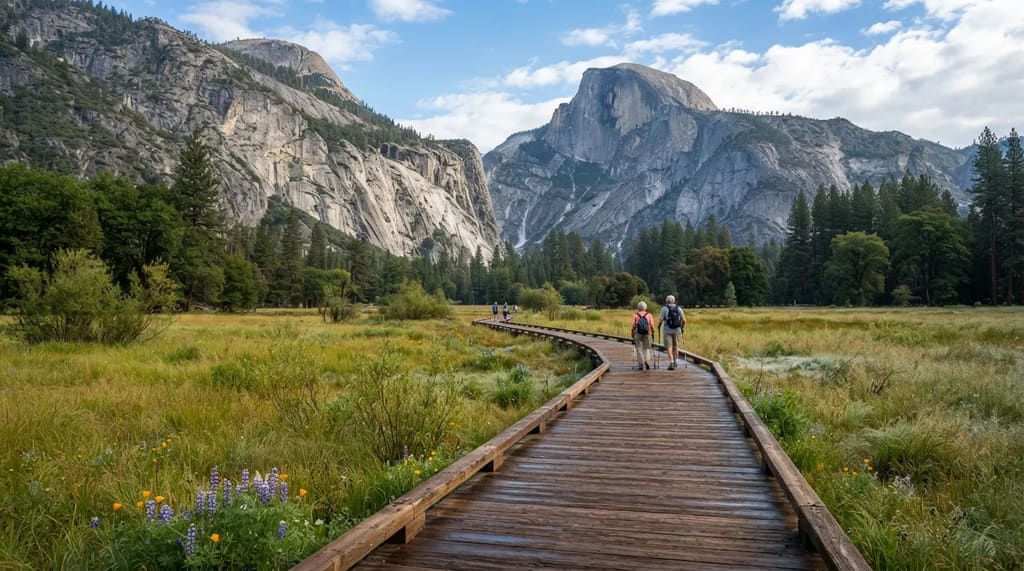
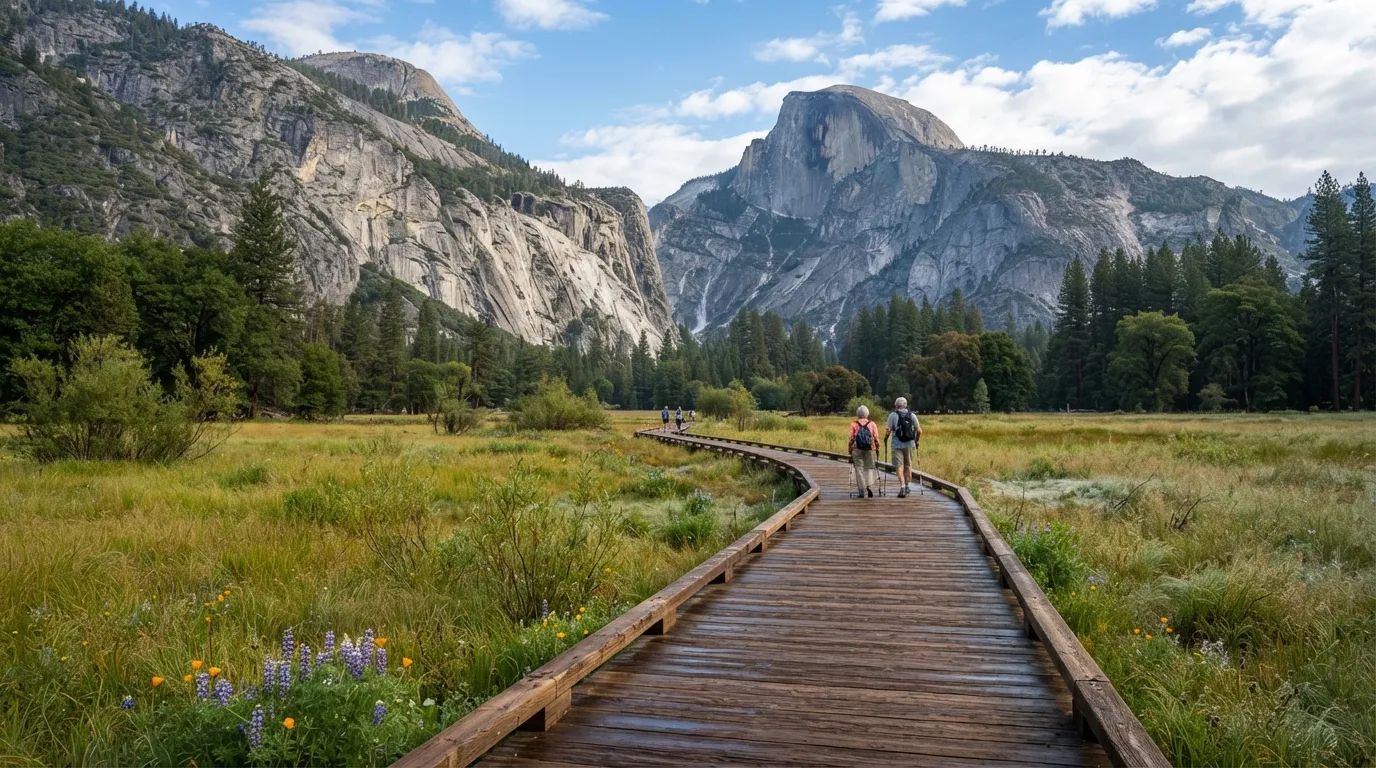
Cook’s Meadow Loop in Yosemite Valley is a flat, one-mile loop that the National Park Service puts at about 30 minutes. It begins at the Yosemite Valley Visitor Center and returns across the meadow on a boardwalk.5
From the middle of the meadow you can see Yosemite Falls, Half Dome, Sentinel Rock and Royal Arches without climbing anything.5 The valley shuttle stops at the visitor center, so the loop works even if you would rather leave the car parked.
The trail is wheelchair accessible when it is not covered in snow, and it is open year-round. Boardwalks are slippery when wet, and more so under frost or snow, so shoes with grip matter on a cold morning.5
Three stops are left, and the next one only opens after the day visitors have gone home.
3. The Evening Program Amphitheater After Dark
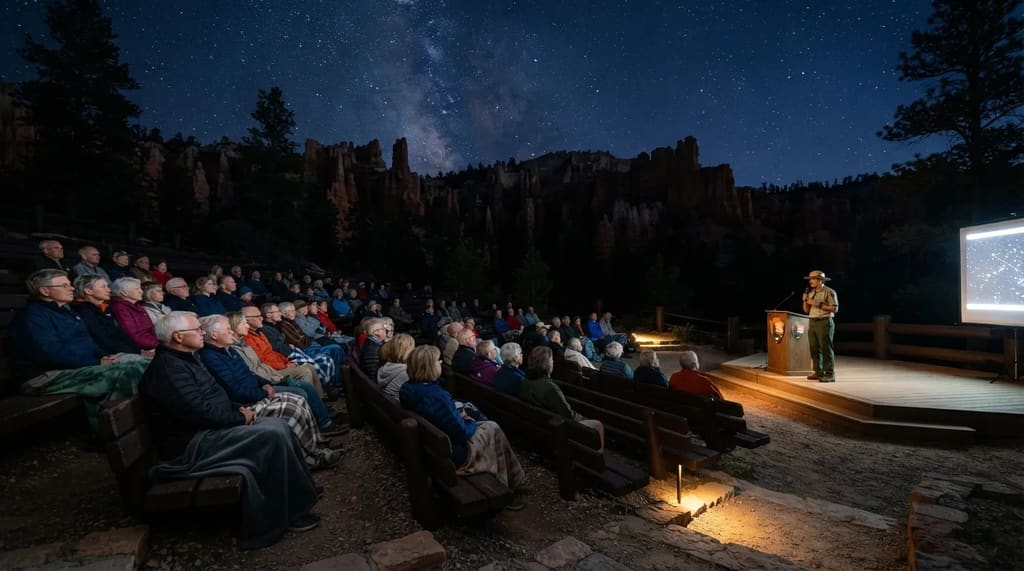
Late in the day, when the lots empty and the overlooks go quiet, many parks gather a small crowd in an amphitheater for an evening ranger program. Rows of benches face a screen or a simple stage, and the mountains serve as the ceiling.
Topics range from night skies and bats to the stories of the people who lived on the land, and some parks, Bryce Canyon among them, are known for their astronomy programs.6 Check the schedule at the visitor center or on the park’s website, since programs vary by season, weather and location.
Plan for the cold, because the temperature drops fast after sunset, even in summer.
Worth Knowing
- Layers matter more than you expect once the sun is gone
- A cushion makes hard benches far easier to sit on
- A small flashlight helps on the walk back to the car
- Arriving a little early gets you a seat near the front
Ask at the visitor center whether the path to the seating is lit and level, since many amphitheaters sit down a dark walkway. Early arrival also gives you a first look at the sky changing color.
If the evening sets the mood, the dawn that follows asks even less of you: a parking space and a warm seat in the car.
Related Stories From Travelbinger

2. The Sunrise Parking Pad Before the Crowds
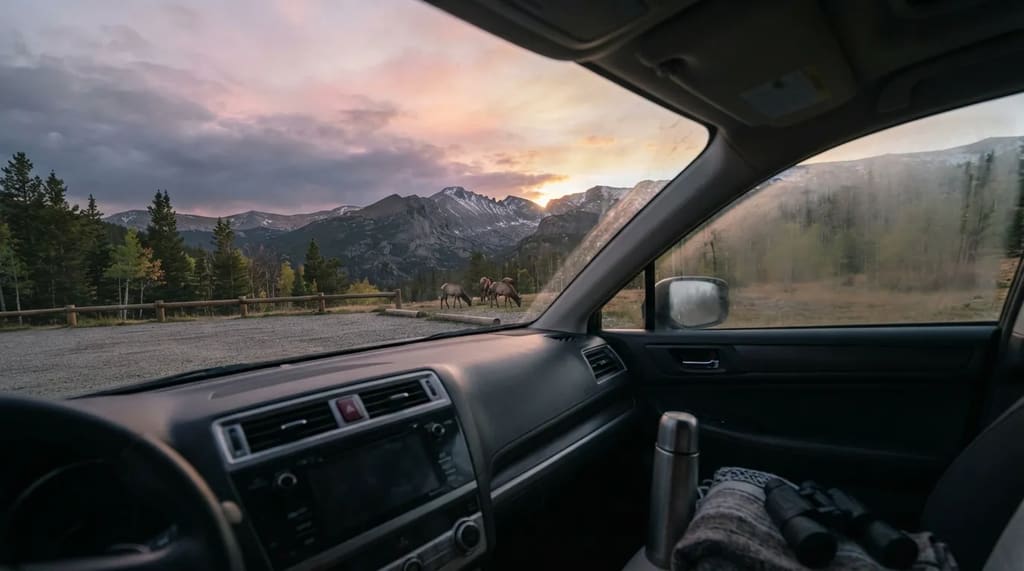
Before the day crowds arrive, a quiet east-facing parking pad becomes a front-row seat. You can watch the sky shift from gray to pink to gold with the windows up and a warm drink in your hands, no trail required.
Light builds well before the sun clears the ridge, so arrive about half an hour early. Scout the pad the afternoon before, since finding a pull-off in the dark is harder than it sounds.
Wildlife is often moving at first light, and a parked car works as a blind. In many parks, deer, elk and birds are active at dawn, so drive in slowly because animals use the roads too.
Bring a thermos, a blanket and binoculars, and stay until the light is full on the ridge. The best moment often comes after the sun is up, when color pours down the walls and the first long shadows start to shrink.
Once the sun is up, there is one more edge to visit, and it is closer to the crowds than you would guess.
1. A Quiet Canyon Rim Just Past the Busiest Viewpoint
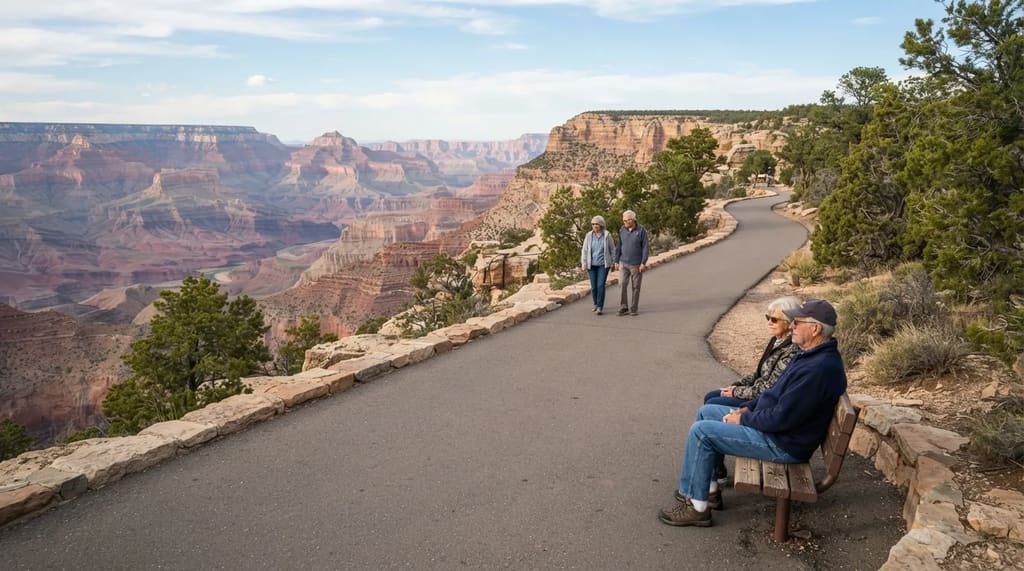
At Grand Canyon‘s South Rim, Mather Point is one of the busiest viewpoints in the park, with visitors standing shoulder to shoulder and phones held high. A few minutes along the paved Rim Trail, the crowd thins and the canyon opens up in a way the railing never allowed.
The Rim Trail follows the edge for miles, and large sections of it are paved and fairly level.7 You can walk as little or as far as you like, and you can look for benches along the way.
Quick Compare
- Mather Point: shoulder-to-shoulder crowds, phones held high, a railing between you and the view
- A few minutes down the Rim Trail: a thinner crowd, paved and fairly level footing, benches along the way
- Farther along the rim: more quiet, but often no railing, so keep well back
Choose a spot a little past the first cluster of people, and sit. The color shifts with the light, ravens ride the updrafts and the quiet at the edge is startling for a place so many people visit.
Stay well back from the edge, keep children and grandchildren close and watch your footing, since much of the rim has no railing. Wind and loose gravel make the edge less forgiving than it looks.
Other canyon parks have their own version of this spot, usually one short walk from wherever the crowd stops.
Closing Thoughts
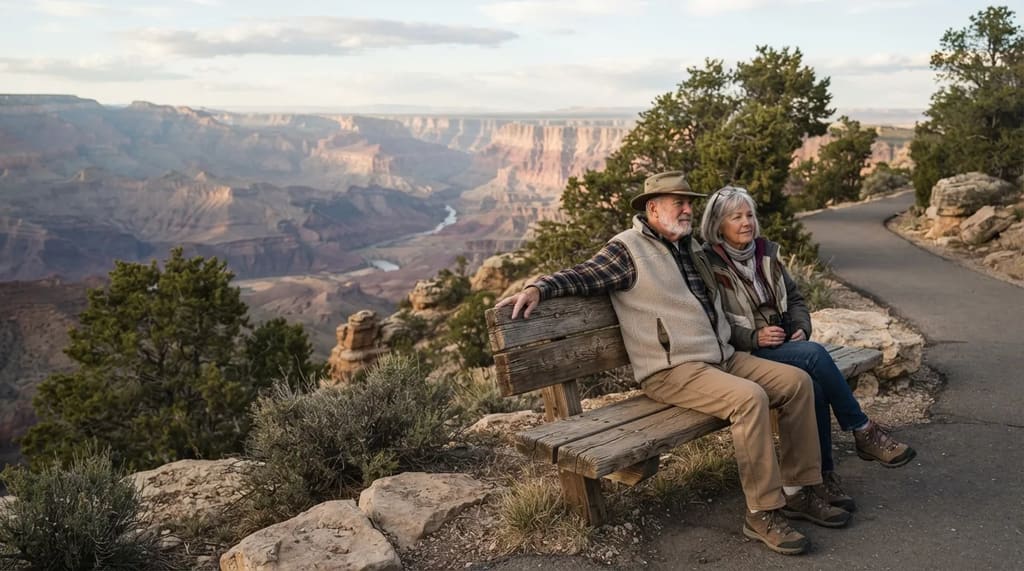
None of these fourteen stops asks for a long hike or an early start, and that is exactly why so many get missed. They ask only that you stop once, a little sooner than you planned.
On the next visit, pick two of them and give each twenty unhurried minutes. A porch, a bench or a bend in the rim trail may end up being what you remember when the famous overlook has blurred into every other photo.
The park is the same either way, but the day feels different when you slow down in it.
Bonus: The Insider Trick Nobody Tells You
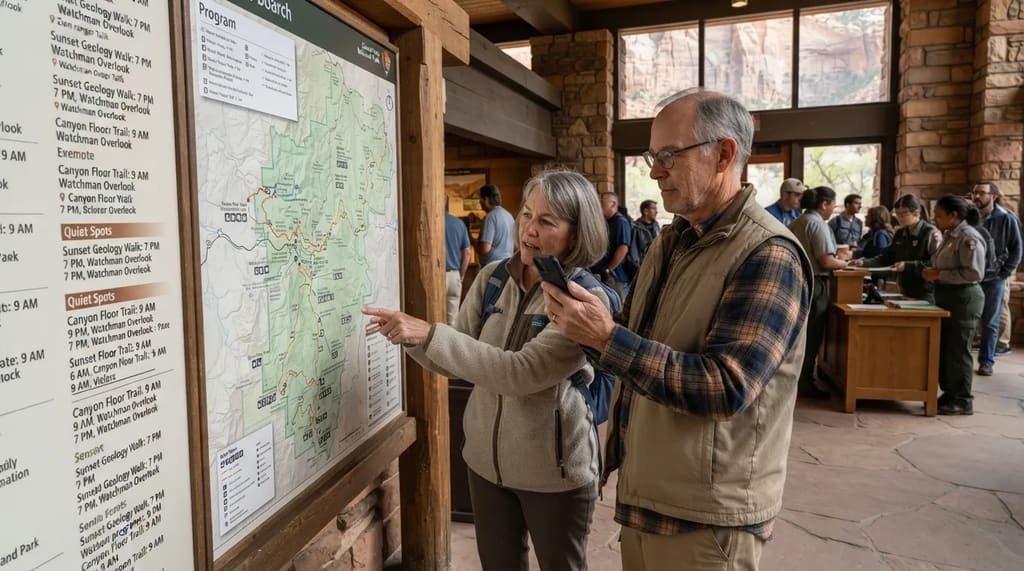
Build your whole day around one fixed anchor, and let the quiet stops fill in around it. Most visitors do the opposite and end up rushing between overlooks.
Here is the simple method, and it takes about five minutes at the visitor center:
- Find your anchor. Read the program board and pick one ranger talk or evening program that appeals to you, then note its start time.
- Ask one precise question. Instead of asking what is worth seeing, ask the desk which paved or level spot is quietest at the hour before your anchor.
- Photograph the board and the map. Signal often drops out in canyons and valleys, so a picture on your phone keeps working when a web page will not.
- Place the indoor stop at midday. Put the exhibit room or bookstore in the hottest or windiest hours, and save the lakeside path, the sunrise pad and the canyon rim for the soft light at either end of the day.
With an anchor in place, you stop asking what to do next and start settling into each stop. That change is what turns a rushed drive-through into a day you remember.
- Mountain Farm Museum Smokies: https://www.greatsmokies.com/mtn-farm-museum/
- Oconaluftee Mountain Farm History: https://en.wikipedia.org/wiki/Oconaluftee_Visitor_Center
- NPS Oconaluftee River Trail: https://www.nps.gov/thingstodo/hike-the-oconaluftee-river-trail.htm
- Canyonlands Ranger-led Programs: https://www.nps.gov/cany/planyourvisit/programs.htm
- NPS Cook’s Meadow Loop: https://www.nps.gov/yose/planyourvisit/cooksmeadowtrail.htm
- Bryce Canyon Astronomy Programs: https://www.nps.gov/brca/planyourvisit/astronomyprograms.htm
- Grand Canyon Visitor Center: https://www.nps.gov/grca/planyourvisit/grand-canyon-visitor-center.htm