You picture the famous park roads in July: brake lights, full lots and a line of cars crawling toward the same overlook. Then you learn that some of the calmest loops on the East Coast sit a short drive from that mess.
One honest note first: no national survey ranks what seniors over 65 prefer. So these twelve picks follow what matters at a slower pace, which means flat paths, benches, one-way roads and fewer cars. The best one sits inside a park famous for its crowds.
#12 – Assateague Island’s Short Forest and Marsh Loops
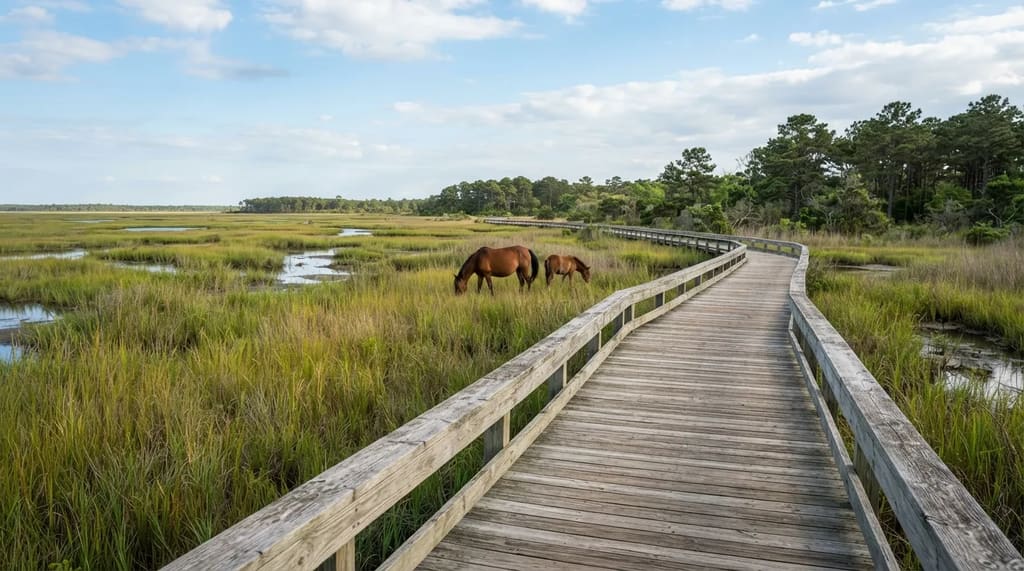
The famous wild horses of Assateague don’t need a crowded road to be seen. They live on a barrier island on the Maryland and Virginia coast, and the national seashore has short, flat loop walks on its Maryland side.
Two of them, the Life of the Forest and Marsh trails, run through pine woods and over boardwalks. Most walkers finish either one in well under an hour.
Here’s what first-timers miss. In midsummer, mosquitoes and biting flies can make the island close to unbearable.
At a Glance
- Where: The Maryland side of the national seashore
- Terrain: Flat pine woods and boardwalk
- Time needed: Well under an hour per loop
- Best seasons: Spring and fall
- Skip it: Midsummer, when biting insects peak
That’s why spring and fall work far better. A quiet September morning on the boardwalk beats a July afternoon on the sand, and beach lovers may hate hearing it.
The horses wander near the paths and roads, and they are wild animals, not pets. Give them room and let them come to you.
The next loop sits where a presidential signature saved a whole stretch of coastline…
#11 – Fort Hill Trail, Cape Cod National Seashore
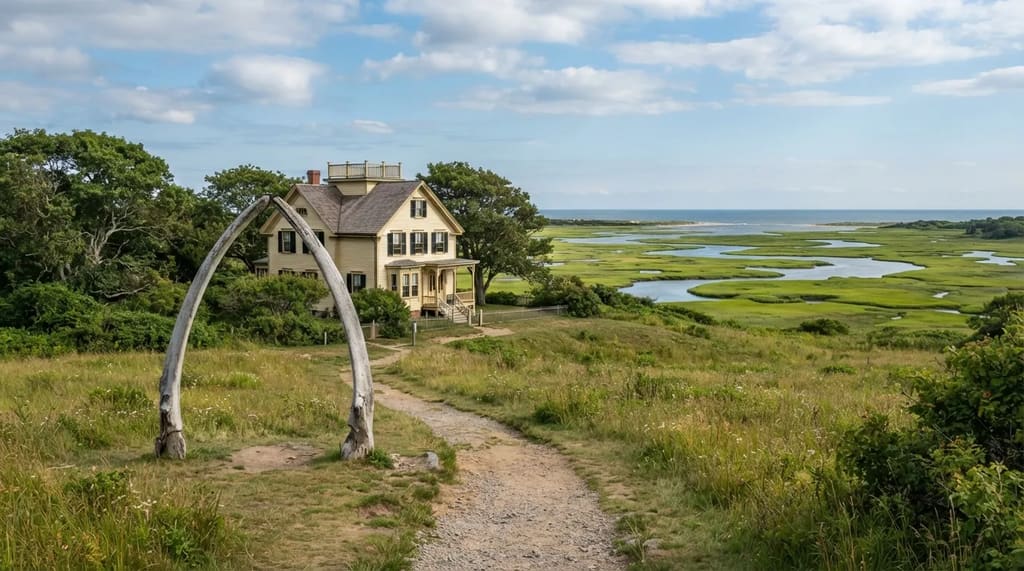
Cape Cod’s summer traffic hides a loop that most day-trippers drive right past. Fort Hill, in Eastham, sits inside the national seashore and circles open fields with views over Nauset Marsh.
The walk is gentle, with grassy stretches, salt marsh edges and shaded woods. The Captain Penniman House nearby gives you a reason to stop and look around.
Out front stands a whale jawbone arch, a quiet reminder of the Cape’s whaling-captain days. Few people on the beach road ever see it.
Most people don’t realize the seashore protects far more than beaches. It also holds marsh, woodland and old farmland views that never make the postcards.
Beach parking lots fill first in July and August. Go on a weekday in late spring or early fall and the inland trails feel like a different park.
The next loop is where soldiers survived one of the cruelest winters of the Revolution…
#10 – Jockey Hollow, Morristown National Historical Park
Not every quiet loop is about water or mountains. Sometimes the strongest reason to go is the history under your feet.
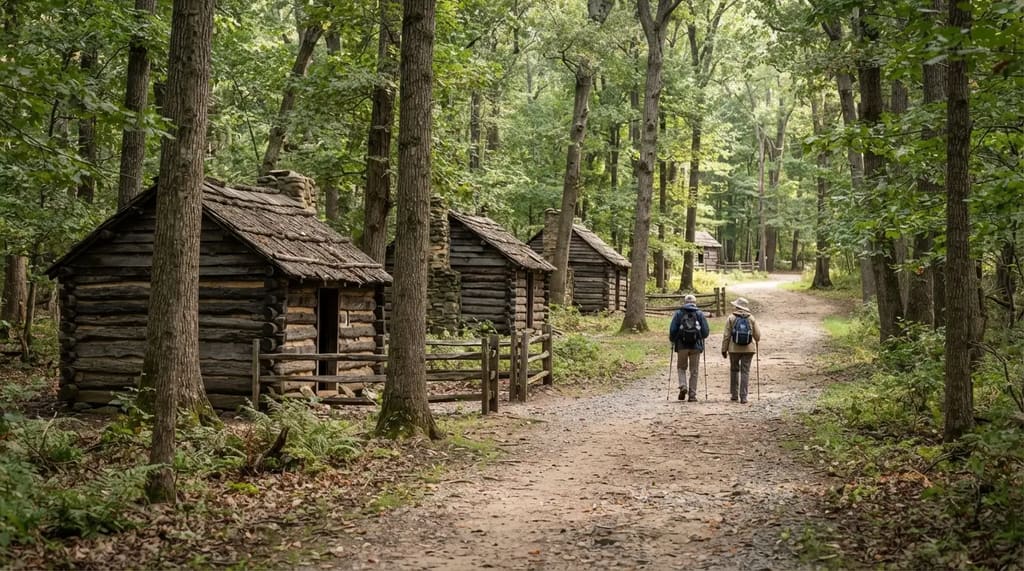
Morristown, New Jersey, was where the Continental Army camped through the winter of 1779–80. Jockey Hollow, the encampment area, is part of the park and has wooded roads and trails.
Here’s the part that surprises people. Morristown was the first place ever designated a national historical park.1 That happened in 1933.
Walk the quiet woods and picture thousands of soldiers hunkered down in rough huts through one of the harshest winters of the war. The silence makes the story hit harder than any museum case.
Fast Facts
- Army encampment: Winter of 1779–80
- Park first: Designated in 1933 as the first national historical park
- Setting: Wooded roads and trails at Jockey Hollow
- Crowd level: Often overlooked for bigger battlefield names
Many visitors skip Jockey Hollow for the more famous battlefield sites. That works in your favor if you want space to wander at your own speed.
Our next pick is a battlefield where one single day changed American history, and it’s far calmer than you’d guess…
#9 – Antietam National Battlefield Tour Road
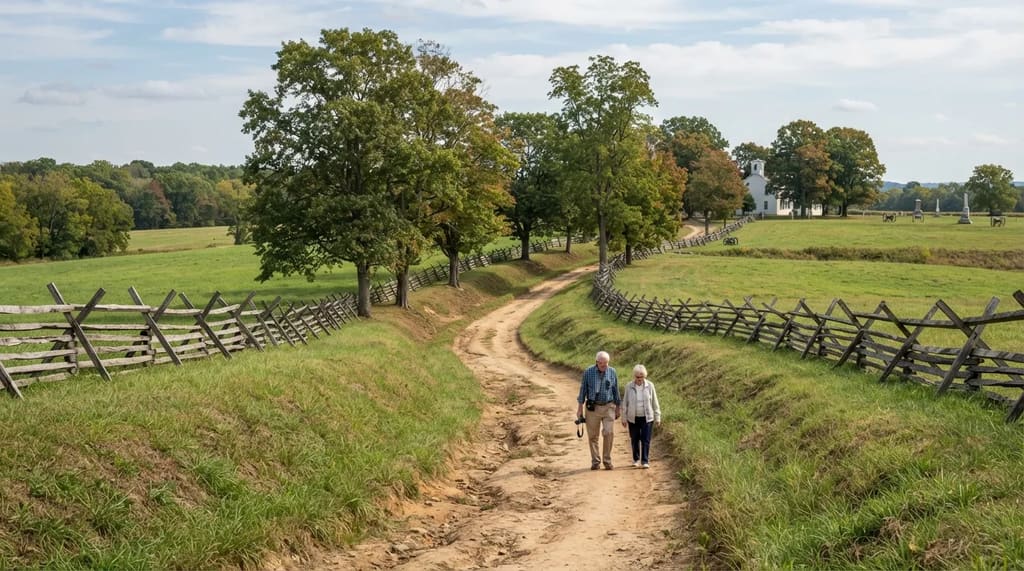
The bloodiest single day in American history happened in a place that now feels almost peaceful. At Antietam, in Maryland, the fighting of September 17, 1862 left more than 22,000 casualties.
Today the park runs a self-guided auto tour of roughly eight and a half miles, with numbered stops. You can pull over at Burnside Bridge, the Sunken Road and the Dunker Church and walk only as far as you like.
That’s the secret for anyone who tires easily. Every stop lets you stay in the car or take a short, level stroll.
Open farmland dominates the route, so the pace feels slow and the views stretch wide. The Sunken Road, nicknamed Bloody Lane, is hard to forget once you stand beside it.
Up next is the “quiet side” of a very busy park, and it turns out to be real…
#8 – Ship Harbor, Acadia’s Quiet Side

Acadia’s main road is the one everybody knows. The 27-mile Park Loop Road winds through the eastern part of Mount Desert Island and is the park’s best-known drive.2
The west side of the island, known as the Quiet Side, tells another story. Ship Harbor Nature Trail is a short loop there, running along rocky shoreline and a tidal inlet.
Quick Compare
- Park Loop Road: 27 miles, east side, the famous and busy drive
- Ship Harbor Trail: A short shoreline loop on the Quiet Side
- Bass Harbor Head Light: Also on the west side, an easy pairing
Here’s what most people don’t realize. The tide decides what you see. At low tide the rocks reveal tide pools and a very different shoreline.
Check a tide chart before you go. The rocks near the water can be slippery, so wear shoes with real grip.
Bass Harbor Head Light is also on this side of the island, so you can pair the walk with a classic Maine lighthouse view. Both feel a world away from the bumper-to-bumper side.
Next comes a forest that grows below the dunes and hides from the sea…
#7 – Sunken Forest, Fire Island National Seashore
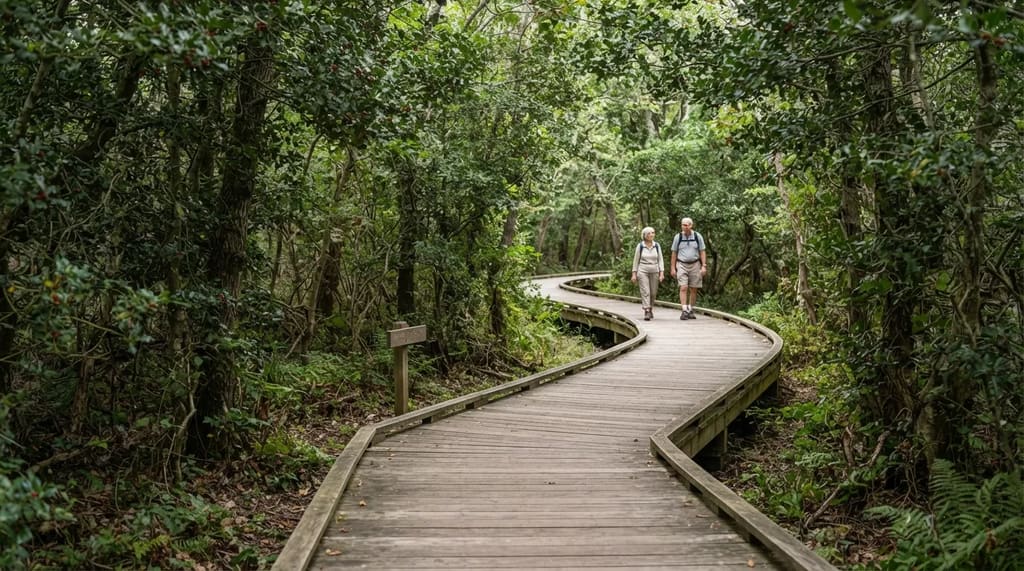
You can’t drive to this one. A ferry carries you across the water to Fire Island, off Long Island, New York.
That alone keeps the numbers down. The Sunken Forest Trail is a boardwalk loop through a maritime holly forest that grows in the shelter of the dunes.
The trees look like they belong inland. This forest is actually growing on a barrier island, steps from the Atlantic.
The boardwalk keeps the walk flat and dry. Most people finish it at an easy pace with plenty of time to stop and look.
Ferries here run on a seasonal schedule, so check times before you plan the day. Next up is a 15-mile loop that many travelers visit in exactly the wrong season…
#6 – Shark Valley Loop, Everglades National Park
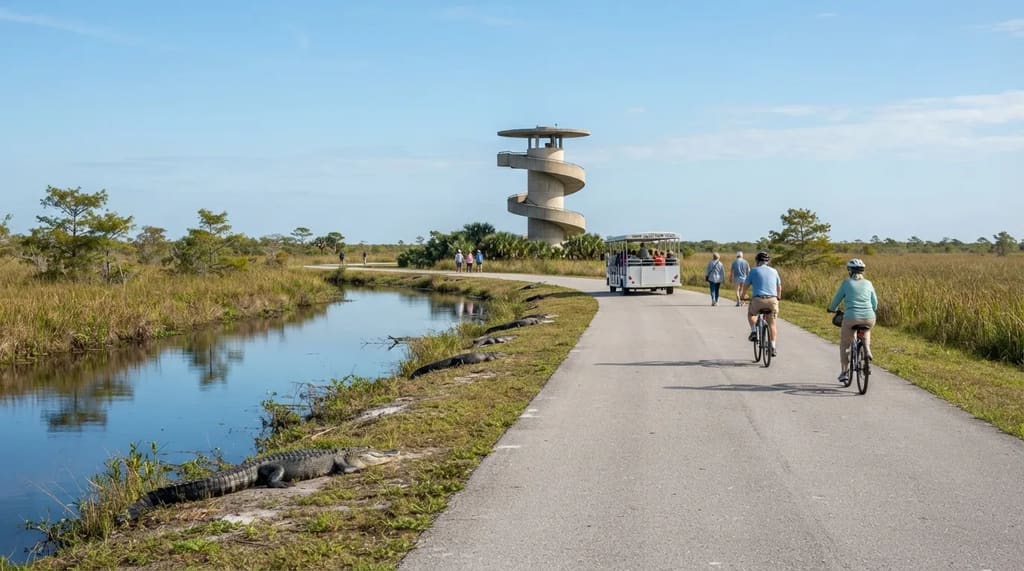
Most people hear “Everglades” and picture airboats and crowds. Shark Valley, in the park’s northern section, is a paved 15-mile loop that is closed to private cars.
Walkers, cyclists and a narrated tram share the route. An observation tower stands about halfway around.
Here’s a blunt opinion. Shark Valley in summer is a poor bargain, thanks to heat, storms and mosquitoes.
The dry winter season is the smarter choice. Alligators gather along the water, and the tram lets you see the loop without walking 15 miles.
Next is a lighthouse that moved, and the forest most visitors never enter…
#5 – Buxton Woods Nature Trail, Cape Hatteras
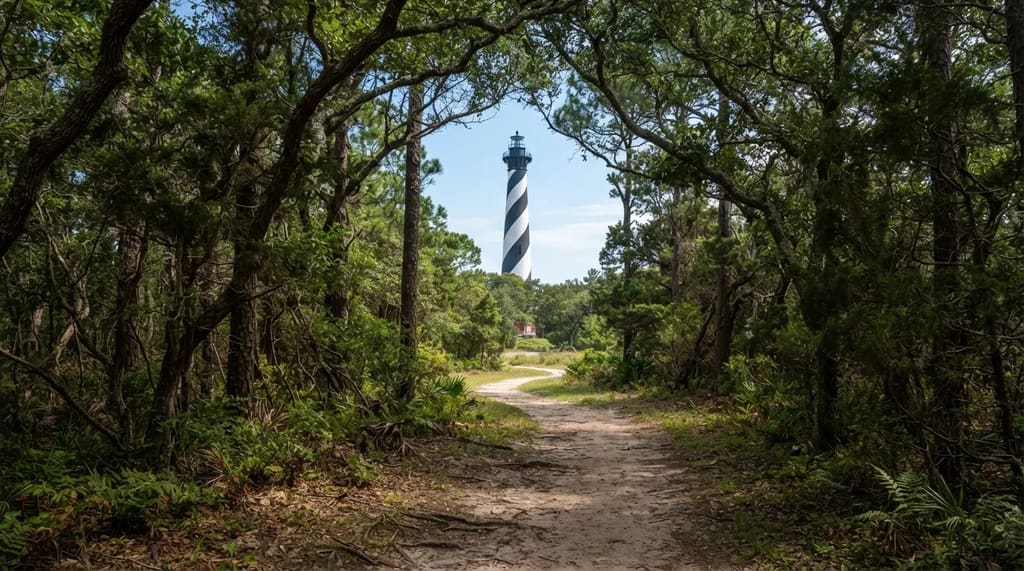
Everyone goes to see the Cape Hatteras Lighthouse. Few people walk into the woods beside it.
Buxton Woods is a maritime forest on the Outer Banks of North Carolina. The nature trail there is a short loop through shaded woodland, a welcome change from the open sand and sun.
Here’s the surprise. The lighthouse itself was physically moved inland in 1999 to save it from the eroding shore. That story alone makes the stop worth it.
At roughly 198 feet, it is the tallest brick lighthouse in the United States. Think about that the next time you glance up at it from the trail.
Why It Stands Out
- Shade: Forest cover instead of open sand and sun
- Height: About 198 feet, the tallest brick lighthouse in the U.S.
- The story: Moved inland in 1999 to escape the eroding shore
- Easy pairing: Woods first, then the lighthouse grounds
Take the woods in the morning, before the heat builds. Then walk toward the lighthouse grounds if you still have the energy.
Coming up is a battlefield road with a built-in bike lane and a very precise stop count…
#4 – Saratoga Battlefield Tour Road, New York
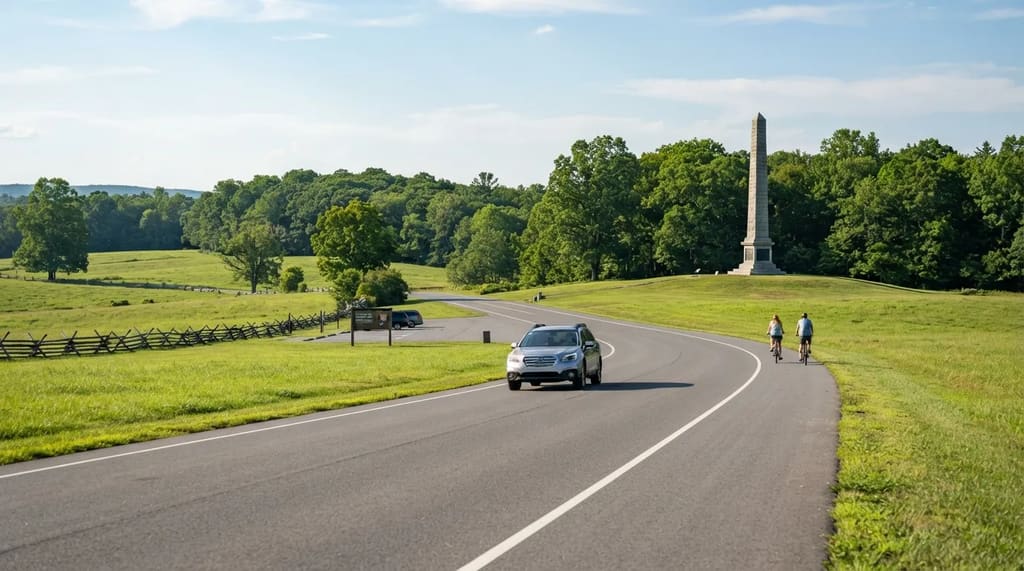
This one is built for people who want to see a lot without walking far. The park offers a 10-mile driving tour road with a total of 10 stops, each with parking and interpretive signs.3 4
The road is one-way and paved. Per the National Park Service, it has a 25 mph speed limit and a multi-use lane on the right-hand side.
Here’s what many drivers don’t know. If you skip every stop, the drive takes only about 30 minutes. With the audio tour and all 10 stops, it takes 1 to 2 hours.3
The fighting here in 1777 is widely seen as a turning point of the Revolution. Yet the fields now feel more like a country drive than a famous battlefield.
Plan for a few limits. Restrooms are at Stops 2 and 7, but there’s no water, and the road closes to vehicles in winter.3
Next is a trail with benches placed for exactly the walkers you’d expect…
#3 – Limberlost Trail, Shenandoah National Park
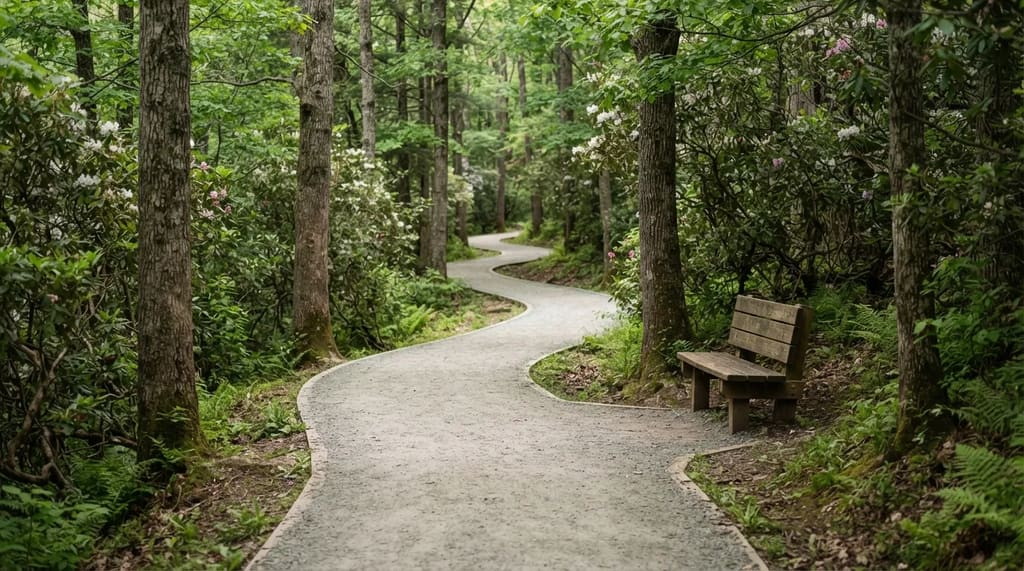
Skyline Drive gets the traffic, but one short loop gets almost no attention. The Limberlost Trail is a 1.3-mile accessible loop at milepost 43 on Skyline Drive.5
The path is crushed greenstone with gentle grades. It winds through mixed hardwood forest, with mountain laurel in spring.
Here’s what makes it work for slower walkers. More than 15 wooden benches line the trail. Other sources say there are over 20 resting areas.
There’s one honest drawback. Reviewers note there isn’t any view along the trail, so don’t expect a big overlook.5
Related Stories From Travelbinger


The parking lot holds only 10 to 12 vehicles, so mornings help. Next up is a park that critics love to mock…
#2 – Congaree Boardwalk Loop, South Carolina
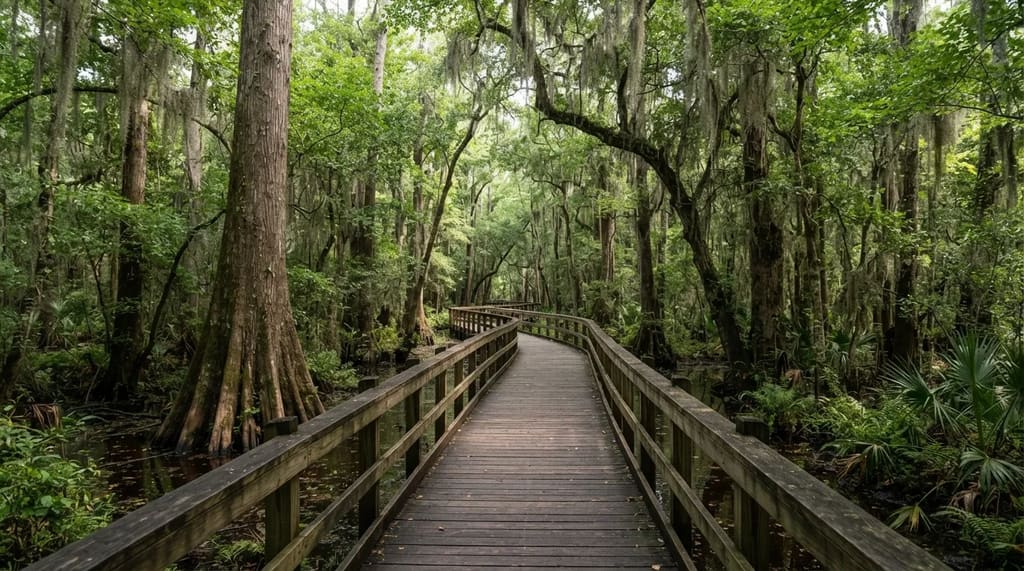
Some critics have called Congaree America’s worst national park. That reputation may be why it stays so calm.
The park sits about 18 miles outside Columbia. Sources list the boardwalk loop at anywhere from 2.4 to 2.6 miles, with only about 13 feet of elevation change.
Here’s the detail that changes the mood. The park holds the largest tract of old-growth bottomland hardwood forest left in the United States. In 2018 it ranked as the 10th-least visited national park.6
The visitor center even has a playful “mosquito meter” that tells you how bad the bugs are that day. Check it before you head out, because the insects are part of the deal in warm months.
Plan ahead on a few other points. There are no restaurants in the park, and the trail is sometimes closed because of flooding.
One loop left, and it makes the busiest park road in Maine look very different…
#1 – Schoodic Loop Road, Acadia National Park
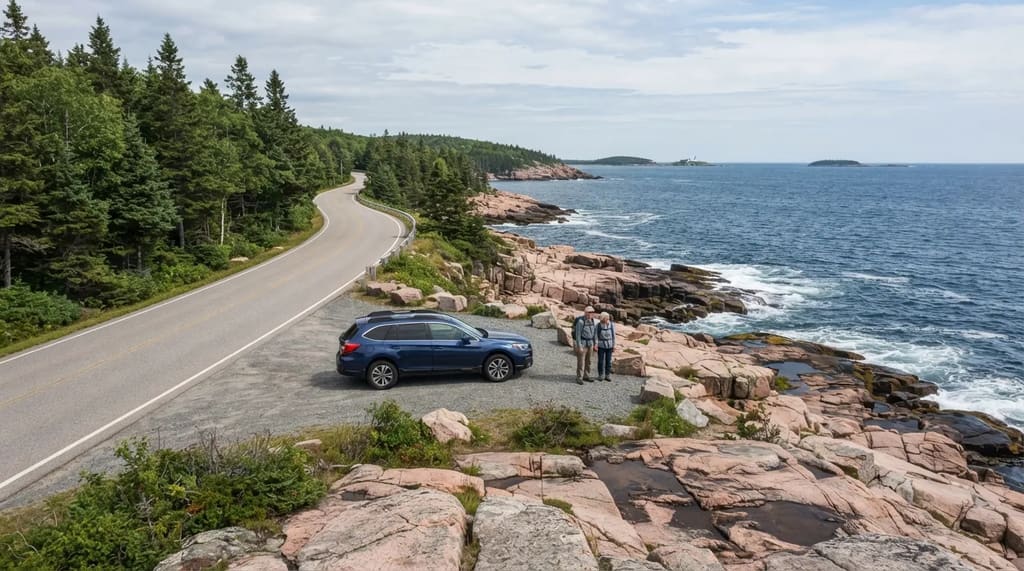
The strongest quiet loop on this list sits inside one of the busiest parks in the East. Schoodic is Acadia’s mainland district, with a six-mile one-way loop road and roughly a tenth of the traffic Mount Desert Island gets.7
The full circuit, including the road back through Birch Harbor, totals around 11 miles. The road has pullouts for views of the Atlantic.
Here’s the detail that sets it apart. On a summer afternoon when the Park Loop Road is bumper to bumper, Schoodic Point can feel like a different park entirely.
Waves crash over pink-gray granite ledges while only a handful of cars sit in the pullouts. For many visitors, that is the whole reason to come.
Getting there is easy. The ferry from Bar Harbor to Winter Harbor takes about 45 minutes, and a free seasonal Island Explorer shuttle runs on the peninsula.
So what do all twelve loops have in common, and what should you do with that?
The Bottom Line
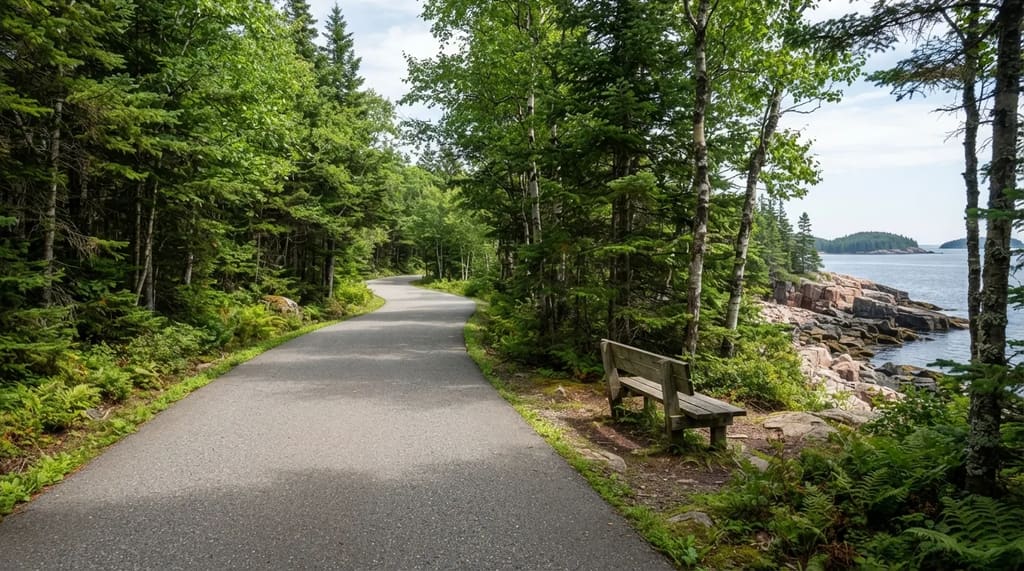
The quietest loops on this list share a few traits: flat surfaces, one-way roads, benches and low traffic. Schoodic offers roughly a tenth of Mount Desert Island’s traffic, and Congaree is one of the least-visited parks in the system.
Limberlost has more than 15 benches on a 1.3-mile loop, and Saratoga takes only 30 minutes if you skip the stops. Check current conditions, hours and fees with each park before you go, since flooding and closures happen.
Visitors 62 and older can also look into the National Park Service’s America the Beautiful Senior Pass. It can cover entrance fees at many of these places.8
Worth Knowing
- Who qualifies: U.S. citizens and permanent residents age 62 or older8
- Lifetime pass: $80, bought once
- Annual pass: $20 per year
- Upgrade trick: Four annual passes can be traded in for a lifetime pass
- Bring: Proof of age when you buy in person
The crowded roads will still be there every July. The quiet ones are waiting, and which one will you try first?
- NPS Morristown Park Overview: https://www.nps.gov/im/netn/morr.htm
- NPS Acadia Park Loop Road: https://www.nps.gov/acad/planyourvisit/park-loop-road.htm
- NPS Saratoga Tour Road: https://www.nps.gov/thingstodo/take-a-drive-on-the-battlefield-tour-road.htm
- NPS Saratoga Tour Road Biking: https://www.nps.gov/sara/planyourvisit/bike-the-tour-road.htm
- Limberlost Trail Reviews: https://www.tripadvisor.com/Attraction_Review-g143051-d8650326-Reviews-Limberlost_Trail-Shenandoah_National_Park_Virginia.html
- Congaree Park Overview: https://en.wikipedia.org/wiki/Congaree_National_Park
- Schoodic Peninsula Guide: https://maine.com/guides/schoodic-peninsula
- NPS Entrance Passes: https://www.nps.gov/planyourvisit/passes.htm