Churton Street in Hillsborough, North Carolina, packs sixteen historical markers into just four blocks. That is the kind of street this list is built around: small enough to finish in a morning, rich enough that you will not want to.
The twelve streets below run from the mountains to the coast, and they differ mostly in how much they ask of your feet. One of them still has its antebellum houses because of how an army behaved in 1861, and you will have to pass eleven other towns to find out which.
#12 – Davidson’s College Main Street North of Charlotte
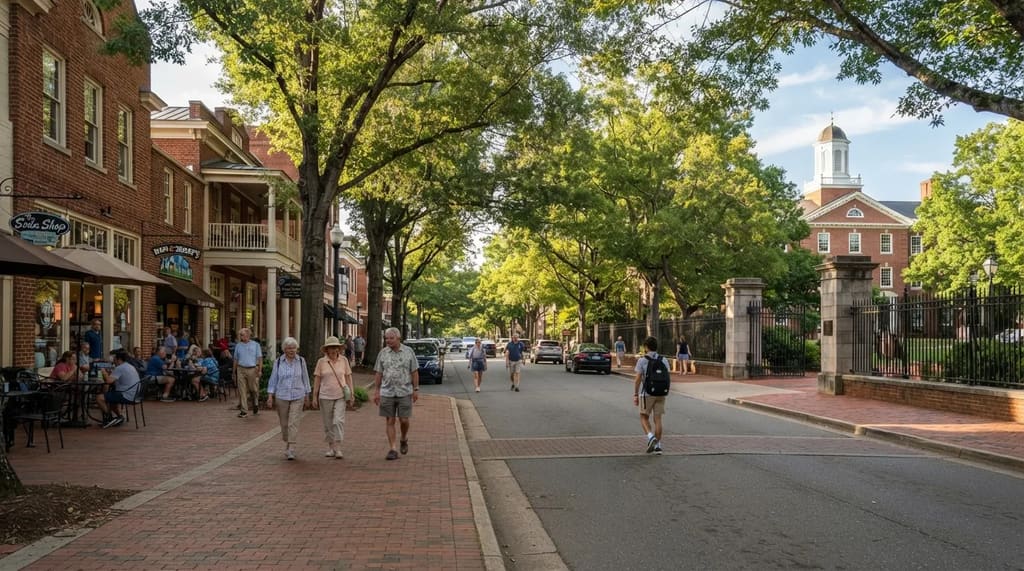
Davidson sits in Mecklenburg County, north of Charlotte, and its Main Street runs right up against Davidson College, which dates to 1837. That pairing gives the street a steady pace, since students, faculty and visitors share the same few blocks on foot.
Shops and cafes line the street, and the campus lawns are a short step away. You can break a walk into two halves with a long sit under the trees, which is the right way to use a town this size.
Treat Davidson as a half-day stop rather than a weekend. The distances are short and nothing here needs a ticket or a reservation.
The town’s roots are in the 1800s, so it cannot give you the colonial streets that the coastal towns later in this list can. What it offers instead is a rhythm set by the college calendar, and a town shaped by horses keeps a very different one.
#11 – Aiken’s Wide Streets in Horse Country
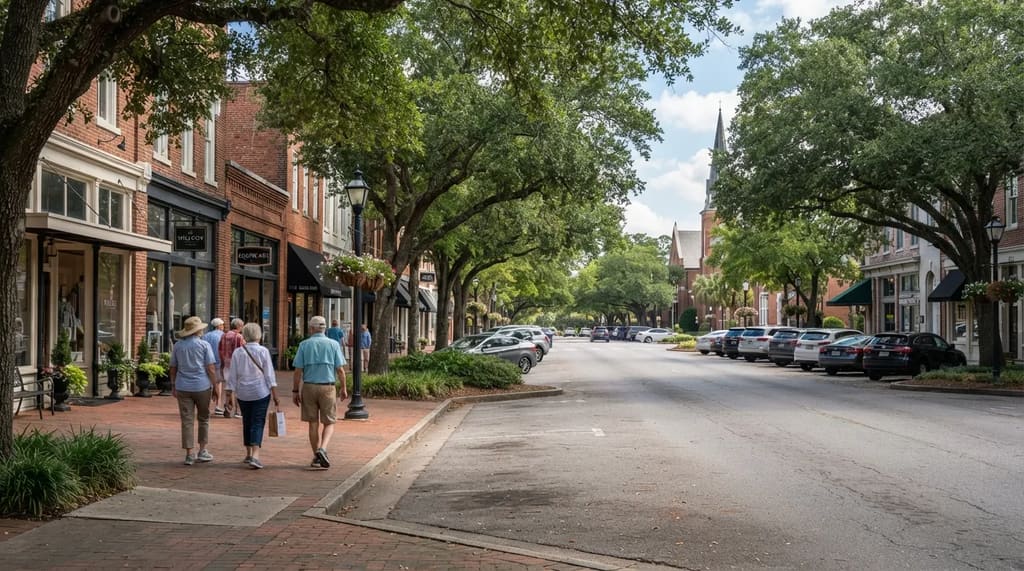
Aiken, South Carolina, is known as horse country, and the wide, tree-shaded streets around its downtown reflect that history. The scale is looser than in a colonial grid, so a walk here feels less crowded even when the sidewalks are busy.
Downtown centers on Laurens Street, where shops and restaurants sit within a few blocks of one another. Hopelands Gardens, a public garden near downtown, gives you a place to sit down before you start back.
Aiken takes a little more planning than Davidson because its best stops sit slightly apart. Two short walks with a rest between them will show you more than one long loop, and your knees will thank you for it.
Aiken built its fame on horses and gardens, but a town in northwest North Carolina built its fame on a television show.
#10 – Mount Airy’s Main Street and Mayberry
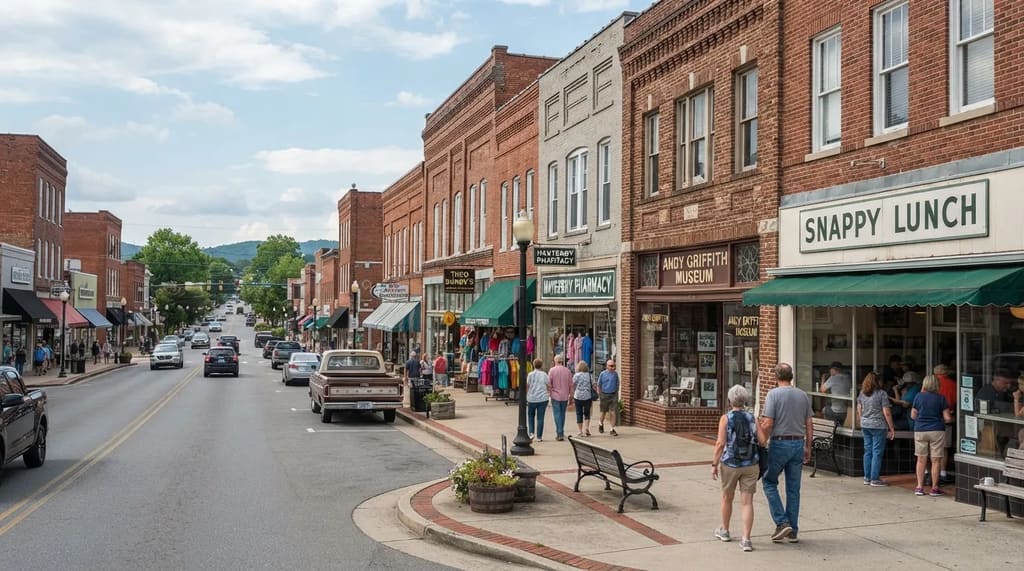
Mount Airy, North Carolina, sits near the Virginia line, and it is the hometown of Andy Griffith. The town leans into that fact, so Main Street has a theme that the other streets here do not.
The Andy Griffith Museum and the old lunch counters give the street its draw, and you do not have to be a longtime viewer to enjoy the storefronts. Give the show tie-in an hour, though, not a day.
The best part of Mount Airy is the ordinary business of a working small-town street. Watch for it between the Mayberry stops.
A street that works as a theme park for one story is a different thing from a street that simply kept its old buildings, as the next town on the coast did.
#9 – Southport’s Waterfront Where Cape Fear Meets the Sea
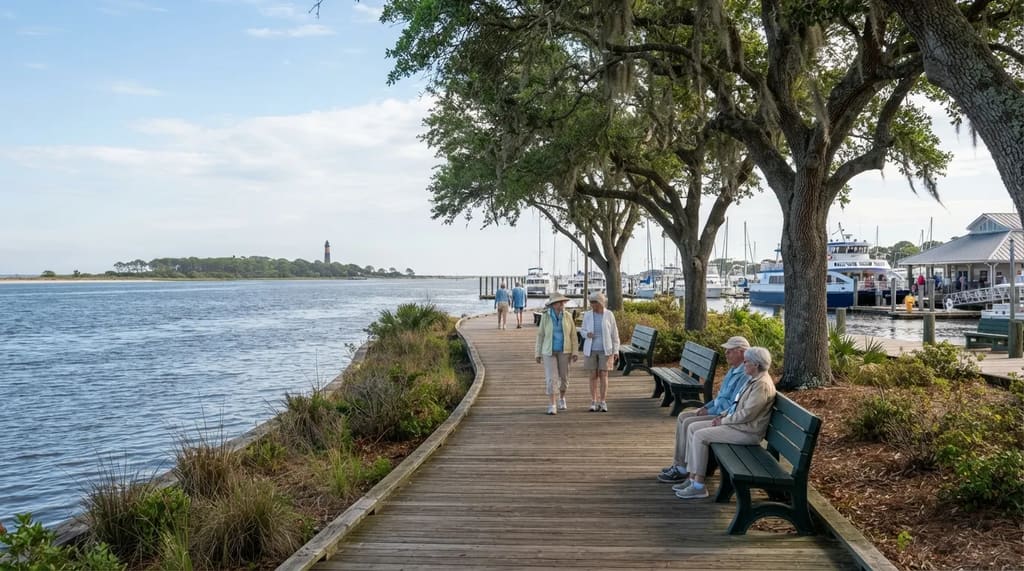
Southport sits at the mouth of the Cape Fear River, and the town was called Smithville until 1887. That older name still turns up in local history, so you will see it on markers and hear it in conversation.
Live oaks shade the streets of old homes near the waterfront, and the river is never more than a short walk away. The Bald Head Island ferry leaves from a marina in Southport, but a good day here does not need it.
Fast Facts
- Location: the mouth of the Cape Fear River
- Old name: Smithville, used until 1887
- Ferry: the Bald Head Island boat leaves from a Southport marina
- Best bench time: a weekday morning
If you want a quieter walk, go on a weekday morning, when the benches along the water are easiest to claim. Sitting by the river is as much a part of Southport as the houses are.
Southport’s river and its old name point to a trade past, and an inland town in South Carolina has a different and older kind of past.
#8 – Camden, South Carolina’s Oldest Inland City
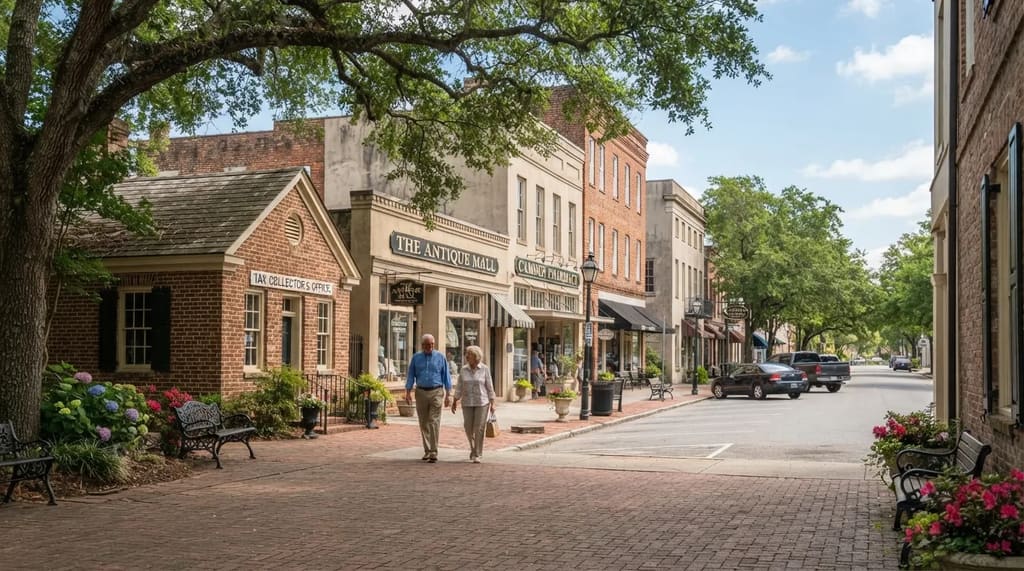
Camden calls itself the oldest inland city in South Carolina, and its roots go back to the 1730s.1 The Battle of Camden was fought nearby in 1780, so the town’s story is tied to the Revolutionary War as well as to its streets.
Camden also has a horse tradition, much like Aiken, and the connection is worth noticing if you plan to visit both. The two towns share a love of the outdoors, though Camden is the one with the deeper colonial record.
The founding date is a clue to the town’s history, but it does not tell you what the sidewalks will show. Ask at a local visitor center which downtown buildings are original before you build a day around them.
Camden’s age raises the question of what a long-lived port town looks like when its waterfront is the main attraction.
#7 – Georgetown’s Front Street and the Harborwalk
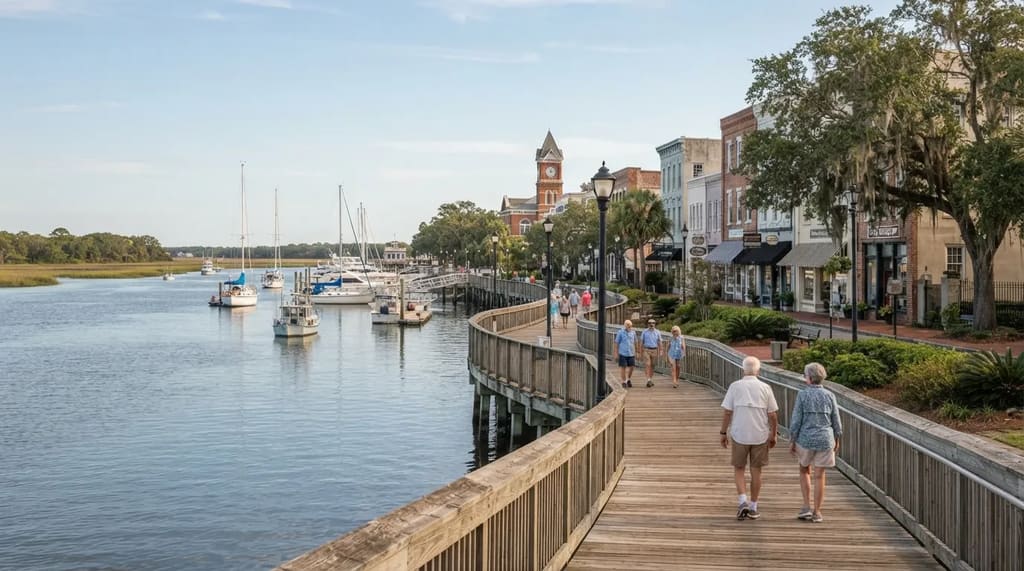
Georgetown, South Carolina, was laid out in the 1720s on Winyah Bay, and its Front Street runs along the Sampit River. The Harborwalk follows the water, so the flattest, easiest stretch of the visit is also the prettiest.
The town grew rich on rice, and the Rice Museum on Front Street covers that history. Start there, because it gives context to the old buildings you will pass afterward.
Georgetown is a good choice if you want a waterfront main street with fewer crowds than a bigger coastal city. It does not have the polish of Beaufort, South Carolina, but the walk is easier to plan.
#6 – New Bern’s Middle Street and the Birthplace of Pepsi
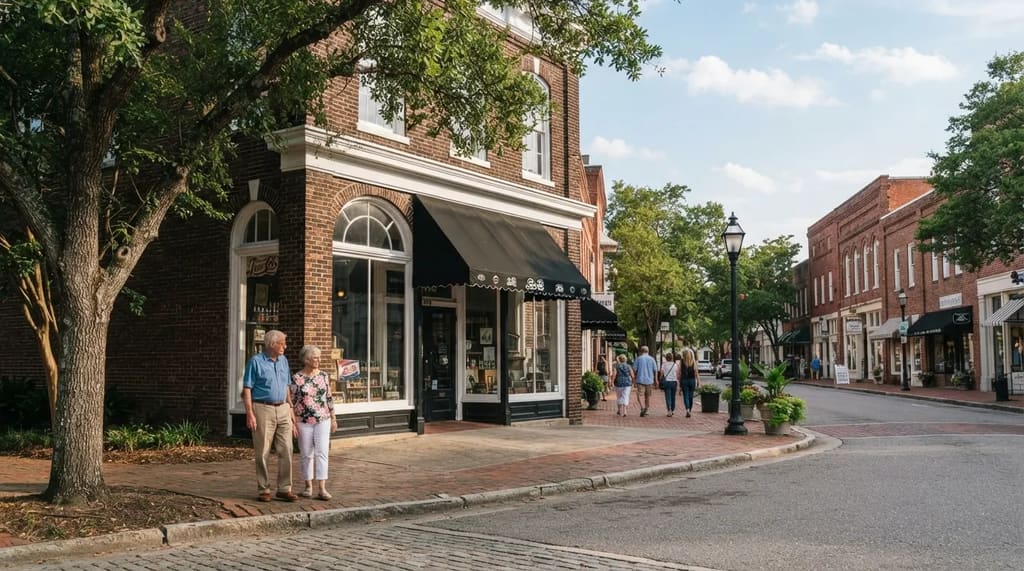
New Bern sits where the Neuse and Trent rivers meet, and the town was once a colonial capital. Tryon Palace, a reconstruction of the governor’s residence, is the major landmark a few blocks from the shopping streets.
Middle Street is where visitors look for the old Pepsi store. The drink was created by a local pharmacist, so the street offers a quick and cheerful break from the grander history around it.
Give New Bern a full afternoon, because the palace and the shopping streets are far enough apart that you will want to take them as separate walks. A lunch stop in between keeps the day comfortable.
#5 – Beaufort, North Carolina’s Front Street Boardwalk
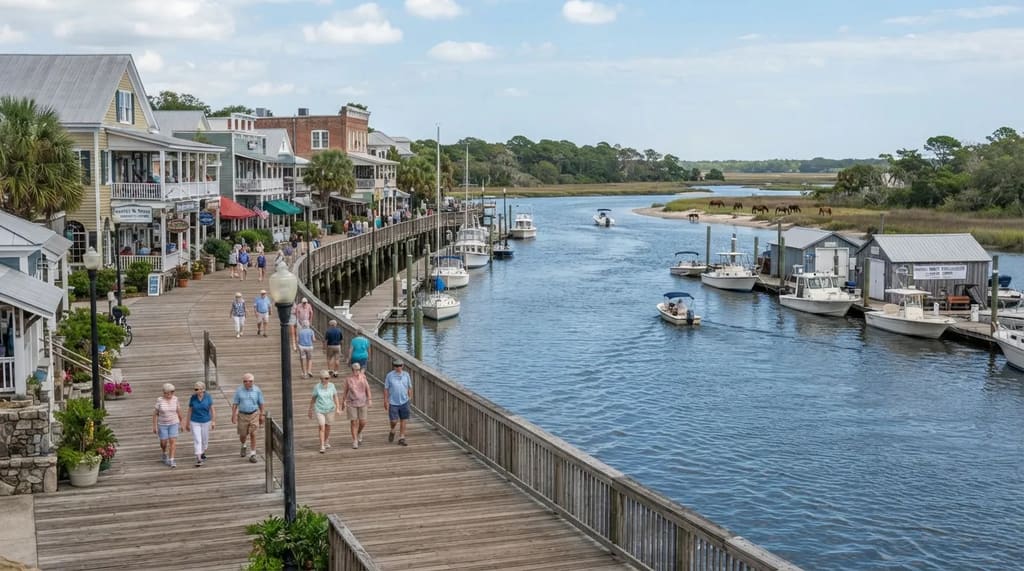
Beaufort, North Carolina, faces Taylor’s Creek, and Front Street runs right along the water. A boardwalk gives you a level path, and the channel is close enough that boats pass at an easy distance.
Across the creek lies the Rachel Carson Reserve, where wild horses can sometimes be seen from the waterfront. The North Carolina Maritime Museum is on Front Street, which means a rainy-day option sits a few steps from the water.
Keep the two Beauforts apart when you plan, because they are separated by several hundred miles and have different histories. This one is a boardwalk town, and the other, later in this list, is a Lowcountry district of grand houses.
Quick Compare
- Beaufort, NC: Front Street on Taylor’s Creek, with a level boardwalk and boats passing close by
- Beaufort, NC: the North Carolina Maritime Museum as a rainy-day backup
- Beaufort, SC: founded in 1711, with Bay Street at the center of a National Register historic district
- Beaufort, SC: a compact, flat downtown of antebellum houses
#4 – Brevard’s Mountain Main Street and Its Hotel
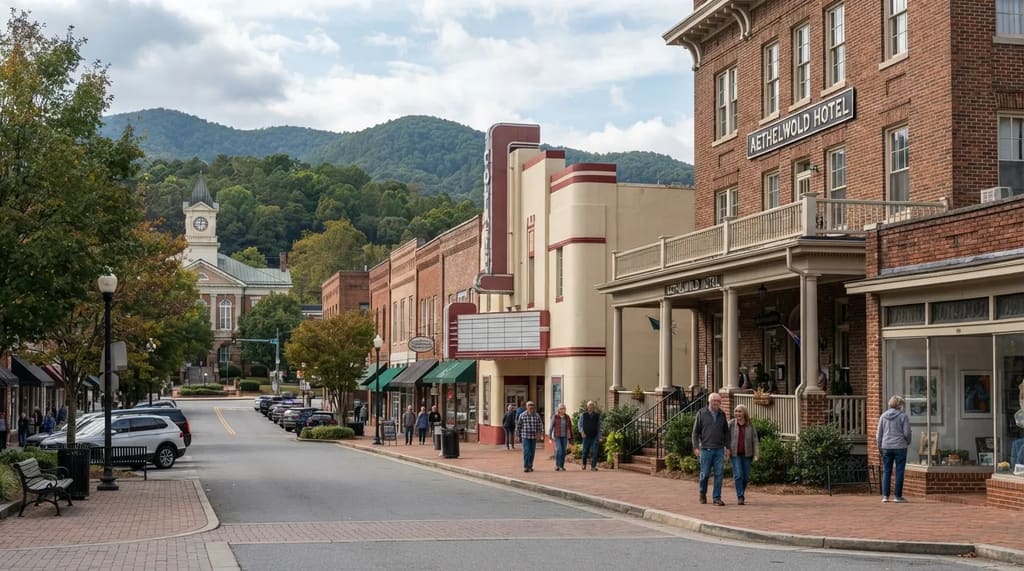
Brevard’s Main Street Historic District holds 32 contributing buildings in the central business district.2 They include the Aethelwold Hotel, where John D. Rockefeller and former President William Taft stayed.3
A walking guide to the district was produced in 2018 by the Joint Historic Preservation Commission with Heart of Brevard and the county library’s North Carolina Room.3 4 You can follow it at your own pace, so no tour ticket is required.
Brevard was incorporated in 1868 and lies 27 miles from Asheville and 8 miles from the South Carolina border. That makes it an easy add-on to a mountain trip, though it is worth a day of its own.
The guide stays within roughly 1880 to 1940, and a street in the Piedmont reaches back much further.
#3 – Hillsborough’s Churton Street and Its Sixteen Markers
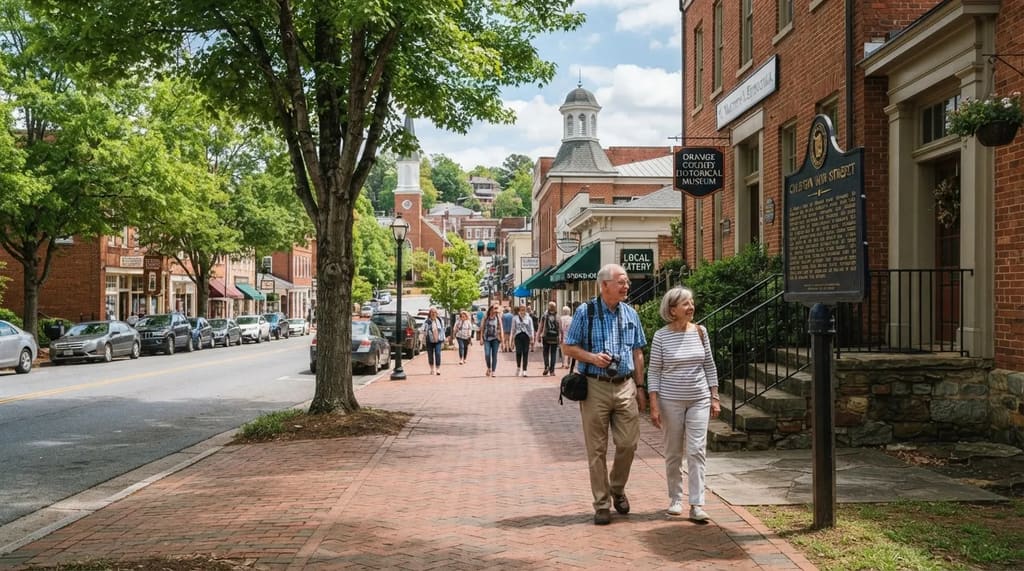
Churton Street is lined with sixteen historical markers along four blocks, and the town sits among the Piedmont’s oldest. The sites within walking distance include the Regulator Hanging Site, St. Matthew’s Episcopal Church and the Old Town Cemetery.5
The Old Town Cemetery holds 184 original markers, which is plenty for a thoughtful half hour. The Orange County Historical Museum on Churton Street gives the wider story of the town and its county.
Take the self-guided route first. The Alexander Dickson House holds the visitors center, where you can pick up maps and a walking tour booklet, so you can set the pace yourself instead of keeping to a group.5
A guided stroll is a good second visit. Tours are limited to 20 people, and the organizers ask for water and comfortable shoes, so it suits a morning when you want stories more than a map.
Worth Knowing
- Churton Street has sixteen historical markers across four blocks
- Self-guided maps and a walking tour booklet are at the Alexander Dickson House visitors center
- Guided strolls are capped at 20 people
- Bring water and comfortable shoes for either option
Hillsborough rewards the slower approach, and the next town went through a long stretch when it was nearly forgotten.
#2 – Edenton’s Broad Street Down to the Water
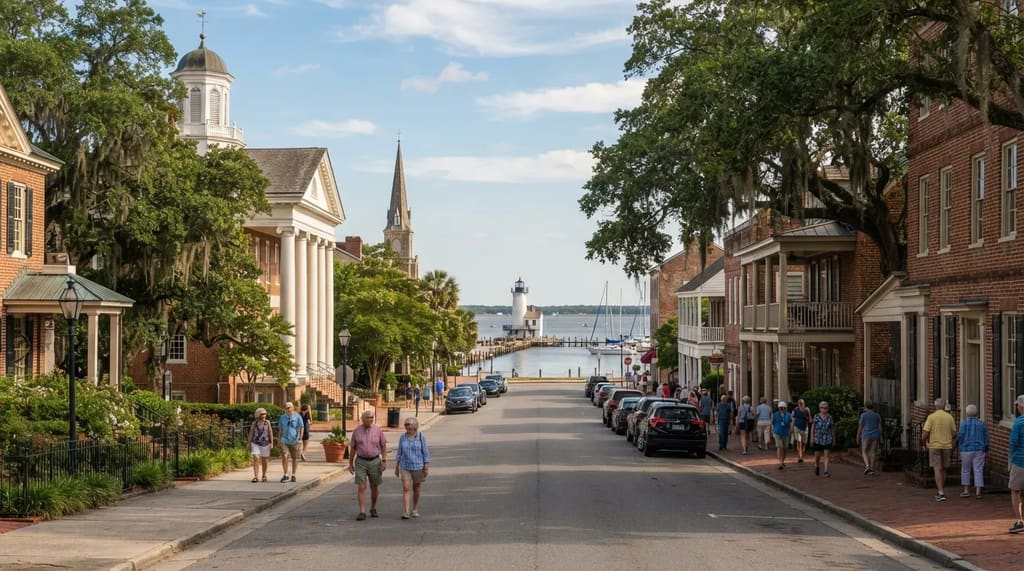
Edenton’s historic district and downtown are concentrated along and adjacent to Broad Street and are easily walkable.6 The street leads from the courthouse to the waterfront on Edenton Bay, so the walk has a natural beginning and end.
Related Stories From Travelbinger


The town has a history of being passed over. Shipping moved to bigger hubs such as Norfolk and Wilmington, and only in the later twentieth century did locals see the value of their old buildings, which is why so much survives.
- The 1767 Chowan County Court House
- The 1758 Georgian Cupola House
- The 1886 Roanoke River Lighthouse on the harbor
If you would rather sit than walk, the Historic Edenton Trolley Tours let you ride while a guide describes the buildings and waterfront. Take the trolley first and walk afterward, because you will know which blocks deserve your slow attention.7
The pattern here, a place overlooked until its houses were the only thing left standing, finds its clearest case in a Lowcountry town a few hundred miles south.
#1 – Beaufort, South Carolina’s Bay Street and the Army That Stayed
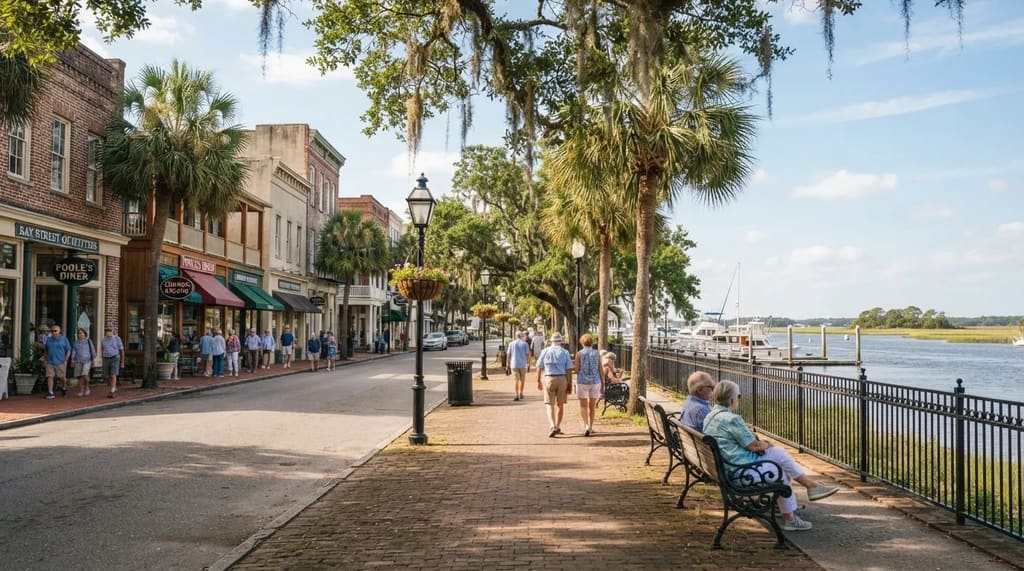
Beaufort was founded in 1711, and Bay Street is the center of a historic district listed on the National Register of Historic Places.8 The downtown is compact, flat and visually rich, so it suits a slow pace.
The houses survived because of what happened in the Civil War. Union forces took the town in late 1861 and lived in the houses instead of burning them, and that choice is why the antebellum streets can still be walked today.
Bay Street itself is a short two- to three-block waterfront stretch with benches, vintage streetlamps and shade from awnings and the occasional palm tree. That means you can rest often, and nobody will hurry you.
- A 1.9-mile introductory walk that takes in the waterfront park, Bay Street and the Parish Church of St. Helena
- Guided history museum walks, $12 per person, 75 minutes, with an ADA-accessible route available
- The John Mark Verdier House, a Federal-style merchant’s house on Bay Street, with guided tours Monday to Saturday
Beaufort is the strongest case on this list because it joins the two ideas that run through all twelve towns. A place survived because something else took the attention, and it is now easy to enjoy at a slow pace.
Parking can be challenging, so use a public lot or walk from where you are staying.
Plan Around One Anchor and One Bench
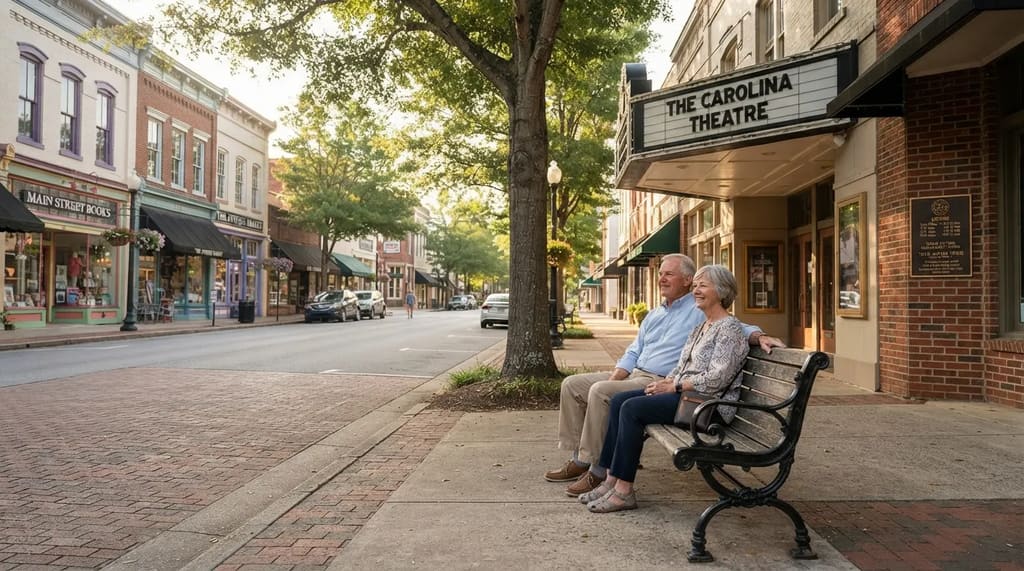
Several of these streets survived because the money, the ports or the traffic went somewhere else, and that is why they are small enough to walk in a morning. Treat each one as a place that rewards a short plan: one anchor stop, one place to park and one bench you intend to use.
Check hours and tour schedules with the local visitor center before you go, since they change by season. After that, let the rest of the day stay open.
Which main street near you has four blocks you have never walked slowly from one end to the other?
- Kershaw County History: https://www.kershaw.sc.gov/services/history-of-kershaw-county
- Main Street Historic District Brevard: https://en.wikipedia.org/wiki/Main_Street_Historic_District_(Brevard,_North_Carolina)
- Transylvania County Main Street District: https://www.transylvaniacounty.org/departments/planning-and-community-development/history
- Brevard Downtown Initiatives: https://brevardnc.org/downtown-initiatives/
- Visit Hillsborough History Itinerary: https://visithillsboroughnc.com/itinerary/history-enthusiast/
- Our State Edenton Walking Guide: https://www.ourstate.com/walking-guide-downtown-edenton-nc/
- NC DNCR Day in Edenton: https://www.dncr.nc.gov/blog/2024/10/25/america-250-north-carolina-day-historic-edenton-nc
- South Carolina Encyclopedia Beaufort: https://www.scencyclopedia.org/sce/entries/beaufort/