Cabin stewards read a stateroom the way other people read a face, and the clues are everything you leave behind. Towels, trays, shoes and door signs all speak for you before you’ve said a word.
Cruise guides and crew accounts keep circling the same handful of habits, and the last one on this list changes how the other thirteen work. We’ll start with the smallest gesture, the one that takes under a minute.
14. A Thank-You Note Left Midweek on the Desk
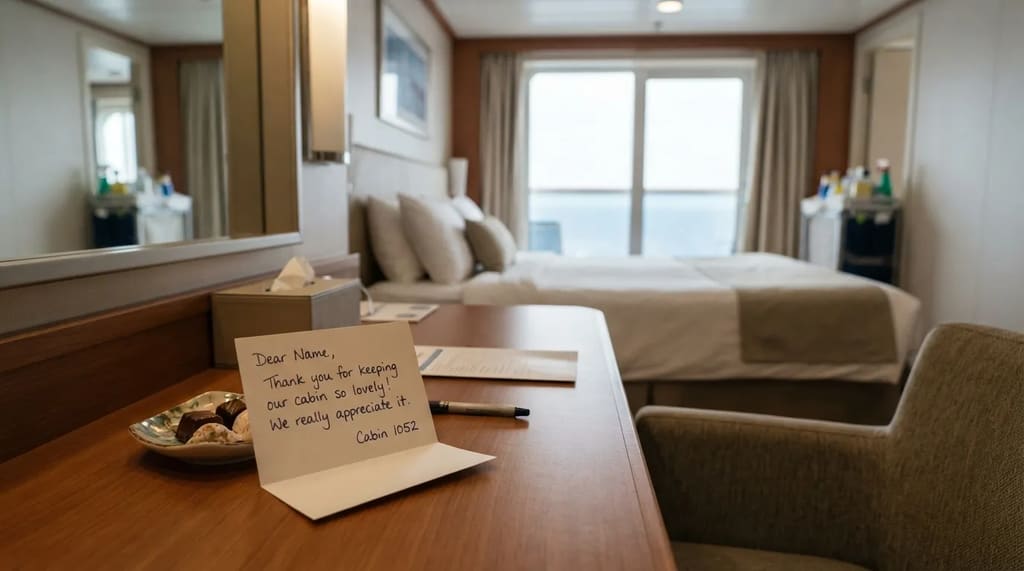
A two-line note on the desk takes under a minute to write, and it reaches your steward even if you never cross paths in the corridor. Most guests save the thank-you for the last evening, which is the worst moment to deliver it.
Write it midweek, not on the last night. Disembarkation is a hectic stretch for housekeeping, so that final evening is when your steward has the least time to read a note.
At a Glance
- When: midweek, while plenty of visits are still ahead
- Where: on the desk, in plain view
- What to include: your steward’s name, one specific detail, your cabin number
- How long: two lines is plenty
Name your steward if you know the name, and mention one specific thing, such as the tidy balcony or towels that showed up right on time. Sign it with your cabin number so it’s easy to pass along to the right person.1
A midweek note does more good than a rushed goodbye on the final morning. Your steward gets to read it with a week of visits still ahead, and that’s the version worth writing.
Learning the name takes one hello at the door, and stewards usually make the first move. That hello is where the next habit begins.
13. A Morning Greeting Using the Steward’s Name
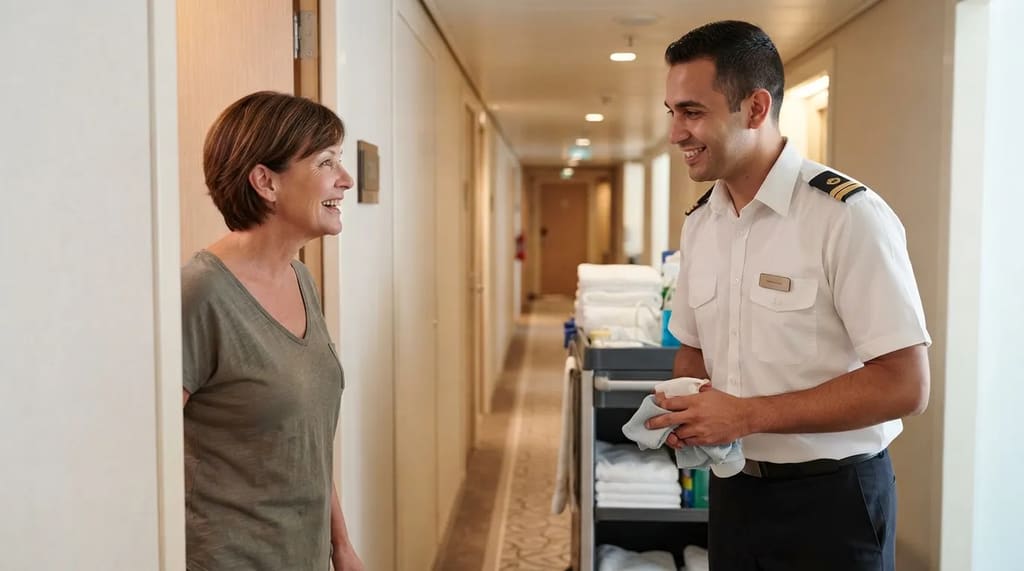
Stewards tend to greet you by name from the first day, and returning the favor is a small gesture that counts. If your steward gave you a card or wears a badge, the name is right there in front of you.
Learn the name on day one and use it each morning. A quick friendly chat is perfect, but a long conversation in the doorway holds up someone with a full list of cabins.
Walking past without a word is the opposite habit, and it’s the kind of thing stewards remember. The guest who’s warm with the cruise director and cold to the housekeeping cart tends to stand out for the wrong reason.
Even a nod and a good morning works when you’re rushing to a shore excursion. The point is to be seen, not to stop the day.
The hello is easy. What you leave on the bathroom floor right after it sends a message you may not intend.
12. Towel Piles That Send a Mixed Message
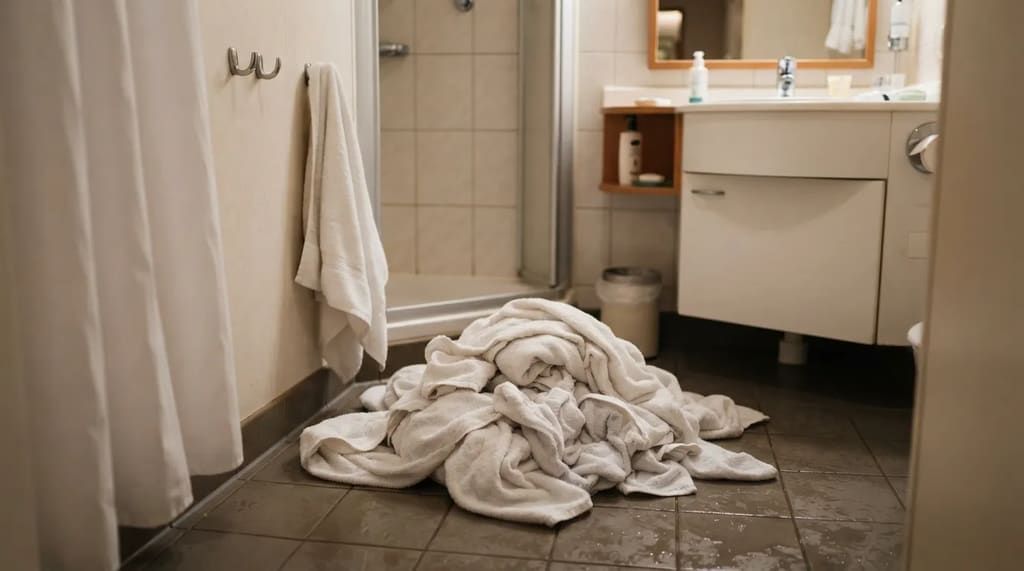
On many ships, a towel on the floor reads as a request for a fresh one, and a towel on a hook reads as one you plan to use again.2 3 A single heap of towels says neither, so the steward has to guess.
Hang what you’ll reuse, and drop what you’re finished with on the floor. A fresh towel for every use means extra laundry and water, and the hook is how you tell cabin staff you don’t need one.1
Skip the folding, too. Neat little bundles look generous, but they leave the steward unsure whether you’re done with them.
Towels at least stay inside the cabin. The balcony brings sun, wind and a heavy door into the picture.
11. Balcony Chairs and a Door Left Open

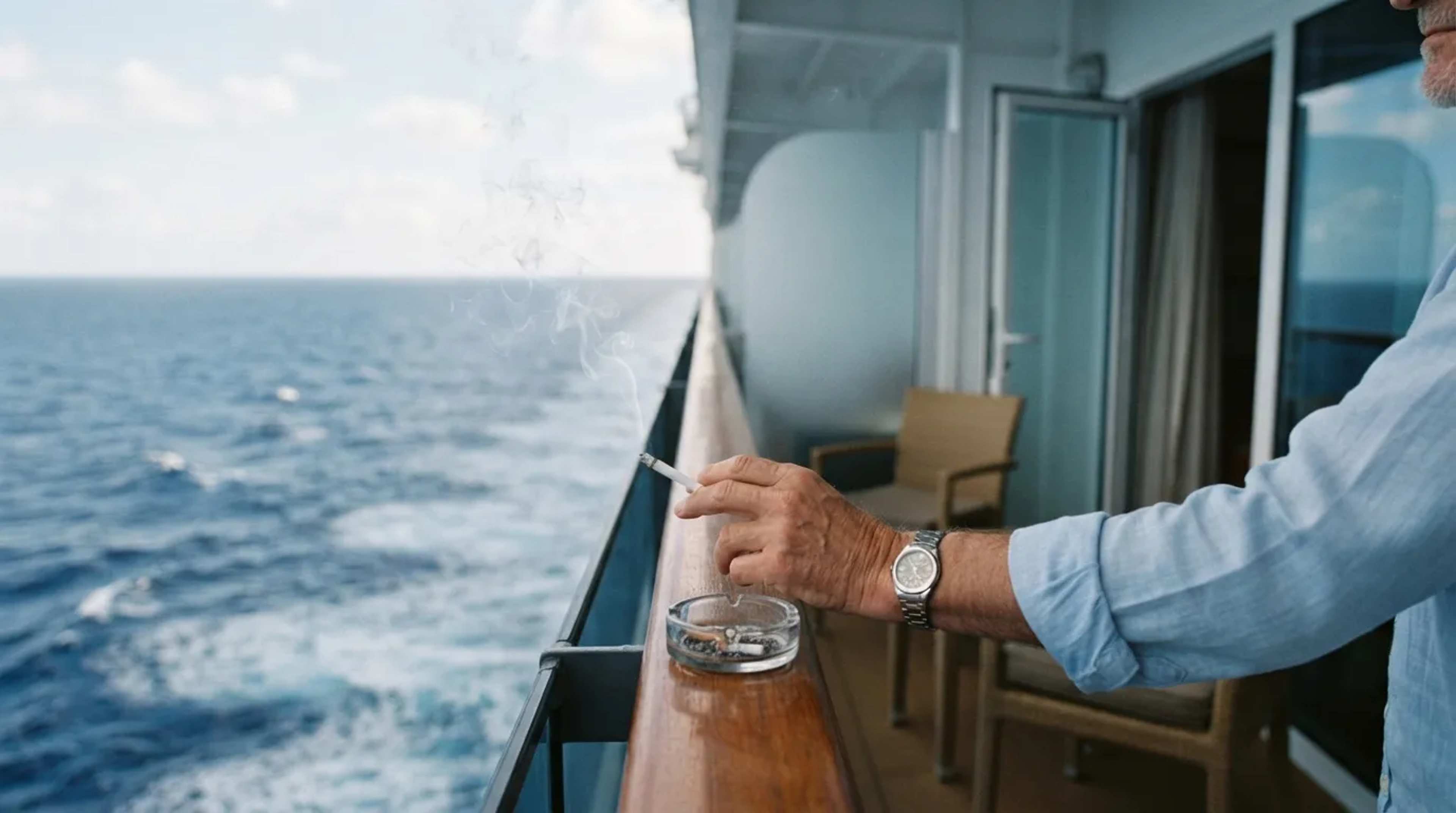
A balcony door left open all day lets the air conditioning escape, and you come back to a warm cabin. The steward is left to deal with whatever the sea breeze carried in.
Latch the balcony door every time you leave the cabin. Balcony doors are heavy and can slam before you realize it, and a slammed door is a classic cruiser pet peeve.
Worth Knowing
- A heavy balcony door can swing shut fast in a strong breeze.
- An open door lets cooled air out and warm, salty air in.
- Towels, swimsuits and paper maps are the usual items the wind takes.
- Rules about draping things over the rail vary by cruise line.
Chairs and the small table deserve the same care. Push them back and square before you go, so the steward can wipe the glass and sweep without dragging furniture across the threshold.
Anything the wind can carry, such as a towel, a swimsuit or a paper map, goes back inside before you leave. Most lines also have rules about draping items over the rail, so check yours on the first day.3
Out in the hallway, a different object sits by your door, and it looks harmless there.
10. Shoes Left Out in the Corridor
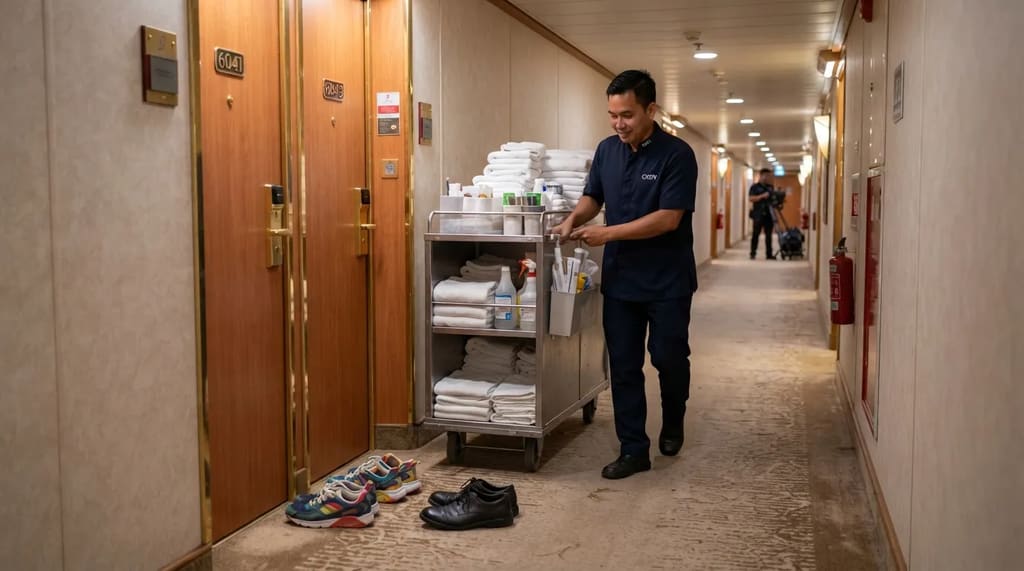
Corridors are the steward’s workplace, and they’re narrow. Housekeeping carts, vacuums and loaded trays share the hallway with your neighbors, so anything outside your door is something a crew member has to step around.
Shoes are the usual offender because they look so harmless beside a door. On many lines the hallway is also part of the ship’s emergency route, so clutter there can break a safety rule as well as a steward’s rhythm.
Keep everything inside the door, shoes included. A closet shelf works, and so does the space under the bed if there’s room, and a damp swimsuit or a bag of laundry belongs inside as well.
A tray left in that same hallway after midnight raises a different question: who is supposed to pick it up, and when?
9. Late-Night Room Service Trays in the Hallway
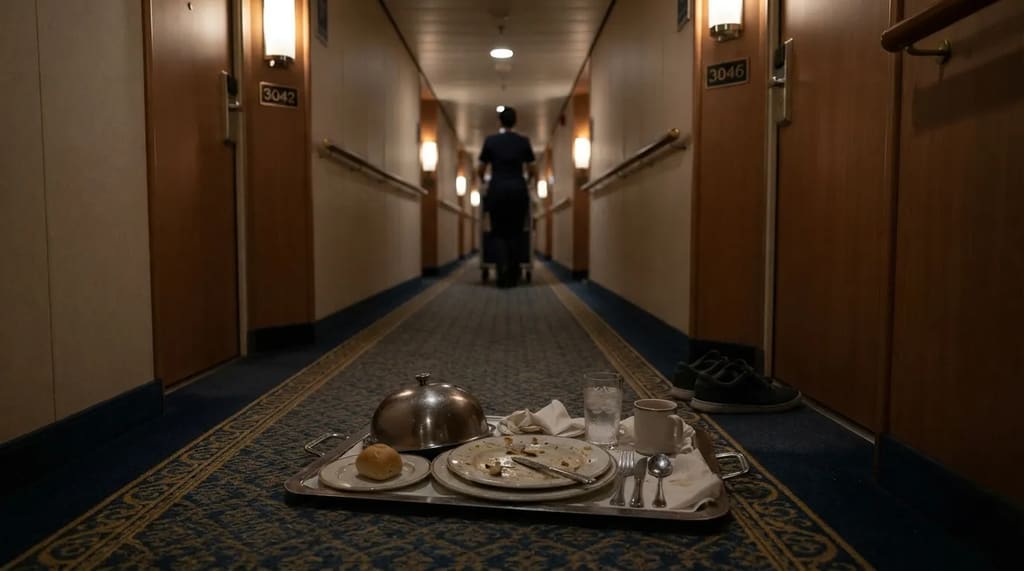
A tray set on the corridor floor at midnight is still there when the first person comes by in the morning, who may well be a crew member pushing a cart. It’s the same narrow hallway from the shoes, with a more awkward obstacle.
Stewards can remove dirty dishes, cups and room-service items from your cabin, though they aren’t the ones who bring your order. That means the clearing happens on their visit, not at the hour you finish eating.4
A plate carried back from the buffet counts the same as a room service tray. Gather every dish in one spot inside the cabin, unless your ship says otherwise.
Policies on where trays go differ by ship, so ask your steward on the first day whether to leave them inside or at a set place outside the door. One question settles it for the whole sailing.
Trays are easy to gather. The closet is where the quieter clutter hides.
8. Closet Chaos and a Shortage of Hangers
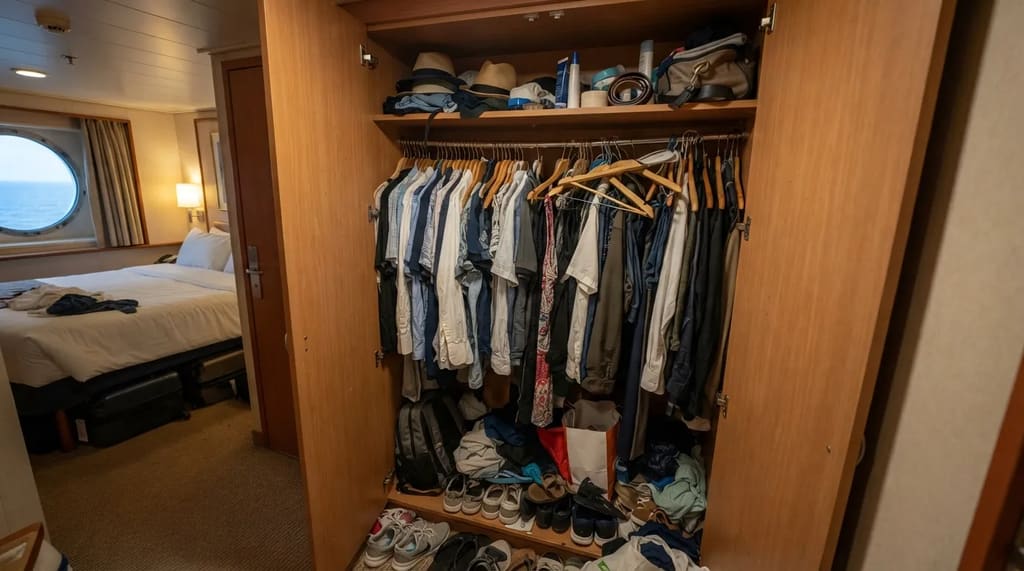
Clutter changes how stewards work, and a closet that won’t close is clutter with a door on it. Your steward may never see it, but you’ll feel it every morning.
Stewards generally tidy visible surfaces, such as the floor and furniture, so what’s behind the closet door stays as you left it. That makes the closet your job, which is fine until you’re hunting for one shirt on day five.4
Extra hangers are among the usual first-day requests, and speaking up on embarkation day helps the steward start your cruise off smoothly. It beats living with a jammed rail all week.
Give the closet ten minutes on the first afternoon. Hang what hangs, stow empty suitcases under the bed or ask your steward where they can go, and keep one shelf for what you reach for daily.
Whatever doesn’t belong in the closet or on the dresser needs a better home, and the safe is only useful if it’s set up properly.
7. A Tidy Shelf Inside the Cabin Safe
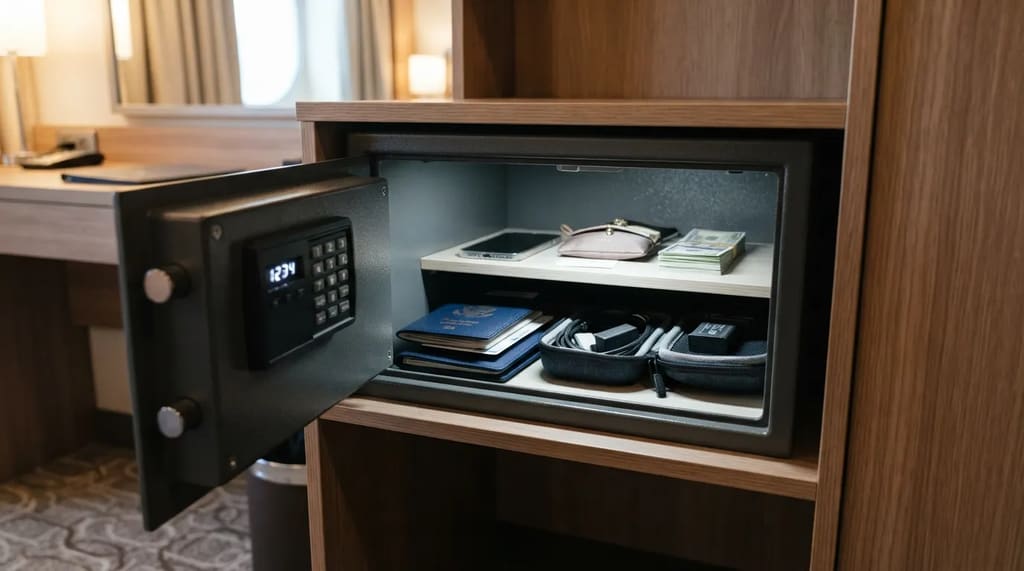
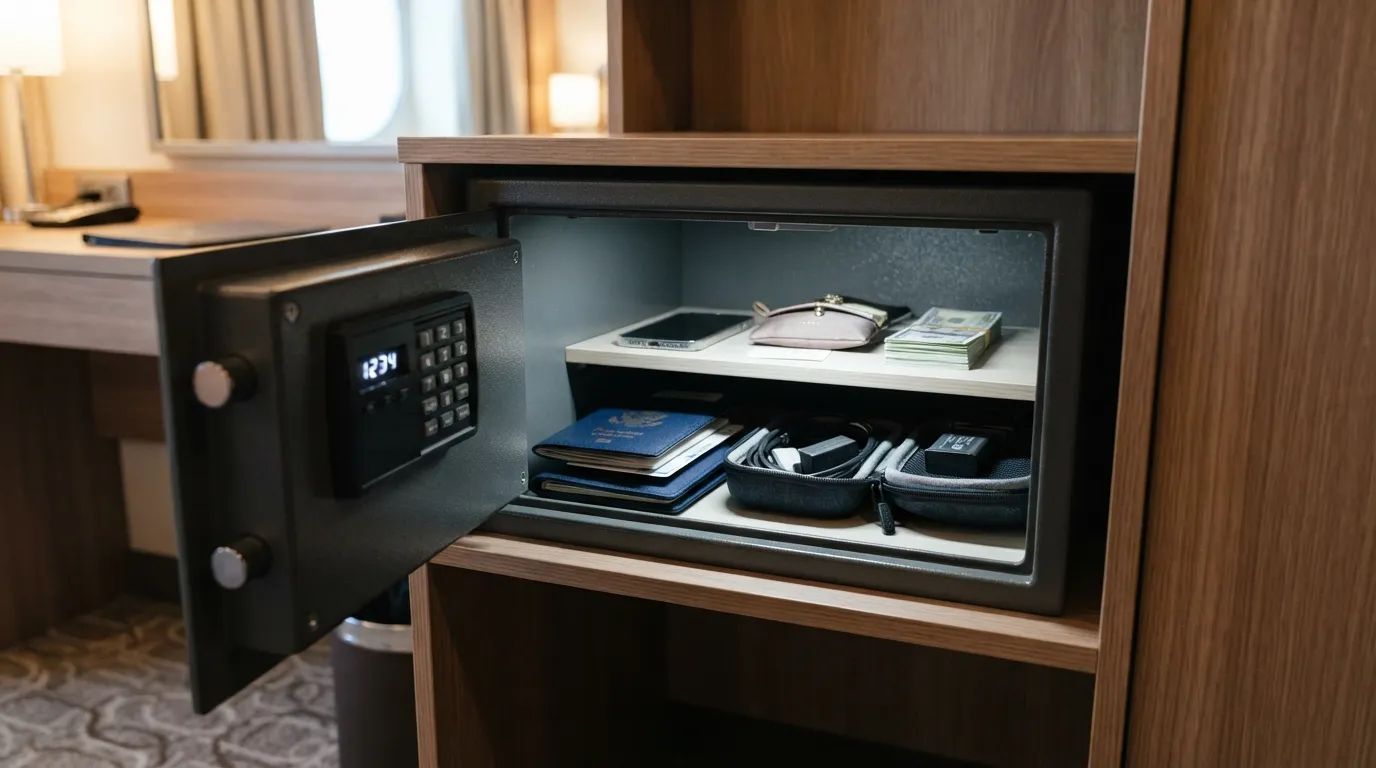
Set your safe code on day one, then open it once before you leave the room. That confirms you remember the code, which beats discovering a problem while you’re late for a tour.
Your steward has access to the cabin while you’re out, so passports, spare key cards and small electronics belong in the safe rather than on the desk.4 A cleared surface also makes the room easier to clean.
A tidy shelf pays off in seconds. Group small items in one pouch, put what you need on the way out at the front, and leave the rest behind it.
On the last morning, check the safe again before you pack. It’s an easy spot to forget, and an empty shelf with the door open tells the next guest, and the steward, that the job is done.
Some items leave the cabin altogether, and when they do, a missing label can send them to the wrong door.
6. A Laundry Bag With a Clear Label
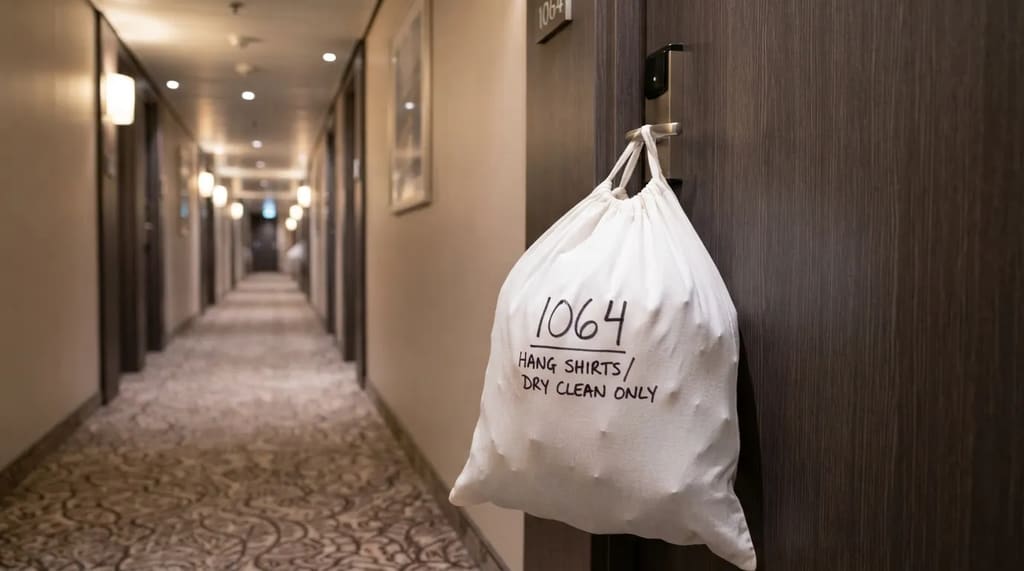
On many ships, cabin stewards collect the clothing passengers want laundered or pressed, and an unlabeled bag is a puzzle for someone handling many cabins at once. A clear label turns it into a simple pickup.
Write your cabin number on the bag and on a note inside it. Add any instructions, such as items to hang rather than fold, since the bag leaves your door and travels with others.
Fast Facts
- Put your cabin number on the outside of the bag and on a note inside.
- Write handling instructions on that note, such as hang or fold.
- Ask about the pickup schedule on day one.
- Leave the bag in plain view, in the spot you agreed on.
Ask about the bag and the pickup schedule on day one. A muddle over pickup can cost you a full laundry cycle, and on a week-long sailing that can mean running short of clean clothes by day five.
Leave the bag in the spot you and your steward agreed on, in plain view. A bag tucked behind the door or buried in the closet is a bag the steward has to hunt for, and may miss.
5. A Clear Floor Beats a Made Bed
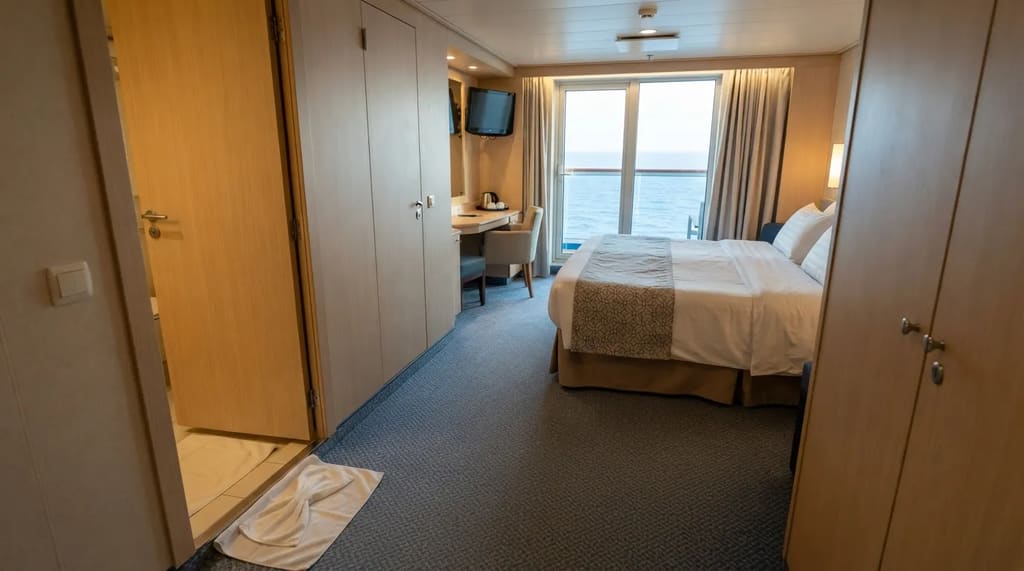
A clear floor does more for a steward than almost any other habit on this list. It’s the difference between cleaning a cabin and cleaning around one.
Stewards want open pathways so they can work without tripping or shifting your things. Bags, shoes, cables and damp towels force a choice between moving your belongings and skipping the spot.
Here’s a ranking worth arguing about: a clear floor matters more than a made bed. Stewards make the beds on every visit, but a floor covered in luggage can’t be cleaned properly.
Before you leave for breakfast, scan the floor. Bags go in the closet, shoes on the shelf, cables up off the carpet, and the only thing left down is a towel you want replaced.
A clear floor tells the steward the room is ready, and the door sign tells them when to come in. Mixed signals there undo the good work.
4. Using the Door Sign the Same Way Daily
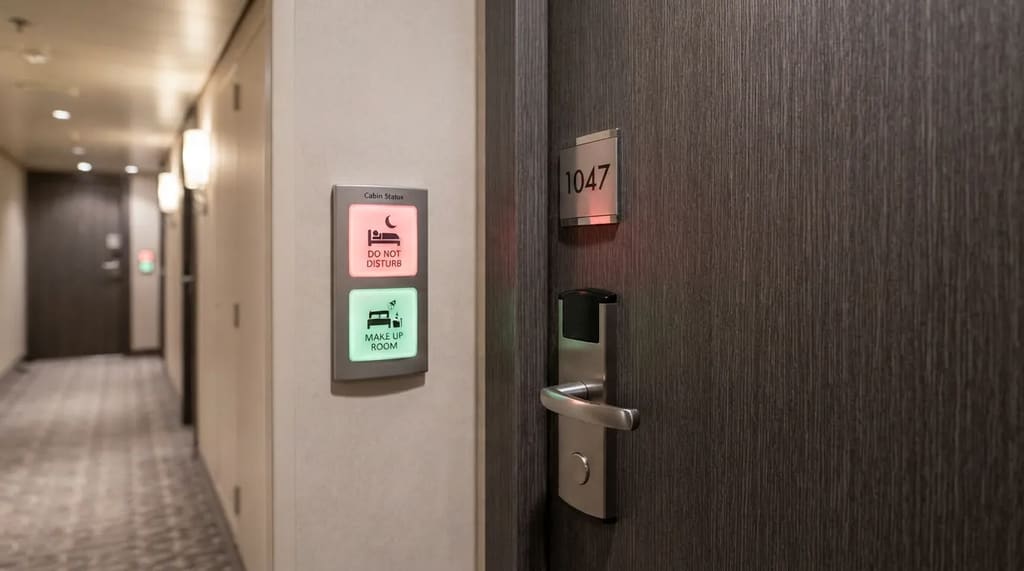
Mixed signals, or forgetting the sign altogether, can leave a steward guessing and throw their whole routine out of sync.5 A steward who can’t tell whether you’re in, out or asleep has to keep checking back.
The system is simple. Flip it to Make Up Room when you head out, and use Do Not Disturb for a nap.
Ask your steward when the cabin will usually be serviced, then match your sign to that window. A predictable routine helps more than a perfectly chosen sign, because both of you know what it means.
If your cabin has a button instead of a hanging sign, the idea is the same. On some newer ships the button lights up outside your door, so use it the way you’d use the sign.
Used this way, the sign is a tool. Left up for days, it can bring a visit from security instead of housekeeping.
3. Do Not Disturb Left Up for Days
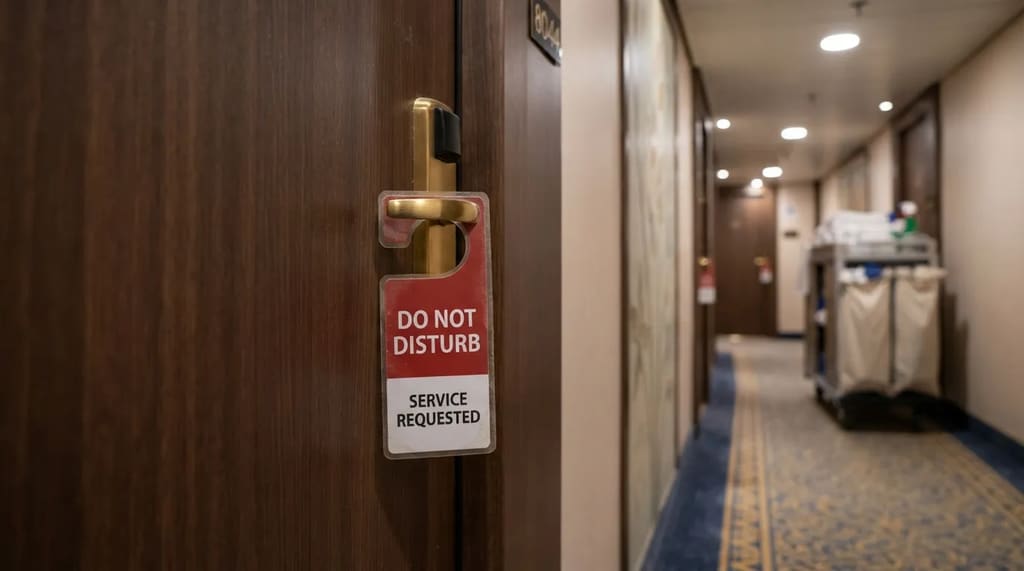
On many ships, a cabin left on Do Not Disturb too long can trigger a welfare check from security.5 6 That’s a knock from someone other than your steward.
With cleaning limited to a visit or two a day, a sign that blocks the visit blocks that day’s cleaning, trays included. If it hangs all morning and comes down only at the busiest hour, your steward may not be able to get to you at all.
Quick Compare
- Do Not Disturb for a few hours: fits a nap or a slow morning.
- Make Up Room: fits any time you’re out of the cabin.
- A word with your steward: fits a day or more without service.
- Do Not Disturb for days: the one that can bring a welfare check.
If you’re in the room, the steward will knock before entering,4 so a quiet morning in the cabin doesn’t need the sign if you’re happy to be cleaned around. Say come in, and carry on with your coffee.
If you want no service, tell your steward instead of leaving the sign up. If you don’t want your room cleaned the entire cruise, that’s fine, as long as you let them know.5
The sign is for a nap or a late morning, not an arrangement. Say once what you want, and the sign stays useful for the days you truly need it.
Related Stories From Travelbinger


2. A Request Made Once and Left Alone

The guests with the smoothest cruises usually speak up early instead of waiting until day four to mention something that mattered. Stewards see the pattern constantly.
Make each request once, early, with your cabin number. Your preferred cleaning time, extra pillows, a refilled ice bucket and a second set of towels are all routine, and all easier on day one.
Batch what you need into one ask, because a steward can fit it into the route without doubling back. Skip the long apology too, since a direct, friendly ask is the faster and kinder option.
Problems follow the same rule. A dripping faucet or a dead bulb mentioned on day one gets fixed, while a problem flagged on the last morning leaves almost no time before new guests arrive.
The last habit involves no asking at all. It comes down to where you’re standing while the main clean happens.
1. Stepping Out While the Cabin Gets Its Main Clean
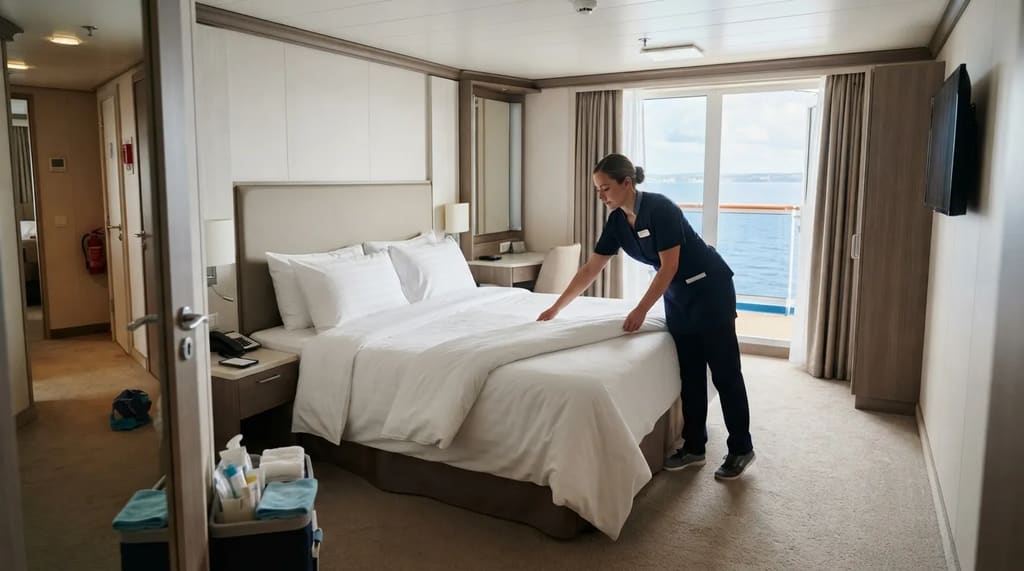
Here’s the habit that makes a steward’s whole day easier: be somewhere else while the cabin is serviced. An empty room can be cleaned in one smooth pass, without working around a guest on a call, a half-unpacked suitcase or a damp swimsuit on the bed.
Ask your steward on day one when the cabin is usually cleaned. Then plan breakfast, the pool or a walk around the deck to line up with that window.
If you’re still in the cabin when the steward knocks, nobody is in trouble. Say come in, step onto the balcony or out into the hall for a few minutes, and the work goes quickly.
This is the habit that makes the other thirteen work. The hooked towels, the clear floor, the closed closet and the sign that matches your plans all pay off when the steward walks into a ready, empty room.
A steward who finds a room like that finishes sooner and has more time for the small extras, like the pillows you asked for on day one. That’s the whole list in one picture.
Closing Thoughts

None of these habits asks for much: a hook, a latch, a sign, a note. Together they turn a stateroom from a puzzle into a room that’s ready to clean.
Stewards tend to remember a sailing by what it was like to work around you, not by where you went or what you packed. Small, steady courtesies are what stick.
So pick one or two before your next cruise. Learn the name, match your sign to your plans, and be out the door when the cart rolls up.
You’ll never see most of what your steward does for you. A cabin that’s easy to care for is the part you can actually give back.
Bonus: The Five-Minute Day-One Check-In Stewards Love

Instead of tackling these habits one at a time, settle most of them in a single short chat on embarkation day. Stewards often introduce themselves in the first hours, and that’s your window.
Ask these four questions, then jot the answers in your phone notes:
- “When is the cabin usually serviced?” Plan your breakfast, pool time or deck walk around that window.
- “Where should trays and dishes go on this ship?” You’ll know whether they stay inside or go to a set spot.
- “When is laundry picked up, and where should the bag go?” Agree on one plain-view spot and stick to it.
- “What’s the signal for a fresh towel?” Ships differ, so hear it from the person who handles it.
While you’re there, put in your one batched request, such as extra hangers or pillows, and give your cabin number so it’s easy to match.
Finish with your steward’s name in your notes. Stewards tend to remember the guest who asked how to make their job easier, and that single conversation sets up the rest of the week.
- Mad About Cruises Steward Tips: https://madaboutcruises.com/cabin-steward-loves/
- Life Well Cruised Towel Signals: https://lifewellcruised.com/things-before-your-leave-your-cruise-cabin-each-day/
- Balcony Rail Rules: https://travelbinger.com/14-shameless-things-passengers-do-on-cruise-ships-that-cabin-stewards-never-forget
- Cruise Critic Cabin Stewards: https://www.cruisecritic.com/articles/cabin-stewards-on-a-cruise-what-to-expect
- Cruise Mummy Steward Tips: https://www.cruisemummy.co.uk/things-your-cabin-steward-secretly-loves-you-doing/
- Carnival Safety Check Policy: https://www.ladbible.com/lifestyle/travel/carnival-cruise-lines-cabin-do-not-disturb-sign-568007-20240409