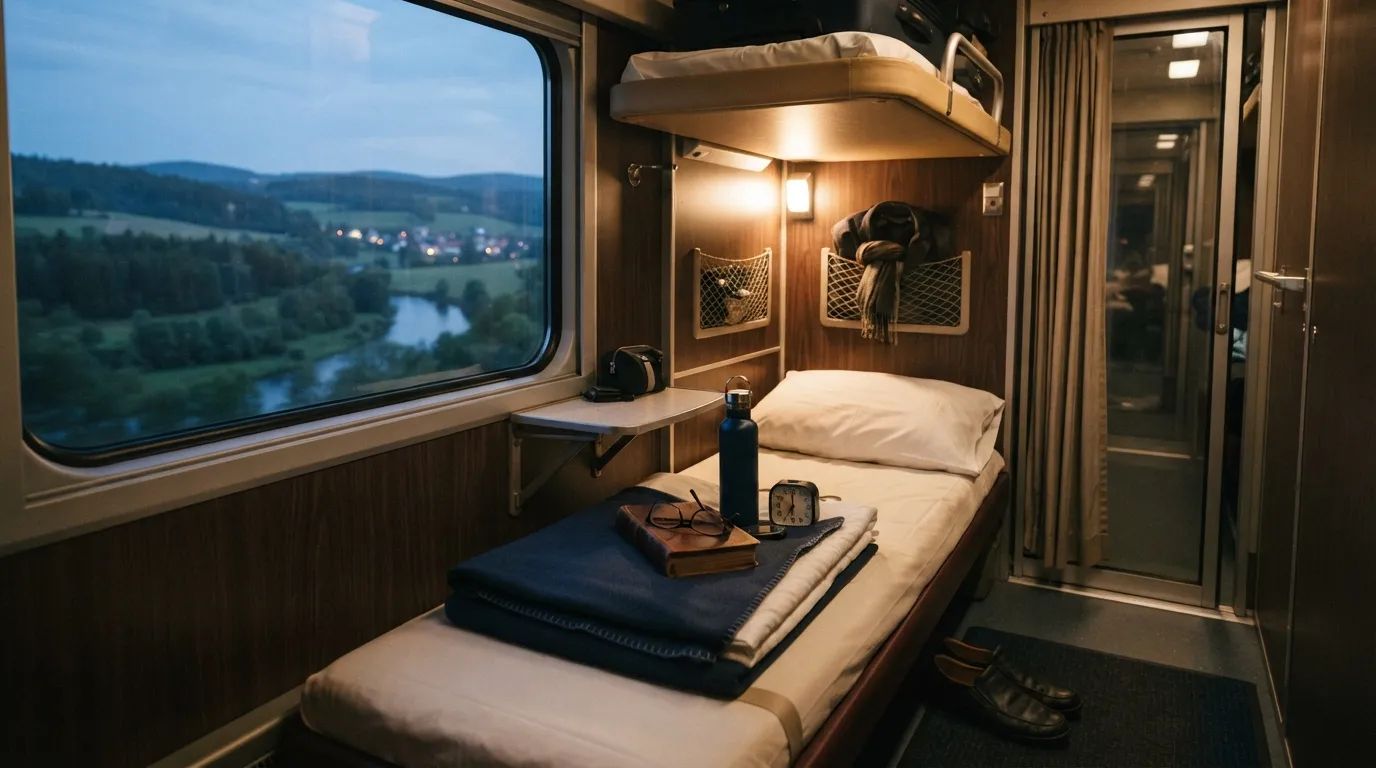
Amtrak lists a Superliner roomette at 3 feet 6 inches wide by 6 feet 6 inches, and everything you need for the night has to fit on that floor. First-timers spend the first hour at the window, while regulars spend it setting the room up, and the difference shows around midnight, when one of them is feeling along the wall for a light switch.
Each move takes a minute or less, and the first is simply learning the room. One of the fourteen decides how well several of the others work, and it is the one first-timers most often leave for later.
1. Walking the Roomette Once From Door to Window
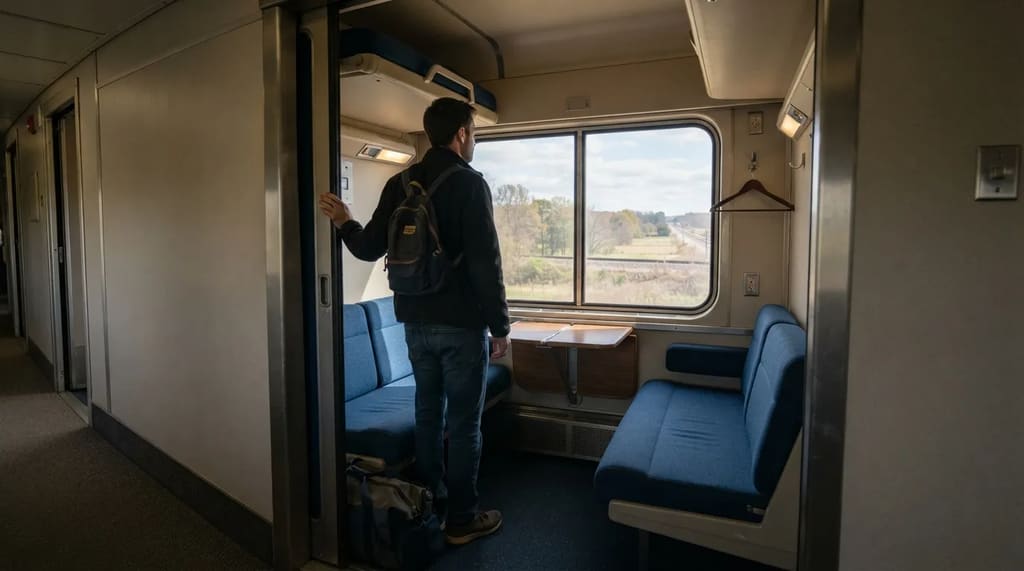
By day, a Superliner roomette is two seats facing each other beside a large window. At night the seats convert into a lower bed, and an upper bed folds down from above.
Regulars stand in the doorway for a minute, the way you would size up a stage set before the show. The room has a garment rack, a fold-down table, an electrical outlet and individual reading lights, and a space this small leaves few places to put anything else.
The two beds are not the same size, and the difference matters when you are deciding who sleeps where.
- Lower berth: 2 feet 4 inches by 6 feet 6 inches
- Upper berth: 2 feet by 6 feet 2 inches, reached by a climb
- Sleeps: two adults, with limited space for luggage
If you will sleep up top, look now at how you will climb up and what there is to hold onto. It is much easier to judge a climb in daylight than in the dark.
The room’s one large window brightens everything by day, and it will do the same with every platform lamp after dark.
2. The Window Shade, Tested Before Dark
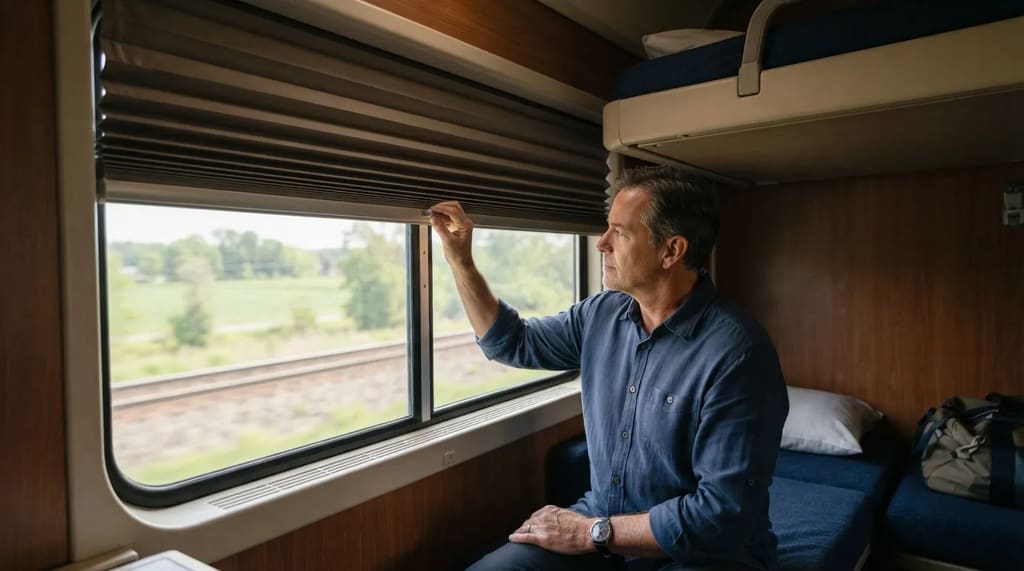
A shade is a small thing until a platform lamp lands on your pillow at two in the morning. Regulars raise and lower it once, early, to learn how far it travels and whether it catches.
Stations and rail yards stay lit through the night, and a roomette’s picture window faces them directly. Ten seconds in daylight spares you a fumbling search later, which could wake anyone else sleeping in the room.
I would not keep the shade shut for the whole trip. The big window is much of what a roomette gives you over a coach seat.
A fair middle course is to leave it open through the evening and close it only when you turn in. If you wake early and like first light, you can leave a hand’s width open at the bottom.
Darkness settles the light, but it does nothing about thirst at three in the morning, when the nearest restroom is down the hall.
3. The Bottle of Water Within Arm’s Reach
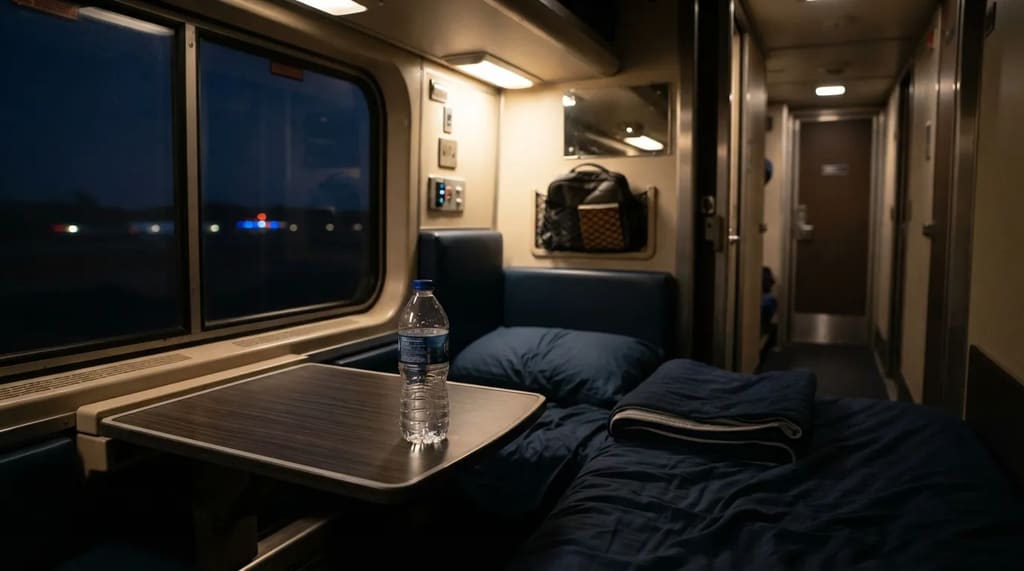
The roomette’s listed features include bottled water, and regulars find out in the first hour where it is and how much there is. They then set one bottle where a hand can find it from the lower bed, not on the far side of the table.
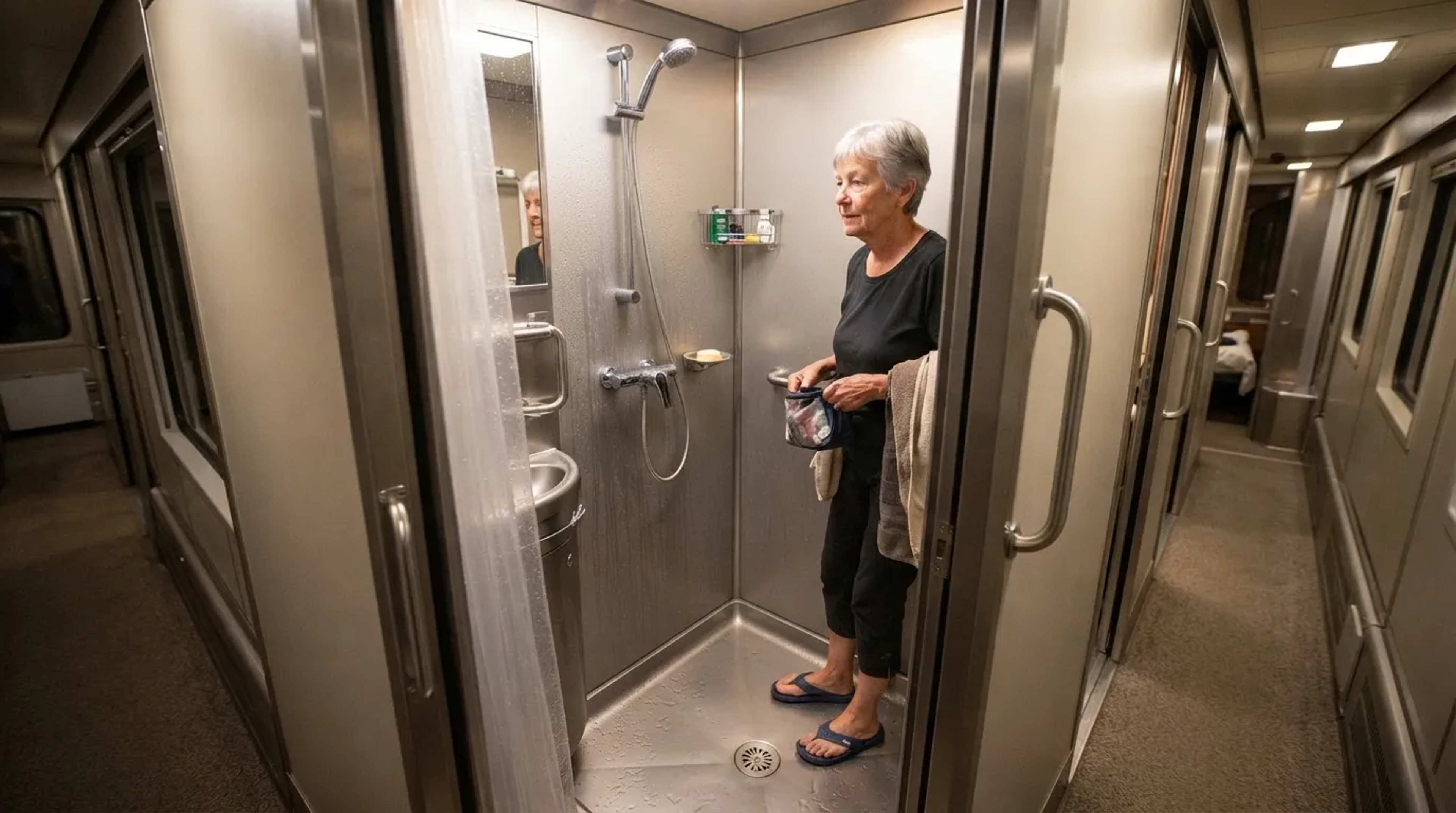
A Superliner roomette has no toilet or shower of its own, only restrooms nearby in the same car. A drink at the bedside is therefore also a decision about how many walks down the corridor you want after dark.
Worth Knowing
- The roomette has no private toilet or shower
- Restrooms are close by, in the same car
- Bottled water is part of the listed features1
- One attendant looks after the whole car, so ask before you assume
Regulars tend to do their heavier drinking earlier in the evening for that reason. They keep a little by the pillow for the night and the first cup of the morning.
I would not pack bottled water for a roomette trip. Space for bags is tight, and that room is better spent on things the car does not supply.
Cap the bottle after each sip, since the car sways and a tipped bottle lands on the bedding.
4. Shoes Parked Where Your Feet Land
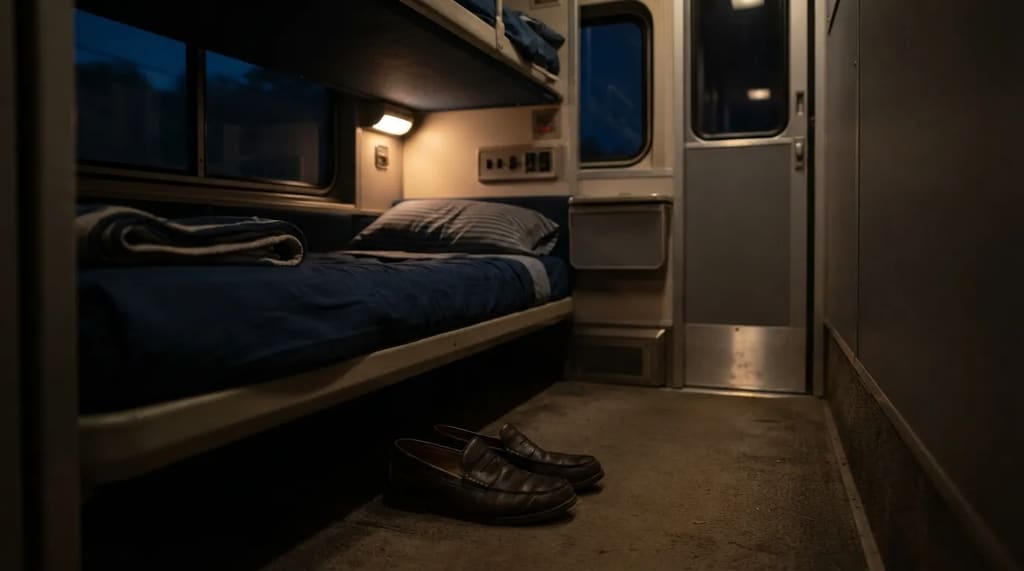
Slip-on shoes at the foot of the lower bed, toes toward the door, are the regular’s answer to the first night walk to the restroom. The position matters more than the brand, because your feet should find them without a light.
Think of it as laying out a path before the lights go off. The first step from the bed should always land on the same spot.
A Superliner is a two-level car, and roomettes sit on both the upper and lower levels.2 In one Empire Builder car, the shower was on the lower level, so an upstairs room means stairs on the way to a shower.
Walking a moving car is steadier in shoes than in socks, and the corridor floor is a poor place to learn that. I would pack slip-ons for the night walk and keep laced shoes for the platform.
If you share the room, each of you should have a spot, and each should know the other’s. That keeps one person from tripping over the other’s shoes in the dark.
5. Reading Lights and Who Can Reach the Switch
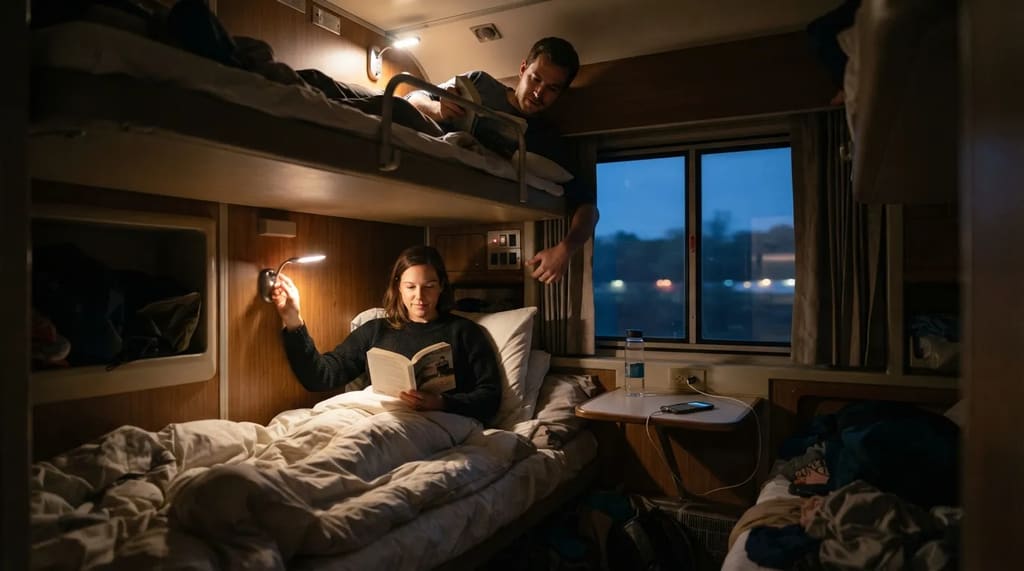
The room has ceiling lights and an individual reading light for each traveler, which is more choice than it first appears. Regulars try each one in the first hour and settle on the dimmest that still lets them read.
If you plan to read in the upper bunk, work out before bedtime who can reach what. The person up top may depend on the one below to work a switch.
There is a second limit to settle early, because the room lists a single electrical outlet. Decide where your phone will sleep and which light you will read by.
I would leave the clip-on book light at home. Each traveler already has a light, and an extra gadget is one more thing to lose in a room this small.
Lights are easy to test from your seat, but the corridor outside has to be walked.
6. Counting Doors Down the Corridor
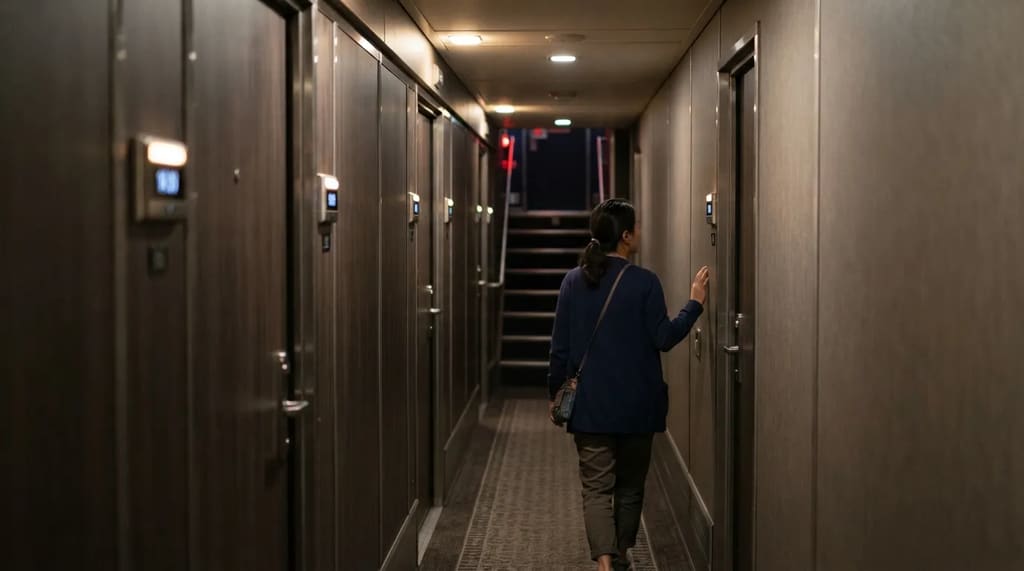
A sleeping-car corridor is narrow, dim at night and lined with doors that look alike. Regulars walk it once in the first hour, from their own door to the restroom, the stairs if there are any, and the end of the car.
In one Superliner car on the Empire Builder, rooms 1 through 10 were upstairs and 11 through 14 downstairs, so a room number can tell you about the stairs you will face.3 Notice what sits across from your door too, because the attendant’s cabin may be one of your neighbors.
Learn which way you turn out of your door and how many steps it is to the restroom. At night a count you have memorized beats a guess, and it spares your neighbors a wrong door.
If your room is upstairs and the shower is downstairs, walk the stairs once while it is light and your hands are empty. A flight you have already climbed is easier to take carrying a towel.
Knowing the corridor also shows how far your bags will sit from your door, and that is where the lock comes in.
7. A Luggage Lock and a Plan for Your Bags
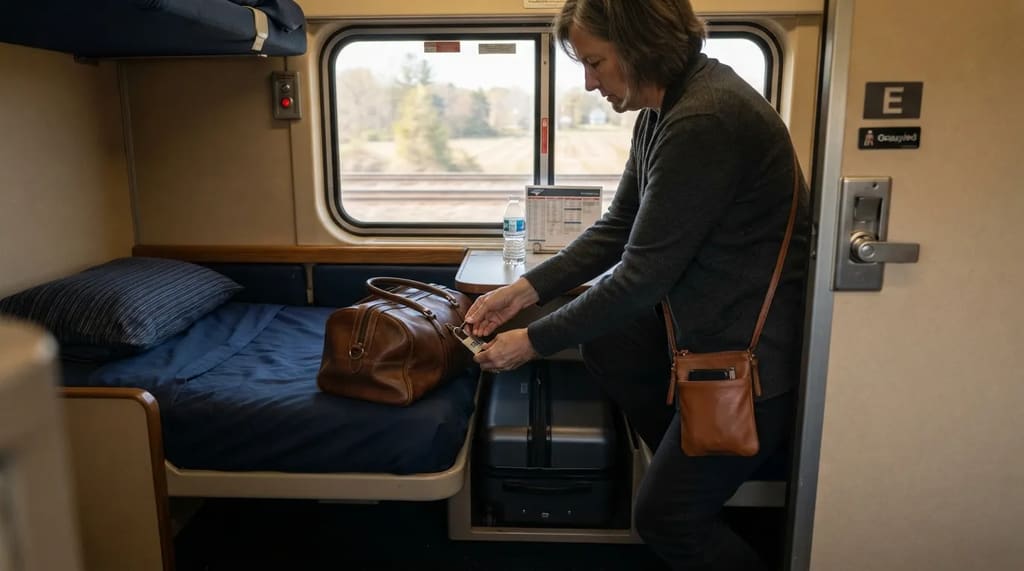
A roomette door locks from the inside, which means the room may be unlocked while you walk to the dining car. Regulars plan for that in the first hour instead of finding out at the first meal.
Ask your attendant before you fit a lock of your own to any door on the train. The train’s rules come first, and the attendant will know them.
Where the bags go depends on the car. A Superliner has a luggage area on the lower level, and the attendant can tell you what the car you are in offers.
I would trust a small bag that stays on your shoulder, holding phone, wallet and keys, more than any lock on a door. The rest of the luggage can wait in the room.
A lock decides who can come in; what can be seen from the corridor when you step out is a matter for the curtain.
8. The Door Curtain and Its Velcro Strip
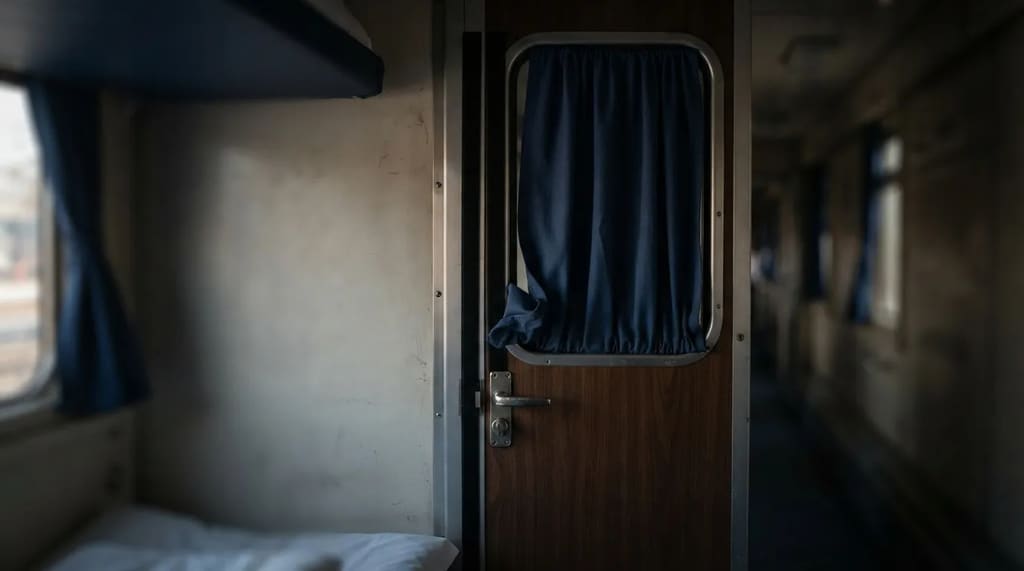
The door has a curtain as well as a latch, and regulars check how it hangs and how it fastens. For a longer absence, such as a meal in the dining car, closing every curtain and using the Velcro strip on the door curtain keeps the room out of sight.
Morning can call for the opposite habit. Some cars prefer the curtain pulled back once you head to breakfast, so the room is plainly empty.
Quick Compare
- Stepping out for a meal: curtains closed, Velcro strip fastened
- Heading to breakfast: some cars prefer the curtain pulled back
- Either way: the attendant’s preference for your car decides it
Those two habits point in different directions, so the first-hour fix is to ask your attendant which one this car prefers. The attendant returns each room to its sitting arrangement in the morning, and the curtain is one way of telling when yours is ready.
I would follow the attendant’s preference over any general rule, because the attendant has the whole car to look after and a routine you cannot see.
The curtain handles what can be seen, and it does nothing about the sound that comes under and around the door.
9. Earplugs on the Pillow
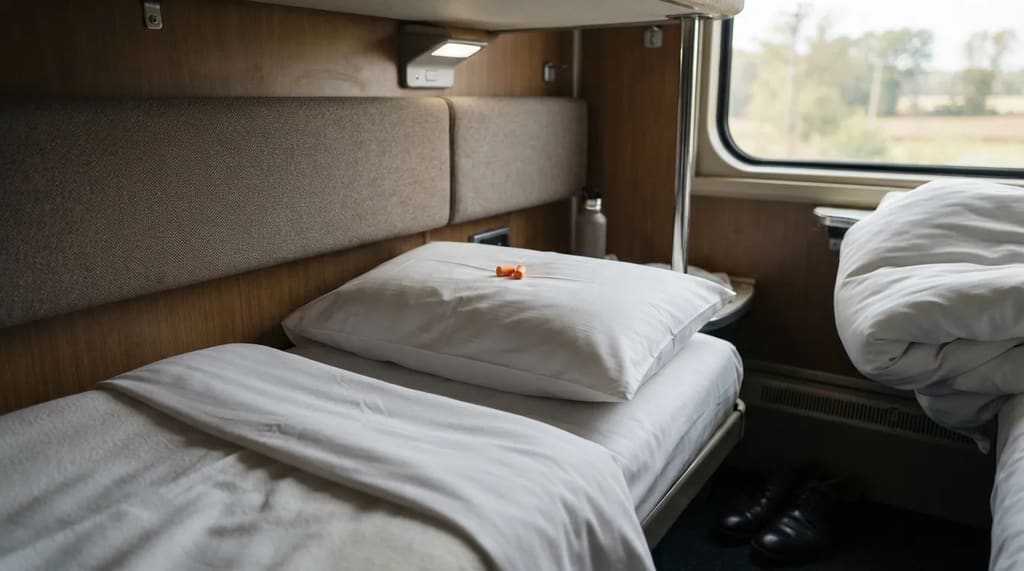
Earplugs belong on the pillow within the first hour, not at the bottom of a bag you will not open at midnight. Regulars set them out when they set out the shoes and the water.
A roomette door does not seal the way a hotel door does, so voices, footsteps and corridor doors reach you easily. That is a reason to pack plugs even if you sleep deeply at home.
Plugs bring one problem of their own, which is the morning knock. If you wear them, ask the attendant for a firm knock and set a phone alarm as a backup.
If you share the room, agree on one wake-up time with your companion. That leaves the attendant a single knock to make.
10. A Coffee Order Set Before Bedtime
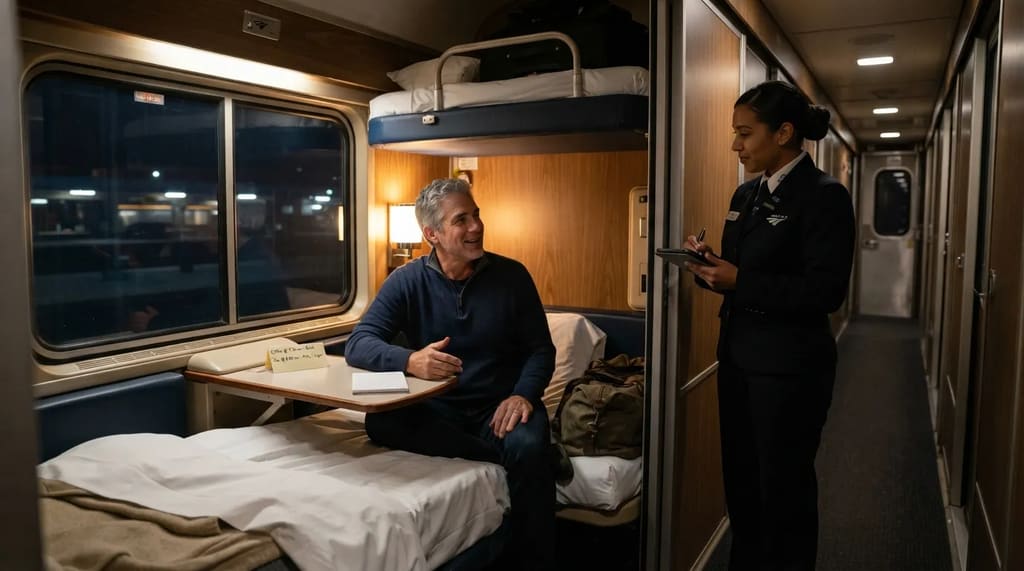
The roomette’s listed personal service includes bed turn-down and coffee, and regulars treat the coffee as a habit to set up on the first evening.1 They give the attendant the time they want it and how they take it, once, while introducing themselves.
Said once, the order carries through the trip, so you are not explaining yourself to a busy attendant every morning. One attendant covers the whole car, so delivery takes a little while, and a fixed time lets the attendant plan around you.
I would ask for the coffee a little before you want to be dressed, not at the moment you wake. The cup takes its turn after the other rooms on the car.
A coffee time is only as useful as your sense of where the train will be by then, and that comes from the timetable.
11. A Glance at the Timetable and the Clock
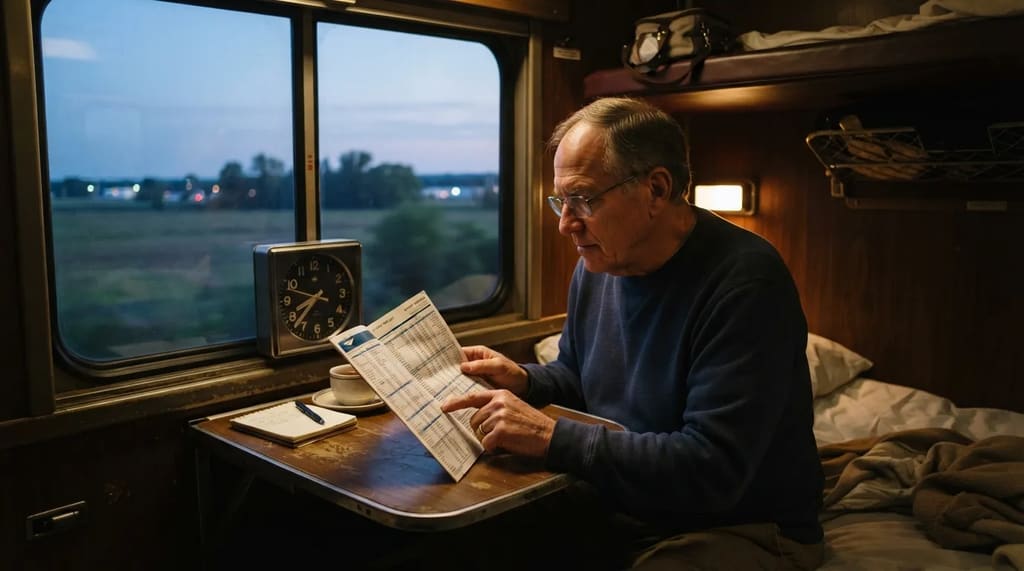
A long-distance train runs on a schedule, and regulars look over the stops for the night and the morning in the first hour. Your attendant will alert you to stops and mealtimes, but it helps to know roughly what to expect before the first alert.
Start with the stops that matter to you, and on routes that cross time zones, check which clock the schedule uses before you set a wake-up time.
At a Glance
- Your own stop, and the stop before it
- The first stop after you go to bed
- Which time zone the schedule is using
- Breakfast hours and your coffee time
I would treat the printed times as an outline, since long-distance trains can run ahead or behind. The attendant’s latest word on timing is better than the paper.
Write down the two or three times that matter, in your phone’s notes or on the back of your ticket envelope. That keeps you from hunting through a full schedule with one hand on the wall.
12. The Call Button You Press Last
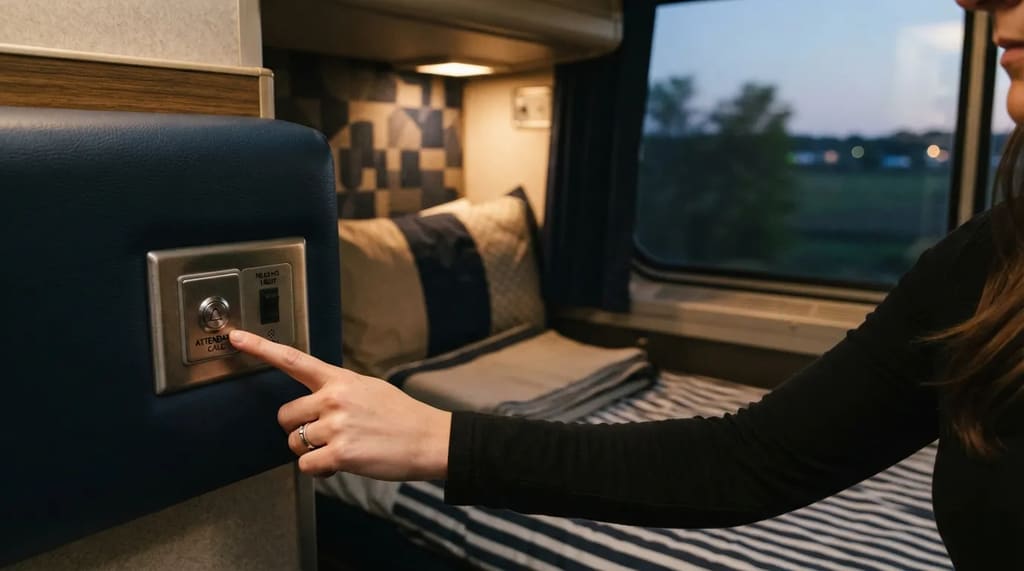
In a Superliner roomette, an attendant call button sits beside one headrest.4 The button is meant for telling your attendant you are ready for bed.
Regulars find it early and press it late, after they have spoken to the attendant. Some attendants ask you to use it, while others would rather be found in person, so ask which this one prefers.
Related Stories From Travelbinger

In the early evening an attendant may still be busy with the rest of the car, so a slow answer is ordinary. I would press the button once, wait a few minutes, press again if needed, and then look for the attendant in the corridor.
Pressing it again and again does not bring anyone faster. It only adds noise to the evening of a person who is looking after every room on the car.
The button reaches the attendant only while you are in the room, and the first time the doors open on a platform, a different check applies.
13. A Quick Sweep Before the First Station Stop
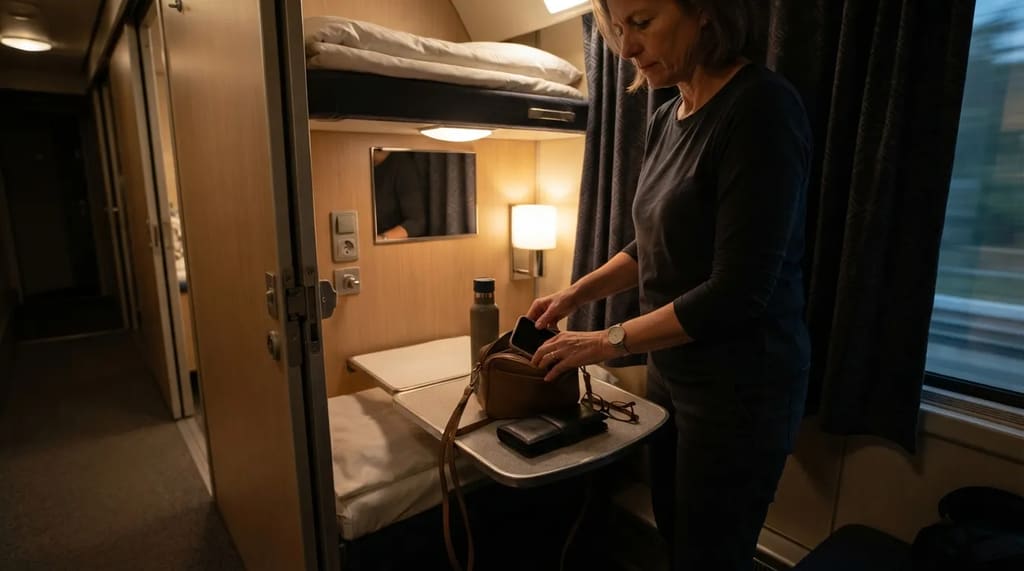
Stations fill and empty a car’s corridor with people, so regulars make one last sweep of the room before the train first stops. The attendant is usually at the car door while passengers get on and off, so there is no one in the corridor to ask right then.
The sweep takes about a minute, and it covers three things.
- Phone, wallet and glasses are in the small bag you carry
- The door is latched from inside and the curtain is set the way you chose
- The bottle, the light and the call button are where your hand expects them
If you want to step off for air, ask the attendant how long the stop lasts first. I would skip the platform walk at the first stop, because you do not yet know the car well enough to find your door in a hurry.
The sweep goes quickly because the earlier steps are done, and most of them depend on a conversation you may not have had yet.
14. Introducing Yourself to the Car Attendant After Departure
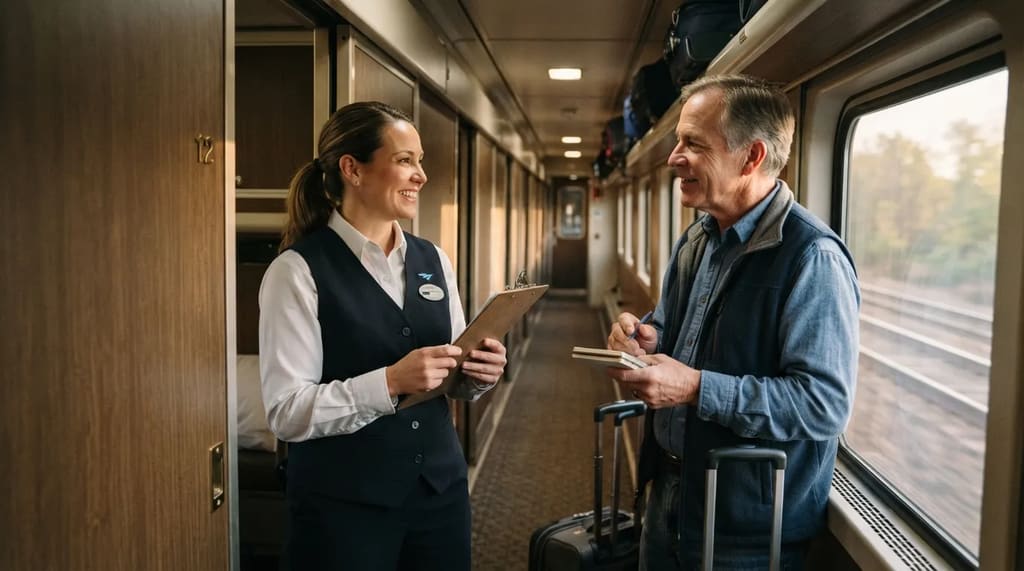
The attendant is busy at the car door while boarding is under way, so regulars give a quick hello and wait until the platform slides away for the real talk. Then they find the attendant within minutes instead of waiting to be found.
An attendant should greet you, check your name against the list, direct you to your room and offer to help with luggage. The attendant also tells you which way to find the dining and lounge cars and advises on the dining schedule.
What regulars bring to that conversation is a short list of their own.
- A bedtime, and a wake-up time if you want a knock
- The morning coffee order, said once
- Whether you prefer the button or a visit, and how the curtain should hang
- If you wear earplugs, a request for a firm knock
Every move above leans on this one: the call button, the coffee, the curtain, the stop check. Since one attendant covers the whole car, a clear set of requests made early is easier to carry out than five made at random.
If time is short, skip the shade test and the shoe placement before you skip this.
Closing Thoughts
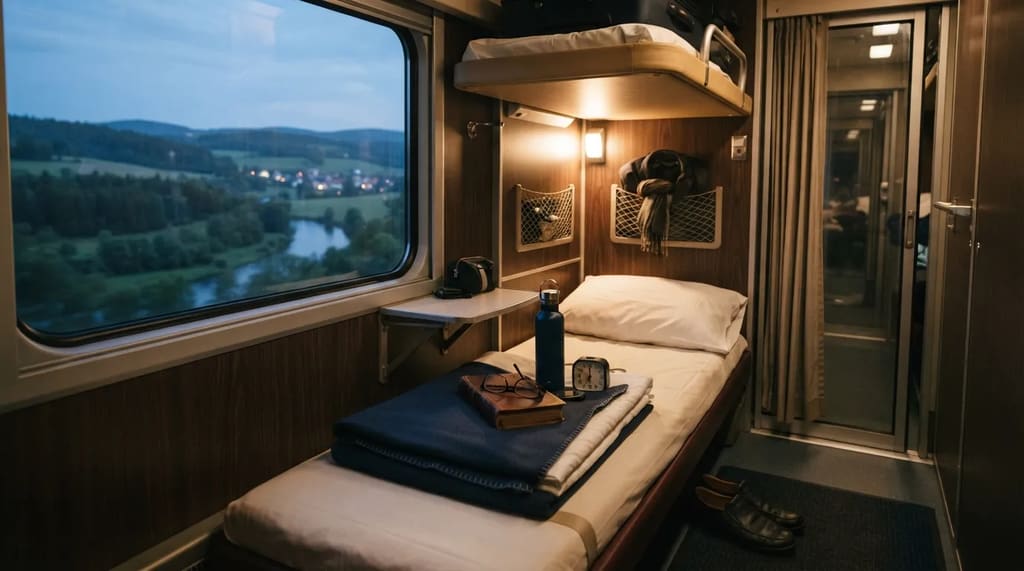
A roomette is a very small home for a night or two, and the first hour is when you move in. Regulars do it the way people unpack anywhere, putting what they use most closest to the bed.
Next time you board, try setting up the room before you settle at the window. The view will still be there when you are done, and so will your shoes, your water and your light.
What is the first thing you put within reach when you settle into an unfamiliar room, on a train or anywhere else?
Bonus: The Lights-Off Rehearsal Nobody Tells You About
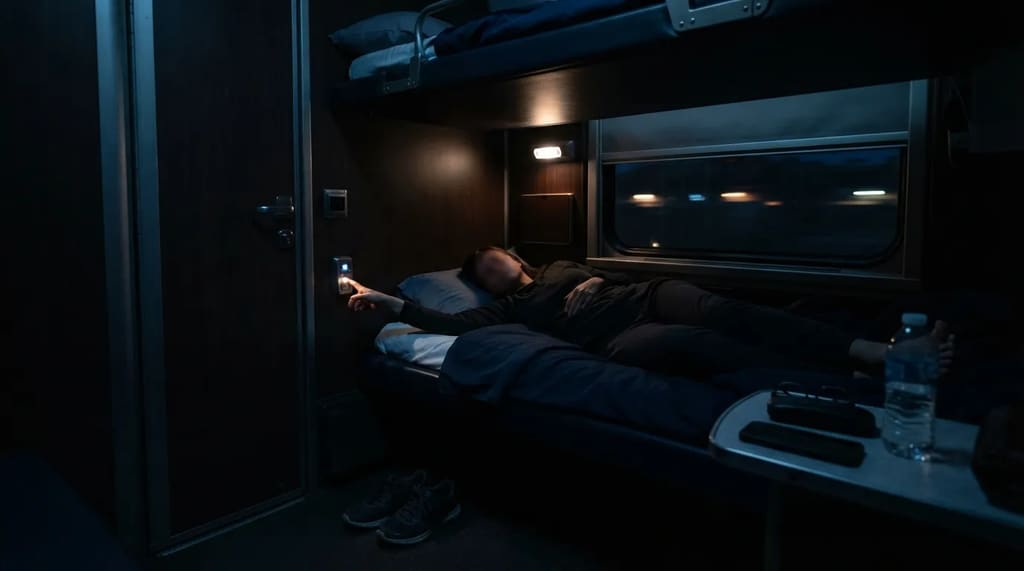
Before you settle in for the night, run one full rehearsal in the dark. Regulars treat it as the true last step of setting up a roomette, because it exposes every mistake while you can still fix it.
- Set the stage. Put your shoes, water, phone, glasses and earplugs in their spots, then lower the shade and switch off every light.
- Lie down and reach. From the pillow, find the water, the reading light, the call button and your shoes by touch alone, with your eyes closed.
- Move whatever you hunted for. Anything that took more than one try goes closer to your hand, and the floor by the door stays clear.
- Walk the night trip in your head. Feet into shoes, turn toward the door, then recall your step count to the restroom.
If you sleep in the upper berth, rehearse the climb down in the dark too. That is the one step you cannot practice half-asleep at three in the morning.
Do this once, and the first real night walk feels like the second.
- Amtrak Roomette vs. Bedroom: https://www.amtrak.com/difference-between-a-roomette-a-bedroom
- Trains Magazine Empire Builder Roomette: https://www.trains.com/trn/amtrak-roomette-experience-on-the-empire-builder/
- The Points Guy Roomette Review: https://thepointsguy.com/reviews/amtrak-superliner-roomette-empire-builder/
- Texas Eagle Onboard Guide: http://texaseagle.com/onboard.php